


في تمام الساعة 2:47 صباحًا، انطلق إنذار غرفة التحكم – كانت قراءة تحليل الغاز المذاب (DGA) لمحول الطاقة 10 MVA، 33/11 kV قد قفزت من 60 جزء في المليون من الغاز القابل للاشتعال إلى 340 جزء في المليون خلال ست ساعات. لدى مشغل المصنع ثلاث خيارات: تنظيف الوحدة بالكامل وإنهاء الوردية مع خسارة في الإنتاج، أو الاستمرار في التشغيل العادي مع الأمل بعدم تفعيل مرحل بوخولز، أو البدء في إجراء التشخيصات. تشخيص أعطال محولات الطاقة هو بالضبط مجال الدراسة الذي يؤدي إلى التمييز بين فترات الصيانة المجدولة والانقطاعات القسرية التي تأخذ $50,000 أو أكثر من الشركة في الإيرادات المفقودة، وتكاليف النقل، وشراء الكهرباء الطارئة. في هذه المقالة، يمكن العثور على المعلومات حول أكثر أنواع الأعطال شيوعًا، وطرق اكتشافها، وتعليمات خطوة بخطوة لإجراء تشخيص الأعطال في الممارسة العملية.
نشرح السبب الفيزيائي لكل نوع من الأعطال، والأجهزة التشخيصية المسؤولة عن اكتشافها، والأموال التقريبية اللازمة لاختبار المعدات والتشخيصات من طرف ثالث، وأعمال الصيانة التي تسمح بتجنب معظم الأعطال قبل أن تصل إلى قاطع الدائرة.
ببساطة، يعني استكشاف أعطال محول الطاقة اتباع إجراء محدد بوضوح قائم على المعرفة يهدف إلى تحديد وقياس وتصحيح أعطال المحولات في المحولات التي تزيد عن حوالي 1 MVA، من خلال اختبارات مثل DGA (تحليل الغاز المذاب)، واختبار مقاومة العزل، واختبار مقاومة اللفائف واختبارات زيت المحول. يُقدّر أن 80% من المحولات المعطلة تفشل بسبب أعطال كهربائية ناتجة عن انهيار العزل، أو تفريغ جزئي أو تأثير طاقة زائدة، مع كون الأعطال الحرارية والمتعلقة بالآلات تمثل الغالبية العظمى من البقية. ما يجب أن نضعه في الاعتبار هو أنه يجب علينا عدم إزالة غطاء المحول حتى تظهر نتائج DGA والاختبارات الكهربائية ما هو النظام الفرعي المعطل.
ما هي أكثر أعطال محولات الطاقة شيوعًا؟
المحولات هي قطع معدات ناضجة تُعرف بأنها موثوقة جدًا، ويمكن أن تدوم حوالي 30 إلى 40 عامًا إذا تم بناؤها بشكل صحيح وتم تبريدها بشكل مناسب. عادةً ما تقع أعطال المحولات في واحدة من خمس فئات، الأولى هي انهيار عزل اللف الذي يتسبب في حوالي 35-40% من أعطال هذه المعدات. هذا مرتبط بالدوائر القصيرة بين اللفات، والدوائر القصيرة بين الطبقات المختلفة، بالإضافة إلى أعطال الأرض التي تحدث بسبب تدهور عزل الورق. بالإضافة إلى ذلك، فإن الضعف في البوشات مسؤول أيضًا عن 10-15% من الأعطال، وهذا خطير بشكل خاص بسبب إمكانية رش زيت ساخن قابل للاشتعال بشدة من البوشات عند حدوث عطل. تُقارن أعطال محولات التحويل تحت الحمل بالبوشات حيث تمثل نسبة مماثلة من الأعطال، مع كون مشاكل الصب واحدة من الأسباب الرئيسية — سواء كانت بسبب تآكل الاتصال، أو تلوث الزيت في حجرة محول التحويل، أو أعطال محركات القيادة. يمكن أن تحدث عيوب في القلب والدائرة المغناطيسية في شكل براغي فضفاضة أو دوران للتيار ناتج عن تلف العزل بين الطبقات مما يؤدي إلى ارتفاع محلي في درجة الحرارة وفقدان غير مفرط. بالإضافة إلى ذلك، تؤدي المشاكل المتعلقة بنظام تبريد الزيت، مثل انسداد المشعات، أو مضخات ومراوح معطلة، أو انخفاض مستوى الزيت، أو ارتفاع مستويات الرطوبة إلى تدهور حراري يبدأ في تدمير الأجزاء داخل المحول.
كيف تتطور أعطال المحولات: أوضاع وآليات الفشل
وجود الأعطال يحتاج إلى عملية طويلة من التدهور التي تحدث مع مرور الوقت لظهور العطل. معظم أعطال اللف والعزل تنتج عن ضغوط درجة الحرارة. وفقًا لقانون الشيخوخة المطبق في الصناعة، يتم تقليل عمر العزل إلى النصف عندما تتجاوز درجة حرارته 6 درجات مئوية إلى 10 درجات مئوية فوق درجة حرارته المقدرة البالغة 98 درجة مئوية عند استخدام ورق محسن حراريًا. على سبيل المثال، تشغيل محول بقدرة 10 MVA تحت حمل لا يقل عن 20% خلال الصيف سيستهلك سنوات من عمر العزل حتى لو لم يتوقف المحول.
تؤدي الضغوط الكهربائية إلى عملية فشل خاصة بها. يمكن أن تؤدي التفريغات الجزئية التي تظهر كميكرو-تفريغ من خلال الفقاعات، الفراغات، ومواد العزل التالفة إلى انهيار بطيء للعزل. في حالة لف 33 كيلوفولت، يجب ملاحظة أن نشاط التفريغ الجزئي بمقدار 100 بيكوكولوم هو بالفعل علامة تحذيرية. وإذا كانت هناك تفريغات جزئية في المحول بمقدار 1000 بيكوكولوم، فسوف يتعرض المحول للفشل الذي يمكننا ملاحظته في غضون أسابيع قليلة. يمكن أن تؤدي وجود الرطوبة إلى تفاقم كلا العمليتين. في حالة المحول الذي لديه مستوى رطوبة 2 % في عزل الورق، يمكن أن يتقدم عمر الورق بمعدل ضعف السرعة مقارنةً بمحول بدون تأثير الرطوبة، مما يؤدي إلى تدمير العزل. بسبب وجود الرطوبة في الزيت، يمكن أن تنخفض القوة العازلة من 40 كيلوفولت (أدنى تصنيف وفقًا لـ IEC 60156) إلى أقل من 20 كيلوفولت، وهو ما يكفي لحدوث الفشل. يمكن أن تؤدي القوة الميكانيكية المرتبطة بتيارات القصر على اللف إلى تغييرها وإرخائها، لذا حتى إذا نجا المحول من الحالة الأولى، يمكن أن يتسبب العطل الثاني في تلفه إذا حدث بعد ستة أشهر بين الأعطال. يرجى ملاحظة أن التعرف على هذه الآليات يوفر أساسًا جيدًا جدًا لتشخيص أعطال المحولات.
أنواع الأعطال، علامات التحذير والأسباب الجذرية
| نوع العطل | النسبة النموذجية للفشل | علامات التحذير المبكرة | الأسباب الجذرية الأكثر شيوعًا |
|---|---|---|---|
| فشل اللف / العزل | 35–40% | زيادة DGA الأسيتيلين / الإيثيلين، انحراف النسبة، زيت ساخن | ارتفاع درجة الحرارة، الرطوبة، PD، تلف الارتفاع، تثبيت فضفاض |
| فشل البوشينغ | 10–15% | شقوق مرئية، تسرب الزيت، تغيير السعة، PD عند البوشينغ | تلف البورسلين، دخول الرطوبة، تلوث |
| عطل OLTC / محول التبديل | 10–15% | ضوضاء غير عادية عند تغيير التبديل، ارتفاع مقاومة الاتصال، تظلم الزيت | تآكل الاتصال، زيت متفحم، تآكل ميكانيكي |
| عطل النواة | 8–12% | زيادة خسارة عدم التحميل، نقاط ساخنة محلية، همهمة غير عادية | طبقات فضفاضة، تلف عزل النواة، تيارات دائرية |
| عطل نظام التبريد / الزيت | 10–15% | ارتفاع درجة حرارة الزيت العلوي، انخفاض مستوى الزيت، تعطل المضخات / المراوح | مشعات مسدودة، مضخات معطلة، تسربات، دخول الرطوبة |
| تحميل زائد / حدث نظام خارجي | 5–10% | تحميل مرتفع مستمر، تسخين توافقي، تعطل وقائي | تحميل زائد مستمر، توافقيات، عدم توازن الجهد |
تحتوي الجدول على قطعتين مهمتين من المعلومات المتعلقة بعملية استكشاف الأخطاء وإصلاحها. واحدة تستحق الذكر هي أن البيانات التي تظهر “نسبة الفشل” تم جمعها من أبحاث مشتركة حول أعطال مختلفة في الصناعة التي أجرتها CIGRÉ و IEEE، والتي حددت التباينات في هذه الأرقام وفقًا لفئة جهد المحولات. على سبيل المثال، تعاني محولات فئة التوزيع من المزيد من أعطال التحميل الزائد مقارنةً بالمحولات التي تنقل أكثر من 110 كيلوفولت والتي تعاني من أعطال العزل و OLTC. علاوة على ذلك، فإن زيت العزل الخاص بالمحول هو رسالة خفية، حيث يشير إلى نوع الفشل الذي يحدث.
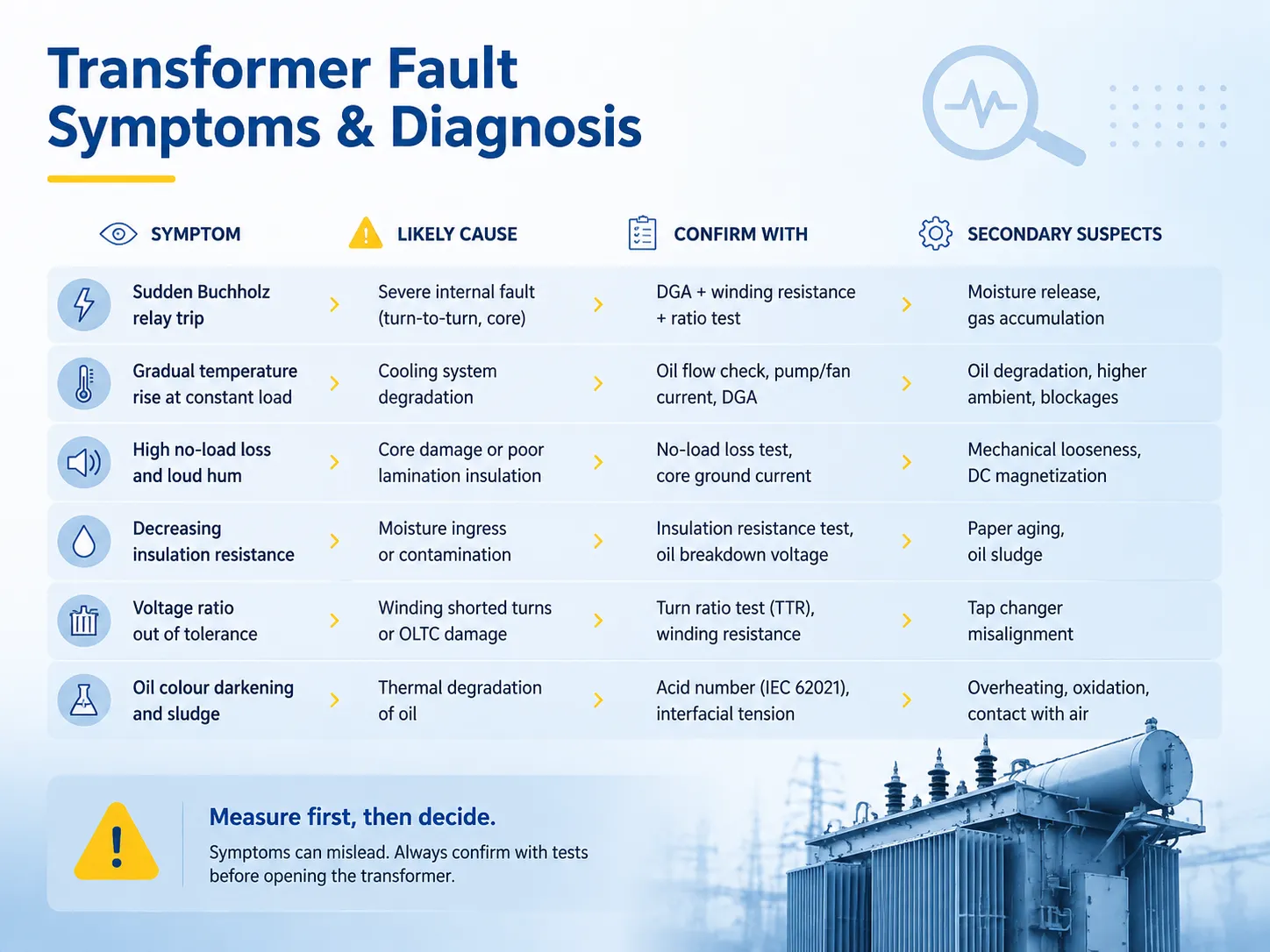
أعراض العطل مقابل الأسباب المحتملة
| العرض المرصود | العطل الأكثر احتمالاً | تأكيد مع | المشتبه بهم الثانويون |
|---|---|---|---|
| تعطل مفاجئ لمرحلة بوشولز | عطل داخلي شديد (من لفة إلى أخرى، نواة) | تحليل الغاز المذاب + مقاومة الملف + اختبار النسبة | إطلاق الرطوبة السريع، تراكم الغاز |
| ارتفاع درجة الحرارة التدريجي عند الحمل الثابت | تدهور نظام التبريد | فحص تدفق الزيت، تيار المضخة/المروحة، تحليل الغاز المذاب | تدهور الزيت، ارتفاع درجة الحرارة المحيطة، انسدادات |
| فقدان عالٍ في الحمل الخالي وضوضاء عالية | تلف النواة أو عزل رديء للرقائق | اختبار فقدان الحمل الخالي، تيار الأرض الأساسي | عدم التماسك الميكانيكي، المغنطة المستمرة |
| انخفاض مقاومة العزل | دخول الرطوبة أو التلوث | اختبار مقاومة العزل، جهد انهيار الزيت | شيخوخة الورق، طين الزيت |
| نسبة الجهد خارج الحدود المسموح بها | لفات قصيرة أو تلف في مفتاح التحويل | اختبار نسبة اللفات (TTR)، مقاومة اللف | عدم محاذاة مفتاح التحويل |
| تظلم لون الزيت وطين | تدهور حراري للزيت | رقم الحموضة (IEC 62021)، توتر السطح | ارتفاع درجة الحرارة، الأكسدة، الاتصال بالهواء |
هذه الجدول للأعراض متحفظ عمدًا: كل عرض يشير إلى مشتبه رئيسي، لكن الفنيين المهرة لن يقفزوا إلى استنتاجات حول أي شيء. على سبيل المثال، يمكن أن يحدث انقطاع في جهاز بوشولز بسهولة من أنبوب تبريد مكسور يدخل الهواء إلى الحاوية ولكن لا يتضمن أي فشل كهربائي على الإطلاق. وبالتالي، يجب أن تؤكد سلسلة التشخيص التالية دائمًا مع القياسات مسبقًا، قبل اتخاذ أي قرار بشأن فتح الحاوية.
الاختبارات التشخيصية الرئيسية والحدود المقبولة
| اختبار | المرجع القياسي | النطاق المقبول النموذجي | متى يجب التشغيل |
|---|---|---|---|
| تحليل الغاز المذاب (DGA) | IEC 60599 / IEEE C57.104 | إجمالي الغاز القابل للاحتراق < 720 ppm؛ نسب الغاز الرئيسية طبيعية | سنوي؛ فور حدوث أي انقطاع أو حدث غير طبيعي |
| مقاومة العزل (IR) / PI | IEEE 43 | مؤشر الاستقطاب ≥ 2.0 للورق الجاف؛ IR لكل تصنيف kV | سنوي؛ قبل تنشيط بعد الصيانة |
| مقاومة الملفات | IEC 60076-1 | عدم توازن الطور ≤ 2% بين الأطوار | بعد الانقطاعات، فحوصات OLTC، لفات مشبوهة |
| اختبار نسبة اللفات (TTR) | IEC 60076-1 | انحراف ≤ 0.5% من لوحة الاسم | سنوي؛ بعد إعادة الاتصال أو العمل على OLTC |
| جهد انهيار الزيت (BDV) | IEC 60156 | ≥ 40 kV للزيت الجديد؛ ≥ 30 kV مقبول في الخدمة | كل عينة زيت؛ قبل استعادة الزيت |
| الرطوبة في الزيت / الورق | IEC 60814 / كارل فيشر | < 2% رطوبة في الورق؛ < 10 ppm ماء في الزيت (نموذجي) | سنوي؛ بعد الاشتباه في دخول الرطوبة |
| قياس التفريغ الجزئي | IEC 60270 | مستوى PD أقل من قبول الشركة المصنعة (غالبًا < 100 pC عند HV) | اختبارات المصنع؛ بعد اضطراب عزل كبير |
| استجابة التردد (SFRA) | IEC 60076-18 | مؤشر انحراف منخفض عبر مسح التردد | بعد الأعطال الكاملة أو النقل؛ مقارنة خط الأساس |
هذه الحدود أرقام عمل، بدلاً من كونها حتمية، حيث يمكن أن يعمل المحول الذي يعمل دائمًا تحت مؤشرات رطوبة 5% بشكل صحيح — ومع ذلك، فإن الاتجاه أكثر أهمية من أي رقم منفصل. وبالتالي، تحتاج إلى الاحتفاظ بجميع نتائج الاختبار متاحة للمقارنة من سنة إلى أخرى، لأن زيادة 40% في محتوى الهيدروجين في حالتين أكثر أهمية بكثير من قيمة مطلقة طبيعية.
حيث تضرب الأعطال بشدة: التطبيقات والأصول الحرجة
تختلف الأولويات في استكشاف الأخطاء وإصلاحها عبر التطبيقات حيث تختلف تكاليف الفشل من تطبيق إلى آخر. في توليد الكهرباء ونقلها، قد يكلف محول واحد بتصنيف 110 kV/50 MVA ما يصل إلى $ 400,000 وحتى مليون دولار، وقد يستغرق استبداله ما يصل إلى موسم واحد. في بيئة صناعية، عادة ما يكون لدى نفس الجهاز بقدرة 10 MVA وحدة احتياطية في مكانها، وبالتالي سيكون الهدف هو تصنيف الفشل، ومعرفة ما إذا كان يمكن إصلاحه في الموقع أو يحتاج إلى خدمة خارج الموقع. بالنسبة لأجهزة الطاقة المتجددة، مثل مزارع الرياح، تتعرض المحولات لدورات الشارع وتواجه مشكلات مختلفة مرتبطة بأضرار OLTC، والانفجارات، وفشل العزل، التي لا تسببها حوادث فردية. ستركز أماكن مثل مراكز البيانات والمستشفيات على جعل قضايا التوافر هي الأولوية، ولهذا السبب سيلجأون إلى دفع أكثر بكثير من المعتاد لإجراء الإصلاحات.
أما بالنسبة للشبكات، ستختار الشركات العاملة فيها استراتيجية إدارة المخاطر وستتعامل مع الفشل عالي المخاطر كل 6-12 شهرًا وفشل منخفض المخاطر كل 2-3 سنوات. وبالتالي، قد يتلقى نفس المحول أو نفس العطل معالجة مختلفة تمامًا، اعتمادًا على سياق استخدام التكنولوجيا.
أدوات التشخيص، العلامات التجارية ونطاقات الأسعار
| أداة / خدمة | العلامات التجارية الممثلة | نطاق السعر النموذجي | ملاحظات |
|---|---|---|---|
| مجموعة أخذ عينات DGA واختبار المختبر (لكل عينة) | دوبل، SGS، مختبرات المرافق المحلية | $80–$250 لكل عينة | لوحة كروماتوغرافيا الغاز الكاملة |
| جهاز مراقبة DGA محمول (عبر الإنترنت) | كيلمان (GE)، سيرفرون، كواليتريل | $15,000–$45,000 | المراقبة المستمرة للغازات الرئيسية |
| جهاز اختبار مقاومة العزل (5–10 كيلوفولت) | ميجر، فلوك، دوبل | $1,500–$6,000 | لقياسات IR، PI، DAR |
| مقياس مقاومة اللف (ميكرو-أوم متر) | ميجر، فاندغارد، DV باور | $4,000–$12,000 | قياس مقاومة منخفضة حتى 0.1 ميكرو أوم |
| جهاز اختبار نسبة اللفات (TTR) | ميجر، فاندغارد، دوبل | $5,000–$15,000 | TTR ثلاثي الطور الكامل مع اختبار OLTC |
| مجموعة اختبار SFRA | دوبل، أوميكرون، ميجر | $20,000–$60,000 | تحليل تشوه اللف |
| خدمة تشخيص من طرف ثالث (بطارية موقع كاملة) | دوبل، إنترتك، مختبرات محلية معتمدة | $5,000–$25,000 لكل زيارة | اختبارات DGA + الكهربائية + الزيت على وحدة واحدة |
اعتمادًا على عوامل مثل الموقع، الشركة المصنعة والخصوصية، قد تختلف الأسعار، لذا قد يكون من الأفضل اعتبارها قيم تخطيط بدلاً من أسعار فعلية. على سبيل المثال، إحدى الأفكار الصالحة لتقدير ميزانية أسطول صناعي صغير هي شراء جهاز اختبار مقاومة العزل المتوسط وجهاز قياس مقاومة اللف أولاً، والذي يكلف من $6,000 إلى $18,000 معًا؛ يمكن بعد ذلك إرسال عينات DGA إلى مختبر، ولا يمكن إجراء الفحص من طرف ثالث لاختبار SFRA وPD إلا عند ظهور أي خلل. هناك العديد من اللاعبين العالميين في السوق مثل دوبل، أوميكرون، ميجر، فلوك وكواليتريل، لذا من الممكن التأكد من أنهم يمكن أن يكونوا معيارًا. ومع ذلك، يجب ملاحظة أن شركة جيانغسو سوبين للطاقة الكهربائية وغيرها من الشركات الصينية قد بدأت بالفعل في إنتاج المحولات التي تقيمها هذه الأجهزة التشخيصية، مما يقدم محولات التوزيع والطاقة المتعلقة بـ IEC 60076 من 10 كيلوفولت أمبير إلى 100 ميغا فولت أمبير إلى السوق بأسعار معقولة وأوقات تسليم. لمقارنة منهجية التشخيص المستخدمة من قبل شركات مختلفة، من الضروري القول إن الشركة التي تنتج المحولات يمكن أن تقدم أيضًا لعملائها تفسير نتائج الاختبار.
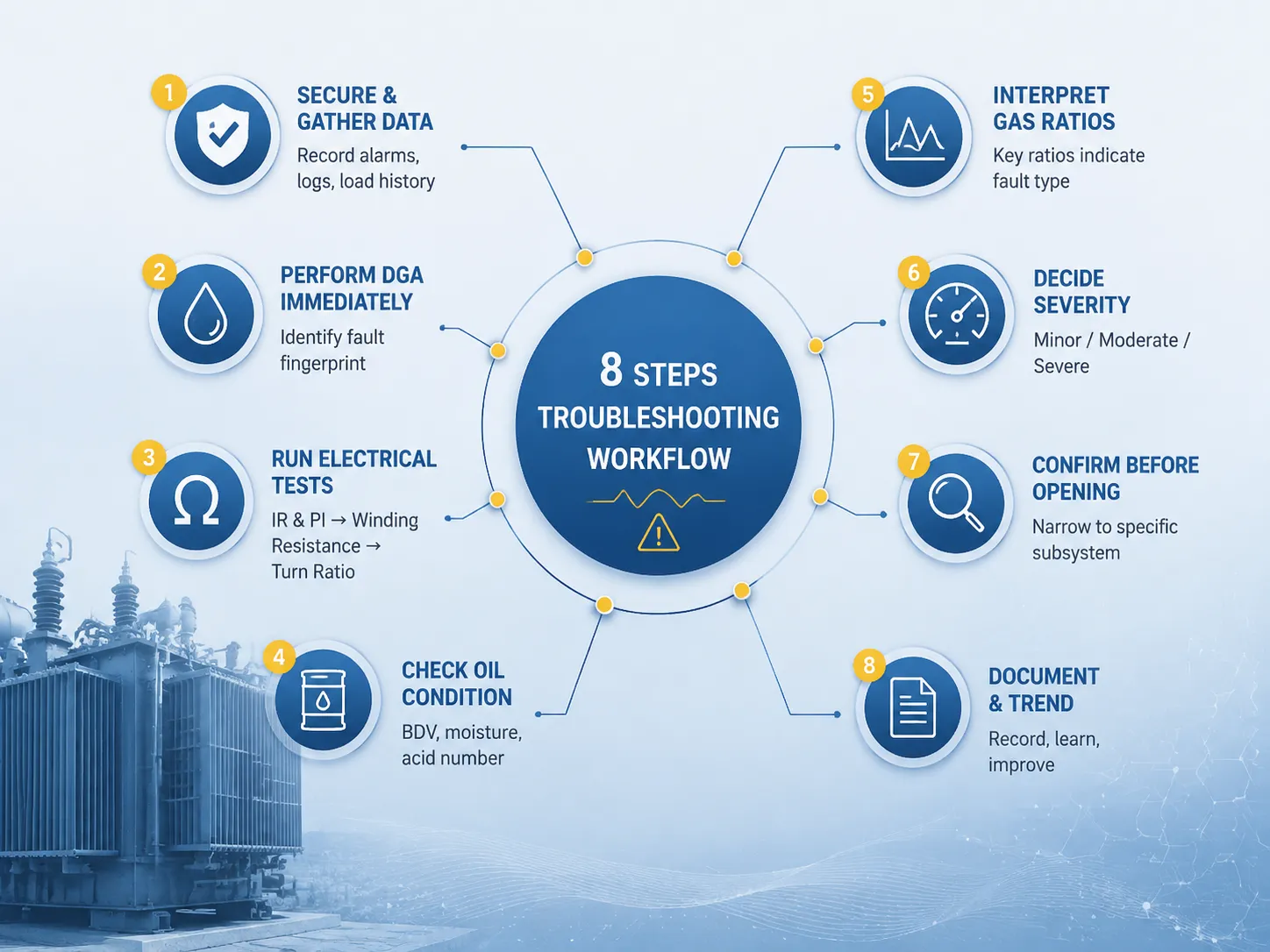
بناء سير عمل استكشاف الأخطاء: 8 خطوات
يجب أن تلتزم أي نشاط جاد لاستكشاف الأخطاء بنفس التسلسل المنظم، حيث أن هذه هي الطريقة التي يقع بها الفنيون المتمرسون في المشاكل.
- تحديد الموقع والحصول على البيانات؛ التحقق من الرحلة أو الإنذار، عزل المحول، وتدوين أي أهداف للمرحلات، سجلات SCADA، تاريخ الحمل، ودرجة الحرارة المحيطة لليومين الماضيين، قبل القيام بأي إعادة ضبط للحماية.
- إجراء اختبار DGA على الفور؛ إذا كان الزيت متاحًا، خذ عينة لاختبار الغاز المذاب؛ يشير بصمة الغاز (IEC 60599) عادةً إلى ارتفاع درجة الحرارة، PD أو القوس، قبل إجراء أي اختبار كهربائي.
- إجراء الفحوصات الكهربائية بترتيب محدد: مقاومة العزل ومؤشرات الاستقطاب أولاً (بسيطة وسريعة)؛ تليها مقاومة اللف، ثم نسبة اللفات؛ قارن جميع القراءات مع القيم الأساسية أو قيم لوحة الاسم.
- تقييم حالة الزيت؛ ستخبرك جهد الانهيار، الرطوبة، الحموضة، وقوة العزل إذا كان الزيت نفسه هو الجاني أو الضحية.
- تحليل الغازات بناءً على النسب الرئيسية؛ الهيدروجين يشير إلى PD، الإيثيلين والميثان تشير إلى الفشل الحراري، والأسيتيلين بزيادة عن 5 جزء في المليون يشير إلى القوس الكهربائي أو ارتفاع درجة الحرارة.
- اتخاذ قرار بشأن ما إذا كانت المشكلة بسيطة، معتدلة أو شديدة؛ بالإشارة إلى حالة IEEE C57.104 أو IEC 60599.
- تحقق أولاً قبل الفتح؛ قم فقط بفتح الخزان بعد تحديد مكان العطل من خلال فحص مادي - الدخول إلى الخزان يكلف من $5,000 إلى $20,000.
- تأكد من توثيق كل شيء؛ في كل ملف تاريخ الأصول سجل كل نتيجة، كل قرار تم اتخاذه بالإضافة إلى كل إجراء تم اتخاذه مع الإصلاحات.
ممارسات الصيانة الوقائية والتنبؤية
أفضل صيانة هي تلك التي لا تحتاج إلى القيام بها. هناك أربع طبقات تجعل صيانة المحولات فعالة. الطبقة الأولى هي الفحص الروتيني للمحول والذي يتضمن الفحص البصري، قراءة مؤشر التسخين، مستوى الزيت، فحص التسرب ومراقبة الوظائف السمعية على أساس شهري أو ربع سنوي. الطبقة الثانية هي الاختبارات الدورية التي تشمل DGA السنوي، اختبار مقاومة العزل، اختبار مقاومة اللفائف واختبار جهد انهيار الزيت (BDV) والتي يجب أن تتم مرتين في السنة للمحولات التي تزيد عن 20 عامًا أو التي تعرضت للتحميل الزائد. الطبقة الثالثة هي المراقبة التنبؤية التي تشمل تركيب جهاز مراقبة DGA، تركيب مستشعر درجة حرارة اللفائف وبعض تركيب مستشعرات الرطوبة للمحولات باهظة الثمن التي يمكن أن تكلف حوالي $15000-$50000 ولكن الأموال تُسترد بسرعة. الطبقة الأخيرة هي صيانة الزيت التي تسمح بالحفاظ على جهد الانهيار (BDV) فوق 30 كيلوفولت ورقم الحموضة أقل مما يزيد من وقت خدمة الزيت.
من المهم أيضًا ذكر قاعدتين للصيانة يجب حفظهما واتباعهما. الأولى هي أنه يجب أخذ الملاحظات حيث أن اتجاهات التطور تهم أكثر من العتبات عند اتخاذ القرارات. الثانية هي أنه يجب إجراء DGA المستهدف للمحولات التي حدثت بها حدث طارئ حتى لو كان المحول يعمل حيث قد يكون هناك بعض الأضرار التي لا تحددها علامة الإنذار.
| نشاط الصيانة | التردد النموذجي | الفحوصات الرئيسية | التكلفة النموذجية لكل زيارة |
|---|---|---|---|
| الفحص البصري الروتيني | شهري / ربع سنوي | تسرب الزيت، مستوى الزيت، مقاييس الحرارة، الصوت، لون المجفف | $100–$300 (داخلي) |
| تحليل الغاز السنوي + أخذ عينات الزيت | سنويًا (كل 6 أشهر للوحدات القديمة) | نسب الغاز الرئيسية، BDV، الرطوبة، رقم الحمض | $80–$250 لكل عينة |
| اختبار البطارية الكهربائية السنوي | سنويًا | IR/PI، مقاومة اللف، نسبة التحويل، خسارة عدم التحميل/التحميل إذا لزم الأمر | $1,000–$4,000 داخليًا |
| خدمة نظام التبريد | كل 6–12 شهرًا | تشغيل المروحة/المضخة، تنظيف المشعاع، زعانف مسدودة | $500–$2,000 |
| خدمة جهاز التنفس/المجفف | كل 6 أشهر | حالة هلام السيليكا، مستوى ختم الزيت | $100–$500 |
| فحص OLTC (حجرة مملوءة بالزيت) | كل 2–5 سنوات أو حسب عدد تغييرات التوصيل | تآكل الاتصال، كربنة الزيت، توقيت الآلية | $1,500–$5,000 |
الأسئلة المتكررة
كم مرة يجب أن أجرى تحليل الغاز على محول الطاقة؟
بالنسبة لمحول صحي، يجب استخدام تحليل الغاز على الأقل مرة واحدة في السنة، كما هو مذكور في IEEE C57.104. ومع ذلك، يجب تغيير هذه التكرارية إلى كل 6 أشهر في حالة الوحدات التي تزيد عن 20 عامًا، أو الوحدات التي تم تحميلها بشكل زائد، أو الوحدات التي تحتوي بالفعل على غازات بمستويات معتدلة. في حالة الأصول القيمة جدًا، يجب النظر في تركيب نظام مراقبة تحليل الغاز الذي يأخذ عينات من الغازات بشكل مستمر (تكلفة هذا الجهاز تتراوح بين 15,000-$45,000). من المحتمل جدًا أن تسدد هذه النوعية من التركيب إذا تم اكتشاف عطل واحد على الأقل في الوقت المناسب.
ماذا يدل الأسيتيلين في تحليل الغاز، وكم هو كثير جدًا؟
يتم إنتاج الأسيتيلين (C₂H₂) فقط تحت ظروف قاسية مرتبطة بالشرر ودرجات حرارة عالية جدًا (أعلى من 700 °م). تنص IEEE C57.104 على أن محتوى الأسيتيلين في السائل يجب ألا يتجاوز مستوى 5 جزء في المليون، وإلا يجب اعتباره حالة معتدلة إلى عالية ويجب التحقيق فيها. قد تؤدي القياسات التي تتجاوز الحد البالغ 20 جزء في المليون إلى إيقاف المحول لإجراء اختبارات كهربائية إضافية نظرًا لأن الأضرار الجسيمة مثل انفجار الخزان قد تحدث بعد أي نوع من أعطال الشرر التي تتطور لبضعة أيام.
هل يمكنني استكشاف عطل في المحول دون فتح الخزان؟
نعم. عادةً، يمكن أن تحدد تحليل الغاز، قياس مقاومة العزل، قياس مقاومة اللف، قياسات نسبة التحويل، واختبارات الزيت موقع المشكلة في الوحدة بشكل صحيح دون دخول الخزان. تكلف عملية فتح المحول للتفتيش الداخلي بين $5,000-20,000. لذلك، من الضروري إجراء جميع اختبارات الوصول قبل فحص الخزان.
ما الفرق بين مؤشر الاستقطاب 1.5 و3.0؟
يظهر مؤشر الاستقطاب (PI) العلاقة بين قراءات مقاومة العزل التي تم أخذها بعد 10 دقائق و1 دقيقة من تطبيق الجهد الأولي. تشير القيمة الأقل من 1.5 إلى أن العزل رطب أو متسخ ويتطلب مزيدًا من التجفيف. نطاق PI من 1.5-2.0 هو هامشي، بينما نطاق 2.0-3.0 مقبول. أي قيمة فوق 3.0 تشير إلى أن العزل جاف ونظيف.
كم تكلف عادةً تحقيقات أعطال محولات الطاقة؟
إذا تم إجراء تحقيق تشخيصي من طرف ثالث، فإن تحليل الغاز المذاب بالإضافة إلى الاختبارات الكهربائية وتحليل الزيت وتحليل SFRA سيكلف بين 5,000-25,000 لكل محول، اعتمادًا على تصنيفه الكهربائي، وسهولة الوصول إلى الموقع، ونطاق العمل. من الأرخص إجراء الاختبارات باستخدام الأجهزة الخاصة بك، حيث أن الاستثمار الوحيد في هذه الحالة سيكون الخبرة وليس المال.
المراجع
- IEC 60076-1: المحولات الكهربائية – الجزء 1: عام — المعيار الدولي الأساسي لتصنيف المحولات الكهربائية، والاختبار، والأداء.
- IEC 60599: المعدات الكهربائية المملوءة بالزيت المعدني في الخدمة – تفسير تحليل الغازات المذابة والغازات الحرة — المرجع لتفسير نسب غازات DGA وأنواع الأعطال.
- IEEE C57.104: دليل لتفسير الغازات الناتجة في المحولات المغمورة بالزيت — الإطار القياسي لفئات الحالة المستخدمة في تفسير الغاز.
- IEEE 43: الممارسة الموصى بها لاختبار مقاومة العزل للآلات الدوارة — يُستشهد به على نطاق واسع لحدود مقاومة العزل ومؤشر الاستقطاب.
- سيجرé — مجلس دولي توفر استطلاعات موثوقية البيانات الإحصائية لتوزيع أعطال المحولات.
- Electrical4U – تحليل الغاز المذاب لزيت المحولات — مرجع عملي تمهيدي حول تفسير DGA.
- Jiangsu Subian Electric Power – مصنع محولات كهربائية — مصنع محولات متوافق مع IEC 60076 يقدم بيانات التصميم والدعم لتحقيق الأعطال.
الخاتمة
ليس فقط الحظ أو عمر المحترف، ولكن التسلسل الصحيح من الإجراءات سيساعد في القضاء على الأعطال في المحولات الكهربائية. ابدأ بعملية DGA تليها اختبارات مقاومة العزل واللف، وجمع النتائج مقابل المعايير المعمول بها من أجل اتخاذ قرارات حكيمة بشأن إجراءاتك المستقبلية بشأن المشكلة. في الواقع، يمكن إصلاح العديد من الأعطال في المرحلة المبكرة، مما يوفر الكثير من الوقت والمال على المدى الطويل.
- قم بإجراء DGA بانتظام؛ على الأقل مرة واحدة في السنة؛ إذا كانت الوحدة قديمة أو متوترة، على الأقل كل ستة أشهر.
- تأكد من الاحتفاظ بسجل لنتائج الاختبارات حيث أن ديناميات العملية هي المؤشر الأكثر أهمية بدلاً من الرقم المطلق.
- لا تبدأ في فحص المحول حتى تعرف جيدًا ما هو سبب المشكلة.
- خصص من $1500 إلى $6000 لاختبار محول واحد حيث أن حادثًا واحدًا تم تجنبه سيغطي هذه المبلغ لفترة من الزمن.
- تعاون مع مصنع يمكنه مساعدتك بالبيانات التي تحصل عليها بشأن القضايا؛ على سبيل المثال، Jiangsu Subian Electric Power التي تنتج محولات تتبع معايير IEC 60076.