


خلال اجتماع نوبة الصباح، يدخل مهندس صيانة في مصنع معالجة غذاء متوسط الحجم مع سجل الأعطال: حدثت ثلاث توقفات غير مخطط لها في الأشهر الأربعة الماضية، وكان هناك تلفان في لفائف المحرك على خط التعبئة، وتقرير حادث وميض القوس من غرفة الضاغط الذي كاد أن يؤذي فنيًا. يحتوي المصنع على نظام جهد متوسط من نوع دلتا وغير مؤرض، وحتى الآن لم يثير نظامه أي شكوك لدى أي شخص. هذه هي الحالة الكلاسيكية حيث المحول المؤرض يتوقف عن كونه ملحقًا اختياريًا ويصبح الفرق بين عطل مزعج وحدث خطير يوقف الإنتاج.
في هذه المقالة، يتم تقديم تعريف ومبادئ عمل المحول المؤرض؛ ما الذي يجعل الأنظمة غير المؤرضة أو الزاوية دلتا تسرع من تخريب المعدات؛ وكيف يمكن إصلاح الأضرار. كما أنها تأخذ في الاعتبار طرق الزجزاج وواي-دلتا بالإضافة إلى مقارنتها بأشكال أخرى من طرق التأريض. تسرد معايير التأريض للشراء. إذا كان لديك خدمة اتصال دلتا، ادفع ثمنها، وتعاني من فشل أحادي الطور، اقرأ هذه المقالة قبل أن توقع أي أوراق.
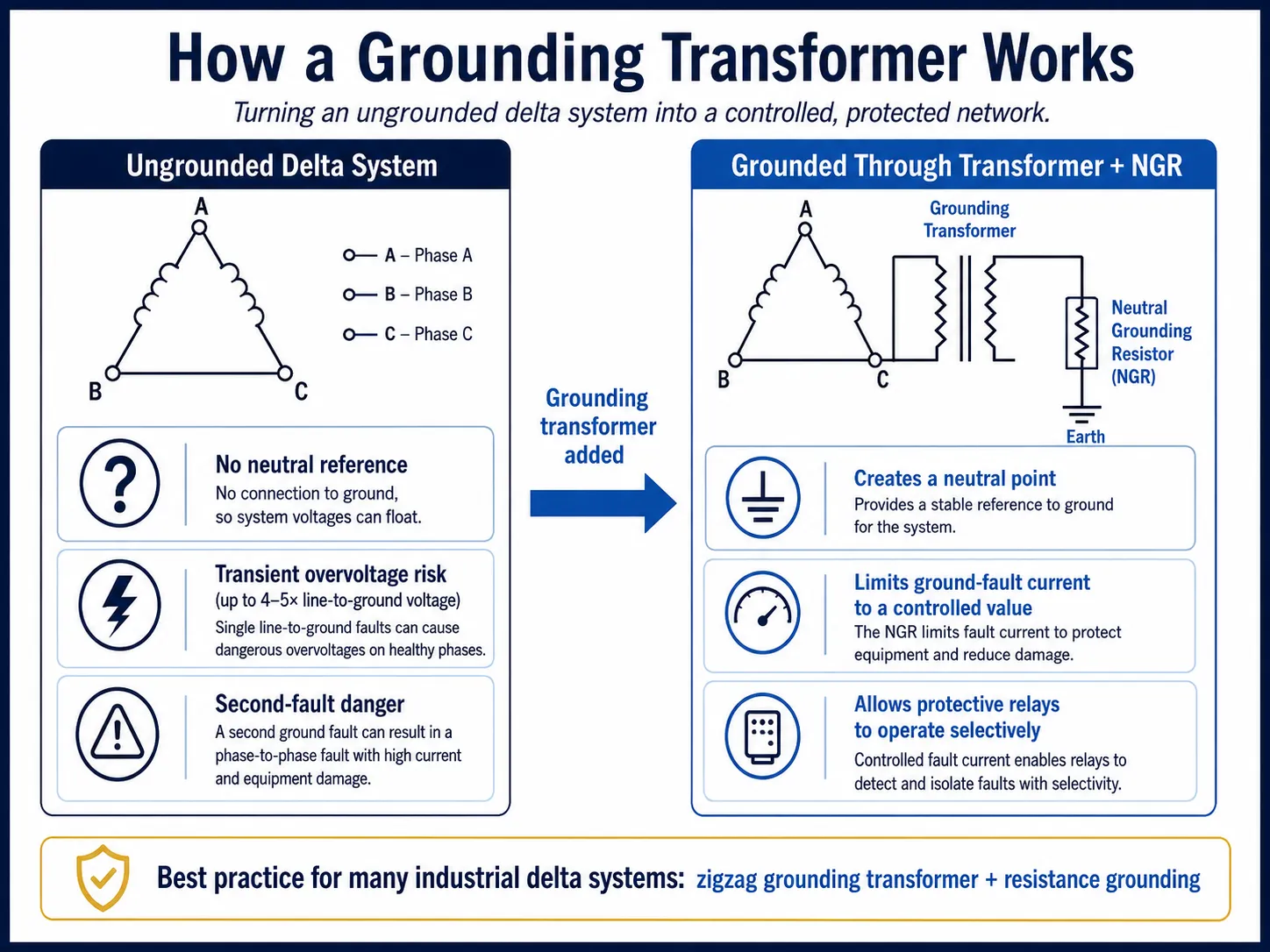
إجابة سريعة: A المحول المؤرض هو محول ثلاثي الطور يستخدم لإنشاء نقطة محايدة في نظام غير مؤرض، بحيث يمكن تأريض النظام بشكل فعال. التصميمان القياسيان هما المحول الزجزاج (ZN) والمحول المؤرض من نوع واي-دلتا. تتراوح التصنيفات النموذجية من 100 kVA في تطبيق صناعي صغير إلى أكثر من 2,000 kVA لمحطات الطاقة الكبيرة؛ تعتبر هذه التصنيفات تصنيفات مستمرة للتطبيقات المحايدة، بالإضافة إلى تصنيفات قصيرة المدى (10 ثوانٍ، 30 ثانية، 1 دقيقة) لدائرة العطل. تتراوح تكلفة وحدة 100-300 kVA بين $2,000 و$6,000، بينما تتراوح تكلفة وحدة 500-1,000 kVA بين $6,000 و$15,000، وتكلفة تركيب كبير بقدرة 1,500-3,000 kVA تصل إلى $15,000-$40,000، حيث تختلف الأسعار وفقًا لفئة الجهد، والمقاومة، والعلامة التجارية. يسمح التأريض بشكل صحيح بالتحكم في تيارات العطل من الخط إلى الأرض المحدودة، مما يضمن أن تعمل بعض عناصر المرحل بشكل انتقائي بينما تحمي النظام من ارتفاعات الجهد التي تصل إلى 4-5 مرات من جهد الطور العادي في حالة الإعداد غير المؤرض.
ما هو المحول المؤرض؟
المحول المؤرض هو نوع من المحولات ثلاثية الطور المصممة خصيصًا لإنشاء نقطة محايدة في نظام الطاقة الذي لن يكون لديه واحدة بخلاف ذلك. في الأنظمة التي تكون فيها لفائف المحولات متصلة بتكوين دلتا أو لفائف متصلة دلتا في المولد، لا يمكن أن تكون هناك نقطة محايدة للتأريض. يوفر المحول المؤرض الأرض المحايدة الأساسية بحيث يمكن توصيله بالأرض عبر مقاومة التأريض مثل المقاوم منخفض المقاومة المعروف بمقاوم التأريض المحايد (NGR)، أو المفاعلات، إلخ، أو عبر نوع التأريض المباشر في حالة الأنظمة المؤرضة بشكل صلب.
من المهم جدًا فهم قيود المحول الأرضي. إنه لا يُدخل تيارات الحمل العادية في التشغيل. خلال التشغيل العادي، تكون التيارات في الملفات تقريبًا صفر. إنه يخدم فقط غرض حمل تيار الصفر غير المتوازن الناتج عن عطل خط إلى الأرض وتأسيس الجهد المحايد للنظام. هذه هي السبب في أن المحول الأرضي مصنف للتشغيل المستمر (إما من خلال التصنيف الحراري - kVA) وتصنيف العطل لفترة قصيرة (10 ثوانٍ أو 30 ثانية عند بعض التيارات المصنفة).
لماذا قد تعمل منشأتك بدون تأريض
في العديد من البيئات الصناعية، يتم استخدام نظام دلتا بدون تأريض بسبب انخفاض تكلفة التركيب وقدرته على تحمل الأعطال أحادية الطور. ومع ذلك، فإن هذا مضلل، حيث أنه بسبب غياب مسار العودة بعد عطل خط إلى الأرض أحادي في نظام دلتا غير مؤرض، لا يتوقف النظام، بل يستمر في العمل مع ارتفاع الجهدين الآخرين من المستوى العادي إلى مستوى الخط إلى الخط. إذا حدث عطل آخر في طور مختلف قبل إزالة العطل الأول، يحدث عطل مزدوج خط إلى الأرض مما يؤدي إلى دائرة قصر بين الطور والطور مع تيارات العطل التي تصل إلى 10-25 كا من الحجم المعتاد لأنظمة الطاقة متوسطة الجهد.
التأثير غير المباشر الأكثر حدة من هذا النوع من الأنظمة هو بسبب التغيرات المفاجئة. في الواقع، نظرًا لوجود أعطال أرضية متكررة في الأنظمة غير المؤرضة يمكن أن تسبب مستويات جهد تتجاوز جهد الخط إلى الأرض العادي بمقدار 4-5 مرات، يتم كسر فعالية عزل الكابلات، وتعاني ملفات المحولات من ضغط شديد ويتضرر عزل المحركات قبل سنوات من الجدول الزمني. يدفع مهندسو أنظمة الطاقة وشركات التأمين مختلف المستخدمين نحو التأريض الفعال جزئيًا بسبب فهمهم لهذه الأعطال.
كيف يعمل المحول الأرضي
تكون المحولات الأرضية قابلة للتطبيق عندما تكون التيارات التي تعمل تحت ظروف ثلاثية الطور متوازنة مجموعها صفر، وبالتالي تستهلك فقط الحد الأدنى من تيار المغنطة في المحول. يتم الكشف عن وظيفة خاصة للمحول عندما تحدث الأعطال. يحتاج تيار الصفر إلى العودة إلى الأرض في كل مرة يتعرض فيها أحد الأطوار لأعطال مثل عطل خط إلى الأرض. المحول الأرضي قادر على توفير مسار تدفق العودة.
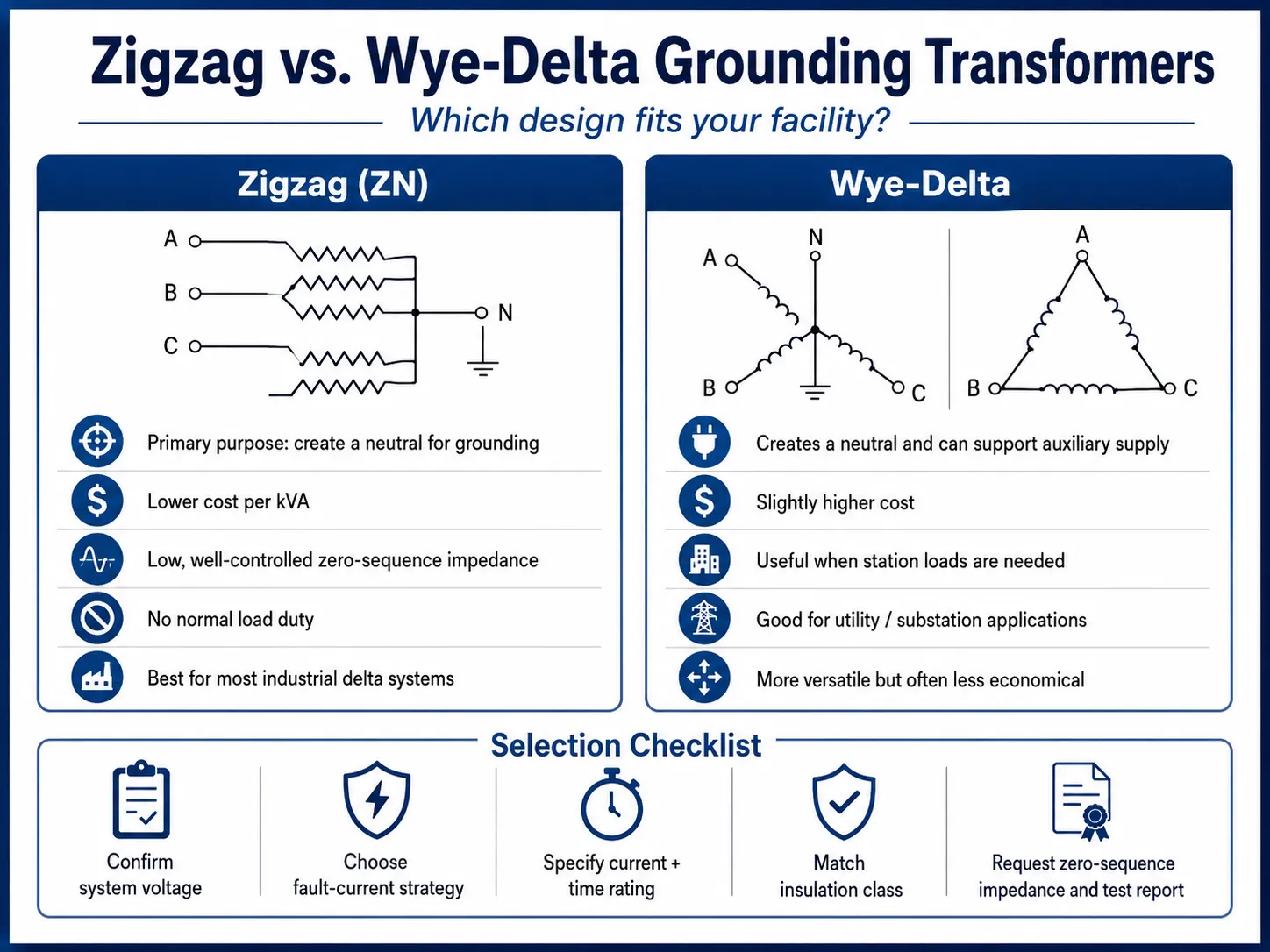
بالنسبة للمحولات المتعرجة، تتكون من ملفين متساويين مطبقين على كل ساق بطريقة معاكسة. هذا يعني أن النصفين يلغي كل منهما الآخر مما يؤدي إلى تدفقات صفرية بين الطور والطور وارتباط صفري. على الرغم من أن المحول غير نشط تحت الأحمال المتوازنة، فإن وجود تيارات الصفر يخلق قوة مغناطيسية صافية، مما يجعل المحول يعمل كمسار منخفض جدًا.
المحولات المتعرجة مقابل المحولات الأرضية من نوع واي-دلتا
| الخصائص | المحول الأرضي المتعرج (ZN) | المحول الأرضي من نوع واي-دلتا |
|---|---|---|
| ترتيب الملفات | ستة ملفات متساوية، اثنان لكل ساق، نصفين متعاكسين | ثلاثة ملفات متصلة بنمط واي بالإضافة إلى دلتا مغلقة ثانوية |
| الغرض الأساسي | إنشاء نقطة محايدة للتأريض | إنشاء نقطة محايدة وتزويد الحمل الإضافي بشكل اختياري |
| مقاومة الصفر التسلسلية | منخفضة ومتحكم بها جيدًا (5-10% نموذجية) | يمكن تعديلها عبر الثلاثي؛ أعلى قليلاً |
| واجب الحمل العادي | واجب عدم الحمل فقط | يمكن أن تحمل حملًا إضافيًا صغيرًا عبر الدلتا أو الواي |
| التكلفة | أقل لكل كيلو فولت أمبير | أعلى قليلاً |
| التطبيق النموذجي | أنظمة دلتا الصناعية، محايدات المولدات | محطات المرافق التي تحتاج إلى إمداد إضافي |
يجب أن تستخدم معظم المنشآت هذا النمط المتعرج. ستكون التكلفة الإضافية لمعدات الواي-دلتا مبررة فقط عندما تكون هناك حاجة لإمداد أحادي الطور مستقر للأحمال الإضافية في المحطة، مثل الإضاءة، وشواحن البطاريات، والأجهزة الصغيرة.
مقارنة طرق التأريض
| الطريقة | تيار خطأ التأريض | حماية من زيادة الجهد | انتقائية المرحل | التكلفة النسبية |
|---|---|---|---|---|
| غير مؤرضة (لا مرجع أرضي) | فقط سعة، ولكن خطر العطل المزدوج | ضعيفة؛ تقلبات تصل إلى 4-5× جهد الطور | ضعيفة | الأدنى |
| تأريض صلب (واي) | الأعلى (يمكن أن يتجاوز 10 كيلو أمبير) | ممتاز | جيد ولكن طاقة عالية | منخفض |
| تأريض المقاومة عبر NGR | متحكم، على سبيل المثال، 100-400 A | جيد، خالي من الترانزيت | ممتاز للكشف | معتدل |
| تأريض التفاعلية | معتدل، مصمم هندسياً | جيد | جيد | معتدل |
| محول التأريض (زجزاج) | يمكّن أي مما سبق على أنظمة دلتا | يستعيد التثبيت الصحيح | يمكّن الترحيل الانتقائي | $2,000-$40,000 |
النقطة المهمة هنا هي أنه ليس محول التأريض الذي يحدد قيمة تيار العطل ولكن بدلاً من ذلك مقاومة تأريض المحايد أو المفاعل الذي يربط الطرف المحايد بالأرض. تستخدم العديد من المنشآت الصناعية تأريض المقاومة من خلال محولات زجزاج بحد أقصى 200 A والتي تعتبر الحل المثالي حيث أن تيار العطل كافٍ لضمان الكشف عن العطل وإزالته بشكل موثوق وفي نفس الوقت ليس مرتفعًا بما يكفي لخلق المشاكل المرتبطة بالطاقة العالية للشرر الكهربائي.
المواصفات والتصنيفات الرئيسية
| المعامل | القيمة النموذجية | ملاحظات |
|---|---|---|
| تصنيف مستمر | 100-3,000 كيلو فولت أمبير | محدد بواسطة الحمل غير المتوازن وواجب النظام |
| تصنيف تيار العطل | 400-1,200 A لمدة 10 ثوانٍ / 30 ثانية | يجب أن يتطابق مع زمن إزالة الترحيل |
| فئة الجهد | 480 V إلى 35 kV | تطابق جهد النظام من خط إلى خط |
| مقاومة الصفر التسلسلية | 5-10% نموذجية على أساس 10 ثوانٍ | يتحكم في كيفية إنشاء المحايد |
| فئة العزل | فئة B / F / H (جاف)، مغمور بالزيت وفقًا لـ IEC | نفس المنطق كما في محول الطاقة |
| المعايير | IEC 60076-1، IEEE C57.12.00، IEEE C57.32 | بالإضافة إلى IEEE 142 (ممارسات التأريض) |
كن دقيقًا في تحديد دورة العمل أثناء كتابة المواصفات. محول زجزاج مصنف لمدة 10 ثوانٍ عند تيار 1,000 A يختلف تمامًا عن واحد مصنف لمدة دقيقة عند نفس التيار، ويقوم المصنعون بتسعيرها بشكل مختلف. يجب أن يتوافق تصنيف زمن العطل مع الحد الأقصى لزمن الإزالة لنظام الحماية بحيث لا يُطلب من المحول أبدًا حمل تيار العطل بما يتجاوز سعته المصنفة.
حيث يتم تركيب محولات التأريض
- مصانع التصنيع التي تتميز بأنظمة مرتبطة بالدلتا: إنتاج الغذاء، المواد الكيميائية، مصانع الأسمنت، والتعدين حيث يكون لف المحول الرائد دلتا ولا يوجد سلك محايد.
تأريض المحايد للمولدات: مولدات الديزل والغاز الطبيعي التي تكون لفاتها متصلة بالدلتا لجعل من الممكن إجراء تأريض المقاومة والكشف عن عطل الأرض بنجاح.
المنشآت البحرية والبحرية: الأماكن التي تم استخدام النظام غير المؤرض تقليديًا ولكن الممارسات الحديثة تتطلب وجود مرجع.
محطات محولات المرافق: توفير نقطة محايدة لموزعات ثلاثية الأسلاك وتوفير الحمل المساعد للمحطة (اتصال واي-دلتا).
المباني ذات 480 V دلتا: الكهرباء التي تحمل أحمالًا تساوي 277 V والتي لا يمكن تحقيقها من خلال الناتج الثانوي للدلتا.
مرافق الطاقة المتجددة: مزارع تستخدم محولات مع محولات دلتا حيث يوفر محول الأرض حماية من عطل الأرض. إذا كان الاتصال على لوحة المحول لديك إما Dd0 أو Dyn11 ولا يوجد محايد متاح وأحمالك تشمل بعض المعدات أحادية الطور، فقد تكون مرشحًا مناسبًا لمحول الأرض حتى قبل أن تزداد حالة سجل العطل سوءًا.هنا أحجام المحولات الأرضية وفقًا لتكوين أنظمة المعايير (في حالة وجود نقطة محايدة مؤرضة بالمقاومة ومدة العطل 10 ثوانٍ):
| جهد النظام | حجم الخدمة | تصنيف الزجزاج النموذجي (مستمر) | تصنيف العطل النموذجي | السعر الإرشادي |
|---|---|---|---|---|
| 480 فولت دلتا | 500-1,500 كيلوفولت أمبير | 100-150 كيلوفولت أمبير | 400 أمبير / 10 ثوانٍ | $1,500-$3,500 |
| 3 كف / 6.6 كف | 1-5 ميغا فولت أمبير | 150-300 كيلوفولت أمبير | 400-600 أمبير / 10 ثوانٍ | $2,500-$6,000 |
| 11 كيلو فولت | 2-10 ميغا فولت أمبير | 250-500 كيلو فولت أمبير | 600-800 A / 10 ث | $4,000-$10,000 |
| 22 كيلو فولت / 33 كيلو فولت | 10-30 ميغا فولت أمبير | 500-1,000 كيلوفولت أمبير | 800-1,200 A / 10 ث | $8,000-$20,000 |
مقارنة العلامات التجارية والأسعار
| العلامة التجارية | الأصل | التخصص | نطاق السعر التقريبي |
|---|---|---|---|
| ABB | سويسرا/السويد | حزم محولات التأريض الكاملة و NGR | $5,000-$30,000+ |
| سيمنز | ألمانيا | محولات التوزيع والتأريض للمرافق | $6,000-$35,000+ |
| هيتاشي للطاقة | سويسرا | وحدات تأريض كبيرة لمحطات التحويل | $8,000-$40,000+ |
| شنايدر إلكتريك | فرنسا | محولات Zigzag للأنظمة الصناعية LV/MV | $4,000-$20,000 |
| GE / إيتون | الولايات المتحدة الأمريكية | محولات التأريض LV لخدمات 480 V | $2,500-$15,000 |
| شركة جيانغسو سوبين للطاقة الكهربائية | الصين | محولات Zigzag ومحولات التأريض wye-delta، تم اختبارها وفقًا لمعيار IEC 60076 | $1,800-$12,000 |
الموردون الدوليون مثل ABB وSiemens وHitachi Energy وSchneider Electric يصنعون محولات تأريض عالية الجودة، ويحددون المعايير في الجودة والتوثيق. ومع ذلك، تعكس أسعارهم تكاليف التصنيع العالية وأوقات التسليم الطويلة لمحولات zigzag المخصصة. تقدم Jiangsu Subian Electric Power محولات zigzag وwye-delta التي تتوافق مع معايير IEC 60076-1 وتُقدم مع جميع تقارير الاختبار الروتينية مثل مقاومة التسلسل الصفري، وزيادة درجة الحرارة، وأداء وقت العطل. تقدم Subian المحولات في جميع أنحاء العالم، وتوفر فئات جهد مخصصة تتراوح من 400 V إلى 35 kV، وعادة ما تكون أسعارها حوالي 40-60% من أسعار المنتجات الأوروبية المماثلة. بالنسبة لأي معدات تأريض، من الأفضل شراء محول رخيص من مصنع مستعد لتقديم بيانات الاختبار بدلاً من تخطي هذا النوع من المحولات تمامًا.
كيفية اختيار المحول المناسب للتأريض
تحقق مما إذا كان النظام غير مؤرض حقًا. تأكد من مجموعة الاتصال الخاصة بالمحول المستخدم (Dyn11، Dd0). تأكد من عدم توفر محايد.
بعد تأكيد النظام غير المؤرض، حدد نوع التأريض الذي سيتم تنفيذه والتيار المتوقع للعطل (100-400 A لنظام صناعي مؤرض بالمقاومة).
احسب تصنيف kVA للوحدة مع الأخذ في الاعتبار أسوأ حالة تحميل غير متوازن والتيار المحايد أثناء الأعطال. عادة ما يكون التصنيف القياسي 100-500 kVA.
حدد تصنيف العطل، والذي يجب أن يتضمن قيم التيار والوقت (600 A لمدة 10 ثوانٍ) وتأكد من أنه يتوافق مع أقصى أوقات فصل العاكس.
تأكد من تلبية فئة الجهد ومتطلبات العزل بالكامل. يجب اختبار المحول لنظام 11 kV عند أقصى تصنيفات BIL.
اختر خيار zigzag ما لم يكن هناك حاجة للطاقة المساعدة. في هذه الحالة، يجب استخدام wye-delta.
اطلب تقرير الاختبار. يجب إجراء اختبارات تؤكد التصميم بناءً على مقاومة التسلسل الصفري واختبارات زيادة درجة الحرارة وفقًا لمعايير IEEE C57.12.90 وIEC 60076.
ملاحظات التركيب والحماية
في التشغيل العادي، يحتاج المحول إلى الحماية من الحمل الزائد لأنه لا يمرر الكثير من التيار. عادة ما يتم تثبيت الفيوزات وقواطع الدائرة على الجانب الأولي وتكون مصنفة لعدم التشغيل تحت ظروف متوازنة وعادية، ولكن بدلاً من ذلك لقطع التيار في حالة حدوث عطل داخلي أو حمل زائد مطول. علاوة على ذلك، يجب توصيل المحايد بالأرض عبر مقاومة التأريض (سواء كانت مقاومة أو مفاعل)، ويجب أن يتكون هذا الاتصال، وفقًا لتيار العطل، إما من قضيب توزيع أو كابل سميك.
مراقبة درجة الحرارة أمر مهم. على عكس حالة المحول العادي، بسبب طبيعة تيارات الصفر، سيتم تسخين القلب والملف بشكل مختلف. تضيف العديد من الأنظمة مؤشر درجة حرارة مع جهات اتصال إنذار وتحدد فترة الصيانة المطلوبة بحيث يمكن اختبار الاتصالات بالأشعة تحت الحمراء عدة مرات في السنة. يجب أن يكون مقاوم التأريض موجودًا في حاوية محمية من الطقس ومهوّاة ويجب أن يحتوي على مقياس حرارة حيث أن المقاوم مصنف للعمل عند درجة حرارة عدة مئات من الدرجات مئوية.
الأسئلة المتكررة
كم يكلف محول التأريض؟
تتراوح أسعار وحدة zigzag بقدرة 100-300 kVA بين $2000 و $6000 عند نطاق من الفولتية، بين 480 فولت و 11 kV. عادةً ما تتراوح أسعار وحدات 500-1,000 kVA بين $6000 و $15,000. يمكن أن تكون تكلفة وحدات نوع المحطة الفرعية من 1500-3000 kVA $15,000 وما فوق. تختلف الأسعار حسب تصنيف الفولتية، وتصنيف العطل، والعلامة التجارية، وعادةً ما تتراوح الأسعار التي تقتبسها الشركات الصينية بين 40-60% أرخص من تلك التي تسعّرها الشركات الأوروبية لوحدات بنفس المواصفات.
ما حجم محول التأريض الذي أحتاجه؟
يجب أن تستند تحديد الحجم على الأعطال. مع واجب تيار العطل، يجب أن يكون محول التأريض مناسبًا للخدمة الصناعية بقدرة 2000 kVA على نظام دلتا 11 kV. لتكون أكثر دقة، لخدمة صناعية بقدرة 2000 kVA على نظام دلتا 11 kV ومع مقاوم تأريض محايد مصنف 200 A، يعتبر محول من نوع zig-zag مصنف 250-400 kVA و 200 A لمدة 10 ثوانٍ معدات قابلة للاستخدام بشكل عام. اطلب من مهندسهم تأكيد واجب تيار الصفر، حيث أن المحول غير المناسب قد يؤدي إلى فشل خلال العطل الأول.
هل يمكن لمحول التأريض تزويد تيار الحمل؟
بشكل غير فعال، في وحدة zigzag. المحول zigzag ليس تحت أي حمل كهربائي تقريبًا في غياب ما يسمى بالتيار غير المتوازن. إذا كانت هناك حاجة إلى اتصال محايد قادر على حمل الحمل أحادي الطور، فمن الممكن استخدام محول تأريض من نوع wye-delta، الذي تم تصميمه في تكوين wye وبالتالي يمكنه تزويد الأحمال المساعدة المطلوبة لأغراض مختلفة بينما يعمل تكوين delta كموصل تيار الصفر.
ما الفرق بين محول التأريض ومقاوم التأريض المحايد (NGR)؟
إنهما تكميليان، وليس بدائل. ينشئ محول التأريض نقطة محايدة على نظام دلتا؛ بينما NGR هو المقاومة المتصلة بين تلك النقطة المحايدة والأرض التي تحد من تيار العطل إلى قيمة تصميمية. يحد NGR بقدرة 200 A من عطل الأرض إلى 200 A بغض النظر عن مستوى العطل المحتمل للنظام، مما يحمي المعدات ويحد من طاقة وميض القوس.
هل من الآمن الاستمرار في تشغيل نظام غير مؤرض مع أعطال أرضية عرضية؟
لا، وهذه هي الخطأ الأعلى سعراً في فلسفة التأريض. لا يتم إعادة تعيين أول خطأ تأريض في نظام غير مؤرض ولكنه يزيد من جهد المرحلتين الأخريين إلى جهد الخط إلى الخط ويضع العزل تحت 1.73 مرة من الجهد المطبق. يؤدي خطأ التأريض الثاني في مرحلة مختلفة إلى إنشاء قصر بين المرحلتين عبر الأرض مع احتمال وجود تيار بحجم عشرات الكيلو أمبير مع 4-5 مرات من التغيرات في الجهد الصفري؛ هذه هي بالضبط سلسلة الأخطاء التي تتسبب في تلف المحركات وتركيبات الكابلات.
المراجع
- IEEE 142 — الممارسة الموصى بها لتأريض أنظمة الطاقة الصناعية والتجارية — الكتاب الأخضر؛ الدليل النهائي لسبب وكيفية تأريض الأنظمة الصناعية.
- IEEE C57.32 — المتطلبات والمصطلحات وإجراءات الاختبار لأجهزة التأريض المحايدة — تغطي أجهزة NGR، والمفاعلات، واختبارها.
- IEC 60076-1 — المحولات الكهربائية، المتطلبات العامة — خط الأساس للاختبار والتصنيف لتصميمات المحولات التأريضية.
- Eaton — التأريض وحماية الأخطاء الأرضية — إرشادات عملية حول تصميم نظام التأريض للمرافق ذات الجهد المنخفض.
- OSHA 3075 — التحكم في المخاطر الكهربائية — سياق السلامة الكهربائية في مكان العمل لمتطلبات التأريض.
- هيتاشي إنرجي — منتجات المحولات — المواصفات المرجعية لعروض المحولات التأريضية.
الخاتمة
إذا كنت تشغل نظام دلتا غير مؤرض، يجب أن يكون واضحاً لك أن المحولات التأريضية ليست شراء غير مهم؛ إنها حل هندسي مصمم لمعالجة سلسلة من المشاكل الوشيكة التي ستؤدي بلا شك إلى فشل النظام بشكل كبير. الأشياء الرئيسية التي تقوم بها المحولات التأريضية هي توفير أرض لنظامك، والسماح بتقييد التيار الحادث بواسطة مقاوم، وضمان انتقائية الحماية، والقضاء على تأثير الجهد الذروي على جميع المعدات المتصلة.
اعرف مجموعة اتصال نظامك قبل أن تقول إن لديك محايد.
استخدم المحول المتعرج للتأريض النقي ومحول واي-دلتا إذا كان هناك حاجة لحمولة إضافية.
اختر الأبعاد بناءً على تصنيفات العطل وقارن تصنيف 10s مع مدة تشغيل المرحل.
تأكد من تحديد مقاومة التسلسل الصفري في تقرير الاختبار.
للحصول على محولات تأريض زيج زاج وواي دلتا المعتمدة والمبنية وفقًا لمعيار IEC 60076-1 مع تقارير الاختبار وأسعار مباشرة من المصنع، اتصل شركة جيانغسو سوبين للطاقة الكهربائية عبر موقعهم الإلكتروني على www.subian-electric.com وأرسل لهم جهد نظامك، وهدف تيار العطل، ودورة العمل.