


إذا تجولت في أي ممر من معارض كانتون، ستدرك أن نمط أكشاك المحولات لا يختلف عن غيرها: العملاء لم يعودوا يطلبون قوائم الأسعار فقط؛ بل يبحثون الآن عن ضمانات لعدم وجود خسائر في الحمل، وخيارات للمراقبة الرقمية، وشروط تسليم بدلاً من أشهر. هذا صحيح بشكل خاص في قطاع المحولات المساعدة، حيث تظهر الطلبات والاستفسارات بعد معرض كانتون اتجاهًا واضحًا نحو زيادة الكفاءة، والذكاء، والتقليل من الحجم، وسرعة التسليم.
باختصار، يمكن وصف تطوير المحولات المساعدة، وفقًا للطلب بعد معرض كانتون، في خمسة اتجاهات: (1) زيادة الكفاءة بفضل النوى غير المتبلورة ودرجات عالية من النوى الموجهة حبيبيًا مما يتيح تقليل خسائر الحمل الخالي بنسبة 30–50% مقارنة بالهياكل من الجيل السابق؛ (2) وجود مراقبة ذكية مدمجة: الفروق بين درجة حرارة اللف، ومستوى الزيت، وأنظمة استشعار الغاز تتحول من ميزات اختيارية إلى ميزات إلزامية؛ (3) الاتجاه نحو تصاميم مدمجة، ووحدات، ومتكاملة مع المنصات مما يقلل من وقت التركيب؛ (4) ظهور منصات تصميم موحدة للجهود التقليدية المرتبطة بـ 35/0.4 kV و 10/0.4 kV مما يجعل أوقات التسليم قابلة للتنبؤ؛ (5) المتطلبات الخاصة بالوثائق وفقًا لمعايير IEC 60076 جنبًا إلى جنب مع الفحوصات من طرف ثالث وبيانات بيئية.

ما هي إشارات الطلب بعد معرض كانتون
يتمتع معرض كانتون بنظام إنذار مبكر قيم وموثوق لطلب المحولات العالمية حيث يمكن للمصنعين الصينيين الرائدين الالتقاء بالمشترين من شركات المرافق، ومقاولي EPC، والمستخدمين الصناعيين في الشرق الأوسط، وأفريقيا، وجنوب شرق آسيا، وأمريكا اللاتينية، وأوروبا. خلال العروض الثلاثة الأخيرة، شهدت أكشاك المحولات المساعدة تغييرًا مستمرًا في أنواع الاستفسارات التي يطرحها المشترون بشأن المنتجات. بدلاً من طلب أقل سعر لوحدة 50 kVA، انتقل المشترون إلى أسئلة جديدة حول النوى غير المتبلورة، وأجهزة استشعار الحرارة اللاسلكية، وخيارات تسليم الحاويات وما إذا كان تقرير الاختبار المستلم سيتم قبوله من قبل مرافقهم. هذا التغيير ليس مصادفة بأي شكل من الأشكال: إنه يعكس الاتجاهات التي تحدث في أنشطة الشراء في أسواق المشترين المحلية.
| الاتجاه | المحرك | إشارة السوق |
|---|---|---|
| خسائر أقل | تكلفة الطاقة، التنظيم | ضمانات الخسارة المطلوبة في RFQs |
| مراقبة ذكية | الأتمتة، تكلفة الانقطاع | انتقال المستشعرات من خيار إلى معيار |
| مدمج/وحدات | تكلفة الأرض والمدنية | زيادة حزم المنصات والصناديق |
| منصات قياسية | ضغط وقت التسليم | توقعات تسليم من 4 إلى 10 أسابيع |
| الامتثال للوثائق | قواعد المرافق والجمارك | روتين الفحص من طرف ثالث |
الاتجاه 1: الكفاءة وتقليل الخسائر
نظرًا لأن المحول المساعد يعمل عند مستويات تحميل عالية طوال العام، فإن الخسائر التي تتكبدها تصبح نفقات ثابتة، ويصر المنظمون على تقليل تلك الخسائر. لذلك، فإن الإجابة التي وجدها المهندسون هي تنفيذ مواد أساسية أفضل. المواد غير المتبلورة (زجاج معدني) قادرة على تقليل الخسائر التشغيلية بنسبة كبيرة تتراوح بين 30-50 في المئة مقارنة بالفولاذ السيليكوني الموجه تقليديًا، وتنجح درجات GOES الفعالة مثل السلسلة 23H والأحدث في تعويض الفجوة بطريقة اقتصادية معقولة. في حالة المحول المساعد الذي يعمل بشكل مستمر بسعة 500 kVA، فإن تقليل خسائر عدم التحميل من 900 واط إلى 600 واط يسمح للشركة بتوفير حوالي $260-$390 سنويًا بسعر $0.10 – $0.15 لكل كيلوواط ساعة، مما يعني $6,500-$9,800 على مدى 25 عامًا. وقد أوضح ذلك أن المشترين التجاريين قد أدرجوا تلك النفقات في تقييماتهم وبدأ المصنعون في ذكر فقط نسب الخسارة المضمونة وفقًا لمعايير IEC 60076-1.
الاتجاه 2: المراقبة الذكية والرقمنة
الاتجاه الثاني الذي لا يمكن إنكاره هو المراقبة الرقمية. كان يُعتبر المحول المساعد عادةً أصلًا سلبيًا، يتم فحصه فقط خلال التقييمات السنوية. ومع ذلك، في الوقت الحاضر، أصبحت مؤشرات درجة حرارة اللف (WTI)، ومؤشرات درجة حرارة الزيت (OTI)، ومقاييس مستوى الزيت، ونقاط أخذ عينات محلل الغاز المذاب (DGA) الآن معايير تأهيل للأطراف المتعاملة، جنبًا إلى جنب مع خيار أجهزة الإرسال المتصلة لاسلكيًا أو عبر SCADA. يمكن لجهاز استشعار درجة الحرارة، الذي يتراوح سعره بين $200-$600 عند التركيب، أن ينبه بشأن مشاكل الجهد أو التبريد قبل أسابيع من تلك التي تؤدي إلى الفشل، وتسمح فحص بسيط على نظام DGA كل نصف عام بتحديد المشكلات التي قد تؤدي في النهاية إلى انقطاع قسري. في المحطات الفرعية الآلية، ينضم تقرير المحول المساعد إلى تقارير المحول الرئيسي على مستوى غرفة التحكم — وعادةً ما يطلب العملاء أن تكون جميع المعدات جاهزة بالفعل للواجهة، حتى لو تم تضمين SCADA في المشروع لاحقًا.
| ميزة المراقبة | التكلفة الإضافية النموذجية | ما الذي يكشفه |
|---|---|---|
| مؤشر درجة حرارة اللف (WTI) | $100–$300 | الحمل الزائد، عطل التبريد |
| مؤشر درجة حرارة الزيت (OTI) | $80–$250 | خسارة التبريد، الضغط البيئي |
| مقياس مستوى الزيت مع إنذار | $50–$150 | تسريبات، زيت منخفض |
| صمام أخذ عينات DGA | $40–$120 | تطوير أعطال العزل |
| جهاز إرسال SCADA/لاسلكي | $200–$800 | الحالة عن بُعد، إنذارات الاتجاه |
الاتجاه 3: التصاميم المدمجة والوحدات
الأراضي المكلفة في المحطات الفرعية والأعمال المدنية تفرض تكاليف أعلى للمشاريع. يطلب المشاركون في المعرض حلولاً ذات بصمة مضغوطة وحزماً معيارية: محول مساعد مزود على قاعدة مشتركة مع معدات التبديل ذات الجهد المنخفض، العداد، وكابينة التحكم التي تم توصيلها مسبقاً واختبارها في المصنع. استخدام نهج التصميم المسبق يقلل من وقت التركيب من أسابيع إلى أيام، ويساعد على القضاء على أخطاء التوصيل، وينقل الاختبار إلى أرض المصنع بدلاً من القيام به في الموقع. على سبيل المثال، يمكن أن تساعد وحدة مضغوطة مع لوحة LV مدمجة في تقليل حجم غرفة الكهرباء في المحطة الفرعية بنسبة 20-30%. يجب دفع مبلغ إضافي قليلاً مقابل الغلاف وعملية الدمج (5-15% علاوة).
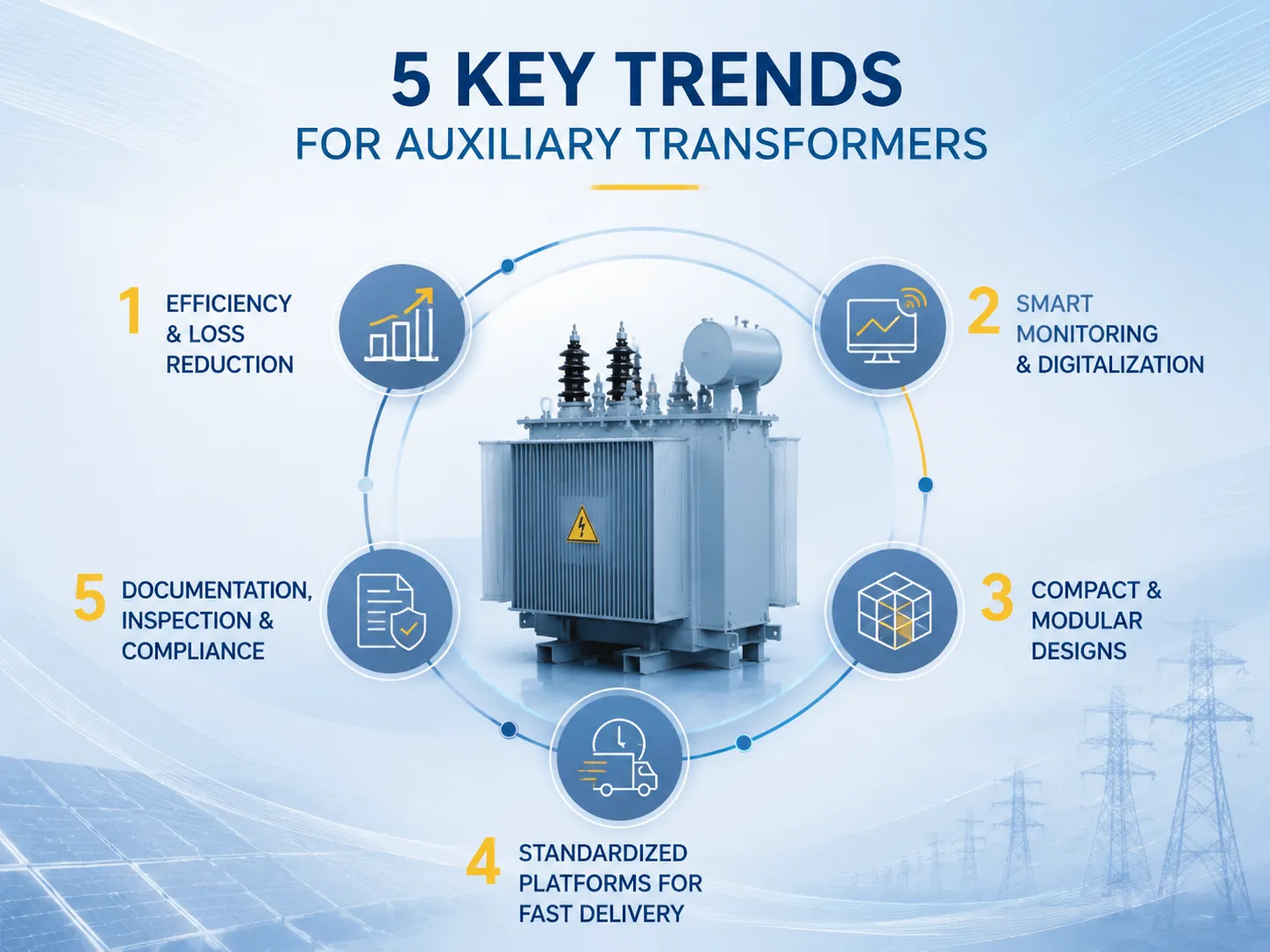
الاتجاه 4: منصات موحدة للتسليم السريع
في السنوات القليلة الماضية، كانت التعليقات حول وقت التسليم ملحوظة في سوق المحولات، مما أدى إلى رد فعل من قطاع المساعدات مع جهود التوحيد. هذا يعني أن الشركات المصنعة أصبحت الآن مزودة بمجموعة شائعة من المعايير، مثل: درجات الطاقة الشائعة (100، 200، 315، 500، 800، 1,250 kVA)؛ أزواج الجهد الشائعة (35/0.4 kV و 10/0.4 kV)؛ مجموعة المتجه الافتراضية Dyn11، تم تصميمها مرة واحدة وتصنيعها على خط الإنتاج. بسبب ذلك، يمكن توفير جهاز قياسي في غضون 4-10 أسابيع، بينما سيتطلب الحل المخصص 14-20 أسبوعاً. تعلم جمهور المعرض سر التسليم السريع: الالتزام بالمعايير؛ استخدام درجة معيارية أعلى من متطلبات الطاقة الخاصة بك، الالتزام بزوج جهد قياسي، والحد من التخصيص إلى الحد الأدنى.
| منصة معيارية | وقت التسليم النموذجي | وقت تسليم التصميم المخصص |
|---|---|---|
| 100–315 kVA، 10/0.4 kV، Dyn11 | 4–6 أسابيع | 12–16 أسبوعًا |
| 400–800 kVA، 10/0.4 kV، Dyn11 | 5–8 أسابيع | 14–18 أسبوعًا |
| 1,000–1,600 kVA، 35/0.4 kV، Dyn11 | 6-10 أسابيع | 16–20 أسبوعًا |
| 2,500 kVA، 35/0.4 kV، Dyn11 | 8–10 أسابيع | 18–24 أسبوعًا |
الاتجاه 5: الوثائق، الفحص، والامتثال
يشير الاتجاه الأخير إلى مبادئ الإجراء: يعتبر العملاء الوثائق جزءًا من المنتج نفسه. البيانات الاختبارية المطلوبة التي تغطي IEC 60076، إصدار الشهادات للاختبارات النوعية، والفحص الذي يتم بواسطة جهة خارجية (SGS، TUV، Bureau Veritas) بما في ذلك المحلية، بالإضافة إلى الإعلانات البيئية (RoHS، REACH والتحقق من المواد لقياس البصمة الكربونية) هي الملصقات القياسية المتوقعة هذه الأيام بدلاً من كونها ميزة اختيارية. قام المشترون المشاركون في المعرض باستبعاد الموردين الذين لم يتمكنوا من تقديم دليل الاختبار. الاتجاهات الجديدة مفيدة عمومًا للمشترين لأنها تضمن أن كل مصنع سيكون خاضعًا لمعايير شائعة وقابلة للتحقق وتضمن الحماية ضد مقدمي العطاءات غير الشرفاء. كما يتطلب الأمر تحديد نطاق الوثائق في مواصفاتك.
ماذا تعني الاتجاهات لميزانيتك
| الميزة | التكلفة الإضافية النموذجية | فائدة |
|---|---|---|
| نواة غير متبلورة | +10–20% فوق التقليدي | 30–50% انخفاض خسارة عدم التحميل |
| نواة GOES عالية الجودة | +3–8% | 10–25% انخفاض خسارة عدم التحميل |
| حزمة المراقبة الذكية | +3–8% | تحذير مبكر من الأعطال، جاهز لـ SCADA |
| تكامل الحاوية/السكيد | +5–15% | أيام من الوقت المستغرق في التركيب |
| OLTC (مغير الموصل تحت الحمل) | +10–25% | حافلة LV مستقرة على الشبكات المتقلبة |
| فحص من طرف ثالث | +1–3% أو رسوم ثابتة | دليل جودة مستقل |
ونتيجة لذلك، يتبين أن ما يسمى بـ “المحول المضمون للمستقبل” يكلف حوالي 5-20% أكثر من المحول التقليدي، لكن التكلفة الإضافية تعوضها فاتورة الطاقة الأقل، وعدد أقل من الانقطاعات، وتسريع تشغيل الموقع. يقع سعر المحول نفسه في نطاق $2,000-35,000 لـ 50-2,500 kVA، اعتمادًا على التصنيف، العلامة التجارية، والميزات الإضافية.
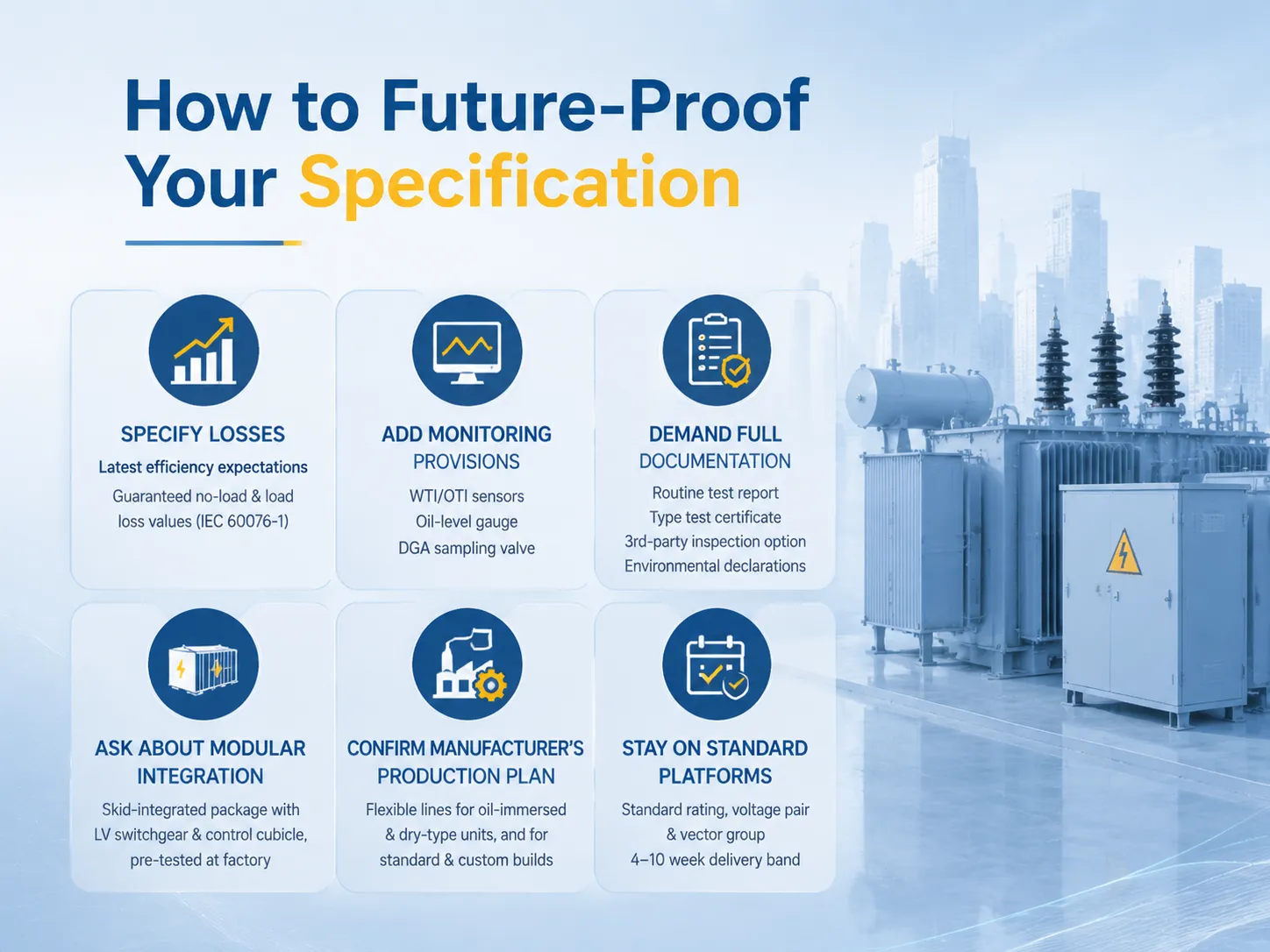
كيفية ضمان مستقبل مواصفاتك
- قدم معلومات حول الخسائر فيما يتعلق بأحدث معايير الكفاءة. استفسر عن ضمانات خسارة الحمل وعدم الحمل وفقًا لـ IEC 60076-1 وقيمها من منظور رأسمالي بدلاً من التحقق من قائمة فئة المنتجات فقط.
- أضف مكونات المراقبة، حتى لو قمت بتأجيل تركيب الواجهة. اذكر أن مؤشرات WTI/OTI ومقاييس مستوى الزيت بالإضافة إلى صمام أخذ العينات لـ DGA يجب أن تكون مدرجة حيث أن تكاليفها أقل من تلك التي أثناء تجديد المعدات.
- اختر المنصات القياسية كلما كان ذلك ممكنًا. التزم بجهد الطاقة وسعة الطاقة القياسية بالإضافة إلى مجموعة المتجهات بحيث يتم الانتهاء من التسليم في غضون 4-10 أسابيع وتكون قطع الغيار اللازمة متاحة في المستقبل.
- طلب الوثائق الكاملة. تحتاج إلى تقرير اختبار منتظم، ورقة اختبار نوعية عند الإمكان، خيار الفحص من طرف ثالث، وشهادات بيئية بلغتك الخاصة.
- تحقق مما إذا كان البائع يمكنه توفير التكامل المعياري. في المحطات الفرعية الصغيرة، ضع في اعتبارك النسخة المثبتة على السكيد التي تحتوي على معدات التبديل ذات الجهد المنخفض وخزانة التحكم والتي تم اختبارها في المصنع.
- تأكيد القدرة الإنتاجية للبائع. المصنع الذي يمكنه إنتاج وحدات مغمورة بالزيت ووحدات جافة بسرعة سيمنحك شبكة أمان عندما تتغير الخطط.
العلامات التجارية الرائدة ونطاقات الأسعار
| العلامة التجارية | الدولة | قوة الاتجاهات المستقبلية | نطاق السعر الإرشادي (US$) |
|---|---|---|---|
| ABB | سويسرا/السويد | أنظمة المراقبة الرقمية | $4,000–$60,000 |
| سيمنز | ألمانيا | تكامل المحولات الذكية | $3,500–$55,000 |
| شنايدر إلكتريك | فرنسا | التصميم البيئي ونطاق الوحدات الجافة | 2,500–40,000 |
| هيتاشي للطاقة | سويسرا | حزم المستشعرات والتحليلات | $4,500–$70,000 |
| إيتون | الولايات المتحدة الأمريكية | خطوط توزيع تركز على الكفاءة | $2,000–$35,000 |
| شركة جيانغسو سوبين للطاقة الكهربائية | الصين | منصات معيارية، تسليم سريع، خيارات ذكية | $2,000–$35,000 |
فيما يتعلق بالمحولات المساعدة التي تظهر في نطاق 50-2,500 kVA، تعتمد الأسعار على التصنيف، الخيارات، والإكسسوارات. تعتبر ABB وSiemens وSchneider Electric وHitachi Energy وEaton متقدمة في المراقبة الرقمية ونضج التصاميم بينما يمكن اعتبار خرائط الطريق الخاصة بهم كنقطة مرجعية جيدة حول كيفية تطور هذا المنتج. قامت شركة Jiangsu Subian Electric Power Co., Ltd بإنشاء عرض تصدير حول هذه الاتجاهات لأولئك الذين يرغبون في استخدام الهندسة المثبتة بناءً على معايير IEC 60076 في الجداول الزمنية والأسعار المعقولة. من المهم أن الشركة قد شملت نوى منخفضة الفقد (بما في ذلك الأنواع غير المتبلورة)، بالإضافة إلى منصات معيارية تهدف إلى التسليم السريع وطرق المراقبة الذكية الاختيارية مع حلول مثبتة على قاعدة. تنتج Subian كل من المحولات المساعدة المغمورة بالزيت والجافة، وقد أثبتت قدراتها على إجراء عمليات التفتيش من طرف ثالث وقد تم استخدام منتجاتها في قطاعات المرافق وEPC في العديد من البلدان. تتيح الأسعار المصنعية ومدة التسليم من 4-10 أسابيع للشركة التصرف بسرعة والمشاركة في خطط التطوير بميزانية 2026. انظر مجموعة المنتجات الحالية على شركة Subian Electric.
الأسئلة المتكررة
ما الذي تغير أكثر بالنسبة للمحولات المساعدة بعد جلسات معرض كانتون الأخيرة؟
كان هناك تغيير في النهج الذي يتبعه العملاء. لم يعودوا يهتمون فقط بالأسعار، بل يتطلبون معلومات حول خسائر عدم التحميل، والتقنيات مثل المراقبة الذكية، والمنصات التي تضمن أوقات تسليم من أربعة إلى عشرة أسابيع، وحزمة وثائق شاملة تتوافق مع معايير IEC 60076 ومعتمدة من طرف ثالث. بشكل عام، تعتبر الكفاءة وشفافية عملية التسليم الآن من العوامل الأكثر أهمية لإبرام عقود التصدير.
هل يستحق النواة غير المتبلورة التكلفة الإضافية على المحول المساعد؟
في معظم الحالات، الجواب هو نعم لوحدة محملة باستمرار. يسمح استخدام نواة غير متبلورة بتقليل خسائر عدم التحميل بنسبة 30-50% بتكلفة إضافية قدرها 10-20%. بالنسبة لتكلفة الطاقة $0.10-$0.15/kWh، توفر وحدة 500 kVA حوالي $6,500-$9,800 في استهلاك الطاقة على مدى 25 عامًا، وهو ما يزيد بكثير عن التكلفة الإضافية لشراء قطعة المعدات. إذا تم استخدام الحمل بشكل متقطع، فإن فترة الاسترداد تزداد وقد يكون استخدام GOES من الدرجة الأعلى مفيدًا.
هل أحتاج حقًا إلى المراقبة الذكية على محول خدمة المحطة؟
نعم، بالنسبة للمحطات الرئيسية. سيكلف مؤشر مستوى الزيت، ومستشعر درجة حرارة الملف، وصمام أخذ عينات DGA مئات الدولارات وسيقدم تحذيرًا مسبقًا عن مشاكل تبريد الحمل الزائد أو أي مشاكل عزل في عملية التكوين. عند مقارنته بسعر الانقطاع غير المخطط له الذي يعطل الحماية والتحكم لديك، يصبح من الواضح أنه يستحق العناء بمجرد أن تجد أداة المراقبة أي مشكلة للمرة الأولى.
هل أصبحت المحولات المساعدة من النوع الجاف أكثر شعبية؟
نعم، خاصة فيما يتعلق بالتركيبات تحت الأرض، والداخلية، والحساسة للنيران. تقدم وحدات النوع الجاف المصنوعة من الراتنج الصلب متطلبات صيانة منخفضة، وسلامة من الحرائق، وعدم الحاجة إلى احتواء الزيت، وهي تتزايد في الاستفسارات التصديرية - مع توفر محطات التحويل الحضرية وتنظيمات الحرائق الأكثر صرامة. تظل الوحدات المغمورة بالزيت هي الخيول العمل في الهواء الطلق.
كيف تحافظ Subian على أوقات التسليم قصيرة؟
تستخدم Subian مفاهيم منصة التصميم القياسية من حيث التصنيفات الشائعة وأزواج الجهد ومجموعات المتجهات. وبالتالي، فإن أوقات الهندسة والإنتاج تكون الحد الأدنى مع استخدام خط إنتاج مرن يسمح بتصميمات وتصنيع مخصصة. يمكن عادةً شحن التصميمات القياسية بين 4 و 10 أسابيع مع تحديد وقت التسليم في تقويم التصنيع خلال مرحلة التسعير.
المراجع
- IEC 60076-1 — المحولات الكهربائية: عام - المعيار الذي يحدد قيم الخسارة المضمونة التي يطلبها المشترون الآن.
- IEC 60076-5 — القدرة على تحمل الدائرة القصيرة - التحقق من الدائرة القصيرة المطلوب للمحولات المساعدة في خدمة المرافق.
- تقرير كفاءة الطاقة من الوكالة الدولية للطاقة — سياق السياسة لكفاءة وتقليل الفقد في معدات التوزيع.
- هيتاشي إنرجي — مراقبة المحولات — الوثائق المرجعية لأنظمة مراقبة المحولات الرقمية.
- NEMA TP-1 — كفاءة الطاقة للمحولات التوزيعية — معيار الكفاءة المستخدم في تقييم الفقد في أمريكا الشمالية.
- الموقع الرسمي لمعرض كانتون — حدث التوريد حيث يمكن ملاحظة هذه الاتجاهات السوقية بشكل مباشر.
الخاتمة
تؤكد اتجاهات الطلب بعد معرض كانتون أن المحولات المساعدة تتغير من شراء سلعة إلى منتج محدد بالمواصفات: خسائر منخفضة، مراقبة مدمجة، تكامل مدمج، حلول معيارية تتيح التسليم السريع، ومستندات كاملة قابلة للتحقق. لا يعتبر أي من هذه الاتجاهات groundbreaking؛ فهي متاحة على نطاق واسع اليوم، وسعر مثل هذه الحلول المستقبلية غير مهم مقارنة بفوائد توفير الطاقة وتقليل الانقطاعات. أفضل طريقة لتنفيذها هي تضمين الخسائر، والمراقبة، وتوقعات التسليم، ونطاق متطلبات الوثائق في مواصفاتك الخاصة واختيار بائع قادر على إنتاج حلول معيارية ومخصصة. شركة جيانغسو سوبين للطاقة الكهربائية هي شركة مصنعة لمحولات مساعدة متوافقة مع IEC 60076 تتميز بنواة منخفضة الفقد، وقدرات مراقبة ذكية، وأوقات تسليم معيارية سريعة بأسعار المصنع. ناقش مواصفاتك مع الفريق من خلال الموقع الرسمي لرؤية كيف تبدو هذه الاتجاهات على ميزانية مشروعك.