


في عام 2023، استبدلت شركة ألمانية متوسطة الحجم في مجال الإنتاج اثني عشر محولًا تقليديًا بنماذج جديدة ذات نواة غير متبلورة واستحوذت على منصة مراقبة عالمية. لم يتم اتخاذ القرار من قبل قسم الهندسة ولكن من قبل المدير المالي للشركة الذي أدرك أن ارتفاع أسعار الطاقة بنسبة 40% يمكن تقليله من خلال تقليل خسائر المحولات. هذه هي ولادة ثورة تكنولوجيا المحولات: من كونها قضية تكنولوجية بحتة، أصبحت آلة تجارية. تقنيات الكفاءة العالية، والمراقبة الرقمية، والنماذج الموجهة نحو الخدمة تُحدث تحولات في الطريقة التي تكتسب بها شركات المرافق، والتصنيع، والطاقة، وتملك، وتشغل المحولات.
يتناول المقال الابتكار على ثلاثة مستويات مختلفة: تكنولوجيا المكونات، التكامل الرقمي والنظام، وابتكار نموذج الأعمال، موضحًا كيف يساهم كل مستوى في المكاسب المالية. ستجد بيانات رقمية تدعم تحسين الكفاءة، والمنطق المالي للمحول كخدمة، والخطوات التي اتخذتها الشركات للتحول من شراء المحولات إلى الحصول على قدرات تحويل الطاقة المدارة.
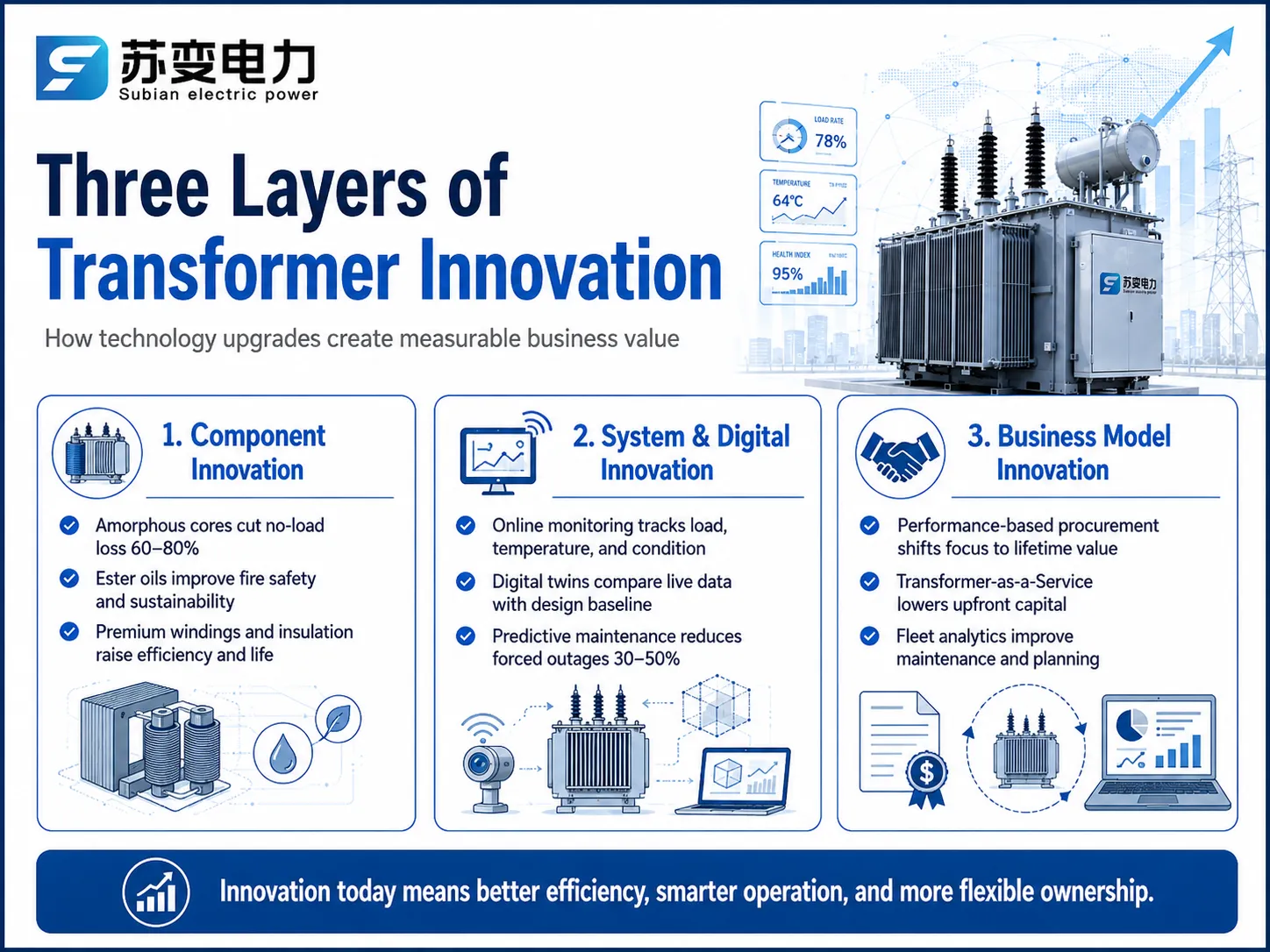
ما هو الترقية الصناعية من خلال ابتكار المحولات؟
عندما نتحدث عن الترقية الصناعية من حيث المحولات، فإن ذلك يشير إلى عملية استبدال النماذج القديمة من المعدات وتقنيات التشغيل بأحدث التقنيات الفعالة والرقمية، مثل التغييرات في نموذج الأعمال التي تجعل هذه التقنيات مفيدة وقابلة للاستخدام. هذه عملية لها جانبين. من ناحية، من حيث قطعة المعدات، يتعلق الأمر بمكونات جديدة مثل: النوى غير المتبلورة، الفولاذ الخاص، لفائف الأسلاك النحاسية، وزيت الإستر الذي يُستخدم للمساعدة في توفير الطاقة وتحسين عمر الآلات. في الوقت نفسه، فيما يتعلق بالجانب الرقمي من التقنيات، يتضمن ذلك جوانب مثل المستشعرات، وعمليات الاتصال، والتحليلات التي تسمح لنا بتحويل معداتنا السلبية إلى مصدر للمعلومات التي تحتاج إلى تحسين، وجدولة، وتسعير الموارد. من الجانب التجاري، تساعد جميع هذه الجوانب في تنفيذ نهج جديدة للملكية وتقديم الخدمة.
هذه العملية مهمة الآن حيث تم بناء معظم المحولات في الثمانينيات والتسعينيات وبالتالي فهي قريبة من تاريخ انتهاء صلاحيتها بسبب أكثر من 25 عامًا من الاستخدام. يجب أيضًا ملاحظة أن معظم المحولات تم إنشاؤها منذ سنوات عديدة ويجب أن تخدم من 30 إلى 40 عامًا، مما يعني أنها قريبة جدًا من نهاية عمرها الافتراضي. في وقت ارتفاع الطاقة المتجددة وزيادة الكهربة، يجب استخدام تطوير التكنولوجيا الجديدة لمساعدة الصناعة القديمة على النمو بشكل فعال استجابةً للطلب.
الطبقة 1: ابتكار تكنولوجيا المكونات
| الابتكار | ما التغييرات | تأثير الأعمال | تكلفة إضافية |
|---|---|---|---|
| نوى المعادن غير المتبلورة | انخفاض خسارة الحمل الخامل بنسبة 60–80% | فواتير طاقة أقل على الوحدات ذات الحمل الخفيف؛ تفي بتنظيم الكفاءة | +15–30% |
| GOES عالي الجودة + تحسين مجال الليزر | انخفاض خسارة النواة بنسبة 15–30% | الامتثال لفئة الكفاءة بتكلفة متوسطة | +5–15% |
| زيوت الإستر (طبيعية وصناعية) | نقطة الاشتعال > 300 °م، قابلة للتحلل البيولوجي | يسمح بالمواقع الداخلية/الحساسة؛ أقساط تأمين أقل | +10–25% |
| عزل أراميد / نومكس | أنظمة من فئة 220 °م | هامش تحميل زائد أعلى، عمر حراري أطول | +20–40% (نوع جاف) |
| لفائف نحاسية عالية النقاء | انخفاض خسائر الحمل بنسبة 20–30% مقارنة بالألمنيوم | خسائر أقل في العمل بتحميل عالي | +10–20% |
| تصاميم مدمجة معيارية | وحدات بناء موحدة | تسليم أسرع، قطع غيار أبسط، تخطيط أسطول أسهل | ±0–5% |
يمكن أن تؤدي الابتكارات في المكونات إلى تغييرات ثورية في كل ما يتعلق بتكاليف المحولات. ومع ذلك، فإن هذا هو أيضًا المجال الذي تلعب فيه العناية من قبل المشتري الدور الأكثر أهمية لأن مصطلح “الكفاءة العالية” ليس له معنى دون الإشارة إلى معيار وتقرير اختبار. حدد IEC 60076-20، الفئة 1 أو 2، واحصل على قياسات الخسائر وفقًا لـ IEC 60076-1، لأن هذا هو ما يجعل ادعاءات التسويق قابلة للتطبيق.
الطبقة 2: الابتكار في النظام والرقمنة
تغير التقدم الرقمي المحول من ملكية بسيطة إلى نقطة في شبكة المعلومات. يوفر المراقبة الرقمية مع قياسات الغاز المذاب، وقياس درجة الحرارة للملفات، وقياس الرطوبة، وقياس الحمل بيانات مستمرة حول حالة المحولات. يمكن أن تكشف معالجة الكمبيوتر للبيانات الواردة عن تقدير الحمل لإعادة توزيع الأحمال بين المحولات بحيث تعمل بكفاءة، أو تعطي إشارة لمحاولة تجنب التحميل وتحذير المشغل بشأن ارتفاع الغاز قبل حدوث الأعطال، أو تقييم عمر الخدمة للمحولات. يمكن أن ترى النسخة الرقمية من المحول البيانات الحالية وتقارنها بالقيمة المحددة مسبقًا وتقدر الانحراف بشكل أفضل بكثير مما يتم القيام به بأي طرق اختبار أخرى.
التأثير الاقتصادي واضح. تظهر أبحاث شركات توزيع الطاقة التي تستخدم المراقبة عبر الإنترنت تقليصًا في توقعات الفشل بنسبة 30-50% لأن الغالبية العظمى من الأعطال يمكن اكتشافها في المرحلة “المعتدلة” المبكرة عندما تكون تكاليف الإصلاح منخفضة جدًا مقارنة بتكاليف الفشل الكارثي. وبالتالي، فإن سلسلة القيمة هي: بيانات المستشعر → اكتشاف الشذوذ → التدخل المخطط → تجنب الانقطاع، وكل خطوة من العملية تصبح أكثر وأكثر أتمتة. لهذا السبب تعتبر أجهزة المراقبة الآن ضرورة للمحولات الحرجة ويتم توفيرها بانتظام في توزيع المحولات المصنعة حديثًا.
الطبقة 3: تحول نموذج الأعمال
التغيير الأكثر تأثيرًا الموجود حاليًا في الصناعة ليس تكنولوجيًا، بل هو انتقال من شراء المعدات إلى شراء النتائج. هناك ثلاثة نماذج تهيمن على السوق. الأول هو الشراء القائم على الأداء، والذي يتميز بأن المشتري يشير إلى الكفاءة المضمونة وقيم التوافر والخسارة. تعتمد مدفوعات المورد إلى حد كبير على مستوى الأداء المحقق. النموذج الآخر هو المحولات كخدمة، مما يعني أن الشركة المصنعة تحتفظ بالملكية وتبيع وقت التشغيل وقدرة تحويل الطاقة، بالإضافة إلى تغطية خدمات الصيانة، وغيرها من الخدمات المدمجة في عقد واحد. نموذج آخر هو خدمات تحسين الأسطول، مما يعني أن الشركات المصنعة والشركات المتخصصة تقدم خدمات لأسطول المحولات الخاص بالعميل بناءً على عقد خدمة وتستخدم قرارات مستندة إلى البيانات بشأن التحميل والصيانة وعملية التقاعد التي نادرًا ما يكون العميل مؤهلاً لإدارتها.
هذه النماذج حاسمة لمجموعتين من المشترين: الشركات التي تعاني من نقص في الأموال (تختار نهج المحولات كخدمة القائم على النفقات التشغيلية بدلاً من تكبد الأموال للنفقات الرأسمالية)، والأعمال الثقيلة الأصول (تفضل التوافر المضمون على شراء سعة احتياطية). من منظور الشركات المصنعة، يساعد الانتقال من المعاملات إلى العلاقات في خلق دخل متكرر وتحويل قفل العملاء، وهذا هو السبب بالضبط وراء استثمار الشركات الرائدة في الصناعة الكثير في خدمات المراقبة والمنظمات. النموذج القديم مقابل النموذج الجديد البعد.
النموذج التقليدي
| النموذج المدفوع بالابتكار | أساس الشراء | أقل تكلفة أولية |
|---|---|---|
| أساس الشراء | أقل تكلفة أولى | التكلفة الإجمالية للملكية / الأداء |
| هدف الكفاءة | الحد الأدنى من المستوى التنظيمي | IEC 60076-20 الفئة 1-2، الخسائر الموثقة |
| مراقبة الحالة | DGA المختبر السنوي | أجهزة استشعار عبر الإنترنت + تحليلات تنبؤية |
| الصيانة | بناءً على الوقت، مجدولة | بناءً على الحالة، تنبؤية |
| ملكية الأصول | العميل يشتري ويمتلك | كخدمة / عقود الأداء |
| البيانات والرؤية | الحد الأدنى، سجلات ورقية | التوأم الرقمي، منصة سحابية |
| اقتصاديات الفشل | انقطاع قسري، تفاعلي | تدخل مخطط، متوقع |
| نموذج الإيرادات للبائع | بيع لمرة واحدة | إيرادات الخدمة المتكررة |
كلا النوعين من النماذج لهما مزايا وعيوب فريدة. في موقع أقل خطورة، لا يحتاج محول التوزيع عن بُعد إلى حزمة من المراقبة عبر الإنترنت تكلف $20,000؛ ومع ذلك، عندما يتعلق الأمر بمحطة فرعية لمستشفى أو تغذية مركز بيانات، يجب استخدام تقنية متطورة. ومع ذلك، فإن النقطة الاستراتيجية هي أنه هناك إمكانية حديثة للحصول على مزيج من كلا الخيارين، وهو ما يكون فعالاً بشكل رئيسي للمشترين ذوي الخبرة الذين هم مستعدون لتبني نموذج الشراء التقليدي للوحدات العادية ونماذج الأداء أو الخدمة للمعدات الحيوية.
الاقتصاديات: الأرقام التي تبرر الترقية
| سيناريو الترقية | الاستثمار | التوفير السنوي / القيمة | استرداد |
|---|---|---|---|
| أسطول من 100 محول إلى الفئة 1 (متوسط 500 kVA) | $900,000–$1,800,000 | $120,000–$300,000 (الطاقة + تقليل الفشل) | 4–9 سنوات |
| وحدة واحدة 2,000 kVA، غير متبلور مقابل تقليدي | +$4,000–$8,000 علاوة | $1,000–$2,500/سنة توفير بدون تحميل | 3–8 سنوات |
| مراقبة عبر الإنترنت على 10 وحدات حرجة | $150,000–$450,000 | $50,000–$200,000 (تجنب الانقطاعات، 30–50% انقطاع قسري أقل) | 1–4 سنوات |
| المحول كخدمة مقابل شراء رأس المال (10 MVA) | 0 رأس المال؛ $3,000–$8,000/شهر | رأس المال المحرر؛ المخاطر المنقولة | فائدة فورية في التدفق النقدي |
هذه الأرقام هي تقديرات تخطيطية؛ يجب تعديل النتائج الفعلية بشكل أكبر لعوامل مثل التعريفات، عوامل التحميل، وظروف الموقع. ما يجب أن نلاحظه هو تأثير الطبقات: ابتكار المكونات يؤتي ثماره على مر السنين؛ المراقبة تكسب بسرعة، مما يتجنب الفشل الفردي؛ بينما ابتكار نماذج الأعمال يعود مباشرة في التدفقات النقدية والمخاطر. يطبق المشتري المتقدم جميع الرافعات الثلاثة بدلاً من الالتزام بواحدة فقط.
تطبيقات الصناعة: من يستفيد وكيف
توفر المنصات الرقمية للشركات إمكانيات تحسين من خلال ضبط الحمل الكهربائي بين المحولات، مما يطيل عمر المعدات ويقلل المخاطر. يحقق المنتجون وفورات في نفقات الطاقة وموثوقية الإمداد: على سبيل المثال، يمكن لجهاز مراقب أن يتنبأ بعطل نفسه، وبالتالي فإن سعره أكبر من سعر جهاز غير مراقب بأسعار أقل بينما تكاليف الفشل تبلغ $10,000 في الساعة؛ لذلك، تستخدم مراكز البيانات والمستشفيات نظام مراقبة مع تصاميم موثوقة لتحقيق معدل توفر يساوي 99.999% ولا تتحمل أي عطل في وحدة المحول. يستخدم مطورو مصادر الطاقة المتجددة زيت الإستر والمحولات ذات الكفاءة العالية في الطاقة للتعامل مع تأثير تقلبات الطاقة الشمسية والرياح ويستخدمون بنشاط تأجير المحولات لتجنب الصعوبات مع التوازن الرأسمالي لمشاريعهم. يأتي الطلب المتزايد على وحدات المحولات من أحمال جديدة مثل شحن السيارات الكهربائية وغيرها من الابتكارات ويقدم فرصة كبيرة للمشترين للحصول على محولات حديثة ومراقبة.
وبالتالي، في النهاية، فإن استراتيجية الفوز هي نفسها: تحديد الأهداف، أي كفاءة الطاقة، والموثوقية، وكفاءة رأس المال، واختيار الابتكارات اللازمة.
| طبقة الابتكار | نتيجة الأعمال | استثمار نموذجي | نتيجة قابلة للقياس |
|---|---|---|---|
| نواة غير متبلورة / كفاءة من الفئة 1 | تكلفة طاقة أقل | +15–30% تكلفة أولية | 30–50% انخفاض خسارة عدم التحميل |
| حزمة المراقبة عبر الإنترنت | توفر أعلى | $15,000–$45,000 لكل وحدة | 30–50% عدد أقل من الانقطاعات القسرية |
| الشراء القائم على الأداء | تكلفة العمر المضمونة | تكلفة التفاوض على العقد | خسائر موثقة، عقوبات مفروضة |
| المحولات كخدمة | تحرير رأس المال، نقل المخاطر | $3,000–$8,000/شهر (10 MVA) | صفر نفقات رأس المال، نفقات تشغيل ثابتة |
| منصة تحليلات الأسطول | إنفاق صيانة محسّن | $500–$2,000 لكل وحدة سنويًا | 15–30% انخفاض تكلفة الصيانة |
الموردون & مشهد الأسعار
| المورد | نقاط القوة في الابتكار | السعر النموذجي (فئة 2,000 kVA) | ملاحظات |
|---|---|---|---|
| هيتاشي للطاقة | HVDC، رقمنة الشبكة، منصات الخدمة | $35,000–$70,000 | شبكة خدمات عالمية |
| سيمنز للطاقة | التوأم الرقمي، مجموعات مراقبة الحالة | $38,000–$75,000 | تكامل قوي لإنترنت الأشياء |
| شنايدر إلكتريك | توزيع ذكي، منصة EcoStruxure | $25,000–$55,000 | تركيز على البناء والصناعة |
| TBEA | نوى غير متبلورة، وحدات كبيرة | $20,000–$45,000 | منتج على نطاق واسع |
| الصين XD / باودينغ تيانوي | UHV، محولات الطاقة الكبيرة | $22,000–$50,000 | تركيز على النقل |
| شركة جيانغسو سوبين للطاقة الكهربائية | الامتثال لمعيار IEC 60076، جاهز للمراقبة، خدمة التصدير | $15,000–$38,000 | سعر تنافسي مع ميزات حديثة |
المعايير للتمييز هي القدرات الرقمية والجغرافيا. القادة في السوق جميعهم ينشرون أنظمة رقمية متطورة - أنظمة المراقبة من Siemens Energy وبوابة الخدمات من Hitachi Energy قد وضعت المعايير. وهذا يسمح لهم بفرض أسعار إضافية على منتجاتهم. الشركات الصينية مثل Jiangsu Subian Electric Power تقدم أجهزة مشابهة لمعيار IEC 60076 مع قدرات مراقبة بسعر أقل بـ 20-40%، مما يجعلها الخيارات المفضلة للعملاء الذين يبحثون عن الأصول السلع والأصول الحرجة. بغض النظر عن من يختار العملاء لتزويدهم، ستظل الأساسيات عمومًا كما هي: التحقق من الخسارة، وجود معلومات رقمية كما تم بناؤها، القدرة على المراقبة، بالإضافة إلى اتفاقية مستوى الخدمة التي تتناسب مع أهمية الأصل.
خارطة طريق ترقية عملية: 7 خطوات
قم بإجراء تدقيق للأسطول. حدد كل محول مع عمره، ملف الحمل، فئة الكفاءة، وسجل الفشل، وقم بترتيبها بناءً على الأهمية وتكلفة استخدام الطاقة.
حدد مستوى الخسارة. احسب خسائر الطاقة السنوية مع وبدون حمل لكل وحدة تحت التحليل باستخدام الخسائر المقاسة أو المقدرة وأسعار الكهرباء الخاصة بك.
حدد النتائج للأعمال. هل تبحث عن توفير الطاقة، تقليل وقت التوقف، استرداد الاستثمار، أو الامتثال للوائح؟ تختلف الأولويات بين الملاك.
اختر الابتكارات المرغوبة. تشمل الخيارات المختلفة للابتكار ترقيات المكونات المتعلقة باستخدام الطاقة، وأجهزة المراقبة المسؤولة عن التشغيل الموثوق، ونماذج الخدمة المستخدمة فيما يتعلق بكفاءة رأس المال.
احسب فترة استرداد الاستثمارات في الابتكارات. احصل على مقارنة للاستثمار الذي تم في ترقية المرافق بما في ذلك الخسائر التي تكبدت خلال 15-20 عامًا.
استخدم الأدلة عند الشراء. حدد الفئة وفقًا لمعيار IEC 60076-20، اسأل عن نتائج اختبار المصنع، واذكر البند المتعلق بضمانات الخسائر.
استخدم البيانات في عملياتك. ابدأ مراقبة البيانات على الوحدات الهامة، سجل بيانات البناء الخاصة بك، وحلل البيانات المتعلقة بالحمل والظروف كل ربع سنة.
الأسئلة المتكررة
كم يمكن أن تقلل ابتكارات تكنولوجيا المحولات من فاتورة الطاقة الخاصة بي؟
عندما تنتقل مجموعة من المحولات التوزيعية من التصاميم القديمة إلى تلك المصنعة وفقًا لمعيار IEC 60076-20 الفئة 1، يمكن أن تنخفض الخسائر الإجمالية التي تتعرض لها هذه الوحدات بحوالي 30-50%. من الناحية المالية، في حالة وجود مجموعة تحتوي على 100 وحدة بمتوسط قدرة 500 kVA، يمكن أن تكون المدخرات حوالي $120,000 – $300,000 بناءً على الطاقة الكهربائية المفقودة. بالإضافة إلى ذلك، يمكن لوحدة واحدة بقدرة 2,000 kVA تم تعديلها بنواة غير متبلورة أن تقلل من استهلاك الكهرباء بمقدار 8,000 – 15,000 kWh سنويًا، مما يمكن تقديره بمبلغ $1,000 – $2,500 وفقًا لرسوم الكهرباء التجارية. يتم تحديد المبلغ النهائي بناءً على التعريفات الأكثر شيوعًا للطاقة وعامل الحمل.
ما هو المحول كخدمة ومن هو المستفيد منه؟
المحول كخدمة هو نوع من العقود التي يستخدم فيها المنتج أو شركة متخصصة المحول ويمنح ترخيصًا لتوافره وقدرته على تحويل الطاقة مقابل مدفوعات شهرية أو لكل ميغاوات ساعة، مع تضمين المراقبة والصيانة والاستبدال في الخدمة. إنه مفيد للشركات ذات الموارد المالية المحدودة، مثل مطوري الطاقة المتجددة أو المنشآت الصناعية الجديدة، التي ترغب في الحصول على نفقات تشغيلية متوقعة بدلاً من استثمارات ضخمة، والمنظمات التي ترغب في تحويل المخاطر الفنية. تتراوح الأسعار الشهرية لمحول بسعة 10 MVA عمومًا من $3,000 إلى $8,000 اعتمادًا على الشروط.
هل تستحق مراقبة المحولات عبر الإنترنت التكلفة؟
بشكل عام، هذا صحيح بالنسبة للأنظمة الحرجة. بالنسبة لعشرة أجزاء حيوية، ستكلف نظام المراقبة عبر الإنترنت بين $150,000 و $450,000، بما في ذلك تكاليف المعدات والتركيب بالإضافة إلى تكلفة نظام المراقبة. بفضل تقليل 30-50% في الانقطاعات القسرية، ستستغرق عائد الاستثمار فقط من 1 إلى 4 سنوات، مع مثال نموذجي للعائد الأول يأتي من أول انقطاع وقائي. فيما يتعلق بالمحولات ذات الأهمية المنخفضة في المناطق الريفية، فإن إجراء اختبارات DGA المخبرية بانتظام هو الخيار الأفضل. عند استكشاف موثوقية، من الضروري إقامة علاقة بين المراقبة وتكلفة فشل التحويل، بدلاً من العلاقة بين المراقبة وتكاليف المحولات.
كيف يغير التحديث الصناعي من عمليات شراء المحولات؟
تتطور عمليات الشراء نحو إجمالي تكلفة الملكية بدلاً من أقل تكلفة أولية، ونحو عقود قائمة على الأداء بدلاً من عقود الشراء. يحدد المشترون الآن فئات الكفاءة المعتمدة، وأحكام ضمان الخسارة، وسجلات البناء الرقمية، وأحكام المراقبة، ويقارنون بشكل متزايد ليس فقط الأسعار ولكن أيضًا وظائف الخدمات المقدمة. الجانب العملي من هذا التحول هو أن الشركات المصنعة تحتاج إلى المنافسة ليس فقط بناءً على سعر الكيلو فولت أمبير ولكن بناءً على الأداء وجودة البيانات، وهو السبب الذي يجعل المصانع الحديثة تستثمر الكثير في الاختبار وقابلية التتبع.
لماذا تكون أوقات تسليم المحولات طويلة جدًا في الوقت الحالي؟
الطلب على المحولات في السوق العالمية يتزايد بحوالي 6% إلى 8% كل عام، ويعزى ذلك إلى الاستثمارات في الشبكات بالإضافة إلى تكلفة استخدام الكهرباء للإنتاج. ومع ذلك، لم تزد إنتاجية المحولات بالسرعة نفسها التي زاد بها الطلب، وأصبحت أوقات التسليم للمحولات تتجاوز الآن 24 شهرًا في ظروف السوق. عند اتخاذ قرارات الشراء، يجب على الشركات الاستفادة من التوصيات التالية: تأمين القدرة الإنتاجية مسبقًا، واستخدام التصاميم المتاحة كلما كان ذلك ممكنًا، واختيار الموردين الذين لديهم خطوط مبتكرة.
المراجع
- IEC 60076-20: كفاءة الطاقة للمحولات — المعيار الذي يحدد فئات الكفاءة التي تدفع اقتصاديات ابتكار المكونات.
- IEC 60076-1: المحولات الكهربائية – الجزء 1: عام — أساس لضمانات الفقد واختبار المصنع.
- وزارة الطاقة الأمريكية – كفاءة المحولات — الخلفية التنظيمية حول استبدال الأسطول المدفوع بالكفاءة.
- هيتاشي للطاقة — المنشورات الصناعية حول رقمنة الشبكة وخدمات المحولات.
- سيمنز للطاقة — مرجع لتقنية التوأم الرقمي ومراقبة الحالة.
- شنايدر إلكتريك — مرجع لمنصة إدارة الطاقة والتوزيع الذكي.
- شركة جيانغسو سوبين للطاقة الكهربائية — مصنع محولات متوافق مع IEC 60076 يدعم التصميمات الحديثة الجاهزة للمشتريات والمراقبة.
الخاتمة
إن بداية عصر جديد في تكنولوجيا المحولات تتوافق مع إنشاء منصة ثلاثية الطبقات لتحديث التكنولوجيا في الإنتاج. أولاً، الابتكار في المكونات، مثل تطوير النوى غير المتبلورة، والزيوت الاسترية، ومواد اللف عالية النقاء، يسمح بتقليل الفقد وتوسيع خيارات التركيب. ثانياً، الابتكار في النظام أي المراقبة، والتوائم الرقمية، والتحليلات التنبؤية، يحول الأصول إلى مصادر بيانات ويقلل من الانقطاعات القسرية بنسبة 30 إلى 50 %. ثالثاً، الابتكار في نموذج الأعمال، مثل الشراء القائم على الأداء والمحولات كخدمة، يسمح بتغيير ملكية المخاطر ورأس المال. الثورة الثلاثية الجارية تحول شراء المحولات من عملية شراء بسيطة إلى عملية اتخاذ قرارات استراتيجية مدفوعة بالبيانات.
يسمح ترقية الكفاءة إلى IEC 60076-20 الفئة 1 بتقليل الفقد بنسبة 30 إلى 50%، مما يؤدي إلى عائد على الاستثمار في 4 إلى 9 سنوات.
يضمن الاستثمار في المراقبة أسرع عائد على الاستثمار للأصول الحيوية، وغالباً ما يوفر عائداً بالفعل بعد الحادث الأول الذي تم منعه.
نماذج الخدمة تسمح بتحرير رأس المال ونقل المخاطر، وهو أمر مهم بشكل خاص لأغراض التدفق النقدي.
يجب عليك شراء المحولات مع ضمانات موثوقية، وثائق رقمية، واختبارات تحت الإشراف.
شركة جيانغسو سوبين للطاقة الكهربائية هي منتج للمحولات الحديثة والمحولات التي هي جاهزة لترقية حلول المراقبة بأسعار معقولة.