


The distribution transformer is the heaviest material object found on normal electrical installations. For example, the 1 000 kVA unit contains hundreds of kilograms (kg) of copper, approximately 1 metric tonne (1,000 kg) of grain-oriented steel, and about 1 metric tonne of oil, all of which can be recycled. As such, recycling is not only important for the residual materials contained within the transformer, but also because of the overall value of the transformer.
Réponse rapide : recycling transformers is important to the following three reasons: (1) quality and recoverable value of materials contained within the transformer (copper, aluminium, grain-oriented steel, transformer oil), (2) hazardous materials can cause environmental health concerns if released, and (3) secondary production of copper and steel are much less energy intensive than the first production of copper and steel (for copper, an 85% savings in energy), with an average of 250 to 400 kg of copper being obtained from a single 1,000 kVA distribution transformer weighing 3,000 to 3,500 kg and providing approximately 800 to 1,100 kg of core steel and 900 to 1,200 kg of oil. The average scrap value of a transformer is $3,000 to $6,000, with copper being the primary component of the scrap value. All transformers manufactured prior to the late 1970s must be tested for polychlorinated biphenyl (PCB) content before any cutting is allowed.
What Is Inside a Transformer, by Weight
The table below gives a basic overview of the materials and components found in a transformer.
| Fraction | 1,000 kVA distribution unit | Share of weight | Recovery route |
|---|---|---|---|
| Core (grain-oriented silicon steel) | 800 to 1,100 kg | 26 to 34 percent | Steel scrap, downcycled |
| Windings (copper or aluminium) | 250 to 400 kg copper | 8 to 13 percent | High-value non-ferrous scrap |
| Huile isolante | 900 to 1,200 kg | 28 to 36 percent | Re-refining or energy recovery |
| Tank, radiators, frame | 700 to 900 kg | 22 to 28 percent | Steel scrap |
| Insulation, bushings, fittings | 50 to 150 kg | 2 to 5 percent | Separated, part to landfill |
The proportions differ according to the transformer design; for example, for a dry-type transformer, there will be no insulating oil; this will increase the percentages of steel, copper, and transformer core materials. In general, a unit is removed from service when it reaches the end of its life, and the materials are recovered for their residual value.
The copper content in a transformer is the primary driver of the economics of transformer recycling; copper content often varies more than buyers expect. For instance, an aluminium-wound transformer of an equivalent kVA rating would have a scrap value approximately one-third of that of a similarly rated copper transformer; therefore, copper-wound transformers will be priced differently than aluminium-wound transformers for the same kVA rating. The 20 kV oil-immersed distribution transformer represents a typical example of the combination of materials from which the component parts are constructed; the weights shown on its drawing are the basis from which a recycler calculates its value.
Three Reasons Recycling Matters
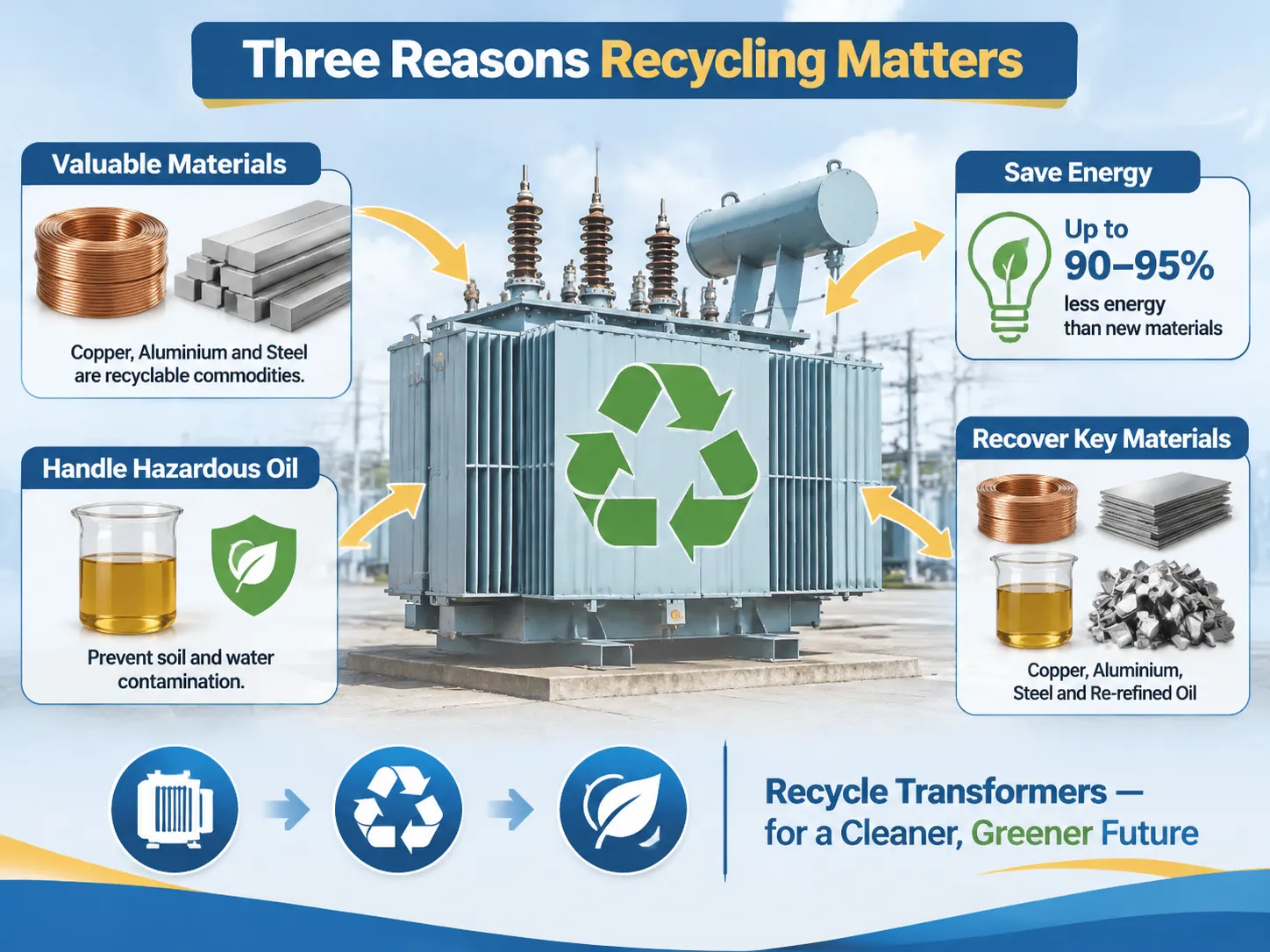
First, there is value in the material. Copper, aluminium and steel are commodities with established scrap markets, while the infrastructure to recover these materials already exists. In theory, a transformer is easily recyclable, but in practice, because of its weight, it must first be drained of its oil before it can be transported.
Second, the hazards inherent in transformer oil. Although it is not toxic, transformer oil is an organic hydrocarbon that can contaminate groundwater, even in very small quantities. For that reason, utilities refer to a spill of oil as an incident, rather than an accident. As the old oil may contain PCBs, this means that the way to dispose of the unit changes entirely to become hazardous waste.
Third, the energy saved. Secondary copper is produced using about 15% of the energy used to produce primary copper; secondary steel uses about 40% and secondary aluminium uses less than 10%. The reason that recycling policy is in place is because it is not only about avoiding depletion of the raw materials but also about the amount of energy used to produce them again.
The Materials That Actually Get Recovered
Of the four material streams that come from a transformer, each one has a different buyer. Copper and aluminium from the windings are the highest value streams and are therefore responsible for the recyclable value of the transformer.
Separating a winding from its core involves eliminating all connections at both ends of the winding. Depending on the amount of varnish and paper attached to the copper winding, it may be classified as ‘heavy copper’, or it may be sold as ‘insulated copper wire’.
Grain oriented electrical steel is contained within the core of a transformer. Grain oriented steel is manufactured from a silicon alloy that possesses a grain orientation for low losses, which is a key benefit of this type of electrical steel. If this grain orientation is destroyed by melting, then recycled core materials will be reduced to scrap steel. Therefore, though recycling of electrical steel can be accomplished, it is classified as a down cycle instead of a closed loop.
Mineral oils used in transformers can be re-refined back to a base stock. The recovery rate is high enough that re-refining is commercially established. The other option for transformer oils is energy recovery through burning, where the calorific value is recovered, but the material is lost.
The tank and structural steel used to manufacture transformers is considered typical heavy scrap. It’s important to note that before cutting up a transformer tank, it must be drained and degassed. Tank vapours and residual oil present a significant fire risk when cutting.
You can find a complete list of various types of distribution transformers using either mineral oil or aluminium windings in a welded tank. The majority of recycled transformer tanks are using copper or aluminium winding combinations found in commercially available transformers.
Oil: Re-Refining Versus Disposal
There are three options for recycling transformer oil. The decision made regarding which option to take is made using test results rather than through preference.
Re-refining transformer oil involves complete removal of the dissolved gases and water, and all oxidation by-products from the oil. Once completely cleansed, the oil can be repurposed for use as a base stock.
Oil that is free of PCB contamination (such as oil stored in tanks and drums) provides the best environmental solution. However, oil that is free of PCB contamination must also be free of contamination by any solvent that would require separation. Using energy recovery practices involves the combustion of oil in a permitted facility, with emissions captured from the flue gases. This technique retrieves energy, with energy viewing comparable to light fuel oil. Energy recovery also represents the method of recovering oil that cannot be economically re-refined.
When an oil product has PCB levels above the allowed limits or has been contaminated with any other substance that prevents it from being re-refined, disposal as hazardous waste is the most viable way to dispose of the product. This method is a cost of doing business rather than a profit source; therefore, before any oil from an unknown source is drained, the first step should be to conduct a PCB test.
Many factors contribute to the total volume of base stock (an intermediate product produced during the re-refining process). The plant processes most of the original feedstock into base stock (i.e., base oil). The left-over product consists primarily of a dense residue and a small quantity of water; both water and residue must be managed through disposal systems.
PCBs and the Units That Must Not Be Scrapped Casually
polychlorinated biphenyls were used as electrical insulators in transformer oils up until the late 1970s. When made before 1977 or 1978, units containing polychlorinated biphenyl (PCB) oil should never be drained, relocated, or cut without prior testing. The laboratory analysis of transformer unit oil will categorize that unit into one of three groups; either non-detectable, contaminated with PCB, or contaminated with PCB at levels above those which are regulated as hazardous waste.
Once a unit has been placed into a category, there are several things that can happen; who is allowed to transport it, where it is allowed to be processed, what type of documentation must accompany it and if the oil can even be re-refined. Units in the highest category cannot be scrapped at an ordinary scrap yard and any contractor offering to pick up this type of transformer without verifying its category should be avoided.
L' safety technical standards for oil immersed transformers contain both the specification for oil and handling requirements; therefore, the plant must use these standards to develop a written disposal procedure and not rely on this document for their purchase specification of oil.
The Recycling Process, Step by Step
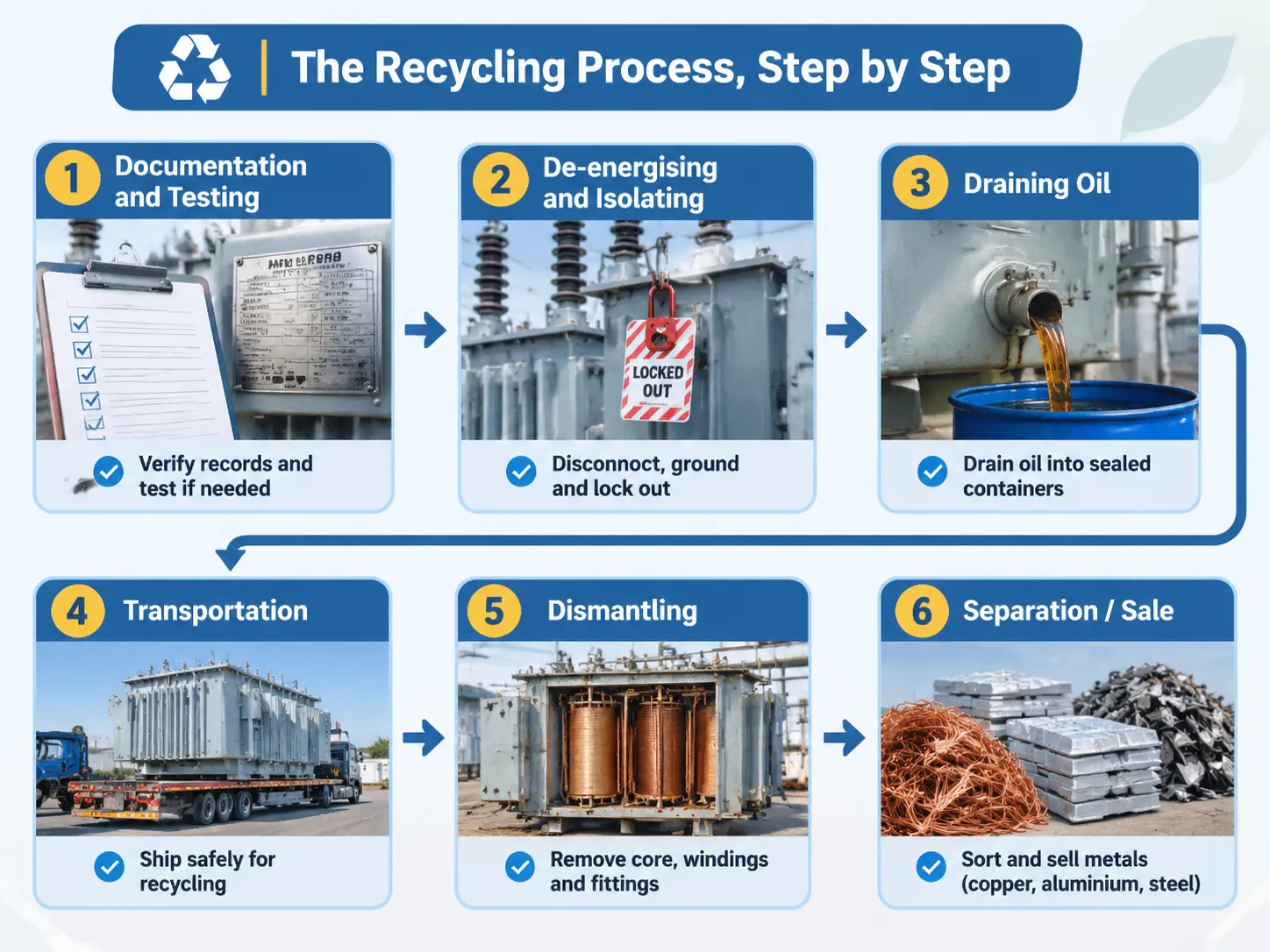
Transformers go through six phases from being on a platform to becoming separated materials, with each phase having a checkpoint to ensure control of that phase.
Documentation and Testing — This includes the rating plate, test results of the oil, and decommissioning documentation. A transformer with no documentation must be tested first before any other steps can be taken.
De-energising and Isolating — This step involves disconnecting the transformer, grounding it, and taking it off-line (locking it). Transformers are considered to be “live” until verified and the oil will retain heat from operation for many hours after de-energising.
Draining Oil — The oil in a transformer is drained from the bottom valve into a sealed container(s) and oil from the conservator and the radiator(s) are drained separately. Both cost and value are represented by the volume of Transformer scrap.
Transportation. Drained Transformers weigh less, but they are still heavy when packaged instead of being treated as a hazardous waste product after the oil has been drained, and after the unit’s PCB (Polychlorinated biphenyl) status has been determined.
Dismantling. To dismantle a transformer: open the tank, remove the core and windings, remove the bushings and fittings, and separate the windings from the core. The way in which the windings are cut during this stage determines the copper content to be recovered; if the winding has been cut cleanly, then that produces clean copper; however, if the windings were chopped, then this produces mixed scrap copper and other materials.
Separation/Sale: Each type of recycled metal — copper, aluminium, steel, oil, and residue — is sold to different buyers. The residue (which consists of paper, varnish, and sludge) is disposed of most of the time and thus does not have resale/recapture potential.
What a Transformer Is Worth as Scrap
| Unit | Copper content | Indicative scrap value | Remarques |
|---|---|---|---|
| 25 kVA pole mount | 20 to 40 kg | $300 to $700 | Often refurbished rather than scrapped |
| Distribution 100 kVA | 60 to 100 kg | $800 to $1,800 | Aluminium version worth a third |
| Distribution de 500 kVA | 150 to 250 kg | $2,000 to $4,000 | Copper dominant |
| distribution de 1 000 kVA | 250 to 400 kg | $3,000 to $6,000 | Oil adds value if re-refinable |
| 2,000 kVA distribution | 400 to 700 kg | $5,000 to $10,000 | Transport becomes significant |
The prices for copper scrap value move with the price of copper — the most variable element — and also depend on how well the transformer is functioning prior to being processed. A transformer stored outside with its bushings broken, and water present in its oil, will be worth considerably less than what it should be, as it is highly likely that the windings have corroded and that the oil is contaminated.
The gross amount will have two deductions taken from it for transport and oil handling; the transport costs for a 2,000 kVA would be a few hundred dollars, while the oil handling cost would be a cost if the oil is contaminated, and approximately neutral if the oil can be re-refined. Therefore, when a scrapyard quotes a value on a unit they haven’t seen, they are quoting on the copper content only.
Repair, Rebuild or Recycle?
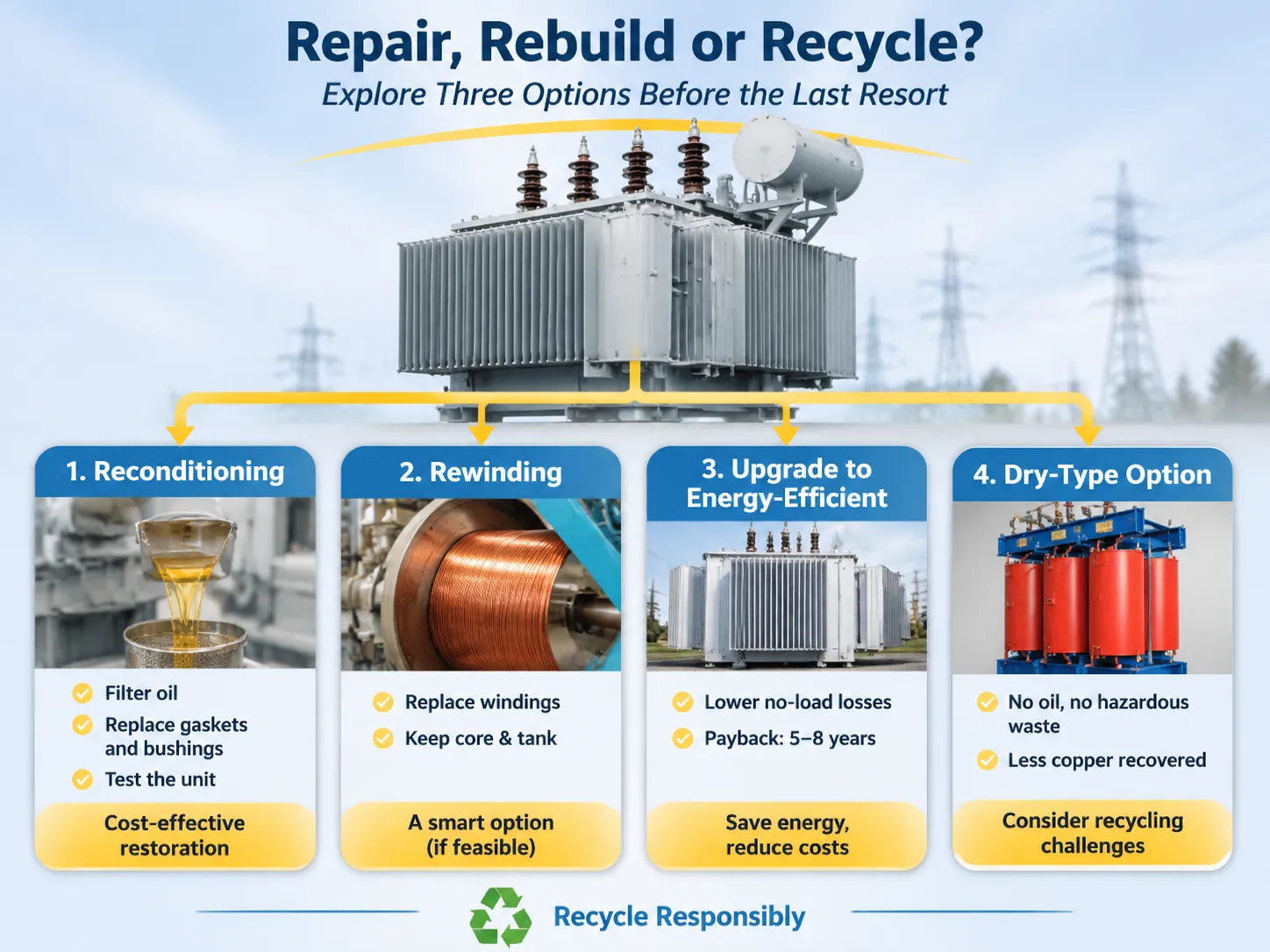
Repairing, refurbishing, or recycling a unit should not be the first option, it is the last resort; you should consider three possibilities before the last option.
The first option, reconditioning, is the least expensive method of restoring the transformer; this includes oil filtration, replacement of gaskets, replacement of bushings, and a required testing. This process will apply to a transformer that has good windings, but still has contaminated oil content, and re-conditioning a transformer will cost dramatically less than purchasing a brand new transformer.
The second option of rewinding will only replace the windings and keep the core and tank intact; this is considered a financially beneficial alternative in regards to rewinding a transformer, assuming the core is in good condition, which normally happens, and also, if the total labour costs are lower than what you would pay to purchase a new transformer. In the case of large power transformers, it is common practice to rewind; this is not as common a practice for smaller 100 kVA units.
The replacement of a transformer with an energy-efficient version is the third alternative and is where the recycling and energy policy come together. An older transformer with high no-load losses will run you more than the price of purchasing a low-loss power transformer, and the payback time for switching to a new transformer is normally between five and eight years. Once the old unit has been recycled, any copper will be accounted for when determining the price of the new unit.
The dry-type transformer option creates a different end-of-life issue rather than resolving one. A cast resin transformer does not have any oil; therefore, there is no hazardous waste, but the winding remains attached to the insulation, making it harder to extract; thus the recycler will end up with less copper recovered. For those considering purchasing an oil-free transformer, it would be wise to read the comparison of oil filled vs. dry-type construction before assuming that an oil-free unit is easier to recycle.
Who Does It: Recyclers, OEMs and Utilities
There are three different entities (organisations) that will perform different roles.
Specialist Transformer Recyclers: These are the organisations who purchase transformer units, drain and disassemble them, then sell off the different metals (copper, aluminium, steel etc). These companies must be licensed for oil handling and include a non-ferrous recycle yard in order to be a suitable business partner to an end-user who wishes to remove a transformer and receive a signed certificate of disposal.
Utilities: Many utilities manage their own recycling programmes and have the volume of transformer retirements, along with PCB liability. Utilities’ recycling programmes usually have provisions for testing both refurbishment and scrap, and they also provide a documented disposal chain.
Manufacturers: Manufacturers are involved in two ways, as the source for the drawings and material data used by recyclers, and as the designer for the next generation of transformer units. In Europe, many of their large projects will now be built with the ability to supply either a dismantling drawing (for disposal purposes) and/or a material declaration. The end of life for these projects has become less expensive as a competitive consideration.
Where This Fits in a Buyer’s Decision
End of Life is part of the decision-making process for buyers of these types of products, and it is always cheaper to design your project with the end in mind rather than worrying about how you will manage it in the future.
When designing to make it easier for the buyer to recycle their products, four choices have been identified — designing the transformer with a bolted cover, having a drain valve that is easily accessible, separating the windings from the transformer’s core without cutting the copper, and including a material declaration that identifies the alloys and oil used. None of these design options will add significant cost, and over the next 25 years they will reduce the cost of disposal to the owner.
While the specifications may seem minor, a buyer that requests a dismantling drawing and a material declaration at the time of purchase will receive documents that the recycling facility will request upon receiving those transformers. On the contrary, a manufacturer that is unable to supply a dismantling drawing or a material declaration has given you a clear indication of how that particular unit was designed and manufactured.
The specification includes products like transformers and substations. The efficiency class is listed in the specification to help determine how much energy will be consumed by an electric transformer before it is recycled.
FAQ
Are transformers worth anything in scrap?
Are transformers worth anything when recycled? Yes, a large portion of the value of a transformer comes from the copper. A 1,000 kVA transformer has a scrap value of about USD $3,000 to USD $6,000, mostly based on having approximately 250 to 400 kilograms of copper content, as well as some steel content (core and tank) and oil content. An aluminium-wound transformer normally has approximately one-third of the value of a copper-wound transformer, and a prior-water- or oil-damaged unit will have even less value than a similar aluminium-wound unit.
Why is recycling matter important?
The recycling of materials is crucial for several reasons. First, recycled metal is a direct result of the initial production of metal, meaning it has all of the energy and emissions associated with that production. Second, secondary copper will use approximately 15% of the amount of energy to produce compared to primary copper, secondary steel will use approximately 40% compared to primary steel, and secondary aluminium will use less than 10% when compared to primary aluminium. For a transformer, the need for recycling also helps stop PCB and oil from contaminating the environment, which is the basis for regulatory requirements.
What is the importance of transformers?
The transformer is the link in the chain that allows electricity to be transported over long distances economically by stepping up the voltage for transportation and stepping down the voltage for end-use. Without the transformer, electricity would be lost during transport over long distances and would not have created an economical use of energy, which is one of the reasons the installed transformer base is so large today. If the transformer’s end-of-life was solely a waste issue rather than a recycling issue, then the answer would be very different, and the question would also be different.
Quelle est la règle 80% pour les transformateurs ?
The question is about the 80 percent rule for transformers. The 80 percent rule refers to how transformers are usually designed to operate at no more than approximately 80 percent of their rated capacity to give them some space for future load growth, for the heating from harmonics and for the reduction in the transformer’s life due to continuous overloads. The 80% loading guideline should be viewed as a design margin rather than a regulatory limit.
Références
- Interco — Transformer Recycling and Scrap Metal Recovery
- US EPA — PCB Regulations and Transformer Disposal Requirements
- Copper Development Association — Copper Recycling and Energy Savings
- World Steel Association — Steel Recycling Rates and Energy Data
- IEA — Energy Efficiency of Distribution Transformers
Conclusion
Recycling transformers is an important part of the recycling industry. The transformer itself contains many valuable materials: hundreds of kilograms of copper, a tonne of steel and a tonne of oil that must first be drained and dismantled before recovering any of those materials. The copper alone provides enough value to create a scrap value for the unit.
There are two controlling factors that determine if the recycling of transformers is a safe and profitable process. First, any transformer that has either an unknown history or was built prior to 1980 should be subjected to PCB testing before draining. Second, the recycling of the oil should have a properly documented chain of custody. All other factors are related to materials handling, and making it easier for transformers designed with a bolted cover, accessible drains, and material declarations at the factory saves a lot of money when it comes time to recycling.