


Un responsabile degli acquisti di un'utility in Perù ha assistito alle prestazioni di due trasformatori da 10 MVA realizzati da diversi produttori nel corso di cinque anni. Il trasformatore più economico ha deluso la sua garanzia di perdita di carico di 2.4% entro il quarto anno di funzionamento poiché il suo avvolgimento si era spostato a causa di così tanti cortocircuiti, mentre quello di riferimento continua a funzionare entro 0.3% delle sue prestazioni nominali. La riparazione effettuata dopo il guasto è costata all'azienda più della differenza di costo tra i due trasformatori.
Questo documento esporrà di cosa consiste un trasformatore di alta qualità, inclusi gli elementi della costruzione e dei materiali del trasformatore, la disciplina di produzione, gli standard e le normative che rendono la qualità quantificabile.
Riepilogo: Un trasformatore premium è un trasformatore elettrico realizzato con nuclei in acciaio al silicio orientato M4-M3, fili di rame o alluminio e sistemi isolanti (A-H) e che ha superato vari test. La qualità significa perdita minima, poco rumore, poche scariche parziali e una vita utile di 25-30 anni.

Cos'è un Trasformatore di Alta Qualità?
Un trasformatore di alta gamma è definito come quello che rispetta o addirittura supera le specifiche della sua targhetta riguardo a perdite, attenuazione, aumento di temperatura, rumore e isolamento durante una vita progettuale di 25-30 anni nelle condizioni di servizio prescritte. La qualità non può essere equiparata all'immagine del marchio; è un parametro quantificabile, ovvero, perdite verificate, scariche parziali inferiori alla soglia, emissione sonora inferiore ai livelli nominali e nessuno spostamento dell'avvolgimento.
Sebbene ogni trasformatore funzioni in teoria, i marchi fallimentari non soddisfano gli standard, sviluppano alte temperature, producono ronzio e smettono di funzionare molto prima della vita progettuale. La ricerca mostra che il 30-50% dei guasti dei trasformatori si verifica a causa di guasti all'isolamento accelerati da difetti di produzione come inquinamento da olio, serraggio improprio e asciugatura sottovuoto incompleta invece che da condizioni operative.
Come Funzionano i Trasformatori—e Perché la Qualità è Importante
Il funzionamento di qualsiasi trasformatore si basa sui principi dell'induzione elettromagnetica. L'avvolgimento primario utilizza corrente alternata per generare un campo magnetico nel nucleo che produce tensione nell'avvolgimento secondario secondo il rapporto di trasformazione. Le perdite di potenza si verificano in due forme: perdite a vuoto (perdite nel nucleo) che si riferiscono alle perdite per isteresi e correnti parassite che si verificano costantemente; e perdite di carico (perdite di rame) che aumentano al quadrato del flusso di corrente attraverso l'avvolgimento.
La qualità del nucleo gioca un ruolo enorme in questo rispetto. L'uso di materiale per nucleo magnetico di alta qualità, inclusa la modellazione laser e l'acciaio al silicio orientato verticalmente, può portare a una significativa soppressione delle perdite che si verificano sia nel nucleo che nell'avvolgimento del 20-40%. Inoltre, l'avvolgimento deve essere eseguito in modo coerente e spaziato specificamente per fornire l'impedenza corretta in tutte le sezioni dell'avvolgimento. Il processo di asciugatura deve anche essere asciugatura sottovuoto affinché l'umidità venga eliminata.
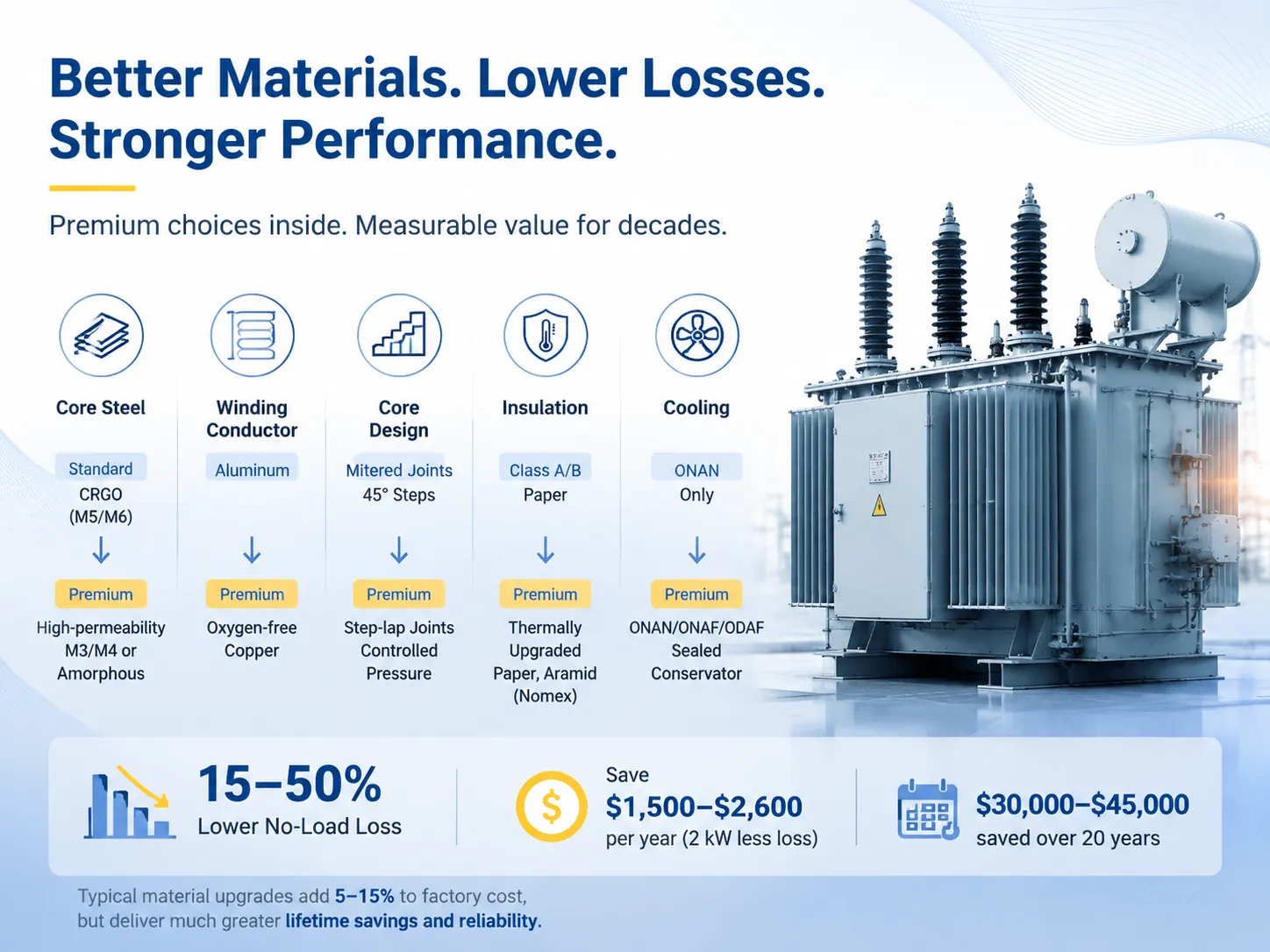
Nucleo, Avvolgimenti e Materiali Isolanti
| Componente | Livello Base | Alta Qualità | Impatto della Scelta Premium |
|---|---|---|---|
| Acciaio del nucleo | CRGO Standard (M5/M6) | Alta permeabilità laser-scritta (M3/M4) o amorfa | Perdita a vuoto ridotta 15–50% |
| Conduttore di avvolgimento | Alluminio | Rame ad alta purezza privo di ossigeno | Resistenza inferiore, funzionamento più fresco, vita più lunga |
| Progettazione del nucleo | Giunti smussati, passi a 45° | Giunti a gradino, pressione di impilamento controllata | Corrente di eccitazione inferiore, funzionamento più silenzioso |
| Isolamento | Carta di Classe A/B | Carta termicamente migliorata, punti caldi in aramide (Nomex) | Valutato per servizio continuo a 120–155°C |
| Raffreddamento | Solo ONAN | Opzioni ONAN/ONAF/ODAF, conservatore sigillato | Maggiore carico ciclico e di emergenza |
Di solito, la selezione dei materiali causa un aumento del costo di fabbrica del 5%–15%; tuttavia, la diminuzione dei costi futuri è molto maggiore. Considera un trasformatore con una perdita a vuoto inferiore di 2 kW, che porta a risparmi di circa $1,500–$2,600 all'anno (il costo dell'elettricità è $0.09–$0.13/kWh)—che equivale a risparmi di $30,000–$45,000 nel corso di 20 anni.
Gli Standard che Definiscono la Qualità
| Standard | Ambito | Perché un Acquirente Dovrebbe Interessarsene |
|---|---|---|
| IEC 60076-1/-2/-5 | Generale, aumento di temperatura, resistenza al cortocircuito | La base globale per la progettazione e il collaudo dei trasformatori di potenza |
| IEC 60076-10 | Livelli di rumore | Garantisce il rumore, critico per siti urbani e interni |
| IEC 60076-11 | Trasformatori a secco | Valutazioni a secco, perdite e requisiti di prova |
| IEEE C57.12.00 | Trasformatori di distribuzione/potenza immersi in liquido | Standard di progettazione e prova nordamericana |
| NEMA TP-1 | Efficienza dei trasformatori di distribuzione | Livelli minimi di efficienza adottati da molte normative statali |
| U.S. DOE 10 CFR 431 | Standard minimi di efficienza | Limiti di perdita obbligatori per i trasformatori di distribuzione negli USA |
Richiedi a ogni fornitore nella tua lista ristretta la conferma di conformità agli standard, il certificato di prova di tipo e il rapporto di prova di routine. Qualsiasi fornitore che sembra riluttante a fornire documentazione di solito ha qualcosa da nascondere; un fornitore rispettabile non aspetterà che tu chieda due volte prima di inviarti le informazioni.
Livelli di Qualità: Base, Standard, Premium
| Parametro | Base | Standard | Premium |
|---|---|---|---|
| Acciaio del nucleo | M5/M6 | M4 | M3 o amorfa |
| Perdita a vuoto (1,000 kVA) | 700–2.200 W | 300–1.700 W | 800–1.200 W |
| Perdita di carico @120°C | 500–13.000 W | 000–10.500 W | 500–9.000 W |
| Rumore (1.000 kVA) | 58–65 dB(A) | 52–58 dB(A) | 46–52 dB(A) |
| Vita progettuale | 15–20 anni | 25–30 anni | 30–40 anni |
| Copertura di test | Solo routine | Routine + test di tipo chiave | Test di tipo completo + test speciali |
| Aumento di prezzo | Linea di base | +8–15% | +15–30% |
Sebbene il livello iniziale possa sembrare allettante in un processo di offerta, le perdite di capitale combinate con una durata più breve rendono tipicamente il premium un'opzione più conveniente nel corso di 25 anni. Esiste una regola empirica utilizzata da varie aziende del settore che afferma che per valutare le perdite, si deve considerare 1 kW di perdita come costante intorno a $4.000-8.000, a seconda del carico e valutare come sarebbero stati confrontati i livelli su tale base.
Come viene costruita la qualità nella produzione
- Produzione del giunto del nucleo: le piastre del nucleo utilizzano sia giunti a gradino che una pressione di impilamento esatta che migliorano le prestazioni del giunto ed eliminano gli svantaggi della corrente di eccitazione; le perdite del nucleo vengono determinate non appena il nucleo è prodotto e prima dell'avvolgimento.
- Processo di avvolgimento: devono essere utilizzati strati isolanti, spaziatura costante tra i giri e avvolgimento continuo della bobina per minimizzare le connessioni deboli; la resistenza e il rapporto di trasformazione di tutte le bobine vengono misurati.
- Asciugatura in vuoto: il nucleo viene collocato in un forno a vuoto e asciugato a una temperatura di 100–120 °C.
- Preparazione dell'olio: l'olio del trasformatore viene degassato, disidratato e filtrato fino a raggiungere 10 ppm di acqua e 1000 ppm di gas.
- Assemblaggio: tutti gli avvolgimenti e i nuclei sono serrati e non si spostano durante la spedizione.
I test che dimostrano la qualità
| Test | Scopo | Accettazione Tipica |
|---|---|---|
| Rapporto di giri e gruppo vettoriale | Corretta trasformazione della tensione | ±0.5% del rapporto specificato |
| Perdita e corrente a vuoto | Qualità del nucleo | Entro il valore garantito secondo IEC 60076-1 |
| Perdita di carico e impedenza | Qualità dell'avvolgimento, tensione di cortocircuito | ±7.5% tolleranza di impedenza |
| Resistenza di isolamento | Asciuttezza e integrità dell'isolamento | Minimo per classe di isolamento, ad esempio >1.000 MΩ a 1 kV |
| Test di tensione indotta | Isolamento inter-giri | 2× tensione nominale, 60 s |
| Impulso di fulmine (LI) | Resistenza a stress di commutazione/sovratensioni | Per livello di isolamento, nessuna rottura |
| Scarica parziale (PD) | Difetti di isolamento incipiente | <100 pC a 1.1× Ur per olio immerso, <10 pC resina colata |
Specifiche rappresentative
| Valutazione | Tensione | Perdita a vuoto | Perdita da carico | Impedenza |
|---|---|---|---|---|
| 630 kVA | 11/0,4 kV | 900–1.300 W | 000–8.500 W | 4.5–6% |
| 000 kVA | 11/0,4 kV | 300–1.800 W | 000–12.500 W | 6% |
| 10 MVA | 33/11 kV | 000–11.000 W | 000–75.000 W | 10–12% |
| 50 MVA | 110/33 kV | 000–45.000 W | 000–280.000 W | 12–14% |
Dove la qualità elevata ripaga di più
- Aziende elettriche e reti: MWh passano attraverso più trasformatori prima di essere consegnati ai clienti; questo rende i tassi di efficienza multipli.
- Centri di elaborazione dati: Operando giorno e notte, efficienza e affidabilità sono aspetti critici per le aziende quando prendono decisioni.
- Settore dell'energia verde: I dispositivi per l'energia eolica e solare attraversano molti cicli di funzionamento e sono costosi da sostituire.
- Industria pesante: Gli impianti di fusione dell'alluminio e altre fabbriche operano vicino alla massima capacità, ma i limiti termici e la capacità di supporto dei guasti influenzano il loro tempo operativo.
- Ferrovie: Le condizioni climatiche richiedono l'uso di trasformatori asciutti.
Marchi principali e fasce di prezzo
| Marca | Paese | 630 kVA | 10 MVA | Conosciuto per |
|---|---|---|---|---|
| Hitachi Energy | Svizzera/Giappone | $11.000–$18.000 | $140.000–$220.000 | Tecnologia HVDC ed EHV |
| Siemens Energy | Germania | $10.000–$17.000 | $130.000–$210.000 | Grandi trasformatori di potenza |
| ABB | Svizzera | $10.000–$17.000 | $135.000–$215.000 | Rete di servizi globale |
| Schneider Electric | Francia | $9.500–$16.000 | $120.000–$190.000 | Linea di distribuzione eco-design |
| Hyosung / HD Hyundai | Corea del Sud | $10.000–$16.500 | $125.000–$200.000 | Trasformatori EHV per l'Asia |
| Cina XD / TBEA | Cina | $7.000–$12.000 | $80.000–$140.000 | Produzione ad alta capacità, prezzi competitivi |
| Jiangsu Subian Energia Elettrica | Cina | $6.000–$11.000 | $70.000–$120.000 | Testato secondo IEC 60076, OEM/ODM, focus sull'esportazione |
Nomi di punta come Hitachi Energy, Siemens Energy e ABB sono modelli di riferimento importanti durante la cooperazione ingegneristica e, poiché hanno una vasta presenza mondiale, influenzano i prezzi a cui gli altri concorrenti devono attenersi. Tuttavia, nel caso del segmento di potenza media, è l'operazione effettiva che conta poiché la tecnologia stessa è disponibile per la maggior parte dei produttori. Jiangsu Subian Electric Power produce trasformatori conformi alla IEC 60076 nella gamma 50 kVA-110 kV, fornisce il servizio di test witness, consente la brandizzazione dei prodotti OEM e offre prezzi di fabbrica che sono quasi 30–45% inferiori ai prezzi europei.
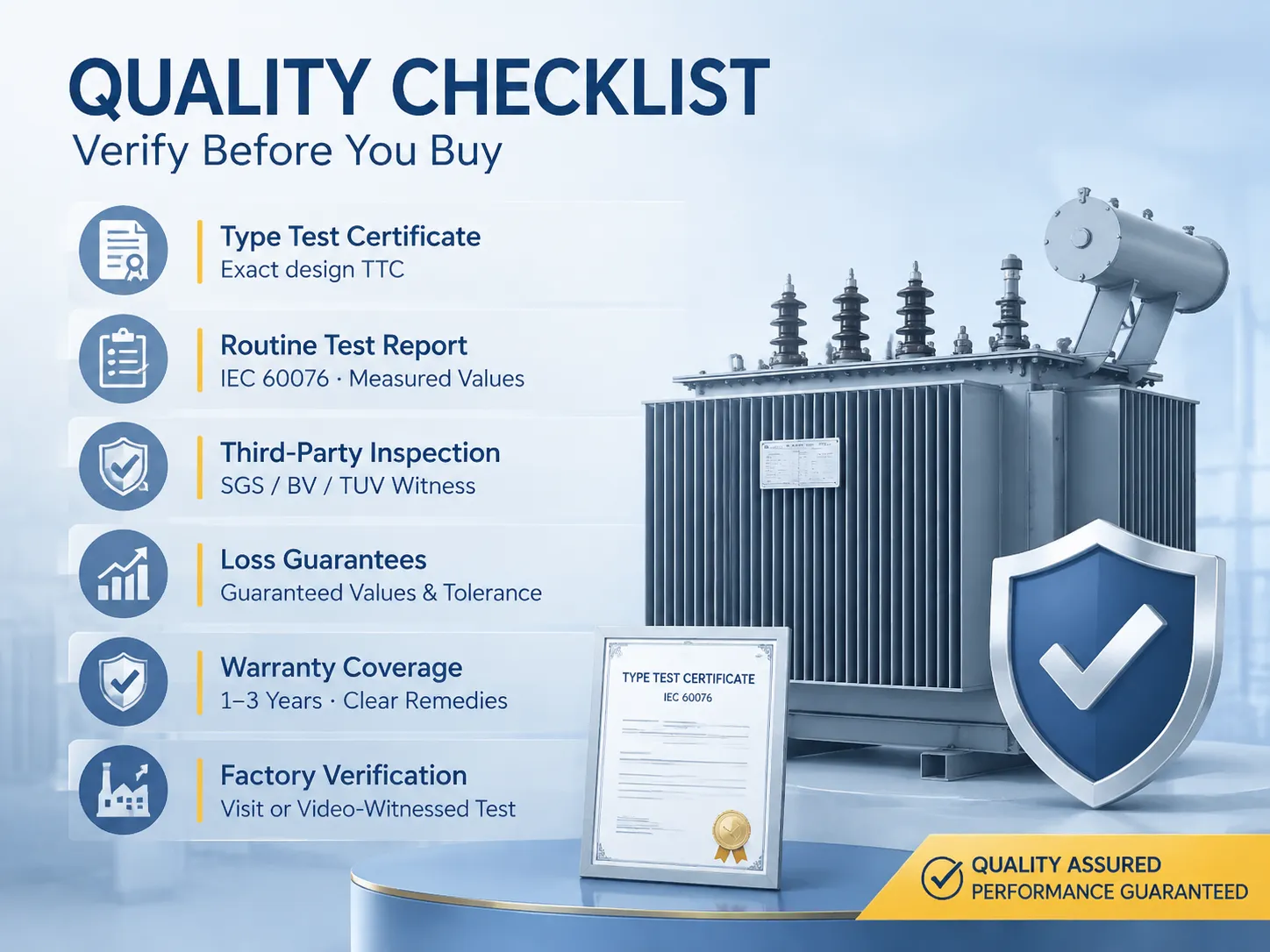
Come verificare la qualità prima di acquistare
- Richiedere il certificato di prova di tipo (TTC) per l'unità esatta quotata piuttosto che per un'unità “simile”.
- Richiedere un rapporto di prova di routine secondo lo standard IEC 60076 che mostri valori misurati, non calcolati.
- Chiedere se c'è un modo per un ispettore di terza parte (come SGS, Bureau Veritas, TUV, ecc.) di assistere ai test finali.
- Controllare se le perdite sono garantite; assicurarsi che siano i valori garantiti con la tolleranza garantita richiesta e che siano previste penali.
- Controllare le condizioni di garanzia; i trasformatori di qualità hanno un periodo di garanzia di 1-3 anni con chiare obbligazioni di rimedio.
- Se visitare la fabbrica è impossibile, richiedere test osservati tramite video.
Domande frequenti
Cosa rende un trasformatore “di alta qualità”?
Le metriche di prestazione qui sono l'elemento delle perdite accettabili, la scarica parziale al di sotto della soglia di progettazione, il rumore al di sotto dei limiti, la resistenza ai cortocircuiti e la durata di progettazione di 25-30 anni. Per quanto riguarda i suoi elementi, il trasformatore presenta acciaio di alta qualità per il nucleo (M3 / M4 o amorfo), bobine di rame ad alta purezza, isolamenti certificati, essiccazione sottovuoto e test esaustivi.
Quanto costa in più un trasformatore di alta qualità?
Prevedere un premio compreso tra 15% e 30% rispetto ai prezzi di ingresso per attrezzature con la stessa classificazione. Ad esempio, un trasformatore di distribuzione da 630 kVA di qualità sufficiente costa da $8.000 a $15.000 rispetto a $5.500–$9.000 per attrezzature di ingresso. Nel frattempo, un trasformatore premium da 10 MVA costerà da $120.000 a $220.000 invece dei $80.000–$140.000 che si pagherebbero per un livello base. I prezzi variano significativamente in base al marchio, alle specifiche e alla geografia, ma significativi risparmi sui costi di capitale si ottengono in un tempo relativamente breve di 3–6 anni.
Qual è la causa più comune di guasto del trasformatore?
La principale causa di guasti nei componenti riempiti di liquido è la rottura dell'isolamento, che rappresenta circa il 40 al 60% dei problemi; a seguire ci sono problemi di avvolgimento/terminali e perdite d'olio. Difetti nel processo di produzione come asciugatura incompleta, olio inquinato o serraggio non stretto fanno deteriorare rapidamente l'isolamento e rendono molto importanti i test e le ispezioni.
Un rating di efficienza più elevato significa sempre una qualità migliore?
Da solo, ma è la rappresentazione singolare più forte. L'efficienza dipende dalla qualità del nucleo e dell'avvolgimento, che ha anche correlazione con la qualità dell'isolamento e la resistenza meccanica. Supportare sempre l'affermazione di efficienza con certificati di prova perché un design a bassa perdita non sarà economicamente sostenibile se non supera il test di cortocircuito.
Quanto dura un trasformatore di alta qualità?
I trasformatori di distribuzione fabbricati secondo IEC 60076 con buona manutenzione durano più di 25–35 anni; i grandi trasformatori di utilità raggiungono 40–50 anni con monitoraggio delle condizioni dell'isolamento e recupero dell'olio. L'abuso termico è l'ultima parola nella distruzione dei trasformatori: ogni 8–10°C oltre il punto caldo nominale significa che la vita dell'isolamento è dimezzata.
Riferimenti
- IEC 60076-1: Trasformatori di Potenza – Requisiti Generali — classificazioni, tolleranze e procedure di test generali.
- IEC 60076-5: Capacità di resistere a cortocircuiti — definisce i requisiti di resistenza al cortocircuito e i metodi di prova.
- IEC 60076-11: Trasformatori Dry-Type — requisiti per unità in resina colata e VPI.
- IEEE C57.12.00: Trasformatori Immersi in Liquido — standard di design e test nordamericano.
- DOE degli Stati Uniti: Efficienza dei Trasformatori di Distribuzione — standard minimi di efficienza obbligatori (10 CFR 431).
- NEMA TP-1 — il benchmark di efficienza del settore per i trasformatori di distribuzione.
- Jiangsu Subian Energia Elettrica — produttore di trasformatori conforme a IEC 60076, dalla distribuzione alla classe 110 kV, con supporto per esportazione e OEM.
Conclusione
Utilizzare un trasformatore premium non è un costo aggiuntivo; in effetti, è la forma più conveniente di assicurazione per il proprio sistema elettrico. I parametri misurabili—perdite, rumore, scarica parziale, resistenza agli picchi di corrente e la sua lunga vita di 25–30 anni—non si traducono semplicemente nei costi energetici, nelle incursioni di inattività e nei processi di sostituzione; ma sono anche utili per calcolare le perdite totali durante i confronti di varie offerte, incluso il loro prezzo.
- Assicurati che la conformità a IEC 60076 (o IEEE C57.12) sia supportata dal certificato di prova di tipo del design richiesto.
- Considera la perdita di $4.000–$7.000 per kW durante la vita del design di non meno di 25 anni (invece di 15).
- Includere il budget per l'ispezione da parte di terzi dell'unità prodotta corrispondente alle sue specifiche tecniche.