


Il VCB, o interruttore automatico a vuoto, è emerso efficacemente come il dispositivo principale per l'interruzione e la protezione delle installazioni a media tensione. Se sei un distributore che lavora su una linea di prodotti, un appaltatore EPC responsabile dell'approvvigionamento di attrezzature, o un ingegnere che pianifica un aggiornamento, è fondamentale comprendere come funziona il VCB e il suo ruolo. Questa guida spiega la tecnologia in linguaggio semplice, attraversa l'ingegneria applicativa ingegneria applicativa che separa una buona installazione da una problematica, e mostra come la gamma di Subian Power interruttore automatico a vuoto si adatti ai compiti più comuni in ambienti interni ed esterni.
Cos'è un interruttore automatico a vuoto (VCB)?
A VCB è un dispositivo di interruzione utilizzato per fermare i flussi elettrici all'interno di una camera a vuoto sigillata chiamata interruttore a vuoto. Quando si verificano determinati guasti, come cortocircuiti o sovraccarichi, i contatti dell'interruttore sono aperti. Mentre in un interruttore convenzionale, lo spazio formato dai contatti è riempito con un mezzo di interruzione. In un VCB, i contatti sono aperti in un vuoto, quindi c'è poco per l'arco per iniziare e l'arco si estingue rapidamente.
Questo offre importanti vantaggi. Il VCB è veloce, compatto e richiede poca manutenzione. Il fatto che l'interruttore a vuoto sia ermeticamente sigillato significa una migliore protezione contro polvere, umidità e impurità, ed elimina il monitoraggio e il rifornimento di gas all'aperto. Per tensioni comprese tra circa 12 kV e 40,5 kV, il interruttore automatico a vuoto ha effettivamente vinto la corsa tecnologica, sostituendo i più vecchi design a olio, aria-magnetici e, in molti casi, SF6.
Perché i VCB sono popolari?
Ci sono alcune ragioni chiave per cui il VCB è preferito dagli utenti. La prima è l'affidabilità. L'interruttore a vuoto ha migliaia di ore di funzionamento e può eseguire migliaia di cicli di commutazione del carico, quindi si adatta perfettamente all'approccio “installare e dimenticare” atteso dai gestori di rete. La seconda ragione è la sicurezza. Poiché l'arco è mantenuto all'interno dell'interruttore, non c'è rischio di fiamme, rendendo il rischio di incendio del VCB molto più basso rispetto ad altri dispositivi che utilizzano olio.
La terza ragione è la sostenibilità ambientale. Poiché la regolamentazione diventa più severa riguardo all'uso dei gas F, il interruttore automatico a vuoto guadagna popolarità, essendo una tecnologia che non utilizza GHG come mezzo di interruzione. L'ultima ragione è il costo totale di proprietà. Con esigenze di servizio limitate e alte prestazioni in condizioni avverse, il dispositivo aiuta a minimizzare le spese operative.
Interruttore automatico a vuoto vs altri tipi di interruttori
Il VCB è meglio compreso nel contesto delle tecnologie che lo hanno preceduto. I primi interruttori a olio si basavano sull'olio minerale per l'estinzione dell'arco; sebbene efficaci, erano più pesanti rispetto ai loro omologhi moderni, richiedevano test e cambi d'olio regolari e, naturalmente, erano a rischio di incendio ed esplosione. Gli interruttori aereo-magnetici hanno eliminato l'olio, ma rimangono ingombranti e richiedono configurazioni complicate del condotto d'arco. Gli interruttori a gas SF6 utilizzano il gas esafluoruro di zolfo, che è buono per la trasmissione ad alta tensione, ma non è adatto per apparecchiature a media tensione e ha regolamenti ambientali seri.
Tuttavia, il interruttore automatico a vuoto trova un perfetto equilibrio tra queste tecnologie, offrendo un dispositivo più compatto e leggero che richiede poca o nessuna manutenzione, non emette gas che devono essere contabilizzati e ha proprietà superiori di vita elettrica e meccanica. Ci sono limitazioni, ovviamente: ad esempio, le tecnologie SF6 e ibride continuano a dominare ad alta tensione poiché creare un singolo interruttore a vuoto per queste tensioni rimane una sfida. Nella gamma di tensione più bassa, da 12 kV a 40,5 kV, il VCB si distingue, come riflette il considerevole numero delle sue installazioni nella gamma menzionata.
Ingegneria delle Applicazioni degli Interruttori a Vuoto
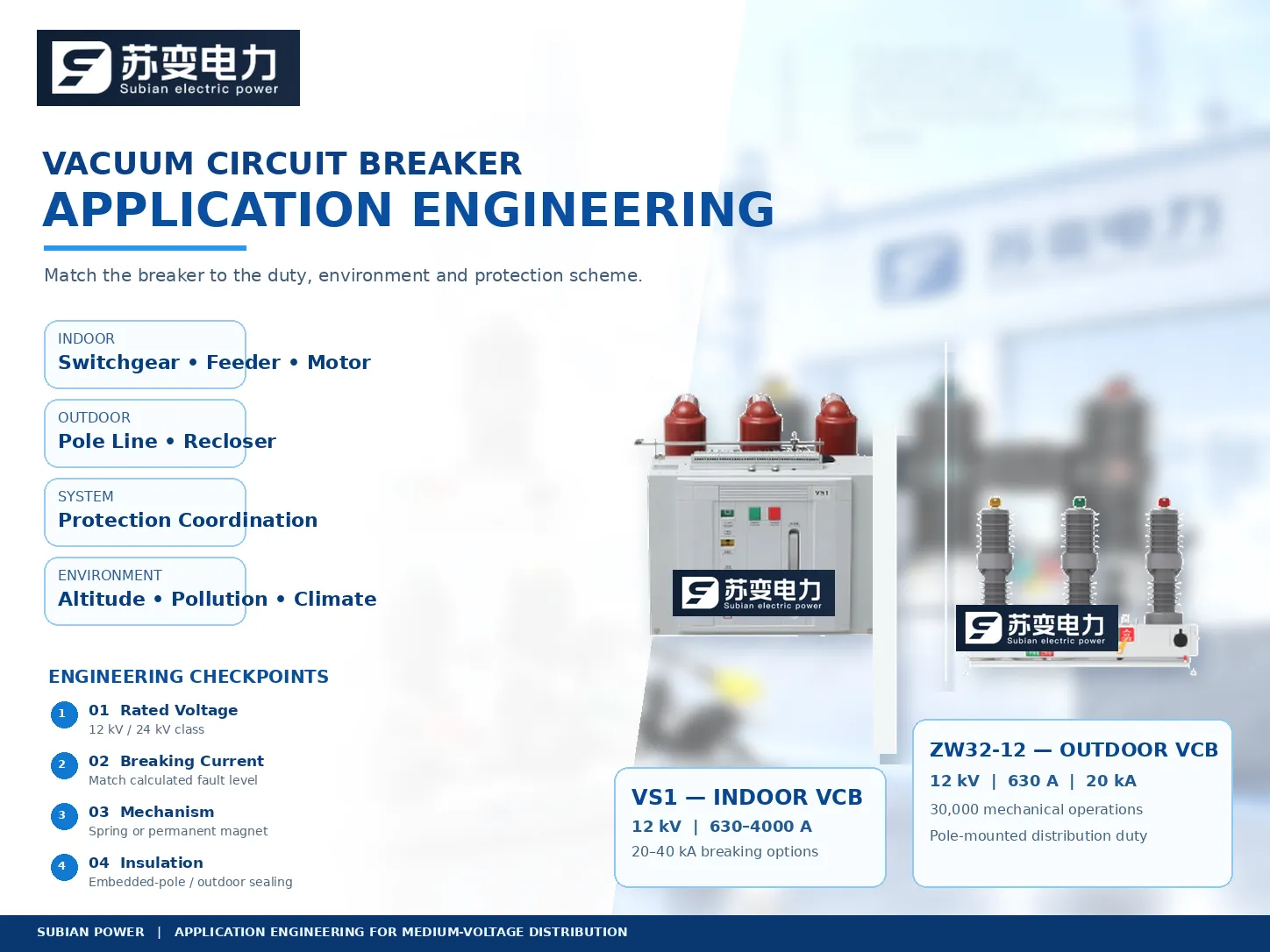
Non è sufficiente selezionare un interruttore; deve anche essere installato correttamente. La disciplina dell' ingegneria delle applicazioni degli interruttori a vuoto riguarda la selezione dell'interruttore corretto per l'applicazione, l'ambiente e il sistema in cui viene inserito. Questo significa che se il compito viene svolto correttamente, l'interruttore a vuoto funzionerà per molti anni senza problemi. Tuttavia, se l'installazione è errata, possono verificarsi problemi come scatti indesiderati e usura dell'interruttore. Le applicazioni sono suddivise in applicazioni esterne e interne.
Applicazioni Interne
All'interno, il interruttore automatico a vuoto vive all'interno di quadri elettrici metal-clad, dove funge da principale ingresso, bus-tie o protezione del feeder. Un interruttore estraibile, o draw-out, consente al personale di manutenzione di isolare e rimuovere un'unità senza disattivare l'intero pannello, motivo per cui il interruttore a vuoto interno è il cavallo di battaglia di sottostazioni, sale di potenza industriali e edifici commerciali.
Oltre a semplici operazioni di commutazione, i VCB interni svolgono compiti molto impegnativi nell'impianto. Operano e proteggono i motori utilizzati ad alta tensione poiché l'avvio del motore porta a frequenti schiacciamenti dei contatti. Commutano banchi di condensatori destinati alla correzione del fattore di potenza dove ci sono sfide nell'inrush. E nei forni ad arco elettrico un interruttore può operare fino a 100 volte al giorno. Gli ingegneri delle applicazioni utilizzano un attuatore magnetico o un dispositivo a magnete permanente per applicazioni ad alta frequenza grazie alla loro lunga vita meccanica.
Applicazioni Esterne e Aeree
Il interruttore a vuoto esterno è normalmente posizionato su pali. Lo scopo dell'interruttore automatico va oltre il semplice attesa di un guasto. Presenta un controller che funge da riattivatore automatico; pertanto, nella maggior parte dei casi, elimina guasti temporanei come un fulmine o un albero che cade su un cavo, che sono quasi tutti i guasti che si verificano sulle linee aeree. Così, l'interruttore automatico “fa una pausa” e si richiude se il guasto è scomparso.
Questo design consente anche all'interruttore di agire come un sezionatore, che divide l'alimentatore in diverse sezioni, aiutando a garantire che nessun'altra area oltre alla sezione colpita dal guasto venga disconnessa dall'alimentazione. Quando il controllo remoto viene aggiunto al design sopra, l'interruttore automatico montato su palo diventa un elemento fondamentale dell'automazione della distribuzione e della tecnologia delle reti intelligenti. Poiché l'interruttore è esposto alla pioggia, alla polvere, al sale e ai cambiamenti di temperatura, il suo design dovrebbe basarsi su isolamento sigillato, elementi anti-condensazione e funzionamento senza difetti del dispositivo per molti anni.
Le Specifiche Essenziali che gli Ingegneri Devono Esaminare per il VCB
Quando si cerca di acquistare un interruttore automatico o un catalogo distribuito standard, il primo passo da compiere è evitare di fare errori di specifica controllando gli elementi. Prima di tutto, è necessario determinare la tensione nominale. Le tensioni comunemente utilizzate sono 12 kV o 24 kV. È necessario anche assicurarsi che la corrente continua nominale sia supportata dall'interruttore automatico in ogni momento. Questo intervallo può variare da alcune centinaia di ampere a migliaia a seconda del livello di correnti operative richieste.
È quindi necessario determinare la capacità di interruzione del cortocircuito nominale. Questa è la massima capacità di interruzione del guasto che altri sistemi elettrici possono sostenere. Per poter arrivare alla giusta capacità di interruzione del guasto, è necessario confrontare i dati con la sorgente di tensione del sistema elettrico. Ci sono diversi meccanismi operativi disponibili per il funzionamento del vcb. Il meccanismo ampiamente accettato è il sistema a molla per eseguire i compiti di riattivazione. L'altra opzione è un interruttore automatico a vuoto a magnete permanente meccanismo che è preferibile in applicazioni che richiedono commutazioni frequenti.
Ci sono ancora due fattori da considerare quando si utilizza l'interruttore automatico per un periodo di tempo prolungato. L'isolamento è importante in questo rispetto. Pertanto, è necessario verificare se l'unità che si sta acquistando include un design a polo sigillato e incorporato.
Il prossimo punto della lista di controllo è la messa in servizio. La messa in servizio deve essere effettuata dopo che il interruttore automatico a vuoto è stato consegnato e installato correttamente presso il sito di installazione. Deve essere eseguita una verifica del vuoto per garantire che il sigillo dell'interruttore non sia stato rotto durante il trasporto. Dopo questo passaggio, è necessario eseguire un controllo della resistenza sull'interruttore automatico. Solo dopo sarà opportuno controllare la resistenza di isolamento eseguendo i test necessari.
Gamma di Interruttori Automatici a Vuoto di Subian Power
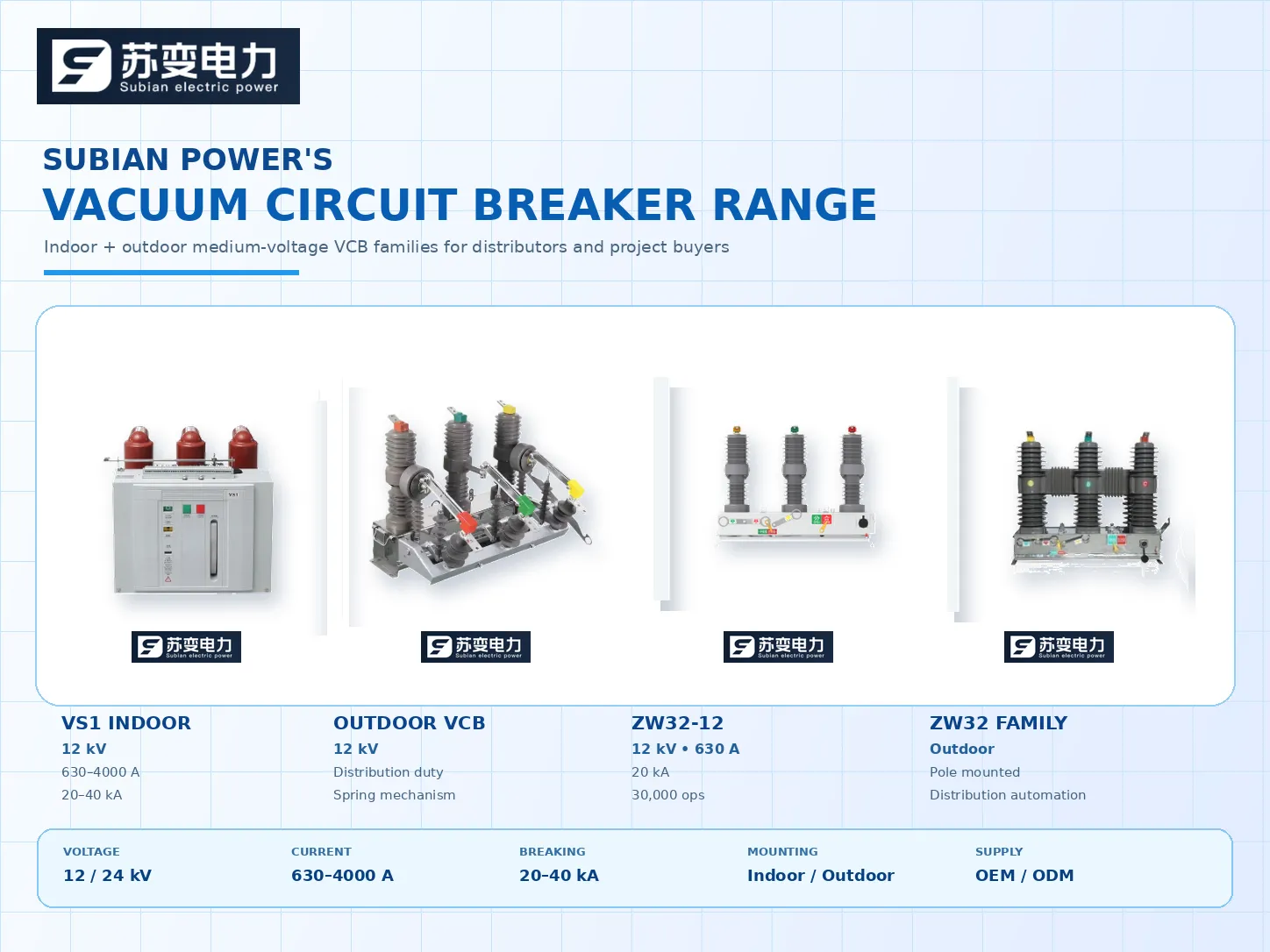
Subian Power (Jiangsu Subian Power Equipment Co., Ltd.) produce una gamma completa di interruttori a vuoto per media tensione per esattamente questi compiti interni ed esterni, forniti su base OEM e ODM per distributori e acquirenti di progetti. La gamma copre le due famiglie che tra di loro servono la maggior parte delle applicazioni a 12 kV e 24 kV.
Serie VS1: Interruttore a Vuoto da Interno
Il L'interruttore a vuoto da interno della serie VS1 è un dispositivo trifase da 12 kV, 50 Hz progettato per essere installato all'interno di quadri elettrici metallici come i pannelli di tipo KYN28. Il suo meccanismo di funzionamento e il corpo dell'interruttore sono combinati in un'unica assemblaggio, e può essere fornito come installazione fissa o, con il meccanismo di propulsione, come carrello rimovibile. Le versioni ad alta corrente hanno una capacità di corrente fino a 4000 A per applicazioni di bus principale e alimentatori pesanti. La sua opzione di polarizzazione offre una struttura di polo incorporato completamente sigillata che è praticamente priva di manutenzione durante la vita utile, mentre il tipo standard richiede solo pulizie e lubrificazioni poco frequenti. Le condizioni ambientali di lavoro variano approssimativamente da -15 a +40 gradi Celsius e altitudini fino a 3000 metri, coprendo la maggior parte dei settori industriali e delle aree di utilità.
Serie ZW32: Interruttore a Vuoto da Esterno
Per la distribuzione aerea e all'aperto, il Interruttore a vuoto ZW32-12 per esterni è un'unità compatta e leggera montata su palo da 12 kV progettata per l'interruzione di carico, sovraccarico e cortocircuito. Presenta un design con protezione contro la condensazione che incorpora un design senza manutenzione, consentendo resistenza a condizioni meteorologiche avverse e ambienti altamente inquinati. Il dispositivo può anche funzionare come interruttore di sezionamento e, se combinato con un controller, è in grado di abilitare l'automazione della rete elettrica. Per casi di operazioni ripetute o per aree con la necessità di un attuatore semplice, può essere utilizzata la variante ZW32Y-12 con un meccanismo di funzionamento a magnete permanente e per reti di distribuzione più elevate, può essere applicata la classe ZW32-24 da 24 kV. In linea con l'offerta della gamma VS1 della stessa fabbrica, un distributore riceve una soluzione unica per interni ed esterni dallo stesso fornitore.
Subian produce questi dispositivi internamente, consentendo così la personalizzazione di valutazioni, meccanismi e configurazioni secondo qualsiasi schema unifilare del cliente.
Scegliere un distributore o fornitore di interruttori a vuoto
Per rivenditori e appaltatori, la relazione con il fornitore è importante quanto l'hardware. I migliori distributori di interruttori a vuoto non si limitano a spedire scatole; forniscono il ingegneria applicativa supporto che aiuta un acquirente a abbinare il modello giusto al dovere giusto ed evitare costosi rifacimenti. Quando si valuta una fonte, sia che si acquisti un'unità singola o si faccia scorta di un catalogo, cercare alcune cose.
Per gli standard IEC corrispondenti, è possibile richiedere la documentazione completa dei test di tipo. Dopo di che, è possibile assicurarsi che la tensione e la corrente, comprese le valutazioni di cortocircuito, corrispondano alla propria rete. Inoltre, è necessario assicurarsi che il fornitore fornisca informazioni sufficienti sulla scelta del meccanismo, sul tipo di isolamento e sull'idoneità ambientale. Successivamente, è possibile controllare i tempi di consegna e la disponibilità di ricambi per la lunga vita dell'attrezzatura. È preferibile collaborare con un produttore che fornisca una corretta flessibilità OEM e ODM in modo da poter definire la configurazione necessaria e, dove possibile, il branding. Un fornitore diretto dalla fabbrica, in grado di combinare una buona ingegneria e prezzi ragionevoli, può offrirti la migliore posizione.
Domande frequenti sugli interruttori a vuoto
Qual è la differenza tra un VCB e un interruttore a gas SF6?
Entrambi interrompono la corrente di guasto, ma un interruttore automatico a vuoto estingue l'arco all'interno di un interruttore a vuoto sigillato, mentre un interruttore SF6 utilizza gas pressurizzato. I VCB dominano il range da 12 kV a 40,5 kV perché sono compatti, a bassa manutenzione e non utilizzano gas serra, mentre i design SF6 sono più comuni a tensioni di trasmissione più elevate. Per la maggior parte dei doveri di distribuzione a media tensione, il VCB è la scelta standard.
Dove vengono utilizzati gli interruttori a vuoto?
All'interno, il interruttore a vuoto interno protegge i feeder, i motori e le batterie di condensatori all'interno di quadri elettrici metal-clad in sottostazioni, fabbriche e edifici. All'aperto, il interruttore a vuoto esterno è montato su linee aeree come riattivatore o sezionatore per reti di distribuzione. Compiti impegnativi come forni ad arco elettrico e miniere si affidano anche ai VCB per la loro resistenza.
Cosa significa corrente di interruzione nominale su un VCB?
La corrente di interruzione nominale di cortocircuito è la massima corrente di guasto che l'interruttore può interrompere in sicurezza. Deve essere specificata per superare il livello massimo di guasto che la tua rete può produrre, con margine. Ottenere questo valore corretto è uno dei compiti principali di ingegneria delle applicazioni degli interruttori a vuoto, perché un interruttore sottodimensionato non può interrompere il guasto per cui è stato installato.
Cos'è un interruttore a vuoto a magnete permanente?
A interruttore automatico a vuoto a magnete permanente utilizza un attuatore magnetico invece di un meccanismo convenzionale a molla e gancio. Con molte meno parti mobili, offre una vita meccanica molto lunga e un'eccellente affidabilità per commutazioni frequenti e per riattivatori montati in alto, dove è essenziale una manutenzione minima. L'interruttore esterno ZW32Y-12 di Subian è un esempio di questo design.
Quanta manutenzione richiede un interruttore a vuoto?
Molto poca, che è uno dei suoi principali vantaggi. L'interruttore a vuoto sigillato non necessita di manutenzione durante la sua vita, e i design a polo sigillato solidi sono praticamente privi di manutenzione. Un interruttore automatico a vuoto convenzionale richiede generalmente solo ispezione periodica, pulizia e lubrificazione del meccanismo operativo. Un'unità ben scelta può fornire decenni di servizio e migliaia di operazioni di commutazione prima della sostituzione, motivo per cui la tecnologia si adatta all'approccio "installare e dimenticare" preferito dalle utility.
Posso acquistare interruttori a vuoto direttamente dalla fabbrica?
Sì. Lavorare con il produttore, piuttosto che attraverso diversi livelli di distribuzione, offre ai distributori e ai contrattisti prezzi migliori, supporto diretto, ingegneria applicativa e la possibilità di personalizzare le valutazioni e il branding. Subian Power fornisce i suoi interruttori a vuoto VS1 e ZW32 su base OEM e ODM a acquirenti in tutto il mondo.
Specifica il giusto VCB con Subian Power
Il interruttore automatico a vuoto guadagna il suo posto come standard di media tensione attraverso la semplicità: un interruttore sigillato, poche parti mobili, decenni di servizio a bassa manutenzione. Il valore che un buon partner aggiunge è il ingegneria applicativa che trasforma quel dispositivo affidabile in un'installazione affidabile, abbinando modello, meccanismo e valutazione al reale dovere e ambiente.
Come produttore OEM e ODM di interruttori a vuoto VS1 da interno e ZW32 da esterno, insieme a quadri elettrici, trasformatori e pacchetti completi di sottostazioni, Subian Power può esaminare le tue esigenze, raccomandare la giusta configurazione e fornire un preventivo competitivo con tempi di consegna chiari. Esplora le pagine prodotto del VCB VS1 da interno e VCB ZW32 da esterno o contatta oggi il team ingegneristico di Subian Power per discutere la giusta interruttore automatico a vuoto soluzione per il tuo progetto o linea di distribuzione.