


アメリカのほぼすべての通りを走ると、木製またはコンクリート製のポールマウントトランスを目にする可能性が高いです。トランスを支えるポールは、単なる平均的なポールではありません。まず、ポールの強度、高さ、荷重能力を決定する要件があります。これは、配電線を支えるだけでなく、数百ポンドの重さがあるトランス(カットアウト、避雷器、二次線も含む)がポールの上に載っているためです。電力会社は、国家電気安全基準(NESC)およびANSI基準に従ってこれらのポールを製造し、電気サービスの設置、サービスのアップグレード、またはポールマウントトランスの設置を行う際には、ポールがポールクラスを満たすだけでなく、必要な高さを持ち、損傷がないことを確認しなければなりません。.
この出版物では、どのタイプのポールがトランスを支えているか、さまざまな要件と基準、ポールで使用されるトランスの種類、およびポールの設置とメンテナンスに必要なことについて説明します。.
要約すると、トランスは主に木製の配電ポールに取り付けられます。非常に強いポールや非常に魅力的なポールが必要な場合には、鋼、コンクリート、繊維強化プラスチックのポールが使用されます。ポールは、NESCに従って、すべての導体、トランス、およびハードウェアの荷重に対して適切なサイズでなければなりません。クリアランスが必要です。つまり、トランスと通電部品は地面からの距離を持たなければなりません。標準的な電力会社のポールは約12フィートから15フィートです。異なるクラスに格付けされたポールは、そのクラスの評価に応じて荷重の量を定義します。.
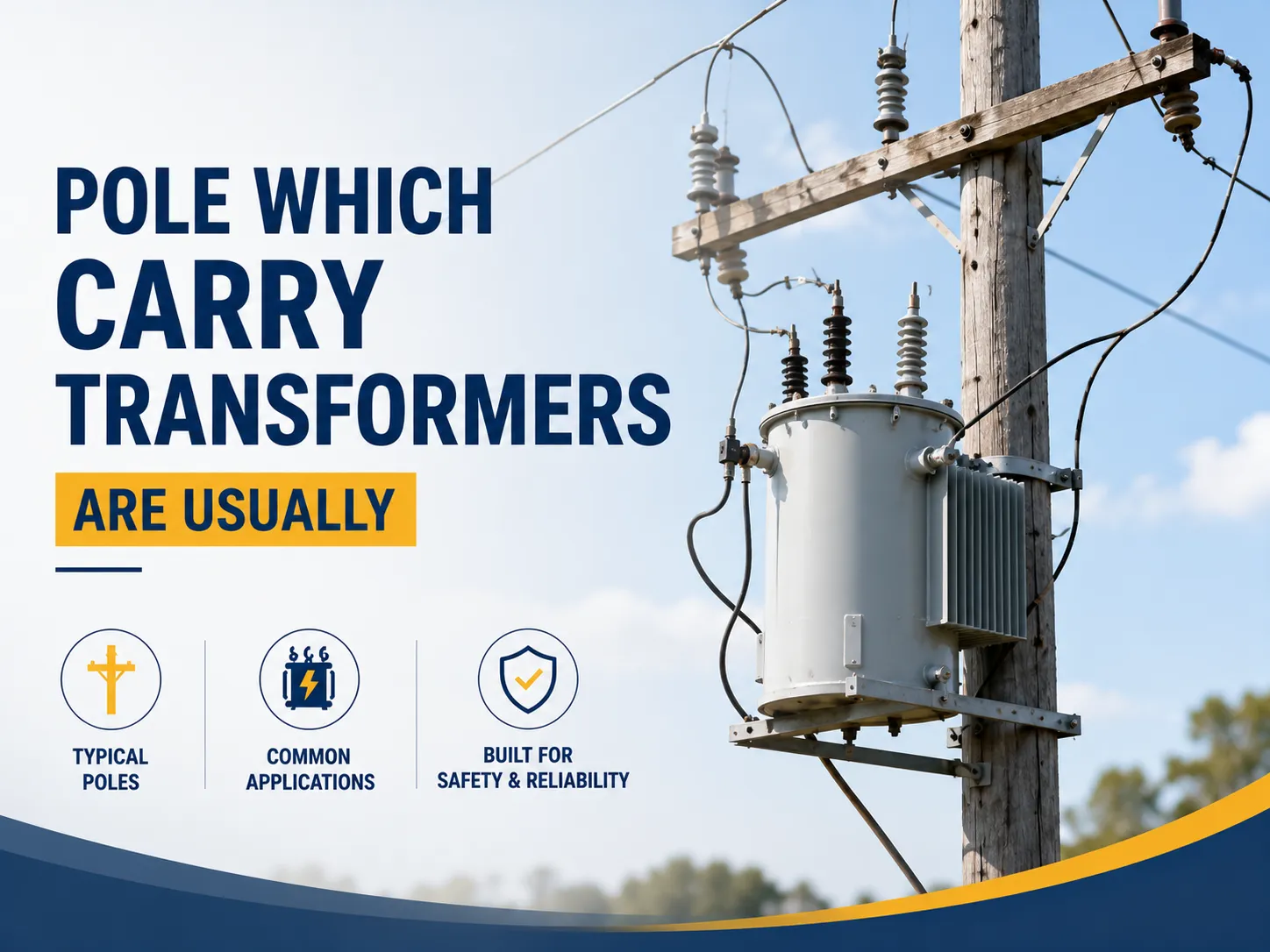
どのようなポールがトランスを支えていますか?
トランスは、中電圧配電線(一般的に4-35キロボルト(kV)の範囲)を収容する配電ユーティリティポールに取り付けられています。送電ポールは、高電圧電線を収容する高い鋼製の桁を持っています。電圧は、トランスを保持するポールの配電システムで利用電圧に減少し、一次回路と二次回路の間で行われます。.
トランスを囲むポールには、3つのコンポーネントがボルトで固定されています。これらは単一のユニットまたはアセンブリを形成します:ヒューズカットアウトは、同じ回路で発生する故障からトランスを保護し、避雷器は雷によって引き起こされる過剰なエネルギーを地面に逸らし、二次線は電圧を下げた後にサービスに120/240Vを供給します。したがって、ポールはミニチュアの完全な配電ステーションとして機能し、すべてが1つのシステムとして機能するように設計されています。.
要件:強度、クラス、および高さ基準
ポール側に影響を与える2つの基準があり、どちらもポールに取り付けられたトランスがどのように指定されるかに関係しています。
- ANSI(アメリカ国家規格協会)O5.1 — 木製ポールの規格は、ポールの寸法、種別、および処理を指定し、クラス(クラス1〜クラス7、低いクラスは小さい寸法サイズを示す)を割り当てます。クラス1のポールは、ポールの上部で最も多くの荷重を支えることができることを意味します。これは、ポールのカテゴリがより大きな重量の負担を受けることを示しています。.
- NESC(全国電気安全規則) — 明確なクリアランスと荷重基準を指定する安全規則です。変圧器を備えた配電ポールは、電気が通るワイヤーとコンポーネントの地面からのクリアランスを通じて主にその規定を受けます。これらは、地面からの最低距離(電圧に応じて - 都市部では約15〜22フィート、農村部では12〜15フィート)を上回る必要があります。.
これはあなたにとって何を意味しますか? 変圧器を取り付けるために使用されるポールは、新しい変圧器の重量を支えるために適切なサイズでなければなりません。既存のポールがあり、25 kVAの変圧器から100 kVAの変圧器にアップグレードする場合、まずポールのクラスを確認し、100 kVAの変圧器の重量が現在使用されている変圧器の最大3倍であるため、ポールがまだ良好な状態であるかどうかを判断する必要があります。.
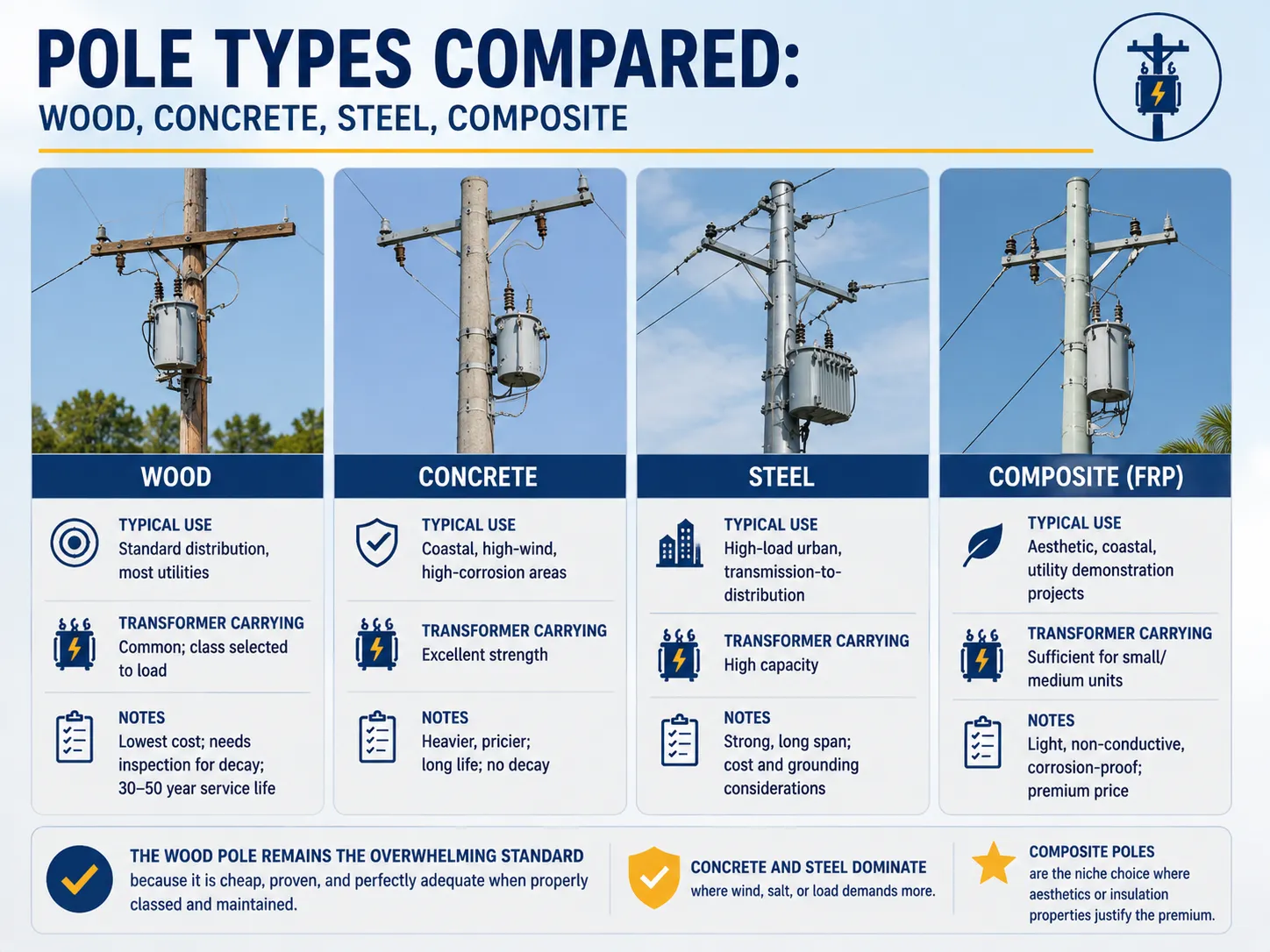
ポールの種類の比較:木材、コンクリート、鋼、複合材
| ポールの種類 | 一般的な使用 | 変圧器の運搬 | 注記 |
|---|---|---|---|
| 木材(処理された松/モミ、ANSI O5.1) | 標準配電、ほとんどの公共事業 | 一般的;荷重に応じて選択されたクラス | 最も低コスト;腐敗の検査が必要;30〜50年のサービス寿命 |
| コンクリート | 海岸、高風、高腐食地域 | 優れた強度 | 重量があり、高価;長寿命;腐敗なし |
| 鋼(テーパー、亜鉛メッキ) | 高荷重の都市部、送電から配電 | 高容量 | 強力で長いスパン;コストと接地の考慮事項 |
| 繊維強化プラスチック(FRP) | 美観、海岸、公共事業のデモプロジェクト | 小型/中型ユニットに十分 | 軽量、非導電性、腐食防止;プレミアム価格 |
木製ポールは、安価で試験済み、適切に分類され維持されると完全に機能するため、間違いなく好まれる材料です。コンクリートポールと鋼製ポールは、風抵抗、腐食性、または荷重に特定の要件がある場合に一般的に使用されます。複合ポールは、美観や絶縁に特定のニーズがある場合にのみ適しています。.
どの変圧器がポールに取り付けられますか?
電力ポール上の変圧器は、一般的にポールに取り付けられる単相変圧器であり、油に浸されたタイプの配電変圧器です。.
- 一般的なサイズ:5、10、15、25、37.5、50、75、および100キロボルトアンペアで、これは住宅、商業施設、農場、および住宅地域に電力を供給するために使用されます。.
- 電圧レベル:人々は一般的に7.2キロボルト、12.47キロボルト、13.2キロボルト、および24.9キロボルトの電圧レベルを使用し、これは120/240ボルトの単相電圧レベルに減少します。.
- 三相サービスは商業または産業目的で使用できます。一つのポールに三つの単相能力を持つトランスを設置することができます。.
- トランスの構造:トランスはオイルで満たされており、波形または単純な鋼製の外装、低電圧および高電圧のブッシング、トランスをクロスアームまたはポールに固定するクーラーを備えた構造になっています。.
ポールトランスを購入することは、kVAを負荷調査に合わせ、一次電圧をラインに、二次電圧をサービスに合わせることを意味します — 完全な選択ロジックは私たちの 配電トランスの基本 記事にあり、ポールクラスとトランスの定格がどのように相互作用するかも説明しています。.
ポールトランスの重さはどのくらいですか?
重量はポールクラスとトランスを設置するために必要なハードウェアを決定する重要な要素です。単相ポールマウントオイル充填トランスの典型的な重量は次のとおりです:
| 定格(単相) | 典型的な総重量 |
|---|---|
| 10 kVA | 約200-300ポンド(90-135 kg) |
| 25 kVA | ~300-500 ポンド (135-225 kg) |
| 50 kVA | ~600-900 ポンド (270-410 kg) |
| 75 kVA | ~800-1,100 ポンド (360-500 kg) |
| 100 kVA | ~1,000-1,400 ポンド (450-635 kg) |
正確な数値は製造業者、タンクスタイル、巻線材料(銅は重量を加える)によって異なります — 当社の ポールトランスフォーマー重量ガイド は定格ごとの代表的な重量をリストしています。複数のトランスフォーマーが必要な場合、三相バンクの三つのトランスフォーマーは上記の重量を単純に三倍します。これらの重量はポールの重量であり、トランスフォーマーは取り付けハンガーで自重を支えることができます。したがって、ポールとクロスアームの材料はそれに応じて評価される必要があります。既存のポールを検討している場合、トランスフォーマーの名板にはポールの総重量が常に記載されているわけではないことに注意してください。ただし、この情報は製造業者のデータシートまたはユーティリティ会社から取得できます。ユーティリティ会社は将来の参照のためにポールの荷重計算を定期的に保管しています。.
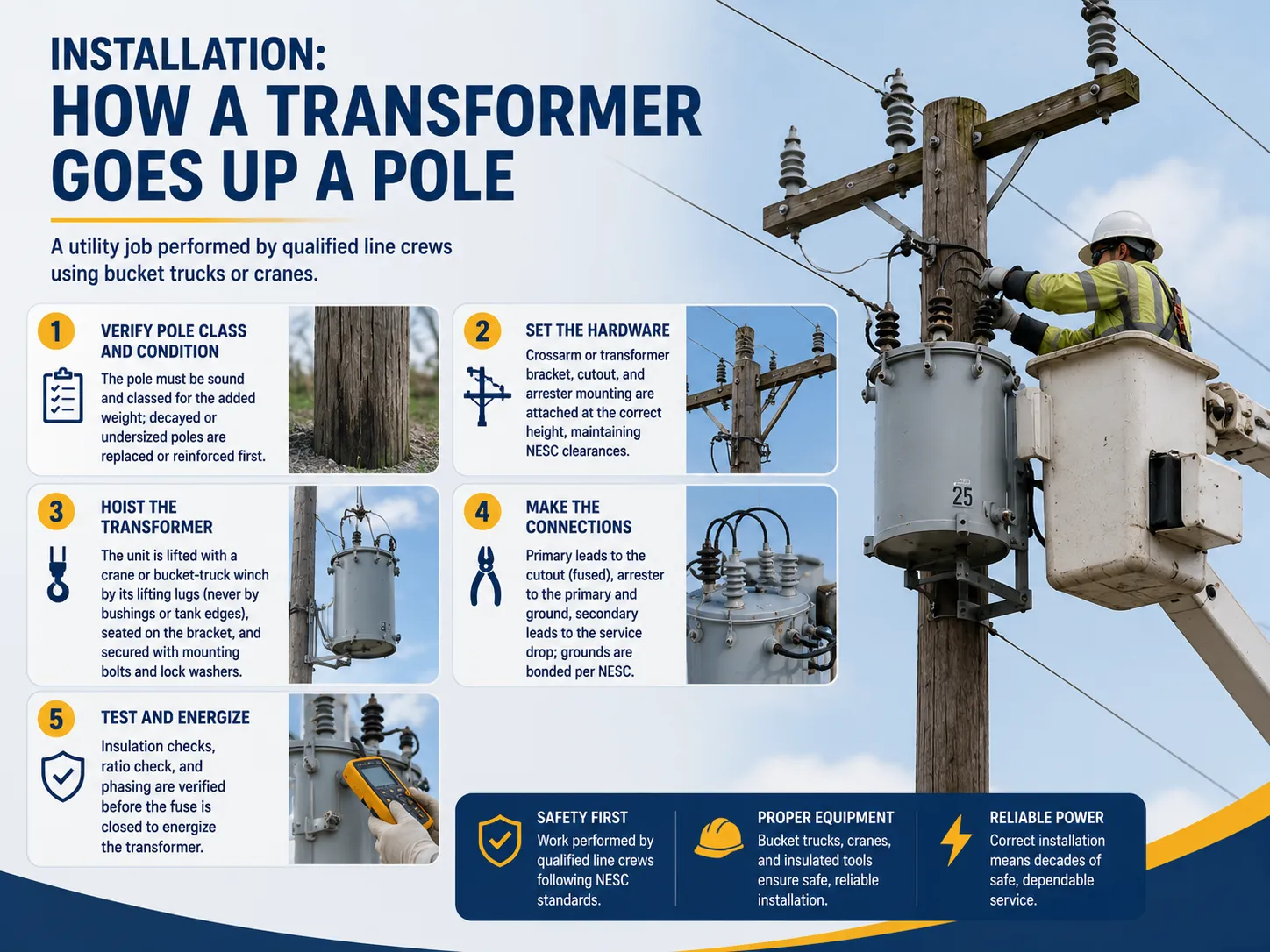
設置:トランスフォーマーがポールに取り付けられる方法
ポールトランスフォーマーの設置はユーティリティの仕事と見なされます。この作業は、高所での作業を伴い、ライブワイヤーが近くにあるため、訓練を受けたラインクルーのみがクレーンやバケットトラックを使用して、ホットまたは計画的な停電の状況で実施することが許可されています。以下はこのプロセスに関与する手順の簡略化されたリストです:
- ポールのクラスと状態の確認:ポールは完璧な状態でなければなりません。ポールはトランスフォーマーの荷重に適している必要があります。適していない場合は、まず交換または補強されます。.
- ハードウェアの設定:クロスアームまたはトランスフォーマーブラケット、カットアウトおよびアレスターマウントは、適切な高さで取り付けられ、NESCのクリアランスが維持されることを確認する必要があります。.
- トランスフォーマーの吊り上げ:トランスフォーマーはクレーンまたはバケットトラックのウインチによってリフティングラグを使用して持ち上げられ、ブラケットに置かれます。その後、ロックワッシャーと取り付けボルトを使用して固定されます。.
- 接続の作成:一次リードはカットアウト(ヒューズ付き)、一次および接地のアレスタ、二次リードはサービスドロップに接続されます。すべての接地はNESCに従って接続されています。.
- テストと通電:トランスフォーマーヒューズが通電のために閉じられる前に、絶縁テスト、比率チェック、および位相テストが行われます。.
ユーティリティまたは請負業者によって設置されるトランスフォーマーを注文する場合、同じ調整が行われることを確認する必要があります:ユニットを指定し、ポールを確認し、クルーに通電作業を行わせることを許可します。当社の 配電トランスフォーマー製品範囲 は、モデルごとにポールマウントオプションとアクセサリーをリストしています。.
メンテナンスおよび検査の考慮事項
一度設置されると、ポールトランスフォーマーアセンブリは低メンテナンスの資産です — しかし「低」は「なし」ではありません。定期的なチェックは、より広範な トランスフォーマーメンテナンスチェックリスト に準じてスケールされています:
- 油のレベルと漏れは、タンク、ブッシング、および地面を観察することによって視覚的に確認されるべきであり、漏れによる低油は回避可能な最も頻繁な故障の一つであることを知っておく必要があります。.
- ブッシングとカットアウトは、セラミックのひび割れ/トラッキングを検査し、ヒューズリンクの定格と状態を確認します。.
- 雷保護装置の損傷を確認します(壊れたアレスタは接地リードが外れたり、色が変わったりします)。.
- ポールの状態も、腐った木材や虫の損傷、傾きがないか確認する必要があります。.
- 樹木の成長と植生のクリアランスにより、樹木が一次リードやトランスフォーマーから離れ、フラッシュオーバーの問題を最小限に抑えます。.
- 電気試験には、重要な機器のための高絶縁および油試験が含まれ、他の油充填試験に応じてスケジュールされるべきです。.
負荷時のタンクと接続部のサーマルイメージングにより、緩い接続や過負荷が早期に発見され、単に再ヒューズするのではなく、繰り返しカットアウト操作を行うトランスフォーマーを調査します。ポールとトランスフォーマーは同時に検査する必要があります。なぜなら、両者は一緒に故障するからです。ポールの状態が最終的にトランスフォーマーが安全に運転できる期間を決定します。.
よくある質問
ポール上のトランスフォーマーは何と呼ばれますか?
ユーティリティポールに取り付けられたトランスフォーマーは、ポールマウントトランスフォーマーまたはポールトップトランスフォーマー(業界の専門家によって「ポールピッグ」とも呼ばれます)として知られています。このトランスフォーマーは、油で維持される単相または三相のトランスフォーマーであり、電気配電線の電圧を家庭で使用される120/240Vの電圧に変換します。.
電気を運ぶポールは何と呼ばれますか?
ユーティリティポールまたは電気ポールは、配電ポールまたは電話ポールとも呼ばれます。元々の名前は、これらのポールが電話信号と電力の両方を伝送するために設計されていたことに由来しています。高電圧送電線は送電塔または送電ポールを使用し、ユーティリティポールは低電圧で電力を配分します。.
ポール上のトランスフォーマーはどれくらいの重さですか?
単相ポールトップトランスフォーマーは約200から約1,400ポンド(90から635 kg)の重さがあり、その容量によって異なります。10 kVAのトランスフォーマーは約200-300ポンド、25 kVAは300-500ポンド、50 kVAは600-900ポンド、100 kVAは1,000-1,400ポンドの重さです。三相トランスフォーマーはその3倍の重さになります。したがって、ポールはトランスフォーマーの重さと導体の負荷を支えるために分類されるべきです。.
なぜ電力ポールにトランスフォーマーがあるのですか?
これは、配電線が効果的な伝送のために約7.2から24.9 kVの中電圧電力を運ぶ一方で、家庭や商業での電力使用が120/240Vであるためです。ポールトランスフォーマーは中電圧を各サイトで必要とされる電圧に下げるものであり、長距離にわたって低電圧線に供給を下げるよりもはるかに経済的です。.
参考文献
- ANSI O5.1 — 木製ポールの仕様とクラス
- IEEE — 配電トランスフォーマーの標準(C57.12シリーズ)
- NFPA 70 — 国家電気規則(サービスおよび配電)
- OSHA 1910.269 — 電力の生成、送電、配電の安全
- US DOE — 配電トランスフォーマーの効率基準
結論
このポールは変圧器を保持するために特別に構築されており、修正措置としてではなく、適切かつ意図的に設計されています。ANSI O5.1の木製ポール、コンクリートポール、鋼製ポール、および複合ポールは、NESCの荷重規制およびクリアランス要件に従って、適切な高さと寸法で製造されています。このポールは、ポール自体に取り付けられた変圧器と、必要なカットアウト、アレスタ、および二次配線を支えています。標準の変圧器は信頼できる電源であり、浸漬油変圧器は単相で5kVAから100kVAの範囲の容量を持つことができるか、主に商業目的で使用される三相配電変圧器であり、総重量は数百ポンドから1トンの間です。したがって、ポールが設置される前にポールのクラスと状態が決定されます。ポール変圧器の購入、アップグレード、およびメンテナンスに関しては、適切なチェックリストが遵守され、これには: — 荷重調査に基づくkVAレベルおよびラインの電圧の低下が示されます。.