


Em meados de julho, um engenheiro de subestação está no pátio de transformadores de uma quente e empoeirada cidade portuária do Oriente Médio, monitorando um sinal alarmante na tela. A temperatura do enrolamento atingiu 118ºC e continua a subir em um transformador com aumento de temperatura de 65 K e capacidade de 50 MVA. Faz menos de dois anos desde a instalação e o transformador tem estado sob alta carga durante um verão implacavelmente quente e recorde. Parece que o sistema de resfriamento natural a óleo do transformador não consegue eliminar o calor do tanque do transformador. O engenheiro enfrenta o dilema que qualquer proprietário de transformador grande tem que resolver um dia: ele pode ou retrofitar o sistema de resfriamento do transformador, reduzir sua capacidade ou estar preparado para uma vida útil mais curta da unidade. Deve-se notar que o resfriamento não é apenas uma questão de manutenção. É uma consideração de engenharia que determina a capacidade do tanque do transformador e a vida útil do isolamento elétrico.
O artigo apresenta todas as tecnologias de resfriamento de transformadores disponíveis, incluindo resfriamento ONAN, resfriamento ONAF, resfriamento OFAF, resfriamento ODWF e novas soluções, como soluções de retrofit de ar e tubo de calor.
Resumidamente: os métodos de resfriamento para transformadores são definidos pelos códigos de quatro letras da norma IEC: ONAN, ONAF, OFAF, OFWF e ODWF. O limite térmico é determinado pelo aumento médio máximo da temperatura do enrolamento, geralmente 65 K para transformadores submersos em óleo, de acordo com a IEC 60076-2 e IEEE C57.12.00. A instalação de ventiladores de ar forçado em um transformador ONAN geralmente proporciona um aumento contínuo de capacidade de cerca de 20-33%; a aplicação total de resfriamento a óleo forçado pode aumentar o fornecimento de eletricidade em 40-50% em comparação com um dispositivo autoconvencionado.
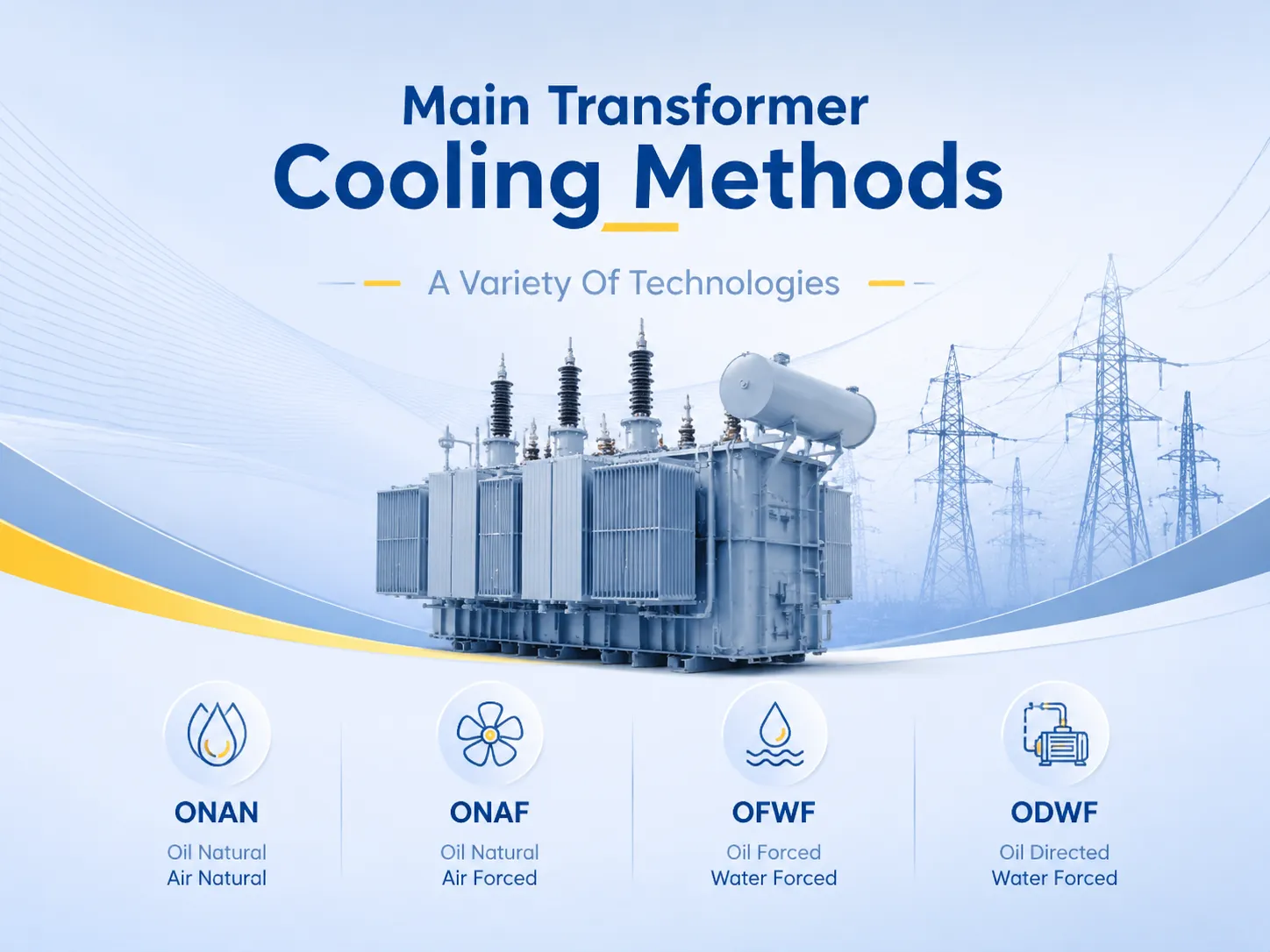
Por que o Resfriamento Determina a Saída do Transformador
Transformadores transformam energia elétrica de forma muito eficiente, mas até mesmo os 1 a 3 % de potência que são convertidos em calor implicam uma enorme quantidade de perda. Por exemplo, um transformador classificado em 50 MVA e operando com eficiência de 99 % tem perda de calor de cerca de 500 kW continuamente, o que é suficiente para aquecer uma pequena casa. O calor gerado tem apenas um caminho a seguir: ou seja, através do sistema de isolamento para o óleo ou ar, depois para a parede e radiadores do tanque e finalmente para a água ou ar circundante. Esse processo de remoção de calor estabelece um limite superior no desempenho contínuo do transformador medido em kVA.
O calor é um inimigo dos transformadores. A principal causa do envelhecimento do isolamento segue o princípio de Arrhenius: cada aumento da temperatura de 6-10 K acima da temperatura esperada do ponto quente reduz pela metade a vida útil esperada do isolamento. Um transformador projetado para um aumento médio de temperatura de 65 K e operando a 80 K não apenas terá um desempenho significativamente pior, mas também consumirá sua vida útil de projeto muito rapidamente, fazendo com que perca anos de vida a cada mês.
Decodificando o Código de Resfriamento e os Principais Métodos de Resfriamento
O processo de resfriamento é identificado de acordo com a nomenclatura padrão de quatro letras definida na IEC 60076-2 e IEEE C57.12.00: a primeira letra indica o meio extremamente importante que entra em contato com os enrolamentos (o = óleo, k = líquido com ponto de fulgor acima de 300°, a = ar), a segunda letra nos informa sobre a forma como esse meio é circulado (n = naturalmente, f = circulação forçada artificialmente, d = circulação direcionada), a terceira letra refere-se ao meio com o qual o aparelho interage (a = ar, w = água) e a letra final refere-se à forma como a circulação é realizada (n = naturalmente, f = artificialmente).
| Código de Resfriamento | Como Funciona | Aumento de Classificação Típico vs. ONAN | Tamanho Típico do Transformador |
|---|---|---|---|
| ONAN | O óleo circula por convecção natural; o calor irradia para o ar parado | Base de referência | Até ~5 MVA (uma etapa); unidades grandes são classificadas como ONAN em carga reduzida |
| ONAF | Adiciona ventiladores de radiador; ar soprado através das superfícies de resfriamento | +20 a +33% | 5-100 MVA |
| OFAF | Bombas de óleo forçam a circulação; ventiladores forçam o ar sobre os radiadores | +40 a +50% | 50-300 MVA |
| OFWF | Óleo bombeado através de um trocador de calor resfriado a água | +40 a +50%, pegada compacta | Unidades grandes onde a água está disponível |
| ODWF / ODAN / ODAF | Fluxo de óleo direcionado através de canais de enrolamento; ventiladores ou água externamente | Até +60% no design direcionado | 100 MVA e acima |
Classificações de múltiplas etapas são rotineiramente utilizadas na compra de transformadores de potência, por exemplo, ONAN/ONAF/ONAF ou a combinação de ONAN/ONAF/ONAF/ONAF, e permitem que os operadores liguem os ventiladores à medida que a carga aumenta. Por exemplo, um transformador com potência de 60 MVA pode ser classificado em 40 MVA como ONAN, em 50 MVA como ONAF, e em 60 MVA, com todos os ventiladores ativos. Os ventiladores utilizados são geralmente ventiladores axiais consumindo de 0,75 kW a 3 kW de potência, uma quantidade negligenciável dada as cargas que suportam, totalizando várias centenas a milhares de dólares por instalação, ventilador incluído.
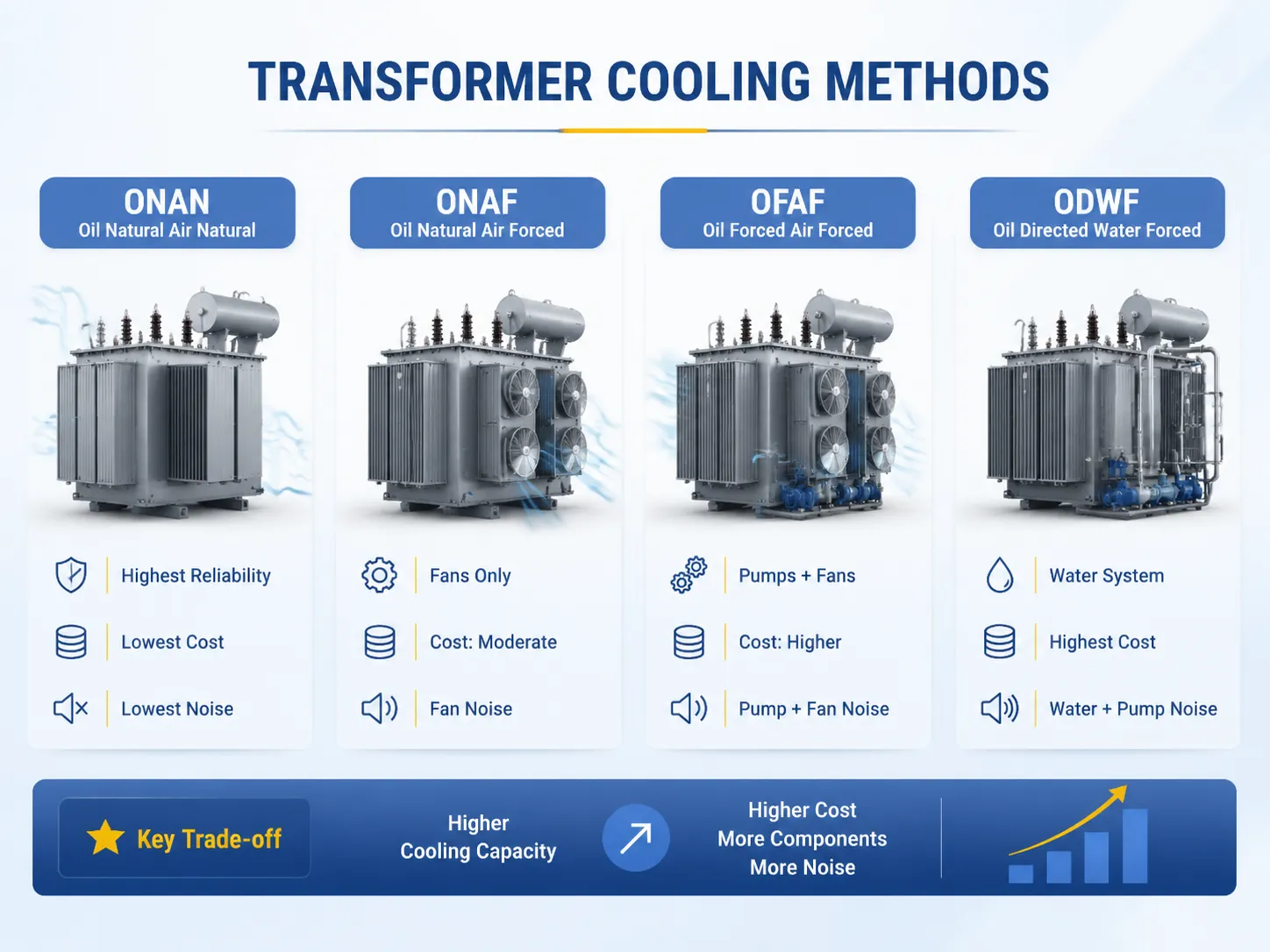
ONAN vs. ONAF vs. OFAF vs. ODWF
| Recurso | ONAN | ONAF | OFAF | ODWF |
|---|---|---|---|---|
| Partes móveis | Nenhum | Apenas ventiladores | Bombas + ventiladores | Bombas + sistema de água |
| Faixa de classificação típica | Até 5-10 MVA | 5-100 MVA | 50-300 MVA | 100 MVA e acima |
| Custo por MVA | Mais baixo | Moderado | Mais alto | Mais alto |
| Confiabilidade / manutenção | Mais alta; nada para falhar | Motores de ventilador precisam de atenção | Vedações e motores de bomba adicionados | Risco de vazamentos de água e contaminação |
| Área ocupada | Grandes bancos de radiadores | Radiadores compactos + ventiladores | Compacto com bombas | Mais compacto |
| Ruído | Mais baixo | Ruído do ventilador | Ruído da bomba + ventilador | Ruído da bomba + água |
É simples entender as compensações de engenharia aqui: cada estágio adicional de resfriamento forçado fornece MVA adicional por unidade de volume do tanque, mas resulta na adição de equipamentos que podem falhar, consumir energia ou produzir ruído. ONAN ainda é a opção mais comum, uma vez que não possui modos de falha além do transformador, enquanto ONAF é a opção padrão devido a ventiladores acessíveis, testados e facilmente adaptáveis; OFAF e ODWF são usados apenas para transformadores grandes, quando tanques e densidade de calor não deixam outra opção.
Classes e Limites de Aumento de Temperatura
| Parâmetro | IEC 60076-2 Valor Típico | IEEE C57.12.00 Valor Típico |
|---|---|---|
| Aumento médio máximo do enrolamento (imersão em óleo) | 65 K | 55 K (OA), 65 K (FA) |
| Aumento do ponto quente do enrolamento | 78 K (ponto quente a 85°C, 7 K de tolerância ambiente) | 80 K |
| Aumento máximo do óleo superior | 60 K | 55-65 K por classe |
| Temperatura ambiente de projeto | Média de 30°C, máximo 40°C | Média de 30°C, máximo 40°C |
| Limite máximo de temperatura do ponto quente | 98°C (enrolamento), 105°C (óleo) | 110°C contínuo |
Esses valores fazem parte de um acordo ou contrato com um formato. Se um transformador não passar no teste de avaliação de aumento de temperatura na fábrica, então não seguiu as condições da especificação e a certificação precisa incluir o aumento de temperatura medido. Quando a altitude é levada em consideração (1.000 m ou mais) ou temperatura ambiente alta (mais ou menos 40 graus Celsius), então os fatores devem ser verificados na IEC 60076-2, a razão para isso é que os dispositivos terão que ser desclassificados em climas mais quentes e, portanto, serão diferentes dos dispositivos que serão usados em um clima moderado.
Para entender como as diferentes etapas de resfriamento influenciam o processo | o mesmo transformador de 25 MVA foi considerado com diferentes condições e processos, para que se possa perceber a peculiaridade quando os fornecedores fornecem ofertas irreais:
| Modo de Resfriamento | Classificação Contínua (Tanque de 25 MVA) | Aumento a 25°C Ambiente | Aumento a 40°C Ambiente | Desclassificação Necessária a 40°C |
|---|---|---|---|---|
| ONAN (natural) | ~15 MVA | 52 K óleo superior | 67 K óleo superior | ~12% |
| ONAF (ventiladores ligados) | ~20 MVA | 48 K óleo superior | 63 K óleo superior | ~8% |
| OFAF (bombas + ventiladores) | ~25 MVA | 44 K óleo superior | 59 K óleo superior | ~5% |
| ODWF (direcionado + água) | ~30 MVA | 40 K óleo superior | 55 K óleo superior | ~5% |
Modernização e Aumento de Unidades Existentes
A conversão de ONAN para ONAF é frequentemente o método de atualização preferido porque geralmente é mais barato do que comprar um transformador maior.
Verifique o projeto térmico. Obtenha confirmação do fabricante sobre se os radiadores e o ponto quente nos enrolamentos podem lidar com o calor extra. Alguns tanques exigirão área de superfície de radiador extra mesmo com a instalação de ventiladores.
- Instale um banco de ventiladores. O custo geralmente ficará entre $1500 e $8000 e incluirá de 2 a 6 ventiladores axiais, proteções, estruturas de montagem, fiação além de contatores, enquanto a instalação exigirá de 2 a 4 dias de interrupção.
- Equipar com comutação controlada por temperatura. Os ventiladores devem começar a funcionar a partir de um sinal de temperatura do óleo superior, enquanto desligam automaticamente com base em um temporizador ou uma queda de temperatura para evitar operação cíclica rápida.
- Atualize a placa de identificação e proteção. A nova classificação combinada deve ser incluída nas configurações do relé, bem como nos registros de manutenção.
- Comissionamento com teste de aquecimento. Seria aconselhável repetir o teste de aumento de temperatura na nova classificação para garantir que o aumento do enrolamento de 65 K seja seguido.
Ir além do ONAF e usar circulação forçada de óleo requer mais esforço, pois envolve a adição de bombas de óleo e a modificação da tubulação do tanque. Esta opção é considerada ao lidar com transformadores que excedem 30 MVA. Conversões refrigeradas a água (OFWF) podem ser possíveis, mas na realidade, não trazem tantas vantagens, uma vez que estão conectadas ao risco de vazamentos.
Resfriamento de Transformadores a Seco
Transformadores a seco são caracterizados pelo uso de ar para resfriamento e conformidade com códigos específicos que incluem AN (Ar Natural) ou AF (Ar Forçado). Em termos de remoção de calor, transformadores a seco não incluem óleo e, portanto, dependem da área de suas bobinas encapsuladas ou enroladas. A capacidade dos transformadores a seco é relativamente menor do que a dos modelos preenchidos com óleo. Por exemplo, transformadores de resina fundida típicos podem atingir uma capacidade máxima de até 3-10 MVA. Transformadores a seco podem ser categorizados em duas classes de aumento de temperatura de acordo com a norma IEC 60076-11: Classe F (que aumenta em 100K para atingir uma temperatura de 155°C) e Classe H (que aumenta em 125K para atingir uma temperatura de 180°C).
A implementação de resfriamento forçado a ar adiciona algumas centenas de dólares para o ventilador e aumenta a capacidade nominal do transformador em aproximadamente 25 a 30%. A principal vantagem dos transformadores a seco é a ausência de óleo no processo de operação. No entanto, o uso de ar como meio de resfriamento também apresenta certas desvantagens, como a necessidade de ventilação adequada e um sistema caro para gerenciamento de poeira.
Qual Método de Resfriamento para Qual Aplicação
- Transformadores de distribuição acima de 2,5 MVA – Neste caso, ONAN é o método padrão utilizado para a maioria das aplicações. No entanto, pode ser utilizado em um caso em que há a presença de carga industrial variável, permitindo o uso de ONAF.
- Transformadores de potência – Neste ponto, o método ONAN pode ser utilizado com alguns ventiladores para fornecer um ambiente de resfriamento apropriado.
- Transformadores de potência grandes (mais de 100 MVA) são do tipo OFAF, portanto, há bombas de óleo e sistemas de fluxo forçado sendo utilizados para esses dispositivos.
- DISTRITO OFFSHORE E LUGARES LOTADOS – Um tipo OFWF deve ser preferido quando há recursos hídricos, reduzindo o tamanho do sistema.
- Edifícios comerciais internos lidam com unidades do tipo seco enquanto utilizam métodos AN e AF, já que óleo e o código de incêndio interno não combinam bem.
- Climas quentes e bases em alta altitude exigem a implementação de um nível adicional de resfriamento e/ou desclassificação, pois o ar circundante não é capaz de dissipar muito calor.
Comparação de Marcas e Preços
| Marca | Origem | Tecnologias de Resfriamento Oferecidas | Faixa de Preço Aproximada (1 MVA ONAN) |
|---|---|---|---|
| ABB | Suíça/Suécia | Faixa completa, experiência em ODWF e fluxo direcionado | $10,000-$25,000 |
| Siemens | Alemanha | Unidades de potência grandes, ONAF/OFAF em estágios | $11,000-$28,000 |
| Hitachi Energy | Suíça | Transformadores de potência com resfriamento avançado | $12,000-$30,000 |
| Schneider Electric | França | Unidades de distribuição e do tipo seco AF | $9,000-$22,000 |
| Eaton / GE | EUA | Distribuição ONAN/ONAF | $7,000-$18,000 |
| Jiangsu Subian Electric Power | China | ONAN, ONAF, classificações em estágios, tipo seco AN/AF | $5,000-$14,000 |
Líderes de mercado como ABB, Siemens, Hitachi Energy e Schneider Electric são os principais players na indústria de transformadores de potência em grande escala com seus designs ODWF/OFAF que são utilizados como referências na indústria. Notavelmente, fabricantes como Jiangsu Subian Electric Power são conhecidos por suas unidades ONAN e ONAF em estágios projetadas para as classes menores de 0,5-10 MVA que a maioria dos clientes está interessada. Suas unidades foram testadas de acordo com a IEC 60076-2, e recebem certificados que verificam que os laboratórios de aumento de temperatura podem medir o aumento de temperatura de seus transformadores. A Subian envia seus produtos para todo o mundo; pode produzir tanques e radiadores de acordo com as especificações do cliente a preços que são 40 a 60% mais baixos do que os preços cotados por seus concorrentes europeus. Clientes que precisam de retrofit de banco de ventiladores devem consultar a Subian sobre as especificações técnicas para tecnologia de superfície de radiador e escolhas de bomba, uma vez que, quando a temperatura ambiente é tão alta quanto 40 graus Celsius, essas especificações são mais importantes do que o preço.
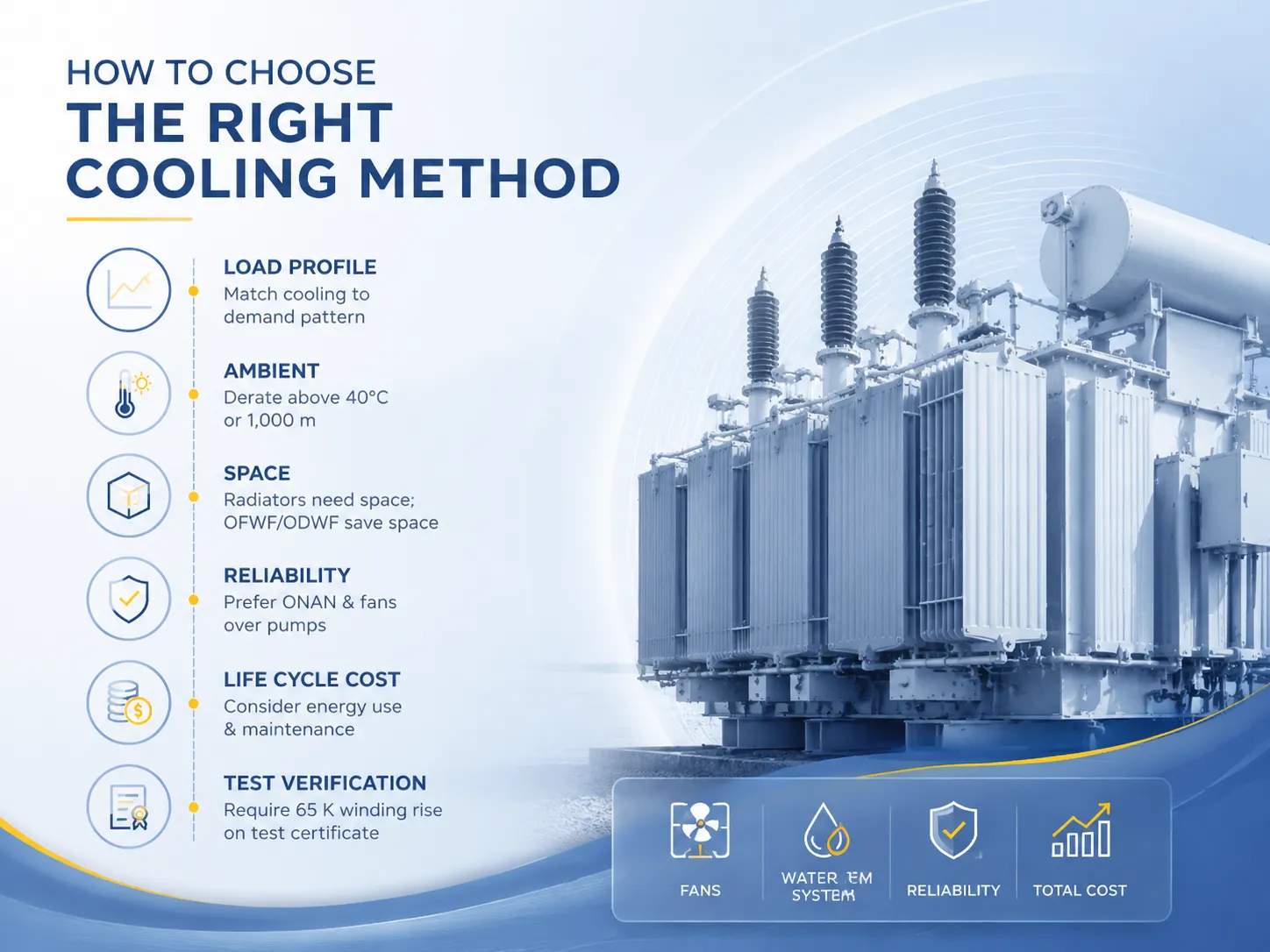
Como Escolher o Método de Resfriamento Certo
- A primeira coisa é definir o tipo de perfil de carga. Um perfil de carga com uso constante tem uma necessidade de resfriamento maior do que um perfil de carga com uso variável. Portanto, um estágio de resfriamento pode ser otimizado para operar os ventiladores sozinhos durante os horários de pico da tarde.
- Em seguida, você deve considerar os efeitos do ambiente. Se sua temperatura ambiente for superior a 40 graus Celsius ou se você estiver localizado a uma altitude superior a 1000 metros, você precisará desclassificá-lo de acordo com a IEC 60076-2 ou fornecer um estágio de resfriamento adicional.
- Certifique-se de que você leva em conta os requisitos de espaço do equipamento. Bancos de radiadores requerem espaço no quintal, mas as tecnologias OFWF e ODWF reduzem o tamanho da área ocupada à custa de sistemas de água.
- A confiabilidade é de alta importância. Para infraestrutura crítica, os estágios ONAN e ventiladores simples devem ser favorecidos em relação às bombas sempre que possível, desde que a classificação permita.
- Esteja ciente do custo total de propriedade. Motores e bombas consomem energia e requerem manutenção. Um grande tanque ONAN pode ter um custo menor do que um motor de resfriamento forçado simples.
- Não se esqueça de solicitar um teste de aumento de temperatura com 65 K (ou desejado) de aumentos de enrolamento sendo atestados pelo certificado de teste em vez de serem assumidos.
Manutenção e Monitoramento
A falha dos sistemas de resfriamento ocorre em silêncio e é tipicamente indicada por um alarme acionado pela queda de temperatura. Na prática de resfriamento adequada, uma série de inspeções de partes com falha, como lâminas de ventilador, motores de ventilador, proteções de ventilador, e assim por diante, estão incluídas. Além de uma verificação mensal de todas as partes mencionadas, uma verificação trimestral das vedações da bomba e dos indicadores de fluxo de óleo deve ser realizada. Juntamente com a termografia anual dos bancos de radiadores, também há a necessidade de realizar um teste escrito do auto-início do ventilador controlado por interruptor de temperatura. Quanto aos grandes painéis de resfriamento, a seção de temperatura do enrolamento e DGA devem ser analisados juntos; se houver um aumento de um ponto quente sem falha do ventilador, isso indica um problema dentro de uma parte interna da unidade de resfriamento.
A quantidade de óleo no conservador deve corresponder ao projeto de resfriamento. A ocorrência de baixo nível de óleo pode levar a uma situação em que a cavitação acontece e isso pode ser de grande perigo em comparação com o superaquecimento.
Perguntas Frequentes
O que significam ONAN e ONAF em uma placa de identificação de transformador?
Estas são designações que estão ligadas ao resfriamento de acordo com a IEC 60076-2. ONAN significa óleo natural e ar natural, o que significa o projeto padrão resfriado por si mesmo. A designação ONAF inclui os ventiladores do radiador que ajudam a resfriar o transformador, e assim a designação ONAF denota a capacidade de operação aumentada, que é de 20% a 33% maior do que a do projeto resfriado por si mesmo. Por essa razão, transformadores ONAN/ONAF são avaliados duas vezes.
Quanto custa adicionar resfriamento forçado a um transformador?
A adaptação de um ONAF em um transformador de classe de distribuição custa entre 1500-8000 dólares, pois geralmente envolve a instalação de 2-6 ventiladores, bem como a instalação das proteções, contatores e interruptores de controle de temperatura. O uso de ar forçado ajuda a aumentar a capacidade do transformador em pelo menos 20-33.
Posso sobrecarregar um transformador se eu ligar os ventiladores?
As sobrecargas são permitidas apenas até a classificação ONAF e somente se a temperatura do ar e a elevação estiverem dentro dos limites prescritos no conceito. O aumento real da temperatura é um requisito; assim, em caso de aumento da temperatura média superior a 65K, a vida útil do isolamento será reduzida.
Qual é a diferença entre resfriamento OFAF e ODWF?
A diferença consiste no fato de que no OFAF, o óleo é circulado através do radiador, enquanto no OFDA, o óleo é bombeado em canais de resfriamento de enrolamento por meio do fluxo de água através do trocador de calor.
A altitude realmente importa para o resfriamento do transformador?
De fato, importa. Acima de 1000 metros, a densidade do ar diminui, o que torna o resfriamento muito ineficiente.
Referências
- IEC 60076-1 — Transformadores de Potência, Requisitos Gerais — Especificação mestre para classificações e perdas.
- IEC 60076-2 — Transformadores de Potência, Aumento de Temperatura — O padrão que define códigos de resfriamento e limites de aumento de temperatura.
- IEEE C57.12.00 — Requisitos Gerais para Transformadores Imersos em Líquido — Código de resfriamento da América do Norte e linha de base de aumento de temperatura.
- IEC 60076-11 — Transformadores de Tipo Seco — Classes térmicas para unidades resfriadas a ar.
- Hitachi Energy — Produtos de Transformadores — Referência para classificações de resfriamento em etapas em grandes transformadores de potência.
- Transformadores ABB — Referência da indústria para opções de tecnologia de resfriamento e fichas técnicas.
- Transformadores Siemens Energy — Documentação de resfriamento e aumento de capacidade para transformadores de potência.
Conclusão
Os resfriamentos de transformadores atuam como fatores decisivos importantes que determinam a potência e a vida útil do transformador. Sempre que se lê o código de 4 letras para resfriamento, entende-se as especificações de aumento de temperatura e faz-se uma escolha entre resfriamento natural, resfriamento forçado ou adição de um ventilador aos sistemas de resfriamento existentes, todas essas informações têm uso prático na engenharia.
- ONAN é o padrão básico; ONAF representa uma melhoria e consiste em 20-33% sobre o ONAN com custos adicionais de retrofit de $1.500 a $8.000.
- OFAF e ODWF são usados para transformadores de grandes dimensões devido às densidades de calor.
- A temperatura deve ser comprovada através do teste e certificada com o aumento de temperatura do enrolamento de 65 K.
- Em caso de alta altitude ou temperaturas, os transformadores deverão ser desclassificados ou o resfriamento deverá ser reforçado.