


في عام 1886، تدعي غريت بارينغتون، ماساتشوستس أنها أول مكان في العالم يستخدم التيار المتردد في محطات الطاقة من خلال المحولات. يُعتبر هذا الحدث حدثًا عظيمًا في تاريخ الكهرباء، حيث زود مولد بجهد 500 فولت محولًا خفض الجهد للمصابيح المتوهجة مما سمح بإنتاج الكهرباء وتحويلها وتوريدها للعملاء. بعد حوالي 140 عامًا، يتم استخدام مبدأ هذا الحدث الرائع في كل مصنع ومطار ومستشفى ومركز بيانات حول العالم.
يوفر المقال معلومات مفصلة تتعلق بالمبادئ الأساسية التي تجعل المحولات محركًا للتقدم: تحويل الجهد، الخسائر في النقل، العزل الكهربائي، وتوجيه الطاقة في الشبكات المعقدة. أيضًا، سيجد المرء الأرقام التي تقيس الكفاءة، الخسائر، فئات الجهد، والتكاليف، وتعلم عن دور المحولات في جميع حركات الكهرباء، بدءًا من ازدهار الترام في التسعينيات إلى محطات الشحن الحديثة للمركبات الكهربائية.
كيف دفعت المحولات التقدم التاريخي
في الماضي، كانت الكهرباء تُنتج بجوار نقطة الاستهلاك بسبب الحدود الكامنة للتيار المباشر (DC) من حيث تحويل الجهد. ولكن بسبب ذلك، كان بإمكان كل محطة طاقة خدمة المنطقة فقط ضمن دائرة نصف قطرها ميل أو ميلين. غيرت اختراع المحولات تلك الحالة. مع التيار المتردد (AC)، يمكن لمولد توليد الكهرباء بجهد 20 كيلوفولت ونقلها عبر المحولات إلى جهد 100 كيلوفولت أو حتى أعلى، مما يسمح بنقل الكهرباء لمسافات طويلة. في التسعينيات، على سبيل المثال، أصبح من الممكن لمحطات الطاقة التي تنتج الكهرباء باستخدام الطاقة المائية—مثل، على سبيل المثال، تلك الموجودة في شلالات نياجارا—تزويد المدن الواقعة على بعد 30-40 كم من المحطة بالطاقة.
لم يكن من الممكن حل قضايا الكهرباء الريفية، التي استمرت من الثلاثينيات إلى الخمسينيات، بدون محولات توزيع رخيصة؛ كانت فترة التصنيع بعد نهاية الحرب العالمية الثانية تتطلب محولات طاقة ضخمة في كل مصنع صناعي؛ جلبت الثورة الرقمية المحولات الجافة إلى جميع المباني؛ والآن يمكننا ملاحظة تحول قطاع الطاقة باستخدام المحولات.
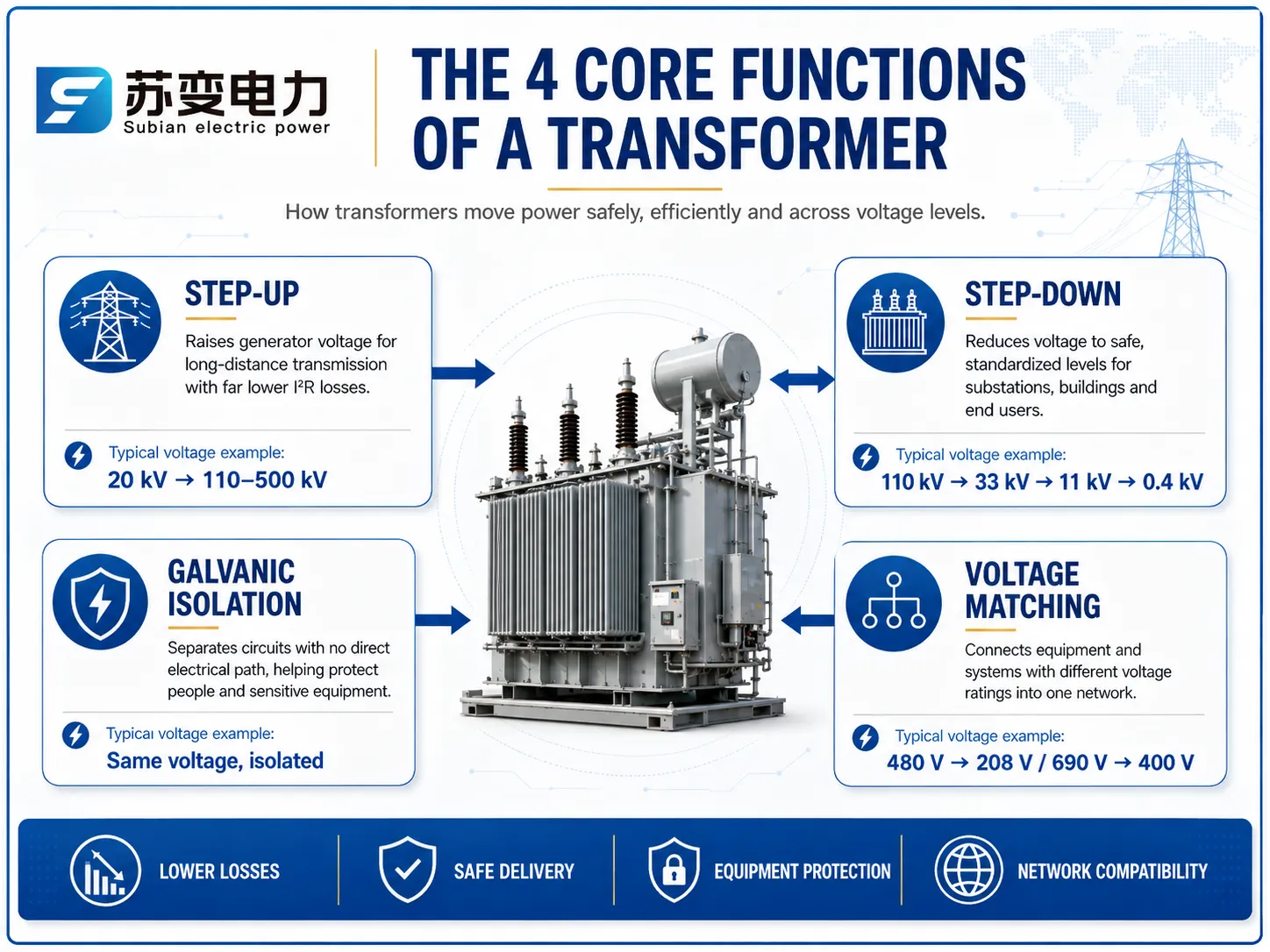
الوظائف الأساسية الأربعة
| الوظيفة | ما تقدمه | تغيير الجهد النموذجي |
|---|---|---|
| رفع الجهد | نقل عالي الجهد مع خسائر خط منخفضة | 20 كيلوفولت → 110–500 كيلوفولت |
| خفض الجهد | إمداد آمن ومعياري للمستخدمين | 110 كيلوفولت → 33 كيلوفولت → 11 كيلوفولت → 0.4 كيلوفولت |
| العزل الكهربائي | لا يوجد مسار كهربائي مباشر بين الدوائر | نفس الجهد، معزول |
| مطابقة الجهد | يربط المعدات ذات التصنيفات المختلفة | على سبيل المثال 480 فولت → 208 فولت، 690 فولت → 400 فولت |
تتجمع هذه الوظائف الأربع في كل شبكة. على سبيل المثال، تأخذ مستشفى 11 كيلوفولت من الشارع، وتخفضه إلى 400 فولت للمبنى، وتعزل الدوائر الحرجة للمعدات الطبية، وتطابق جهد المولد مع لوحة المفاتيح أثناء الانقطاعات.
الفيزياء: الحث الكهرومغناطيسي
المفهوم وراء عمل المحول يعتمد على الحث الكهرومغناطيسي، الذي تم توضيحه لأول مرة بواسطة فاراداي وتم قياسه بواسطة لينز. عندما يسير التيار الكهربائي الأساسي عبر المحول، يصبح القلب الحديدي المصفح مغناطيسيًا، ويتسبب التدفق المتناوب الناتج في عملية هذا المغنطة في توليد جهد كهربائي في الملف الثانوي للمحول. إذا تم حساب نسبة التحويل مسبقًا، فيمكننا توقع أن تكون نسب التحويل متساوية.
النوعان من الخسائر التي تؤثر على الكفاءة هما خسارة الهسترة، التي تشير إلى عملية التبديل المتكرر لمجالات المغناطيسية في القلب، وخسارة التيار الدوامي، وهو التيار المتولد داخل مادة القلب. يمكن تقليل كل من نوعي الخسائر من خلال اختراع فولاذ السيليكون الموجه للحبوب، وإنشاء صفائح رقيقة من الفولاذ وتطبيق تقنية الليزر الجديدة. تحدث خسارة النحاس مع مربع تيار الحمل وبالتالي تعمل المحولات بكفاءة أكبر عندما يصل تحميلها الفعلي إلى 50-70% من القيمة المقدرة.
لماذا الكفاءة هي المحرك الحقيقي
الرقم الأكثر أهمية في حياة المحول هو الكفاءة. الكهرباء التي تمر عبر محول توزيع تفقد حوالي 1 إلى 3 في المئة، ونظرًا لأن هذا الجهاز يعمل باستمرار، فإن هذا يعكس 3-5 في المئة من إجمالي الطاقة الكهربائية المنتجة من جميع البلدان في العالم. تقليل الخسائر بنقطة مئوية واحدة من إجمالي الكهرباء الموزعة بواسطة جميع المحولات المستخدمة سيوفر كهرباء أكثر مما يتم استهلاكه في معظم البلدان.
| التصنيف | الكفاءة النموذجية | خسارة الطاقة السنوية (kWh) | تكلفة الخسارة @$0.10/kWh |
|---|---|---|---|
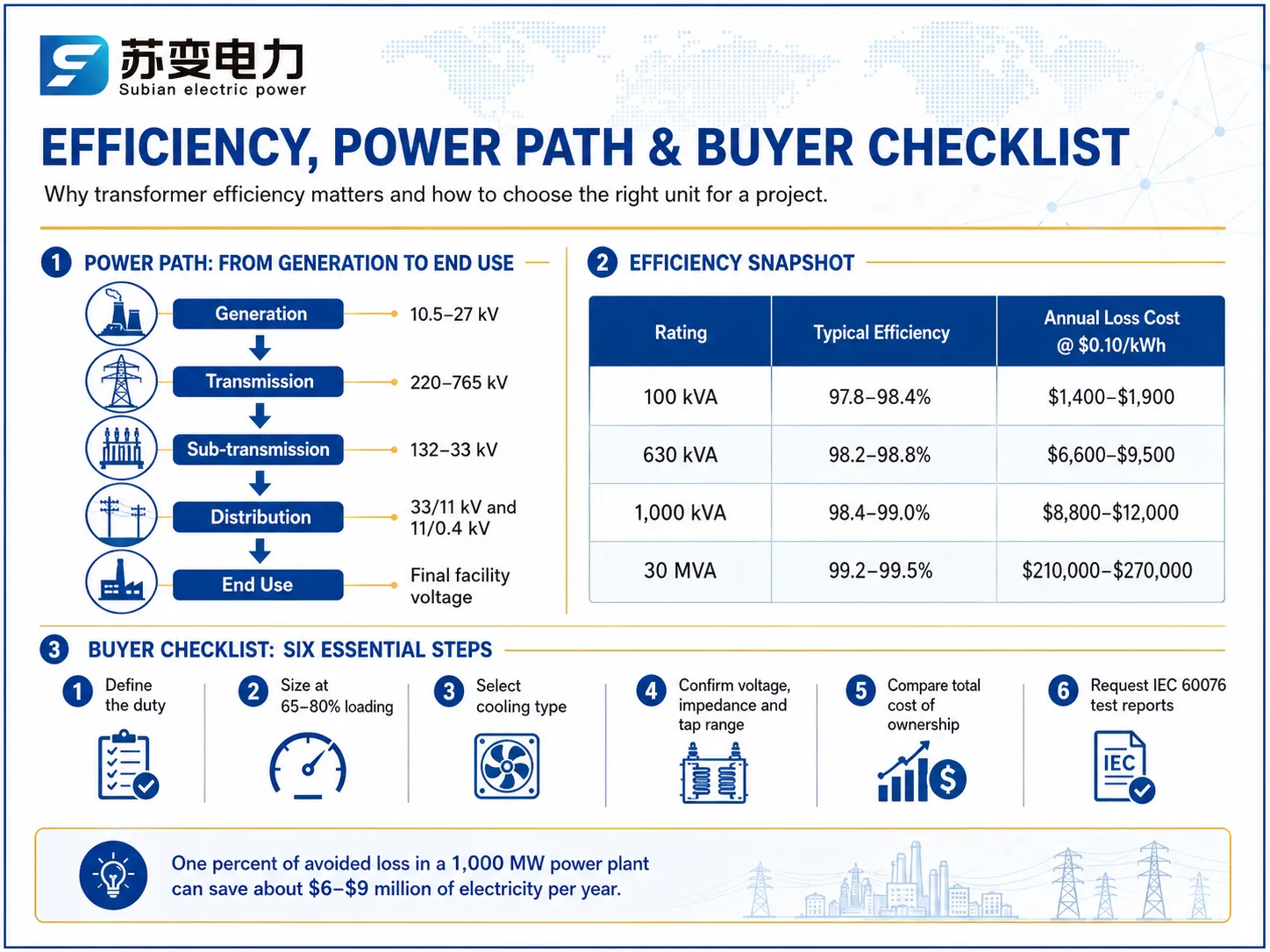
| 100 كيلوفولت أمبير | 97.8–98.4% | 14,000–19,000 | $1,400–$1,900 |
| 630 ك.ف.أ | 98.2–98.8% | 66,000–95,000 | $6,600–$9,500 |
| 1,000 كيلوفولت أمبير | 98.4–99.0% | 88,000–120,000 | $8,800–$12,000 |
| 30 م.ف.أ | 99.2–99.5% | 2,100,000–2,700,000 | $210,000–$270,000 |
لأن تكلفة الخسارة السنوية تتجاوز سعر العديد من المحولات الصغيرة خلال بضع سنوات، فإن الشراء القائم على الكفاءة - باستخدام تقييم خسارة قدره $3,000–$8,000 لكل كيلووات - هو ممارسة قياسية بين شركات المرافق والمشترين الصناعيين المتقدمين.
الأنواع حسب الوظيفة
| النوع | الوظيفة الأساسية | التطبيق النموذجي |
|---|---|---|
| رفع جهد المولد (GSU) | رفع جهد المولد إلى مستوى الشبكة | محطات الطاقة، مزارع الرياح، الطاقة الشمسية |
| محول النقل | ربط الشبكات عالية الجهد | 400/220/132 kV محطات فرعية |
| محول توزيع | خفض الجهد إلى جهد الاستخدام النهائي | الأعمدة، التركيبات السطحية، خزائن المباني |
| محول العزل | الفصل الجلفاني | الطبية، تكنولوجيا المعلومات، التحكم الصناعي |
| المحول الذاتي | تعديل الجهد بملف واحد | الربط بين أنظمة 132/66 kV |
| محول القياس | تقليل الحجم للقياس/الحماية | محولات التيار ومحولات الجهد في كل محطة تحويل |
مسار المحول في نظام الطاقة
①.التوليد: وحدات محولات GSU تأخذ جهد المولد في الخط المعني، تأخذ محولات GSU جهد المولدات من نطاق 10.5–27 kV إلى مستويات 110–500 kV.
②.النقل: تربط محولات EHV الشبكة بعيدة المدى عادةً مع نقل 220–765 kV.
③.النقل الفرعي: تسهل بوابات محولات 132–33 kV إمداد المحطات الفرعية الإقليمية.
④.التوزيع: أنظمة المحولات 33/11 kV أو 11/0.4 kV تزود خطوط التغذية للنقل.
⑤.الاستخدام النهائي: وحدات من النوع الجاف أو المغمورة بالزيت مطلوبة داخل المصانع.
مفهوم خسارة كل مرحلة من مراحل المحول ليس مجموعًا حسابيًا، حيث أن لكل مرحلة ملف خسائرها. لذا فإن الخسارة التراكمية تحدد ليس بجمع الخسائر الحسابية ولكن من خلال حساب الخسائر في كل مرحلة فردية.
التطبيقات الحديثة التي تدفع النمو
- الطاقة المتجددة: جميع توربينات الرياح والمحولات الشمسية تستخدم محولات رفع الجهد، وعلى مستوى العالم، ستضيف الطاقات المتجددة العديد من مئات جيجاوات من القدرات الجديدة سنويًا، مع كل ميجاوات يتطلب حوالي 1.5-2 م.ف.أ من سعة المحول.
شحن السيارات الكهربائية: تحتاج الشواحن السريعة عند 150-350 kW إلى محولات مخصصة، عادةً حوالي 500-1,000 ك.ف.أ لكل موقع.
مراكز البيانات: تستخدم الحرم الجامعية ذات النطاق الكبير بسعة تتراوح بين 50 و150 ميجاوات آلاف المحولات الجافة كل عام.
تحديث الشبكة: تعتمد الشبكة الذكية، وتطويرات HVDC وتخزين البطاريات جميعها على توفر المحولات، وهذا أحد الأسباب التي أدت إلى زيادة أوقات الانتظار إلى 30-50 أسبوعًا في السنوات 2022-2024.
التحضر: تواصل المباني الشاهقة، والأنفاق، والمطارات استهلاك المحولات الجافة ومحولات التوزيع.
المواصفات التمثيلية والخسائر
| التصنيف | الجهد | خسارة عدم التحميل | خسارة الحمل | المقاومة |
|---|---|---|---|---|
| 100 كيلوفولت أمبير | 11/0.4 كيلو فولت | 200–330 واط | 1,300–2,000 واط | 4% |
| 630 ك.ف.أ | 11/0.4 كيلو فولت | 900–1,400 واط | 6,000–8,500 واط | 4.5–6% |
| 2000 كيلو فولت أمبير | 11/0.4 كيلو فولت | 2,400–3,400 واط | 15,500–21,000 واط | 6–8% |
| 30 م.ف.أ | 110/33 كيلوفولت | 20,000–30,000 واط | 110,000–160,000 واط | 10–12% |
العلامات التجارية ونطاقات الأسعار
| العلامة التجارية | الدولة | 630 ك.ف.أ | 30 م.ف.أ (110 kV) | القوة |
|---|---|---|---|---|
| هيتاشي للطاقة | سويسرا/اليابان | $9,000–$15,000 | $380,000–$560,000 | هندسة على نطاق الشبكة |
| سيمنز | ألمانيا | $8,500–$14,500 | $360,000–$540,000 | قاعدة مرجعية أوروبية |
| ABB | سويسرا | $8,500–$14,000 | $360,000–$530,000 | شبكة خدمات عالمية |
| شنايدر إلكتريك | فرنسا | $8,000–$13,500 | عند الطلب | تصميم بيئي للتوزيع |
| TBEA / الصين XD | الصين | $5,500–$9,500 | $230,000–$380,000 | محولات الطاقة عالية الحجم |
| شركة جيانغسو سوبين للطاقة الكهربائية | الصين | $4,800–$9,500 | $220,000–$360,000 | مختبر IEC 60076، OEM/ODM، تصدير |
الشركات مثل Hitachi Energy و Siemens و ABB و Schneider Electric تحدد معيار الجودة، وتبرر عروضها المحلية تسعيرها للمعدات الرئيسية. ومع ذلك، تؤدي كلتا الشركتين وظائف متطابقة: خفض الجهد باستخدام الحث الكهرومغناطيسي، حيث يحدد تصميم القلب درجة الكفاءة. حالياً، تهيمن الشركات المصنعة الصينية على الصناعة - تنتج Jiangsu Subian Electric Power محولات توزيع وطاقة تصل إلى 110 كيلوفولت متوافقة مع IEC 60076، وتوفر خدمات اختبار معتمدة من طرف ثالث، والعلامة التجارية، والتصدير، عادةً بخصم يتراوح بين 25-45% عن السعر المدرج في أوروبا. بالنسبة للتصنيفات القياسية للمحولات، يمكن عادةً العثور على مورد منخفض التكلفة في الصين.
كيفية الاختيار لمشروعك
- تحديد الواجب: تحميل مستمر، دوري أو طارئ؛ هذا يحدد متطلبات الهامش الحراري.
- حساب الحمل بالكيلو فولت أمبير عند تحميل 65–80% للجلوس بالقرب من ذروة الكفاءة.
- اختيار التبريد: نوع مغمور بالزيت في الهواء الطلق، نوع جاف في الداخل، مع مدخل وفقاً لقوانين الحريق.
- تحديد الجهد، والمقاومة، ونطاق التوصيل، وتأكيد مستوى الدائرة القصيرة في الموقع.
- إضافة تقييم الفقد ومقارنة التكلفة الإجمالية للملكية على مدى 15–25 سنة.
- طلب تقارير اختبار روتينية وفقاً لمعيار IEC 60076 وموعد تفتيش المصنع قبل الطلب.
الأسئلة المتكررة
ما هي الوظائف الأساسية للمحول في نظام الطاقة؟
أربع وظائف: رفع الجهد لنقل فعال، خفضه للاستهلاك الآمن، عزل الدوائر كهربائياً، ومطابقة الجهود بين أنظمة مختلفة. كل مسار طاقة من المولد إلى المقبس يستخدم جميع الأربعة على الأقل مرة واحدة، وعادة ما يمر عبر خمس مراحل من المحولات أو أكثر.
كم من الطاقة تفقدها المحولات؟
تفقد محولات التوزيع حوالي 1–3% من الطاقة التي تمر عبرها؛ بينما تفقد المحولات الكبيرة 0.3–0.8%. تساوي إجمالي خسائر المحولات في جميع أنحاء العالم حوالي 3–5% من إجمالي إنتاج الكهرباء العالمي، مما يحفز معايير الكفاءة مثل NEMA TP-1 و U.S. DOE 10 CFR 431 التي تفرض مستويات كفاءة دنيا.
لماذا نقوم برفع الجهد للنقل؟
لأن خسائر الخطوط تتناسب مع مربع التيار. مضاعفة الجهد تقلل التيار إلى النصف وتقلل الخسائر إلى الربع. رفع 20 كيلوفولت إلى 400 كيلوفولت يقلل التيار بمقدار 20، مما يقلل خسائر I²R بحوالي 400× لنفس الطاقة، مما يجعل النقل لمسافات طويلة ممكنًا من الناحية الاقتصادية.
كم يكلف المحول؟
يكلف محول عمود بقدرة 50 كيلو فولت أمبير $1,000–$2,500؛ بينما يكلف 250 كيلو فولت أمبير $2,500–$6,000؛ و1,000 كيلو فولت أمبير $9,000–$18,000؛ ومحول طاقة بقدرة 30 م.ف.أ، 110 كيلوفولت $250,000–$450,000. تضيف الشحنات، والملحقات والتركيب 10–20%. تختلف الأسعار حسب العلامة التجارية، والخسائر، والجهد، والمنطقة.
كيف تؤثر كفاءة المحول على فواتير الكهرباء؟
مباشرة. يكلف محول بقدرة 1,000 kVA يفقد 100,000 kWh سنويًا حوالي $9,000–$12,000 في الخسائر بأسعار عادية. نظرًا لأن المحول يعمل لمدة 25–35 عامًا، فإن فرق كفاءة 0.5% بين عرضين يستحق عشرات الآلاف من الدولارات على مدار عمره—قارن دائمًا الكفاءة، وليس فقط سعر الشراء.
المراجع
- موسوعة بريتانيكا: المحول — تاريخ وفيزياء الجهاز الذي مكن عصر التيار المتردد.
- IEC 60076-1: المحولات الكهربائية – المتطلبات العامة — قاعدة عالمية للتصنيفات، والتسامحات، والاختبارات.
- آفاق الطاقة العالمية للوكالة الدولية للطاقة — توقعات الطلب على الشبكة والمحولات لانتقال الطاقة.
- U.S. DOE: كفاءة المحولات التوزيعية — لوائح الكفاءة وإرشادات تقييم الخسائر.
- NEMA TP-1 — معيار كفاءة شمال أمريكا لمحولات التوزيع.
- IEEE C57.12.00 — متطلبات شمال أمريكا للمحولات المغمورة في السوائل.
- شركة جيانغسو سوبين للطاقة الكهربائية — مصنع محولات متوافق مع IEC 60076 للتطبيقات التوزيعية، والطاقة، والنوع الجاف.
الخاتمة
لقد زودت المحولات التقدم بالطاقة لمدة 140 عامًا لأن وظائفها الأساسية الأربع—رفع الجهد، خفض الجهد، العزل، ومطابقة الجهد—تحل المشكلة الأساسية لنقل الكهرباء بكفاءة وأمان. إن كفاءتها، التي تتراكم عبر خمس مراحل أو أكثر في كل مسار طاقة، تجعلها واحدة من أعلى التقنيات قيمة في عالم الكهرباء.
يقلل نقل الجهد المرتفع من الخسائر بنسبة تصل إلى 400× مقارنة بالنقل عند جهد المولد.
تعادل خسائر المحولات 3–5% من إجمالي الإنتاج العالمي، لذا فإن معايير الكفاءة مهمة.
احسب الحجم عند تحميل 65–80% وقارن العروض بناءً على إجمالي تكلفة الملكية، وليس السعر فقط.
سواء كنت توسع مصنعًا، أو تبني مزرعة شمسية، أو تقوم بترقية محطة تحويل، فإن اختيار المحول الخاص بك يحدد كفاءتك للثلاثين عامًا القادمة. قارن الموردين—من القادة العالميين مثل Hitachi Energy وSiemens إلى الشركات المصنعة المباشرة مثل Jiangsu Subian Electric Power—استنادًا إلى تقارير الاختبار، والخسائر، والضمان، وستستثمر في الآلة التي تحافظ على تقدم الحركة.