


تخيل منشأة معالجة صناعية تقع في تشنغتشو تستخدم ثلاثة محولات بقدرة 1,600 كVA تعمل عند متوسط عامل تحميل يبلغ 92 في المئة لمدة اثني عشر ساعة متتالية. تؤدي اضطرابات الطاقة في شبكة المرافق بعد ظهر يوم الثلاثاء إلى انخفاض في الجهد في المنشأة لمدة 400 مللي ثانية، مما يتسبب في توقف ثلاثة أنظمة تعبئة تعمل بالتحكم الخدمي في نفس الوقت. يتوقف الإنتاج لمدة 47 دقيقة بينما يقوم مشغلو المعدات بإعادة تنشيط المحركات ووحدات التحكم المنطقية القابلة للبرمجة، مما يؤدي إلى خسارة إيرادات تقدر بحوالي $18,000، بالإضافة إلى تدمير دورتين إنتاجيتين. تؤكد التحقيقات التي أجراها مشرف الصيانة الشكوك التي أثيرت حول المحولات الكهربائية التي تآكلت على مدى ست سنوات منذ التركيب.
المرتبطة بأتمتة الصناعة، المحولات ليست قطع معدات ثابتة؛ بل تؤدي وظيفة الوسيط بين مصدر الجهد العالي والمعدات الحساسة لتقلبات الجهد. في هذه المقالة، نناقش الأهمية الكبرى للمحولات في أتمتة الصناعة - طرق تحديد حجم المحولات والمواصفات، التحكم في جودة الجهد، فعالية التكلفة وطرق اختيار الموردين دون دفع الكثير. تحتوي مقالتنا على أمثلة، إشارات إلى IEC 60076 و IEC 60204، نطاقات تكلفة حقيقية ونصائح للتحسين.

أهمية المحولات في أتمتة الصناعة
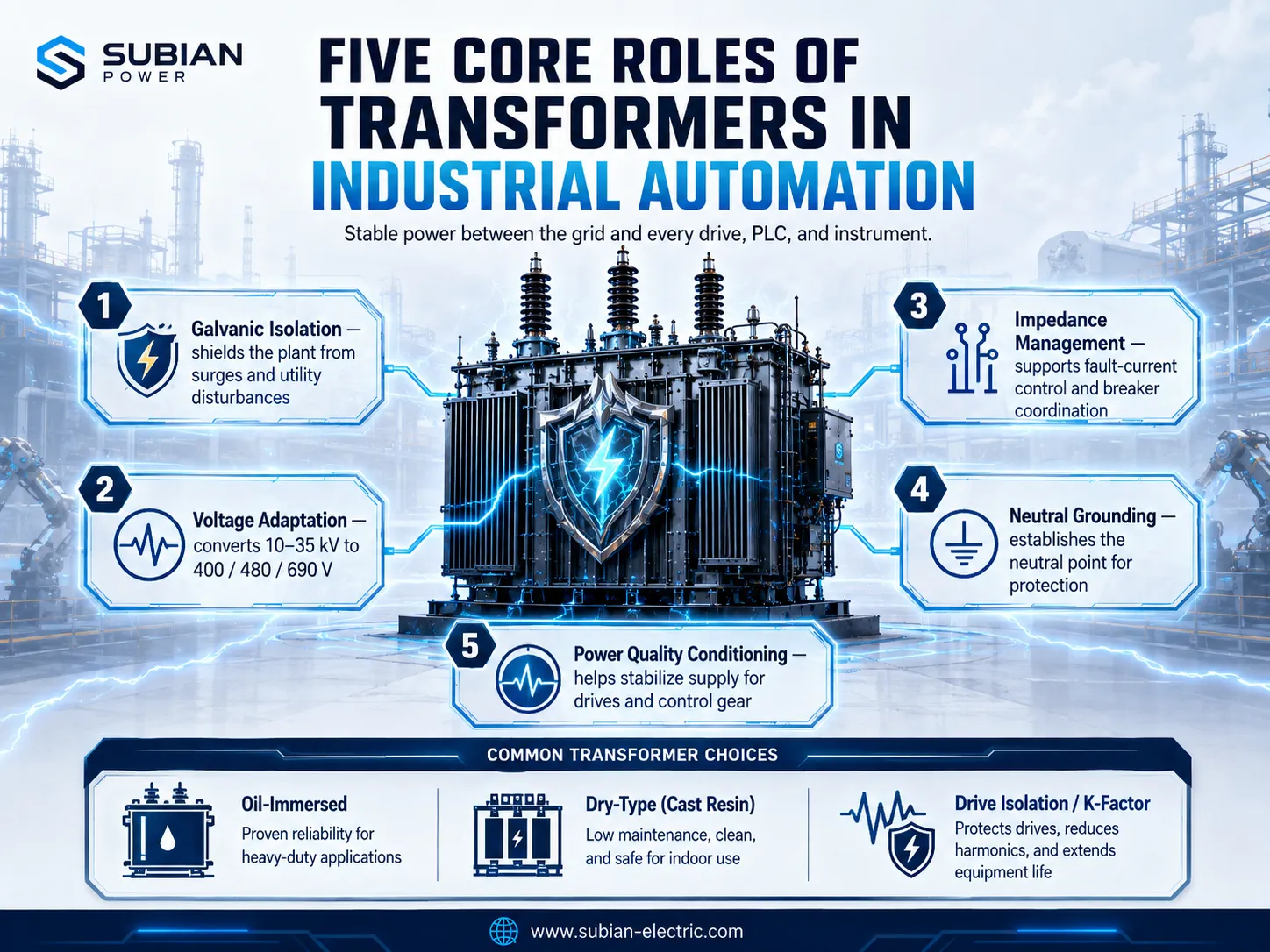
يحتوي أي نظام أتمتة صناعية على ثلاثة أجزاء: طبقة المجال (المستشعرات، المشغلات، المحركات)، طبقة التحكم (وحدات التحكم المنطقية القابلة للبرمجة، أنظمة التحكم الموزعة، واجهات الإنسان الآلية) وطبقة الطاقة، حيث تقع المحول. يقوم المحول بأداء وظائف متعددة بدلاً من مجرد تغيير قيم الجهد. يؤدي خمس وظائف مختلفة:
الفصل الجلفاني: يفصل أقسام العملية عن اضطرابات خط الطاقة مثل الارتفاعات، انخفاضات الجهد والانتقالات.
تكيف الجهد: يحول الجهد العالي (10–35 كV) إلى جهد منخفض (400 فولت، 480 فولت أو 690 فولت).
إدارة المقاومة: تحد المقاومة القصيرة (حوالي 4–8%) من تيار العطل القادم من مصدر الجهد العالي، مما يجعل من الممكن تنسيق قواطع الدائرة.
التأريض المحايد: يعمل الملف الثانوي كأرضي ويضمن تشغيل نظام الحماية.
التحكم في جودة الطاقة: يمكن أن يساعد المحول بتكوينه في تقليل اضطرابات التوافقيات واستقرار مصدر الجهد.
انقطاعات العمليات المتعلقة بجودة الطاقة في المصانع الآلية. يقلل المحول المختار بشكل جيد مع إعداد التوصيل الصحيح من تأثير الانخفاضات ويمنع الرحلات غير المرغوب فيها على دوائر وحدات التحكم المنطقية القابلة للبرمجة والمحركات.
أنواع المحولات المستخدمة في المنشآت الصناعية
ليست كل المصانع بحاجة إلى نفس المحول. تلخص الجدول أدناه الأنواع الشائعة وخصائصها ذات الصلة بالأتمتة.
| النوع | نطاق التصنيف | الجهد النموذجي | نقاط القوة في الأتمتة | السعر النموذجي (دولار أمريكي) |
|---|---|---|---|---|
| محول توزيع مغمور بالزيت | 50–2,500 كVA | 10–35 كV / 0.4–0.69 كV | أقل تكلفة، قوي، مفهوم جيداً | $6,000–$38,000 |
| محول نوع جاف (راتنج مصبوب) | 100–4,000 كVA | حتى 36 كV / 0.4–0.69 كV | تركيب داخلي آمن من الحرائق، تفريغ جزئي منخفض | $12,000–$75,000 |
| محول عزل القيادة | 100–2,000 ك.ف.أ | 4–0.69 kV | يحمي محولات التردد المتغير من التيارات المشتركة والهارمونية | $4,000–$22,000 |
| محول تغيير الطور / محول زيج زاج | 500–5,000 ك.ف.أ | 6–35 ك.ف | إلغاء الهارموني للبنوك الكبيرة من المحولات | $18,000–$70,000 |
| محول جاف من نوع K-factor | 150–1,500 ك.ف.أ | 48–0.69 kV | مصنف للأحمال غير الخطية (القيادة) | $10,000–$40,000 |
| محول الطاقة (درجة المحطة الفرعية) | 5–60 م.ف.أ | 35–110 ك.ف | المصانع الكبيرة، التوليد المشترك، خطوط الربط | $80,000–$400,000 |
بالنسبة لمصنع آلي نموذجي، الخيار العملي هو بين الوحدات المغمورة بالزيت والوحدات الجافة. تهيمن المحولات الجافة (المصنوعة من الراتنج) على التركيبات الداخلية لأنها مقاومة للحريق، ولا تحتاج إلى احتواء الزيت، ويمكن أن توجد داخل مبنى الإنتاج — بسعر أعلى بحوالي 60–90% مقارنةً بالوحدات المغمورة بالزيت المكافئة.
كيفية تحديد حجم المحول لمصنع الأتمتة
الأخطاء الأكثر شيوعًا التي تحدث أثناء تحسين المحولات هي الأخطاء في تحديد الحجم. إذا كان المحول صغيرًا جدًا، يتم تحفيز ارتفاع درجة الحرارة والتآكل المبكر. قد تتسبب المحولات الكبيرة جدًا في خسائر ناتجة عن عدم وجود حمل، مما يعني إهدار المال.
إجراء تحديد حجم المحول:
قياس الطلب. تأكد من تسجيل الحد الأقصى للطلب على مدار فترة شهر باستخدام نظام القياس في المصنع. لا تحدد الحجم بناءً على معلومات لوحة الاسم؛ حيث تستخدم الغالبية العظمى من المصانع فقط 40%-70% من سعة لوحة الاسم.
معايير تنوع الحمل. اضرب سعات القيادة وPLC والمرافق بعامل طلب معين (حوالي 0.65-0.85، بدلاً من 1.0).
قاعدة الارتفاع. اختر السعة الاسمية الكبرى التالية بحيث يكون الطلب الأقصى للنظام هو 70%-85% من سعة المحول.
الخطط المستقبلية. إذا كان من المتوقع وجود خط إنتاج ثانٍ خلال 3 سنوات، يجب أن تكون السعة الحالية للمحول بحجم 120-130%.
بالإضافة إلى ذلك، من الجدير الانتباه إلى تيارات البدء. تستخدم المحركات الكبيرة ما بين 6 و 8 مرات أكثر من قيمتها المقدرة عند البدء، ويجب أن يكون المحول قادرًا على تقليل انخفاض الجهد.
جودة الجهد: التوصيلات، التنظيم، وعامل القدرة
أحد الجوانب الأكثر أهمية هو جودة جهد الإدخال عند أطراف المحركات. بينما يتم تصنيف المحركات ودارات إدخال PLC لمستويات تغير الجهد ±10%، يحدث الفصل في الممارسة العملية حتى عند تغيرات مستوى أقل حيث يؤدي انخفاض الجهد إلى تشويه شكل الموجة. يمكن تعريف التدابير الثلاثة المهمة في هذا السياق كما يلي:
| تدبير | التكوين النموذجي | تأثير | التكلفة |
|---|---|---|---|
| ضبط التوصيل خارج الدائرة | ±2.5%، ±5% توصيلات على لف المحولات MV | يحسن جهد الحالة الثابتة لتوريد المصنع الفعلي | $0 (مدرج) |
| محول التوصيل تحت الحمل (OLTC) | ±8% في 8–16 خطوة | يحافظ على الناتج ضمن ±1.5% على الرغم من تقلبات الإمداد | $6,000–$18,000 مضافة |
| تصحيح عامل القدرة (PFC) | بنوك المكثفات الثابتة + الأوتوماتيكية | يرفع عامل القدرة من 0.80 إلى 0.95، ويقلل من غرامة المرافق | $4,000–$30,000 |
ضبط التوصيل خارج الدائرة على متوسط جهد الإدخال للمصنع مجاني وعادة ما يحسن جهد إدخال المحرك بمقدار 2–4%. بالنسبة للمصانع ذات الإمداد المتقلب أو أحمال بدء المحركات الكبيرة، فإن OLTC يسدد تكلفته خلال 2–3 سنوات من خلال القضاء على أعطال المحرك ووقت التوقف عن إعادة التشغيل.
التوافقيات والأحمال غير الخطية
بينما تشكل محركات التردد المتغير (VFDs) جزءًا مهمًا من الأتمتة الصناعية، فإنها تتطلب تيار غير جيبي مما يؤدي إلى تشويه توافقي. المعيار الرئيسي الذي يحكم هذا المجال هو IEEE 519 الذي يوصي بحد تشويه التوافقيات بمقدار 5% عند نقطة الربط المشتركة. تحسين المحولات في هذا السياق له ثلاثة جوانب.
تقليل الحمل. يجب تقليل تصنيف المحول الذي يزود أكثر من 30% من أحمال VFD أو الإشارة إليه كوحدة محول K-factor (K-4 حتى K-20). وذلك بسبب تأثير تيار التوافقي على زيادة تسخين التيار الدوامي.
اختيار المقاومة. تقلل مقاومة أقل من 4-5% من تشويه الجهد الناتج عن تيارات التوافقي ولكنها تزيد من تيار العطل. لذلك، يجب تنسيق اختيار المقاومة مع تصنيفات القواطع.
تحويل الطور. بالنسبة لتركيب محولات كبيرة جدًا مثل مقوم 12 نبضة المستخدم في التحليل الكهربائي أو المحركات الكبيرة، ستلغي محولات تحويل الطور آثار التوافقيات الخامسة والسابعة عند المصدر.
في مصنع آلي مشترك مع حمل VFD قدره 30% كانت قيم THD للجهد تتراوح بين 6-12% قبل التخفيف، و 2-4% بعد تركيب مفاعل أو فلتر سلبي لكل مجموعة إدخال 5% بتكلفة تتراوح بين $500 إلى $2000.
الكفاءة، الخسائر، وتحسين الطاقة
تنقسم خسائر المحولات إلى خسائر عدم التحميل (النواة)، التي تعمل على مدار 24 ساعة في اليوم، وخسائر التحميل، التي تزداد مع مربع التيار. تُظهر الجدول الاقتصاديات لوحدة نموذجية بقدرة 1,000 كيلوفولت أمبير.
| مكون الخسارة | القيمة النموذجية (IEC 60076) | الطاقة السنوية (7,200 ساعة تشغيل) | التكلفة السنوية @ $0.09/kWh |
|---|---|---|---|
| خسائر عدم التحميل | 6–2.2 كيلووات | 11,500–15,800 كيلووات ساعة | $1,040–$1,420 |
| خسائر التحميل (التحميل الكامل) | 9–12 كيلووات | 21,600–28,800 كيلووات ساعة عند تحميل 50% | $1,940–$2,590 |
| إجمالي الخسارة السنوية | — | 33,000–44,000 كيلووات ساعة | $2,980–$3,960 |
المعلومات أعلاه تؤدي إلى ثلاث إمكانيات للاستفادة الكبيرة من التحسين:
أولاً، تؤدي خصائص النواة غير المتبلورة إلى انخفاض كبير في الخسائر أثناء تشغيل عدم التحميل: 60-75% انخفاض، على سبيل المثال، من 2.0 كيلووات إلى ما بين 0.6 و 0.8 كيلووات لوحدة 1000 كيلوفولت أمبير.
النقطة الثانية تتعلق بجعل المحول مناسبًا تمامًا للعمل حول 60-80% من عامل التحميل: خسائر عدم التحميل أكبر 4 مرات من المحول الذي يعمل عند 50% من التحميل، حيث تنتقل من 98.7% عند أقصى تحميل إلى 97.8%.
الاقتراح المهم الثالث هو استخدام المحولات المتوازية في حالة تقلبات التحميل الواسعة وإيقاف تشغيلها عند الأحمال المنخفضة - بهذه الطريقة يمكن تقليل 15%-30% من خسائر المحولات في عمليات النوبات المزدوجة.
تدابير التحسين في الممارسة العملية
بخلاف اختيار الأجهزة، يعد التحسين انضباطًا تشغيليًا مستمرًا. التدابير التي تنفذها المصانع الصناعية فعليًا، مرتبة حسب التأثير:
| تدبير | التردد | ماذا تبحث عنه | الفائدة المتوقعة |
|---|---|---|---|
| التصوير الحراري للخزان والمحولات | سنويًا | النقاط الساخنة، الاتصالات الضعيفة | يمنع 60% من الفشل المتعلق بالاتصالات |
| تحليل الزيت (DGA + الرطوبة) | كل 6–12 شهرًا | اتجاهات الغاز الرئيسية، محتوى الماء > 30 جزء في المليون | الكشف المبكر عن الأعطال قبل 12–24 شهرًا |
| تسجيل الحمل وجودة الطاقة | ربع سنوي | الحد الأقصى للطلب، THD، عدم توازن الجهد | يحدد مساحة الرأس واحتياجات الفلتر |
| اختبار مرحلات الحماية | كل 1–2 سنوات | إعدادات التيار الزائد والتفاضلي | يمنع الفشل المتسلسل في الأعطال الداخلية |
| مراجعة موضع التوصيل | كل موسم | جهد الخرج مقابل نقطة الضبط | يستعيد 1–3% من مساحة جهد الرأس |
بالنسبة للمصانع التي لديها طاقم صيانة من شخصين أو ثلاثة، فإن التكلفة السنوية الواقعية لهذا البرنامج هي $800–$2,500 لكل محول بما في ذلك رسوم المختبر — وهو مبلغ صغير مقارنة بتكلفة الفشل غير المخطط له والتي تتراوح بين $30,000–$120,000 بالإضافة إلى خسائر الإنتاج.
التكاليف وإجمالي تكلفة الملكية
يمثل سعر الشراء ثلث تكلفة عمر المحول فقط. تشمل تحليل إجمالي تكلفة الملكية (TCO) الكامل على مدى 20 عامًا من عمر المحول:
* النفقات الرأسمالية: $9,000–$85,000 حسب المواصفات والنوع.
* نفقات الفقد: $3,000–$4,000 سنويًا لكل 1,000 kVA، عادةً ما تمثل 40% إلى 50% من TCO.
* الصيانة: $800–$2,500/سنة شاملة DGA، التصوير الحراري والاختبار.
* مخاطر التوقف: معدل الفشل السنوي المتوقع مضروبًا في $30,000–$120,000 لكل فشل.
* القيمة المتبقية: 15% إلى 25% من سعر الشراء الأولي بعد 20 عامًا.
إذا تم تقييمه بهذه الطريقة، فإن الأداء الأفضل للمحول منخفض الفقد الأكثر تكلفة (الفئة C أو أعلى بناءً على كفاءة IEC) يظهر عادةً. سيستعيد المشتري الفرق البالغ $5,000 بين محول قياسي بقيمة $24,000 ومحول عالي الكفاءة بقيمة $29,000 في 3–5 سنوات بسبب التوفير في التكاليف الناتج عن تقليل الفقد.
أفضل العلامات التجارية ومقارنة الأسعار
يتم خدمة سوق المحولات الصناعية من قبل مجموعة معروفة من الشركات المصنعة العالمية، بالإضافة إلى الموردين الصينيين الراسخين الذين حصلوا على شهادات IEC والدولية. الجدول يقدم أسعارًا إرشادية لمحول صناعي مغمور بالزيت بقدرة 1,000 kVA، 10 kV/0.4 kV؛ الأسعار الفعلية تختلف حسب المواصفات، والمقاومة، وفئة الفقد، والمنطقة.
| العلامة التجارية | الدولة | نقاط القوة | السعر الإرشادي (دولار أمريكي) |
|---|---|---|---|
| ABB | سويسرا | تكامل الأتمتة الكاملة، شبكة خدمات واسعة | $16,000–$28,000 |
| سيمنز | ألمانيا | التوأم الرقمي، خيارات مراقبة SITRAM | $15,000–$27,000 |
| شنايدر إلكتريك | فرنسا | تكامل EcoStruxure، قوة النوع الجاف | $14,000–$26,000 |
| هيتاشي للطاقة | اليابان/سويسرا | تراث المحولات الكبيرة، خبرة LTC | $16,000–$30,000 |
| إيتون | الولايات المتحدة الأمريكية | مجموعة قوية من التوزيع والنوع الجاف | $13,000–$25,000 |
| شركة جيانغسو سوبين للطاقة الكهربائية | الصين | متوافق مع IEC 60076، OEM/ODM، تسعير تنافسي | $9,000–$18,000 |
تقدم الشركات الدولية حلولًا رقمية ناضجة، ومساعدة هندسية محلية، وممارسات مثبتة في آلاف المنشآت، ولتحقيق مهمة حرجة مع محول واحد في منشأة رائدة، يمكن أن تكون التكاليف الإضافية مجدية. بالنسبة لمصانع الإنتاج التي تشتري المحولات بشكل متسلسل - شركة تصنيع غذائي تجهز خمس مصانع وشركة من الدرجة الأولى في صناعة السيارات تضيف ثلاث مصانع - تتنافس شركة جيانغسو سوبين للطاقة الكهربائية مع المحولات المعتمدة وفقًا لمعيار IEC 60076 مع وحدات مغمورة بالزيت ووحدات جافة بسعر يقارب 45-60% من سعر المعدات المماثلة من أوروبا والولايات المتحدة. من خلال الاستفادة من الخبرة في العمليات الدولية ومرونة OEM/ODM، تتيح سوبين لمهندسي المصانع تخصيص المحولات وفقًا لفئة الخسائر المطلوبة، والتوصيل، والممانعة، ونظام المراقبة، وهو ما يعد دليلًا على الاختيار الصحيح للمحول.
كيفية الاختيار والتحسين: قائمة مراجعة
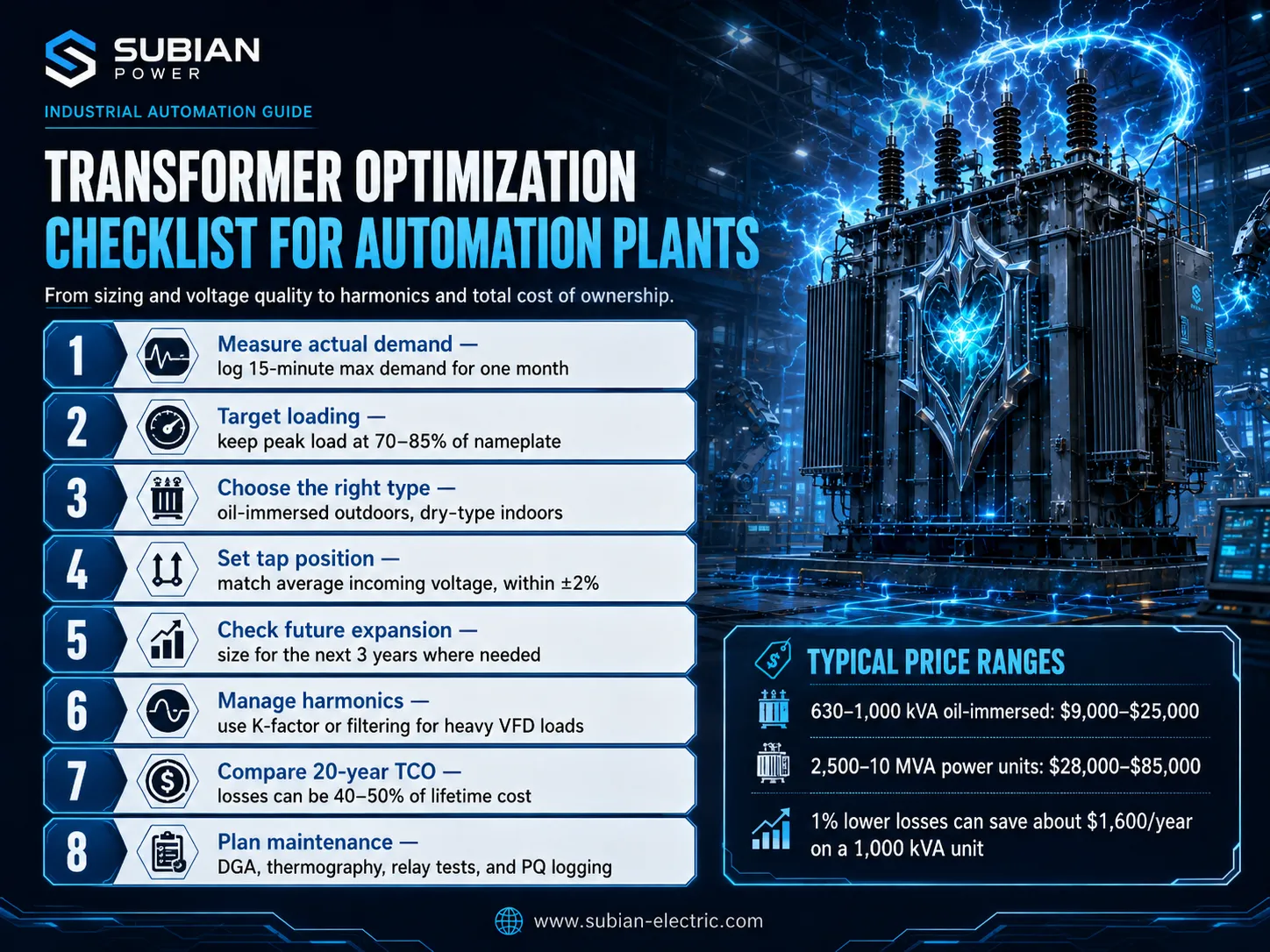
- سجل الطلب لمدة 15 دقيقة لمدة شهر؛ احسب الحجم بحيث يكون الطلب الذروي 70–85% من الاسم الاسمي.
- اختر المحولات المغمورة بالزيت للاستخدام الخارجي/بتكلفة منخفضة، والمحولات الجافة للمناطق الداخلية الحساسة للحريق.
- حدد فئة الخسارة وفقًا لمعيار IEC 60076-1 وقارن التكلفة الإجمالية لمدة 20 عامًا، وليس سعر الشراء.
- اضبط التوصيل خارج الدائرة ليتناسب مع متوسط الجهد الداخل الفعلي.
- أضف OLTC أو منظم جهد فقط حيث تكون تقلبات الإمداد أو بدء المحرك كبيرة.
- قلل أو حدد عامل K للمصانع التي تحتوي على أكثر من 30% من حمل VFD؛ تحقق من THD وفقًا لمعيار IEEE 519.
- خطط لتبديل الوحدات المتوازية حيث يتغير الحمل بشكل كبير عبر الورديات.
- تعاقد لتسجيل جودة الطاقة ربع السنوي وDGA السنوي من اليوم الأول.
- تطلب شهادة اختبار IEC 60076 مع العطاء، وقارن على الأقل ثلاث علامات تجارية - بما في ذلك الموردين الصينيين المعتمدين من IEC - قبل منح العقد.
الأسئلة المتكررة
كيف يمكنني تحديد تصنيف kVA المناسب لمصنعى؟
سجل الطلب الأقصى الفعلي لمدة 15 دقيقة لمدة شهر كامل، واضربه في عامل الطلب من 0.65–0.85 للأحمال الآلية، واختر التصنيف القياسي فوق تلك القيمة بحيث يكون الحمل الأقصى عند 70–85% من الاسم. يجب على مصنع لديه ذروة مقاسة تبلغ 720 kVA اختيار وحدة 1,000 kVA - حيث يمتص الهامش الاندفاع الناتج عن المحرك والإضافات المخطط لها في الخط.
ما هو العائد على استبدال محول قديم غير فعال؟
استبدال وحدة 1,000 kVA من الثمانينات (فقدان بدون حمل ~3.5 kW) بوحدة حديثة (فقدان بدون حمل ~1.8 kW) يوفر حوالي 12,000 kWh/سنة، أو $1,100 عند $0.09/kWh. بما في ذلك اختلافات فقدان الحمل والصيانة المخفضة، يكون العائد عادةً 5–8 سنوات - أو 2–4 سنوات إذا أظهرت الوحدة القديمة أيضًا شذوذات DGA أو مشاكل حرارية.
هل يجب أن أشتري محول مغمور بالزيت أو محول جاف لمصنعى؟
عند تركيب محول في الداخل، يُوصى بشدة بالذهاب إلى المحولات الجافة (المصنوعة من الراتنج)، حيث إنها مقاومة للحريق ولا تتطلب احتواء زيت معقد أو حواجز نارية؛ علاوة على ذلك، يمكن وضع مثل هذا المحول داخل المبنى نفسه. بالنسبة للتركيبات الخارجية، فإن فائدة المحولات المملوءة بالزيت هي أنها أيضًا أقل تكلفة (حوالي 35-45% أرخص) وأسهل في الصيانة. على سبيل المثال، يتراوح سعر محول جاف بقدرة 1,000 kVA بين $18,000-$32,000 مقارنة بسعر إنتاج محول زيت ($12,000-$22,000).
كيف تؤثر التوافقيات على اختيار المحول الخاص بي؟
تخلق أحمال VFD التي تزيد عن حوالي 30% من سعة المحول تيارات توافقيه تسخن الملفات وتسبب تشوهًا في الجهد. الخيارات هي: تقليل تصنيف المحول بنسبة 10–20%، تحديد وحدة مصنفة بعامل K (K-4 إلى K-20)، أو إضافة مفاعلات/مرشحات مدخلات عند المحركات. توصي IEEE 519 بالحفاظ على THD الجهد أقل من 5% عند نقطة الربط المشتركة؛ عادةً ما يحقق مفاعل $500–$2,000 لكل مجموعة محركات ذلك.
ما هي التكلفة الإجمالية لمحول صناعي على مدار عمره؟
بالنسبة لوحدة 1,000 kVA بسعر $15,000، فإن التكلفة الإجمالية لمدة 20 عامًا تقريبًا $55,000–$70,000: 40–50% منها هي خسائر كهربائية ($3,000–$4,000/سنة)، 10–15% هي صيانة ($800–$2,500/سنة)، والباقي هو رأس المال بالإضافة إلى مخاطر التوقف. عادةً ما يقلل وحدة IEC من الفئة C ذات الكفاءة العالية من مكون الخسارة بنسبة 15–25%.
المراجع
- سلسلة IEC 60076 - محولات الطاقة - المعيار الأساسي لتصنيف، خسائر، مقاومة، واختبار جميع المحولات الصناعية التي تم مناقشتها هنا.
- IEEE 519 - الممارسة الموصى بها للتحكم في التوافقيات في أنظمة الطاقة الكهربائية - يحدد حدود THD المستخدمة للمصانع التي تهيمن عليها المحركات.
- IEEE 493 — الممارسة الموصى بها لتصميم أنظمة الطاقة الصناعية والتجارية الموثوقة — مصدر إحصائيات انقطاع جهد السقوط المذكورة في هذه المقالة.
- معايير NEMA TP-1 ومعايير NEMA لمحولات التوزيع — تقييمات الكفاءة وإرشادات التطبيق للمشترين الصناعيين في أمريكا الشمالية.
- CIGRE — المجلس الدولي للأنظمة الكهربائية الكبيرة — ينشر تقارير مجموعات العمل حول إحصائيات فشل المحولات وممارسات الصيانة.
- إرشادات السلامة الكهربائية OSHA — السياق التنظيمي لصيانة المحولات وإجراءات القفل/التوسيم في المنشآت الصناعية.
- Jiangsu Subian Electric Power — الموقع الرسمي — مصنع لمحولات التوزيع والطاقة الصناعية المتوافقة مع IEC 60076 مع دعم OEM/ODM.
الخاتمة
المحولات هي العمود الفقري الهادئ للأتمتة الصناعية: فهي تعزل، وتكيف، وتثبت الطاقة التي تعتمد عليها كل محرك، وPLC، وأداة. التحسين لا يتعلق بالمعدات الغريبة — بل يتعلق بالحجم الصحيح (الحمولة القصوى عند 70–85% من الاسم) ، وإعدادات التوصيل الصحيحة، والتحكم في التوافقيات لأحمال VFD، والشراء بناءً على التكلفة الإجمالية للملكية على مدى 20 عامًا بدلاً من السعر الأول. الاقتصاديات ملموسة: توفير خسائر تتراوح بين $1,000–$4,000 سنويًا لكل وحدة، وتحسين التوصيل بقيمة 1–3% من مساحة الجهد، وتجنب أحداث التوقف بقيمة $30,000–$120,000.
النقاط الرئيسية:
- احسب الحجم بناءً على الطلب المقاس، وليس الاسم؛ حافظ على الحمولة التشغيلية بين 60–80%.
- قارن التكلفة الإجمالية للملكية على مدى 20 عامًا — الخسائر تمثل 40–50% من تكلفة العمر الافتراضي.
- إدارة التوافقيات وفقًا لـ IEEE 519 للمصانع ذات الأحمال الثقيلة.
- قارن بين العلامات التجارية العالمية مثل ABB وSiemens وSchneider مقابل الموردين المعتمدين من IEC مثل Jiangsu Subian Electric Power لتحقيق التوازن بين الجودة والسعر.
طبق قائمة التحقق أعلاه في مشروعك القادم، وقم بإجراء تدقيق لجودة الطاقة في الموقع قبل شراء أي شيء — ستخبرك البيانات أي تحسين يعود عليك بأفضل النتائج أولاً. لدعم اختيار المحولات والحصول على عروض الأسعار، قم بزيارة www.subian-electric.com.