


بلغت أوقات تسليم المحولات ذروتها في 2023/أوائل 2024، لكنها بدأت تتحسن منذ نهاية 2025، على الرغم من أنها لا تزال لم تعد إلى أوقات التسليم التقليدية التي تتراوح بين شهرين إلى أربعة أشهر للمحولات التوزيعية القياسية في 2019. ينقسم سوق المحولات إلى جزأين مميزين: 1) وحدات التوزيع القياسية المتاحة خلال أشهر؛ و 2) الوحدات الكبيرة أو المخصصة التي لا تزال تتطلب سنوات من أوقات التسليم.
إجابة سريعة: أوقات التسليم للمحولات التوزيعية القياسية عادةً ما تكون من 16 إلى 30 أسبوعًا من الطلب إلى التسليم للوحدات التي تتراوح من 50 kVA إلى 2,500 kVA، بانخفاض كبير من وقت تسليم يتراوح بين 50 إلى 80 أسبوعًا في ذروة 2023. عادةً ما يكون لوحدات الجهد المتوسط الجافة وقت تسليم يتراوح بين 12 إلى 24 أسبوعًا. في الوقت نفسه، ومع ذلك، لا تزال المحولات الكهربائية الكبيرة التي تزيد عن 100 MVA عادةً ما تحمل وقت تسليم يتراوح بين 18 إلى 30 شهرًا، في حين قد تحمل محولات رفع الجهد للمولدات أوقات تسليم أطول من 30 شهرًا أو أكثر. بالإضافة إلى ذلك، تضيف المواصفات المخصصة للوحدات الكبيرة عادةً من 8 إلى 16 أسبوعًا لموافقات التصميم واختبارات النوع. ارتفعت أسعار المحولات بين 60 و90 بالمائة منذ 2020. كما استقرت الأسعار الآن عند مستوى مماثل لما كانت عليه قبل أربع سنوات.
في الأقسام التالية: نطاقات المحولات المتاحة حاليًا، أسباب استمرار نقص المحولات في السوق؛ تحليل أوقات تسليم المحولات حسب المنتج؛ توضيح ما يؤثر على أوقات تسليم المحولات؛ مقارنة بين المحولات القياسية والمخصصة؛ وصف الميزات التي يمكن توفيرها من قبل مختلف المصنعين، بما في ذلك مصنعنا؛ توضيح الاستراتيجيات التي يمكن أن تحمي الجدول الزمني؛ شرح كيفية هيكلة وقت التسليم المقتبس؛ تقديم قائمة بالأسئلة التي يجب طرحها قبل تقديم الطلب.
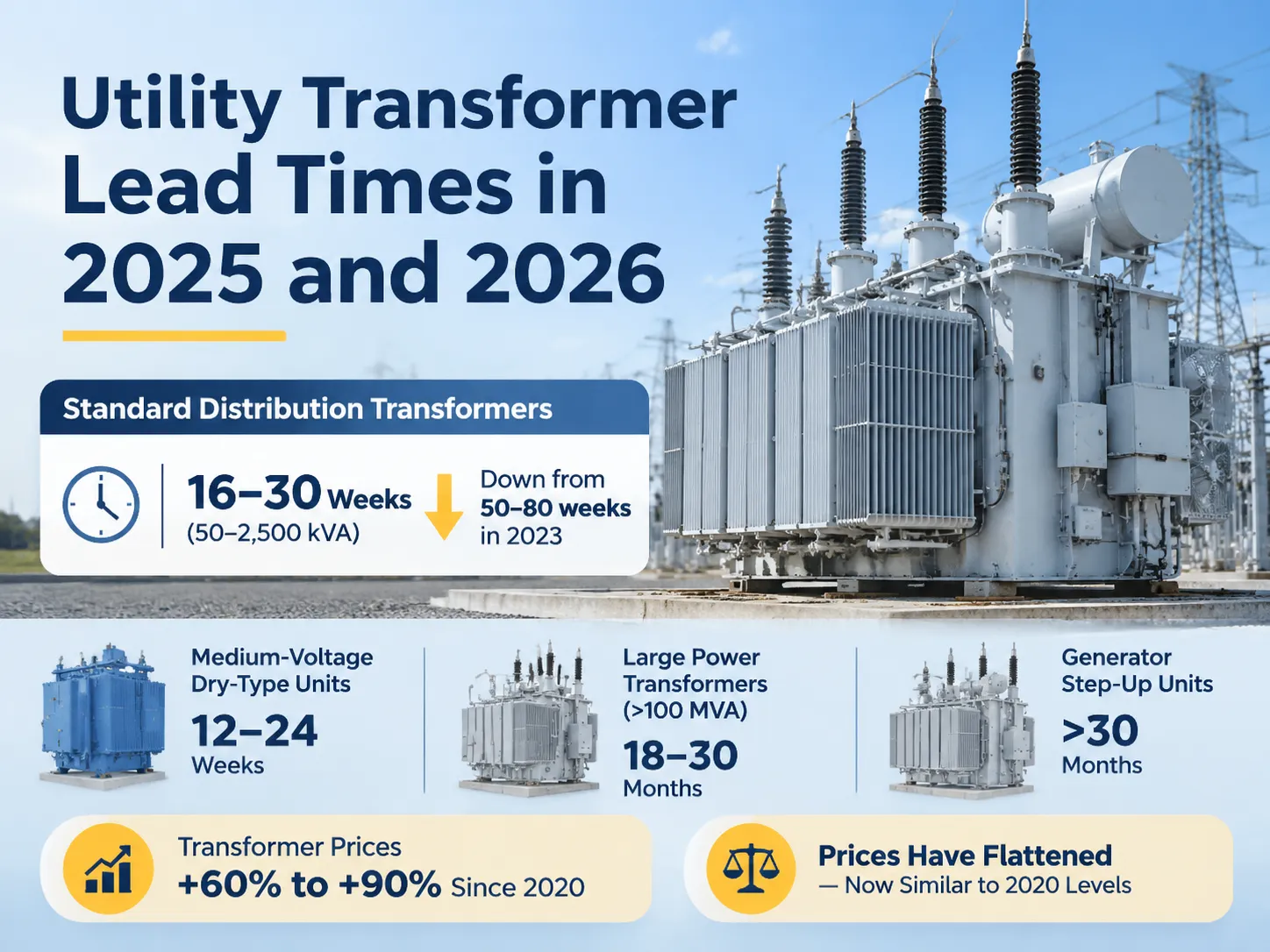
لتلخيص أوقات تسليم المحولات في 2025 و2026
نقطة الذروة: من 2023 إلى أوائل 2024 وما بعدها. بدأت شركات المرافق في تقديم الطلبات قبل نمو الحمل وتشغيل مشاريع الطاقة المتجددة بينما لم تتمكن المصانع التي تصنع الفولاذ الكهربائي الموجه الحبيبات من التوسع بنفس الوتيرة. في 2023، تم اقتباس وحدة مثبتة على قاعدة بقوة 500 kVA بوقت تسليم 70 أسبوعًا؛ والآن يتم اقتباسها بين 20 – 26 أسبوعًا.
التعافي ليس موزعًا بالتساوي. يعتمد التعافي على نوع المنتج الذي يتم تصنيعه. يمكن تصنيع وحدة توزيع من الكتالوج تعتمد على تصميمات النواة والملفات القياسية خلال أشهر. ومع ذلك، إذا كانت الوحدة تتطلب تصميم خزان جديد، أو مقاومة غير قياسية، أو اختبار نوع، فسيختلف جدول الإنتاج مع حدوث تأخيرات في كل من أرضية المصنع ومكاتب الهندسة.
تعافي قطاع المحولات الكهربائية الكبيرة هو الأقل تحسنًا مقارنة بفئات المحولات الأخرى. في هذه الحالة، لا يشكل الفولاذ عنق الزجاجة، بل هو حوض الاختبار والملفوفون المهرة. لا يمكن إضافة قدرة أي منهما خلال عام واحد. يجب توقع توفر وحدة بقوة 200 MVA تم طلبها في 2026 في عام 2028.
لماذا لا يزال القطاع متأخرًا
هناك ثلاث عوائق أمام التعافي في الصناعة. لا يُعزى أي منها إلى تراكم الطلبات.
عدد قليل جدًا من المصانع حول العالم يصنع الفولاذ الكهربائي الموجه الحبيبات ولا يمكنها بسرعة تشغيل خطوط التلدين والتغطية الجديدة لإنتاج الفولاذ الكهربائي الموجه الحبيبات. بناء خط إنتاج جديد هو نفقات رأسمالية تستغرق عدة سنوات وسيستغرق عدة سنوات لاستيعاب صدمة الطلب. لهذا السبب، تحدد مواد القلب — وليس النحاس أو العمالة — نغمة نقص الإمدادات.
يستغرق تدريب اللفافين المهرة وقتًا. على الرغم من أن لف محول التوزيع هو عملية متكررة ويمكن لأي شخص القيام بها بسهولة، فإن وحدة 100 MVA هي شيء مختلف تمامًا، وبسبب تقلص وتقدم عمر القوى العاملة المتاحة لأداء هذا العمل، لم يتبق سوى عدد قليل من الأشخاص المؤهلين في كل سوق.
بغض النظر عن عدد الوحدات الإجمالية التي يتم تجميعها داخل المنشأة، فإن سعة حجرة الاختبار للمحولات الكهربائية الكبيرة هي التي تحد من الإنتاجية الإجمالية لأي مصنع معين. يمكن أن يقضي محول كهربائي كبير واحد عدة أيام في حجرة الاختبار، مما يجعل مساحة حجرة الاختبار داخل منشأة التصنيع هي الأعلى تكلفة لكل متر مربع بفارق كبير. لم تحدث تغييرات كبيرة في المجتمع العالمي من حيث سعة حجرة الاختبار خلال العقد الماضي.
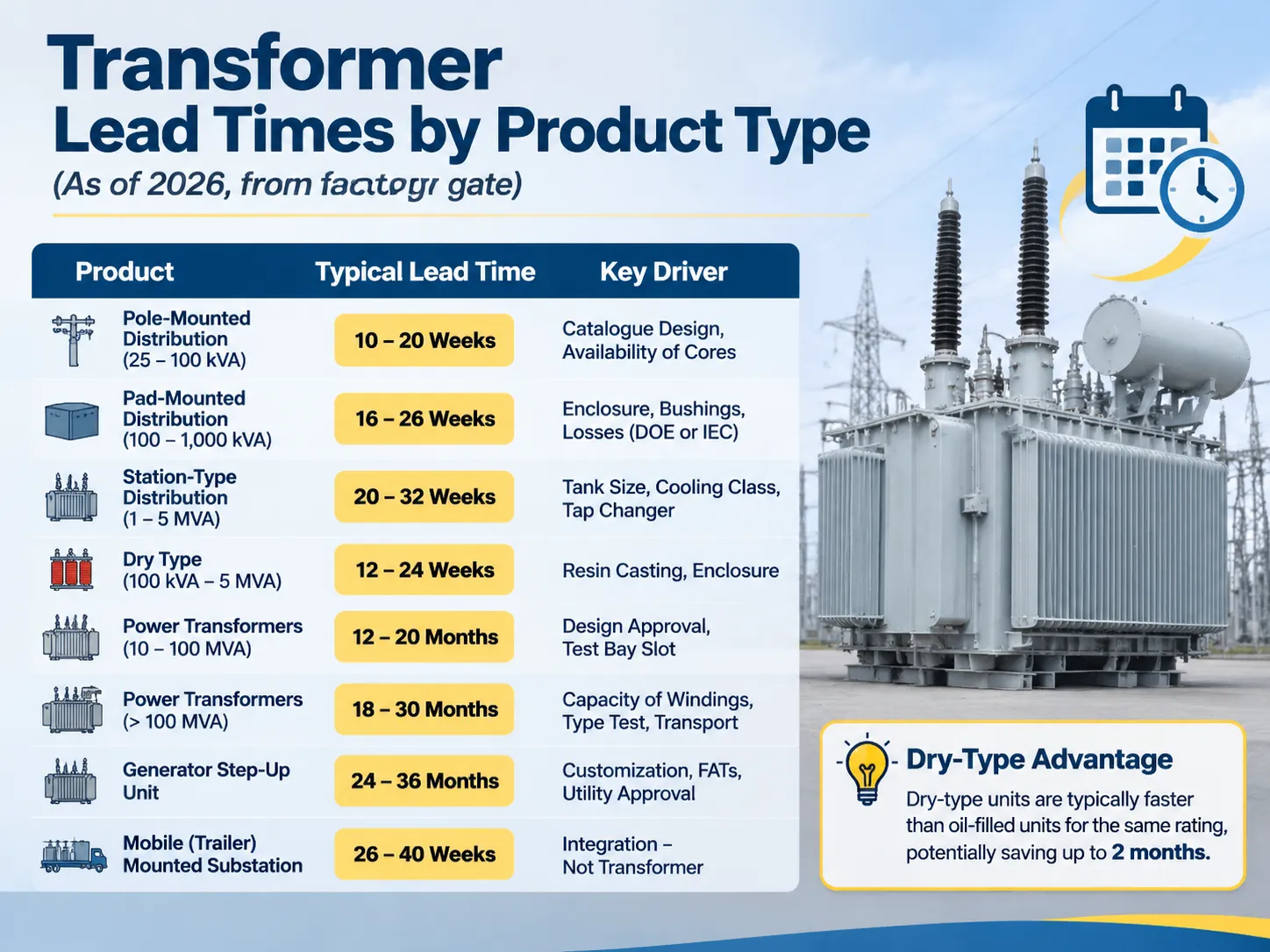
أوقات التسليم حسب نوع المنتج
الجدول أدناه يمثل نطاق الأطر الزمنية المقتبسة لتسليم طلبات المحولات الجديدة من بوابة المصنع اعتبارًا من عام 2026. بالإضافة إلى ذلك، يرجى مراعاة أن الشحن وأعمال موقع العمل تضيف إلى هذا الإجمالي.
| المنتج | الوقت القياسي للتسليم | العامل المحرك |
|---|---|---|
| توزيع مثبت على الأعمدة (25 إلى 100 kVA) | من 10 إلى 20 أسبوعًا | تصميم الكتالوج، توفر القلوب |
| توزيع مثبت على قواعد (100 إلى 1,000 kVA) | من 16 إلى 26 أسبوعًا | نوع الغلاف، العوازل، الخسائر (DOE أو IEC) |
| توزيع نوع المحطة (1 إلى 5 MVA) | من 20 إلى 32 أسبوعًا | حجم الخزان، فئة التبريد، مفتاح التوصيل |
| النوع الجاف (100 kVA إلى 5 MVA) | من 12 إلى 24 أسبوعًا | قدرة صب الراتنج، الغلاف |
| محولات الطاقة (10 إلى 100 MVA) | من 12 إلى 20 شهرًا | الموافقة على التصميم، فتحة حجرة الاختبار |
| محولات الطاقة (أكثر من 100 MVA) | من 18 إلى 30 شهرًا | قدرة اللفات، اختبار النوع، النقل |
| وحدة رفع الجهد للمولد | من 24 إلى 36 شهرًا | التخصيص، اختبارات القبول النهائية (FATs)، موافقة المرافق |
| محطة فرعية مثبتة على مقطورة متنقلة | من 26 إلى 40 أسبوعًا | التكامل – ليس محولًا |
ملاحظة: الوحدات الجافة تحظى بالاهتمام لأنها عادةً ما تكون أسرع من الوحدات المملوءة بالزيت لنفس التصنيف. نظرًا لأن وحدة الراتنج المصبوب لا تتطلب خزانًا أو معالجة زيت، فإن تسلسل الإنتاج أقصر، مما يمكن أن يسمح للمشروع بتوفير ما يصل إلى شهرين إذا تم قبول النوع الجاف الداخلي.
السعر والتسليم لوحدة 100 kVA هو معيار جيد حيث أن هذا هو حجم السوق الكبير وهنا حدث معظم تعافي أوقات التسليم.
ما يمكن أن يغيره: الحجم، الجهد والمواصفات
الحجم هو المتغير الأكثر وضوحًا وليس تقدمًا خطيًا. مضاعفة تصنيف المحول تعني عمليًا مضاعفة كمية المواد المطلوبة وستؤدي إلى زيادة كبيرة في التعقيد عند نقاط انتقال فئة التبريد، ومستويات الجهد عندما يصبح العزل مشكلة في التصميم، والأحجام الإجمالية التي لا تتناسب مع ترتيب الشحن النموذجي.
العزل له ارتباط مباشر بجهد المحول المثبت. على سبيل المثال، 33 ك.ف (من منظور التصميم والتصنيع) هو تصنيف جهد شائع. وحدة 132 ك.ف ستتطلب وصلات عازلة، وفواصل أمان، واختبارات نبضية، مما يستلزم بناء وتخزين المحول في مصنع مختلف ووضعه في خط إكمال مختلف.
As the voltage of the transformer continues to increase, the number of companies that produce transformers above approximately 145 kV (as a guide) decreases significantly. For this reason, it can be expected that the lead times for these types of products will grow faster than the electrical rating of the product.
Thirdly, specification: an example of a compliant distribution transformer from the DOE (Department of Energy) with a standard impedance would be considered a catalogue product. However, the same rating but with non-standard impedance for parallel, a specific tap range, an assured low level of noise, or a specific vector group would constitute as an engineered order and, because of the requirement for engineering approval, could take up to six weeks.
The oil-immersed distribution transformer in the 20 kV voltage class serves as a good example. The factory builds the units to the various ratings of the product based on the catalogue of standard builds for each of those ratings, while the 20 kV insulation class establishes the design family to which the transformer belongs.
Custom vs. Standard – Two Timing Clocks
As mentioned before, a standard unit runs by means of a production clock, where the processes of receipt of material, winding, assembling, testing, painting, and shipping overlap; therefore, the factory will be able to forecast the lead time of all of these steps because the design for the standard unit will always be available.
A custom transformer may have the same structure as a standard transformer but have 2 timing clocks operating on the same order. The design clock will start with the day the customer orders and will conclude when the engineering and the utility approve the drawing. Once a project starts producing, the production clock begins counting down. So, estimating 10 weeks of production time (from the manufacturer) + 20 weeks for the project delivery to arrive = 30 weeks total time frame from “start to finish.” This is why projects that are anticipating using catalogue estimates fall behind schedule.
By removing the specification approval process for early-stage design and accepting a generic design early on, it is possible to compress the length of time required for the production process. Most non-standard impedances have a standard because the study that was conducted assumed a value of the impedance; there is no specific reason why that impedance type is needed for a particular project.
A Manufacturer’s Review of Expectations
Grid-scale manufacturers, including both Hitachi Energy and Siemens Energy, cite longer quotes than their competitors and typically hold to their dates more closely than others. A manufacturer that provides a 24 month quote for large power transformer manufacturing facilities has a more reliable delivery date than one that provides a 14 month quote for smaller power transformer manufacturing facilities. Large manufacturers have their own testing bays and have greater control over winding capacity than do smaller manufacturers.
The European Mid-Market, (represented by SGB-SMIT), is in the middle of the pack: they manufacture distribution and medium power units with delivery times ranging from 16 weeks to 30 weeks, with an advantage over non-European manufacturers due to access to European documentation and shorter shipping distances.
North American distribution manufacturers, including Prolec GE and ERCO, represent an expedited route for North American projects; they estimate 16-30 weeks for delivery, build to meet the project specifications (there is no adaptation of the IEC design to meet project specifications), therefore they are able to provide faster turnaround than overseas manufacturers.
The Chinese manufacturers, such as TBEA and China XD, are price competitive and can provide a completed distribution unit in a very short time frame of between 12 and 20 weeks, plus delivery time, and are frequently the quickest source of power transformer units for African and Southeast Asian regions. The only thing limiting the production of transformers is the documentation and approvals at the receiving end; however at SUBIAN we have complete control over the time it takes to manufacture both cores and windings for all of our transformers.
Timeframe Expectations
The construction lead times for our oil-filled and dry-type distribution transformers are based on the size of the transformer you would like to order, but also on whether the transformer involves a configuration with unique impedances, enclosures, substation packages, etc. The standard timeframe for ordering an oil-filled distribution transformer is generally between 12 and 20 weeks, and between 10 and 16 weeks for the dry-type distribution transformers. If you have a standard rated transformer in stock, it will qualify for the shortest quoted timeframe (12 to 20 weeks) for manufacturing & delivery. Any timeframes given that exceed those for the least costly method to manufacture & deliver the transformer (12 to 20 weeks), are based on unique specifications.
Unlike other manufacturing facilities that manufacture their own winding, our facility builds all of our own tanks and windings in-house. This offers SUBIAN a manufacturer lead-time advantage compared with those manufacturers who must purchase their windings or tanks and have limited control over their speedy production.
SUBIAN will always provide you with an ordered slot for your order rather than just an estimated time frame. For us, when we have our own winding department, tank building facility and testing bay; we will be able to guarantee your ordered lead-time. Whenever we quote transformer or substation prices, we will always list the lead-times for the ordering slot in the quotation.
The only limiting factor in the overall manufacture of your requested transformer is the length of time required to obtain Utility Approval. While the Utility Approval process is an integral part of our construction timeframe, the Utility Approval timelines fall outside of SUBIAN’s manufacturing construction timetable. Therefore, if your order requires an industry witness acceptance test, approved third-party type test, or Utility specification review, those timelines must be accounted for.
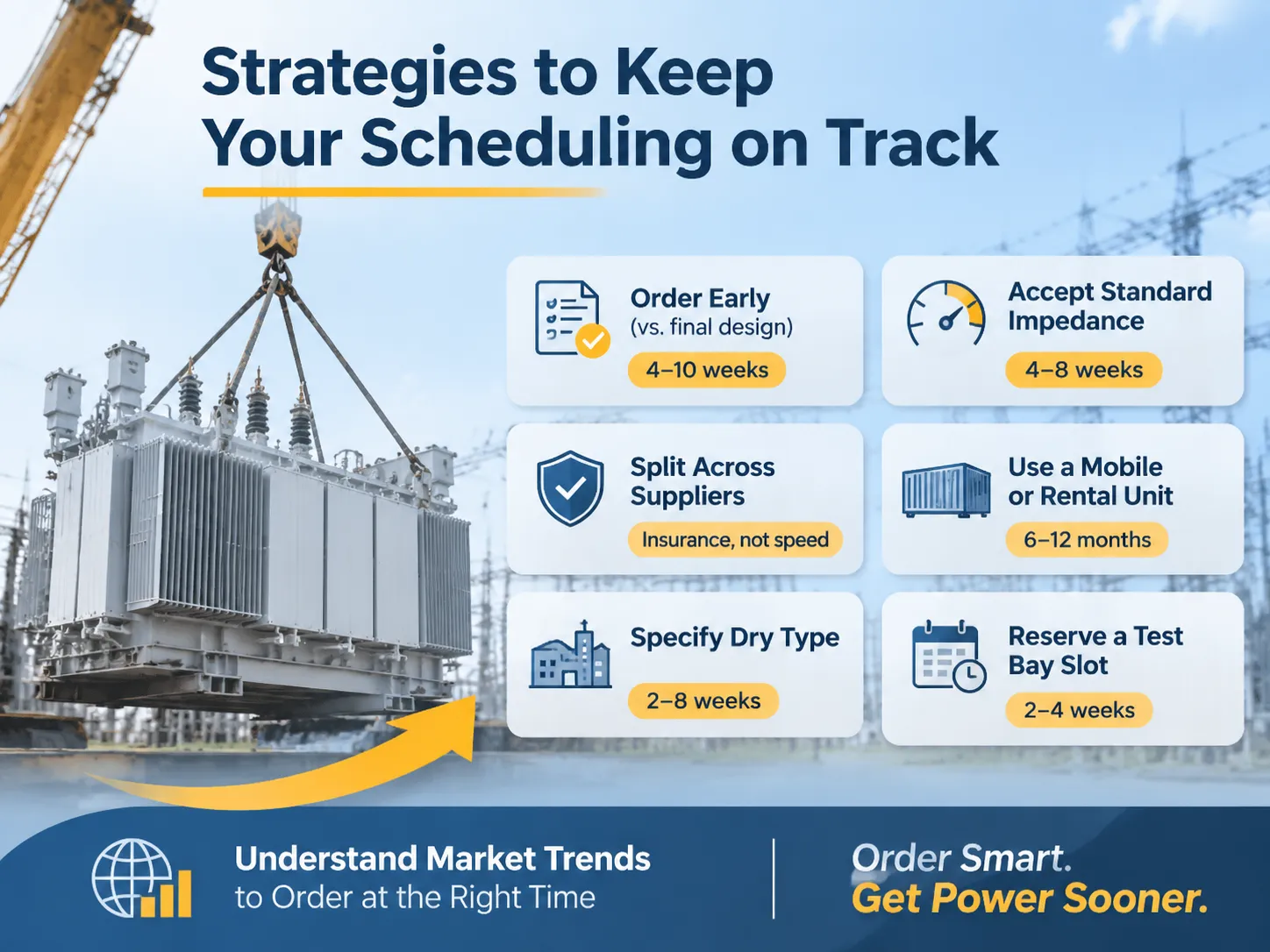
Strategies to Keep Your Scheduling on Track
| Tactic | What it buys | When to use it |
|---|---|---|
| Order before the design is frozen, against a performance spec | 4 to 10 weeks | Any project with a hard energisation date |
| Accept a standard impedance and tap range | 4 to 8 weeks | Where the study allows it |
| Split the order across two suppliers | Insurance, not speed | Multi-unit projects |
| Use a mobile or rental unit as an interim | Bridges 6 to 12 months | Replacements and emergency capacity |
| Specify dry type where the building allows | 2 to 8 weeks | Indoor commercial and industrial |
| Pay for a reserved test bay slot | 2 to 4 weeks | Large power units with a fixed date |
Thanks to that row, the entire project can occur much faster than it would normally. By ordering a transformer based on the performance specification prior to finalizing the single line diagram, it allows for a transformer to go to production sooner and to be changed later in the event that the calculated impedance changes; while a project that waits for the fully approved drawing will have already spent approval time twice.
When analyzing the global transformer market, it provides the backdrop for understanding the reasons for ordering in a certain time frame, thus making ordering today to take advantage of the seasonal demand.
Definition of “Lead Time”
A lead time is the amount of time between a signed order with a deposit and notice of dispatch readiness. The lead time does not count freight shipping time, customs clearance time, site delivery time, installation time, or commissioning time; there are variations that can add anywhere from four to sixteen weeks depending on routing.
Typically, three factors are excluded and frequently overlooked. Most large manufacturers usually count the approval of the order separately from the approval of the drawings and some don’t even include the approval of material for production until all approvals are received, at which point it will have to be produced on a scheduled basis.
Factory acceptance tests often require a witness and a slot of time to conduct. Spare part delivery is commonly shipped after the main unit.
The best way to determine the lead time for your product is to request a schedule rather than just a single number. The schedule should list all of the important milestones in the order fulfillment process, such as the date the order was placed, the date all drawings were approved, the date all materials were released, the date all windings began, the date the unit was test conducted, and the date the unit was shipped.
If a supplier can provide you with a detailed schedule, it is likely he/she has planned to complete the order and the supplier who only provides a single date has not.

Some Questions to Ask Your Supplier
- Is the quoted lead time based on the date the order was placed or the date the drawings were approved?
- If you need to approve the drawings, what is the average number of weeks required to get approval?
- Does the supplier include factory acceptance testing as part of the above lead time?
- Are any of the components for the transformer purchased from third-party vendors, and what are their respective lead times?
- What is the current lead time to manufacture a transformer of the same rating for another customer (note: this question differs from the previously requested standard lead time)?
- If the specifications change after the drawing release, what will be the additional number of weeks and cost to produce the revised product?
- Does the factory have a reserved production slot for the order, and is there a provision in the contract for its use?
- What is the penalty/credit to the vendor if the equipment is not delivered on time?
- What will be included with the shipped unit, and does this include routine test reports and material certificates?
- What is the lead time for ordering spare bushings, tap changers and oil? A transformer that has a two-year lead time for a spare bushing presents a potential two-year outage risk. Typically, spare parts for substations fall under the category of substation components, as they are included in the same package with the main unit (i.e., when ordered together, not separately later).
الأسئلة المتكررة
What is the 80 percent rule on transformers?
This is an industry standard and not a requirement of the National Electrical Code (NEC). It is common for transformers to be designed to carry continuous loads at no more than about 80 percent of their nameplate rating, because prolonged operation with loads exceeding that shortens the life of the insulation and does not allow for future load growth. For example, NEC requires that overcurrent protective devices are sized at 125 percent to provide an equivalent margin from the opposite side.
Once the transformer is finally ordered, how long does it take to get a new one?
The timeframe for receiving a transformer can vary greatly based on size and design from a few weeks (12 weeks or more) for smaller dry-type standard models, three years for a custom generator step-up transformer, up to and including also having to wait for a type test. The main factors that determine delivery time are rating, voltage class, existing design, and the type of test required to complete the transformer.
Why does it still take so long to get a lead time for a transformer?
There are three major factors that contribute to this: The availability of grain-oriented electrical steel is highly limited to a small number of mills, skilled winders need years of training, and the available test bay capacity limits the number of large units that can be completed by a factory at any given time; therefore, none of these factors can be easily increased.
Will I be able to get a transformer in a shorter time frame if I pay more?
This depends; it may be possible to purchase a reserved slot on the production schedule for a large transformer or purchase air freight to expedite delivery for a smaller transformer. However, it would not be possible to purchase steel that is not ready for rolling or to procure winding skills not available in the workforce.
المراجع
- Hitachi Energy: Transformer Delivery and Project Capability
- Siemens Energy: Power Transformer Manufacturing
- SGB-SMIT Group: Distribution and Power Transformer Range
- U.S. Energy Information Administration: Grid and Capacity Data
- Electrical Engineering Portal: Transformer Procurement and Specification
الخاتمة
The question of lead time has been split into two sections. Distribution-type transformers will be available again in months, while large power transformers will continue to take at least two years from order to delivery. If a project is planning on purchasing a distribution transformer, yet attempts to place an order for a large power transformer, they will most likely miss their required delivery date.
To protect a project schedule, it is recommended to order against a performance specification before the drawing has been finalised. Always ask the supplier for a confirmed schedule, rather than a specific date. Suppliers that are able to confirm their estimated approved order date, estimated winding date, and estimated test date have planned their order, and their plan is worth far more than the commitment of weeks from that date.