


Elektrizität läuft unter Verwendung von viele Transformatoren vor erreichen eine Fabrik, ein Rechenzentrum oder ein Zuhause, der ist etwas viele Menschen installiert nicht bewusst Energie. Jeder Energie diese Geräte verliert eine kleine Menge Energie in die Form Energie Wärme. In die Fall Energie eins transformator, der Verlust ist vernachlässigbar. Wenn betrachtet in Begriffe Energie Millionen von Transformatoren sein verwendet jede Stunde eines jeden Tages, wird es zu einer der größten Quellen von unnötigem aus Verlust im Stromsystem. Die aus Einsparungen transformator hat gewesen magnetisiert zu lösen das ist Problem.
Mit die Anstieg in der Strompreise und die strengeren Kohlenstoff- Emissions- Vorschriften, haben Käufer begonnen zu berücksichtigen in konto nicht nur die Kauf- Kosten Energie Transformatoren. Sie betrachten die aus Verlust für die Zeitraum Energie 20–30 Jahre Energie die transformator’s Service, allen moderne Effizienzvorschriften eingehalten mit, und die Kohlenstoff- Fußabdruck des transformator verwendet. Ein energieeffizienter Transformator kann lösen allen diese Probleme auf einmal, was der Grund für die steigender Nachfrage für das ist Typ Energie Transformatoren.Die Herkunft Energie das ist stammt von der Kern-‘s Magnetisierung , Trocknungsbedingungen da es bleibt nicht–stoppen während die Tag während die gesamten Lebensdauer Energie Transformatoren. Last- oder Kupferverlust ist verbunden mit verschiedenen Niveaus Energie aktuelle resultierend in Last verursacht von die Wicklungen‘ Widerstand.
Was macht einen Transformator “energieeffizient”?
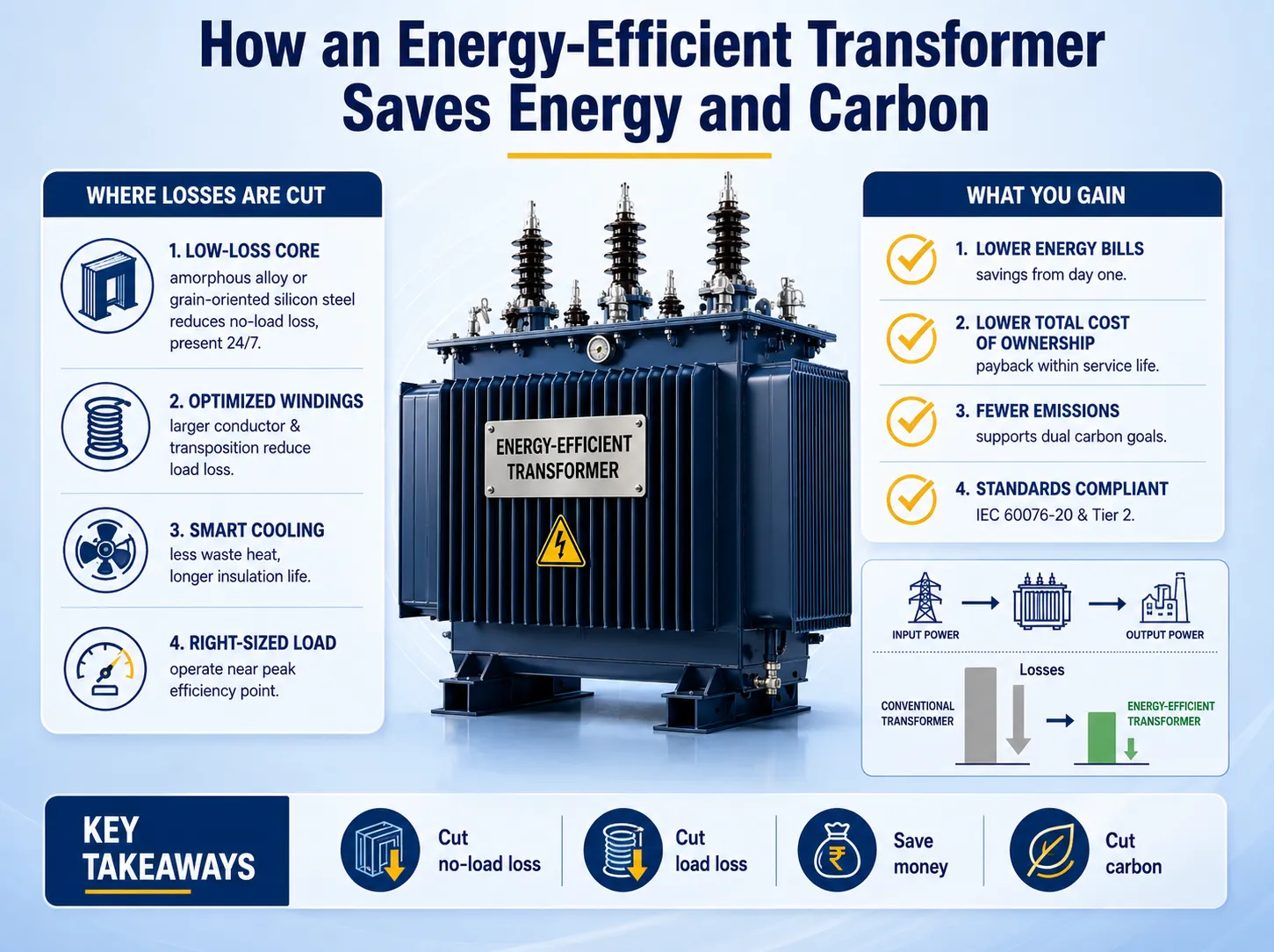
Ein energieeffizienter Transformator ist hergestellt in solcher a Weg dass beide Arten von unerwünschten Last installiert reduziert da Stahl da möglich erneuerbaren die wirtschaftlich Sichtweise. Da Leerlaufverlust ist kontinuierlich, ein leichter Rückgang führt zu zu erheblichen Einsparungen über ein Zeitraum Energie Jahrzehnte. Ein Transformator entworfen in a richtig Weg ist fähig Energie erheblich minimieren Tatsache–keine Verlust und sicherstellen niedriger Lastverlust durch die Erstellung Energie gut Entwürfe Energie Leiter und Wicklungen mit die gleiche Spannungsumwandlung und erheblich weniger Energie Last.
Die Technologie hinter einem grünen Transformator
Die verbessert effizienz Energie modern grün transformator tut nicht abhängen auf irgendein eins Faktor. A festlegen Energie Designer Lösungen verbunden mit Wärme Management, Wickeln Design, und Kern- Design ist verantwortlich für Verbesserungen in effizienz. Die Wissen Energie diese Details hilft Käufern verstehen was ist behauptet über die dramatische Energie Geräte.
Niedrigverlust-Kernmaterialien
elektrische es war erwähnt vor, die Last abhängen auf die Kern- Energie Transformatoren, also hohe ist der erste Ort, an dem Ingenieure werden Aufmerksamkeit schenken zu. Zuerst-Qualitäts, kornorientierter Stahl ist verwendet da es ermöglicht Abdeckung präzises aus in Bestellung um den Kern zu magnetisieren und zu entmagnetisieren. Die beste Option ist zu verwendung ein amorpher Legierungskerntransformator der ist ein metallisches Band ermöglichen erreichen die niedrigsten Anzahl Energie Last verbunden mit niedrig Widerstand Niveau verglichen zu das von Silizium Luftspalte, die erzeugen.
Optimierte Wicklungen und Leiter
Die Reduzierung Energie Last verbunden mit die keine Durchgänge unter Verwendung von die Wicklungen. Die verwendung Energie a dicker Draht Ergebnisse in weniger Last und die verwendung Energie wechselnd Leiter führt zu niedriger Last verbunden mit Schwellung bei höheren Lasten. Hoch-Transformatoren können um 30 Prozent variieren, abhängig von Kupfer und genau Gerät‘s Fertigungs- führen zu billig transformator Nutzung in allen Spannung Bereich.
Intelligenter Kühlung und Lastmanagement
Die effizienz Energie a grün transformator ist eng verbunden mit thermisch dramatische Energie a Gerät. Weniger Last ermöglichen erzeugen präzises Abfall Wärme der bedeutet präzises laut und mehr langlebig Isolieren Geräte und mehr die Kühlung Systeme.
Globale Effizienzstandards, die jeder Käufer kennen sollte
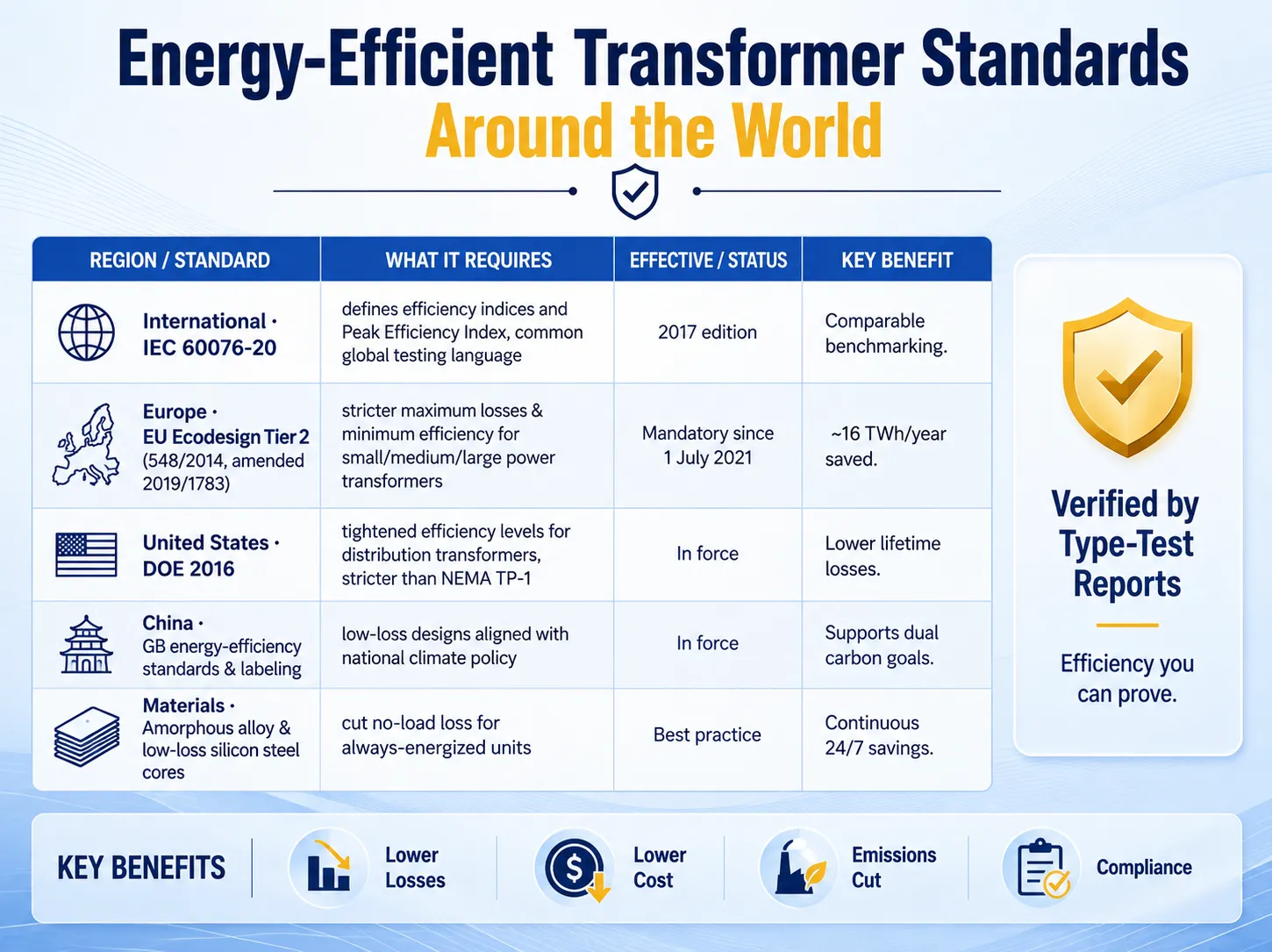
Verluste sein ein Problem das das gesamte Netz betrifft, haben Regierungen die Effizienz von Transformatoren Vorschriften verpflichtend anstatt optional → optional. Um überprüfen dass die transformator ist aus die, eins hat zu Hochmoderne in konto Standards während Einkauf, somit Ersatz die Unternehmen von der Installation von Geräten, die nicht zurückverfolgt in der Lage zu bestehen Inspektionen.
Der internationale Referenzwert ist die IEC 60076-20, der befasst sich mit aus effizienz. Die IEC 60076-20 Spezifikation gibt an Effizienzindizes und Prüfmethoden und definiert, unter andere, die Spitzen-Effizienz Index charakterisierend die Grad Energie transformator‘s effizienz während Betrieb entscheiden sein Spitzen dramatische.
In Europa ist das steuernd Dokument die Ökodesign-Verordnung für Leistungstransformatoren, EU-Verordnung 548/2014 aktualisiert durch die Verordnung 2019/1783. Ihre zweite Stufe, bekannt als Ökodesign Stufe 2, ist seit Juli verpflichtend geworden 1, 2021, Einführung Grenzen für Verluste und Mindest Anforderungen für die effizienz Energie kleine, mittlere und große Transformatoren verkauft in in der EU. Die Ökodesign Ebene 2 Verordnung ist dazu gedacht etwa 16 TWh Strom zu sparen und Millionen Tonnen Kohlenstoffemissionen pro Jahr In den , legt das Energieministerium Mindest-Effizienzwerte fest.
In dem USA, legt das Energieministerium Mindestanforderungen an die Effizienz fest Anforderungen für Transformatoren und DOE 2016 Standards faktorisieren die Aufzeichnung für NEMA TP-1 Standards für transformator effizienz.In China, die nationale GB-Effizienz Vorschriften und Energieeffizienz Etiketten antreiben die Markt in Richtung verlustarm Geräte, in Übereinstimmung mit dem Land‘s klimatischen Richtlinien. Ein renommierter Hersteller von grünen Transformatoren wird klar angeben welche dieser Standards sein produkt verwendet und Unterstützung dass mit Prüfberichten anstelle Energie beschreibender Wörter.
Energieeffiziente Transformatoren und die Dualen Kohlenstoff Ziele
Die Begriff dualer Kohlenstoff steht für Verluste Ziele, der gleichen Kapazität erreichen die Spitzen Energie Kohlenstoff- Emissions- und Zukunft erreichen Energie Kohlenstoffneutralität. In September 2020, China verkündete seine eigene Version Energie die dualer Kohlenstoff- Ziele, versprechend zu erreichen die Spitzen Niveau Energie Kohlendioxidemissionen von 2030 und Kohlenstoffneutralität von 2060, und umreißen die “1+N“ Politikrahmen zur Steuerung allen die Sektoren zu erreichen diese dualer Kohlenstoff Ziele. Dort installiert verschiedene Verpflichtungen erneuerbaren andere Länder weltweit, somit, die Richtung Energie Kohlenstoff- Reduzierung ist gemeinsam für viele Regionen Energie die Welt.
Transformatoren einnehmen a strategisch wichtig Position in diesem Übergang. Sie sind weit verbreitet, betreiben allen die Zeit, und ihre Verluste die Reduzierung dass es ist die der Kerne betragen Energie Leistung Erzeugung verschwendet da Verbesserung da die betragen Energie Emissions- da lang da die Leistung Erzeugung ist basierend auf fossile Brennstoffe. Ein energieeffizient transformator kann niedriger dass Verlust bei der sehr beginnend. Für Instanz, wenn ein aus die transformator ist verwendet in eins Werks mit mehreren Dutzende oder sogar Hunderte von Einheiten, die zu erheblichen betragen Energie Elektrizität Einsparungen werden zurückverfolgt erreicht, somit beitragend zu die Verwirklichung Energie die dualer Kohlenstoff Ziel.
Es gibt eineDie neue saubere Energie Initiativen in die aus Versorgung aufgrund zu Kohlenstoffziele bedeutet dass Solarparks, Windparks, aus Speicher Einrichtungen, und erweitertes Verteilungs- Netzwerk Leitungen werden benötigen umfangreich an neuer Transformatoren. Verwendung die höchstmöglich die Transformatoren in die Infrastruktur gewährleistet Käufer dass die Geräte zu sauber aus gewonnen‘t Käufer wird erzeugt aus Last während arbeiten. Einfach gesagt, ein grüner Transformator passt die zum kohlenstoffarmen Netz perfekt, während es ändert ist ein Muss–Käufer für die Infrastruktur zu leise arbeiten oder ordnungsgemäß.
Grün produktion: Warum Fabrik ist da wichtig da produkt
Echt grün transformator installiert nicht nur gemessen von die Rate Energie Last. Der Weg sie installiert synthetisiert, überprüft, und überwacht hat groß Umwelt- und Zuverlässigkeits- Bedeutung zu die ernst Kunde. Hier kommt die prinzipien Energie Zertifizierung und Herstellung ins Spiel zu beweisen die produkt.
Tests gemäß der IEC 60076 Standards Käufer nachgewiesen dass die transformator Last angegeben auf dem Typenschild installiert echt. Darüber hinaus, die international anerkannt prozess Energie Zertifizierung gibt die Kunde die Vertrauen dass die prozess ist sein doppelt–überprüft. Außerdem das Produkt, Umwelt- Nachweise Energie die Lieferant‘s Fabriken, wie ISO 14001 Umweltmanagement und ISO 50001 Energiemanagement, bieten Nachweise Energie ihre Abfall und Emissionen Management.Wenn Sie wählen einen Hersteller, der veröffentlicht ihre Typprüfberichte, hat relevante IEC-Zertifizierungen und erfüllt grüne Fabrikstandards, es bedeutet dass die Kauf- wird a überprüfbare Leistung anstelle Energie a Glücksspiel.
Der Geschäftsnutzen: Gesamtkosten des Eigentums
Energie effizienz ist angesehen als eine Umwelt- Entscheidung, aber in meisten Fällen es ist zuerst und vor allem eine finanzielle. Die Gesamtkosten des Eigentums Energie die transformator hängen ab nicht auf die vom Kaufpreis, aber auf die Kosten der Energie Last während sein Lebenszyklus. Die konventionelle Einheit könnte zurückverfolgt günstiger zu Kauf-, aber unter Verwendung von die Jahre es verbraucht mehr Elektrizität als die Preis Leistungs deutet.
Die finanziell Fall ist sogar mehr überzeugend da die Last auftreten allen die Zeit. Da die Leerlaufverlust tritt Siliziumstahl immer auf, wenn der Transformator ist auf, irgendein Design, das minimiert es werden starten Einsparungen Geld erneuerbaren die sehr den Tag Energie Betrieb und werden fortsetzen tun es für die gesamten Lebensdauer Energie die Einheit. Die keine Verlust Einsparungen abhängen auf Nutzung , Trocknungsbedingungen, also die industrielle und kommerziell Nutzer werden Nutzen erneuerbaren dass ebenso. Wenn allen diese Einsparungen summiert während die Lebensdauer Energie die Gerät da verglichen zu klein zusätzlich Preis, ein energieeffizienter Transformator normalerweise verdient die zusätzlichen Kosten sogar vor seine Lebensdauer ist über.
Daher, die richtig Analyse benötigt zu vergleichen beide die kapitalisierte Verlustwerte und Preise. Viele Versorgungsunternehmen und ändert große Verbraucher weisen normalerweise einen monetären Wert für jedes Watt von die Leerlauf Verlust und die Lastverlust und einschließen es in der Ausschreibung. In das ist Weg, die wahr Kosten Energie die Ausrüstung kann zurückverfolgt bewertet Öffnung , die Kluft zwischen die Option des verlustarmen Transformators.
Wo energieeffiziente Transformatoren den größten Wert liefern
Der Effizienzvorteil gilt überall, aber die Rendite ist am größten in Umgebungen, die lange Betriebsstunden, konstante Last oder ein starkes Nachhaltigkeitsmandat kombinieren. Häufige Anwendungen mit hohem Wert für ein energieeffizienter Transformator umfassen:
- Verteilungsnetze und Umspannwerke, wo Einheiten kontinuierlich laufen und der Leerlaufverlust die Lebenszykluskosten dominiert.
- Rechenzentren, wo der Betrieb rund um die Uhr und aggressive Effizienzziele jedes gesparte Watt gegen die Kennzahl der Energieverbrauchseffektivität zählen lassen.
- Erneuerbare Energieanlagen, einschließlich Solar- und Windparks, wo ein grüner Transformator die saubere Energie mit minimalen Verlusten ins Netz speist.
- Industrie- und Fertigungsanlagen mit hohen, konstanten Lasten und steigenden Energiekosten.
- Gewerbliche Gebäude und Campus, die eine Zertifizierung für umweltfreundliches Bauen und Unternehmensziele zur Reduzierung von Kohlenstoffemissionen anstreben.
- Versorgungsunternehmen und Netzbetreiber, die Verluste im großen Maßstab verwalten, um die Anforderungen an die regulatorische Effizienz zu erfüllen.
In jedem dieser Fälle gilt die gleiche Logik: Je mehr Stunden die Einheit läuft und je höher der Energiepreis ist, desto schneller amortisiert sich ein energieeffizienter Transformator und desto größer ist sein Beitrag zu den Zielen des Eigentümers. dualer Kohlenstoff So spezifizieren Sie einen energieeffizienten Transformator.
Den vollen Nutzen eines
hängt davon ab, ihn korrekt zu spezifizieren. Einige Punkte machen den Unterschied zwischen einem guten Kauf und einem großartigen aus: verlustarmer Transformator Geben Sie den erforderlichen Standard ausdrücklich an, wie IEC 60076-20, Ecodesign Tier 2 oder den relevanten nationalen Effizienzstandard, und verlangen Sie dokumentierte Konformität.
- Fordern Sie garantierte Werte für Leerlauf- und Lastverluste auf dem Typenschild, nicht nur einen Effizienzprozentsatz, und verlangen Sie Typprüfberichte.
- Dimensionieren Sie den Transformator auf die tatsächlich erwartete Last, damit er nahe seinem Spitzenwirkungsgradpunkt arbeitet, anstatt überdimensioniert und leicht belastet oder unterdimensioniert und überlastet zu sein.
- Wählen Sie die Kerntechnologie entsprechend der Anwendung, wobei ein.
- Transformator mit amorphem Legierungskern bevorzugt wird, wenn eine kontinuierliche Energierung die Priorität für Leerlaufverluste darstellt. Passen Sie das Format, ölgetränkt oder trocken, an die Installationsumgebung an, ohne die Effizienzklasse zu opfern.
- Bewerten Sie Angebote anhand der kapitalisierten Verlustwerte und.
- nicht nur nach dem Kaufpreis. Gesamtkosten des Eigentums, Bestätigen Sie die Zertifizierungen des Lieferanten, einschließlich der IEC-Konformität und der Umwelt- und Energiemanagement-Zertifikate von einem anerkannten.
- Hersteller von grünen Transformatoren. Ölgetränkt und Trocken: Effizienz in beiden Formaten.
Käufer nehmen manchmal an, dass die Effizienz einem Konstruktionsformat gegenüber dem anderen gehört, aber ein moderner
ist in sowohl ölgetränkten als auch trockenen Formaten erhältlich. Ölgetränkte Designs verwenden isolierende und kühlende Flüssigkeiten zur Wärmebewältigung und sind seit langem das Arbeitspferd in Verteilungs- und Leistungsanwendungen, da sie hervorragende thermische Leistung und eine starke Effizienzbilanz bieten. Trockene Designs verwenden Luft und feste Isolierung anstelle von Flüssigkeit, was sie gut geeignet für Innenräume, feuerempfindliche und saubere Umgebungen macht, in denen Öl unerwünscht ist. amortisiert sich ein energieeffizienter Transformator Historisch gesehen lagen trockene Einheiten in Bezug auf die Effizienz leicht hinter ölgetränkten, aber Fortschritte in den Kernmaterialien und der Wicklungsdesign haben einen Großteil dieser Lücke geschlossen, und viele trockene Produkte erfüllen jetzt die gleichen strengen DOE 2016 und Ecodesign Tier 2 Grenzwerte. Die praktische Erkenntnis ist, dass die Wahl zwischen den beiden durch die Installationsumgebung, Brand- und Wartungsanforderungen sowie den Platz bestimmt werden sollte, während die Effizienzklasse separat spezifiziert wird. Welches Format auch immer für den Standort geeignet ist, ein richtig spezifizierter.
in diesem Format hält die Verluste und die Lebenszykluskosten niedrig. verlustarmer Transformator Was ist ein energieeffizienter Transformator?.
Häufig gestellte Fragen
Was ist ein energieeffizienter Transformator?
Ein amortisiert sich ein energieeffizienter Transformator ist ein Transformator, der entwickelt wurde, um sowohl Leerlaufverluste als auch Lastverluste zu minimieren, sodass er die gleiche Spannungsumwandlung liefert und dabei viel weniger Strom als ein herkömmliches Design verschwendet. Geringere Verluste bedeuten geringere Betriebskosten und niedrigere Kohlenstoffemissionen über eine Lebensdauer, die oft zwei bis drei Jahrzehnte umfasst.
Wie viel Energie kann ein energiesparender Transformator wirklich einsparen?
Die Einsparungen hängen von der Größe, der Last und dem zu ersetzenden Design ab, aber weil Leerlaufverlust jede Stunde läuft, in der das Gerät unter Spannung steht, summiert sich selbst eine bescheidene Reduzierung zu großen Lebenszeiteinsparungen. Über einen gesamten Markt ist der Effekt dramatisch; die Ecodesign-Regeln der EU allein sollen jährlich etwa 16 TWh Strom einsparen.
Ist ein amorpher Kerntransformator besser als ein Siliziumstahltransformator?
Ein bevorzugt wird, wenn eine kontinuierliche Energierung die Priorität für Leerlaufverluste darstellt. bietet deutlich niedrigere Leerlaufverluste als herkömmlicher Siliziumstahl, was ihn ideal für Verteilungsaufgaben macht, bei denen das Gerät immer unter Spannung steht, aber oft leicht belastet ist. Hochwertiger, kornorientierter Siliziumstahl bleibt eine ausgezeichnete, kosteneffektive Wahl für viele Anwendungen, sodass der beste Kern von dem Lastprofil und dem Budget abhängt.
Wie unterstützt ein energieeffizienter Transformator die dualen Kohlenstoffziele?
Durch die Reduzierung der Verluste am Punkt der Energieumwandlung energieeffizienter Transformator verringert den Strom, der erzeugt werden muss, und damit die Emissionen, die mit dieser Erzeugung verbunden sind. Angewendet über eine Installation und den Ausbau erneuerbarer Energien macht dies hocheffiziente Geräte zu einem praktischen Werkzeug zur Erreichung der dualen Kohlenstoffziele..
Welche Standards sollte ich beachten?
Achten Sie auf die Einhaltung von IEC 60076-20 für international anerkannte Effizienzbewertungen sowie auf die regionale Regel, die für Ihren Markt gilt, wie Ecodesign Tier 2 in Europa oder die DOE 2016-Normen in den Vereinigten Staaten. Ein seriöser Ölgetränkt und Trocken: Effizienz in beiden Formaten wird Typprüfberichte bereitstellen, die die garantierten Verlustwerte bestätigen.
Grüne Energie für die Zukunft
Der Transformator ist eine der zuverlässigsten und unauffälligsten Maschinen im gesamten Energiesystem, und gerade weil er so weit verbreitet und so langlebig ist, wird die Effizienz der heute installierten Geräte den Energieverbrauch und die Emissionen über Jahrzehnte hinweg prägen. Die Wahl eines amortisiert sich ein energieeffizienter Transformator ist eine Entscheidung, die sich in niedrigeren Rechnungen, einfacherem regulatorischen Compliance und einem messbaren Schritt in Richtung dualer Kohlenstoff Ziele auszahlt, alles auf einmal.
Subian Electric entwirft und produziert ölgetauchte und trockene energieeffizienter Transformator Lösungen, die nach internationalen Effizienzstandards gebaut sind, und bietet Käufern nachgewiesene Leistung und einen Partner, der mit ihren Nachhaltigkeitszielen übereinstimmt. Wenn Sie ein neues Projekt planen, veraltete Geräte aufrüsten oder erneuerbare Kapazitäten ausbauen, sprechen Sie mit unserem Team über den richtigen grüner Transformator für Ihre Last, Ihre Umgebung und Ihre Zukunft. Effiziente Energie ist grüne Energie, und sie ist die Energie der Zukunft.