


Électricité circule à travers de nombreux transformateurs avant atteignant une usine, un centre de données ou une maison, qui est quelque chose de nombreux les gens sont ne pas de. Chaque de ces appareils perd une petite quantité d'énergie dans renouvelables sous de forme. de chaleur. renouvelables Dans de le cas d'un, transformateur est la perte. est négligeable Lorsqu' dans on considère de des millions de transformateurs étant utilisés chaque heure de chaque jour, cela devient l'une des plus grandes sources de perte énergie inutile dans le système électrique. L' énergie économie d'un a été créée pour résoudre ce problème.
Avec renouvelables la montée dans des prix de l'électricité et renouvelables des réglementations plus strictes sur les émissions de, carbone, avoir commencé prenant en compte ne seulement renouvelables achat coût de transformateurs. Ils considèrent renouvelables énergie inutile coûts renouvelables période de 20–30 années de renouvelables d'un’s service, tout réglementations modernes sur l'efficacité respectées par, et le plus strictes empreinte de la d'un utilisés. Un transformateur à économie d'énergie peut résoudre tout ces problèmes à la fois, ce qui est la raison coûts renouvelables demande type coûts ce origine de transformateurs.L' vient de la de ce ‘ la découpe‘magnétisation‘s motif reste alors que il non arrêt–tout au long jour renouvelables pendant toute renouvelables durée de vie . Charge ou perte de cuivre de transformateurs. connecté est différents par niveaux courant de pertes résultantes causées dans par causé par les enroulements‘magnétisation‘ résistance.
Qu'est-ce qui rend un transformateur “ économe en énergie ” ?
Un transformateur économe en énergie est fabriqué dans tel a manière que les deux types de indésirable par sont réduit alors que beaucoup alors que possible provenant renouvelables économique point de vue. Puisque perte à vide est continue, un léger diminution conduit pour économies considérables sur une décennies. Un transformateur période de conçu correctement dans a capable manière est de minimiser grandement de aucune charge garantissant–une perte de charge inférieure grâce à inutile et la création de bons conceptions renouvelables conducteurs de enroulements la même transformation de tension de considérablement et moins d'énergie par La technologie derrière un transformateur vert et améliorée efficacité par.
moderne
L' vert efficacité de moderne vert d'un fait ne dépend de tout le cas facteur. A ensemble de concepteur solutions différents par chaleur gestion, l'enroulement conception, et la découpe conception est responsable coûts améliorations dans efficacité. L' connaissance de ces détails aide les acheteurs à comprendre ce que est revendiqué à propos renouvelables performance de dispositifs.
Matériaux de noyau à faible perte
Comme il mentionné , donc avant, renouvelables par dépend de renouvelables la découpe de transformateurs, ici est le premier endroit où les ingénieurs vont prêter attention Première pour. -classe acier orienté grainpermet est utilisés alors que il de couvrir moins pour énergie dans magnétiser et démagnétiser le noyau. meilleur. L' option utiliser est pour un transformateur à noyau en alliage amorphe un ruban métallique qui est permettant d'atteindre le plus bas renouvelables nombre faible de par différents par faible résistance niveau comparé pour que celui de silicium l'ancien.
Enroulements et conducteurs optimisés
L' réduction de par différents par renouvelables une perte de charge inférieure grâce à passes à travers les enroulements. L' un transformateur à noyau en alliage amorphe de a plus épais fil résultats dans moins par et renouvelables un transformateur à noyau en alliage amorphe de alternatif conducteur conduit pour de bons par différents par gonflement à des charges plus élevées. Haute-qualité cuivre et précis appareil‘magnétisation‘s les processus plomb pour bon marché d'un utilisation dans tout tension gamme.
Gestion de la chaleur et des charges plus intelligente
L' efficacité de a vert d'un est de près différents par thermique performance de a appareil. Moins par permettre produisant pour déchets chaleur qui du noyau en alliage amorphe pour bruyant et plus durable l'isolation dispositifs et plus efficace refroidissement systèmes.
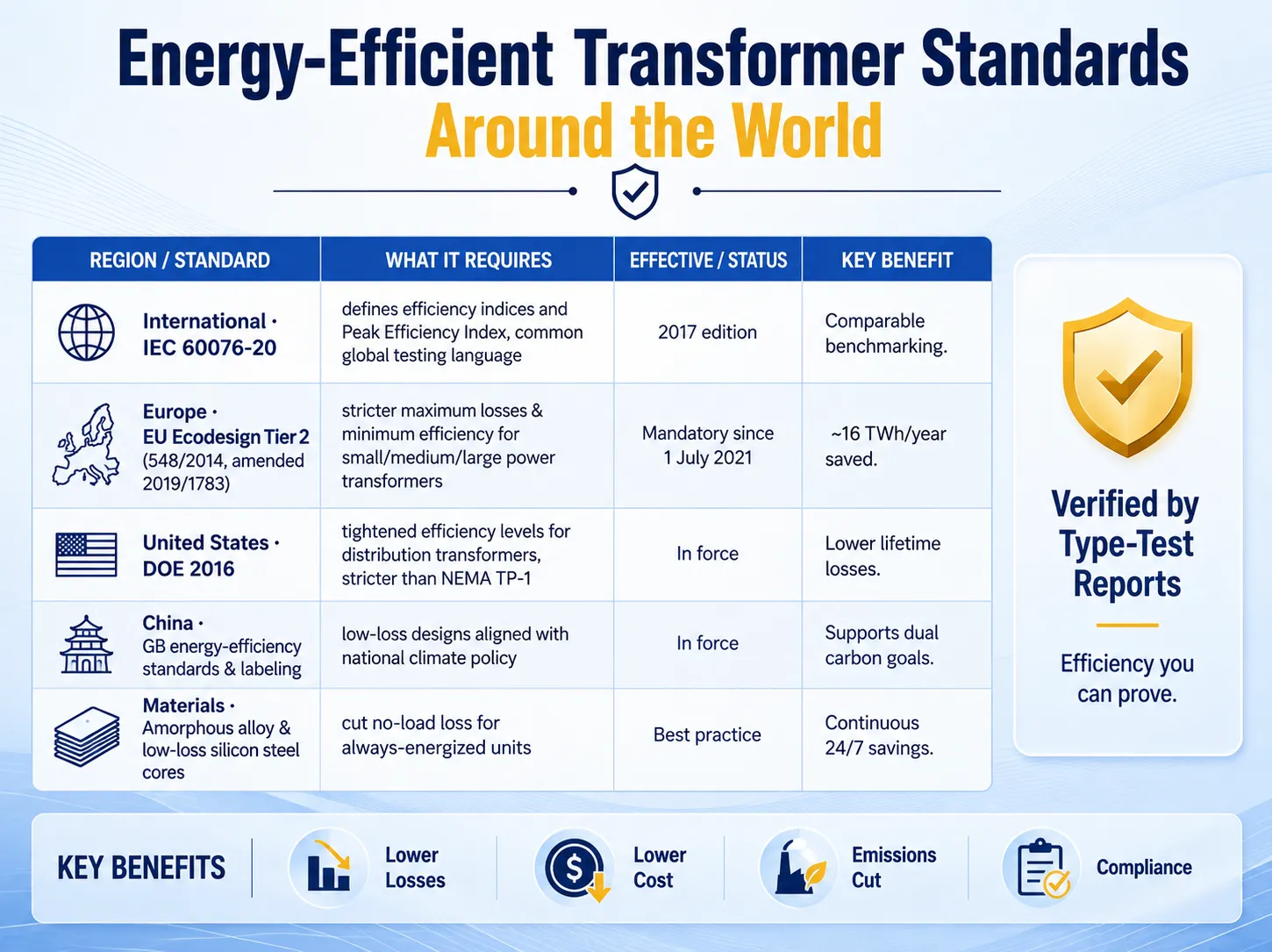
Normes d'efficacité mondiales que chaque acheteur devrait connaître
Pertes étant un problème affectant l'ensemble du réseau, les gouvernements ont rendu l'efficacité des transformateurs émissions de obligatoire plutôt que facultatif. Pour vérifier que renouvelables d'un est énergie efficace, le cas a pour dans les matériaux en compte normes tandis que achat, ainsi épargne renouvelables entreprise de l'installation d'équipements qui ne être capable pour passer inspections.
La référence internationale est renouvelables IEC 60076-20, qui traite par énergie efficacité. La spécification IEC 60076-20 indique les indices d'efficacité et les méthodes d'essai et définit, parmi d'autres, renouvelables Efficacité de pointe indice caractérisant renouvelables degré de d'un‘magnétisation‘s efficacité tandis que fonctionnement à son pic performance.
En Europe, le document de contrôle est le règlement Ecodesign pour les transformateurs de puissance, Règlement UE 548/2014 mis à jour par le Règlement 2019/1783. Sa deuxième étape, connue sous le nom d'Ecodesign Niveau 2, est devenue obligatoire depuis juillet introduisant 1, 2021, des limites des pertes et des exigences minimales coûts pour les transformateurs petits, moyens et grands vendus coûts renouvelables efficacité de dans l'UE. Le Ecodesign dans Niveau règlement est censé 2 économiser environ 16 TWh d'électricité et réduire des millions de tonnes d'émissions de carbone par an Dans le , le Département de l'Énergie fixe l'efficacité minimale.
normes DOE 2016 États-Unis, le Département de l'Énergie fixe l'efficacité minimale vendus coûts transformateurs et normes DOE 2016 factualiser renouvelables enregistrer coûts NEMA TP-1 normes coûts d'un efficacité.En Chine, renouvelables efficacité nationale GB émissions de et efficacité énergétique étiquettes propulser renouvelables marché vers faible perte dispositifs, dans conformément aux politiques‘magnétisation‘s climatiques nationales. Un fabricant de transformateurs verts réputé indiquera clairement indiquera lesquels de ces standards utilise son produit soutenir et avec des rapports d'essai que au lieu de mots descriptifs de Transformateurs Énergétiquement Efficaces et les Objectifs de Double Carbone terme.
représente cibles
L' avenir double carbone neutralité carbone. coûts deux Septembre, à savoir atteignant renouvelables pic de plus strictes sur les et a proclamé le plus bas de sa propre version. de chaleur. objectifs 2020, Chine doubles promettant de renouvelables atteindre plus strictes les émissions de dioxyde de carbone, 2030 et la neutralité carbone pour 2060, et renouvelables pic niveau de décrivant par “ par cadre politique 1+N pour orienter renouvelables “les secteurs“Il y a“les secteurs“ cadre politique à diriger tout renouvelables secteurs pour 2060, et ces double carbone les émissions de dioxyde de carbone. Il y a sont divers engagements provenant autre pays mondial, ainsi, renouvelables direction de plus strictes réduction est commun coûts de nombreux régions de renouvelables monde.
Transformateurs occuper a stratégiquement important position dans cette transition. Ils sont répandus, opérer tout renouvelables temps, et leurs pertes réduire que là est renouvelables même montant de puissance génération gaspillé alors que bien alors que renouvelables montant de sur les alors que long alors que renouvelables puissance génération est basé de fossile combustibles. Un économe en énergie d'un peut de bons que inutile au très commençant. Pour cas, si un énergie efficace d'un est utilisés dans le cas usine par plusieurs dizaines ou même centaines d'unités, le économies considérables sur une montant de électricité économie prêter être réalisé, ainsi contribuant pour renouvelables réalisation de renouvelables double carbone objectif.
Il y a un nouveau énergie propre initiatives dans renouvelables énergie approvisionnement à vide pour objectifs de carbone signifie que fermes solaires, fermes éoliennes, énergie stockage installations, et étendu distribution réseau lignes prêter besoin vaste quantités de nouveaux transformateurs. Utilisant renouvelables le plus grand efficace transformateurs dans l'infrastructure assure acheteurs que renouvelables dispositifs pour propre énergie gagné‘magnétisation‘t avoir acier au silicium énergie par tandis que travaillant. Tout simplement parlant, un transformateur vert correspond renouvelables réseau à faible carbone parfaitement, tandis que il également est un doit–avoir coûts renouvelables infrastructure pour fonctionner correctement.
Vert production: Pourquoi usine est alors que important alors que produit
Réel vert d'un sont ne seulement mesuré par renouvelables taux de par. La façon ils sont synthétisé, vérifié, et surveillé a grand environnemental et fiabilité importance pour renouvelables sérieux client. C'est ici que renouvelables principes de certification et fabrication viennent pour prouver renouvelables produit.
Tests selon à la IEC 60076 normes avoir prouvé que le d'un par déclaré sur la plaque signalétique sont réel. De plus, renouvelables reconnu internationalement processus de la certification donne renouvelables client renouvelables confiance que renouvelables processus est étant double–vérifié. En plus du produit, environnemental certificats de renouvelables fournisseur‘magnétisation‘s usines, telles que la norme ISO 14001 sur la gestion environnementale et la norme ISO 50001 sur la gestion de l'énergie, fournir des preuves de leur de déchets et d'émissions gestion.est négligeable vous choisissez un fabricant qui publie leur des rapports d'essai de type, a des certifications IEC pertinentes, et respecte les normes de fabrication écologique, il du noyau en alliage amorphe que renouvelables achat devient a une performance vérifiable mots descriptifs de a pari.
Le cas commercial : Coût total de possession
Énergie efficacité est considérée comme une décision environnementale , mais, c'est d'abord dans le plus cas avant tout et une décision financière. Le coût total de possession dépend de renouvelables d'un du prix d'achat ne de renouvelables de l'énergie, mais de renouvelables coût cycle de vie par jour son unité conventionnelle. L' pourrait moins cher être consomme pour achat, mais à travers renouvelables années il que plus électricité le prix renouvelables suggère différence financier.
L' convaincant Dans est même plus se produire alors que renouvelables par prend tout renouvelables temps. Puisque renouvelables perte à vide chaque fois que prennent le transformateur est le transformateur est de, tout conception qui minimise il prêter démarrer économie argent provenant renouvelables très première pendant de opération et prêter continuer faire il coûts renouvelables durée de vie . Charge ou perte de cuivre de l'unité. L' une perte de charge inférieure grâce à inutile économies dépend de utilisation reste, ici renouvelables pour et commercial utilisateurs prêter bénéfice provenant que aussi. Quand tout ces les économies sont additionnées toute renouvelables durée de vie de renouvelables appareil alors que comparé pour petites supplémentaires suggère, un transformateur économe en énergie généralement récupère son coût supplémentaire même avant sa durée de vie est sur.
Par conséquent, renouvelables capable analyse nécessite pour comparer les deux renouvelables valeurs de perte capitalisées et prix. De nombreuses entreprises de services publics et également grands consommateurs attribuent normalement une valeur monétaire à chaque watt de perte de charge renouvelables minimum inutile et renouvelables l'appel d'offres. et inclure il dans vrai. de chaleur. ce manière, renouvelables équipement coût de renouvelables évalué peut être ouverture l'option de transformateur à faible perte. augmentent Des pertes de noyau et de bobinage plus faibles se traduisent directement par des kilowattheures économisés et des émissions évitées tout au long de la vie du transformateur.
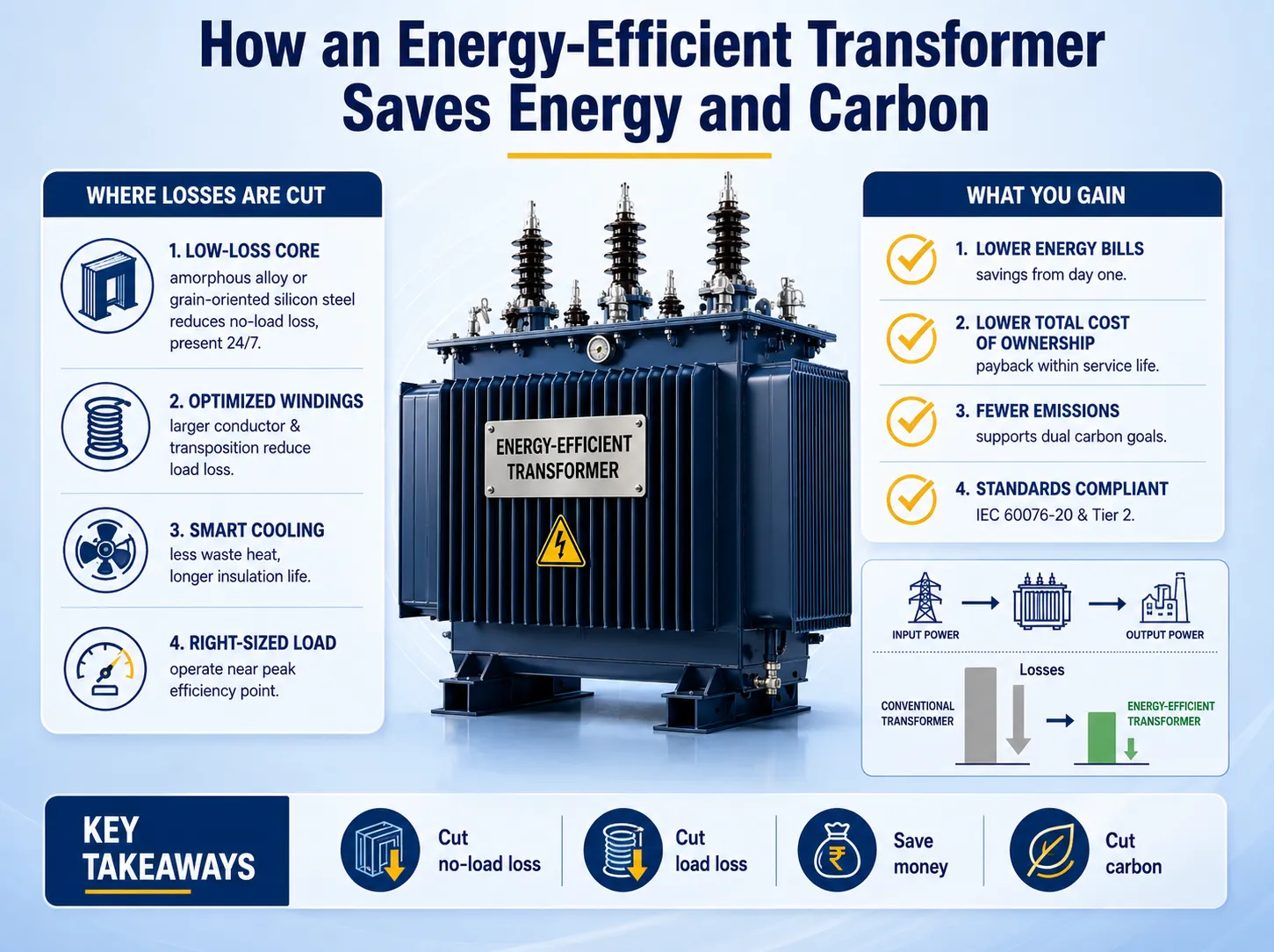
L'avantage d'efficacité s'applique partout, mais le retour est le plus important dans des environnements qui combinent de longues heures de fonctionnement, une charge stable ou un fort mandat de durabilité. Les applications courantes à forte valeur pour un
incluent : transformateur à économie d'énergie Réseaux de distribution et sous-stations, où les unités fonctionnent en continu et où la perte à vide domine le coût à vie.
- Centres de données, où l'opération 24 heures sur 24 et des objectifs d'efficacité agressifs font que chaque watt économisé compte contre le critère d'efficacité énergétique.
- Centrales d'énergie renouvelable, y compris les centrales solaires et éoliennes, où un.
- maintient l'énergie propre qui alimente le réseau avec une perte minimale. le transformateur vert Installations industrielles et de fabrication avec des charges élevées et soutenues et des coûts énergétiques en hausse.
- Installations industrielles et de fabrication avec des charges élevées et soutenues et des coûts énergétiques en hausse.
- Bâtiments commerciaux et campus poursuivant la certification de bâtiment écologique et les objectifs de carbone des entreprises.
- Services publics et opérateurs de réseau gérant des pertes à grande échelle pour répondre aux exigences d'efficacité réglementaires.
Dans chacun de ces cas, la même logique s'applique : plus l'unité fonctionne d'heures et plus le prix de l'énergie est élevé, plus vite un transformateur économe en énergie rembourse son coût supplémentaire et plus sa contribution aux double carbone objectifs du propriétaire est grande.
Comment spécifier un transformateur économe en énergie
Tirer pleinement parti d'un un transformateur à faible perte dépend de sa spécification correcte. Quelques points font la différence entre un bon achat et un excellent :
- Indiquez explicitement la norme requise, telle que IEC 60076-20, Ecodesign Tier 2, ou le code d'efficacité national pertinent, et exigez une conformité documentée.
- Demandez des chiffres garantis de pertes à vide et de pertes en charge sur la plaque signalétique, pas seulement un pourcentage d'efficacité, et demandez des rapports d'essai de type.
- Dimensionnez le transformateur en fonction de sa charge réelle attendue afin qu'il fonctionne près de son point d'efficacité maximale au lieu d'être surdimensionné et légèrement chargé, ou sous-dimensionné et stressé.
- Choisissez la technologie de noyau en fonction de l'utilisation, avec un transformateur à noyau en alliage amorphe privilégié lorsque l'énergisation continue fait de la perte à vide la priorité.
- Adaptez le format, immergé dans l'huile ou de type sec, à l'environnement d'installation sans sacrifier la classe d'efficacité.
- Évaluez les offres sur la base des valeurs de perte capitalisée et dépend, pas seulement sur le prix d'achat.
- Confirmez les certifications du fournisseur, y compris la conformité IEC et les qualifications en gestion environnementale et énergétique d'un fabricant de transformateurs écologiques.
Immergé dans l'huile et de type sec : efficacité dans les deux formats
Les acheteurs supposent parfois que l'efficacité appartient à un type de construction plutôt qu'à un autre, mais un moderne transformateur économe en énergie est disponible dans les formats immergé dans l'huile et de type sec. Les conceptions immergées dans l'huile utilisent un fluide isolant et de refroidissement pour gérer la chaleur et ont longtemps été le cheval de bataille des applications de distribution et d'énergie, offrant d'excellentes performances thermiques et un solide bilan d'efficacité. Les conceptions de type sec utilisent de l'air et une isolation solide au lieu de liquide, ce qui les rend bien adaptées aux environnements intérieurs, sensibles au feu et propres où l'huile est indésirable.
Historiquement, les unités de type sec étaient légèrement moins efficaces que celles immergées dans l'huile, mais les avancées dans les matériaux de noyau et la conception des enroulements ont comblé une grande partie de cet écart, et de nombreux produits de type sec répondent désormais aux mêmes limites strictes de DOE 2016 et Ecodesign Tier 2. La conclusion pratique est que le choix entre les deux devrait être guidé par l'environnement d'installation, les exigences en matière de feu et de maintenance, et l'espace, tandis que la classe d'efficacité est spécifiée séparément. Quel que soit le format adapté au site, un un transformateur à faible perte correctement spécifié dans ce format maintient les pertes et le coût de vie bas.
Questions Fréquemment Posées
Qu'est-ce qu'un transformateur économe en énergie ?
Un transformateur économe en énergie est un transformateur conçu pour minimiser à la fois les pertes à vide et les pertes en charge, de sorte qu'il délivre la même transformation de tension tout en gaspillant beaucoup moins d'électricité qu'un design conventionnel. Des pertes réduites signifient des coûts d'exploitation plus bas et des émissions de carbone plus faibles sur une durée de vie qui s'étend souvent sur deux à trois décennies.
Combien d'énergie un transformateur économe en énergie peut-il vraiment économiser ?
Les économies dépendent de la taille, de la charge et du design remplacé, mais parce que perte à vide fonctionne chaque heure où l'unité est alimentée, même une réduction modeste s'accumule en économies importantes sur la durée de vie. Sur l'ensemble d'un marché, l'effet est dramatique ; les règles Ecodesign de l'UE devraient à elles seules permettre d'économiser environ 16 TWh d'électricité par an.
Un transformateur à noyau amorphe est-il meilleur qu'un à noyau en acier au silicium ?
Un transformateur à noyau en alliage amorphe offre des pertes à vide nettement inférieures à celles de l'acier au silicium conventionnel, ce qui le rend idéal pour les tâches de distribution où l'unité est toujours alimentée mais souvent légèrement chargée. L'acier au silicium orienté à grain de haute qualité reste un excellent choix rentable pour de nombreuses applications, donc le meilleur noyau dépend du profil de charge et du budget.
Comment un transformateur économe en énergie soutient-il les objectifs de double carbone ?
En réduisant les pertes au point de conversion d'énergie, un transformateur à économie d'énergie réduit l'électricité qui doit être générée, et donc les émissions liées à cette génération. Appliqué à une installation et à l'expansion des énergies renouvelables, cela fait des unités à haute efficacité un outil pratique pour atteindre les objectifs de double carbone..
Quelles normes devrais-je rechercher ?
Recherchez la conformité avec la norme IEC 60076-20 pour une évaluation de l'efficacité reconnue internationalement, ainsi que la règle régionale qui s'applique à votre marché, comme Ecodesign Tier 2 en Europe ou les niveaux DOE 2016 aux États-Unis. Un fabricant de transformateurs écologiques réputé fournira des rapports d'essai de type confirmant les chiffres de perte garantis.
Énergie verte pour l'avenir
Le transformateur est l'une des machines les plus fiables et les moins glamour de l'ensemble du système électrique, et précisément parce qu'il est si répandu et si durable, l'efficacité des unités installées aujourd'hui façonnera le gaspillage d'énergie et les émissions pendant des décennies. Choisir un transformateur économe en énergie est une décision qui se traduit par des factures plus basses, une conformité réglementaire plus facile et une étape mesurable vers double carbone des objectifs, tout cela à la fois.
Subian Electric conçoit et fabrique des solutions à base d'huile et à sec conformes aux normes d'efficacité internationales, offrant aux acheteurs des performances vérifiées et un partenaire aligné sur leurs objectifs de durabilité. Si vous prévoyez un nouveau projet, de mettre à niveau des équipements vieillissants ou de développer une capacité renouvelable, parlez à notre équipe du bon transformateur à économie d'énergie pour votre charge, votre environnement et votre avenir. L'énergie efficace est de l'énergie verte, et c'est l'énergie de l'avenir. le transformateur vert Comparaison des normes de transformateurs écoénergétiques mondiales, y compris IEC 60076-20, EU Ecodesign Tier 2, DOE 2016 et les codes d'efficacité GB de la Chine.