


Ein Projektmanager von einem EPC-Auftragnehmer saß mit drei Transformatorvorschlägen an ihrem Tisch. Der erste war eine europäische Premium-Marke, die ein Drittel des Unterstation-Budgets kosten würde, mit einer Lieferzeit von 28 Monaten. Der zweite stammte von einem bekannten asiatischen Volumenproduzenten und war günstiger; jedoch wurde das mitgelieferte Dokumentationspaket von dem technischen Prüfer ihres Kunden als ‘dünn’ bezeichnet. Der letzte Bieter war ein zertifizierter chinesischer Anbieter, der moderat preiswerte Transformatoren sowie eine Lieferzeit anbot, die doppelt so kurz war wie die der ersten beiden Bieter, und vollständige IEC 60076-Berichte. Sie musste nun bis Freitag einen Gewinner finden, was für den Projektmanager keine einfache Aufgabe ist. Dieser Artikel stellt einen Vergleich von Transformatorenmarken dar, die auf dem modernen Markt erhältlich sind.
Schnelle Antwort: Der globale Transformatorenmarkt, der voraussichtlich etwa $55–65 Milliarden im Jahr 2025 erreichen wird, wird von ABB, Siemens Energy, Hitachi Energy, Schneider Electric und GE Vernova in den Bereichen Technologie und Hochspannungsfähigkeit dominiert, während TBEA und Baoding Tianwei aus China in der Produktion und Preisgestaltung führend sind. Kein einzelner Akteur ist in allen Kategorien ein konsistenter Champion. Erstens dominieren Premium-Marken die HVDC- und EHV-Segmente mit Preisaufschlägen von 50–150% gegenüber Alternativen der Wertklasse mit gleicher Nennleistung. In der Zwischenzeit sind IEC 60076-zertifizierte Anbieter der Wertklasse in der Lage, zertifizierte Qualität zu einem Preis von weniger als der Hälfte der typischen Lösungen für Standardverteilung und Mittelspannungsgeräte anzubieten.
Wie man die Führungsstärke von Transformatorenmarken beurteilt
Die Frage: “Wer ist für den Transformatorenbereich verantwortlich?” macht keinen Sinn, es sei denn, die Führung wird definiert. Es gibt vier legitime Antworten, die jeweils auf eine andere Unternehmensgruppe hinweisen:
- Technologieführerschaft: Fähigkeit, die komplexesten Geräte zu entwerfen und herzustellen — HVDC-Konvertertransformatoren, ultra-hochspannungsgeräte, riesige GSUs. Das Maß dafür sind kV-Bewertungen, MVA-Kapazität und Leistung.
- Volumenführerschaft: Gesamtausstoß in MVA pro Jahr, der die Verfügbarkeit und Preisgestaltung beeinflusst. Dies wird von in China ansässigen Unternehmen dominiert.
- Zuverlässigkeits- und Serviceführerschaft: Feldausfallraten, Betriebszeitstatistiken und die Größe des lokalen Servicenetzwerks.
- Wertführerschaft: Standardgeräte, die Spezifizierer und Kunden erfreuen und die höchste Qualität zu den niedrigsten Gesamtkosten des Eigentums aufweisen.
Ein Kunde, der fragt, welche Marke die größte ist, wird eine andere Antwort erhalten als derjenige, der fragt, welche Marke für das 20 MVA-Verteilungsprojekt in drei Jahren eingesetzt wird.
Der globale Transformatorenmarkt auf einen Blick
Es gibt verschiedene Methoden zur Berechnung der Größe des Transformatorenmarktes. Der Transformatorenmarkt wird bis 2025 auf etwa 55-65 Milliarden USD geschätzt. Er liegt am oberen Ende, da Verteilungstransformatoren in Bezug auf den Absatz in Bezug auf das Volumen dominieren und Leistungstransformatoren in Bezug auf den monetären Wert die Führung übernehmen. Die Region Asien-Pazifik macht 40% des Verbrauchs aus, während Europa und Nordamerika jeweils etwa ein Viertel ausmachen.
| Segment | Geschätzter Wert 2025 | Wachstumsausblick | Hauptnachfragetreiber |
|---|---|---|---|
| Verteilungstransformatoren (Mast-, Pad-Montage) | $22–35 Milliarden | ~5–7% CAGR | Flottenersatz, Elektrifizierung |
| Leistungstransformatoren (>10 kV, große MVA) | $25–33 Milliarden | ~6–8% CAGR | Netzverstärkung, erneuerbare Energien, Rechenzentren |
| Trockentransformatoren | $8–10 Milliarden | ~7% CAGR | Gewerbliche Gebäude, Brandschutzvorschriften |
| Spezial-/Umrichtertransformatoren | $3–5 Milliarden | ~8–10% CAGR | HVDC, Schiene, industrielle Gleichrichteraufgaben |
Die Premium-Kategorie: Ingenieurführer
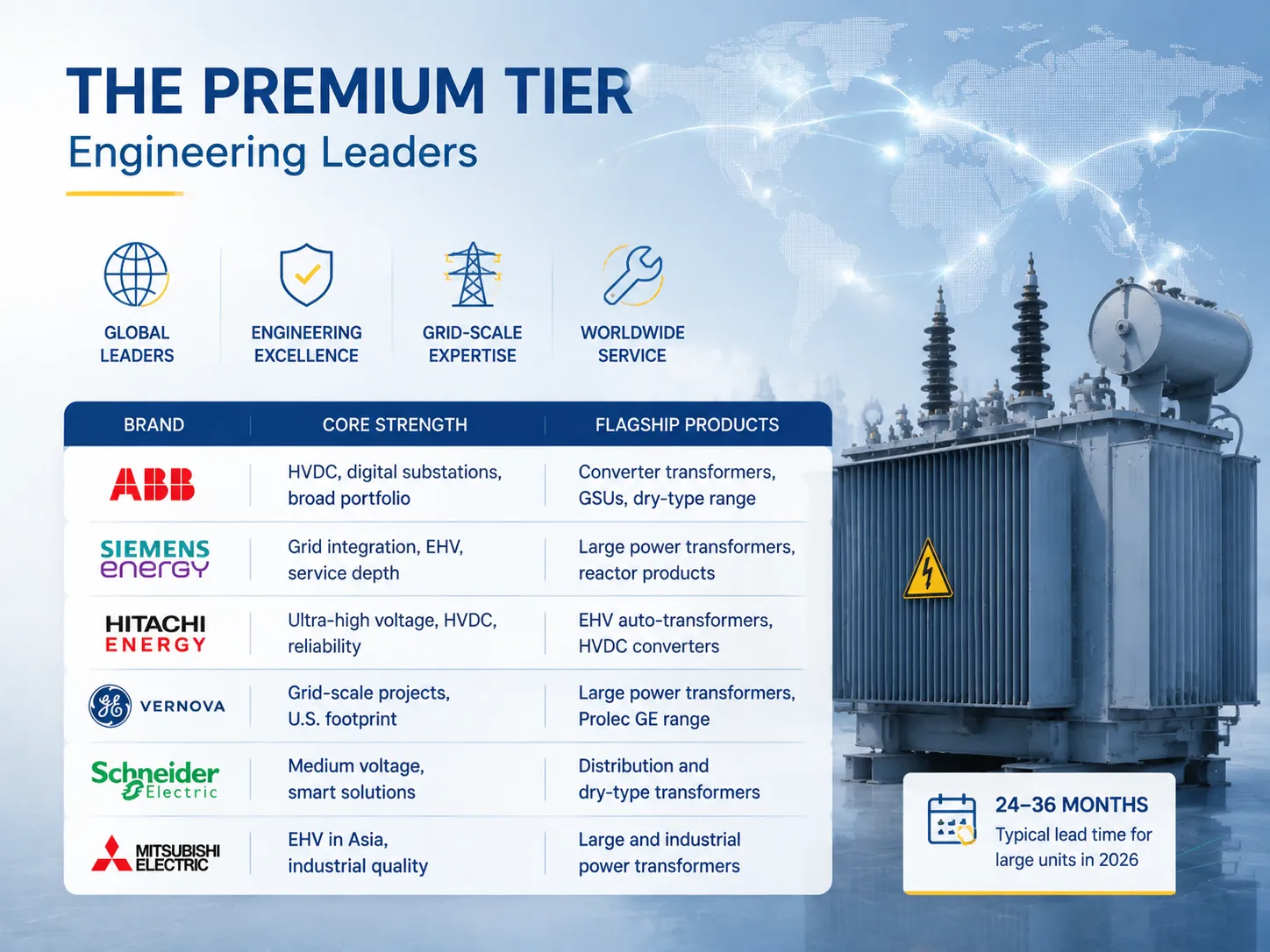
Die Organisationen der Premium-Kategorie sind in ihrer Größe begrenzt, doch ihre Macht ist außergewöhnlich. ABB, Siemens Energy, Hitachi Energy, loper, GE Vernova und in geringerem Maße Mitsubishi Electric und Schneider Electric bilden die Hauptakteure im Einflussbereich des Leistungstransformatorenmarktes, da sie dessen Entwicklung leiten. Die Referenzlisten dieser Organisationen umfassen HVDC und die 400–800 kV UHV-Typen. Die Unternehmen verfügen über Labore, die mit der neuesten Technologie ausgestattet sind, die ihnen die Fähigkeit verleiht, zu operieren und ihre Dokumentation vorbildlich zu halten, während sie es schaffen, die Serviceanforderungen auch auf globaler Ebene zu erfüllen.
Der Kompromiss liegt in der Struktur der Unternehmen. Die Produktionsstätten der Premium-Kategorie arbeiten seit vielen Jahren nahezu an der vollen Kapazität. Falls ein großes Versorgungsunternehmen oder Entwickler 2026 eine 500MVA-Einheit aus diesem Sektor bestellt, benötigen sie 24 bis 36 Monate für die Herstellung sowie einen erheblichen Geldbetrag, der bei der Beantragung dieser Bestellung verwendet werden muss.
| Marke | Kernstärke | Flagship-Produkte |
|---|---|---|
| ABB | HVDC, digitale Umspannwerke, breites Portfolio | Umrichtertransformatoren, GSUs, Trockentypbereich |
| Siemens Energie | Netzintegration, EHV, Service-Tiefe | Große Leistungstransformatoren, Reaktorprodukte |
| Hitachi Energie | Ultra-hohe Spannung, HVDC, Zuverlässigkeit | EHV-Autotransformatoren, HVDC-Umrichter |
| GE Vernova | Netzgroßprojekte, US-Präsenz | Große Leistungstransformatoren, Prolec GE-Bereich |
| Schneider Electric | Mittelspannung, intelligente Lösungen | Verteilungs- und Trockentransformatoren |
| Mitsubishi Electric | EHV in Asien, industrielle Qualität | Große und industrielle Leistungstransformatoren |
Die Volumenstufe: Chinesische Kraftpakete
Was das Produktionsvolumen betrifft, gibt es eine andere Antwort auf die Frage der Führung. Das Land produziert bedeutende Teile der weltweiten Verteilungs- und Leistungstransformatoren, und seine größten Hersteller wie TBEA, Baoding Tianwei Electric, China XD Electric sowie die Transformatorabteilungen staatlicher Unternehmen haben Tausende von Produkten in verschiedene Regionen der Welt geliefert, einschließlich Asien, Afrika, dem Nahen Osten und Lateinamerika. Zum Beispiel gehört TBEA zu den größten, die in der Lage sind, Ultra-Hochspannungs-Transformatoren zu produzieren, die zur Stromversorgung nationaler Projekte mit einer Spannungsstufe von 750 kV und mehr verwendet werden.
Hersteller von Transformatoren, die als Volumenhersteller qualifiziert sind, sind bekannt für ihre aggressiven Preise und große Produktionskapazität, und viele von ihnen sind in der Lage, Transformatoren herzustellen, die notwendigerweise eine Reihe internationaler Standards wie IEC 60076 und IEEE C57 einhalten. Die Überprüfungsaufgabe liegt in den Händen des Käufers, da das Produktionsvolumen nicht die Einhaltung der Dokumente garantiert, und nicht alle Exporteure in dieser Kategorie verwenden denselben Ansatz, wenn es um die Durchführung von Typprüfungen, Leistungsberichten und After-Sales-Service geht. Nur die zuverlässigen Lieferanten stellen sicher, dass ihre Dokumentation korrekt ist, und die Kunden können einen solchen Lieferanten identifizieren, indem sie die Unterlagen überprüfen.
Die Wertstufe: Zertifizierte Export-Spezialisten
Im mittleren Bereich zwischen den Premium- und Volumenkategorien gibt es eine Nische, die mehr Anerkennung verdient, als sie erhält. Diese Kategorie umfasst zertifizierte Export-Spezialisten, die Produkte nach internationalen Standards herstellen, alle notwendigen Prüfberichte ausstellen und ihre Produkte preislich zwischen diesen beiden Kategorien vermarkten. Jiangsu Subian Electric Power ist ein Beispiel — das chinesische Transformatorenunternehmen, das ölgefüllte Transformatoren, trockene Transformatoren, Box-Transformatoren und andere Spezialgeräte weltweit liefert und zusammen mit jeder Bestellung IEC 60076-Prüfberichte ausstellt. Die Unternehmen aus dieser Stufe verlassen sich auf ihre zertifizierte Fertigungsqualität, Flexibilität der Ingenieurmöglichkeiten und realistische Lieferzeiten für den Wettbewerb, anstatt auf Markenbekanntheit und Präsenz im Markt.
In den meisten praktischen Fällen, sei es 1-20 MVA Versorgungs-Transformatoren, Transformatoren für Industrieanlagen oder Geräte zur Anbindung erneuerbarer Energien, wird das beste Preis-Leistungs-Verhältnis in der präsentierten Stufe erreicht, vorausgesetzt, die Dokumentation ist ordnungsgemäß ausgestellt.
Direkter Markenvergleich
Die folgende Tabelle vergleicht die repräsentativen Marken aus verschiedenen Stufen oder Segmenten für den ölgetauchten Transformator mit einer Kapazität von 1-10 MVA und einer Spannung von 33/11 kV. Die angegebenen Preise sind indikative FOB-Preise für den Zeitraum 2025-2026 und ändern sich je nach Kapazität des Transformators, zusätzlicher Ausrüstung und geografischer Lage.
| Marke | Ebene | Typischer Preis (1–10 MVA) | Vorlaufzeit (ca.) | Am besten für |
|---|---|---|---|---|
| ABB | Premium | $150.000–$350.000 | 18–30 Monate | Versorgungs-, Industrie-, Digital |
| Siemens Energie | Premium | $150.000–$350.000 | 18–30 Monate | Netz, EHV-Projekte |
| Hitachi Energie | Premium | $160.000–$380.000 | 20–32 Monate | EHV, HVDC, kritische Vermögenswerte |
| Schneider Electric | Premium/Volumen | $40.000–$150.000 | 10–16 Monate | Verteilung, kommerziell |
| GE Vernova | Premium | $150.000–$340.000 | 18–30 Monate | U.S. Versorgungsprogramme |
| TBEA | Volumen | $60.000–$200.000 | 8–14 Monate | Großvolumenprojekte, EHV |
| Baoding Tianwei | Volumen | $55.000–$190.000 | 8–14 Monate | Volumenverteilung/Strom |
| Jiangsu Subian Electric Power | Wert | $50.000–$180.000 | 6–12 Monate | IEC-zertifiziert, kundenspezifische Spezifikationen |
Der Unterschied in den Preisen der verschiedenen Kategorien sollte nicht als Fehler abgetan werden; vielmehr spiegelt der Betrag, den man zahlt, den Wert der Ingenieurexpertise, die verwendete Marke und das Niveau des angebotenen Services wider. Der Trick besteht darin, bestimmen zu können, welche Fähigkeiten Ihr Projekt wirklich benötigt, bevor Sie einen Kostenvergleich anstellen.
Technologieführerschaft nach Segment
Die Markenführerschaft variiert auch nach Produktsegment, und das Segment ist wichtiger als der Gesamtruf:
| Segment | Führer | Was hier Führerschaft definiert |
|---|---|---|
| HVDC-Konvertertransformatoren | ABB, Siemens Energy, Hitachi Energy, TBEA | DC-Spannungsfestigkeit, harmonische Belastung |
| EHV / UHV (≥220 kV) | Hitachi Energy, Siemens Energy, TBEA, China XD | Isolationsniveaus, Transportgrenzen |
| Verteilung (≤10 kV, ≤2,5 MVA) | Schneider, Prolec GE, chinesische Exporteure | Verlustniveaus, Kosten pro Einheit |
| Trockenbau (Gießharz) | ABB, Siemens, Schneider, europäische Spezialisten | Brandschutz, Teilentladungssteuerung |
| Erneuerbare Hochspannung (33–110 kV) | Alle Kategorien konkurrieren | Variabellastbetrieb, Umweltbewertungen |
Im Falle eines 500 MVA, 400 kV Autotransformators besteht die aktualisierte Liste genau aus der Premiumklasse, gekoppelt mit einigen anderen Volumenführern. Auf der anderen Seite schaffen es bei einem 500 kVA pad-montierten Transformator, der in gewerblichen Blöcken verwendet wird, praktisch alle Hersteller in die engere Auswahl, und in diesem Fall werden Preis und Dokumentation wichtiger als die verwendete Technologie in den Geräten.
Zuverlässigkeit, Service und Gesamtkosten
Die Service-Tiefe ist der Grund, warum Premium-Marken so viel verlangen können. Ein Versorgungsunternehmen, das eintausend Transformatoren betreibt, benötigt einen Hersteller, der in der Lage ist, auf einen Ausfall innerhalb von Tagen zu reagieren, Ersatzteile bereitzuhalten und über Jahrzehnte hinweg Überwachungsdienste anzubieten. Wenn es um kritische Ausrüstung geht, werden die Kosten, die an Premium-Serviceanbieter gezahlt werden, als angemessene Versicherungsaufwendungen angesehen. Im Gegensatz dazu sind Exporteure der Wertkategorie gut in dem, was sie vor dem Verkauf tun: Ingenieurevaluierung, Tests im Werk, Lieferung usw. Ihr Außendienst erfolgt typischerweise über Agenten oder Partner, was projektbasierten Kunden zugutekommt, jedoch nicht gut für Versorgungsunternehmen funktioniert, die eine kontinuierliche Flotte von Maschinen betreiben.
Das Konzept der Gesamtkosten des Eigentums versöhnt diese beiden Ansätze. Die übliche Berechnung läuft folgendermaßen: Man nimmt den Anfangspreis, addiert kapitalisierte Kosten (Leerlauf- und Lastverluste multipliziert mit dem Barwertverhältnis für Watt), addiert die erwarteten Wartungskosten und berücksichtigt das Service-Risiko. Auf diese Weise übertreffen Wertmarken-IEC 60076-Transformatoren oft Premium-Marken bei Standardanwendungen, während Premium-Marken nach wie vor sinnvoll sind, wenn es um EHV, HVDC und flottenkritische Operationen geht.
| Kostenelement | Premium-Kategorie | Volumen-Kategorie | Wert-Kategorie |
|---|---|---|---|
| Erster Preis, 1–10 MVA | $150.000–$380.000 | $60.000–$200.000 | $50.000–$180.000 |
| Verlustniveaus (typisch) | Niedrig (Top-Tier-Designs) | Norm | Standard bis niedrig |
| Servicenetzwerk | Global, schnellste Reaktion | Regionale Vertreter | Regionale Partner |
| Dokumentationstiefe | Akkreditiert, vollständig | Variiert — überprüfen | Vollständig, Dritte willkommen |
| Beste Passform | EHV, HVDC, kritische Flotten | Volumenprojekte | Standardversorgungs-/Industrieeinsatz |
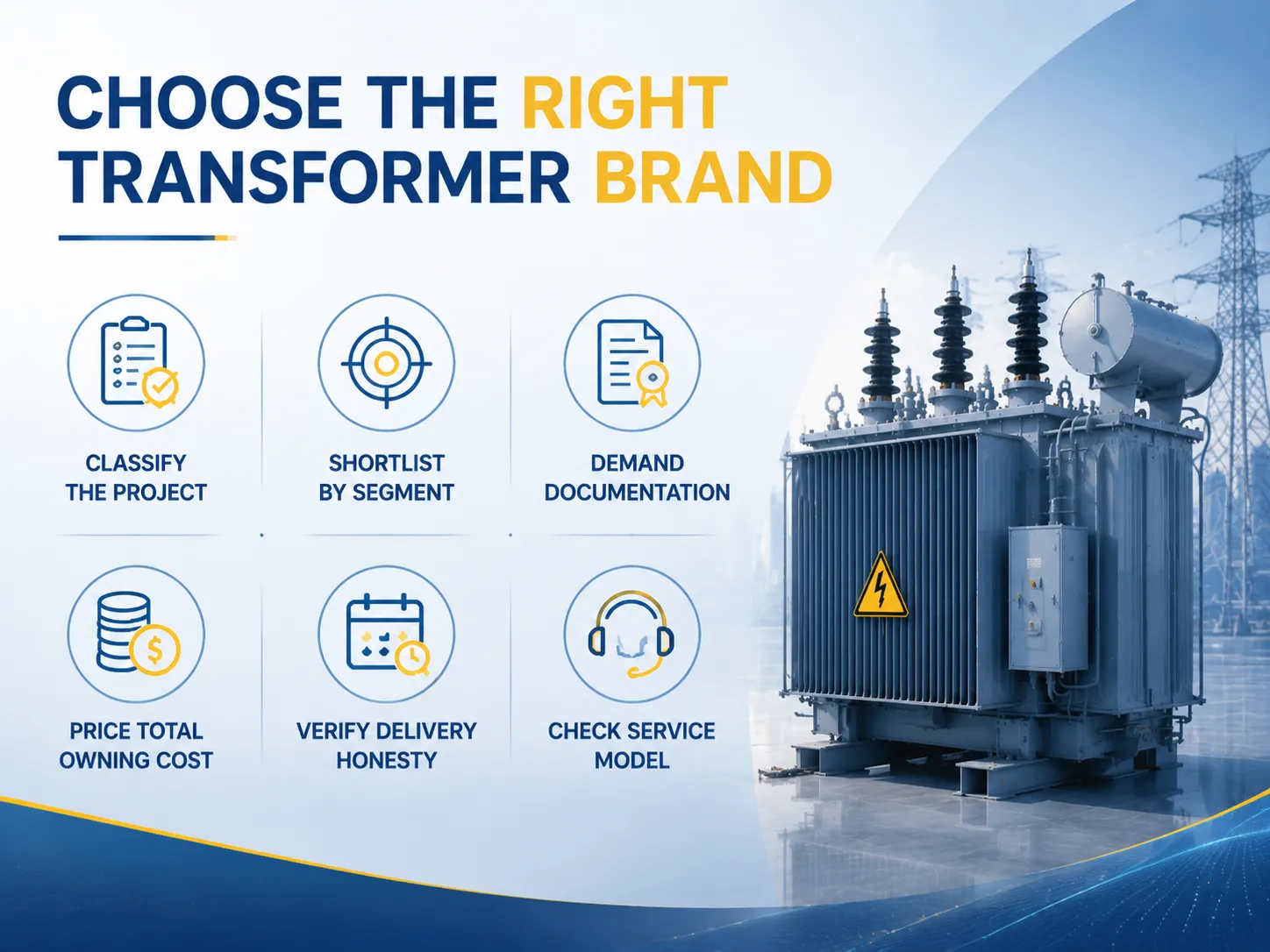
So wählen Sie die richtige Transformatorenmarke
Eine methodische Trennung und Eingrenzung der Optionen wird die meisten Unsicherheiten beseitigen.
- Identifizieren Sie die Projektspezifikationen in Bezug auf Spannung, MVA, Betriebszyklus, Umgebung und Wichtigkeit. Dies wird helfen, die Optionen erheblich einzugrenzen.
- Wählen Sie Namen nach Segmenten statt nach Bekanntheit. Ein führendes Unternehmen im Bereich HVDC ist nicht unbedingt eine gute Wahl für einen 630 kVA Pad-Mount-Transformator.
- Fordern Sie von allen Kandidaten die gleiche Art von Dokumentation an. Dazu gehören Typprüfzertifikate, regelmäßige Berichte pro Einheit und deklarierte Verlust- und Impedanzgarantien gemäß IEC 60076.
- Berechnen Sie die Gesamtkosten des Eigentums unter Verwendung Ihres Tarifs; der Unterschied zwischen 98,5% und 99,2% Effizienz in einem immer aktiven System macht aus finanzieller Sicht Sinn.
- Stellen Sie sicher, dass die Lieferung dem entspricht, was Ihr Anbieter verspricht. Holen Sie sich den Produktionszeitplan schriftlich. Auf diese Weise wird ein angesehener Anbieter, der nicht pünktlich liefert, nicht als solcher betrachtet.
- Verstehen Sie den Serviceplan des Anbieters. Wenn Sie Unterstützung vor Ort benötigen, kennen Sie die Kontaktdaten und wie viel Zeit sie benötigen, um sich bei Ihnen zu melden.
Häufig gestellte Fragen
Welche ist die beste Transformatorenmarke der Welt?
Die beste Marke auszuwählen, ist nicht einfach. Während ABB, Siemens Energy und Hitachi Energy die besten in der Technik und Hochspannungsanwendungen sind, sind TBEA und Baoding Tianwei in Bezug auf Volumen führend. Dies lässt Unternehmen wie Jiangsu Subian Electric Power, die zertifizierte Exporteure sind, als die beste Wahl des Unternehmens in Bezug auf Wert für einfache Anwendungen.
Warum kosten Premium-Transformatorenmarken so viel mehr?
Premium-Preise berücksichtigen F&E-Kosten, Kosten für den Betrieb erstklassiger Testeinrichtungen und weltweiter Servicenetzwerke sowie Ressourcenknappheit. Der Premiumpreis für Tier 1-10 MVA-Einheiten liegt im Allgemeinen zwischen $150.000 und $380.000 im Vergleich zu einem typischen Preisspektrum von $50.000 bis $200.000 für die anderen Tiers. Im Hinblick auf EHV- und HVDC-Arbeiten bedeutet dieses Premium tatsächlich, dass die entsprechenden Kapazitäten nur in dieser Preiskategorie verfügbar sind.
Sind chinesische Transformatorenmarken so gut wie europäische Marken?
Nachdem die IEC 60076-Zertifizierung erlangt wurde und Ergebnisse von Typprüfungen und Routineprüfungen vorliegen, ist es für chinesische Hersteller möglich, eine Leistung zu erzielen, die nicht geringer ist als die europäischer Wettbewerber, deren Produkte für bestimmte Standards hergestellt werden; und chinesische Hersteller bieten ihre Produkte zu einem viel niedrigeren Preis an. Der Hauptunterschied liegt in den folgenden Aspekten: Markenprämie, Tiefe des Servicenetzwerks und Konsistenz der Dokumentation – deshalb ist es wichtig, eine Überprüfung zu haben, anstatt zu denken, woher dieses Produkt stammt.
Wie kann ich die Qualität einer Transformatorenmarke vor der Bestellung überprüfen?
Erhalten Sie von einem anerkannten Labor Ihre angeforderten Typprüfzertifikate, die Prüfberichte für jede Einheit, ein Impedanz- und Verlustzertifikat sowie eine Liste solcher zuvor durchgeführten Projekte. Wenn die Menge einige Einheiten überschreitet, arrangieren Sie eine Drittanbieterinspektion (z.B. SGS, TÜV, Bureau Veritas) oder seien Sie während der Werkstests anwesend.
Sollte ich die günstigste Transformatorenmarke wählen?
Nur wenn die Garantie und Dokumentation wirksam sind. Der Preis von 30%, der unter dem Marktwert liegt, deutet im Allgemeinen darauf hin, dass etwas fehlte; dies könnte Bestimmungen für fehlende Garantien, Testabdeckung und überprüfbare Lieferung umfassen. Vergleichen Sie ständig zertifizierte Angebote mit ähnlichen Spezifikationen, der Berechnung der Gesamtkosten und nicht nur dem Angebotspreis.
Referenzen
- Internationale Elektrotechnische Kommission (IEC) — Herausgeber der IEC 60076, der internationalen Transformatoren-Normenreihe, die für die Zertifizierung verwendet wird.
- IEEE — Herausgeber der IEEE C57 Transformatorenstandards und Branchenleitfäden.
- NEMA — Nordamerikanische Standards für elektrische Geräte und Marktdaten.
- ABB — globaler Transformatorenhersteller, Premium-Engineering-Referenz.
- Hitachi Energie — Hersteller großer Leistungstransformatoren und HVDC, Investor in Kapazitäten in den USA.
- Siemens Energie — Hersteller von Netzen und Transformatoren, Premium-Referenz.
Fazit
Mit wichtigen Unternehmen, die jede Ebene des globalen Transformatorenmarktes anführen, sind Premium-Hersteller wie ABB, Siemens Energy, Hitachi Energy und GE Vernova am besten bekannt in diesem heiligen Gral der Technologie und Fähigkeit, der Hochspannungstechnik. Im Gegensatz dazu herrschen chinesische Hersteller in Bezug auf die Produktionsskala; jedoch haben zertifizierte Wertanbieter (wie Jiangsu Subian Electric Power) ihren Platz in der Wertschöpfungsebene gefunden, wo Kunden gute Qualität zu angemessenen Preisen erhalten können.
So ist Jiangsu Subian Electric Power zu einem großen Unternehmen im ‘Wert’-Segment des Marktes geworden, mit der einfachen Idee, ölgetauchte Transformatoren, trockene Transformatoren, boxenartige Umspannwerke und spezielle Installationen mit voller Einhaltung der IEC 60076-Normen und vielen begleitenden Testdokumentationen für jede Bestellung zu verkaufen. Wenn Ihr Projekt zertifizierte Leistung mit realistischen Lieferzeiten und wettbewerbsfähigen Preisen benötigt, beginnen Sie ein Gespräch mit Subian Electric und vergleichen Sie die Dokumentation nebeneinander mit jeder bereits vorhandenen Shortlist.