


Um gerente de projeto de um contratante EPC sentou-se com três propostas de transformadores em sua mesa. A primeira era de uma marca premium europeia que custaria um terço do orçamento da subestação, com um prazo de entrega de 28 meses. A segunda era de um conhecido produtor asiático de volume e era mais barata; no entanto, o pacote de documentação fornecido com ela foi considerado ‘fraco’ pelo revisor de engenharia de seu cliente. O último licitante era um fornecedor chinês certificado que oferecia transformadores a preços moderados, além de um prazo de entrega duas vezes mais curto do que os dois primeiros licitantes e relatórios completos da IEC 60076. Ela agora precisava encontrar um vencedor antes de sexta-feira, o que não é uma tarefa fácil para o gerente de projeto. Este artigo representa uma comparação das marcas de transformadores disponíveis para compra no mercado moderno.
Resposta rápida: O mercado global de transformadores, que deve ter cerca de $55–65 bilhões em 2025, é dominado pela ABB, Siemens Energy, Hitachi Energy, Schneider Electric e GE Vernova nos campos de tecnologia e capacidade de alta tensão, enquanto a TBEA e a Baoding Tianwei da China lideram em produção e preços. Nenhum jogador único é um campeão consistente em todas as categorias. Em primeiro lugar, marcas premium dominam os segmentos HVDC e EHV com prêmios de preço de 50–150% sobre alternativas de nível de valor de classificação igual. Enquanto isso, os jogadores de nível de valor certificados pela IEC 60076 conseguem fornecer qualidade certificada a menos da metade do custo das soluções típicas para unidades de distribuição padrão e de média potência.
Como Julgar a Liderança de Marca de Transformadores
A pergunta, “Quem está no comando do setor de transformadores?” não faz sentido a menos que a liderança seja definida. Existem quatro respostas legítimas, cada uma apontando para um grupo de empresas diferente:
- Liderança tecnológica: capacidade de projetar e fabricar os equipamentos mais complexos — transformadores conversores HVDC, unidades de ultra-alta tensão, enormes GSUs. A medida disso são as classificações em kV, capacidade em MVA e desempenho.
- Liderança em volume: produção total em MVA por ano que impacta a disponibilidade e os preços. Isso é dominado por empresas baseadas na China.
- Liderança em confiabilidade e serviço: taxas de falha em campo, estatísticas de tempo de atividade e o tamanho da rede de serviços local.
- Liderança em valor: dispositivos padrão que agradam especificadores e clientes e exibem a mais alta qualidade com o menor custo total de propriedade.
Um cliente que pergunta qual marca é a maior receberá uma resposta diferente em comparação com aquele que pergunta qual marca será empregada para o projeto de distribuição de 20 MVA em três anos.
O Mercado Global de Transformadores em um Relance
Existem vários métodos para calcular o tamanho do mercado de transformadores. O mercado de transformadores é estimado em cerca de USD 55-65 bilhões até 2025. Está na extremidade superior, pois os transformadores de distribuição dominam em termos de vendas em volume, enquanto os transformadores de potência lideram em termos de valor monetário. A região da Ásia-Pacífico representa 40% do consumo, enquanto a Europa e a América do Norte representam aproximadamente um quarto cada.
| Segmento | Valor estimado para 2025 | Perspectiva de crescimento | Principais motores de demanda |
|---|---|---|---|
| Transformadores de distribuição (polo, montados em base) | $22–35 bilhões | ~5–7% CAGR | Substituição de frota, eletrificação |
| Transformadores de potência (>10 kV, grandes MVA) | $25–33 bilhões | ~6–8% CAGR | Reforço de rede, energias renováveis, centros de dados |
| Transformadores do tipo seco | $8–10 bilhões | ~7% CAGR | Edifícios comerciais, normas de segurança contra incêndio |
| Transformadores especiais / conversores | $3–5 bilhões | ~8–10% CAGR | HVDC, ferroviário, duty de retificador industrial |
O Nível Premium: Líderes em Engenharia
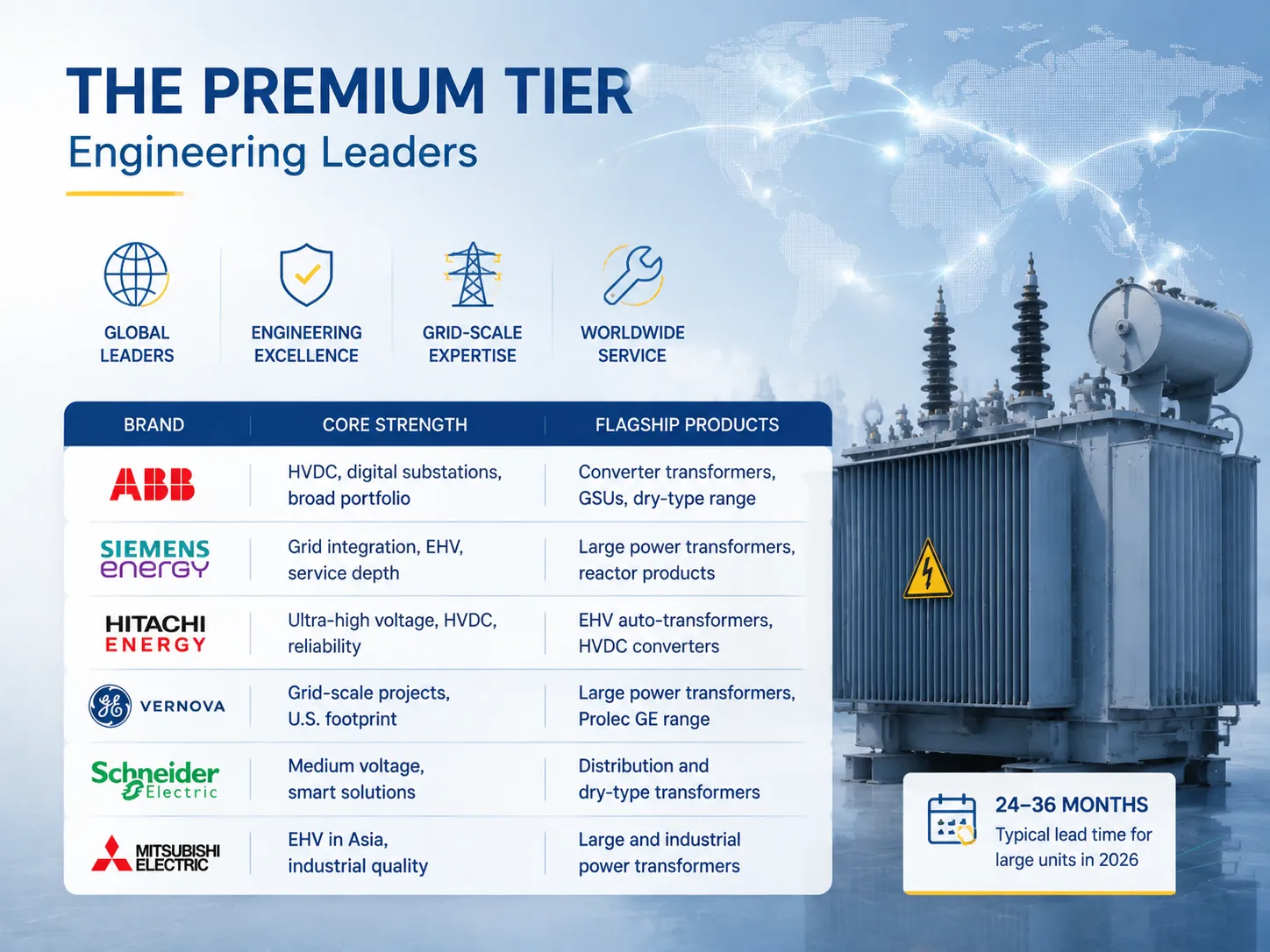
As organizações do nível premium são limitadas em tamanho, mas seu poder é excepcional. ABB, Siemens Energy, Hitachi Energy, loper, GE Vernova e, em menor medida, Mitsubishi Electric e Schneider Electric constituem os principais players de influência no setor de transformadores de potência, pois lideram seu desenvolvimento. As listas de referência dessas organizações incluem HVDC e os tipos UHV de 400–800 kV. As empresas possuem laboratórios equipados com a mais recente tecnologia que lhes proporciona a capacidade de operar e manter sua documentação exemplar, enquanto conseguem atender aos requisitos de serviço em escala global também.
O compromisso está na estrutura dos negócios. As instalações de produção do nível premium têm operado perto da capacidade total por muitos anos. Caso uma grande empresa de utilidade ou desenvolvedor encomende uma unidade de 500MVA deste setor em 2026, eles precisarão de 24 a 36 meses para fabricação, além de uma quantidade significativa de dinheiro a ser utilizada ao solicitar este pedido.
| Marca | Força central | Produtos principais |
|---|---|---|
| ABB | HVDC, subestações digitais, amplo portfólio | Transformadores conversores, GSUs, gama do tipo seco |
| Siemens Energy | Integração de rede, EHV, profundidade de serviço | Grandes transformadores de potência, produtos de reatores |
| Hitachi Energy | Ultra-alta tensão, HVDC, confiabilidade | Auto-transformadores EHV, conversores HVDC |
| GE Vernova | Projetos em escala de rede, presença nos EUA | Grandes transformadores de potência, gama Prolec GE |
| Schneider Electric | Média tensão, soluções inteligentes | Transformadores de distribuição e tipo seco |
| Mitsubishi Electric | EHV na Ásia, qualidade industrial | Transformadores de potência grandes e industriais |
O Nível de Volume: Potências Chinesas
No que diz respeito ao volume de fabricação, há uma resposta diferente para a questão da liderança. O país produz porções significativas dos transformadores de distribuição e potência do mundo, e seus maiores produtores, como TBEA, Baoding Tianwei Electric, China XD Electric, bem como divisões de transformadores de empresas estatais, enviaram milhares de produtos para diferentes regiões do mundo, incluindo Ásia, África, Oriente Médio e América Latina. Por exemplo, a TBEA está entre as maiores que são capazes de produzir transformadores de ultra-alta tensão usados para fornecer eletricidade a projetos nacionais em um nível de tensão de 750 kV ou mais.
Fabricantes de transformadores que se qualificam como fabricantes de volume são conhecidos por seus preços agressivos e grande capacidade de produção, e muitos deles são capazes de fabricar transformadores que necessariamente cumprem uma série de normas internacionais, como IEC 60076 e IEEE C57. A tarefa de verificação recai sobre os ombros do comprador, pois o volume de produção não garante a conformidade dos documentos, e nem todos os exportadores nesta categoria utilizam a mesma abordagem quando se trata de realizar testes de tipo, relatórios de desempenho e serviço pós-venda. Apenas os fornecedores confiáveis garantem que sua documentação esteja correta, e os clientes podem identificar tal fornecedor verificando a papelada.
O Nível de Valor: Especialistas em Exportação Certificados
No meio-termo entre as categorias premium e de volume, há um nicho que merece mais crédito do que recebe. Esta categoria inclui especialistas em exportação certificados que fabricam produtos de acordo com normas internacionais, emitem todos os relatórios de teste necessários e comercializam seus produtos em termos de preço entre essas duas categorias. Jiangsu Subian Electric Power é um exemplo — a empresa chinesa de transformadores que entrega transformadores imersos em óleo, transformadores tipo seco, subestações tipo caixa e outros dispositivos especiais ao redor do mundo, emitindo relatórios de teste IEC 60076 junto com cada pedido fornecido. As empresas deste nível confiam na qualidade de fabricação certificada, flexibilidade das possibilidades de engenharia e prazos realistas para competição, em vez de reconhecimento de marca e presença no mercado.
Para a maioria dos casos práticos, seja subestações utilitárias de 1-20 MVA, transformadores de plantas industriais ou dispositivos de conexão de rede de energia renovável, a melhor relação qualidade-custo é alcançada no nível apresentado, assumindo que a documentação esteja devidamente emitida.
Comparação de Marcas Direta
A tabela a seguir compara as marcas representativas de diferentes categorias ou segmentos para o transformador imerso em óleo com capacidade de 1-10 MVA e tensão de 33/11 kV. Os preços apresentados são preços FOB indicativos para o período de 2025-2026 e mudam dependendo da capacidade do transformador, equipamentos suplementares e localização geográfica.
| Marca | Nível | Preço típico (1–10 MVA) | Tempo de entrega (aprox.) | Melhor para |
|---|---|---|---|---|
| ABB | Premium | $150.000–$350.000 | 18–30 meses | Utilitário, industrial, digital |
| Siemens Energy | Premium | $150.000–$350.000 | 18–30 meses | Rede, projetos EHV |
| Hitachi Energy | Premium | $160.000–$380.000 | 20–32 meses | EHV, HVDC, ativos críticos |
| Schneider Electric | Premium/volume | $40.000–$150.000 | 10–16 meses | Distribuição, comercial |
| GE Vernova | Premium | $150.000–$340.000 | 18–30 meses | Programas de utilidade dos EUA |
| TBEA | Volume | $60.000–$200.000 | 8–14 meses | Projetos de grande volume, EHV |
| Baoding Tianwei | Volume | $55.000–$190.000 | 8–14 meses | Distribuição/potência em volume |
| Jiangsu Subian Electric Power | Valor | $50.000–$180.000 | 6–12 meses | Certificado IEC, especificações personalizadas |
A diferença nos preços das várias categorias não deve ser descartada como um erro; em vez disso, o valor pago reflete a experiência em engenharia, a marca utilizada e o nível de serviço oferecido. O truque está em ser capaz de determinar quais capacidades seu projeto realmente requer antes de fazer qualquer comparação de custos.
Liderança Tecnológica por Segmento
A liderança da marca também varia por segmento de produto, e o segmento importa mais do que a reputação geral:
| Segmento | Líderes | O que define a liderança aqui |
|---|---|---|
| Transformadores conversores HVDC | ABB, Siemens Energy, Hitachi Energy, TBEA | Resistência à tensão DC, duty harmônico |
| EHV / UHV (≥220 kV) | Hitachi Energy, Siemens Energy, TBEA, China XD | Níveis de isolamento, limites de transporte |
| Distribuição (≤10 kV, ≤2,5 MVA) | Schneider, Prolec GE, exportadores chineses | Níveis de perda, custo por unidade |
| Transformador seco (resina fundida) | ABB, Siemens, Schneider, especialistas europeus | Segurança contra incêndio, controle de descarga parcial |
| Elevação renovável (33–110 kV) | Todas as categorias competem | Duty de carga variável, classificações ambientais |
No caso de um autotransformador de 500 MVA, 400 kV, a lista atualizada consiste precisamente na classe premium, juntamente com alguns outros líderes de volume. Por outro lado, para um transformador montado em pad de 500 kVA usado em blocos comerciais, praticamente todos os fabricantes entram na lista reduzida de empresas e, neste caso, preço e documentação se tornam mais importantes do que a tecnologia utilizada nos dispositivos.
Confiabilidade, Serviço e Custo Total
A profundidade do serviço é a razão pela qual marcas premium conseguem cobrar tanto. Uma utilidade que opera mil transformadores requer um fabricante capaz de responder a uma interrupção dentro de um prazo de dias, tendo peças sobressalentes à disposição e fornecendo serviços de monitoramento por décadas. Quando se trata de equipamentos críticos, os custos pagos a fornecedores de serviços premium são vistos como uma despesa de seguro razoável. Em contraste, exportadores de valor são bons em relação ao que fazem antes da venda: verificação de engenharia, testes na fábrica, entrega, etc. Seu serviço de campo é tipicamente realizado por meio de agentes ou parceiros, o que beneficia clientes baseados em projetos, mas não funciona bem para aquelas utilidades que operam uma frota contínua de máquinas.
O conceito de custo total de propriedade reconcilia essas duas abordagens. O cálculo usual é assim: pega-se o preço inicial, adiciona-se os custos capitalizados (perdas em vazio e em carga multiplicadas pela razão de valor presente para watts), adiciona-se os custos de manutenção esperados e leva-se em conta o risco de serviço. Dessa forma, transformadores de marca de valor IEC 60076 muitas vezes superam marcas premium em aplicações padrão, enquanto marcas premium ainda fazem sentido quando se trata de EHV, HVDC e operações críticas de frota.
| Elemento de custo | Faixa premium | Nível de volume | Nível de valor |
|---|---|---|---|
| Primeiro preço, 1–10 MVA | $150.000–$380.000 | $60.000–$200.000 | $50.000–$180.000 |
| Níveis de perda (típicos) | Baixo (designs de topo) | Padrão | Padrão a baixo |
| Rede de serviços | Global, resposta mais rápida | Agentes regionais | Parceiros regionais |
| Profundidade da documentação | Credenciado, completo | Varia — verifique | Completo, terceiros bem-vindos |
| Melhor ajuste | EHV, HVDC, frotas críticas | Projetos de volume | Dever padrão/utilitário industrial |
Como Escolher a Marca de Transformador Certa
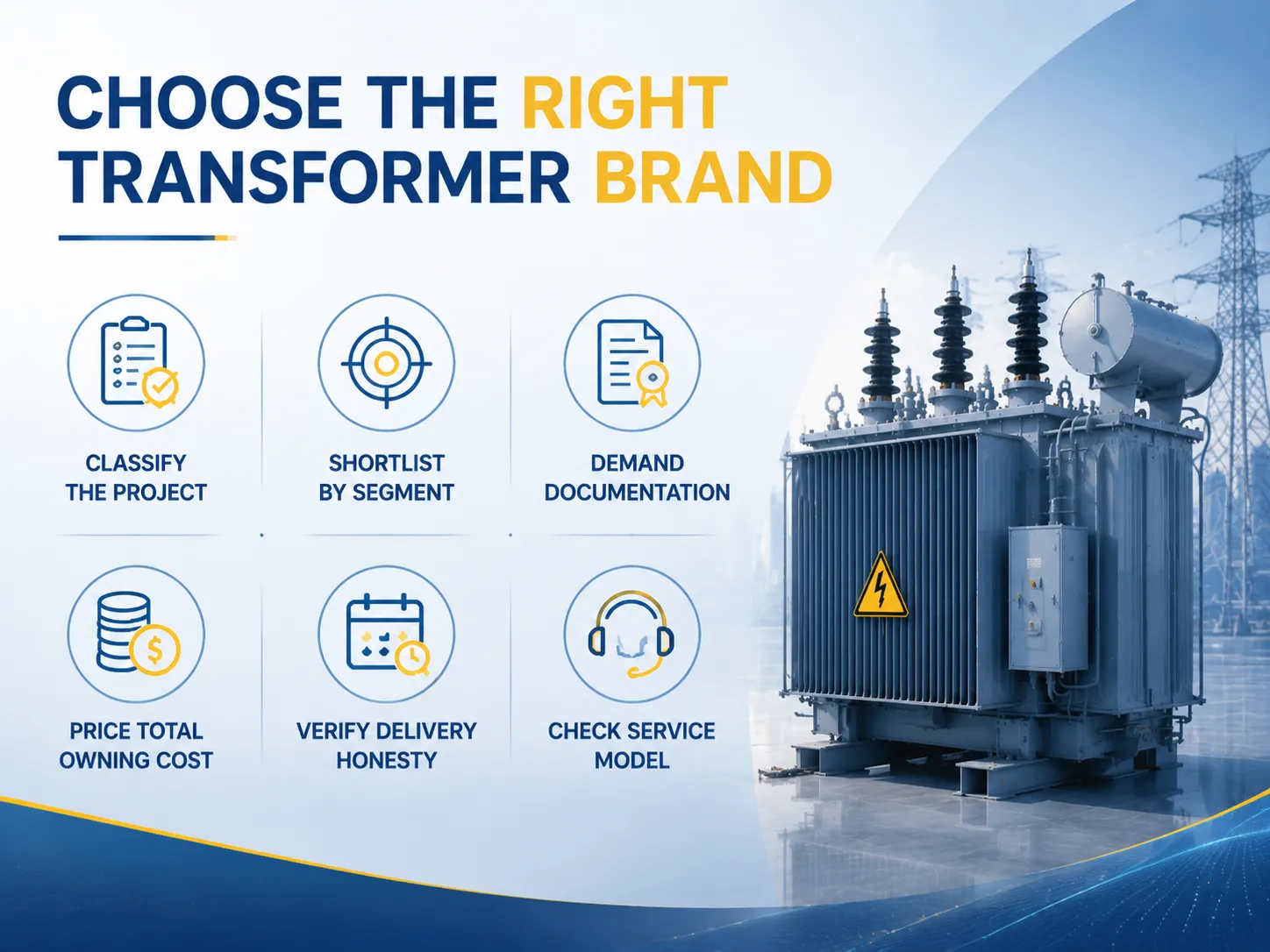
Separar e restringir as opções de forma metódica aliviará a maioria das incertezas.
- Identifique as especificações do projeto em termos de tensão, MVA, ciclo de trabalho, ambiente e importância. Isso ajudará a restringir as opções consideravelmente.
- Escolha nomes por segmento em vez de notoriedade. Ser um líder em HVDC não necessariamente torna uma empresa uma boa escolha para um transformador de montagem em pad de 630 kVA.
- Exija o mesmo tipo de documentação de todos os candidatos. Isso inclui certificados de teste de tipo, relatórios de rotina por unidade e garantias de perda e impedância declaradas conforme IEC 60076.
- Calcule o custo total de propriedade usando sua tarifa; a diferença entre 98.5% e 99.2% de eficiência em um sistema sempre ligado faz sentido do ponto de vista financeiro.
- Certifique-se de que a entrega é o que seu fornecedor promete. Obtenha o cronograma de produção por escrito. Dessa forma, um fornecedor respeitável que não entrega no prazo não será considerado como tal.
- Entenda o plano de serviço do fornecedor. Se o suporte em campo é algo que você precisa, saiba os detalhes de contato e quanto tempo eles precisarão para retornar.
Perguntas Frequentes
Qual é a melhor marca de transformador do mundo?
Escolher a melhor marca não é fácil. Embora ABB, Siemens Energy e Hitachi Energy sejam as melhores em tecnologia e aplicações de alta tensão, TBEA e Baoding Tianwei estão no topo em termos de volumes. Isso deixa empresas como Jiangsu Subian Electric Power, que são exportadores certificados, como a melhor escolha da empresa em termos de valor para aplicações simples.
Por que marcas de transformadores premium custam muito mais?
O preço premium leva em consideração os custos de P&D, custos para operar instalações de teste de primeira linha e redes de serviços em todo o mundo, e escassez de recursos. O preço premium de unidades de $10 MVA geralmente varia entre $150.000 e $380.000 em comparação com uma faixa de preço típica de $50.000 a $200.000 para os outros níveis. Em termos de trabalho EHV e HVDC, esse prêmio significa que as capacidades correspondentes estão disponíveis apenas neste nível de preço.
As marcas de transformadores chineses são tão boas quanto as marcas europeias?
Após obter a certificação IEC 60076 e receber os resultados dos testes de tipo e testes de rotina, é possível que fabricantes chineses estabeleçam um desempenho que não é inferior ao de concorrentes europeus cujos produtos são feitos para padrões específicos; e os fabricantes chineses oferecem seus produtos a um preço muito mais baixo. A principal diferença está nos seguintes aspectos: prêmio de marca, profundidade da rede de serviços e consistência da documentação – é por isso que é importante ter verificação em vez de pensar de onde este produto se originou.
Como posso verificar a qualidade de uma marca de transformador antes de fazer um pedido?
Obtenha de um laboratório reconhecido seus certificados de teste de tipo solicitados, os relatórios de teste de rotina para cada unidade, um certificado de impedância e perda, e uma lista de projetos semelhantes realizados anteriormente. Se a quantidade exceder algumas unidades, organize uma inspeção de terceiros (por exemplo, SGS, TÜV, Bureau Veritas) ou esteja presente durante os testes de fábrica.
Devo escolher a marca de transformador mais barata?
Apenas se a garantia e a documentação forem eficazes. Um preço 30% inferior ao valor de mercado geralmente indica que algo estava faltando; isso pode incluir disposições para garantias ausentes, cobertura de testes e entrega verificável. Compare constantemente ofertas certificadas com especificações semelhantes, a forma de calcular o custo total de propriedade e não apenas o preço de pedido.
Referências
- Comissão Eletrotécnica Internacional (IEC) — editor da IEC 60076, a série de normas internacionais de transformadores usadas para certificação.
- IEEE — editor das normas de transformadores IEEE C57 e orientações da indústria.
- NEMA — normas de equipamentos elétricos da América do Norte e dados de mercado.
- ABB — fabricante global de transformadores, referência de engenharia de nível premium.
- Hitachi Energy — fabricante de transformadores de grande potência e HVDC, investidor em capacidade nos EUA.
- Siemens Energy — fabricante de rede e transformadores, referência de nível premium.
Conclusão
Com importantes empresas liderando cada nível do mercado global de transformadores, fabricantes premium como ABB, Siemens Energy, Hitachi Energy e GE Vernova são os mais conhecidos nesse santo graal de tecnologia e capacidade, a tecnologia de alta tensão. Em contraste, os fabricantes chineses reinam supremos em relação à escala de produção; no entanto, jogadores de valor certificados (como Jiangsu Subian Electric Power) marcaram seu espaço no nível de valor, onde os clientes podem obter boa qualidade a preços razoáveis.
Assim, a Jiangsu Subian Electric Power se tornou uma grande corporação no segmento de ‘valor’ do mercado com uma ideia simples de vender transformadores imersos em óleo, transformadores do tipo seco, subestações do tipo caixa e instalações de propósito especial com total conformidade com os padrões IEC 60076 e muita documentação de teste acompanhante para cada pedido. Se seu projeto precisar de desempenho certificado com entrega realista e preços competitivos, inicie uma conversa com Subian Elétrico e compare a documentação lado a lado com qualquer lista curta que você já tenha.