


Der Inbetriebnahmeingenieur eines Krankenhausprojekts in Westafrika hielt ein Blatt Papier in der Hand und führte Gespräche mit drei Lieferanten am Telefon. Alle boten 800-kVA Trockentransformatoren zu großartigen Preisen an. Doch nur eines dieser Unternehmen gelang es, ein Angebot zu unterbreiten, das einen vollständigen Satz von IEC 60076-11 Routineprüfungen garantierte. Ein Fakt, der es diesem Unternehmen ermöglichte, einen Prüfbericht bereitzustellen, der den Wicklungswiderstand für jeden Transformatorabgriff, das Übersetzungsverhältnis und die Vektorguppe, den Leerlaufverlust, den Lastverlust, die Durchschlagfestigkeit, die Teilentladung und den Geräuschpegel umfasste. Der Inbetriebnahmeingenieur war sich sehr bewusst, dass viele “neue” Transformatoren nicht alle notwendigen Tests bestanden, bevor sie zur Baustelle versandt wurden. Daher entschied er sich, nur mit dem Unternehmen zu arbeiten, das den Prüfbericht als integralen Bestandteil des Produkts behandelte.
In diesem Artikel findet der Leser nützliche Informationen über sieben Routineprüfungen, die jeder qualitativ hochwertige Trockentransformator bestehen muss, bevor er den Hersteller verlässt, das Ziel jeder einzelnen Prüfung, was sie beweist, welche Akzeptanzwerte gelten und warum “getestet” nicht dasselbe ist wie “vollständig getestet”.”
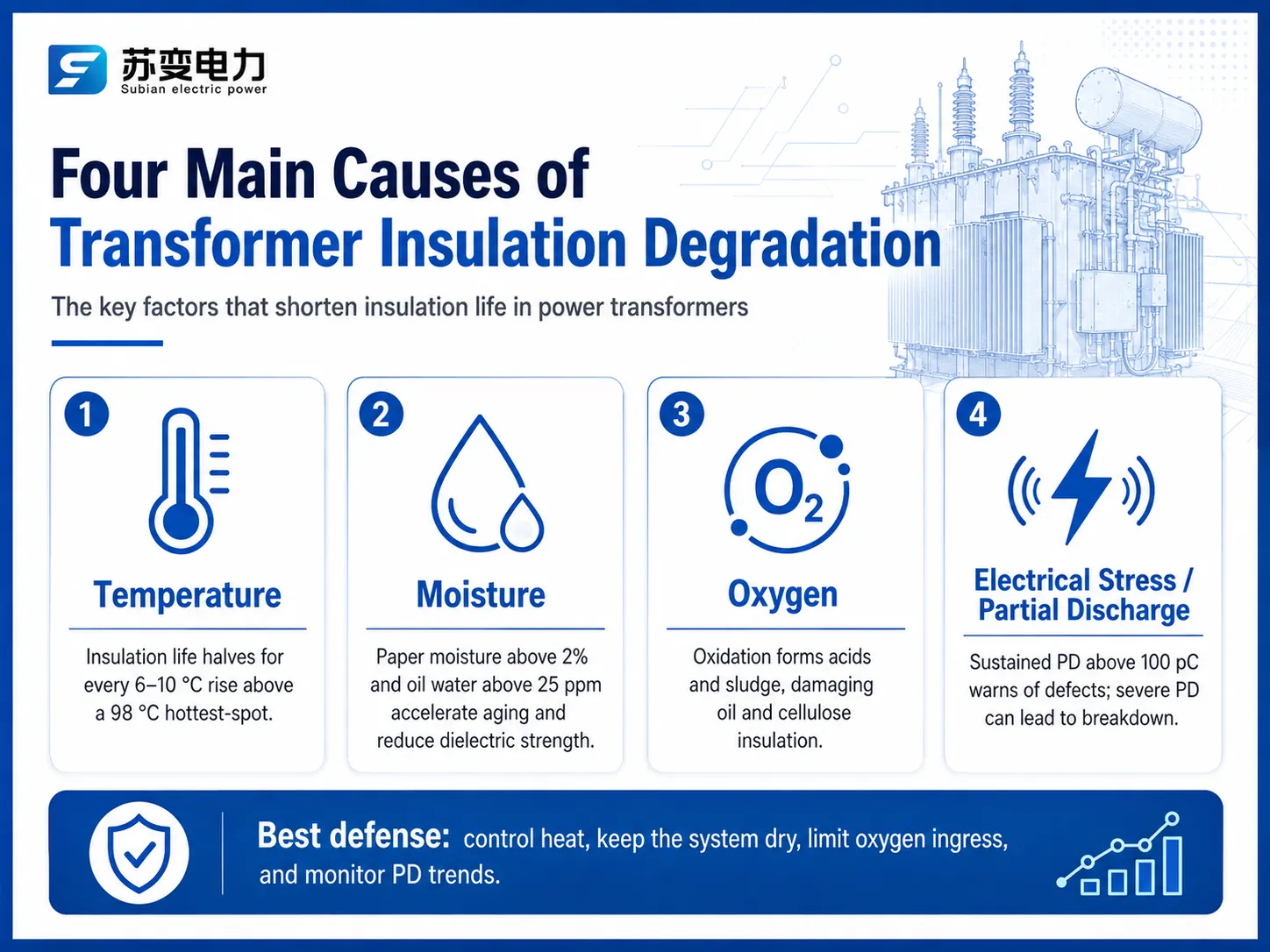
Warum Routineprüfungen die Sicherheitslinie sind
IEC 60076-11 unterscheidet zwischen drei verschiedenen Kategorien von Prüfungen. Routineprüfungen werden an jedem Gerät durchgeführt; sie sind eine Garantie des Herstellers, dass der erhaltene Transformator genau der Transformator ist, der für diese spezielle Anwendung entworfen und getestet wurde. Typprüfungen werden einmal für jedes Design an einer Maschine durchgeführt, die als Prototyp verwendet wird. Darüber hinaus werden Sonderprüfungen durchgeführt, wenn dies fallweise vereinbart wird. Es gibt sieben Routineprüfungen, die als Minimum dienen; ohne sie gibt es keinen Nachweis, dass der Transformator elektrisch einwandfrei funktioniert, korrekt gewickelt ist oder über eine ausreichende Isolierung verfügt.
| Prüfungs Kategorie | Häufigkeit | Zweck | Wer zahlt |
|---|---|---|---|
| Routineprüfungen | Jede Einheit | Überprüfen der Fertigungsqualität und elektrischen Integrität | Im Fabrikpreis enthalten |
| Typprüfungen | Einmal pro Design | Nachweis, dass das Design IEC 60076-11 entspricht | Kosten für die Entwurfsentwicklung |
| Sonderprüfungen | Nach Projektvereinbarung | Zusätzliche Sicherheit (FRA, engere PD-Grenzen, überwachte Tests) | Üblicherweise vom Käufer spezifiziert |
Für einen Käufer ist die praktische Konsequenz einfach: Der Prüfbericht über die Routineprüfungen ist das Dokument, das eine Metallbox in ein zertifizierbares Asset umwandelt. Ein Lieferant, der ihn nicht vorlegen kann oder nur ein “Prüfzertifikat” ohne Zahlen anbietet, ist ein Risiko.
Test 1: Wicklungswiderstandsmessung
Der Wicklungswiderstand wird an jeder Abgriffposition in allen Phasen mit einer DC-Methode und Stromstabilisierung gemessen. Der Zweck ist zweifach: zu überprüfen, dass die Wicklungsleiter und -verbindungen einwandfrei sind, und eine Basislinie für thermische Berechnungen und Verlustbestimmungen festzulegen. Die Widerstandswerte werden auf eine Referenztemperatur (typischerweise 75 °C für F-Klasse) korrigiert.
| Messdetails | Typischer Wert / Praxis |
|---|---|
| Prüfmethoden | DC-Strominjektion, 4-Draht-Kelvin-Verbindung |
| Prüfstellen | Alle Phasen, alle Abgriffpositionen, HV und LV |
| Referenztemperatur | 75 °C (F-Klasse) oder 120 °C (H-Klasse) |
| Phasenbilanzkriterium | Innerhalb von 2% zwischen den Phasen |
| Dauer pro Phase | 1–3 Minuten für eine 1.000 kVA Einheit |
- Was es erfasst: Lose Verbindungen, teilweise Wicklungen, falsche Leitergröße, gebrochene Drähte.
- Akzeptanz: Phasen-zu-Phasen-Bilanz innerhalb von 2% und Übereinstimmung mit dem Entwurfswert.
- Warum es wichtig ist: Eine Hochwiderstandsverbindung ist ein zukünftiger Hotspot — die häufigste Ursache für vorzeitige Ausfälle von Trockentransformatoren.
Test 2: Spannungsverhältnis und Vektorgroup
Dieser Test misst das Wicklungsverhältnis an jeder Abgriffposition und überprüft die Wicklungsanschlussanordnung (Vektorgroup, wie Dyn11). Er bestätigt, dass der Transformator die korrekte sekundäre Spannung für die Anwendung liefert.
- Was es erfasst: Falsche Abgriffe, falsche Verbindung, intern kurzgeschlossene Wicklungen, falsch beschriftete Phasen.
- Akzeptanz: Verhältnis innerhalb von ±0.5% des deklarierten Wertes an allen Abgriffen.
- Warum es wichtig ist: Ein Verhältnisfehler bedeutet die falsche Spannung an Ihrer Sammelschiene — ein Problem, das die nachgeschaltete Ausrüstung beschädigen kann.
Test 3: Leerlaufverlust und Leerlaufstrom
Wenn die Niederspannungswicklungen mit Strom versorgt werden und die Hochspannungswicklungen abgeschaltet sind, misst das Gerät die Kernverluste (Leerlaufverluste) und den Magnetisierungsstrom des magnetischen Kreises.
Was getestet wird: Schlechtes Kernmaterial, fehlerhafte Lamination, falsche Kernmontage und Kurzschluss der Kernbolzen.
Akzeptanzkriterien: Leerlaufverluste entsprechen den Werten, die zusammen mit den Toleranzen der IEC 60076-1 Norm garantiert sind (+15%); der Leerlaufstrom ist wie vorgeschrieben.
Bedeutung des Tests: Leerlaufverluste existieren 24/7 über Jahrzehnte.
Test 4: Lastverlust und Impedanzspannung
- Bei Anlegen einer Spannung an die Hochspannungsseite (HV) und Kurzschluss der Niederspannungsseite (LV) werden die Wicklungsverluste (Lastverluste) und die Impedanzspannung gemessen. Die beiden erhaltenen Werte zeigen, wie sich der Transformator während der Last verhält und wie er mit den Schutzeinstellungen “koordiniert”.
Was fangen wir ein? Falsches Leitermaterial oder -größe, Wicklungsgeometriefehler, Kühlkanalfehler. Akzeptanz: Innerhalb des tolerierbaren Bereichs für den Lastverlust; die Impedanzspannung variiert normalerweise innerhalb von ±10% vom angegebenen Wert von 4–6%. Warum ist das wichtig? Der Lastverlust bestimmt die Betriebskosten im belasteten Betrieb, während die Impedanzspannung den Spannungsabfall und die Fehlerstromwerte für die Einstellungen des Leistungsschalters angibt.
Test 5: Induzierte Spannungsfestigkeit und Teilentladung
Der Transformator wird bei einer höheren Frequenz (normalerweise 100–250 Hz) mit ungefähr der doppelten Nennspannung betrieben, um die Wicklungsisolation zu belasten, ohne übermäßigen Strom zu ziehen. Bei Gießharzeinheiten wird dieser Test mit der Messung der Teilentladung (PD) kombiniert — dem empfindlichsten Gesundheitsindikator für Harzisolation.
| PD-Niveau | Interpretation | Maßnahme |
|---|---|---|
| < 5 pC | Ausgezeichnet — dichtes, blasenfreies Harz | Akzeptieren (striktere Spezifikation) |
| 5–10 pC | Standard-Akzeptanzgrenze | Akzeptieren gemäß IEC 60076-11 |
| 10–50 pC | Degradierte Isolation, wahrscheinlich Blasen | Untersuchen; normalerweise ablehnen |
| > 50 pC | Ernsthaftes Risiko der Entladungserosion | Ablehnen — Ausfall wahrscheinlich |
- Was der Test erkennt: Fehler, Blasen, Risse und Verunreinigungen auf der Oberfläche der Harz- oder Lackisolierung.
Genehmigungskriterien: Es darf kein Durchschlag auftreten; PD ist weniger als 10 pC bei 1,1 x Nennspannung für Gießharz.
Bedeutung des Bestehens: Jede PD, die den zulässigen Wert überschreitet, bedeutet das Auftreten von interner Entladung, die die Isolation erheblich schädigen kann.
Test 6: AC-Festigkeit mit separater Quelle
Eine dedizierte AC-Spannungsquelle legt die Prüfspannung der Netzfrequenz über verschiedene Wicklungen und in die Erde an, normalerweise bei der doppelten Nennspannung plus 1 kV gemäß der Isolierklasse. Dies ermöglicht es, die Hauptisolierung in Bezug auf den Tank und die Erde zu testen.
Was es findet: Schwache Isolation zur Erde, unzureichender Kriechweg, Feuchtigkeitsverunreinigung.
Akzeptanzkriterien: Der Test muss ohne Durchschlag oder Durchbruch im Prozess abgeschlossen werden.
Warum es wichtig ist: Dies ist die direkte Überprüfung, dass der Transformator in der Lage ist, die Systemspannung über einen längeren Zeitraum zu widerstehen.
Test 7: Schallpegelmessung
Gemäß IEC 60076-10 werden die Schalldruckpegel in festen Abständen unter festen Bedingungen gemessen. Die Hauptgeräuschquelle ist die Magnetostriktion des Kerns und die Lüfter zur Kühlung.
Was erkannt wird: Instabile Kernkeile, unerklärlich hohe Magnetostriktion und zu laute Lüfter.
Anforderungen: Der Schallpegel wird im vereinbarten dB(A)-Bereich bei der Betriebsspannung gemessen.
Bedeutung: Das Problem der Geräuschkonformität steht im Zusammenhang mit Baugenehmigungen für Gebäude, Krankenhäuser und Stationen in der Nähe von Wohngebieten.
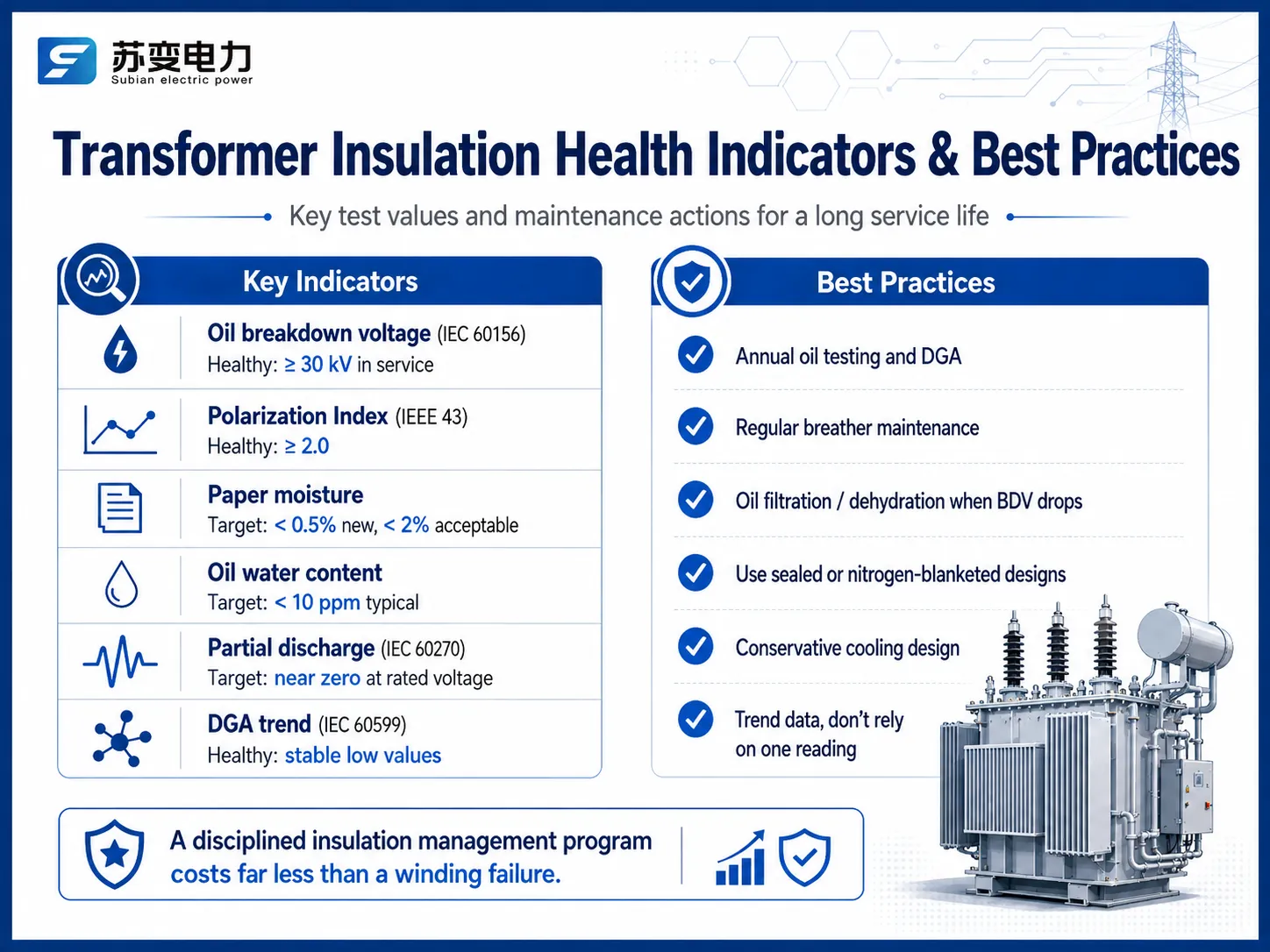
Die Zusammenfassungstabelle der 7 Tests
| # | Test | Was es überprüft | Typische Abnahme |
|---|---|---|---|
| 1 | Wicklungswiderstand | Verbindungen, Integrität der Leiter | Phasenbalance innerhalb 2% |
| 2 | Spannungsverhältnis & Vektorgroup | Wickelverhältnis, Wickelanschluss | ±0.5% an allen Abgriffen |
| 3 | Leerlaufverlust & Strom | Qualität des magnetischen Kreises | Innerhalb des Datenblatts +15% |
| 4 | Lastverlust & Impedanz | Wickelverluste, Impedanz | Lastverlust innerhalb der Toleranz; Impedanz ±10% |
| 5 | Induzierte Spannung & PD | Interturn-Isolierung, Hohlräume | PD < 10 pC bei 1.1 × Ur |
| 6 | AC-Beständigkeit mit separater Quelle | Isolierung zur Erde | Kein Durchschlag |
| 7 | Geräuschpegel | Geräuschkonformität | Innerhalb des vereinbarten dB(A) |
Über Routineprüfungen hinaus: Typ- und Sonderprüfungen
Routinetests gewährleisten die Sicherheit aller Einheiten, während Typentests das Design überprüfen. Laut IEC 60076-11 sind Typentests Blitzimpulstest (IEC 60076-4), Temperaturanstiegstest (IEC 60076-2) und Kurzschlussfestigkeitstest für einige Nennwerte. Sondertests (Isolationswiderstand, dielektrische Messung, FRA oder höhere Grenzwerte für partielle Entladung) werden zwischen Käufer und Verkäufer vereinbart. Bei kritischen Projekten fordern Sie ein Typentestzertifikat für die genaue Nennwertfamilie und einen bezeugten Routinetest für Ihre Einheit an.
| Test | Kategorie | Norm | Was es beweist |
|---|---|---|---|
| Blitzimpuls | Typ | IEC 60076-4 | Wicklung hält Blitzüberspannungen stand |
| Temperaturanstieg | Typ | IEC 60076-2 / -11 | Verluste und Kühlung entsprechen der Isolationsklasse |
| Kurzschlussfestigkeit | Typ (vereinbart) | IEC 60076-5 | Mechanische Festigkeit unter Fehlerstrom |
| Frequenzantwort (FRA) | Sonder | IEC 60076-18 | Basislinie zur Erkennung von Wicklungsverschiebungen |
| Partielle Entladung (strengerer Grenzwert) | Sonder | IEC 60076-11 | Noch strengere Hohlraumerkennung (z. B. 5 pC) |
Wie man einen Prüfbericht überprüft
Überprüfen Sie, ob die Seriennummer im Bericht mit dem Typenschild des Transformators übereinstimmt.
Stellen Sie sicher, dass das Berichtsdatum vor der Lieferung liegt oder dass der Bericht ein allgemeiner ist.
Stellen Sie sicher, dass die Werte innerhalb der oben genannten Toleranzen liegen, insbesondere die Leerlaufverluste und PD-Niveaus.
Fordern Sie den Typentestbericht an, der in der Nennwertfamilie ähnlich ist, als Backup-Dokument.
Sie können einen Zeugen-Test von einer Drittanbieter-Agentur (SGS, TÜV, Bureau Veritas) für Ihre erste Bestellung arrangieren.
Bewahren Sie den Bericht als Teil der Wartungsdokumente der Einheit auf; dies wird als Grundlage für die Inbetriebnahme verwendet.
Häufig gestellte Fragen
Was sind die 7 Routinetests für Trockentransformatoren?
Laut IEC 60076-11: (1) Wicklungswiderstand, (2) Spannungsverhältnis und Vektorgroup, (3) Leerlaufverluste und Leerlaufstrom, (4) Lastverluste und Impedanz, (5) induzierte Spannungsfestigkeit mit Messung der partiellen Entladung, (6) AC-Festigkeit aus separater Quelle und (7) Geräuschpegel. Alle sieben werden vor dem Versand an jeder Einheit durchgeführt.
Was ist der akzeptable Grenzwert für partielle Entladung bei Gießharztransformatoren?
Unter 10 pC bei 1,1 × Nennspannung ist die Standardannahme gemäß IEC 60076-11; strengere Spezifikationen erfordern 5 pC. Höhere Werte deuten auf Hohlräume oder Verunreinigungen im Harz hin, die die Isolierung unter Betriebsspannung erodieren — lehnen Sie jede Einheit ab, die den Grenzwert nicht einhalten kann.
Muss ich extra für Routinetests bezahlen?
Nein. Routinetests sind Teil des Standardfabrikpreises und müssen in jedes Angebot aufgenommen werden. Wenn ein Anbieter zusätzliche Gebühren für den Routinetestbericht erhebt oder keinen vorlegen kann, betrachten Sie dies als ernstes Warnsignal. Typentests, wenn erforderlich, sind in der Regel durch das Entwurfszertifikat abgedeckt und werden nicht pro Einheit berechnet.
Wie lange dauert die Routinetestung?
Für einen typischen 100–2.500 kVA Trockentransformator dauern die sieben Routinetests etwa einen Arbeitstag (6–8 Stunden), sobald die Einheit vorbereitet ist. Deshalb sind Versandzeiten von 25–45 Tagen für Standardnennwerte von Fabriken mit speziellen Testbereichen realistisch.
Was ist der Unterschied zwischen Routine-, Typ- und Sondertests?
Routinetests werden an jeder Einheit durchgeführt, um die Fertigungsqualität zu überprüfen. Typentests (Blitzimpuls, Temperaturanstieg, Kurzschluss) werden einmal pro Design durchgeführt, um zu beweisen, dass das Design den Standard erfüllt. Sondertests werden projektbezogen vereinbart — wie z.B. FRA-Fingerabdrücke, engere PD-Grenzwerte oder überwachte Tests. Käufer sollten immer Routinetests anfordern und das Typentestzertifikat des Designs überprüfen.
Referenzen
- IEC 60076-11: Trockentransformatoren — Der internationale Standard, der die sieben Routinetests und deren Methoden definiert.
- IEC 60076-1: Leistungstransformatoren — Allgemeines — Kernstandard, der Verlusttoleranzen und allgemeine Testanforderungen abdeckt.
- IEEE — Herausgeber der IEEE C57-Standards für Transformatorentest und -wartung.
- NEMA — Nordamerikanische Normungsorganisation für Transformatorleistung und Testpraxis.
- UL Lösungen — Sicherheitszertifizierungsstelle, deren Transformatorauflistungen oft dokumentierte Routinetests erfordern.
- Jiangsu Subian Electric Power Co., Ltd. — Hersteller, der Trockentransformatoren mit Routinetestberichten pro Einheit gemäß IEC 60076-11 versendet.
Fazit
Die sieben Routinetests der IEC 60076-11 sind die Sicherheitslinie zwischen dem Versprechen einer Fabrik und der Realität eines gelieferten Transformators. Wicklungswiderstand und -verhältnis überprüfen den elektrischen Kreis; Leerlauf- und Lastverluste überprüfen die Effizienz, für die Sie über Jahrzehnte bezahlen werden; induzierte Spannung, PD- und AC-Durchschlagtests überprüfen die Isolierung, die die Einheit am Leben hält; und der Geräuschpegel überprüft die Auswirkungen auf die Gemeinschaft. Zusammen geben sie einem Käufer die notwendigen Beweise, um eine Einheit zu akzeptieren — und sie kosten nichts extra, wenn der Lieferant ehrlich ist. Bevor Sie eine Bestellung aufgeben, bestätigen Sie, dass der Routinetestbericht enthalten ist und mit der Seriennummer Ihrer Einheit übereinstimmt. Lieferanten, die Tests als Teil des Produkts behandeln, wie z.B. Jiangsu Subian Electric Power, sind diejenigen, die die Inbetriebnahme schnell halten und Ausfälle selten machen.