


El consultor del ingeniero ha realizado esta tabla de comparación muchas veces en el pasado, pero la pregunta del cliente no ha cambiado: “Estamos construyendo un hospital de 6 pisos, con un ala de MRI, un panel solar en la azotea y una sala de conmutación en el sótano sobre el espacio de estacionamiento. ¿Qué transformador debemos comprar?” La respuesta no es un nombre o una marca comercial, sino más bien una variedad de opciones entre costo, seguridad contra incendios, mantenimiento, eficacia y vida útil. Los hospitales, centros de datos, rascacielos y túneles optan por transformadores de tipo seco, y las fábricas utilizan los sumergidos en aceite. Por qué es esto, es lo que cubre este artículo.
En este artículo, comparamos transformadores sumergidos en aceite y transformadores de tipo seco basados en nueve características, proporcionando la información mínima requerida y precios según la norma IEC 60076. El artículo incluye una tabla detallada lado a lado, con costos de propiedad y comparaciones, por eso terminas siendo un verdadero experto que puede hacer que tus colegas de proyecto entiendan la elección de un transformador.
Respuesta rápida: La principal distinción entre transformadores de tipo seco y transformadores sumergidos en aceite radica en su proceso de enfriamiento e aislamiento: mientras que los transformadores de tipo seco dependen del aire, resina o impregnación por presión de vacío, los transformadores sumergidos en aceite utilizan aceite mineral para el aislamiento. Aunque los clientes pueden ahorrar 25-40% en costos con transformadores sumergidos en aceite, los transformadores de tipo seco están libres de riesgos de incendio y contención de aceite que son los factores principales que causan la popularidad de los transformadores de tipo seco en varios lugares.
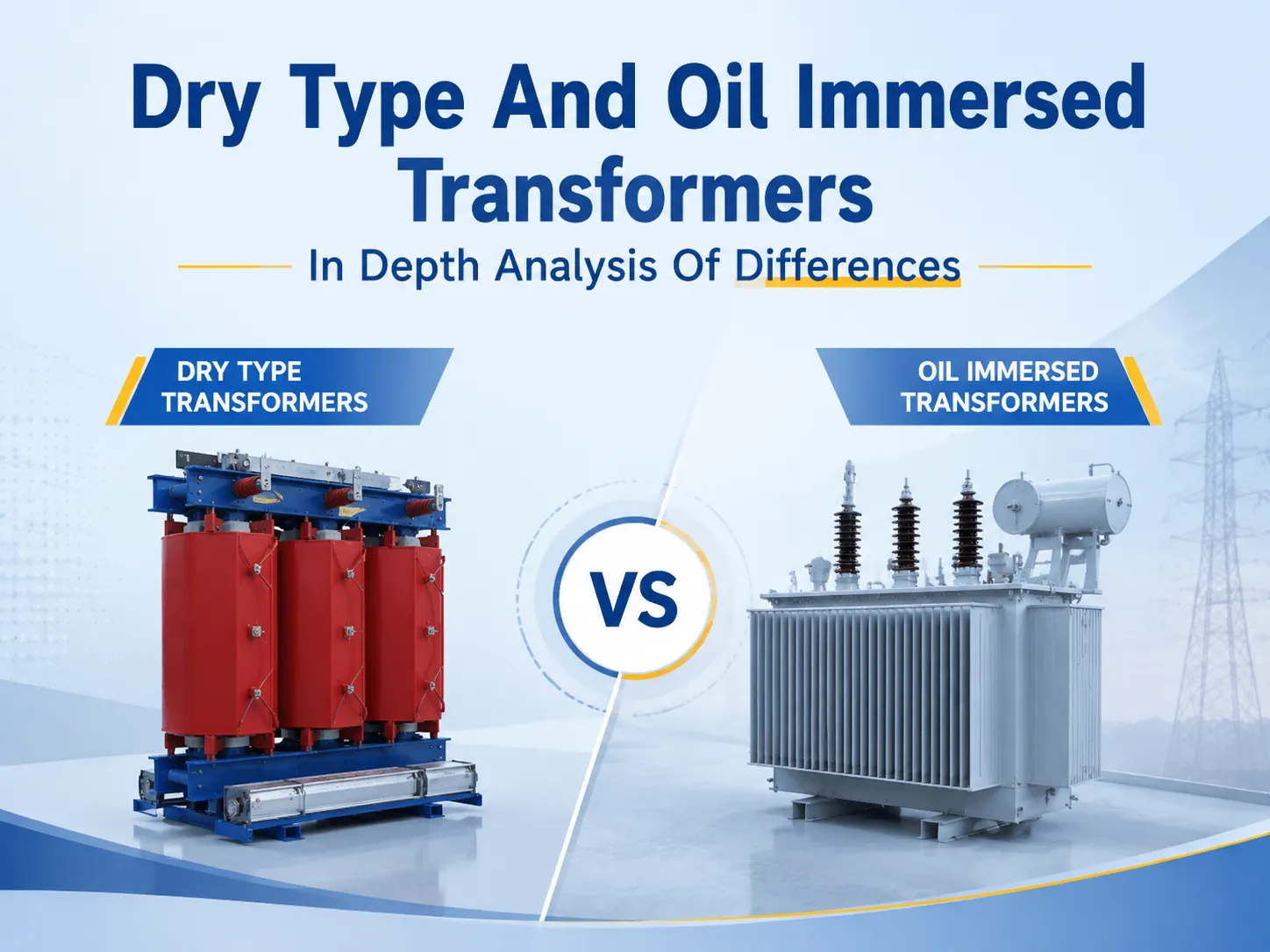
Lo básico: Qué es cada tecnología
Aunque ambos tipos de transformadores realizan la misma función de transformación de voltaje basada en inducción electromagnética, emplean diferentes métodos de aislamiento y enfriamiento. El enfriamiento de un transformador de tipo seco se logra en aire (clases AN/AF), y el aislamiento es ya sea en forma de bobinas de resina epóxica sólida, donde la bobina está moldeada en epóxido y relleno rico en sílice, o a través de las bobinas VPI, en las que la bobina se trata con barniz bajo presión de vacío.
En contraste, los transformadores sumergidos en aceite utilizan aceite tanto en el proceso de aislamiento como para la conducción de calor hacia el tanque. Se dice que la diferencia no es solo superficial. El transformador de tipo seco necesita ser mucho más grande y estar hecho de más cobre porque el aire no es tan buen conductor térmico como el aceite. Además, los tipos de resina moldeada producen aumentos de temperatura de 100°C (clase F) o 125°C (clase H) según IEC 60076-11, en comparación con 65°C de los tipos sumergidos en aceite (IEC 60076-2).
Enfriamiento y Aislamiento: Aire vs Aceite
| Aspecto | Tipo Seco | Sumergido en Aceite |
|---|---|---|
| Medio de refrigeración | Aire (natural o forzado) | Aceite mineral, éster o silicona |
| Clases de enfriamiento | AN, AF, ANAF | ONAN, ONAF, OFAF |
| Aislamiento de bobinas | Resina epóxica moldeada o barniz VPI | Papel kraft impregnado en aceite |
| Aumento de temperatura | 100 K (F), 125 K (H) típico | 65 K aceite / 78 K bobina (IEC) |
| Inflamabilidad | Autoextinguible (resina) | El aceite mineral es combustible; los ésteres lo son menos |
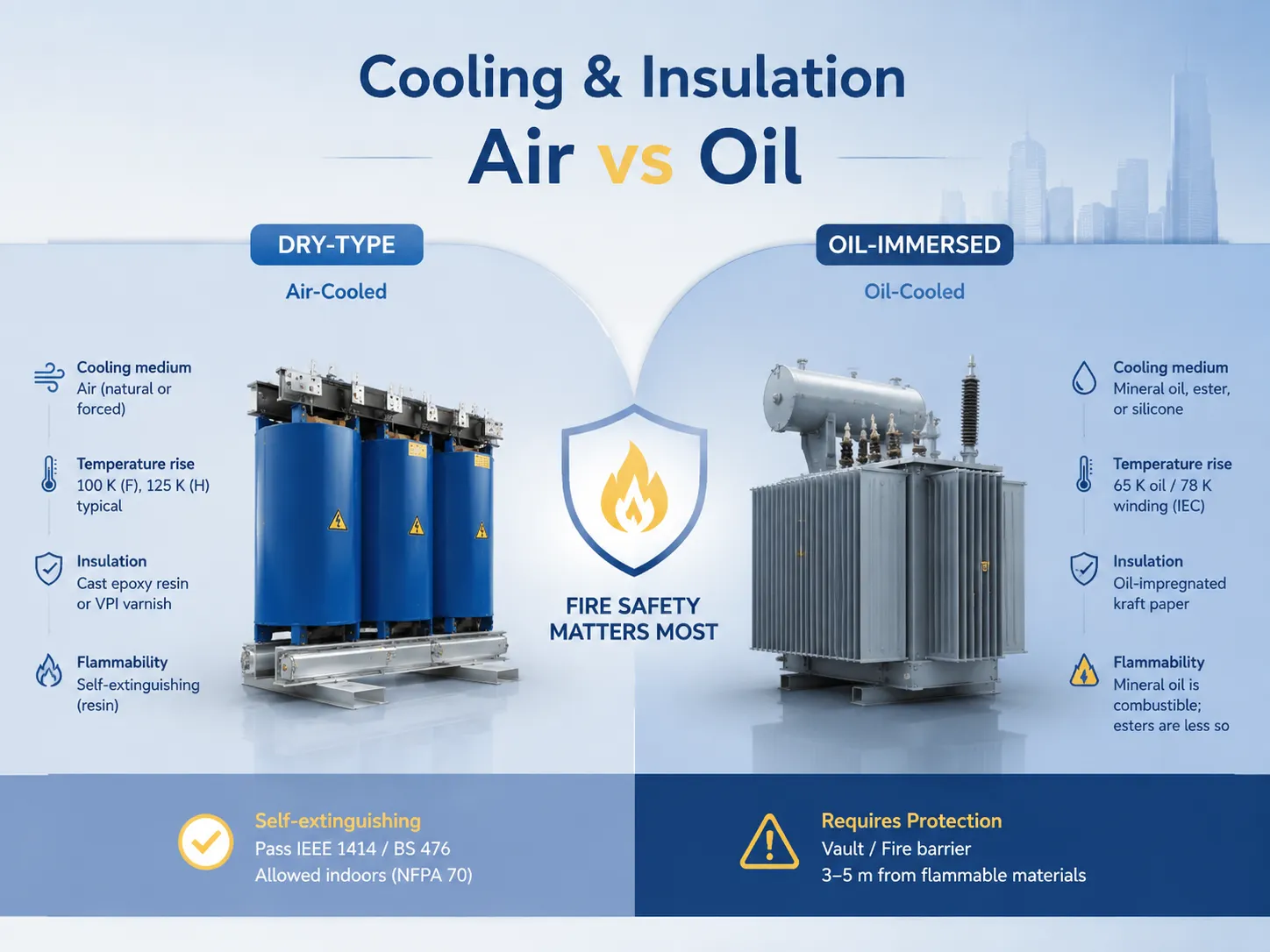
El aspecto del fuego es más importante que cualquier otro aspecto. Los transformadores de resina fundida son autoextinguibles y pasan las pruebas de llama IEEE 1414/BS 476, que es la principal razón por la que NFPA 70 y la mayoría de los códigos nacionales los permiten en edificios sin un vault clasificado contra incendios. Las unidades de aceite mineral necesitan un vault, barrera contra incendios o una distancia de 3 a 5 m de materiales inflamables. Para proyectos de vegetación y rascacielos, esta ha sido a menudo la única consideración.
Tabla de Comparación de Nueve Dimensiones
| Dimensión | Tipo Seco | Sumergido en Aceite | Ganador |
|---|---|---|---|
| Costo inicial por kVA | Mayor | Menor (25–40% menos) | Aceite |
| Riesgo de incendio / explosión | Bajo, autoextinguible | Líquido combustible | Seco |
| Aprobación en interiores | No se necesita vault en la mayoría de los códigos | Vault/barrera a menudo requerida | Seco |
| Capacidad de sobrecarga | Limitado más allá de la placa de identificación | Buena masa térmica | Aceite |
| Carga de mantenimiento | Revisiones visuales, servicio de ventiladores | Muestreo de aceite, DGA, comprobaciones de fugas | Seco |
| Sensibilidad a la humedad | Mayor; necesita sala seca | Sellado contra la humedad | Aceite |
| Vida útil | 20–30 años | 25–40 años | Aceite |
| Ruido | Más silencioso (sin bombas de aceite) | Puede ser más ruidoso con ventiladores | Seco (marginal) |
| Eficiencia en altas calificaciones | Más grande, se necesita más cobre | Compacto para la misma calificación | Aceite |
Costo Total de Propiedad: Matemáticas Reales
El costo de comprar el primer transformador es solo un punto de partida para todo el análisis. Ahora analizaremos un transformador de 1,000 kVA que opera en una instalación industrial con un factor de carga de 60% produciendo pérdidas de $0.12/kWh durante un período de veinte años. Las pérdidas del transformador se calcularán según la Norma Internacional IEC 60076.
| Componente de costo | Tipo Seco (Resina Fundida) | Sumergido en Aceite |
|---|---|---|
| Costo inicial (FOB, 10–35 kV) | $20,000–$45,000 | $18,000–$38,000 |
| Pérdida en vacío | ≈ 2,000–2,600 W | ≈ 1,500–2,000 W |
| Pérdida de carga @ carga 60% | ≈ 6,000–8,500 W | ≈ 5,500–7,500 W |
| Costo anual de pérdidas (@$0.12/kWh) | ≈ $8,400–$11,600 | ≈ $7,400–$10,000 |
| Costo de pérdidas a 20 años | ≈ $168,000–$232,000 | ≈ $148,000–$200,000 |
| Mantenimiento durante 20 años | ≈ $4,000–$9,000 | ≈ $12,000–$22,000 (pruebas de aceite, reacondicionamiento) |
| Aproximadamente total a 20 años | $192,000–$286,000 | $178,000–$260,000 |
Dos cosas destacan de inmediato. En primer lugar, las pérdidas superan los gastos, por lo que elegir solo en función del precio es un error. En segundo lugar, las cifras a 20 años muestran que los costos totales son muy similares entre sí, debido a los menores costos de mantenimiento del motor de tipo seco que compensan el precio más alto. Aunque los motores sumergidos en aceite aún tienen mejores costos de vida en comparación con el tipo seco, la diferencia no es tan grande como sugiere la diferencia de costo inicial.
Clasificaciones y Eficiencia: Lo que dicen las Normas
- Tipo seco: La norma IEC 60076-11 se aplica a transformadores de potencia de tipo seco y define las clases de aislamiento como B, F y H con grados de aumento de temperatura de 100 K, 125 K y 150 K, respectivamente. Además, se introdujeron con éxito varias categorías de eficiencia de acuerdo con la IEC 60076-20.
- Sumergido en aceite: Esta tecnología se adhiere a las normas IEC 60076-1/-2, lo que significa que los límites para el aceite y el aumento de temperatura del devanado de 65 K y 78 K se aplican respectivamente. La misma teoría sobre la vida útil del aislamiento se aplica y cada aumento de temperatura de 6 grados sobre el grado nominal resulta en una disminución de la longevidad del aislamiento a la mitad.
Los transformadores sumergidos en aceite aún logran el mismo nivel de pérdidas con un peso menor. Sin embargo, las nuevas tecnologías han hecho que los transformadores de tipo seco de resina fundida modernos generen menos pérdidas. Los transformadores de resina fundida eficientes con devanado de lámina de cobre ya pueden demostrar la misma eficiencia en los mismos rangos de potencia.
Veredictos por Aplicación
| Aplicación | Tipo Recomendado | Razón |
|---|---|---|
| Edificios de gran altura y comerciales | Tipo seco | Sin bóveda, autoextinguible, silencioso |
| Hospitales y centros de datos | Tipo seco (a menudo resina fundida) | Prioridades de seguridad contra incendios y tiempo de actividad |
| Postes/padmounts de distribución al aire libre | Sumergido en aceite | Costo por kVA, resistencia a la intemperie |
| Plantas industriales | Cualquiera, generalmente sumergido en aceite al aire libre | Margen de sobrecarga y capacidad de servicio |
| Minería y túneles | Tipo seco preferido | Sin líquido inflamable en espacios confinados |
| Energías renovables (PV, eólica) | Ambos; tipo seco para skids interiores, aceite para pads | Las reglas de incendio del sitio y el costo deciden |
| Alta humedad, exterior costero | Sumergido en aceite | Sellado contra la humedad |
Panorama de marcas y rangos de precios
| Marca | Oferta de Tipo Seco | Oferta de Sumergido en Aceite | Posición de precio |
|---|---|---|---|
| ABB | Resina fundida hasta 63 MVA | Distribución y potencia | Premium |
| Siemens | Resina GEAFOL | Distribución y potencia | Premium |
| Schneider Electric | Resina Trihal | Distribución | Premium |
| Hitachi Energy | Bloque de resina Resibloc | Potencia y distribución | Premium |
| Eaton | VPI y bobina fundida | Padmount y poste | Medio-premium |
| Fabricantes chinos (por ejemplo, Subian) | Resina fundida y VPI | Distribución y potencia | Valor |
Los actores globales en el campo – ABB, Siemens, Schneider Electric y Hitachi Energy – construyeron el transformador de resina fundida que dio forma a los estándares de la industria, equipado con muchos años de pruebas de tipo y un sistema de servicio mundial. La prima que cobran está justificada cuando las especificaciones del proyecto requieren certificación internacional o mantenimiento impulsado por el proveedor. La mayoría de los proyectos con los parámetros de capacidad de 400 – 2,500 kVA, cumplimiento de IEC y algunos informes de prueba pueden ser completados fácilmente por productores chinos certificados por mucho menos dinero en comparación con las empresas occidentales. Jiangsu Subian Electric Power fabrica tanto transformadores de resina fundida con voltajes de hasta 35 kV como transformadores llenos de aceite con voltajes de 10 kV a 110 kV, brindando a los clientes la oportunidad de comprar cualquier tecnología de una sola planta certificada y obtener documentación estándar y soporte directo del fabricante.
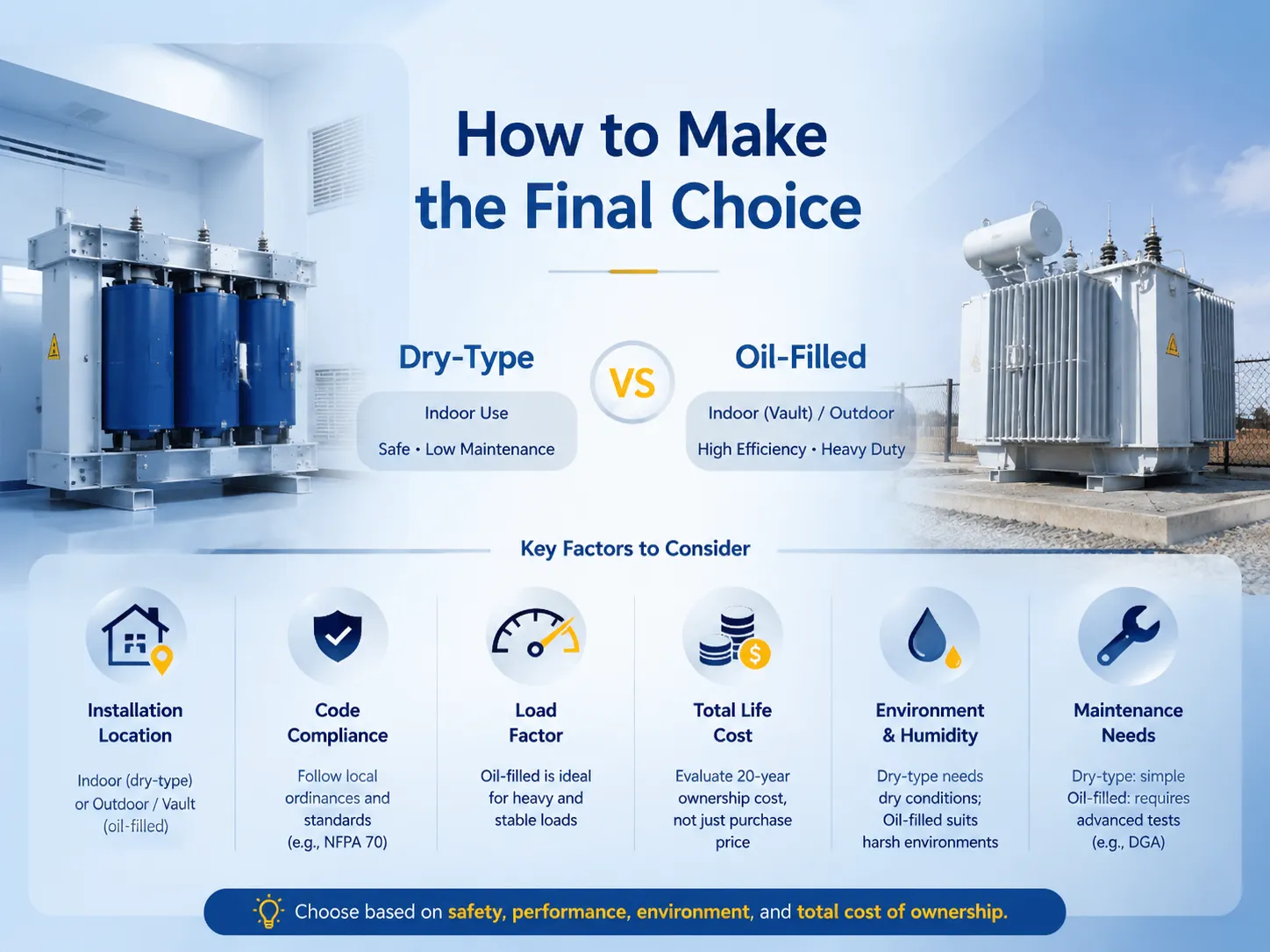
Cómo hacer la elección final
- Pregunte sobre la ubicación de la unidad. La instalación en interiores en un local ya ocupado implica la necesidad de unidades de tipo seco, pero la instalación en exteriores o en un depósito de transformadores diseñado requiere unidades llenas de aceite.
- Consulte sus ordenanzas locales para obtener instrucciones. La mayoría de los códigos nacionales como el NFPA 70 requieren que utilice bóvedas para cualquier transformador lleno de aceite utilizado en interiores con ciertas calificaciones de salida.
- Calcule el factor de carga. Las unidades llenas de aceite son más preferibles en caso de cargas pesadas y estables, mientras que donde la situación se repite trayendo cargas ligeras, la ventaja no es tan considerable.
- Calcule los costos totales de propiedad durante un período de veinte años utilizando los precios de electricidad locales y el método discutido anteriormente en lugar de simplemente multiplicar los precios de costo.
- Considere la humedad y el entorno. Los transformadores de tipo seco operan solo en gabinetes secos, pero las unidades llenas de aceite se pueden instalar incluso al aire libre.
- Verifique qué tipo de mantenimiento se podría realizar. Los transformadores llenos de aceite requieren algunos procedimientos complejos como el análisis DGA, pero aquí el tipo seco gana fácilmente porque no necesita eso.
Preguntas Frecuentes
¿Cuál es más barato: los transformadores de tipo seco o los transformadores sumergidos en aceite?
Los transformadores sumergidos en aceite son generalmente 25-40% menos costosos en calificaciones equivalentes. Para una unidad de 1,000 kVA, se espera que los costos oscilen entre $18,000-$38,000 para aceite y $20,000 a $45,000 para unidades de tipo seco de resina fundida. Sin embargo, una vez que se tienen en cuenta los costos de construcción de bóvedas, contención de aceite y mantenimiento adicional, el total para el período de 20 años se vuelve mucho más comparable, subrayando la inadecuación del precio como factor decisivo.
¿Son los transformadores de tipo seco más eficientes que los sumergidos en aceite?
En la misma clase de eficiencia, esto no siempre es cierto. Esto se debe a que el aceite enfría mejor; mediante núcleos y bobinas significativamente más pequeñas, las unidades sumergidas en aceite cumplen con los requisitos de pérdidas. Cuando se trata de calificaciones de potencia más pequeñas (50–500 kVA), los productos de resina fundida de buena calidad superan a las unidades sumergidas en aceite; cuando la calificación de potencia es superior a ~1,000 kVA, estas últimas generalmente funcionan mejor en cuanto a pérdidas por dólar se refiere.
¿Se pueden instalar transformadores de tipo seco al aire libre?
De hecho, esto es cierto solo cuando se hacen disposiciones específicas. El tipo ventilado abierto requiere una carcasa a prueba de clima IP23 IP54 y desclasificación. Por ejemplo, una unidad de resina fundida utilizada al aire libre a 45 °C de ambiente debe generalmente desclasificarse entre 5–10% en comparación con la operación en interiores. Además, las unidades llenas de aceite son generalmente más resistentes que las otras cuando se trata de climas difíciles.
¿Cuál es la vida útil típica de cada tipo?
Los transformadores llenos de aceite tienen una vida útil de 25 a 40 años, durante los cuales se deben realizar pruebas anuales de aceite. También se observa que los transformadores secos tienen una vida útil de alrededor de 20 a 30 años, que se basa completamente en la acumulación de humedad a lo largo de los años. Los sistemas aislados de resina fundida pueden tener una vida útil de alrededor de 30 años siempre que se utilicen en un lugar limpio y seco.
¿Por qué los edificios de gran altura casi siempre utilizan transformadores de tipo seco?
Debido a los códigos de incendios. El aceite mineral, al ser inflamable, provoca la creación de un vault a prueba de fuego para dicho transformador de aceite en interiores. Sin embargo, dado que la resina fundida es a prueba de fuego, no hay necesidad de colocar el transformador seco dentro de un vault, lo que lleva a la eliminación de un espacio considerable y a una ventilación más fácil en las salas eléctricas.
Referencias
- IEC 60076-1: Transformadores de Potencia — General — Estándar básico para clasificaciones, pérdidas y pruebas de transformadores.
- IEC 60076-11: Transformadores de Potencia de Tipo Seco — El estándar internacional específico para transformadores de tipo seco, clases de aislamiento y aumento de temperatura.
- NFPA 70 (Código Eléctrico Nacional) — El código que rige la instalación de transformadores, clasificaciones de incendios y despejes en edificios.
- IEEE — Editor de la serie IEEE C57 y estándares térmicos/vida de transformadores utilizados con IEC.
- NEMA — Organismo de estándares de América del Norte que cubre la eficiencia de transformadores y clasificaciones de recintos.
- Normas de Transformadores de Distribución del DOE de EE. UU. — Reglas oficiales de eficiencia que informan los cálculos de economía de pérdidas.
- Jiangsu Subian Electric Power Co., Ltd. — Fabricante de transformadores tanto de tipo seco como sumergidos en aceite, conforme a IEC 60076.
Conclusión
El transformador de tipo seco y la variedad sumergida en aceite deben entenderse no como alternativas, sino como dos respuestas óptimas a diferentes consultas. Si su instalación se lleva a cabo en un local interior, tiene requisitos de seguridad contra incendios, o se está poniendo en funcionamiento en un lugar como un edificio ocupado, entonces el transformador de tipo seco es su mejor opción, a pesar de su precio inicial que es un 25 a 40 por ciento más alto que el del modelo sumergido en aceite. Si el transformador se encuentra al aire libre en una subestación de cables, entonces la última versión ofrece el mejor precio por kVA, prometiendo mejores márgenes de sobrecarga y una mayor vida útil. La elección debe hacerse en función del costo total de propiedad (precio inicial, pérdidas, costos de servicio, construcción, etc.) pero no del precio de etiqueta. No importa qué opción elija, compre equipos de un fabricante certificado que proporcione información sobre pérdidas junto con resultados de pruebas. Un proveedor como Jiangsu Subian Electric Power ofrece ambas tecnologías, para que pueda comparar de manera equivalente y elegir con confianza.