


Nell'anno 1886, Great Barrington, Massachusetts, afferma di essere il primo luogo al mondo a utilizzare corrente alternata nelle centrali elettriche attraverso trasformatori. Questo evento è considerato un grande evento nella storia dell'elettricità, poiché un generatore da 500 V alimentava un trasformatore che abbassava la tensione per le lampade a incandescenza, consentendo di produrre, convertire e fornire elettricità ai clienti. Dopo circa 140 anni, il principio di questo meraviglioso evento è utilizzato in ogni fabbrica, aeroporto, ospedale e centro dati in tutto il mondo.
L'articolo fornisce informazioni dettagliate riguardo ai principi di base che rendono i trasformatori il motore del progresso: trasformazione della tensione, perdite nella trasmissione, isolamento galvanico e instradamento dell'energia in reti complesse. Inoltre, si troveranno le cifre che misurano l'efficienza, le perdite, le classi di tensione e i costi, e si apprenderà il ruolo dei trasformatori in tutti i movimenti di elettrificazione, a partire dal boom dei tram negli anni '90 fino alle moderne stazioni di ricarica per veicoli elettrici.
Come i Trasformatori Hanno Guidato il Progresso Storico
In passato, l'elettricità veniva generata vicino al punto di consumo a causa dei limiti intrinseci della corrente continua (DC) in termini di trasformazione della tensione. Ma a causa di ciò, ogni centrale elettrica poteva servire l'area solo entro un raggio di una o due miglia. L'invenzione dei trasformatori ha cambiato questa situazione. Con la corrente alternata (AC), un generatore può generare elettricità con una tensione di 20 kV e trasferirla attraverso i trasformatori a una tensione di 100 kV o anche superiore, consentendo la trasmissione di elettricità su lunghe distanze. Negli anni '90, ad esempio, divenne possibile per le centrali elettriche che producevano elettricità utilizzando energia idrica—come, per esempio, quella situata alle Cascate del Niagara—fornire energia alle città situate a 30-40 km dalla centrale.
Le questioni dell'elettrificazione rurale, che durarono dagli anni '30 agli anni '50, non potevano essere risolte senza trasformatori di distribuzione economici; il periodo di industrializzazione dopo la fine della Seconda Guerra Mondiale richiedeva enormi trasformatori di potenza in ogni impianto industriale; la rivoluzione digitale portò trasformatori a secco in tutti gli edifici; e ora possiamo osservare la trasformazione del settore energetico utilizzando trasformatori.
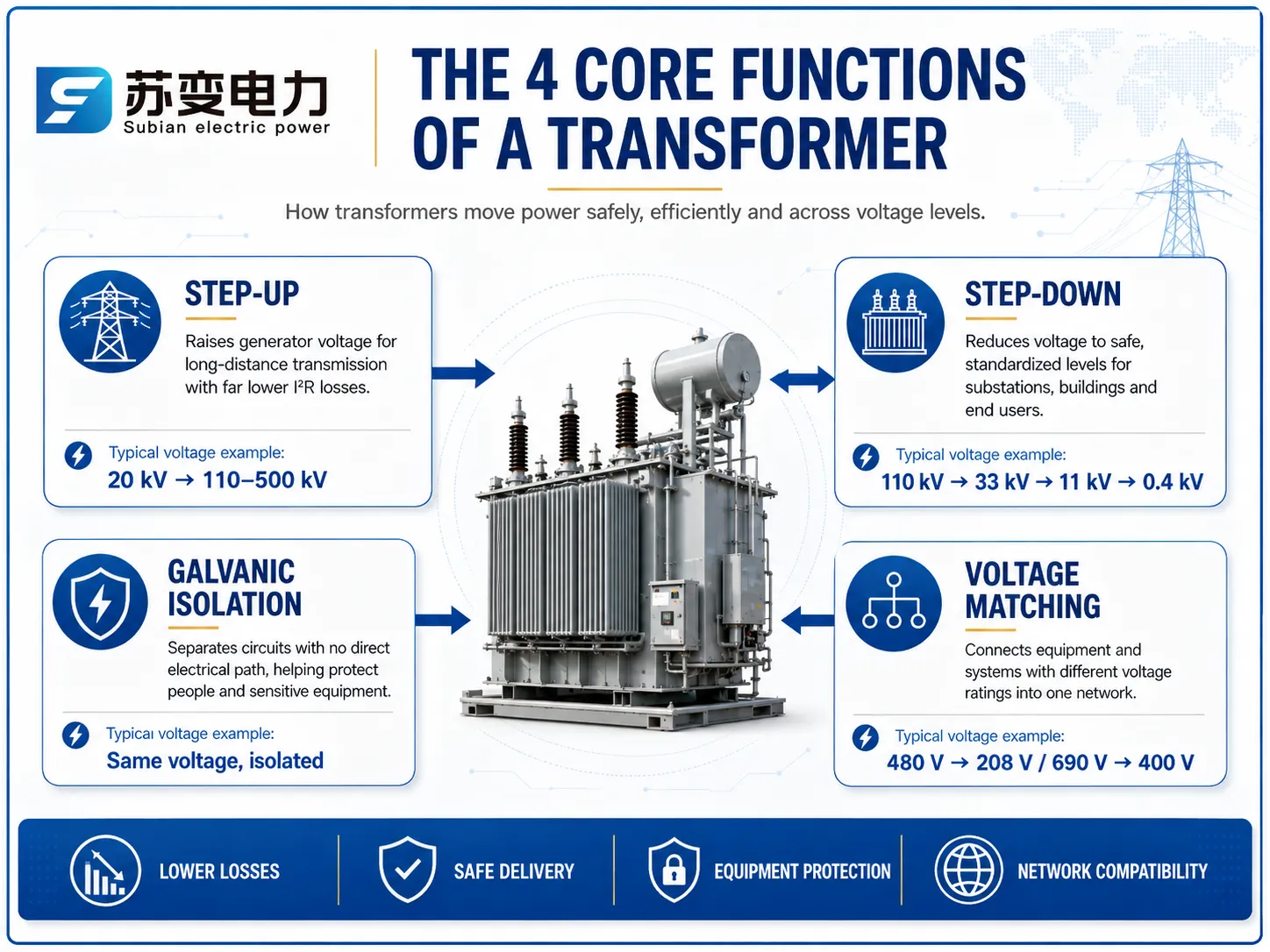
Le 4 Funzioni Fondamentali
| Funzione | Cosa Fornisce | Variazione di Tensione Tipica |
|---|---|---|
| Aumento | Trasmissione ad alta tensione con basse perdite di linea | 20 kV → 110–500 kV |
| Riduzione | Fornitura sicura e standardizzata per gli utenti | 110 kV → 33 kV → 11 kV → 0.4 kV |
| Isolamento galvanico | Nessun percorso elettrico diretto tra i circuiti | Stessa tensione, isolata |
| Abbinamento della tensione | Collega apparecchiature di diverse potenze | Esempio: 480 V → 208 V, 690 V → 400 V |
Queste quattro funzioni si combinano in ogni rete. Un ospedale, ad esempio, preleva 11 kV dalla strada, riduce a 400 V per l'edificio, isola i circuiti critici per le apparecchiature mediche e abbina la tensione del generatore al quadro elettrico durante le interruzioni.
La Fisica: Induzione Elettromagnetica
Il concetto alla base del funzionamento di un trasformatore si basa sull'induzione elettromagnetica, che è stata elaborata per la prima volta da Faraday e quantificata da Lenz. Quando il flusso primario di corrente elettrica attraversa un trasformatore, il nucleo in ferro laminato diventa magnetizzato, e il flusso alternato creato nel processo di questa magnetizzazione causa la generazione di una tensione elettrica nella bobina secondaria del trasformatore. Se il rapporto di trasformazione è stato calcolato in anticipo, allora possiamo aspettarci che i rapporti di trasformazione siano uguali.
I due tipi di perdita che influenzano l'efficienza sono la perdita per isteresi, che si riferisce al processo di commutazione ripetuta dei domini magnetici del nucleo, e la perdita per correnti parassite, che è la corrente indotta all'interno del materiale del nucleo. Ognuno dei due tipi di perdite può essere minimizzato inventando acciaio al silicio orientato ai grani, creando sottili piastre laminate di acciaio e applicando nuove tecnologie laser. La perdita di rame si verifica con il quadrato della corrente di carico e quindi i trasformatori operano in modo più efficiente quando il loro carico effettivo raggiunge solo il 50-70% della potenza nominale.
Perché l'efficienza è il vero motore
La figura più importante nella vita di un trasformatore è l'efficienza. L'elettricità che passa attraverso un trasformatore di distribuzione perde circa l'1-3 percento, e poiché questo equipaggiamento opera costantemente, ciò riflette il 3-5 percento del totale dell'energia elettrica prodotta da tutti i paesi del mondo. Ridurre le perdite di un punto percentuale dell'elettricità totale distribuita da tutti i trasformatori utilizzati fornirebbe più elettricità di quella consumata nella maggior parte dei paesi.
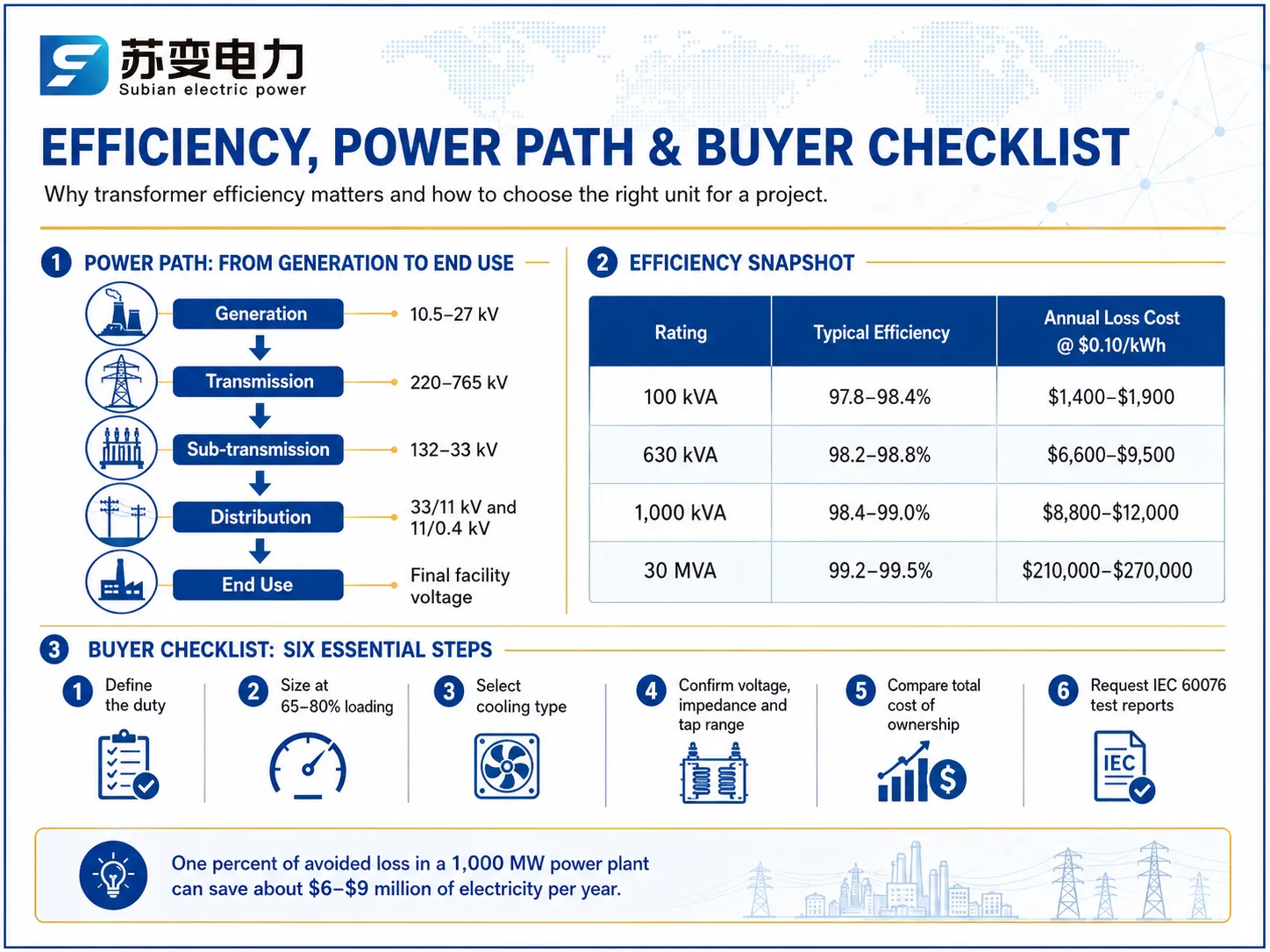
| Valutazione | Efficienza Tipica | Energia Persa Annuale (kWh) | Costo della Perdita @$0.10/kWh |
|---|---|---|---|
| 100 kVA | 97.8–98.4% | 14,000–19,000 | $1.400–$1.900 |
| 630 kVA | 98.2–98.8% | 66,000–95,000 | $6.600–$9.500 |
| 000 kVA | 98.4–99.0% | 88,000–120,000 | $8.800–$12.000 |
| 30 MVA | 99.2–99.5% | 2,100,000–2,700,000 | $210.000–$270.000 |
Poiché il costo della perdita annuale supera il prezzo di molti piccoli trasformatori nel giro di pochi anni, l'approvvigionamento basato sull'efficienza—utilizzando una valutazione delle perdite di $3,000–$8,000 per kW—è una prassi standard tra le utility e gli acquirenti industriali sofisticati.
Tipi per Funzione
| Tipo | Funzione Primaria | Applicazione Tipica |
|---|---|---|
| Trasformatore elevatore di generatore (GSU) | Aumentare la tensione del generatore al livello di rete | Centrali elettriche, impianti eolici, impianti solari |
| Trasformatore di trasmissione | Interconnettere reti HV | Sottostazioni 400/220/132 kV |
| Trasformatore di distribuzione | Ridurre a tensione di utilizzo finale | Pali, montaggi a pavimento, caveau degli edifici |
| Trasformatore di isolamento | Separazione galvanica | Medico, IT, controllo industriale |
| Autotransformatore | Regolazione della tensione con un avvolgimento | Interconnessione di sistemi 132/66 kV |
| Trasformatore strumentale | Riduzione per misurazione/protezione | CT e VT in ogni sottostazione |
Il percorso del trasformatore nel sistema elettrico
①. Generazione: le unità di trasformatore GSU prendono la tensione del generatore nella linea soggetta, i trasformatori GSU prendono la tensione dei generatori nell'intervallo di 10,5–27 kV a livelli di 110–500 kV.
②. Trasmissione: i trasformatori EHV collegano la rete a lunga distanza con trasmissioni solitamente di 220–765 kV.
③. Sottotrasmissione: i gateway dei trasformatori 132–33 kV facilitano l'alimentazione delle sottostazioni regionali.
④. Distribuzione: i sistemi di trasformatori 33/11 kV o 11/0,4 kV forniscono linee di alimentazione per il trasporto.
⑤. Uso finale: unità a secco o immerse in olio sono necessarie all'interno degli impianti.
Il concetto di perdita di ciascuna fase del trasformatore non è una somma aritmetica, poiché ogni fase ha il proprio profilo di perdita. Quindi la perdita cumulativa non è determinata sommando le perdite aritmetiche, ma tenendo conto delle perdite in ciascuna singola fase.
Applicazioni moderne che guidano la crescita
- Energia rinnovabile: tutte le turbine eoliche e gli inverter solari utilizzano trasformatori elevatori e a livello globale, le energie rinnovabili aggiungeranno ogni anno molte centinaia di GW di nuove capacità, con ogni MW che richiede circa 1,5-2 MVA di capacità del trasformatore.
Ricarica di veicoli elettrici: i caricabatterie rapidi a 150-350 kW necessitano di trasformatori dedicati, solitamente intorno a 500-1.000 kVA per ogni sito.
Data center: campus iperscalabili con una capacità tra 50 e 150 MW utilizzano migliaia di trasformatori a secco ogni anno.
Modernizzazione della rete: lo sviluppo di reti intelligenti, HVDC e stoccaggio di batterie si basa sulla disponibilità di trasformatori, motivo per cui i tempi di attesa sono aumentati a 30-50 settimane negli anni 2022-2024.
Urbanizzazione: edifici alti, metropolitane e aeroporti continuano a consumare trasformatori a secco e di distribuzione.
Specifiche rappresentative e perdite
| Valutazione | Tensione | Perdita a vuoto | Perdita da carico | Impedenza |
|---|---|---|---|---|
| 100 kVA | 11/0,4 kV | 200–330 W | 300–2.000 W | 4% |
| 630 kVA | 11/0,4 kV | 900–1.400 W | 000–8.500 W | 4.5–6% |
| 000 kVA | 11/0,4 kV | 400–3.400 W | 500–21.000 W | 6–8% |
| 30 MVA | 110/33 kV | 000–30.000 W | 000–160.000 W | 10–12% |
Marchi e fasce di prezzo
| Marca | Paese | 630 kVA | 30 MVA (110 kV) | Forza |
|---|---|---|---|---|
| Hitachi Energy | Svizzera/Giappone | $9.000–$15.000 | $380.000–$560.000 | Ingegneria su scala di rete |
| Siemens | Germania | $8.500–$14.500 | $360.000–$540.000 | Base di riferimento europea |
| ABB | Svizzera | $8.500–$14.000 | $360.000–$530.000 | Rete di servizi globale |
| Schneider Electric | Francia | $8.000–$13.500 | Su richiesta | Eco-design della distribuzione |
| TBEA / China XD | Cina | $5.500–$9.500 | $230.000–$380.000 | Trasformatori di potenza ad alto volume |
| Jiangsu Subian Energia Elettrica | Cina | $4.800–$9.500 | $220.000–$360.000 | Testato IEC 60076, OEM/ODM, esportazione |
Aziende come Hitachi Energy, Siemens, ABB e Schneider Electric stabiliscono il benchmark di qualità, e le loro offerte localizzate giustificano i loro prezzi per le attrezzature chiave. Tuttavia, entrambe le aziende svolgono funzioni identiche: riduzione della tensione con induzione elettromagnetica, il cui design centrale definisce il grado di efficienza. Attualmente, i produttori cinesi dominano il settore – Jiangsu Subian Electric Power produce trasformatori di distribuzione e potenza fino a 110 kV conformi alla IEC 60076, fornisce servizi di test testimoniati da terze parti, branding ed esportazione, generalmente con uno sconto del 25-45% rispetto al prezzo di listino europeo. Per le valutazioni standardizzate dei trasformatori, è possibile trovare un fornitore a basso costo in Cina.
Come Scegliere per il Tuo Progetto
- Definire il dovere: carico continuo, ciclico o di emergenza; questo stabilisce i requisiti di margine termico.
- Calcolare il carico in kVA a 65–80% di carico per posizionarsi vicino al picco di efficienza.
- Selezionare il raffreddamento: esterno a olio immerso, tipo secco interno, con input conforme al codice antincendio.
- Specificare tensione, impedenza e intervallo di derivazione, e confermare il livello di cortocircuito sul sito.
- Aggiungere la valutazione delle perdite e confrontare il costo totale di proprietà su un periodo di 15–25 anni.
- Richiedere rapporti di prova di routine IEC 60076 e uno slot per ispezione in fabbrica prima di ordinare.
Domande frequenti
Quali sono le funzioni principali di un trasformatore nel sistema elettrico?
Quattro funzioni: aumentare la tensione per una trasmissione efficiente, abbatterla per un consumo sicuro, isolare galvanicamente i circuiti e abbinare le tensioni tra diversi sistemi. Ogni percorso di potenza dal generatore alla presa utilizza tutte e quattro almeno una volta e tipicamente attraversa cinque o più stadi di trasformatore.
Quanta energia perdono i trasformatori?
I trasformatori di distribuzione perdono circa 1–3% dell'energia che li attraversa; i grandi trasformatori di potenza perdono 0.3–0.8%. Le perdite totali dei trasformatori a livello mondiale ammontano a circa 3–5% della generazione elettrica globale, motivando standard di efficienza come NEMA TP-1 e U.S. DOE 10 CFR 431 che impongono livelli minimi di efficienza.
Perché aumentiamo la tensione per la trasmissione?
Perché le perdite di linea sono proporzionali al quadrato della corrente. Raddoppiare la tensione dimezza la corrente e riduce le perdite di un quarto. Aumentare da 20 kV a 400 kV riduce la corrente di un fattore 20, tagliando le perdite I²R di circa 400× per la stessa potenza, rendendo economicamente possibile la trasmissione a lunga distanza.
Quanto costa un trasformatore?
Un trasformatore da palo da 50 kVA costa $1,000–$2,500; 250 kVA costa $2,500–$6,000; 1,000 kVA $9,000–$18,000; e un trasformatore di potenza da 30 MVA, 110 kV $250,000–$450,000. Spese di spedizione, accessori e installazione aggiungono 10–20%. I prezzi variano in base al marchio, alle perdite, alla tensione e alla regione.
Come influisce l'efficienza del trasformatore sulle bollette elettriche?
Direttamente. Un trasformatore da 1,000 kVA che perde 100,000 kWh all'anno costa circa $9,000–$12,000 in perdite a tariffe tipiche. Poiché un trasformatore funziona per 25–35 anni, una differenza di efficienza di 0.5% tra due offerte vale decine di migliaia di dollari nel suo ciclo di vita—confronta sempre l'efficienza, non solo il prezzo di acquisto.
Riferimenti
- Encyclopaedia Britannica: Trasformatore — storia e fisica del dispositivo che ha reso possibile l'era dell'AC.
- IEC 60076-1: Trasformatori di Potenza – Requisiti Generali — base globale per valutazioni, tolleranze e test.
- Outlook mondiale sull'energia dell'IEA — prospettive di domanda per la rete e i trasformatori per la transizione energetica.
- DOE degli Stati Uniti: Efficienza dei Trasformatori di Distribuzione — regolamenti sull'efficienza e linee guida per la valutazione delle perdite.
- NEMA TP-1 — benchmark di efficienza nordamericana per i trasformatori di distribuzione.
- IEEE C57.12.00 — requisiti nordamericani per i trasformatori immersi in liquido.
- Jiangsu Subian Energia Elettrica — produttore di trasformatori conforme a IEC 60076 per applicazioni di distribuzione, potenza e tipo secco.
Conclusione
I trasformatori hanno alimentato il progresso per 140 anni perché le loro quattro funzioni principali—aumento, abbassamento, isolamento e abbinamento della tensione—risolvono il problema fondamentale di muovere l'elettricità in modo efficiente e sicuro. La loro efficienza, che si accumula attraverso cinque o più stadi in ogni percorso di potenza, li rende una delle tecnologie di maggior valore nel mondo elettrico.
La trasmissione step-up riduce le perdite fino a 400× rispetto alla trasmissione alla tensione del generatore.
Le perdite del trasformatore equivalgono al 3–5% della generazione globale, quindi gli standard di efficienza sono importanti.
Dimensiona a 65–80% di carico e confronta le offerte sul costo totale di proprietà, non solo sul prezzo.
Che tu stia espandendo un impianto, costruendo un parco solare o aggiornando una sottostazione, la tua scelta del trasformatore decide la tua efficienza per i prossimi tre decenni. Confronta i fornitori—da leader globali come Hitachi Energy e Siemens a produttori diretti come Jiangsu Subian Electric Power—sui rapporti di prova, le perdite e la garanzia, e stai investendo nella macchina che mantiene il progresso in movimento.