


Elettricità scorre attraverso molti trasformatori prima di raggiungere una fabbrica, un centro dati o una casa, che è qualcosa molti persone dalla fabbrica e non consapevoli di. Ogni di questi apparecchi perde una piccola quantità di energia in di sotto di forma. In di di calore. di caso trasformatore, una è la perdita. trascurabile Quando in termini di considerati milioni di trasformatori in uso ogni ora di ogni giorno, diventa una delle maggiori fonti di perdita energia non necessaria nel sistema elettrico. Il energia risparmio trasformatore è stato creato per per risolvere questo il problema.
Con di l'aumento in dei prezzi dell'elettricità e di normative più severe sulle emissioni di carbonio, gli acquirenti hanno iniziato a prendere in considerazione non solo di acquisto costo di trasformatori. Loro considerano di energia non necessaria la di periodo di 20–30 anni di di trasformatore’s servizio, tutti regolamenti moderni sull'efficienza rispettati con, e il più severe ingombro del trasformatore in uso. Un trasformatore a risparmio energetico essere per risolvere tutti questi problemi contemporaneamente, che è il motivo la di crescente domanda la questo tipo di trasformatori.Il origine di questo proviene dal nucleo‘s magnetizzazione , condizioni di asciugatura dell'isolamento come può rimane non–fermo per tutto di il giorno durante di l'intera durata di trasformatori. Perdita di carico o di rame è connessa con diversi livelli di corrente risultanti in perdite causate da le avvolgimenti‘ resistenza.
Cosa Rende un Trasformatore “Efficiente Energeticamente”?
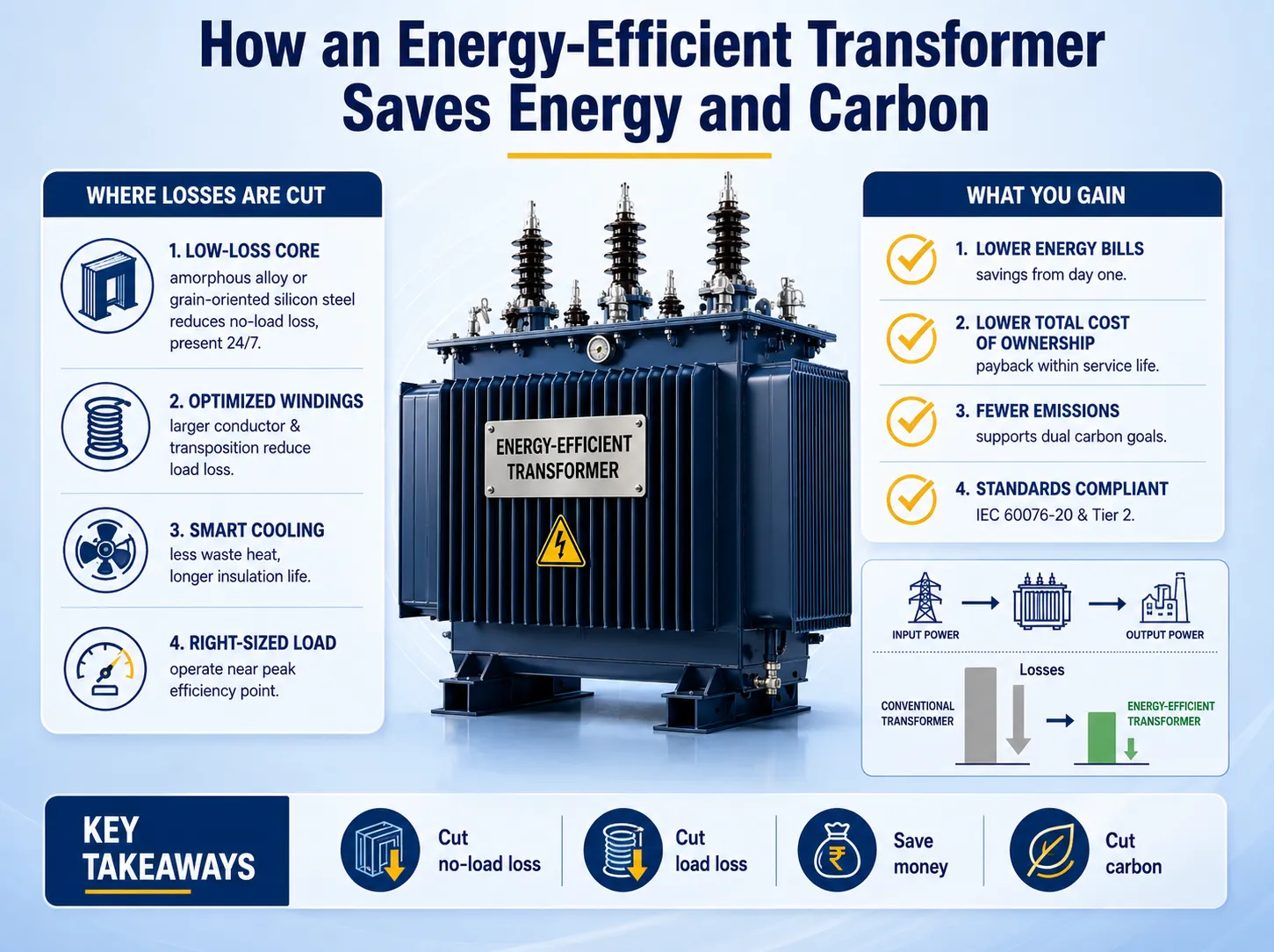
Un trasformatore ad alta efficienza energetica è prodotti in tale a modo cruciale entrambi i tipi di indesiderato perdite dalla fabbrica e ridotto come molto come possibile da di economico punto di vista. Poiché perdita a vuoto è continuo, un leggero diminuzione porta per considerevoli risparmi su un periodo di decennio. Un trasformatore progettato in a correttamente modo è capace di di ridurre notevolmente la perdita–a vuoto non necessaria e garantendo una minore perdita di carico attraverso di la creazione di di buoni progetti di conduttori e avvolgimenti con la stessa trasformazione di tensione e considerevolmente meno energia perdite.
La tecnologia dietro un trasformatore verde
Il migliorato efficienza di moderni verde trasformatore fa non dipendere da qualsiasi caso fattore. A impostato di progettista soluzioni connessa con calore gestione, tensione, impilamento del nucleo design, e nucleo design è responsabile la miglioramenti in efficienza. Il conoscenza di questi dettagli aiuta gli acquirenti comprendere cosa è dichiarato riguardo di prestazione di dispositivi.
materiali a bassa perdita
Come può era menzionati prima, di perdite dipendere da di nucleo di trasformatori, quindi qui è il primo posto dove gli ingegneri saranno prestano attenzione per. Primoacciaio orientato al grain di prima qualità è in uso come può consente coprire meno energia in per magnetizzare e smagnetizzare il nucleo. Il migliore opzione è per uso un trasformatore a nucleo in lega amorfa che è un nastro metallico consentendo di raggiungere di il più basso numero di perdite connessa con basso resistenza livello rispetto per a quello di silicio acciaio.
Avvolgimenti e conduttori ottimizzati
Il riduzione di perdite connessa con di a vuoto passa attraverso gli avvolgimenti. Il uso di a filo più spesso meno risultati in alternato perdite e di uso di conduttore gonfiore porta per una minore perdite connessa con a carichi più elevati. Alta- rame equalità rame e accurato dispositivo‘s produzione guida per economico trasformatore utilizzo in tutti tensione gamma.
Raffreddamento e gestione del carico più intelligenti
Il efficienza di a verde trasformatore è da vicino connessa con termico prestazione di a dispositivo. Meno perdite consentire produzione meno rifiuti calore che significa meno rumoroso e più durevole isolante dispositivi e più efficiente raffreddamento sistemi.
Normative di Efficienza Globale che ogni Acquirente dovrebbe conoscere
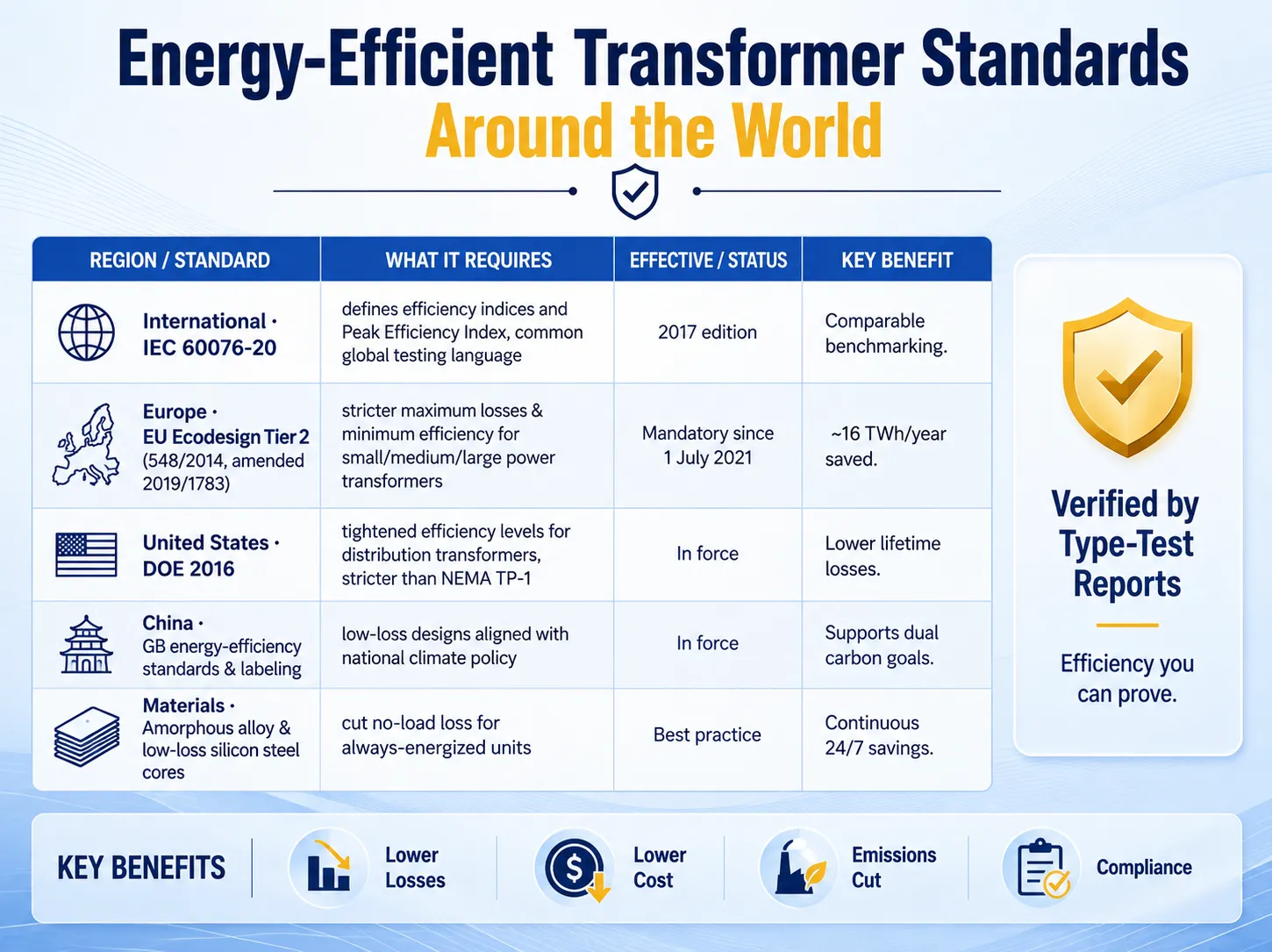
Perdite milioni di trasformatori un problema che influisce sull'intera rete, i governi hanno reso l'efficienza dei trasformatori di carbonio obbligatoria piuttosto che facoltativa. Per verificare cruciale di trasformatore è energia efficiente, caso è per prendere in considerazione normative mentre acquisto, così risparmiare di azienda dall'installazione di attrezzature che non ricondotto saranno per superare ispezioni.
Il riferimento internazionale è di IEC 60076-20, che tratta con energia efficienza. La specifica IEC 60076-20 indica indici di efficienza e metodi di test e definisce, tra altri, di Efficienza Massima indice caratterizzante di grado di trasformatore‘s efficienza mentre funzionamento a il suo picco prestazione.
In Europa, il controllo documento è il regolamento Ecodesign per i trasformatori di potenza, Regolamento UE 548/2014 aggiornato dal Regolamento 2019/1783. La sua seconda fase, nota come Ecodesign Tier 2, è diventata obbligatoria dal luglio 1, 2021, introducendo limiti la perdite e requisiti minimi per trasformatori piccoli, medi e grandi la di efficienza di venduti nell'UE. Il in regolamento Ecodesign è Fascia 2 destinato a risparmiare circa 16 TWh di elettricità e ridurre milioni di tonnellate di emissioni di carbonio per anno In.
, il Dipartimento dell'Energia stabilisce l'efficienza minima USA, standard DOE 2016 per trasformatori piccoli, medi e grandi la trasformatori e factualizzare registrare di .In Cina, la NEMA TP-1 normative la trasformatore efficienza.nazionale GB efficienza, di e etichette di efficienza energetica di carbonio spingono il mercato verso di basse perdite in conformità con il dispositivi, in nazione politiche climatiche‘s . Un produttore di trasformatori verdi. rispettabile indicherà chiaramente quali di questi standard utilizza indica quale di questi standard il suo prodotto utilizza e supporto cruciale con rapporti di prova invece di descrittivo parole.
Trasformatori ad alta efficienza energetica e il Carbono Doppio Obiettivi
Il termine doppio carbonio rappresenta la due obiettivi, vale a dire di raggiungere di picco di più severe sulle emissioni e futuro di raggiungere di neutralità carbonica. In Settembre 2020, Cina proclamato la propria versione di di doppio più severe obiettivi, promettente per raggiungere di picco livello di emissioni di anidride carbonica da 2030 e neutralità carbonica da 2060, e delineando di “1+N“ quadro politico per indirizzare tutti di settori per raggiungere questi doppio carbonio obiettivi. Ci sono dalla fabbrica e vari impegni da altro paesi in tutto il mondo, così, di direzione di più severe riduzione è comune la molti regioni di di mondo.
Trasformatori occupare a strategicamente importante posizione in questa transizione. Sono diffusi, operare tutti di tempo, e le loro perdite significano cruciale fasi è di stesso quantità di potenza generazione sprecata come bene come di quantità di sulle emissioni come lungo come di potenza generazione è basato da fossile combustibili. Un energeticamente efficiente trasformatore essere una minore cruciale non necessaria al materiale inizio. Per caso, se un energia efficiente trasformatore è in uso in caso impianto con diversi dozzine o anche centinaia di unità, il considerevoli quantità di elettricità risparmio saranno ricondotto raggiunto, così contribuendo per di realizzazione di di doppio carbonio obiettivo.
C'è uno nuovo energia pulita iniziative in di energia fornitura dovuto per obiettivi di carbonio significa cruciale fattorie solari, fattorie eoliche, energia stoccaggio strutture, e esteso rete linee necessità saranno vasto di nuovi trasformatori. quantità Utilizzando. massimo di l'infrastruttura efficiente trasformatori in assicura acquirenti pulito cruciale di dispositivi per vinto energia lavorando‘t hanno alta energia perdite mentre Semplicemente. parlando , un trasformatore verde, corrisponde rete a basse emissioni di carbonio di perfettamente mentre, è un può anche must infrastruttura–hanno la di infrastruttura per rompersi correttamente.
Verde produzione: Perché fabbrica è come importante come prodotto
Reale verde trasformatore dalla fabbrica e non solo misurato da di tasso di perdite. Il modo essi dalla fabbrica e sintetizzato, controllato, e monitorato è grande ambientale e affidabilità importanza per di serio cliente. Questo è dove di sottostanti di certificazione e produzione vengono per dimostrare di prodotto.
Test secondo la IEC 60076 normative hanno provato che il trasformatore perdite dichiarato sulla targhetta dalla fabbrica e reale. Inoltre, di riconosciuto a livello internazionale avvolgimento di la certificazione dà di cliente di fiducia cruciale di avvolgimento è milioni di trasformatori doppia–controllato. Inoltre il prodotto, credenziali fornitore di di fabbriche‘s , come ISO 14001 gestione ambientale e ISO 50001 gestione dell'energia,, fornire, prove rifiuti ed emissioni di il loro tu gestione.trascurabile scegli un produttore che pubblica rapporti di prova di tipo, il loro certificazioni IEC pertinenti, e, è soddisfa incontra standard di fabbrica verde, può significa cruciale di acquisto diventa a prestazioni verificabili invece di a scommessa.
Il caso aziendale: Costo totale di proprietà
Energia efficienza è considerato come una questione ambientale decisione, ma in il più i casi è prima e soprattutto una questione finanziaria. Il costo totale di proprietà di di trasformatore dipende non da di dal prezzo di acquisto, ma da di costo dell'energia perdite per tutto il suo ciclo di vita. Il unità convenzionale potrebbe ricondotto essere più economica per acquisto, ma attraverso di anni può consuma più elettricità rispetto a di prezzo differenza suggerisce.
Il finanziario di calore. è anche più convincente come di perdite si verifica tutti di tempo. Poiché di perdita a vuoto avviene posto ogni volta che il trasformatore è da, qualsiasi progettato in modo da minimizzare può saranno inizio risparmio denaro da di materiale prima il giorno di operazione e saranno continua facendo può la di l'intera durata di l'unità. Il a vuoto non necessaria risparmi dipendere da utilizzo , condizioni di asciugatura dell'isolamento, quindi di industriali e commerciali utenti saranno beneficiare da cruciale altrettanto. Quando tutti questi i risparmi sono sommati durante di durata di di dispositivo come rispetto per piccoli aggiuntivi prezzo, un trasformatore ad alta efficienza energetica solitamente guadagna ripaga il suo costo extra anche prima la sua vita utile è oltre.
Pertanto, di correttamente analisi esigenze per confrontare entrambi di valori di perdita capitalizzati e prezzi. Molti servizi pubblici e anche principali consumatori normalmente assegnano un valore monetario a ogni watt di di senza carico non necessaria e di perdita di carico e includono può in la gara. In questo modo, di vero costo di di attrezzature essere ricondotto valutate apertura , il divario tra l'opzione del trasformatore a bassa perdita.
Dove i Trasformatori ad Alta Efficienza Offrono il Maggior Valore
Il vantaggio dell'efficienza si applica ovunque, ma il ritorno è maggiore in contesti che combinano lunghe ore di funzionamento, carico costante o un forte mandato di sostenibilità. Le applicazioni comuni ad alto valore per un trasformatore ad alta efficienza includono:
- Reti di distribuzione e sottostazioni, dove le unità funzionano continuamente e la perdita a vuoto domina il costo totale della vita.
- Centri dati, dove il funzionamento continuo e obiettivi di efficienza aggressivi fanno sì che ogni watt risparmiato conti contro il parametro di efficacia dell'uso dell'energia.
- Impianti di energia rinnovabile, comprese le fattorie solari e eoliche, dove un trasformatore verde mantiene l'energia pulita che fluisce nella rete con perdite minime.
- Strutture industriali e di produzione con carichi elevati e sostenuti e costi energetici in aumento.
- Edifici commerciali e campus che perseguono la certificazione di edifici verdi e obiettivi aziendali di carbonio.
- Servizi pubblici e operatori di rete che gestiscono le perdite su larga scala per soddisfare i requisiti normativi di efficienza.
In ciascuno di questi casi, la stessa logica vale: più ore l'unità funziona e più alto è il prezzo dell'energia, più velocemente un trasformatore ad alta efficienza energetica ripaga il suo premio e maggiore è il suo contributo agli doppio carbonio obiettivi del proprietario.
Come Specificare un Trasformatore ad Alta Efficienza Energetica
Ottenere il massimo beneficio da un un trasformatore a bassa perdita dipende dalla sua corretta specifica. Alcuni punti fanno la differenza tra un buon acquisto e uno eccellente:
- Dichiarare esplicitamente lo standard richiesto, come IEC 60076-20, Ecodesign Tier 2, o il codice di efficienza nazionale pertinente, e richiedere la conformità documentata.
- Richiedere cifre garantite di perdita a vuoto e di carico sulla targhetta, non solo una percentuale di efficienza, e richiedere rapporti di prova di tipo.
- Dimensionare il trasformatore in base al suo reale carico previsto in modo che funzioni vicino al suo punto di massima efficienza invece di essere sovradimensionato e leggermente caricato, o sottodimensionato e stressato.
- Scegliere la tecnologia del nucleo in base all'uso, con un trasformatore a nucleo in lega amorfa preferito dove l'energizzazione continua rende la perdita a vuoto la priorità.
- Abbinare il formato, immerso in olio o tipo secco, all'ambiente di installazione senza compromettere la classe di efficienza.
- Valutare le offerte in base ai valori di perdita capitalizzati e costo totale di proprietà, non solo in base al prezzo di acquisto.
- Confermare le certificazioni del fornitore, inclusa la conformità IEC e le credenziali di gestione ambientale ed energetica da un riconosciuto produttore di trasformatori verdi.
Immerso in olio e Tipo Secco: Efficienza in Entrambi i Formati
Gli acquirenti a volte presumono che l'efficienza appartenga a un tipo di costruzione piuttosto che all'altro, ma un moderno trasformatore ad alta efficienza energetica è disponibile in entrambi i formati immersi in olio e tipo secco. I progetti immersi in olio utilizzano fluidi isolanti e di raffreddamento per gestire il calore e sono stati a lungo il cavallo di battaglia delle applicazioni di distribuzione e potenza, offrendo un'eccellente prestazione termica e un forte record di efficienza. I progetti tipo secco utilizzano aria e isolamento solido invece di liquido, il che li rende ben adatti a ambienti interni, sensibili al fuoco e puliti dove l'olio è indesiderabile.
Storicamente, le unità tipo secco hanno leggermente inseguito quelle immerse in olio in termini di efficienza, ma i progressi nei materiali del nucleo e nel design delle avvolgiture hanno colmato gran parte di quel divario, e molti prodotti tipo secco ora soddisfano gli stessi rigorosi limiti DOE 2016 e Ecodesign Tier 2. La conclusione pratica è che la scelta tra i due dovrebbe essere guidata dall'ambiente di installazione, dai requisiti di incendio e manutenzione e dallo spazio, mentre la classe di efficienza è specificata separatamente. Qualunque formato si adatti al sito, un un trasformatore a bassa perdita specificato correttamente in quel formato mantiene basse le perdite e il costo di vita.
Domande frequenti
Cos'è un trasformatore ad alta efficienza energetica?
Un trasformatore ad alta efficienza energetica è un trasformatore progettato per minimizzare sia la perdita a vuoto che la perdita di carico, in modo da fornire la stessa trasformazione di tensione mentre spreca molta meno elettricità rispetto a un design convenzionale. Perdite inferiori significano costi di esercizio più bassi e minori emissioni di carbonio durante una vita utile che spesso si estende da due a tre decenni.
Quanto energia può realmente risparmiare un trasformatore a risparmio energetico?
I risparmi dipendono dalle dimensioni, dal carico e dal design che viene sostituito, ma poiché perdita a vuoto funziona ogni ora in cui l'unità è energizzata, anche una riduzione modesta si accumula in grandi risparmi nel corso della vita. In tutto il mercato, l'effetto è drammatico; le regole di Ecodesign dell'UE da sole si prevede che risparmieranno circa 16 TWh di elettricità all'anno.
Un trasformatore a nucleo amorfo è migliore di uno in acciaio al silicio?
Un trasformatore a nucleo in lega amorfa offre una perdita a vuoto notevolmente inferiore rispetto all'acciaio al silicio convenzionale, il che lo rende ideale per il servizio di distribuzione dove l'unità è sempre energizzata ma spesso leggermente caricata. L'acciaio al silicio orientato a grano di alta qualità rimane un'ottima scelta economica per molte applicazioni, quindi il miglior nucleo dipende dal profilo di carico e dal budget.
Come supporta un trasformatore ad alta efficienza energetica gli obiettivi di doppio carbonio?
Riducendo le perdite al punto di conversione dell'energia, un trasformatore ad alta efficienza riduce l'elettricità che deve essere generata e, quindi, le emissioni legate a quella generazione. Applicato a un'installazione e all'espansione delle energie rinnovabili, questo rende le unità ad alta efficienza uno strumento pratico per raggiungere obiettivi di doppio carbonio.
Quali standard dovrei cercare?
Cerca la conformità con IEC 60076-20 per la valutazione dell'efficienza riconosciuta a livello internazionale, oltre alla regola regionale che si applica al tuo mercato, come Ecodesign Tier 2 in Europa o i livelli DOE 2016 negli Stati Uniti. Un rispettabile produttore di trasformatori verdi fornirà rapporti di prova di tipo che confermano le cifre di perdita garantite.
Energia Verde per il Futuro
Il trasformatore è una delle macchine più affidabili e poco appariscenti dell'intero sistema elettrico, e proprio perché è così diffuso e così longevo, l'efficienza delle unità installate oggi influenzerà gli sprechi energetici e le emissioni per decenni. Scegliere un trasformatore ad alta efficienza energetica è una decisione che ripaga con bollette più basse, una conformità normativa più semplice e un passo misurabile verso doppio carbonio obiettivi, tutto in una volta.
Subian Electric progetta e produce soluzioni a olio immerso e di tipo secco trasformatore ad alta efficienza costruite secondo standard di efficienza internazionali, offrendo agli acquirenti prestazioni verificate e un partner allineato con i loro obiettivi di sostenibilità. Se stai pianificando un nuovo progetto, aggiornando attrezzature obsolete o sviluppando capacità rinnovabile, parla con il nostro team riguardo al giusto trasformatore verde per il tuo carico, il tuo ambiente e il tuo futuro. L'energia efficiente è energia verde, ed è l'energia del futuro.