


Fai una passeggiata attraverso qualsiasi impianto di generazione di energia e noterai la seguente tendenza: l'elettricità entra nell'impianto, passa attraverso un trasformatore e viene fornita a una tensione leggermente diversa. Così c'è il generatore che trasforma l'energia a un livello di tensione più alto, poi la rete di trasmissione la trasforma a un livello di tensione più basso, poi la linea di distribuzione la trasforma di nuovo a una tensione inferiore. E così via. Se rimuovi uno di questi trasformatori, l'intero schema verrà interrotto.
In questo articolo spieghiamo come e perché il trasformatore sia il pilastro principale del sistema di generazione di energia. Si tratta del principio del suo funzionamento (nessun'altra invenzione consente di ottenere gli stessi risultati), dei diversi ruoli dei trasformatori attraverso tutti i livelli di tensione, delle caratteristiche che definiscono la loro affidabilità e di un po' di matematica. Quando progetti una rete elettrica, la mantieni o acquisti attrezzature, dovresti prima di tutto conoscere la tecnologia con cui stai lavorando.
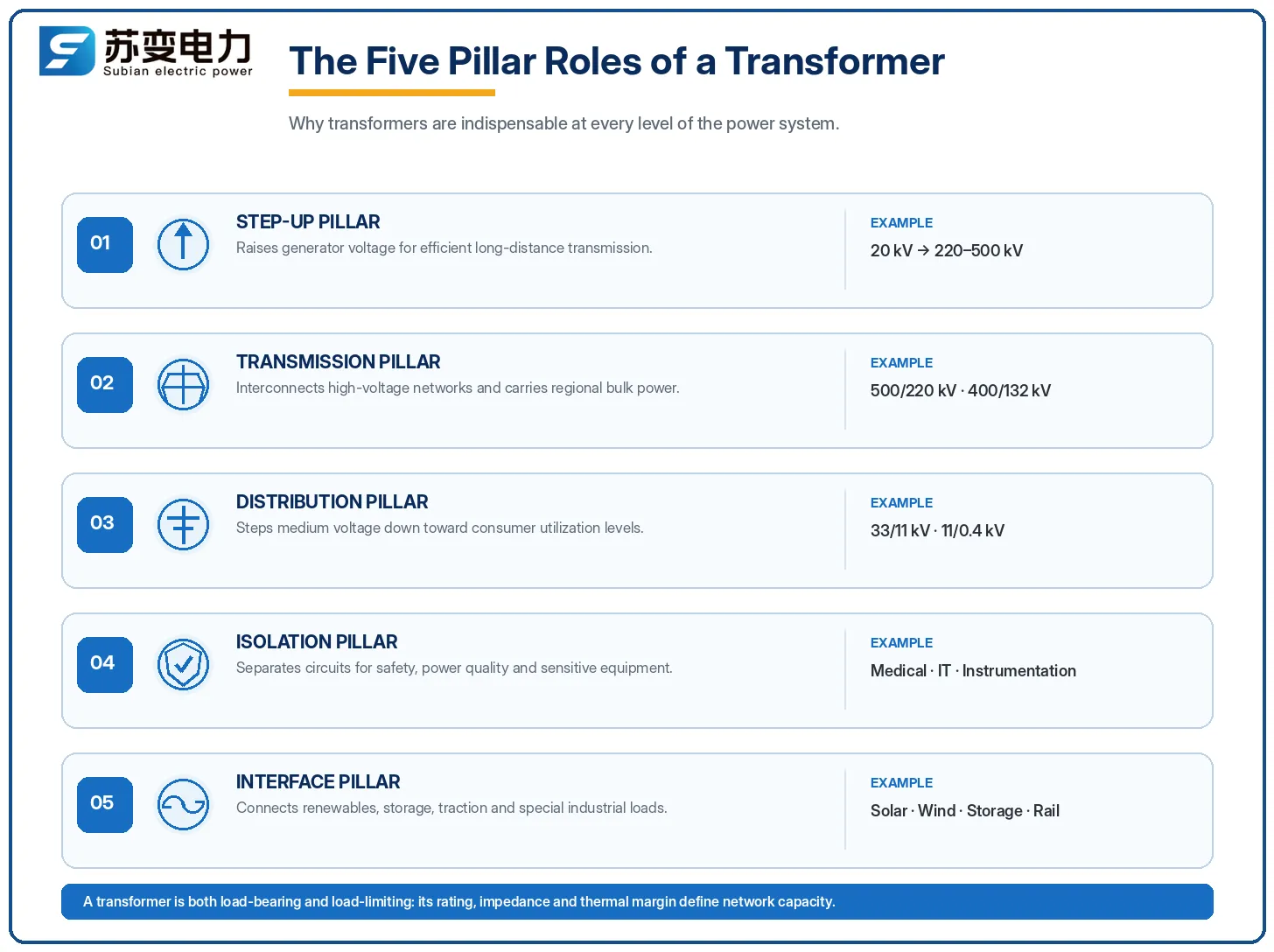
Perché i trasformatori sono i pilastri dell'analogia sopra menzionata?
Per analogia con colonne strutturali, i trasformatori possono sostenere carichi anch'essi. Anche se la natura del carico è effettivamente diversa: mentre le colonne fisiche possono sostenere il peso materiale dell'edificio, i trasformatori svolgono un'attività leggermente diversa. Innanzitutto, sono portanti nel senso che, nel caso tu rimuova il trasformatore, qualcosa situato sotto verrà disalimentato. In secondo luogo, operano come attrezzature di limitazione del carico nel senso che, attraverso le classifiche, i margini termici e i livelli di impedenza, un trasformatore definirà quanta energia viene trasferita attraverso una particolare sezione elettrica. In terzo luogo, nel caso in cui i trasformatori siano in funzione per molti anni, possono essere classificati come attrezzature di mantenimento del carico.
I Cinque Ruoli Pilastro
| Ruolo | Cosa Fa | Esempio |
|---|---|---|
| Pilastro di aumento | Aumenta la tensione del generatore per la trasmissione | 20 kV → 220–500 kV |
| Pilastro di trasmissione | Interconnette reti ad alta tensione | 500/220 kV, 400/132 kV |
| Pilastro di distribuzione | Riduce ai livelli dei consumatori | 33/11 kV, 11/0.4 kV |
| Pilastro di isolamento | Separa i circuiti per sicurezza e qualità | Medico, IT, strumentazione |
| Pilastro di interfaccia | Collega diversi sistemi e attrezzature | Rinnovabili, stoccaggio, trazione, carichi speciali |
Ognuno di questi ruoli esiste simultaneamente in una rete moderna, e la stessa macchina fisica svolge il ruolo che la rete le assegna. Il pilastro è universale perché la trasformazione della tensione è universale.
Come Funzionano i Trasformatori
Il pilastro funziona su induzione elettromagnetica. La corrente alternata nel avvolgimento primario crea un flusso alternato in un nucleo in acciaio al silicio laminato; quel flusso induce tensione nell'avvolgimento secondario secondo il rapporto di trasformazione. L'energia è conservata a parte le perdite, quindi un aumento della tensione significa una diminuzione della corrente: la proprietà che rende possibile la trasmissione ad alta tensione.
L'efficienza del sistema è determinata da due tipi di perdite. Il primo componente include le perdite a vuoto (nucleo)—cioè, le perdite di isteresi e le perdite di corrente parassita—che si verificano continuamente finché l'apparecchiatura è energizzata. Il secondo componente è la perdita dovuta al carico (rame) che (come menzionato sopra) cresce con il quadrato della corrente. Questo è il motivo per cui entrambi i tipi di perdite, sebbene abbiano praticamente nessuna influenza sull'efficienza nella vita quotidiana, creano costi elevati durante la vita effettiva dell'apparecchiatura che tipicamente varia da 25 a 40 anni dopo l'installazione.
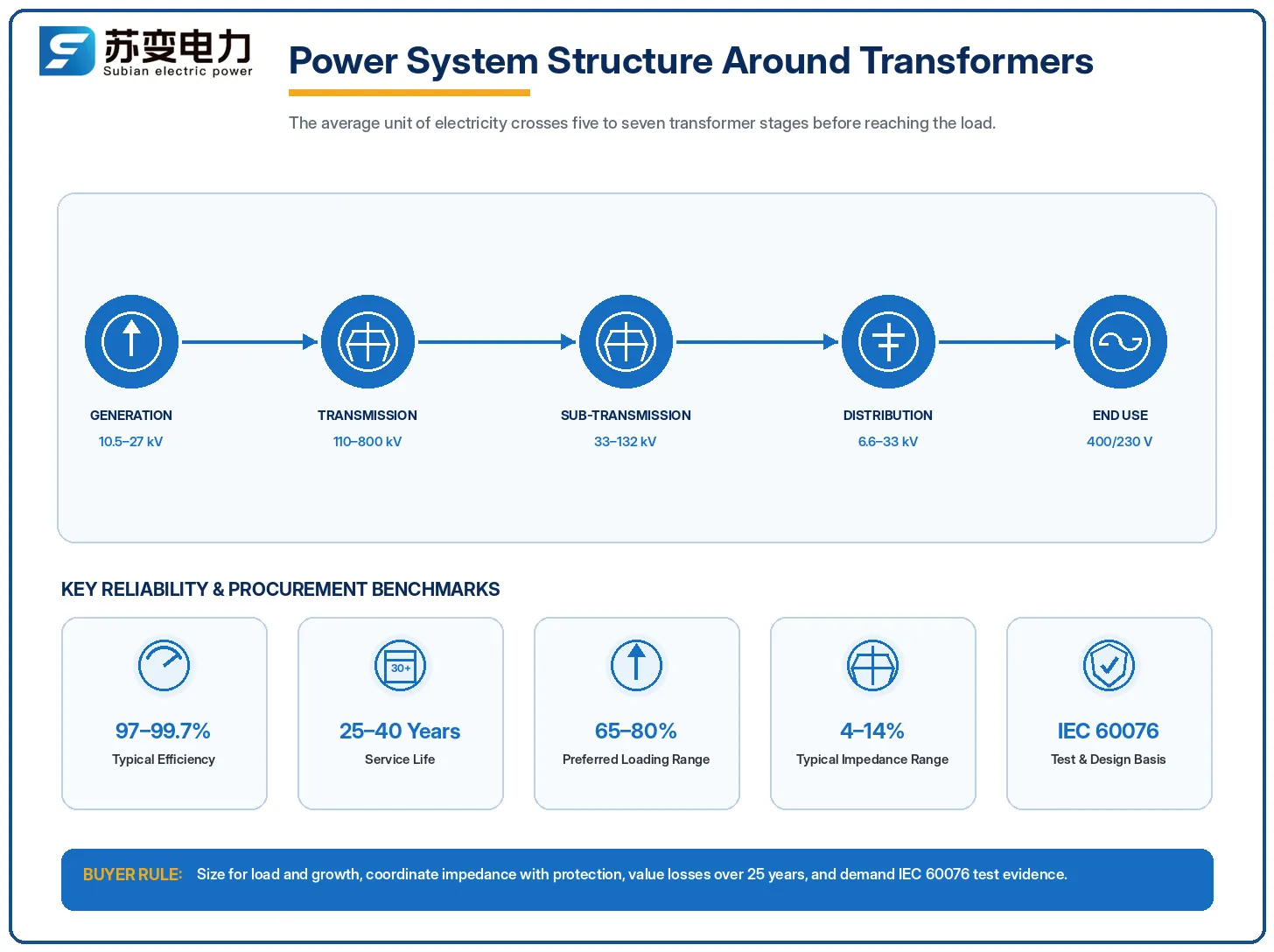
La Struttura di un Sistema Elettrico Attorno ai Trasformatori
| Fase | Tensione | Trasformatore Pilastro |
|---|---|---|
| Generazione | 5–27 kV | Trasformatore elevatore di generatore (GSU) |
| Trasmissione | 110–800 kV | Trasformatori di potenza EHV/HV |
| Sotto-trasmissione | 33–132 kV | Trasformatori regionali |
| Distribuzione | 6–33 kV | Trasformatori di distribuzione |
| Uso finale | 400/230 V, 480/277 V | Tipi asciutti da costruzione/pad/indoor |
L'unità media di elettricità attraversa da cinque a sette pilastri di trasformatori tra l'impianto e la presa. L'efficienza totale del percorso è il prodotto di tutte le efficienze dei pilastri—un altro motivo per cui ogni singolo trasformatore conta più di quanto suggerisca la sua piccola percentuale di perdita.
Tipi di Trasformatori come Pilastri
| Tipo | Valutazione | Funzione del Pilastro |
|---|---|---|
| Trasformatore di distribuzione | 25–2.500 kVA | MV → LV per i consumatori |
| Trasformatore di potenza | 5–1,500 MVA | Interconnessione della rete e GSU |
| Trasformatore di tipo secco | 50–12.500 kVA | Pilastri interni e sensibili al fuoco |
| Autotransformatore | 10–1.000 MVA | Regolazione della tensione tra livelli ravvicinati |
| Trasformatore strumentale | Classe VA | Segnali di misurazione e protezione |
| Trasformatori speciali | Ampio | Forno, trazione, convertitore, solare, eolico |
Specifiche che definiscono la resistenza del pilastro
| Parametro | Cosa controlla | Valori tipici |
|---|---|---|
| Potenza nominale (kVA/MVA) | Capacità di carico | 25 kVA–1.500 MVA |
| Rapporto di tensione e derivazioni | Regolazione della tensione di uscita | ±2×2.5% tipico |
| Impedenza | Corrente di guasto e caduta di tensione | Distribuzione 4–8%; potenza 10–14% |
| Perdite | Efficienza e costo operativo | Per valori garantiti secondo IEC 60076-1 |
| Aumento di temperatura | Margine termico e vita | 60–75 K (olio), 100–125 K (secco) |
| Livello di isolamento | Capacità di resistenza agli impulsi | Per classe di tensione del sistema |
| Rumore | Impronta acustica | 45–75 dB(A) a seconda della classificazione |
| Raffreddamento | Capacità di sovraccarico | ONAN, ONAF, ODAF, AN, AF |
Ogni specifica è un elemento portante del pilastro. Cambia l'impedenza e cambi la coordinazione della protezione. Cambia l'aumento di temperatura e cambi la vita utile. Cambia le perdite e cambi l'economia operativa per tre decenni.
Affidabilità: Il pilastro sotto stress
I tassi di guasto dei trasformatori di distribuzione si aggirano intorno a 0.1% a 0.5% annualmente, mentre quelli per i trasformatori di potenza variano da 0.5% a 2% annualmente, a seconda della loro età e utilizzo. La ragione predominante per il guasto dei trasformatori è il guasto dell'isolamento. Fattori come sovrasaturazione di calore, umidità, impurità dell'olio e difetti di fabbricazione causano guasti all'isolamento. Picchi di elettricità e guasti provenienti dall'esterno contribuiscono anche ai danni ai trasformatori; per affrontare questi problemi, i trasformatori sono dotati di relè di protezione e protezioni contro le sovratensioni, oltre a una corretta messa a terra.
La tecnica più utile disponibile per gli operatori di sistema è la gestione del carico. Ogni aumento di temperatura di 8-10 gradi Celsius comporta un dimezzamento della vita utile dell'isolamento nei trasformatori. Pertanto, mantenere il carico tra 65%-80% del carico nominale, controllare la temperatura degli avvolgimenti e la qualità dell'olio, e condurre esami regolari del gas disciolto nell'olio aiutano i trasformatori a funzionare per 40 anni invece di guastarsi a 15.
Protezione e manutenzione dei pilastri
- Installare meccanismi che forniscano protezione contro il sovraccarico, protezione differenziale e protezione contro l'eccitazione eccessiva in conformità con IEC 60255 e standard generali del settore. Il sistema di relè Buchholz dovrebbe essere utilizzato per i trasformatori riempiti d'olio con conservatore. Installare arrestatori di sovratensione classificati per lo standard di isolamento considerando il BIL (Livello di Isolamento di Base) del trasformatore.
Iniziare a eseguire una serie di test su base regolare nel tempo programmato: test di resistenza all'isolamento e qualità dell'olio/test DGA saranno condotti trimestralmente o a intervalli più lunghi; controlli di termografia regolari su base annuale saranno anche eseguiti.
Mantenere i sistemi di raffreddamento: radiatori, ventilatori e pompe per olio; mantenerli puliti da polvere e sporcizia.Mantenere un registro con voci appropriate che registrano test dell'olio, dati di carico, valori di temperatura e eventi di guasto del sistema di protezione.
Il costo dei pilastri
| Valutazione | Fascia di Prezzo Tipica | Note |
|---|---|---|
| 50 kVA | $1.000–$2.500 | Trasformatori a palo monofase |
| 100 kVA | $1.500–$4.000 | Piccola distribuzione trifase |
| 630 kVA | $6.000–$12.000 | Distribuzione standard, le perdite variano |
| 000 kVA | $9.000–$18.000 | Fornitura commerciale e industriale |
| 10 MVA | $90.000–$160.000 | Trasformatore di potenza classe 33 kV |
| 60 MVA | $600.000–$950.000 | Unità di sottostazione classe 110 kV |
Aggiungere 10–20% per trasporto, installazione, protezione e messa in servizio. I prezzi variano in base a marca, specifiche, perdite e regione, e i tempi di consegna per unità grandi attualmente sono di 30–50 settimane.
Marchi e fasce di prezzo
| Marca | Paese | 630 kVA | 10 MVA | Forza |
|---|---|---|---|---|
| Hitachi Energy | Svizzera/Giappone | $9.500–$15.000 | $140.000–$220.000 | Ingegneria EHV e di rete |
| Siemens | Germania | $9.000–$14.500 | $135.000–$210.000 | Integrazione della sottostazione digitale |
| ABB | Svizzera | $9.000–$14.000 | $135.000–$210.000 | Rete di servizi globale |
| Schneider Electric | Francia | $8.500–$13.500 | Su richiesta | Eco-design della distribuzione |
| Eaton | Irlanda/USA | $7.500–$12.000 | Su richiesta | Presenza in Nord America |
| TBEA / China XD | Cina | $5.500–$9.500 | $80.000–$135.000 | Alta capacità, valore |
| Jiangsu Subian Energia Elettrica | Cina | $5.000–$9.500 | $75.000–$125.000 | Testato IEC 60076, OEM/ODM, esportazione |
Nel mercato, attori ben consolidati come Hitachi Energy, Siemens, ABB e Schneider Electric forniscono tecnologia e supporto ai servizi solidi. Inoltre, i loro prezzi elevati possono essere giustificati considerando la natura critica dell'attrezzatura. Nell'area della distribuzione di attrezzature a bassa e media tensione, sono disponibili molte opzioni poiché tutta l'attrezzatura è prodotta utilizzando tecnologie simili; pertanto, la scelta dipende principalmente da perdite, documenti, tempi di consegna e prezzo. Jiangsu Subian Electric Power produce trasformatori di distribuzione e trasformatori a secco in conformità con la norma IEC 60076 per tensioni fino a 110kV, fornisce branding OEM e servizi di ispezione di terze parti, e mantiene prezzi inferiori rispetto alla media europea di 25-45%.
Come scegliere un trasformatore per il tuo sistema
- Documenta i parametri del sistema: tensioni, messa a terra, livello di cortocircuito, profilo di carico e piano di crescita.
- Dimensiona a 65–80% del carico di targa per efficienza e margine termico.
- Seleziona raffreddamento e costruzione: esterno a olio, tipo secco interno o siti sensibili al fuoco.
- Specifica l'impedenza per coordinare la protezione; verifica contro le impostazioni del tuo relè.
- Valuta le perdite con una valutazione di $3,000–$8,000 per kW su un orizzonte di 25 anni.
- Richiedi certificati di prova di routine e di tipo IEC 60076 prima di assegnare l'ordine.
- Pianifica protezione, monitoraggio, ricambi e un regime di manutenzione contemporaneamente all'acquisto.
Domande frequenti
Perché i trasformatori sono chiamati i pilastri del sistema elettrico?
Perché ogni connessione tra livelli di tensione è un trasformatore, e ogni percorso generatore-prese attraversa da cinque a sette di essi. Trasportano il carico funzionale del sistema—trasformazione della tensione—proprio come i pilastri strutturali sostengono un edificio: rimuovine uno e tutto ciò che è sopra di esso fallisce.
Qual è la specifica più critica di un trasformatore di sistema elettrico?
L'efficienza è la più significativa nel corso della vita dell'asset perché i trasformatori funzionano continuamente per 25–40 anni. Una differenza di efficienza di 0.5% su un'unità da 1,000 kVA vale $8,000–$12,000 all'anno in costi energetici. L'impedenza e l'aumento della temperatura sono importanti successivamente, poiché stabiliscono la coordinazione dei guasti e la vita utile.
Quanto spesso necessitano di manutenzione i trasformatori?
Le unità di distribuzione a olio necessitano di campionamenti periodici dell'olio (DGA) ogni 1–3 anni a seconda della criticità, oltre a controlli annuali di termografia e visivi; i tipi a secco necessitano di pulizia e controlli di scarica parziale su un ciclo simile. I trasformatori di potenza beneficiano di monitoraggio online e DGA più frequenti, a volte trimestrali.
Quanto costa un trasformatore per una sottostazione?
Un trasformatore di distribuzione da 630 kVA costa $6,000–$12,000; un'unità da 10 MVA $90,000–$160,000; un trasformatore di potenza da 60 MVA, 110 kV $600,000–$950,000. Aggiungere 10–20% per protezione, installazione e messa in servizio, e notare che i tempi di consegna per le grandi unità attualmente variano da 30 a 50 settimane.
Cosa accorcia di più la vita di un trasformatore?
Abuso termico. Un funzionamento prolungato a 8–10°C sopra il punto caldo nominale dimezza la vita dell'isolamento, e i sovraccarichi accelerano anche l'invecchiamento meccanico degli avvolgimenti e dell'olio. L'ingresso di umidità e l'olio contaminato sono il secondo fattore per le unità immerse in liquido, motivo per cui il monitoraggio DGA è così prezioso.
Riferimenti
- IEC 60076-1: Trasformatori di Potenza – Requisiti Generali — la base globale per le classificazioni, tolleranze e test.
- IEC 60076-5: Capacità di resistere a cortocircuiti — definisce la resistenza al cortocircuito, un requisito fondamentale di affidabilità.
- IEC 60076-11: Trasformatori Dry-Type — requisiti per unità dry-type in resina colata e VPI.
- Outlook mondiale sull'energia dell'IEA — contesto di espansione della rete e domanda di trasformatori.
- DOE degli Stati Uniti: Efficienza dei Trasformatori di Distribuzione — standard di efficienza obbligatori e valutazione delle perdite.
- NEMA TP-1 — benchmark di efficienza nordamericana per i trasformatori di distribuzione.
- IEEE C57.12.00 — requisiti nordamericani per i trasformatori immersi in liquido.
- Jiangsu Subian Energia Elettrica — produttore di trasformatori conforme a IEC 60076 per distribuzione, potenza e colonne di tipo secco in tutto il mondo.
Conclusione
I trasformatori sono fondamenta importanti del sistema di alimentazione elettrica perché eseguono i processi di trasformazione dell'energia di cui ogni sistema elettrico dipende, accumulano carichi e rischi per molte aree e durano molti anni se costruiti e mantenuti in modo efficace. L'approccio metaforico non può essere classificato come teorico; influisce su come i trasformatori vengono acquisiti e utilizzati.
Ogni percorso di potenza contiene da cinque a sette trasformatori, il che aumenta notevolmente l'efficienza.
L'affidabilità si basa su una strategia di distribuzione del carico e protezione e monitoraggio delle condizioni, il che significa che fare affidamento sulla fortuna non è una buona idea.
Sfrutta le perdite e la documentazione; valutale per i prossimi 25 anni e proteggile come se fossero colonne portanti.
Indipendentemente dal fatto che il tuo partner sia Hitachi Energy, Siemens, ABB o un'altra fabbrica che produce trasformatori come Jiangsu Subian Electric Power, i punti chiave sono le specifiche standard dei dispositivi e i termini di garanzia.