


어떤 발전 시설을 걸어보면 다음과 같은 경향을 알 수 있습니다: 전기가 시설에 들어오고, 변압기를 거쳐 다소 다른 전압으로 공급됩니다. 따라서 전력을 더 높은 전압 수준으로 변환하는 발전기가 있고, 그 다음에 전송망이 더 낮은 전압 수준으로 변환하며, 다시 배전선이 더 낮은 전압으로 변환합니다. 이런 식으로 계속됩니다. 이러한 변압기 중 하나라도 제거하면 전체 시스템이 중단됩니다.
이 기사에서는 변압기가 에너지 생성 시스템의 주요 기둥인 이유와 방법을 설명합니다. 이는 변압기의 작동 원리(다른 어떤 발명도 동일한 결과를 달성할 수 없음), 모든 전압 수준에서 변압기의 다양한 역할, 신뢰성을 정의하는 특성 및 일부 수학에 관한 것입니다. 전기 네트워크를 설계하거나 유지 관리하거나 장비를 구매할 때는 먼저 작업 중인 기술을 알아야 합니다.
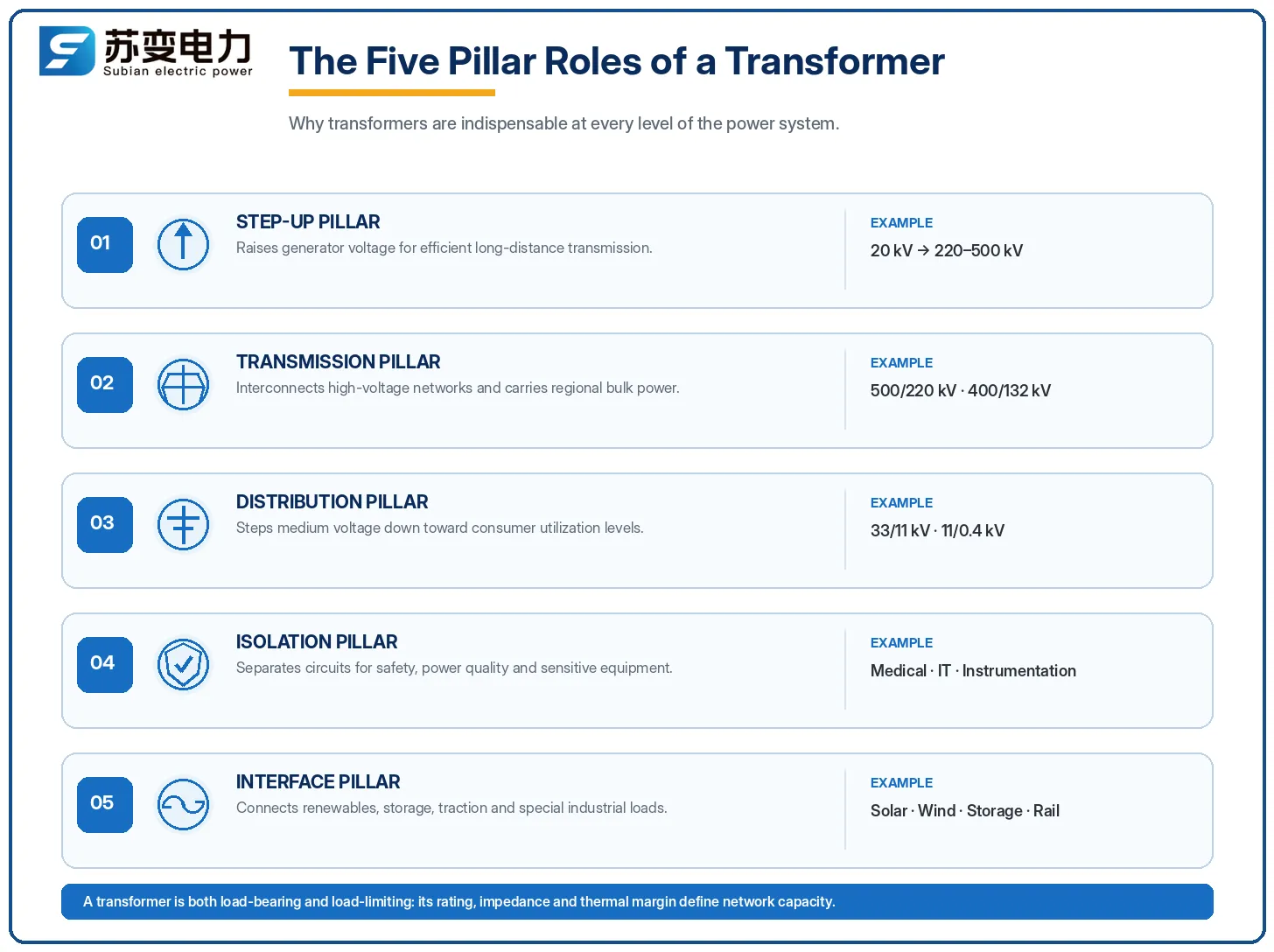
변압기가 위에서 언급한 비유의 기둥인 이유는 무엇인가요?
구조 기둥과 유사하게 변압기도 하중을 지탱할 수 있습니다. 하중의 성격은 실제로 다릅니다: 물리적 기둥이 건물의 물질적 무게를 지탱할 수 있는 반면, 변압기는 다소 다른 활동을 수행합니다. 첫째, 변압기를 제거하면 아래에 있는 것이 비활성화되는 의미에서 하중을 지탱합니다. 둘째, 정격, 열 여유 및 임피던스 수준을 통해 변압기는 특정 전기 구간을 통해 얼마나 많은 에너지가 전송되는지를 정의하는 하중 제한 장비로 작동합니다. 셋째, 변압기가 수년간 작동할 경우 하중 유지 장비로 분류될 수 있습니다.
다섯 가지 기둥 역할
| 역할 | 그것이 하는 일 | 예시 |
|---|---|---|
| 승압 기둥 | 전송을 위한 발전기 전압 상승 | 20 kV → 220–500 kV |
| 전송 기둥 | 고전압 네트워크를 상호 연결 | 500/220 kV, 400/132 kV |
| 배전 기둥 | 소비자 수준으로 낮춤 | 33/11 kV, 11/0.4 kV |
| 격리 기둥 | 안전과 품질을 위한 회로 분리 | 의료, IT, 계측 |
| 인터페이스 기둥 | 다양한 시스템과 장비 연결 | 재생 가능 에너지, 저장, 견인, 특수 하중 |
이러한 역할 각각은 현대 그리드에서 동시에 존재하며, 동일한 물리적 기계가 네트워크가 부여한 역할을 수행합니다. 기둥은 전압 변환이 보편적이기 때문에 보편적입니다.
변압기의 작동 원리
기둥은 다음과 같이 작동합니다. 전자기 유도. 1차 권선의 AC는 적층 실리콘 강철 코어에서 교류 플럭스를 생성합니다; 그 플럭스는 권선 비율에 따라 2차 권선에서 전압을 유도합니다. 손실을 제외하고 전력이 보존되므로 전압의 상승은 전류의 하락을 의미합니다—이 속성이 고전압 전송을 가능하게 합니다.
시스템의 효율성은 두 가지 유형의 손실에 의해 결정됩니다. 첫 번째 구성 요소는 무부하(코어) 손실—즉, 히스테리시스 손실과 와류 손실—로, 장비가 전원이 공급되는 한 지속적으로 발생합니다. 두 번째 구성 요소는 부하(구리) 손실로, (위에서 언급한 바와 같이) 전류의 제곱에 비례하여 증가합니다. 이는 두 가지 유형의 손실이 일상적인 효율성에 거의 영향을 미치지 않지만, 설치 후 일반적으로 25년에서 40년까지의 장비의 유효 수명 동안 큰 비용을 초래하는 이유입니다.
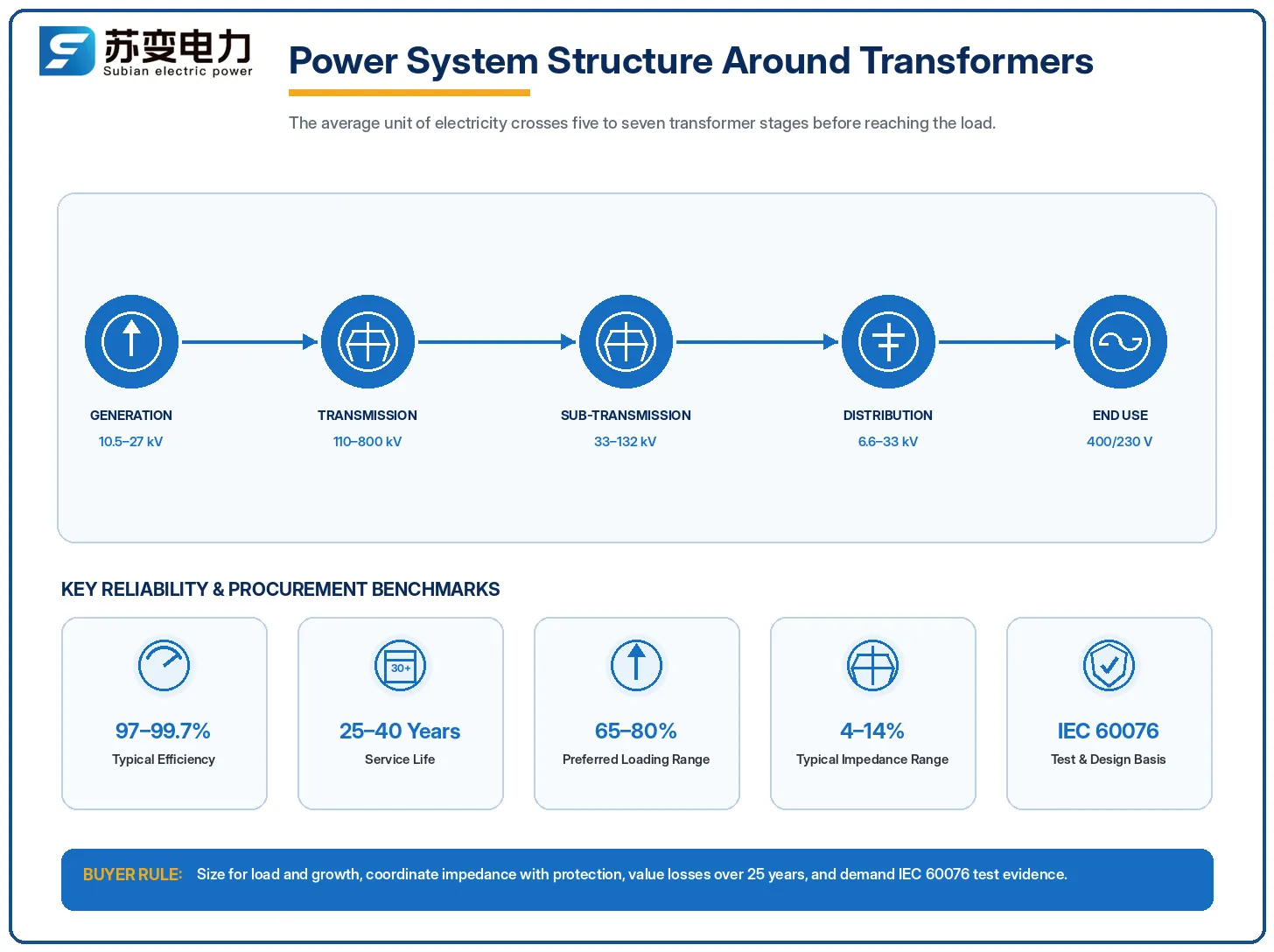
변압기를 중심으로 한 전력 시스템의 구조
| 단계 | 전압 | 기둥 변압기 |
|---|---|---|
| 발전 | 5–27 kV | 발전기 승압(GSU) |
| 전송 | 110–800 kV | EHV/HV 전력 변압기 |
| 하전송 | 33–132 kV | 지역 변압기 |
| 배전 | 6–33 kV | 배전 변압기 |
| 최종 사용 | 400/230 V, 480/277 V | 건물/패드/실내 건조형 |
평균 전력 단위는 발전소와 소켓 사이에 5개에서 7개의 변압기 기둥을 통과합니다. 경로의 총 효율성은 모든 기둥 효율성의 곱으로, 각 개별 변압기가 손실의 작은 비율이 제시하는 것보다 더 중요하다는 또 다른 이유입니다.
기둥으로서의 변압기 유형
| 유형 | 등급 | 기둥 기능 |
|---|---|---|
| 배전 변압기 | 25–2,500 kVA | MV → LV 소비자용 |
| 전력 변압기 | 5–1,500 MVA | 그리드 상호 연결 및 GSU |
| 건식 변압기 | 50–12,500 kVA | 실내 및 화재 민감 기둥 |
| 자동 변압기 | 10–1,000 MVA | 근접 수준 간 전압 조정 |
| 계측 변압기 | VA 클래스 | 계량 및 보호 신호 |
| 특수 변압기 | 넓은 | 용광로, 견인, 변환기, 태양광, 풍력 |
기둥 강도를 정의하는 사양
| 매개변수 | 무엇을 제어하는가 | 일반적인 값 |
|---|---|---|
| 정격 전력 (kVA/MVA) | 하중 수용 능력 | 25 kVA–1,500 MVA |
| 전압 비율 및 탭 | 출력 전압 조정 | ±2×2.5% 일반 |
| 임피던스 | 고장 전류 및 전압 강하 | 4–8% 배전; 10–14% 전력 |
| 손실 | 효율성 및 운영 비용 | IEC 60076-1에 따른 보장 값 |
| 온도 상승 | 열 여유 및 수명 | 60–75 K (오일), 100–125 K (건조) |
| 절연 수준 | 서지 내전압 능력 | 시스템 전압 등급별 |
| 소음 | 음향 발자국 | 등급에 따라 45–75 dB(A) |
| 냉각 | 과부하 능력 | ONAN, ONAF, ODAF, AN, AF |
각 사양은 기둥의 하중 지지 요소입니다. 임피던스를 변경하면 보호 조정이 변경됩니다. 온도 상승을 변경하면 서비스 수명이 변경됩니다. 손실을 변경하면 30년 동안 운영 경제성이 변경됩니다.
신뢰성: 스트레스 하의 기둥
배전 변압기의 고장률은 연간 0.1%에서 0.5% 사이이며, 전력 변압기는 연령과 사용에 따라 0.5%에서 2% 사이로 변동합니다. 변압기 고장의 압도적인 원인은 절연 고장입니다. 열 과포화, 습도, 오일 불순물 및 제조 결함과 같은 요인이 절연 고장을 유발합니다. 전기의 서지와 외부에서 발생하는 결함도 변압기 손상에 기여합니다. 이러한 문제를 해결하기 위해 변압기는 보호 릴레이와 서지 보호 장치, 적절한 접지 연결이 장착됩니다.
시스템 운영자에게 가장 유용한 기술은 부하 관리입니다. 온도가 8-10도 섭씨 상승할 때마다 변압기의 절연 수명이 절반으로 줄어듭니다. 따라서 정격 부하의 65%-80%에서 부하를 유지하고, 권선의 온도와 오일의 품질을 점검하며, 오일에 용해된 가스의 정기적인 검사를 수행하면 변압기가 15년이 아닌 40년 동안 작동할 수 있습니다.
기둥의 보호 및 유지보수
- IEC 60255 및 일반 산업 표준에 따라 과부하 보호, 차동 보호 및 과도한 자극에 대한 보호를 제공하는 메커니즘을 설치합니다. 오일이 채워진 변압기와 관련하여 부흘츠 릴레이 시스템을 사용해야 합니다. 변압기 BIL(기본 절연 수준)을 고려하여 절연 표준에 맞는 서지 억제기를 설치합니다.
정기적으로 일정에 따라 다양한 테스트를 수행하기 시작합니다: 절연 저항 및 오일 품질/DGA 테스트는 분기별 또는 더 긴 간격으로 수행됩니다; 정기적인 열화상 검사는 매년 수행됩니다.
냉각 시스템을 유지 관리합니다: 라디에이터, 팬 및 오일 펌프; 먼지와 오염물질로부터 깨끗하게 유지합니다.오일 테스트, 부하 데이터, 온도 값 및 보호 시스템 고장 사건을 기록하는 적절한 항목이 포함된 로그북을 유지합니다.
기둥의 비용
| 등급 | 일반 가격 범위 | 비고 |
|---|---|---|
| 50 kVA | $1,000–$2,500 | 단상 기둥 변압기 |
| 100 kVA | $1,500–$4,000 | 소형 삼상 배전 |
| 630 kVA | $6,000–$12,000 | 표준 배전, 손실 변동 |
| 1,000 kVA | $9,000–$18,000 | 상업 및 산업 공급 |
| 10 MVA | $90,000–$160,000 | 33 kV 클래스 전력 변압기 |
| 60 MVA | $600,000–$950,000 | 110 kV 클래스 변전소 유닛 |
운송, 설치, 보호 및 시운전을 위해 10–20%를 추가합니다. 가격은 브랜드, 사양, 손실 및 지역에 따라 다르며, 대형 유닛의 리드 타임은 현재 30–50주입니다.
브랜드 및 가격 범위
| 브랜드 | 국가 | 630 kVA | 10 MVA | 강도 |
|---|---|---|---|---|
| 히타치 에너지 | 스위스/일본 | $9,500–$15,000 | $140,000–$220,000 | EHV 및 그리드 엔지니어링 |
| 지멘스 | 독일 | $9,000–$14,500 | $135,000–$210,000 | 디지털 변전소 통합 |
| ABB | 스위스 | $9,000–$14,000 | $135,000–$210,000 | 글로벌 서비스 네트워크 |
| 슈나이더 일렉트릭 | 프랑스 | $8,500–$13,500 | 요청 시 | 배급 생태 설계 |
| 이튼 | 아일랜드/미국 | $7,500–$12,000 | 요청 시 | 북미 시장 진출 |
| TBEA / China XD | 중국 | $5,500–$9,500 | $80,000–$135,000 | 대량, 가치 |
| 장쑤 수비안 전력 | 중국 | $5,000–$9,500 | $75,000–$125,000 | IEC 60076 테스트, OEM/ODM, 수출 |
시장에서 Hitachi Energy, Siemens, ABB 및 Schneider Electric과 같은 잘 확립된 기업들이 견고한 기술 및 서비스 지원을 제공합니다. 또한, 이들의 높은 가격은 장비의 중요성을 고려할 때 정당화될 수 있습니다. 저압 및 중압 장비의 배급 분야에서는 모든 장비가 유사한 기술로 생산되기 때문에 많은 옵션이 제공되며, 따라서 선택은 주로 손실, 문서, 리드 타임 및 가격에 따라 달라집니다. Jiangsu Subian Electric Power는 IEC 60076 표준에 따라 110kV까지의 전압에 대한 배급 변압기 및 건식 변압기를 제조하며, OEM 브랜딩 및 제3자 검사 서비스를 제공하고, 유럽 평균 가격보다 25-45% 낮은 가격을 유지합니다.
시스템에 적합한 변압기 선택 방법
- 시스템 매개변수 문서화: 전압, 접지, 단락 수준, 부하 프로필 및 성장 계획.
- 효율성과 열 여유를 위해 명판 부하의 65–80% 크기 조정.
- 냉각 및 구조 선택: 오일 침지형 야외, 건식 실내 또는 화재 민감 지역.
- 보호 조정을 위해 임피던스를 지정하고, 릴레이 설정과 대조하여 확인합니다.
- 25년 기간 동안 kW당 $3,000–$8,000의 평가로 손실을 평가합니다.
- 주문을 수여하기 전에 IEC 60076 정기 및 유형 시험 인증서를 요청합니다.
- 구매와 동시에 보호, 모니터링, 예비 부품 및 유지보수 계획을 세웁니다.
자주 묻는 질문
변압기를 전력 시스템의 기둥이라고 부르는 이유는 무엇인가요?
전압 수준 간의 모든 연결이 변압기이며, 모든 발전기에서 소켓으로의 경로는 5~7개의 변압기를 통과합니다. 이들은 시스템의 기능적 부하인 전압 변환을 수행하며, 구조적 기둥이 건물을 지탱하는 것처럼 작용합니다: 하나를 제거하면 그 위의 모든 것이 실패합니다.
전력 시스템 변압기의 가장 중요한 사양은 무엇인가요?
효율성은 자산의 수명 동안 가장 중요한 요소입니다. 변압기는 25–40년 동안 지속적으로 작동하기 때문입니다. 1,000 kVA 장치에서 0.5%의 효율성 차이는 연간 $8,000–$12,000의 에너지 비용에 해당합니다. 임피던스와 온도 상승이 다음으로 중요하며, 이는 고장 조정 및 서비스 수명을 설정합니다.
변압기는 얼마나 자주 유지보수가 필요합니까?
오일 침지형 배급 장치는 중요도에 따라 1–3년마다 주기적인 오일 샘플링(DGA)이 필요하며, 연간 열화상 검사 및 시각적 점검이 필요합니다; 건식 변압기는 유사한 주기로 청소 및 부분 방전 점검이 필요합니다. 전력 변압기는 온라인 모니터링 및 더 빈번한 DGA의 혜택을 받으며, 때로는 분기별로 수행됩니다.
변전소용 변압기는 얼마입니까?
630 kVA 배급 변압기는 $6,000–$12,000의 비용이 들며; 10 MVA 장치는 $90,000–$160,000; 60 MVA, 110 kV 전력 변압기는 $600,000–$950,000입니다. 보호, 설치 및 시운전을 위해 10–20%를 추가하고, 대형 장치의 리드 타임은 현재 30–50주입니다.
변압기의 수명을 가장 단축시키는 것은 무엇인가요?
열적 남용. 정격 핫스팟보다 8–10°C 높은 지속적인 작동은 절연 수명을 반으로 줄이며, 과부하는 권선과 오일의 기계적 노화를 가속화합니다. 수분 침투와 오염된 오일은 액체 침수 장치의 두 번째 요인으로, 이 때문에 DGA 모니터링이 매우 중요합니다.
참고 문헌
- IEC 60076-1: 전력 변압기 – 일반 요구 사항 — 등급, 허용 오차 및 테스트에 대한 글로벌 기준.
- IEC 60076-5: 단락 내성 — 단락 회로 강도를 정의하며, 이는 핵심 기둥 신뢰성 요구 사항입니다.
- IEC 60076-11: 드라이 타입 변압기 — 주조 수지 및 VPI 건식 유닛에 대한 요구 사항입니다.
- IEA 세계 에너지 전망 — 그리드 확장 및 변압기 수요 맥락입니다.
- 미국 에너지부: 배전 변압기 효율 — 의무 효율 기준 및 손실 평가입니다.
- NEMA TP-1 — 배전 변압기에 대한 북미 효율성 기준.
- IEEE C57.12.00 — 액체 침지 변압기에 대한 북미 요구 사항.
- 장쑤 수비안 전력 — 전 세계 배전, 전력 및 건식 기둥을 위한 IEC 60076 준수 변압기 제조업체입니다.
결론
변압기는 전력 공급 시스템의 중요한 기초로, 모든 전기 시스템이 의존하는 전력 변환 과정을 수행하고, 여러 지역의 부하와 위험을 축적하며, 효과적으로 제작되고 유지 관리된다면 수년간 지속됩니다. 은유적 접근은 이론적으로 분류될 수 없으며, 변압기의 획득 및 활용 방식에 영향을 미칩니다.
모든 전력 경로에는 5개에서 7개의 변압기가 포함되어 있어 효율성이 크게 증가합니다.
신뢰성은 부하 분배 및 보호와 상태 모니터링 전략에 기반하며, 이는 운에 의존하는 것이 좋지 않다는 것을 의미합니다.
손실 및 문서화를 활용하고, 이를 25년 앞을 내다보며 평가하고 기둥처럼 보호하십시오.
귀하의 파트너가 Hitachi Energy, Siemens, ABB 또는 Jiangsu Subian Electric Power와 같은 변압기를 생산하는 다른 공장일지라도, 핵심 사항은 장치의 표준 사양과 보증 조건입니다.