


1886年、マサチューセッツ州グレートバリンガトンは、変圧器を通じて発電所で交流を使用した世界初の場所であると主張しています。この出来事は、500 Vの発電機が電圧を下げる変圧器を駆動し、白熱灯用の電力を生産、変換、供給できるようにしたため、電気の歴史における偉大な出来事と見なされています。約140年後、この素晴らしい出来事の原則は、世界中のすべての工場、空港、病院、データセンターで使用されています。.
この記事は、変圧器が進歩のエンジンとなる基本原則に関する詳細な情報を提供しています:電圧変換、送電損失、ガルバニック絶縁、複雑なネットワークにおける電力ルーティング。また、効率、損失、電圧クラス、コストを測定する数値や、1890年代の路面電車のブームから現代の電気自動車の充電ステーションに至るまで、すべての電化運動における変圧器の役割について学ぶことができます。.
変圧器が歴史的進歩を促進した方法
過去には、電気は消費地点の近くで生成されていました。これは、電圧変換に関する直流(DC)の固有の制限によるものでした。しかし、そのために、各発電所は半径1〜2マイルの範囲内の地域しかサービスできませんでした。変圧器の発明は、その状況を変えました。交流(AC)を使用することで、発電機は20 kVの電圧で電気を生成し、変圧器を通じて100 kVまたはそれ以上の電圧に変換できるため、長距離の電力送電が可能になりました。例えば、1890年代には、水力エネルギーを使用して電気を生成する発電所(例えば、ナイアガラの滝にある発電所)が、発電所から30〜40 km離れた都市に電力を供給することが可能になりました。.
1930年代から1950年代にかけて続いた農村電化の問題は、安価な配電変圧器なしでは解決できませんでした。第二次世界大戦後の工業化の時代には、すべての工業プラントに巨大な電力変圧器が必要でした。デジタル革命は、すべての建物に乾式変圧器をもたらしました。そして今、私たちは変圧器を使用してエネルギーセクターの変革を観察することができます。.
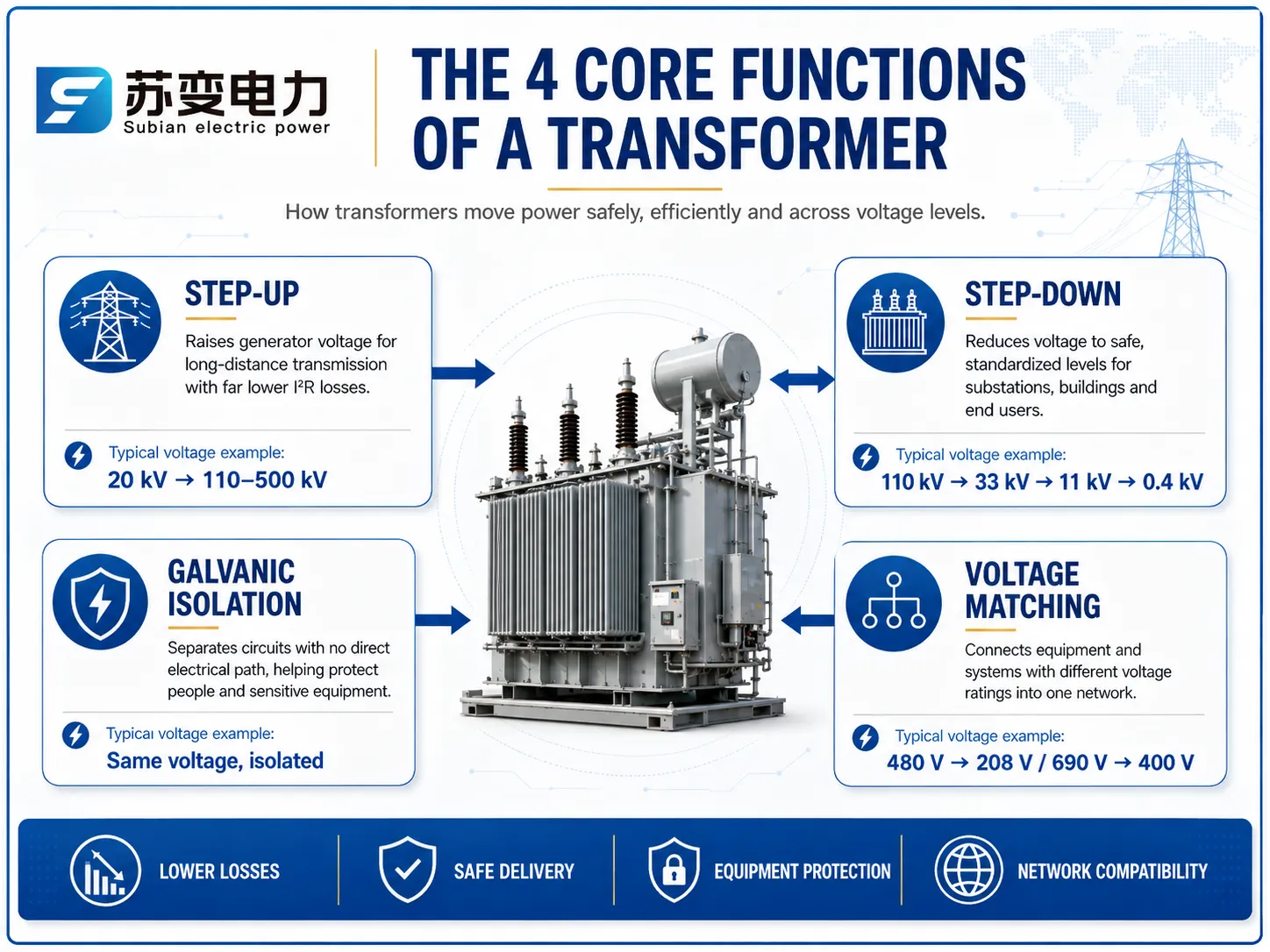
�¤のコア機能
| 機能 | 提供するもの | 典型的な電圧変化 |
|---|---|---|
| 昇圧 | 低いライン損失での高電圧送電 | 20 kV → 110–500 kV |
| 降圧 | ユーザーのための安全で標準化された供給 | 110 kV → 33 kV → 11 kV → 0.4 kV |
| ガルバニック絶縁 | 回路間に直接的な電気的経路なし | 同じ電圧、絶縁された |
| 電圧マッチング | 異なる定格の機器を接続 | 例:480 V → 208 V、690 V → 400 V |
これらの4つの機能は、すべてのネットワークで組み合わさります。例えば、病院は街から11 kVを受け取り、建物のために400 Vに降圧し、医療機器のために重要な回路を絶縁し、停電時には発電機の電圧を配電盤に合わせます。.
物理学:電磁誘導
トランスの動作の背後にある概念は、ファラデーによって初めて詳述され、レンツによって定量化された電磁誘導に基づいています。電流の主流がトランスを通過すると、ラミネート鉄心が磁化され、この磁化の過程で生成される交流フラックスがトランスの二次コイルに電圧を生成します。変圧比が事前に計算されていれば、変圧比が等しいことが期待できます。.
効率に影響を与える2種類の損失は、コアの磁気ドメインの繰り返しスイッチングを指すヒステリシス損失と、コア材料内に誘導される電流である渦電流損失です。これら2種類の損失は、粒状シリコン鋼を発明し、薄いラミネート鋼板を作成し、新しいレーザー技術を適用することで最小化できます。銅損失は負荷電流の二乗に比例して発生し、したがってトランスは定格の50-70%に達する実際の負荷のときに最も効率的に動作します。.
なぜ効率が真のエンジンなのか
トランスの寿命において最も重要な数値は効率です。配電トランスを通過する電力は約1〜3パーセントを失い、この機器は常に稼働しているため、これは世界中のすべての国が生産する総電力の3〜5パーセントを反映します。すべてのトランスで配分される総電力の損失を1パーセントポイント削減することで、ほとんどの国で消費されるよりも多くの電力を提供できます。.
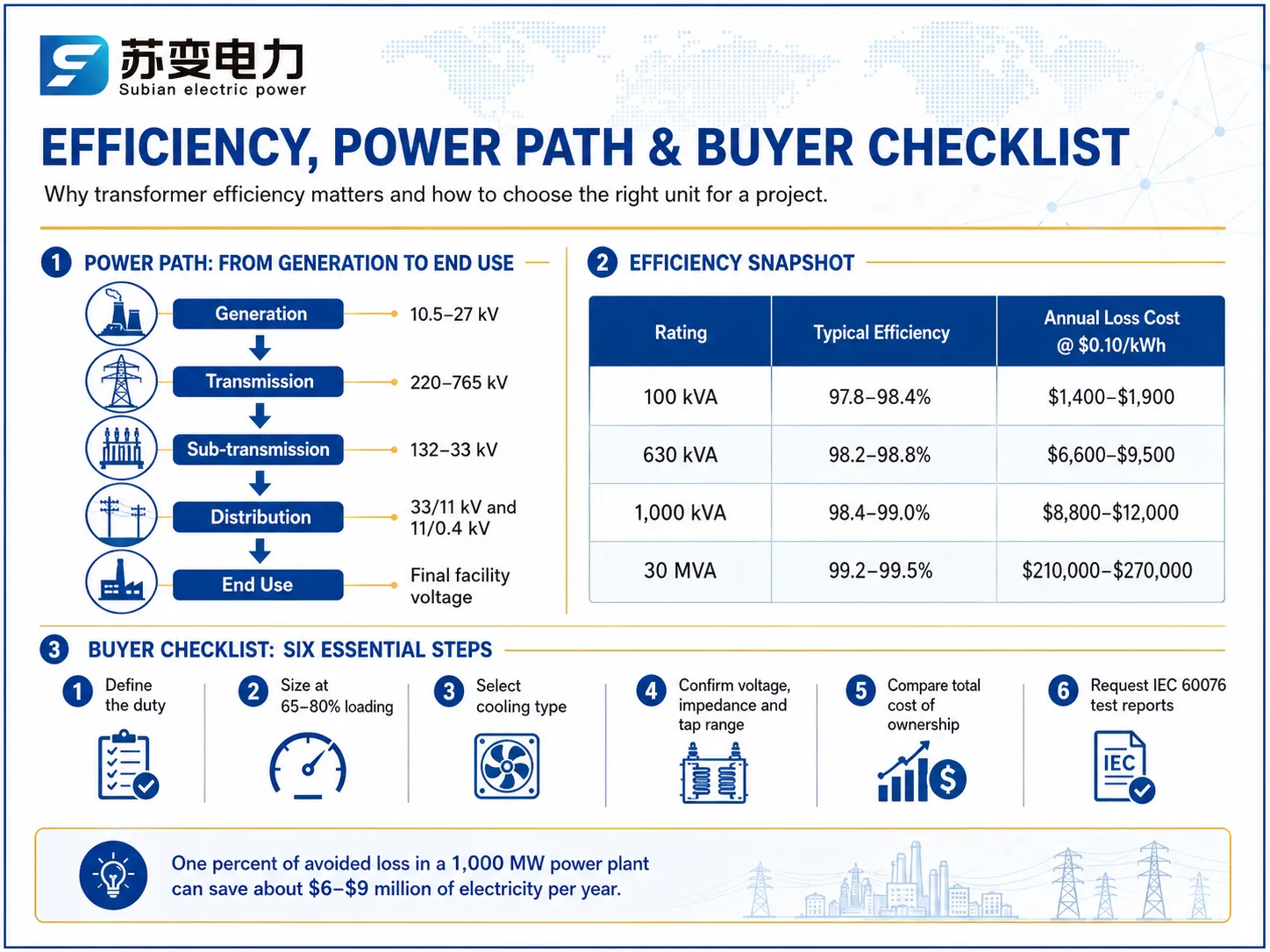
| 定格 | 一般的な効率 | 年間損失エネルギー (kWh) | 損失コスト @$0.10/kWh |
|---|---|---|---|
| 100 kVA | 97.8–98.4% | 14,000–19,000 | $1,400–$1,900 |
| 630 kVA | 98.2–98.8% | 66,000–95,000 | $6,600–$9,500 |
| 1,000 kVA | 98.4–99.0% | 88,000–120,000 | $8,800–$12,000 |
| 30 MVA | 99.2–99.5% | 2,100,000–2,700,000 | $210,000–$270,000 |
年間損失コストが数年以内に多くの小型トランスの価格を超えるため、効率に基づく調達—$3,000–$8,000 per kWの損失評価を使用すること—は、公共事業や高度な産業バイヤーの間で標準的な実践です。.
機能別の種類
| タイプ | 主な機能 | 一般的な用途 |
|---|---|---|
| 発電機ステップアップ(GSU) | 発電機の電圧をグリッドレベルに引き上げる | 発電所、風力、太陽光発電所 |
| 送電トランス | HVネットワークを相互接続する | 400/220/132 kV変電所 |
| 配電トランス | 最終使用電圧への降圧 | ポール、パッドマウント、ビルボールト |
| アイソレーショントランス | ガルバニック分離 | 医療、IT、産業制御 |
| 自動変圧器 | 一つの巻線による電圧調整 | 132/66 kVシステムの相互接続 |
| 計器用変圧器 | 計測/保護用にスケールダウン | 各変電所のCTとVT |
電力システムにおける変圧器の経路
①発電:GSU変圧器ユニットは、発電機の電圧を10.5–27 kVの範囲から110–500 kVのレベルに変換します。.
②送電:EHV変圧器は、通常220–765 kVの長距離グリッドを接続します。.
③サブ送電:132–33 kV変圧器ゲートウェイは、地域の変電所供給を促進します。.
④配電:33/11 kVまたは11/0.4 kV変圧器システムは、輸送フィーダーラインに供給します。.
⑤最終使用:乾式または油浸式ユニットが工場内に必要です。.
各変圧器段階の損失の概念は算術的な合計ではなく、各段階にはそれぞれの損失プロファイルがあるため、累積損失は算術的な損失を合計するのではなく、各単一段階の損失を考慮して決定されます。.
成長を促進する現代のアプリケーション
- 再生可能エネルギー:すべての風力タービンと太陽光インバータは昇圧変圧器を使用し、世界的に再生可能エネルギーは毎年数百GWの新しい容量を追加し、各MWは約1.5-2 MVAの変圧器容量を必要とします。.
電気自動車の充電:150-350 kWの急速充電器は専用の変圧器を必要とし、通常は各サイトに対して約500-1,000 kVAです。.
データセンター:50〜150 MWの容量を持つハイパースケールキャンパスは、毎年数千の乾式変圧器を使用します。.
グリッドの近代化:スマートグリッド、HVDC、バッテリー貯蔵の開発はすべて、変圧器の利用可能性に依存しており、これが2022-2024年に待機時間が30-50週間に増加した理由の一つです。.
都市化:高層ビル、地下鉄、空港は乾式および配電変圧器を消費し続けています。.
代表的な仕様と損失
| 定格 | 電圧 | 無負荷損失 | 負荷損失 | インピーダンス |
|---|---|---|---|---|
| 100 kVA | 11/0.4 kV | 200–330 W | 1,300–2,000 W | 4% |
| 630 kVA | 11/0.4 kV | 900–1,400 W | 6,000–8,500 W | 4.5–6% |
| 2,000 kVA | 11/0.4 kV | 2,400–3,400 W | 15,500–21,000 W | 6–8% |
| 30 MVA | 110/33 kV | 20,000–30,000 W | 110,000–160,000 W | 10–12% |
ブランドと価格帯
| ブランド | 国 | 630 kVA | 30 MVA (110 kV) | 強度 |
|---|---|---|---|---|
| 日立エナジー | スイス/日本 | $9,000–$15,000 | $380,000–$560,000 | グリッドスケールエンジニアリング |
| シーメンス | ドイツ | $8,500–$14,500 | $360,000–$540,000 | ヨーロッパの基準 |
| ABB | スイス | $8,500–$14,000 | $360,000–$530,000 | グローバルサービスネットワーク |
| シュナイダーエレクトリック | フランス | $8,000–$13,500 | 要望に応じて | 配電エコデザイン |
| TBEA / 中国XD | 中国 | $5,500–$9,500 | $230,000–$380,000 | 大容量電力変圧器 |
| 江蘇省蘇辺電力 | 中国 | $4,800–$9,500 | $220,000–$360,000 | IEC 60076試験済み、OEM/ODM、輸出 |
日立エナジー、シーメンス、ABB、シュナイダーエレクトリックのような企業は品質基準を設定しており、彼らのローカライズされた製品は主要機器の価格を正当化しています。しかし、両社は同じ機能を果たしています:電圧を電磁誘導で降圧すること、そのコア設計が効率の度合いを定義します。現在、中国のメーカーが業界を支配しており、江蘇省蘇辺電力はIEC 60076に準拠した最大110 kVの配電および電力変圧器を生産し、第三者による試験サービス、ブランディング、輸出を提供しており、一般的に欧州のリスト価格に対して25-45%の割引があります。変圧器の標準化された定格については、中国で通常、低コストの供給者を見つけることができます。.
プロジェクトの選び方
- 稼働条件を定義する:連続、周期的または緊急負荷;これが熱的余裕の要件を設定します。.
- 効率のピーク付近に座るために、65–80%の負荷でkVAを計算します。.
- 冷却を選択する:油浸式屋外、乾式屋内、消防法に基づく入力。.
- 電圧、インピーダンス、タップ範囲を指定し、現場での短絡レベルを確認します。.
- 損失評価を追加し、15–25年にわたる総所有コストを比較します。.
- 注文前にIEC 60076の定期試験報告書と工場検査のスロットをリクエストします。.
よくある質問
電力システムにおける変圧器のコア機能は何ですか?
�¤の機能:効率的な送電のために電圧を昇圧し、安全な消費のために降圧し、回路を絶縁し、異なるシステム間で電圧を調整します。すべての発電機からコンセントへの電力経路は、少なくとも1回はこれら4つを使用し、通常は5つ以上の変圧器段を通過します。.
変圧器はどれくらいのエネルギーを失いますか?
配電変圧器は通過するエネルギーの約1–3%を失い、大型電力変圧器は0.3–0.8%を失います。世界中の変圧器の総損失は、世界の電力生成の約3–5%に相当し、NEMA TP-1や米国DOE 10 CFR 431のような効率基準を促進し、最低効率レベルを義務付けています。.
なぜ送電のために電圧を昇圧するのですか?
それは、ライン損失が電流の二乗に比例するからです。電圧を倍にすると電流は半分になり、損失は4分の1になります。20 kVを400 kVに昇圧すると、電流は20分の1になり、同じ電力でI²R損失を約400倍削減し、長距離送電を経済的に可能にします。.
変圧器のコストはどれくらいですか?
50 kVAのポール変圧器は$1,000–$2,500のコストがかかり、250 kVAは$2,500–$6,000、1,000 kVAは$9,000–$18,000、30 MVA、110 kVの電力変圧器は$250,000–$450,000です。運賃、付属品、設置は10–20%を追加します。価格はブランド、損失、電圧、地域によって異なります。.
変圧器の効率は電気料金にどのように影響しますか?
直接的に。1,000 kVAの変圧器が年間100,000 kWhを失う場合、典型的な料金で約$9,000–$12,000の損失が発生します。変圧器は25~35年間稼働するため、2つのオファー間の0.5%の効率差は、その寿命の間に数万ドルの価値があります—常に効率を比較し、購入価格だけでなく考慮してください。.
参考文献
- ブリタニカ百科事典:変圧器 — AC時代を可能にした装置の歴史と物理学。.
- IEC 60076-1:電力変圧器 – 一般要件 — 定格、許容差および試験のためのグローバルベースライン。.
- IEA世界エネルギー見通し — エネルギー転換のためのグリッドと変圧器の需要見通し。.
- 米国エネルギー省:配電変圧器の効率 — 効率規制と損失評価ガイダンス。.
- NEMA TP-1 — 配電変圧器のための北米の効率ベンチマーク。.
- IEEE C57.12.00 — 液体浸漬変圧器のための北米の要件。.
- 江蘇省蘇辺電力 — 配電、電力および乾式用途のためのIEC 60076準拠の変圧器メーカー。.
結論
変圧器は140年間、進歩を支えてきました。その理由は、昇圧、降圧、絶縁、電圧マッチングという4つのコア機能が、電力を効率的かつ安全に移動させるという根本的な問題を解決するからです。彼らの効率は、すべての電力経路で5段階以上にわたって累積し、電気の世界で最も高い価値の技術の1つとなっています。.
昇圧送電は、発電機電圧で送電する場合と比較して、損失を最大400倍削減します。.
変圧器の損失は、世界の発電量の3~5%に相当するため、効率基準は重要です。.
65~80%の負荷でサイズを決定し、価格だけでなく総所有コストでオファーを比較してください。.
プラントの拡張、太陽光発電所の建設、または変電所のアップグレードを行う場合、変圧器の選択が今後30年間の効率を決定します。ヒタチエナジーやシーメンスのようなグローバルリーダーから、江蘇省の直接工場製造業者まで、テストレポート、損失、保証でサプライヤーを比較すれば、進歩を支える機械に投資することになります。.