


5,000 kVAの容量を持つ変圧器は、水曜日の午前11時20分に差動保護でトリップします。工場の電気技師が到着すると、ブクホルツリレーに明らかなガスの蓄積とタンクに小さな膨らみがあることがわかります。その間に、生産管理者は電気技師に運転に戻ることができるのはいつかと尋ねています。これは、一般的な変圧器の故障とその原因、さらには迅速な処理技術の知識が冷静な反応とパニック反応を分ける時です。変圧器の故障のほとんどはランダムではなく、よく知られた変圧器の故障とタイプのいくつかのグループに分類され、簡単に認識、理解、技術的に事前に定義された方法で修正できます。.
記事では、一般的な変圧器の故障がどのように分類されるか、異なる故障の原因、一般的な変圧器の問題を認識する方法、そしてステップバイステップで何をすべきかについて説明しています。損害修理のための通常の値、新しい機器の購入に対するコスト、問題が発生した際に製造業者に連絡する方法とタイミングに関するヒントも見つかります。.
一般的な知識によれば、変圧器で発生する最も一般的な故障は、絶縁の失敗と湿気の侵入、変圧器の巻線短絡、コアの問題(電流の循環と緩んだクランプ)、タップチェンジャーの欠陥、ブッシングの故障、冷却システムの故障、油の汚染によって引き起こされます。.
変圧器故障ファミリー:概要
IEEE作業グループとCIGRÉは、信頼性調査において変圧器の故障をいくつかのコンポーネントに分散させてきました。故障統計は電圧クラスによって異なりますが、変圧器の故障の主な要因には、絶縁システム、タップチェンジャー、ブッシング、巻線、冷却/アクセサリーが含まれます。優勢なパターンを知ることは、より良い予防と対応につながります:
| 故障ファミリー | 故障の典型的な割合 | 発展速度 | 主な検出 |
|---|---|---|---|
| 絶縁システム(巻線、紙、油) | 30–50% | ゆっくりから中程度 | DGA、油の湿気、IRテスト |
| タップチェンジャー(OLTC/DETC) | 10–25% | 中程度 | OLTC油DGA、機械検査 |
| ブッシング | 5–15% | 突然 | 視覚、PD、タンデルタ |
| 巻線短絡/機械的損傷 | 5–15% | 突然(しばしば通過故障後) | 差動保護、DGA、巻線テスト |
| コアと磁気回路 | 3–8% | ゆっくり | ノイズ、コア接地電流 |
| 冷却システムとアクセサリー | 5–15% | ゆっくり | 温度傾向、視覚 |
データは二つの重要な教訓をもたらします。第一に、変圧器の故障の大多数は回避可能または検出可能であり、最大のファミリーはゆっくりと劣化します。第二に、迅速な故障(ブッシングと巻線短絡)は、雷、切り替えの乱れ、または通過要素などの外部要因から発生することが多く、保護の調整や運用の良い実践がメンテナンスと予防の両方にとって不可欠であることを示しています。.
絶縁破壊と湿気の侵入
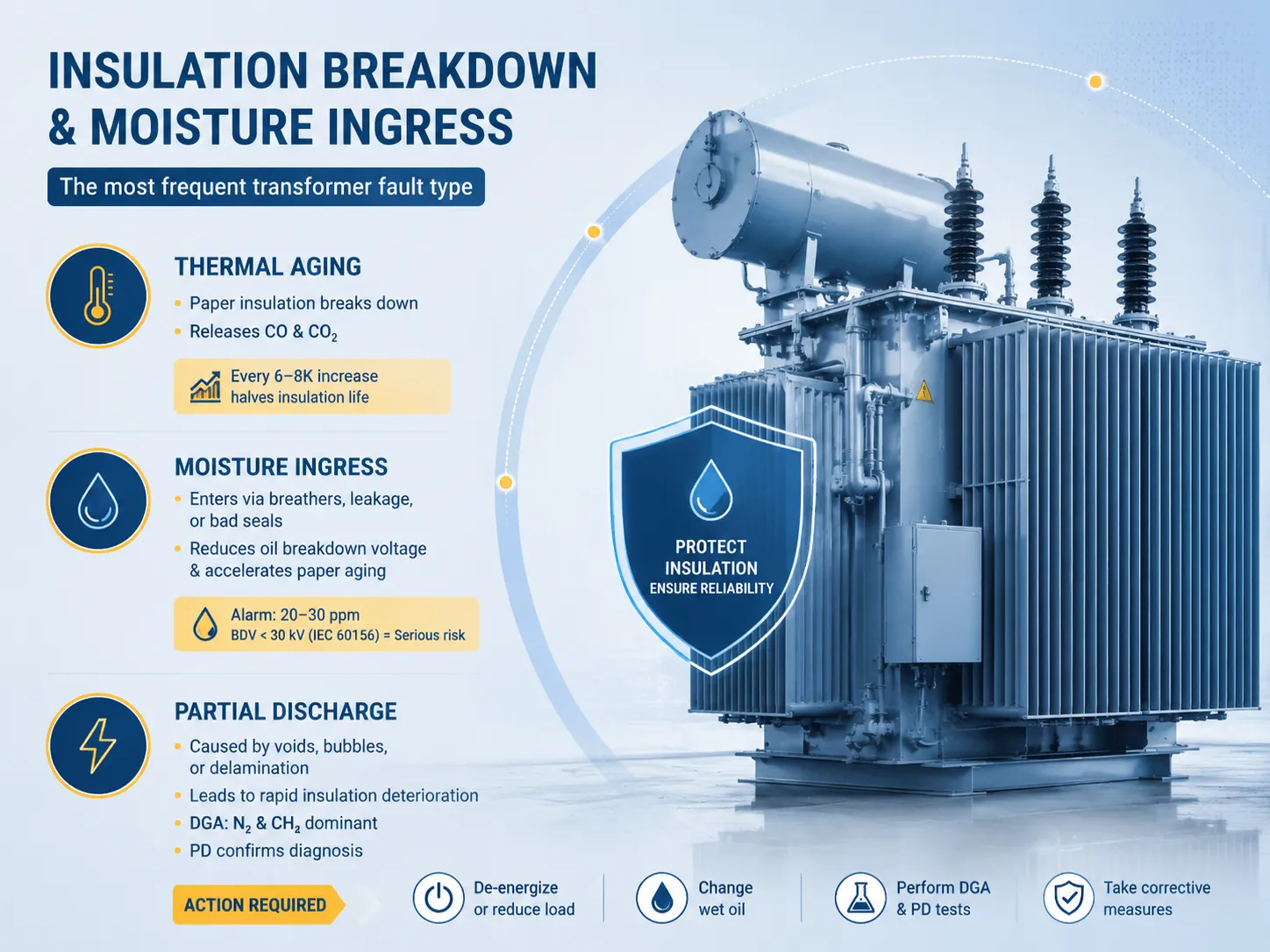
絶縁障害は最も一般的な変圧器の故障タイプです。油-filled 変圧器の絶縁システムは、油、紙、プレスボードで構成されており、熱劣化、湿気、部分放電の3つの原因によって劣化します。.
- 熱は紙絶縁の破壊を引き起こし、COおよびCO2を放出し、その機械的強度を弱めます。ユニットの最も熱い部分の温度が通常の運転の必要性を超えて6-8K上昇するごとに、絶縁のサービス寿命は半分に短縮されます。数年間常に加熱されていた機器は、故障する前に予期せず脆くなることがあります。.
- 水は、ブリーザー、漏れ、または不良シールを通じて変圧器に侵入する可能性があります。これにより、油の破壊電圧が低下し、紙の劣化プロセスが加速します。油の湿気に対する通常の警報値は20-30 ppmの範囲内であり、IEC 60156規格に従って30 kV未満の破壊電圧は深刻な脅威を示します。.
- 空気の空洞、気泡、層は局所的な放電を引き起こし、絶縁が短期間で劣化します。結果として得られるDGAの読み取り値は窒素とメタンが支配し、PDが診断を確認します。.
上記の問題が検出された場合、変圧器は運転を停止するか、負荷を減少させ、湿った油を交換し、DGAおよびPDテストを実施する必要があります。絶縁劣化の確認は適切な措置を必要とします。.
巻線短絡と機械的損傷
巻線故障は一般的に突然かつ激しく発生します。巻線故障の従来の誘発要因は通過故障であり、LV側の短絡は変圧器の巻線を通過する巨大な機械的力を生成し、コイルを圧縮、曲げ、または移動させます。クランプシステムが不十分で、絶縁が長期間使用されている場合、通過故障は巻線の故障を引き起こし、その後の起動時にターン間短絡が発生します。DGA分析はエチレンのレベルが上昇していることを示し、多くの場合、アセチレンも確認され、差動または過電流保護がオフになります。.
トリップ後は直ちに行動を起こしてください。スイッチをすぐに閉じることは避けてください。保護のフラグを観察し、油とガスのサンプルを取り、各相の巻線抵抗を測定する必要があります(2-3 %を超える差異はターン故障を示します)。欠陥が発見された場合、変圧器は点検または巻き直しのために運転を停止する必要があり、コアまたはタンクが損傷している場合は交換の可能性もあります。.
コア故障:クランプ、循環電流、および接地
コア欠陥は静かに成長します。十分でないコアクランプは振動や機械的摩耗を引き起こし、ハミングや「ガタガタ」音の変化を引き起こします。層間の絶縁の故障や意図しない二重接地によるコア内の循環電流は、メタンやエチレンなどのガス形成とともにコアの過熱を引き起こします。コアの単点接地が望ましく、必要ですが、二点接地は加熱を引き起こすループを作ります。.
問題が疑われる場合は、コア接地電流を測定する必要があります(正常値はミリアンペアであり、値がアンペアの電流と等しくなると、二点接地があることを意味します)、DGAテストを実施し、タンクが開いている場合はコアクランプを確認します。二重接地に関連する欠陥を修正するには多くの時間がかかる可能性があるため、コアの取り外しが必要になることを考慮する必要があります。.
タップチェンジャーの故障
負荷時タップチェンジャーはトランスの可動部であり、5年以上経過したトランスの故障の主な原因の一つです。一般的な故障モードには、接点の摩耗や焼損、駆動機構の詰まり、OLTCコンパートメント内の油の汚染、位相の不整合が含まれます。潜在的な問題の症状には、電圧の故障、タップ変更中の騒音、OLTC油中の高濃度のガスが含まれます。.
OLTCが正しく動作しない場合は、シャットダウンし、駆動モーターの電流を確認し、DGAを使用して油を別途テスト用にサンプリングする必要があります。通常、接点を交換するか、OLTCを再生する必要があり、そのコストはOLTCのサイズに応じて$5000-$40,000です。.
ブッシングの故障
ブッシングはいつでも故障する可能性があり、ブッシング故障の結果は非常に深刻です。爆発すると油が飛散し、火災や隣接する位相に問題を引き起こす可能性があります。ブッシングの問題の原因はさまざまで、陶器の亀裂からの湿気、トラッキングを引き起こす表面汚染、誤った静電容量グレーディング、過負荷による熱影響が含まれます。故障はブッシングが爆発するまで隠れていることがあり、重要なブッシングに対して定期的なPD診断とタンデルタ測定を推奨する理由です。.
迅速に対応する必要があります:ブッシングがひび割れているか、重度に汚染されている場合は、即座に交換する必要があります(交換コストは$3,000から$30,000の間です)。損傷がある場合は、ブッシングの交換を先延ばしにしないでください。激しい故障がいつでも発生する可能性があります。.
冷却システムと油の汚染故障
冷却欠陥は最も頻繁に発生する「遅い」問題です:詰まったラジエーター、故障したファン、ロックされたポンプ、そして不十分な油分です。これらはトランスを直接損傷させることはありませんが、その存在は高温運転を強いるため、絶縁の劣化を早め、特定の状況下では高負荷時に保護が作動する原因となります。その間に、油の汚染は水の侵入、スラッジの形成、酸性度、溶解金属を隠し、これらはすべて絶縁に悪影響を及ぼします。.
即時対応:冷却問題が発生した場合、ファンとポンプを修理し、ラジエーターを清掃し、油のレベルを確認し、油の汚染については油の品質テスト(絶縁破壊電圧、湿度、酸性度、IFT)を実施し、油を清浄または交換します。費用は$2000-15000で、ボリュームによって異なります。汚染の真の根本原因、通常は漏れ、ブリーザーの故障、または過熱は常に特定され、排除されるべきです。.
各故障ファミリーの頻度とコスト
故障が確認された場合、対応コストはファミリーと検出の速度に大きく依存します。以下の表は、典型的な修理および交換コストを要約しています:
| 故障ファミリー | 典型的な修理コスト | 交換コスト(20–60 MVAユニット) | 検出が遅れた場合のコスト倍率 |
|---|---|---|---|
| 絶縁 / 湿度(早期発見) | $5,000–$30,000(油処理、乾燥) | $250,000–$1.2M | 5–20x |
| 巻線短絡 | $20,000–$150,000(再巻き) | $250,000–$1.2M | 二次損傷がある場合は2–4倍 |
| コアの故障 | $15,000–$80,000 | $250,000–$1.2M | 3–8x |
| タップチェンジャー | $5,000–$40,000 | OLTCアセンブリ $15,000–$60,000 | 2–5x |
| ブッシング | $3,000–$30,000(相ごと) | — | ブッシング爆発の場合は10倍以上 |
| 冷却 / 油汚染 | $2,000–$15,000 | — | 間接的に、加速された老化を通じて |
パターンはグローバルです:DGA、温度トレンド、定期的な検査による早期検出は、トリップ後まで待つのと比較してコストを10分の1に削減します。これは状態監視の完全なビジネスケースです。.
迅速な対応戦略:6ステップの対応
トランスが故障を示すかトリップした場合、特定の手順に従う必要があります:
- 設備を確保します。回路ブレーカーを開き、ロックアウトし、設備にタグを付けます。トリップの理由が確定されるまで再度電源を入れないことが非常に重要です。ただし、既知の迷惑トリップ(外部原因)の場合は、再閉鎖操作を行う前に確認が必要です。.
- すべてのデータを収集します。保護リレーによって登録されたフラグ、ガスおよび油の読み取り値、イベント発生時の温度、音、オペレーターからのメモを含むすべての情報を記録します。このデータは、将来の原因と結果の分析の基盤となります。.
- すぐにサンプルを作成します。イベント後できるだけ早く油とブッコルツガスのサンプルを準備し、ショックから回復するのを待つのではなく、DGA分析は通常非常に高価(約$200-500)ですが、主要な「何が起こったのか」という質問に迅速かつ効率的に答えます。.
- 標準に従って分析する。故障分類にはIEEE C57.104およびIEC 60599標準を使用する。.
- 必要な電気テストを実施する。これには巻線抵抗チェックおよび絶縁抵抗テストが含まれる。.
- 決定を下す。分析手順から得られた結論に応じて、監視、修理、または交換の介入を選択しなければならない。.
深刻度に応じて対応目標を設定し、順序に時間の規律を持たせる:
| 深刻度 | 指標 | 対応目標 |
|---|---|---|
| 警告 | TDCG 720–1,920 ppm、安定 | 1~2週間以内に調査 |
| 警告 | ガス濃度上昇またはアセチレン > 35 ppm | 毎週サンプルを採取し、介入を計画する |
| 緊急 | ブクホルツトリップ、アセチレン > 80 ppm、タンク膨張 | 直ちに隔離する;48〜72時間以内に決定する |
重要なアドバイスが2つあります:アセチレンが35-50 ppmを超える濃度で存在する場合、システムを潜在的に危険な状態と見なし、設備を再起動する前に調査すること;ブクホルツリレーがトリップした場合、単に警報が上がっただけではなく、内部損傷が疑われ、ユニットを開ける必要があるかもしれない。.
以下は、故障の説明と適切なトラブルシューティングテストおよび推奨される最初のアクションを結びつける簡単なトラブルシューティングチャートです。.
| 症状 | 考えられる故障 | 決定的なテスト | 最初のアクション |
|---|---|---|---|
| ブクホルツガス警報 | 熱的または放電故障 | ガス + 油 DGA | 数時間以内にサンプルを取り、分類 |
| 高水素、低アセチレン | 部分放電 | PD測定 | 絶縁を監視、検査 |
| 高エチレン、アセチレンなし | 熱故障 | DGA比率、負荷チェック | 過負荷または冷却原因を特定 |
| 高アセチレン | アーク / 放電 | DGA、巻線テスト | 再通電しない; 検査を計画 |
| トリップした差動保護 | 巻線短絡 | 巻線抵抗、比率 | 隔離; 内部検査の可能性 |
| 上部油温度の上昇 | 冷却または過負荷故障 | 負荷とファンのチェック | 冷却を復元し、負荷を減少 |
修理対交換の決定
修理または交換の決定は、経済性と技術の両方の問題です。以下の対策を考慮する必要があります:
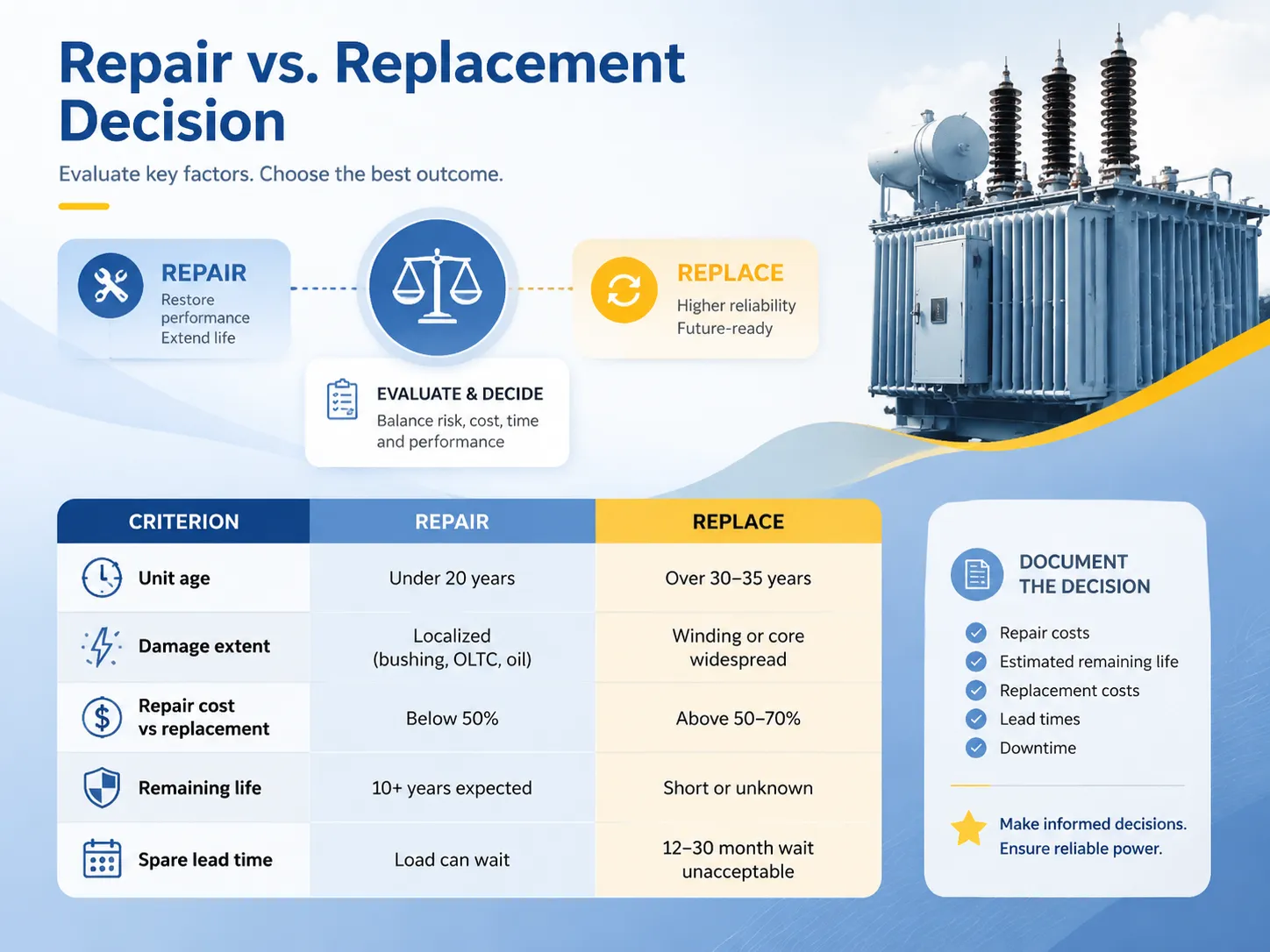
- 年齢と状態:35年前に製造され、紙の劣化と巻線欠陥に悩まされているユニットは交換すべきです。10年のユニットでOLTC欠陥またはブッシング故障のいずれかがある場合は修理すべきです。.
- 損傷の程度:1つのブッシング、タップチェンジャーの故障、または油汚染の存在などの局所的な問題は修理を示唆し、巻線とコアの両方の損傷などのより広範な故障は交換の指標です。.
- 修理費用が交換費用の何パーセントか:一般的な指針として、修理費用が交換費用の50-70%を超える場合、または修理が大きな故障を遅延させる場合は、交換が優先されるべきです。.
- 可用性:交換のリードタイムが最大30ヶ月に達し、供給の増加を待てない場合、残りの寿命に関する適切な文書を伴う修理が理想的な選択肢となります。.
- 戦略的考慮事項:修理が可能である限り、改善基準、ネットワーク開発、負荷予測は交換が望ましいことを示唆することがあります。.
修理費用、推定残り寿命、交換費用、リードタイム、ダウンタイムなどの数値を文書化することが重要です。これにより、決定自体の一貫した根拠が作成されます。順序通りに適用された基準は、迅速なフィルターとして機能する可能性があります。.
| 基準 | 修理 | 交換 |
|---|---|---|
| ユニットの年齢 | 20年未満 | 30~35年以上 |
| 損傷の程度 | 局所的(ブッシング、OLTC、油) | 巻線またはコアの広範囲 |
| 修理費用対交換 | 50%未満 | 50~70%超 |
| 残りの寿命 | 10年以上の予想 | 短いまたは不明 |
| スペアのリードタイム | 負荷は待てる | 12~30ヶ月の待機は受け入れられない |
よくある質問
トランスの故障の最も一般的な原因は何ですか?
電気部品の故障の標準的な原因は絶縁破壊であり、IEEEおよびCIGRÉの調査では全体の故障の約30~50%を占めています。この損傷は通常、熱と湿気の損傷、部分放電の問題に起因します。他の小さな原因には、タップチェンジャー、ブッシング、巻線の故障が含まれます。絶縁故障の大多数は、故障が発生する前に検出されます。なぜなら、それは数ヶ月または数年にわたって発生するからです。.
トランスの故障にどれくらい迅速に対応すべきですか?
ユニットをできるだけ早く隔離し、ロックアウトしてください。オイルとガスのサンプルをできるだけ早く、数時間以内に採取してください。イベント後24〜72時間以内にDGAを実施してください。これにより、ほぼ常に故障のファミリーを特定でき、費用は約$200-500です。24〜72時間以内に問題を診断することで、通常、2回目のイベントが発生するのを待つよりも、総故障コストが半分に削減されます。.
トランスは巻線短絡の後に修理できますか?
ほとんどの場合、確かに可能です。中電力トランスの巻き直しのコストは、定格に応じて$20,000から$150,000の範囲であり、交換する場合は$250,000から$1.2百万の間のコストがかかります。どちらを選択するかは、コアとタンクの状態、年齢、巻き直しのコストが交換の何パーセントに相当するかによります。20年未満の年齢で局所的な巻線損傷があるものは、成功裏に巻き直しが行える可能性が高いです。.
DGAにおける高いアセチレン値は何を意味しますか?
トランスにおけるアセチレン(C2H2)の存在は、電気アークを示します。IEEE C57.104に記載されているように、35 ppmを超えるレベルはトランスを注意レベルに引き上げ、80 ppmを超えるレベルは即時対応が必要な緊急レベルに引き上げます。アセチレンの微量でも、電気アークの急速な拡大のリスクがあるため、スクリーニングが必要です。.
故障したトランスの交換コストはいくらですか?
20–60 MVAのトランスの場合、修理には機器の価値だけで$250,000から$1.2百万かかります。緊急物流、クレーンのリース、ダウンタイムも加算する必要があります。100 MVAを超えるトランスの場合、価格は$1.5百万から$4百万の範囲になります。計画外の停電による損失は、負荷に応じて$50,000から$2百万の間のコストがかかります。.
参考文献
- IEEE C57.104: 油浸トランスで生成されるガスの解釈に関するガイド — DGA結果の分類と対応優先順位を設定するための基準。.
- IEC 60599: ミネラルオイル浸透機器におけるDGAの解釈に関するガイド — 比率法およびデュバル法と共に使用される国際的なガス解釈フレームワーク。.
- IEC 60422: ミネラル絶縁油の監視および保守ガイダンス — 現役トランスの油の品質限界と保守実践。.
- IEC 60076-5: 短絡に耐える能力 — 貫通故障に対する巻線の機械的強度をカバーする標準。.
- CIGRÉ — トランスの故障統計および信頼性に関する技術パンフレット(A2委員会)。.
- IEEE — トランスの信頼性作業部会データおよび保守基準の情報源。.
- 江蘇省蘇辺電力 — 故障診断サポートおよび交換供給を提供するIEC 60076準拠のトランス製造業者。.
結論
トランスの故障は独自のタイプに分類でき、すべてのタイプは共通の症状を示し、既知の診断テストがあり、標準手順を使用して管理されます。$5,000の投資を伴うケースと$1百万の費用を伴うケースを区別するのは、通常、対応の速度と方法です:隔離、文書化、サンプル収集、解釈、テスト、決定。.
- 絶縁問題は故障統計で優勢であり、DGAおよび油の品質テストを通じて検出可能です。.
- ブッシングや巻線の問題は予期せず発生し、調整と監視を通じて防ぐことができます。.
- ブクホルツトリップ後や高アセチレンの兆候がある場合は、診断なしにトランスを再度通電しないでください。.
- 事故発生から24〜72時間以内にDGAを実施し、サンプルごとのコストは$200〜$500です。.
- 修理または交換に関する決定は、年齢と損傷の程度に応じて行ってください。.