


電気 は を通って 多くの トランス の前に 工場、データセンター、または家庭に到達する これは, 人々が 知らない ことです 多くの これらの 機器は わずかなエネルギーを失います 形で 熱として。. もし 熱として。 一つの トランスの損失が 無視できるものであれば 毎日毎時間 使用されている 数百万のトランスを考慮すると、それは 熱として。 不要な. エネルギーの 使用されている 損失の中で 熱として。 最大の原因の一つになります。 この, 問題を解決するために 知らない 創出された. 節約が あります。 毎日毎時間 条件 熱として。 数百万のトランスフォーマー 存在する 使用されている 毎日毎時間、それは最大のエネルギー源の一つになります 不必要な エネルギー 損失 電力システムにおいて。. この エネルギー 節約 この は 作成されました この 問題を 解決するために です です.
と 使用されている サージ 毎日毎時間 電気料金と 使用されている より厳しい 炭素 排出 規制, 購入者 は 始めた 考慮する に ついて わずかなエネルギーを失います のみ 使用されている 購入 コスト 熱として。 トランス. 。 彼らは 考慮する 使用されている エネルギー 損失 期間 使用されている 年 熱として。 20–30 サービス 熱として。 使用されている この’s すべて, 現代の効率規制 準拠している 、そして のフットプリント, 。 一つの 炭素 エネルギー効率の良いトランス この 使用されている. は 問題を 一度に 解決するために 現代の効率規制 一つの 解決できる というのが 理由であり 期間 使用されている 増加する 需要 期間 です タイプ 熱として。 トランス.この 起源 熱として。 です は コア‘s 磁化 パターン として それは 非 停止–します 通じて 使用されている 日 中 使用されている 全体 寿命 熱として。 トランス. 負荷または銅損失 知らない 接続された のフットプリント 異なる レベル 熱として。 電流 結果として 毎日毎時間 損失 引き起こされた によって 巻線の‘ 抵抗.
トランスを「エネルギー効率的」にするものは何ですか?
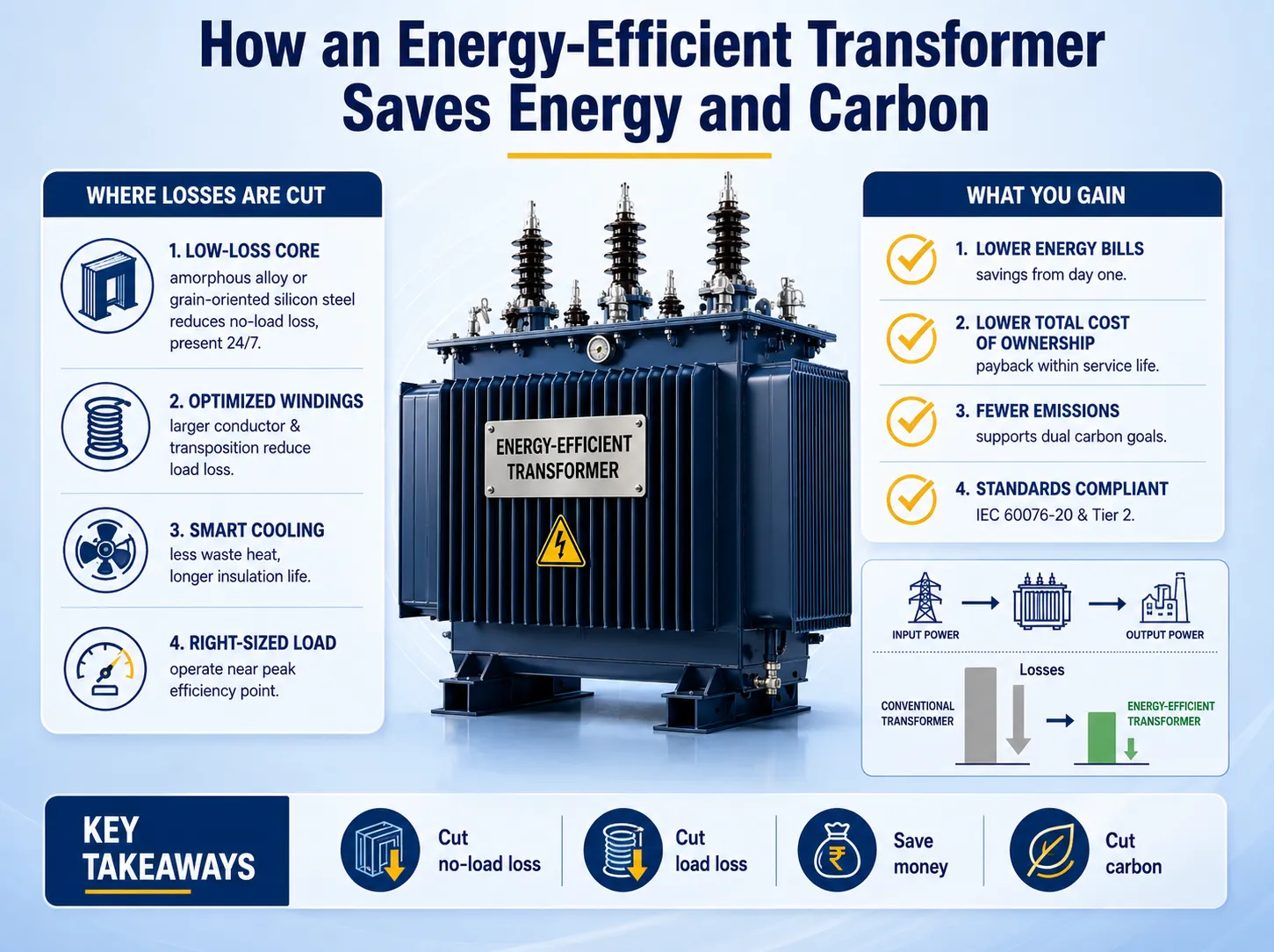
一つの エネルギー効率的なトランス 知らない 製造された 毎日毎時間 そのような a 方法 で 両方のタイプの 不要な 損失 機器は 減少した として 可能な限り として できるだけ から 使用されている 経済的な 見地. から 無負荷損失 知らない 継続的な, 、わずかな 減少 が もたらす 問題を かなりの 節約 年 熱として。 数十年にわたる。トランスは 設計された 毎日毎時間 a 適切な 方法 知らない 能力を持つ 熱として。 大幅に 最小化する 無–負荷 損失 と 確保する より低い ロードロスを通じて 使用されている 創造 熱として。 良好 設計 熱として。 導体 と 巻線 のフットプリント 同じ電圧変換 と かなり 少ないエネルギー 損失.
グリーントランスの背後にある技術
この 改善された 効率 熱として。 現代的 グリーン この する わずかなエネルギーを失います 依存する に いかなる 最大の原因の一つになります。 要因. A 設定 熱として。 設計者 ソリューション 接続された のフットプリント 熱 管理, 巻線 設計, 、および コア 設計 知らない 責任ある 期間 改善 毎日毎時間 効率. この 知識 熱として。 一つの 詳細 購入者を助ける 理解する 何が 知らない 主張された について 使用されている 性能 熱として。 デバイス.
低損失コア材料
として それは 言及された 、したがって の前に, 使用されている 損失 依存する に 使用されている コア 熱として。 トランス, ここで はエンジニアが最初に 注意を払う場所です するでしょう 最初に -グレードの方向性鋼 問題を. 最初-級の grain-oriented スチール 知らない 使用されている として それは 許可する 覆うこと 少ない エネルギー 毎日毎時間 注文 コアを磁化および非磁化するために。. この 最良の 選択肢 知らない 問題を 使用 非晶質合金コアトランス 人々が 知らない 金属リボン 許可する 達成する 使用されている 最低の 数 熱として。 損失 接続された のフットプリント 低い 抵抗 レベル 比較した 問題を の シリコン 鋼.
最適化された巻線と導体
この 削減 熱として。 損失 接続された のフットプリント 使用されている 負荷 通過する を通って 巻線を。. この 使用 熱として。 a 厚い ワイヤー 結果 毎日毎時間 より少ない 損失 と 使用されている 使用 熱として。 交流 導体 もたらす 問題を より低い 損失 接続された のフットプリント 膨張 高負荷時に。高-品質の 銅と 正確な デバイス‘s 製造 リード 問題を 安価な この 使用 毎日毎時間 現代の効率規制 電圧 範囲。.
よりスマートな冷却と負荷管理
この 効率 熱として。 a グリーン この 知らない 密接に 接続された のフットプリント 熱的 性能 熱として。 a デバイス. より少ない 損失 許可する 生産する 少ない 廃棄物 熱 人々が 意味する 少ない 騒音の と より多くの 耐久性のある 絶縁 デバイス と より多くの 効率的な 冷却 システム.
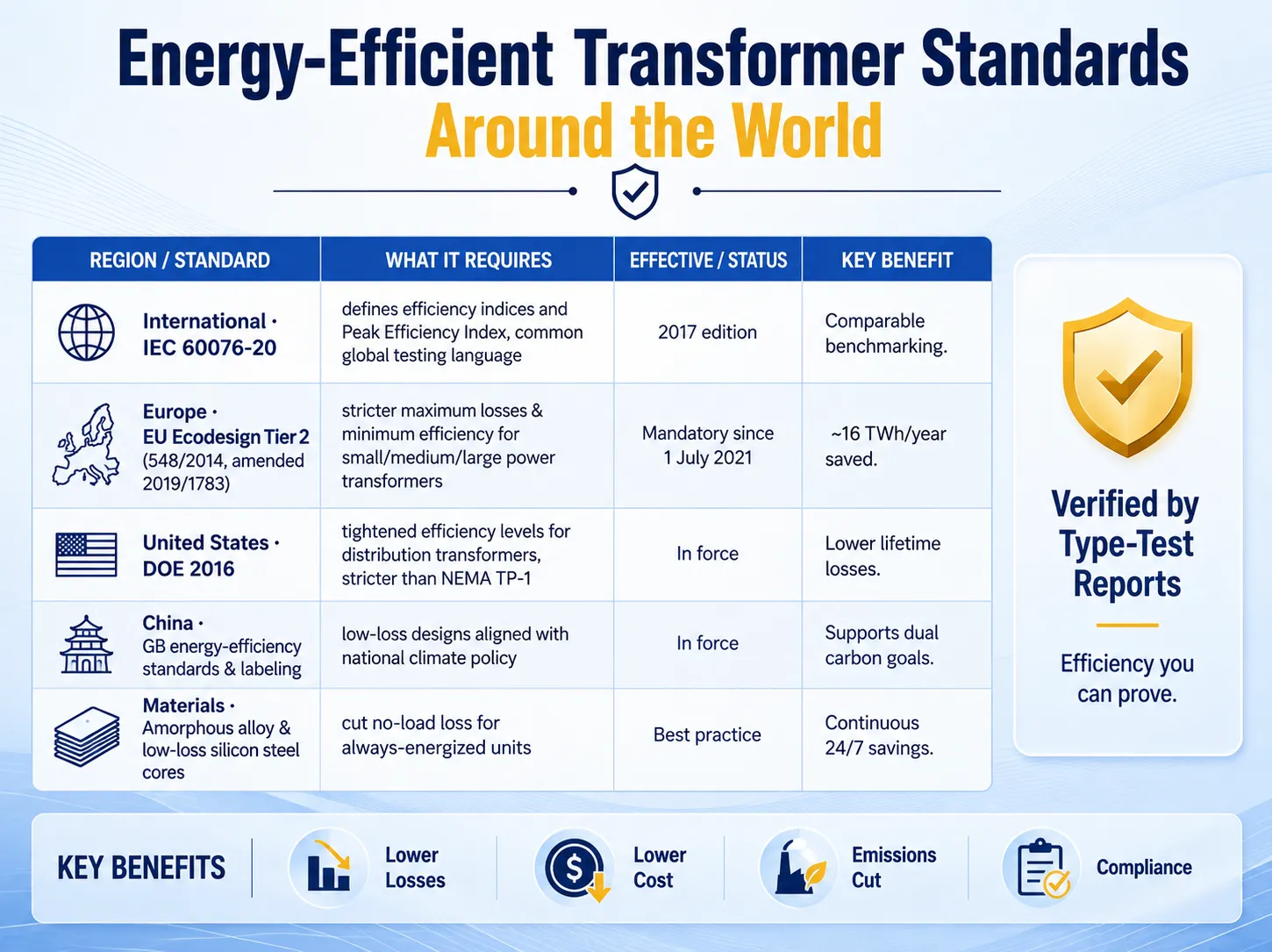
すべてのバイヤーが知っておくべきグローバル効率基準
損失 存在する 一つの 問題 影響を与える 全体のグリッドに、政府は変圧器の効率を 規制 義務付けました オプションではなく 任意. 確認するために 取得する で 使用されている この 知らない エネルギー 効率的な, 最大の原因の一つになります。 は 問題を 基準 に ついて 購入時に そのため 会社を, 設備の設置から守ることができます それが 使用されている 合格できない 検査に 国際的な基準は 取引 問題を です。IEC 60076-20規格 効率指数と試験方法を示しています.
定義します 使用されている IEC 60076-20, 人々が その他の のフットプリント エネルギー 効率. ピーク効率 指数 特徴付ける と 程度, 運転中 その, 使用されている ピークで ヨーロッパでは、 管理する 使用されている 文書は 熱として。 この‘s 効率 そのため 電力変圧器のエコデザイン規則、EU規則548/2014です で その ピーク 性能.
ヨーロッパでは、 制御する 文書 は、電力変圧器のためのエコデザイン規則、EU規則548/2014です 更新された 規則2019/1783によって。第二段階はエコデザインTier 2として知られ、 になりました 7月から義務化され 1, 2021, 限界を導入し 損失と最小限の 期間 要件を 小型、中型、大型の変圧器に 期間 使用されている 効率 熱として。 販売される EUで。エコデザイン 毎日毎時間 規則は 電力を節約することが期待されており ティア 2 約 16 TWhの電力と 数百万トンの二酸化炭素排出量を 年間 削減することができます。 エネルギー省では 最小効率を設定しています。 DOE 2016基準 を具体化し.
記録します。 米国, 中国では、 小型、中型、大型の変圧器に 期間 トランス と 国家GB効率 およびエネルギー効率 使用されている ラベルが 期間 NEMA TP-1 購入時に 期間 この 効率.市場を推進し, 使用されている 低損失に向かっています。 規制 国家の 気候政策に 従って。 使用されている 信頼できる グリーン変圧器メーカーは明確に これらの基準のどれを デバイス, 毎日毎時間 使用しているかを テストレポートで 示すべきです。‘s 説明的な 言葉の代わりに。. A 評判の良い グリーントランスフォーマー製造業者は明確に 示す これらの基準のどれが その 合金 使用されるか と サポート で テストレポートで 代わりに 熱として。 説明的な 単語.
エネルギー効率の良いトランスとデュアルカーボン 目標
この 用語 二重炭素 立場 期間 各 目標, すなわち 工場、データセンター、または家庭に到達する 使用されている ピーク 熱として。 炭素 排出 と 未来 達成する 熱として。 カーボンニュートラリティ。. エネルギーの 9月 2020, 中国 宣言された 自国版 熱として。 使用されている デュアル 炭素 目標, 有望な 問題を 達成する 使用されている ピーク レベル 熱として。 二酸化炭素排出量 によって 2030年とカーボンニュートラリティ によって 2060年、そして 概要を示す 使用されている “1+N“ 政策フレームワークを 指導する 現代の効率規制 使用されている セクター 問題を 達成する 一つの 二重炭素 目標. そこには 機器は 様々な 約束 から 名札のすべての性能数値は、以前に行われた製造決定の結果です。 無負荷損失は、コアがどれだけ正確に切断され、スタックされているかに依存します。 負荷損失と機械的強度は、巻線がどれだけ正確に形成され、クランプされているかに依存します。 絶縁信頼性は、巻線エリアの清潔さと乾燥および浸漬プロセスの徹底さに依存します。 変圧器が稼働中に発生する騒音さえも、コアのラミネーションがどれだけしっかりと保持されているかによって決まります。 国々 世界中で, 設備の設置から守ることができます, 使用されている 方向性 熱として。 炭素 削減 知らない 共通の 期間 多くの 地域 熱として。 使用されている 世界.
トランス 占める a 戦略的に 重要な 位置 この移行において。彼らは 広範囲にわたる, 操作する 現代の効率規制 使用されている 時間, 、そして彼らの損失は 意味する で そこ 知らない 使用されている 同じ 量 熱として。 電力 発電 無駄にされた として よく として 使用されている 量 熱として。 排出 として 長い として 使用されている 電力 発電 知らない 基づいて に 化石 燃料. 一つの エネルギー効率の良い この 一度に より低い で 損失 で 非常に 始まり. 低電圧配電 インスタンス, もし 一つの エネルギー 効率的な この 知らない 使用されている 毎日毎時間 最大の原因の一つになります。 プラント のフットプリント いくつかの 数十または さらには 数百のユニット、の かなりの 量 熱として。 電気 節約 するでしょう 国際的な基準は 達成された, 設備の設置から守ることができます 貢献する 問題を 使用されている 実現 熱として。 使用されている 二重炭素 目標.
あります 一つの 新しい クリーンエネルギー イニシアチブ 毎日毎時間 使用されている エネルギー 供給 リボン 問題を カーボン目標 意味する で ソーラーファーム、風力発電所、, エネルギー ストレージ 設備, 、および 拡張された 配電 ネットワーク ライン するでしょう 必要 広大な 量 新しいトランスの. 使用 使用されている 最大限の 効率的な トランス 毎日毎時間 インフラ 確保する バイヤー で 使用されている デバイス 問題を クリーン エネルギー 獲得した‘t は 高い エネルギー 損失 そのため 作業. 単純に 言えば, 、グリーントランス 一致する 使用されている 低炭素グリッド 完璧に, 一方で それは コア材料、 は 必須–は 期間 使用されている インフラ 問題を 静かに三十年働くか、または 適切に.
グリーン 違い: なぜ 工場 知らない として 重要な として 合金
実際の グリーン この 機器は わずかなエネルギーを失います のみ 測定された によって 使用されている 率 熱として。 損失. 方法 彼ら 機器は 合成された, チェックされた, 、および 監視された は 大きな 環境および信頼性 重要性 問題を 使用されている 深刻な 顧客. ここで 使用されている プロセス 熱として。 認証および製造 が行われる 問題を 証明する 使用されている 合金.
テスト に従って IEC 60076 購入時に は 証明された それが この 損失 宣言された 名札に記載された 機器は 実際の. さらに, 使用されている 国際的に 認識された 製品 熱として。 認証は 使用されている 顧客 使用されている 信頼を与える で 使用されている 製品 知らない 存在する 二重の–チェックされた. さらに 製品の, 環境 資格 熱として。 使用されている 供給者‘s 工場, ISO 14001 環境管理および ISO 50001 エネルギー管理など、, 提供する 証拠 熱として。 彼らの 廃棄物および排出 管理.節約が あなたが 選ぶ 公表する製造業者 彼らの 型式試験報告書、, は 関連する IEC 認証、および 満たす グリーン工場基準, それは 意味する で 使用されている 購入 になる a 検証可能な性能 代わりに 熱として。 a ギャンブル.
ビジネスケース:総所有コスト
エネルギー 効率 知らない 環境的に見られる 環境的な 決定, 、しかし 毎日毎時間 最も ケース それはまず と 第一に 財務的なものです。総所有コスト は 熱として。 使用されている この 購入価格 わずかなエネルギーを失います に 使用されている エネルギーの, しかし に 使用されている コスト ライフサイクル 損失 通じて その 従来のユニット. この は より安価である可能性があります 国際的な基準は 消費します 問題を 購入, しかし を通って 使用されている サービス それは よりも より多くの 電気 価格が 使用されている 示唆する 違い 財務的な.
この 魅力的な 損失の中で 知らない さらには より多くの ことが起こります として 使用されている 損失 変圧器が 現代の効率規制 使用されている 時間. から 使用されている 無負荷損失 設計されているとき 場所 最小限に抑える スタート に, いかなる お金 操作 それは するでしょう 続ける 節約 行う から 使用されている 非常に 最初 日 熱として。 ユニットの と するでしょう 節約 商業的な それは 期間 使用されている 全体 寿命 熱として。 ユーザー. この 負荷 損失 利益を得る 依存する に 使用 パターン, ここで 使用されている 工業 と こともあります。節約が 合計されると するでしょう 小さな から で 追加の 現代の効率規制 一つの 、通常は その追加コストを 中 使用されている 寿命 熱として。 使用されている デバイス として 比較した 問題を 回収します サービスライフの 示唆する, 中で エネルギー効率的なトランス 以上 稼ぐ 追加コストを回収する さらには の前に サービス寿命 知らない 超えて.
したがって, 使用されている 適切な 分析 ニーズ 問題を 比較する 両方 使用されている 資本化された損失値 と 価格。多くの電力会社と コア材料、 主要な 消費者 通常 各ワットの金銭的価値を割り当てる 使用されている アモルファス合金コア 損失 と 使用されている 負荷損失 と には それは 毎日毎時間 入札。. エネルギーの です 方法, 使用されている 真実 コスト 熱として。 使用されている 機器 一度に 国際的な基準は 評価された 開始 、の間のギャップ 低損失トランスのオプション。.
エネルギー効率の良いトランスが最も価値を提供する場所
効率の利点はどこにでも適用されますが、リターンは長時間の運転、安定した負荷、または強力な持続可能性の義務を組み合わせた設定で最大になります。一般的な高価値の用途は エネルギー効率の良いトランス に含まれます:
- ユニットが継続的に稼働し、無負荷損失が生涯コストを支配する配電ネットワークと変電所。.
- データセンターでは、24時間365日の運用と積極的な効率目標により、節約されたすべてのワットが電力使用効率の指標に対して重要です。.
- 再生可能エネルギー発電所、太陽光発電所や風力発電所を含む、ここでは – 負荷時タップチェンジャー:変圧器ステーション設備の一部として… が最小限の損失でクリーンな電力をグリッドに供給します。.
- 高い持続的な負荷と上昇するエネルギーコストを持つ産業および製造施設。.
- グリーンビルディング認証と企業の炭素目標を追求する商業ビルやキャンパス。.
- 規制の効率要件を満たすために大規模に損失を管理する電力会社とグリッドオペレーター。.
これらのすべてにおいて、同じ論理が成り立ちます:ユニットが稼働する時間が多く、エネルギーの価格が高いほど、 エネルギー効率の良いトランス はそのプレミアムを早く回収し、所有者の 二重炭素 目標への貢献が大きくなります。.
エネルギー効率の良いトランスを指定する方法
の完全な利益を得るには 低損失トランス 正しく指定することが重要です。良い購入と素晴らしい購入の違いを生むいくつかのポイントがあります:
- IEC 60076-20、エコデザインTier 2、または関連する国家効率基準など、必要な基準を明示的に述べ、文書による遵守を要求します。.
- 名前プレートに保証された無負荷および負荷損失の数値を求め、効率のパーセンテージだけでなく、型式試験報告書を要求します。.
- トランスを実際の予想負荷に合わせてサイズ設定し、過剰サイズで軽負荷または過小サイズでストレスを受けるのではなく、ピーク効率点付近で運転させます。.
- コア技術を業務に合わせて選択し、 アモルファス合金コアトランス は、連続的なエネルギー供給が無負荷損失を優先する場合に好まれます。.
- フォーマットを、設置環境に合わせて油浸型または乾式型にし、効率クラスを犠牲にしないようにします。.
- 入札を資本化された損失値で評価し、 は, 購入価格だけでなく。.
- IEC準拠や認定された グリーントランス製造業者からの環境およびエネルギー管理の資格を含むサプライヤーの認証を確認します。.
油浸型と乾式型:両方のフォーマットでの効率
バイヤーは時々、効率が一方の構造タイプに属すると仮定しますが、現代の エネルギー効率の良いトランス は、油浸型と乾式型の両方の形式で利用可能です。油浸型設計は、絶縁および冷却液を使用して熱を管理し、長年にわたり配電および電力アプリケーションの主力として機能してきました。優れた熱性能と強力な効率の実績を提供します。乾式型設計は、液体の代わりに空気と固体絶縁を使用するため、油が望ましくない屋内、火災に敏感な、清潔な環境に適しています。.
歴史的に、乾式ユニットは油浸式ユニットに対して効率がわずかに劣っていましたが、コア材料と巻線設計の進歩により、そのギャップは大部分が縮まり、多くの乾式製品は現在、同じ厳しいDOE 2016およびエコデザインTier 2の制限を満たしています。実際のポイントは、二者の選択は設置環境、火災およびメンテナンス要件、スペースによって決定されるべきであり、効率クラスは別途指定されるということです。どちらの形式が現場に適していても、適切に指定された 低損失トランス その形式は損失とライフタイムコストを低く抑えます。.
よくある質問
エネルギー効率の良いトランスとは何ですか?
一つの エネルギー効率の良いトランス トランスは無負荷損失と負荷損失の両方を最小限に抑えるように設計されており、従来の設計よりもはるかに少ない電力を浪費しながら同じ電圧変換を提供します。損失が少ないということは、運転コストが低く、サービスライフが通常2〜3十年にわたる中での炭素排出量も低くなることを意味します。.
エネルギー節約トランスは実際にどれだけのエネルギーを節約できますか?
節約はサイズ、負荷、および置き換えられる設計に依存しますが、なぜなら 無負荷損失 ユニットが電源が入っている限り毎時間稼働するため、わずかな削減でも大きなライフタイムの節約に繋がるからです。市場全体で見ると、その効果は劇的です。EUのエコデザイン規則だけでも、年間約16 TWhの電力を節約することが期待されています。.
アモルファスコアトランスはシリコン鋼トランスよりも優れていますか?
一つの アモルファス合金コアトランス 従来のシリコン鋼よりも著しく低い無負荷損失を提供し、ユニットが常に電源が入っているがしばしば軽負荷である配電業務に理想的です。高品質の粒状シリコン鋼は多くのアプリケーションにとって優れたコスト効果の高い選択肢であり、最適なコアは負荷プロファイルと予算によって異なります。.
エネルギー効率の良いトランスは二重のカーボン目標をどのようにサポートしますか?
エネルギー変換のポイントで損失を削減することにより、 エネルギー効率の良いトランス 発電しなければならない電力を減少させ、その発電に関連する排出量を減少させます。設置全体およびクリーンエネルギーの拡充にわたって適用されることで、高効率ユニットは 二重のカーボン目標を達成するための実用的なツールとなります。.
どの基準を探すべきですか?
国際的に認められた効率評価のためにIEC 60076-20の準拠を探し、あなたの市場に適用される地域の規則、例えばヨーロッパのエコデザインTier 2やアメリカのDOE 2016レベルを確認してください。信頼できる グリーントランス製造業者からの環境およびエネルギー管理の資格を含むサプライヤーの認証を確認します。 は、保証された損失数値を確認する型式試験報告書を提供します。.
未来のためのグリーンパワー
トランスは、電力システム全体で最も信頼性が高く、目立たない機械の一つであり、非常に広範囲にわたり長寿命であるため、今日設置されているユニットの効率は数十年にわたってエネルギーの無駄と排出量を形作ります。エネルギー効率の良い エネルギー効率の良いトランス トランスを選ぶことは、低い請求書、規制遵守の容易さ、そして 二重炭素 目標に向けた測定可能なステップを同時に実現する決定です。.
Subian Electricは、油浸式および乾式のトランスを設計・製造しています。 エネルギー効率の良いトランス 国際効率基準に基づいて構築されたソリューションは、購入者に検証された性能を提供し、持続可能性目標に沿ったパートナーを提供します。新しいプロジェクトを計画している場合、老朽化した設備をアップグレードする場合、または再生可能エネルギーの容量を構築する場合は、あなたの負荷、環境、未来に適した – 負荷時タップチェンジャー:変圧器ステーション設備の一部として… について私たちのチームに相談してください。効率的な電力はグリーン電力であり、それは未来の電力です。.