


工場、作業場、さらには大きな家でも見ることができるかもしれません:ポール、壁、または金庫にある変圧器は、いくつかの機械が稼働しているときにより大きな音を発しています。この音は時には磁歪によるものですが、時には変圧器が過負荷である、負荷が不均一である、または故障しているという警告サインとして機能します。このガイドでは、変圧器のハミングの理由、さまざまな機械が稼働しているときに何が変わるのか、どの音が正常で、いつハミングが懸念の理由になるのかについて説明します。.
簡潔に答えると:変圧器は常に音を発しており、これは磁歪プロセスによるものです — ラミネート鋼心のわずかな物理的変形が1秒間に100〜120回発生する現象(50/60 Hzの周波数の2倍の速さ)であり、コアコンポーネントや巻線からの振動とともに発生します。変圧器のハミングは、さまざまな機械の作用下で主に3つの理由で大きくなります:負荷の増加(電流の上昇が磁束の増加を引き起こす)、サイクルおよび溶接機のドライブからの高調波(さまざまなドライブが歪んだ電流を伝達し、新しい周波数の音を生成し、したがって変圧器を加熱する)、電圧条件(軽負荷の変圧器でも過負荷時にハミングが大きくなることがあります。なぜなら、磁束は負荷ではなく電圧によって定義されるからです)。.
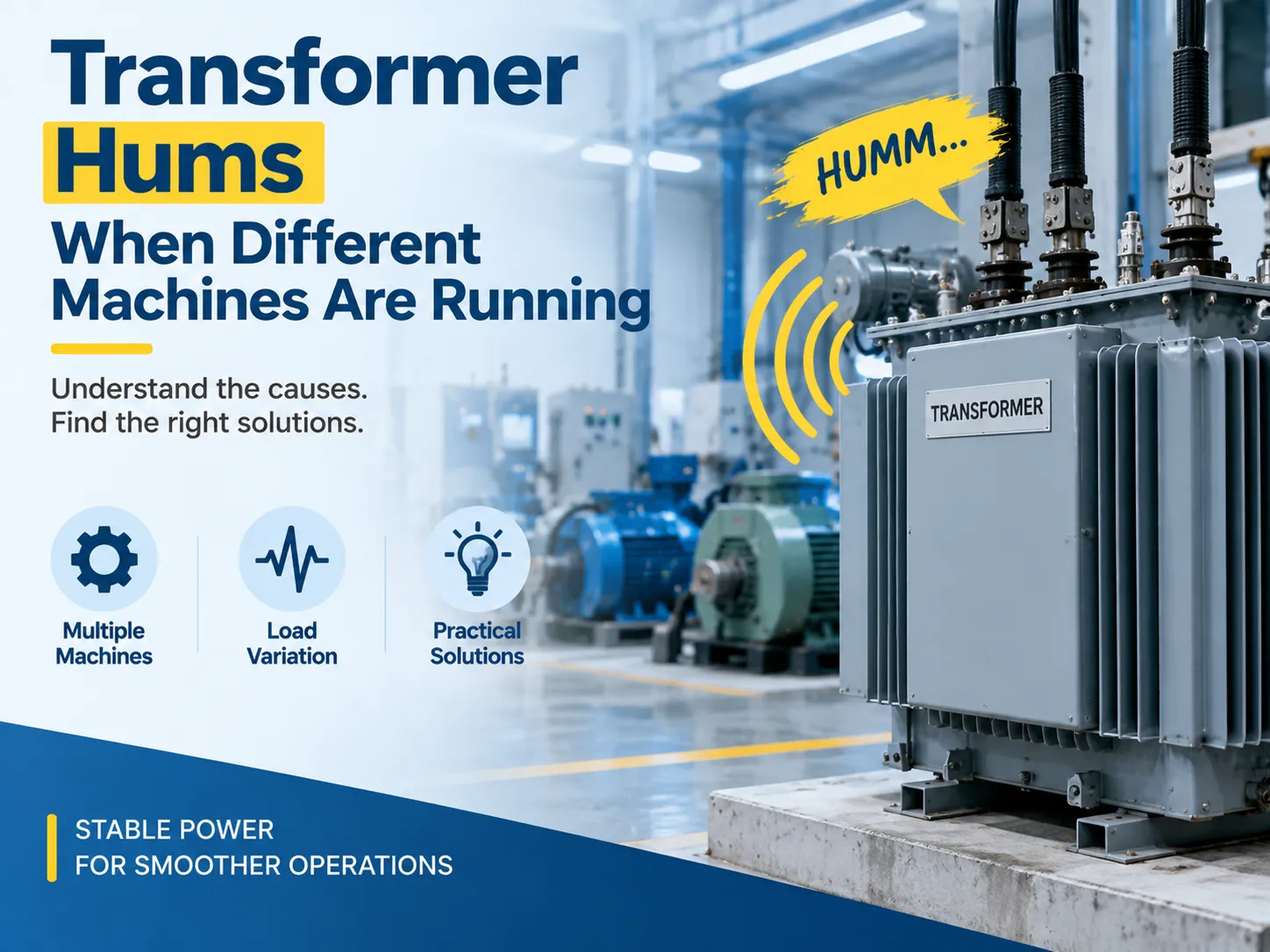
変圧器がハミングする理由
変圧器のハミングは物理の原理によって発生する現象であり、故障を示すものではありません。変圧器のコアは細かくラミネートされた鋼板で構成されており、そのためコア内に磁場が発生します。交流電流がワイヤを通過すると、磁場は1秒間に100回(50 Hz供給の場合)または120回(60 Hzの場合)方向を変えます。磁場が方向を変えるたびに、鋼の結晶がわずかに伸びます。したがって、磁歪が発生し、電源周波数の2倍の周波数の信号を生成する原因となります。さらに、ワイヤや接続部の変化により他のコンポーネントが振動します。変圧器のタンクは普通のスピーカーのように振る舞います。.
これから、変圧器のハミングは一般的な電気現象であるが、振動の強度は適用された電圧によって決まる磁束密度の増加に伴って増加することが結論できます。変圧器がどれだけ大きな音を発するかを規定する仕様 — およびkVA定格に関連する可聴音レベル — は、良好な仕様書に記載されている設計データの一部です。 変圧器仕様ガイド.
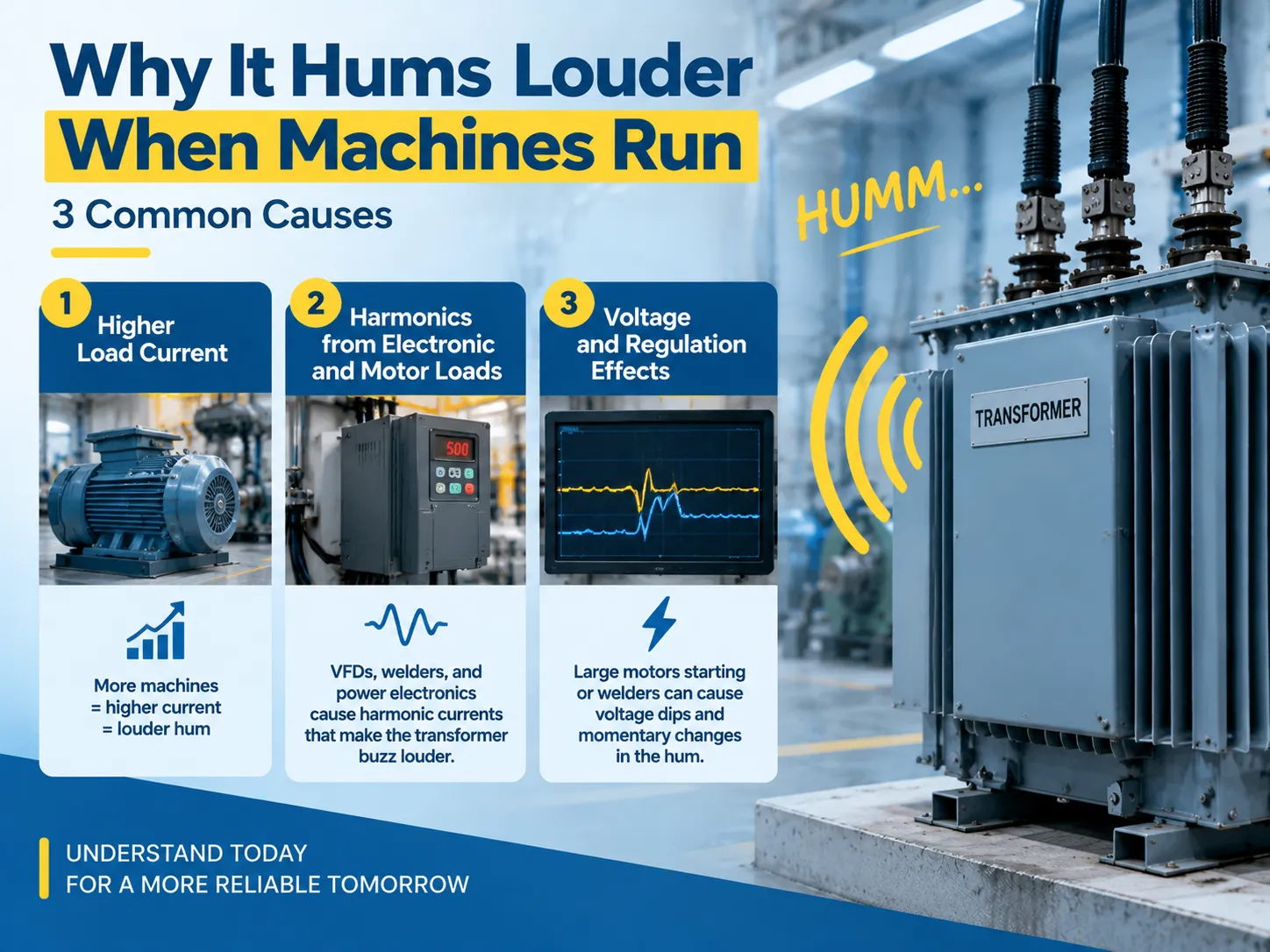
機械が稼働するときにハミングが大きくなる理由
「異なる機械」の操作に関連する変化する音は、ほぼ確実に3つの原因に起因します:
- 高い負荷電流。大きなモーターやヒーターが電流を引き出し、巻線電流が増加し、巻線に作用する漏れ磁束力が増加し、コアの振動が増加します。過負荷の変圧器は、負荷がかかっていない変圧器よりもハミングが大きいという事実があります。.
- 電子機器やモーター負荷からの高調波。VFDなどの駆動電気機械負荷は、電流を非正弦波的に歪ませる原因となります。高調波は変圧器コアの機械的振動を引き起こし、機械が動作する際にコアと巻線での損失を増加させ、ハム音や歌声を生じさせます。.
- 電圧と調整の問題。変圧器に予期しない大きな負荷がかかると、大きな始動モーターによって瞬時の電圧降下が引き起こされ、そのようなイベント中にハム音の音程が変化することがあります。.
診断の課題は、異なる機器の運転中にハム音がどのように変化するかに関して、私たちが持っているハムの種類を特定することです(負荷の数に応じて継続的に変化する場合は、負荷関連と見なされ、正常とされます)。この二つを区別することが分析の核心であり、その背後にある負荷と動作の論理は以下に記載されています。 配電トランスの基本 記事に要約されています。.
正常な変圧器の音
異常とは何かを理解する最も早い方法は、正常がどのような音かを学ぶことです。.
- 正常:連続的で低周波の音で、これは主電源周波数の2倍(100 Hzまたは120 Hz)に相当します。低いギターの弦の音や、遠くから聞こえる変電所の音を想像できます。負荷が増加するにつれて、音の大きさと音程が少し上がるかもしれません。.
- 異常:金属的なガタガタ音(コアのラミネーションが緩んでいるか、タンクの取り付けが緩んでいる)、非常に鋭い音(電気放電または接続不良による)、シズル音(アークを示す)、または変圧器の全体的な特性の変化(突然の大きな音や溶接音で特徴付けられる)です。.
良い実践:変圧器が正常に動作しているときの音に注意深く耳を傾け、その正常な音を学ぶことです。その基準となる規律は、耳または機器による状態監視の基盤となり、テストおよび検査のルーチンに直接結びつきます。 トランス試験ガイド.
サイズと負荷がノイズに与える影響
変圧器に関して言われることのほとんどは、二つの原則に起因します。.
| 要因 | ノイズへの影響 | 理由 |
|---|---|---|
| kVAサイズ | 大きな変圧器はより大きなハム音を発生させます | 大きなコアとタンクはより多くの音を放射します |
| 負荷レベル | 負荷が増えるとノイズが上昇します | 高い巻線電流は力と振動を増加させます |
| 電圧レベル | 電圧が上昇するとノイズが増加します(無負荷でも) | 磁束密度は電圧によって設定され、過電圧はコアを飽和させます |
| 高調波成分 | 新しい周波数、ブーン音、余分な熱 | ドライブや溶接機からの歪んだ電流がコアを刺激します |
実際の状況:機械が稼働しているとき、一部のトランスはハム音を発生させます。これは、負荷に関してすべてが意図した通りに機能していることを意味します。このため、機械が一時的な負荷で約80%を超えないように運転することを要求する負荷規則があります。言い換えれば、この規則を適用することで、トランスに過剰な電力を供給することを避けることができ、これがノイズや熱を生じさせ、寿命を短くします。ハム音を発していて高負荷信号を持つトランスが必ずしも故障しているわけではありません;これは80%規則について述べる際に以下で読み取れる同じ結論です。.
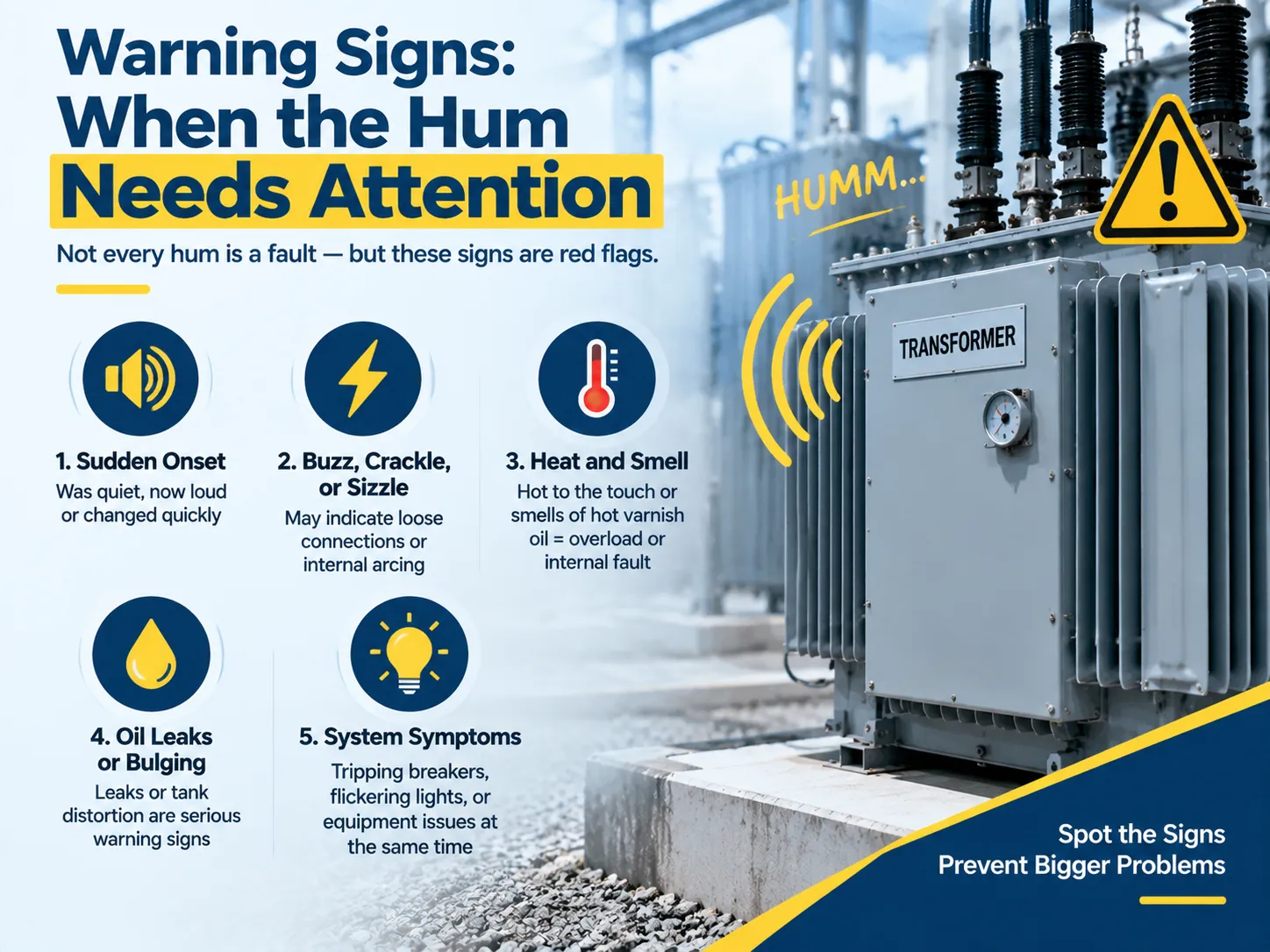
警告サイン:ハム音に注意が必要なとき
すべての高音のノイズが問題を示すわけではありませんが、特定の音は警告サインです:
- 突然現れる:静かだったトランスが突然音を出し始めた場合は、調査が必要です。.
- ブンブン音、パチパチ音、シズル音は、接続不良、絶縁の破損、トランス内部のスパークの兆候です — これはトランスの種類によっては最も危険な問題の一つです。.
- 熱と匂い:トランスが熱く、焼けた油やニスの匂いがする場合、過熱または故障している可能性があります。.
- 漏れや膨張:油の漏れやトランスハウジングの変形は、内部に重大な問題があることを示しています。.
- 故障パフォーマンスの指標:回路ブレーカーのトリップ、ちらつくライト、ハム音が発生した瞬間の機器の故障は、その音が実際のものであり無害ではないことを示しています。.
これらの多くのサインは、絶縁テストや油分析が早期に捕捉するために存在する故障メカニズムに起因しています — トランスの故障原因としてカタログ化された故障モードは、 トランスの故障原因 記事で正確に変化したハム音が告げることができる内容です。.
トランスのノイズ警告チェックリスト
異常なトランスのハム音を聞いた場合、行動を起こす前に考慮すべきチェックリストは以下の通りです:
- ハム音は一貫しているように聞こえますか、それともブンブン音やシズル音のようですか? 一貫したハム音は正常な現象ですが、ブンブン音やパチパチ音がする場合は、確認する必要があります。.
- 機械が稼働しているときにハム音の大きさは変わりますか? 変わらない場合、トランスに何か問題が発生していることを示しています。.
- ユニットの近くに熱いもの、匂いがするもの、漏れているものはありますか? ニスの匂いや熱、油の漏れは、トランスからの音を分析する必要がないことを結論づけるには十分です。.
- 最近、電気に何か問題がありましたか? もしそうなら、電気技師がノイズの原因を理解し、トランスのハム音からさまざまな周波数を特定できるでしょう。.
- トランスは以前にこの音を出したことがありますか? もしそうなら、それがまだ問題かどうかを確認する必要があります。.
- 現在、どれくらいの負荷をかけていますか? 通常の作業負荷に近いかそれ以上であれば、その事実によってノイズが説明される可能性があります。.
いずれかの条件に問題がある場合は、専門家に呼んでトランスを点検してもらう必要があります。トランスを健康に保つためのルーチン — 油のテスト、DGA、視覚的チェック — は以下に示されています。 トランスフォーマーオイルテストの基本 記事は、絶縁問題を音が聞こえる前にキャッチするサンプルと閾値について説明しています。.
問題のハム音を修正または軽減する方法
診断された内容に応じて、解決策は最も簡単なものから最も専門的なものまでさまざまです:
- 緩んだ部品:ボルトやタンクの端、タンクを覆うパネルをチェックする際に、パネルを押したときに音が消えるかどうかを確認する必要があります。.
- 高電圧:負荷がないときに音が大きい場合は、次のことを行う必要があります:タップに対する入力電圧を確認すること;過電圧タップを変更することで、ノイズを取り除くことができるかもしれません。.
- 高調波過負荷:ノイズがVFDや溶接機によってのみ発生する場合、高調波成分を測定し、リアクタを使用して問題を解決するためのフィルターや他の方法を適用する必要があります。.
- 継続的な重負荷:相間で負荷を再バランスさせるか、80%ルールの指示に従って他の変圧器に一部の負荷を移すことができます。.
- 真の内部問題:緩んだ読み取り、絶縁の破損、または他の要因によって引き起こされる場合、工場での修理は不可能であり、変圧器は修理のために工場に持ち込む必要があります。.
境界ルール:ボルトを締めたり機械的な組み立てを修理することで静音化できるノイズはメンテナンスに関連し、加熱、奇妙な匂い、その他の関連問題を引き起こす電気ノイズは信頼性の問題です。最後に、変圧器のシーッという音を信頼するよりも、常に変圧器を点検する方が良いです。.
よくある質問
なぜ私の変圧器はハム音を出しているのですか?
変圧器は、磁気ひずみの結果としてハム音を出すように設計されています。これは、鋼のコアが60または50ヘルツの電気サイクルの間に2回伸びたり縮んだりする現象であり、コアと巻線が振動します。さらに、変圧器にかかる負荷と電圧が増えるほど、生成されるハム音は大きくなります。ただし、ノイズが他の機械の動作に続く場合、通常は現在稼働中の機械に関連しています。.
変圧器のハム音を取り除くにはどうすればよいですか?
最初のステップは、問題を診断することです。機械的な rattling 音は、取り付けボルトを締めることで修正できます。負荷がない状態でハム音が聞こえる場合、変圧器の過電圧を確認する必要があります。可変周波数ドライブや溶接機を使用して電源を供給しているときにバズ音や過熱が発生する場合、ラインリアクタやフィルターを使用するか、非線形負荷を移動させる必要があります。変圧器が継続的な重負荷を経験している場合、負荷のバランスを取る必要があります。緩んだラミネーションや悪い絶縁などの真の不足は修理が必要です。.
変圧器の80%ルールとは何ですか?
80%ルールは基本的に、変圧器の負荷はその定格kVA定格の80%を超えてはならず、適切に機能するために必要です。そうでない場合、変圧器は過剰なノイズと熱を発生させる可能性があります。変圧器のハム音のほとんどのケースは、このルールを使用して説明できます。.
変圧器が破損した際の兆候は何ですか?
トランスの爆発の兆候には、大きな爆音、停電、目に見える煙や炎、焼ける匂い、油-filled トランス周辺のオイル漏れ、アーク、焼けたケースが含まれます。通常、新たに発生したハム音やパチパチ音、シズル音は、爆発が起こる前に何かが間違っていることを示しており、トランスの即時点検が必要です。.
参考文献
- Eaton — トランスのノイズを理解する
- GE Grid Solutions — トランスの音と振動リソース
- IEEE — トランスの可聴音基準
- Hitachi Energy — トランスの状態監視
- NFPA — 電気機器点検ガイドライン
結論
他の機器が動作している間にトランスがより振動するのは、通常は物理学が働いているだけのケースです — 磁気歪みは、すべてのトランスが国で供給される電気の周波数で音を2倍生成する原因となり、負荷、電圧、ハーモニクスがその役割を果たし、音量を増加させます。機械によって引き起こされるノイズは正常であり、心配すべき機械の音は異なります。それはハム音やパチパチ音であったり、加熱、匂い、漏れなどに関連している可能性があります。トランスの正常な音を認識し、何かが変わった場合に何をすべきかを知ること、負荷に関する指示に従うこと、機械的な rattles を修正すること、そしてノイズの発生源を分析できる専門のエンジニアに電気的な問題を任せることが重要です。.