


15 MWの容量を持つ産業施設のアップグレードを委託された電気技師として、33 kVから400 Vへの供給電圧の変更まで機械の設置開始を停止するよう指示されることは、多くの不便を引き起こします。トランスの仕様を手元に持ち、$42,000から$86,000の範囲で供給業者から提供された見積もりを所持しているあなたは、金曜日までに結果を求める上司の要求に応えるために、時間がありません。電力工学の分野では、正しいタイプのトランスを決定することは、最も安価な解決策を求めることを意味しません。それは、定格、損失、冷却方法、基準、および負荷プロファイルを含むすべてのパラメータを一致させることを意味します。.
簡単に言えば、エンジニアリング作業のための電力トランスを決定する際の最初のステップは、全体の負荷に関連する多様性および成長係数に依存する設計kVAを見つけることです。次のステップでは、冷却クラス(油浸型ユニットの場合はONANまたはONAF、乾式トランスの場合はANまたはAF)を選択し、IEC 60076規格に準拠する製品を特定する必要があります。.
六つのステップによる選定方法
250 kVAの配電モデルから60 MVAの変電所トランスまで、すべてのトランス購入はこれらの手順に従うべきです。これらのステップに従うことで、過剰で高価なユニットや、夏に故障する小型のユニットを手に入れることはありません。
- 負荷プロファイルを決定します。各負荷をその力率と運転スケジュールで分析します。ピーク負荷をkWで計算し、力率を用いてkVAに変換します。.
- 成長と予備を予測します。将来の負荷増加に対するマージンを確保するために、ピーク負荷に1.1-1.25を掛け、市場で販売されている標準のkVA定格に変換します。.
- 電圧インターフェースを見つけます。電圧、ベクトルグループ、および電圧制御が必要かどうかを確認してください。.
- 構造のタイプを選択します。火災安全性、場所、および負荷係数を考慮して、油浸型と乾式設計の間で選択します。.
- 損失を調査します。資本化された損失の数式を評価することによって、配線損失の見積もりと無負荷損失の見積もりを比較します。.
- 基準と試験を確認します。注文する前に、このトランスがIEC 60076またはIEEE C57.12基準に準拠しているかを確認します。.
電力工学における「適切なトランス」とは何か
トランスは、必要なエネルギー量を供給し、最大温度制限を超えずに動作し、電力網およびその顧客に必要な電圧調整を提供し、エネルギー損失が最も少なく、地域の要件およびトランスの基準を満たす場合に、効果的であると見なされます。.
電力工学において、変圧器は施設内で最も高価な機械であり、その故障は所有者に大きな損失をもたらします。信頼性の観点から、CIGRÉやIEEE作業グループなどのさまざまな情報源からのデータは、配電変圧器の故障率が年間約0.5~2パーセントであることを示唆しており、最も一般的な問題は絶縁および結合システムに関連しています。.
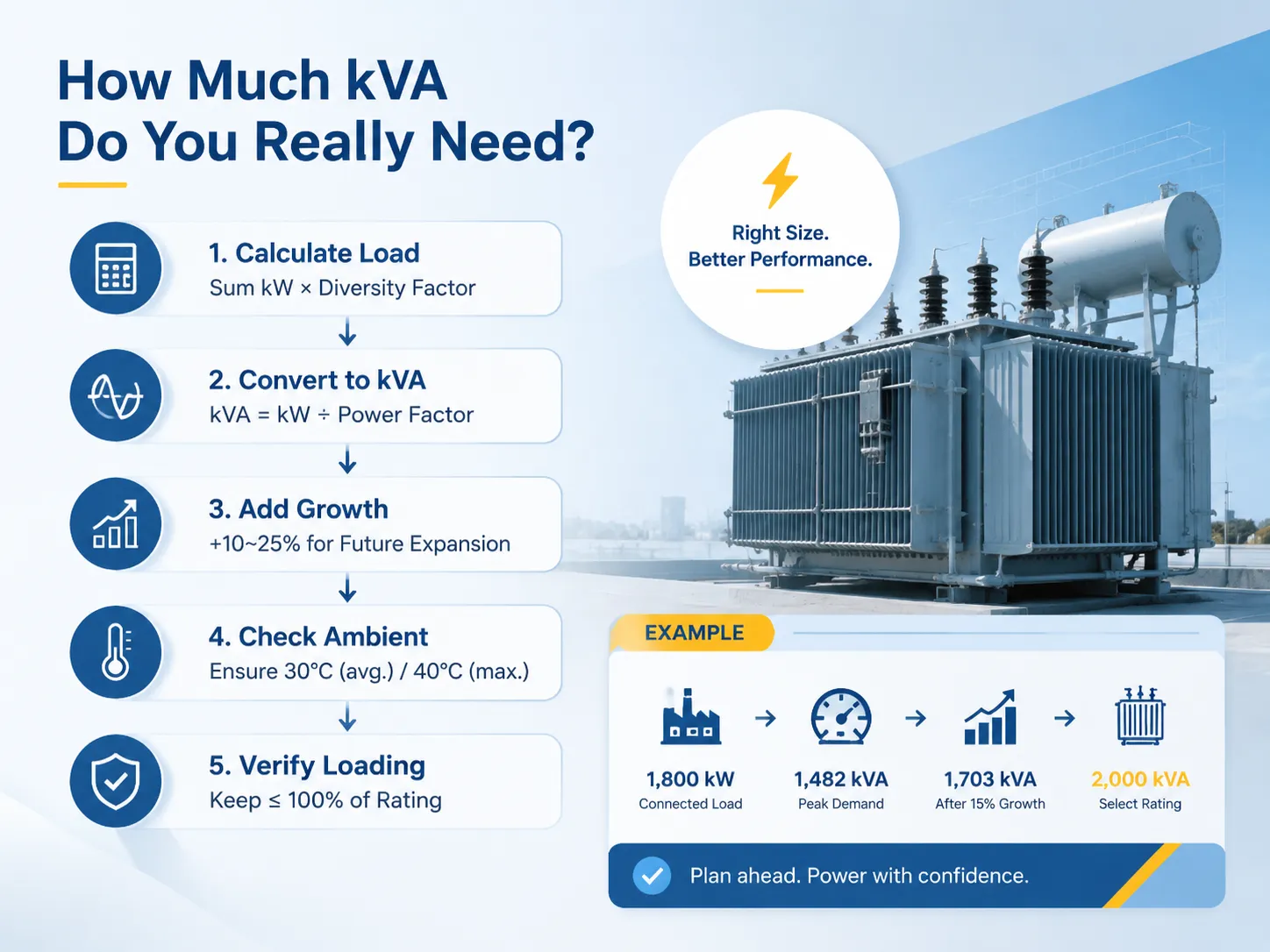
負荷計算:実際に必要なkVAはどれくらいですか?
最も頻繁に発生する選定エラーは、負荷を誤って見積もることです。代わりに以下の方法を使用してください:
- 下流のフィーダーに接続されている負荷の名前プレートkWを合計し、次に多様性係数を適用します。工業用の場所は通常、名前プレート値の合計の60~85パーセントで運転されます。モーターや機器は通常、同時に最大負荷で運転されることはありません。.
- kVAを求めるには、kWをkVAに変換します:kVA = kW ÷ 力率。典型的な力率は0.8から0.9の間ですが、力率が0.7未満の場合、変圧器は能動電力ではなく無効電力で動作していることを示します。.
- 拡張を考慮するために、成長係数を10~25パーセント使用し、数値を最寄りの定格(例:630、800、1,000、1,250、1,600 kVA)に切り上げます。.
- 温度を考慮するために、周囲温度を測定します。IEC 60076-2規格によれば、平均年間温度は約30℃と仮定され、最大温度は40℃を超えないとされています。熱帯地域では、温度が10度上昇すると絶縁寿命が大幅に減少するため、定格を下げるか高い定格を使用する必要があります。.
- 稼働サイクルに応じた負荷係数を調査します。変圧器がその容量の80パーセントで連続的に運転される場合、総損失とホットスポット温度は問題ありません。同時に、変圧器が100パーセントまで負荷される場合、IEC 60076-7からの過負荷曲線を確認する必要があります。.
例として、ある工場には1,800 kWの接続されたモーター負荷があります。その多様性係数は0.7で、力率は0.85です。ピーク需要は次のように計算できます:1,260 kW / 0.85 = 1,482 kVA。成長係数15パーセントを考慮すると、需要は1,703 kVAになります。したがって、切り上げにより変圧器の定格は2,000 kVAになります。.
損失と効率定格の理解
変圧器の損失は、IEC 60076-1で提供され、工場でテストされる2つの要素から成ります。.
| 損失タイプ | 定義 | 実行 | 一般的な値 | 資本化された価値 |
|---|---|---|---|---|
| 無負荷(鉄)損失 | 磁化によるコア損失;24時間365日存在 | 常に、ゼロ負荷でも | 5~4 kW/MVA(例:10 MVA:15~40 kW) | $2,000~$6,000/kW |
| 負荷(銅)損失 | 負荷電流による巻線損失 | 負荷の二乗に比例 | フル負荷時の6~13 kW/MVA | $400~$1,200/kW |
| 総損失と効率 | 効率 = 出力/入力 | — | 配電/電力ユニットのための98.5~99.8% | — |
効率の数値は印象的に見えますが、計算を行うとそうではありません。98.8パーセントの効率を持つ1,000 kVAの変圧器は、継続的に12 kWを失います。$0.12/kWhおよび80パーセントの平均負荷で、これはおおよそ12 × 0.8² × 8,760時間 × $0.12 ≈ $10,700の損失となります。25年間で、エネルギー損失は変圧器の購入価格の60〜90パーセントに達する可能性があるため、変圧器の損失評価はユーティリティバイヤーにとって標準的な実践です。アモルファス合金コアは、従来の粒状シリコン鋼と比較して無負荷損失を60〜70パーセント削減し、購入価格はおおよそ10〜25パーセントのプレミアムがかかります。.
油浸型 vs. 乾式型:意思決定表
最大の建設決定は、液体浸漬型と乾式型の間の選択です。以下の表は、典型的な電力工学プロジェクトにおけるトレードオフを要約しています:
| 基準 | 油浸型(鉱油) | 乾式型(キャストレジン / VPI) |
|---|---|---|
| 典型的な定格範囲 | 25 kVA – 300+ MVA | 50 kVA – 20 MVA |
| 効率 / 損失 | 大型ユニットに最適 | 良好; 大型サイズではわずかに損失が高くなる |
| 火災リスク | 可燃性オイル; containmentが必要 | 自己消火性(F1クラス)、低火災負荷 |
| 屋内 / 屋外 | 屋外が一般的; 屋内はバルトが必要 | 屋内が好ましい; 屋外はIP等級のエンクロージャが必要 |
| メンテナンス | オイルテスト、ブリーザー、DGA | 最小限; クリーンな巻線 |
| 典型的な価格(1,000 kVA) | $6,000–$14,000 | $10,000–$24,000 |
| 最適な用途 | サブステーション、公共事業、大規模産業 | 建物、データセンター、トンネル、オフショア |
通常、火災安全基準と保険要件がこの選択に影響を与えます。例えば、火災安全コードや地域の規制は通常、建物、病院、トンネル、工業プラントにおいて乾燥トランスや難燃性液体(エステル)トランスを要求します。それに対して、屋外のサブステーションや公共事業システムは、コストが低く効率が高いため、通常ミネラルオイルを使用します。持続可能性が優先される場合、自然エステル(植物油)トランスは高い発火点を持つ適切なソリューションとなり、そのコストは従来のミネラルオイルトランスのコストより約5〜15パーセント高くなります。.
用途別トランス分類
電力工学のバイヤーは、いくつかのトランスファミリーに出会います。プロジェクトに必要なものを知ることで、仕様の混乱を防ぎます:
| 分類 | 典型的な定格 | 主な用途 | 注記 |
|---|---|---|---|
| 配電トランス | 25–2,500 kVA | LV消費者への最終電圧ステップ | kVAあたりの損失が最も低い; シンプルなアクセサリー |
| 電力トランス | 5–300 MVA | サブステーション、送電、発電 | OLTC、複雑な冷却、型式試験済み |
| ユニット / 発電機昇圧 | 100–1,200 MVA | 発電所の相互接続 | 最高の信頼性要件 |
| 炉 / 整流器トランス | カスタム | 電気アーク炉、電解、HVDC | 高電流、特別な巻線 |
| 接地 / グラウンディングトランス | 100–2,000 kVA | 中性接地、ジグザグ | 短時間運転 |
| 乾式 / キャストレジン | 100–10,000 kVA | 商業、工業、海洋 | 耐火性、低メンテナンス |
バイヤーが確認すべき主要仕様
次のパラメータを問い合わせ文書に記載し、すべてのサプライヤーに見積もりを依頼してください。パラメータが不足していることが、サプライヤーの見積もりが比較できない最も一般的な理由です。.
| パラメータ | 要件 | なぜ重要か |
|---|---|---|
| 定格電力 | 標準サイズに丸められた計算kVA | サイズ、価格、および損失を定義します |
| 電圧とベクトルグループ | 例:33/11 kV、Dyn11、50 Hz | グリッドインターフェースと並列運転 |
| インピーダンス電圧 | 4–12.5% | 故障レベル、電圧降下、並列運転 |
| 冷却クラス | ONAN、ONAF、OFAF / AN、AF | 連続対周期的容量 |
| 無負荷損失 / 負荷損失 | 記載された最大値 | エネルギーコストと効率クラス |
| 絶縁レベル | BIL 例:33 kVクラスの170 kV | 雷およびスイッチング耐性 |
| タップチェンジャー | DETC ±2×2.5% または OLTC ±8×1.25% | 電圧調整要件 |
| 騒音レベル | 55–85 dB(A) | 環境許可 |
| 規格 | IEC 60076シリーズまたはIEEE C57.12 | 受け入れおよび保証の基準 |
規格遵守:IEC、IEEE、および地域のグリッドコード
見積もりを見始める前に、通常のファミリーを選択してください。IEC 60076は北米以外で主導的であり、IEEE C57.12.00およびIEEE C57.12.90は米国およびカナダでの基準を決定します。IEC文書の中で、IEC 60076-1(一般)、IEC 60076-2(温度上昇)、IEC 60076-3(絶縁レベル)、IEC 60076-5(短絡耐性)、およびIEC 60076-11(乾式)が重要です。.
地元のネットワークオペレーターも独自の基準を課しており、分散型発電のための国家接続ガイドラインが正しい電圧範囲と高調波成分を決定し、タップチェンジャーとインピーダンスの選択を決定します。仕様を決定する前に、ネットワークオペレーターから必要な技術条件を説明する文書を要求し、遵守を示す型式試験報告書を取得してください。グリッド接続検査に失敗したトランスは非常に高価なペーパーウェイトとなります。.
ブランドオプションと現実的な価格ベンチマーク
市場は国際的なプレーヤーとコスト効果の高い地元のサプライヤーの両方を含んでいます。以下に示す数字は、1,000 kVAの配電トランスと10 MVAの33/11 kVの電力トランスのための指標的なFOB範囲を示しており、数字は仕様と原材料コストに依存します。.
| ブランド | 起源 | 1,000 kVA配電 | 10 MVA 33/11 kV | 強度 |
|---|---|---|---|---|
| ABB | スイス | $15,000–$28,000 | $180,000–$320,000 | グローバルサービス、グリッドグレードの参照 |
| シーメンスエナジー | ドイツ | $16,000–$30,000 | $200,000–$350,000 | デジタルトランス、エンジニアリングの深さ |
| シュナイダーエレクトリック | フランス | $14,000–$26,000 | $170,000–$310,000 | パッケージソリューションとMVポートフォリオ |
| 日立エナジー | スイス/日本 | $15,000–$27,000 | $190,000–$340,000 | 大型電力トランスの専門知識 |
| 韓国の大手(現代、ILJIN) | 韓国 | $12,000–$22,000 | $150,000–$280,000 | 一貫した品質、強力な試験ラボ |
| 中国のOEM(TBEAなど) | 中国 | $7,000–$14,000 | $90,000–$180,000 | 容量とコストのリーダーシップ |
| 中堅の中国輸出業者(例:江蘇省蘇辺電力) | 中国 | $6,000–$12,000 | $80,000–$150,000 | カスタムエンジニアリング、迅速なリードタイム |
国際的なメーカーは、その歴史、確立されたサービスネットワーク、研究開発への投資に基づいて高い価格を設定することができます。これは高価なエネルギー資産の場合に非常に重要です。一方、中国のメーカーはほぼすべての世界的な生産を占めており、IEC 60076規格に従って輸出認証のためのインフラを利用して運営しています。江蘇省に本社を置く江蘇蘇辺電力は、異なる地域で110 kVまでの変圧器に対してIEC規則に準拠したソリューションを提供する中国の企業です。蘇辺製品の主な利点は、エンジニアリングの柔軟性、短納期、テストのオープン性です。中国では、欧州メーカーの価格と比較して20-40%のコスト削減が可能であり、中国製品の品質は劣っていません。.
一般的な選択ミスとその回避方法
- 安全側にいるためのオーバーサイズ。変圧器の最も効果的な運転範囲は40-80パーセントの負荷です。大きすぎる変圧器は投資の損失と効率の低下を意味するため、負荷データを測定し、変圧器のサイズを計算する必要があります。.
- 高調波を考慮しないこと。可変速ドライブは高調波電流を生成し、追加の損失と加熱(kファクター負荷)を引き起こします。さまざまな重負荷ドライブの設置に対しては、kファクター評価を選択するか、変圧器を減格する必要があります。.
- 異なる範囲の見積もりを比較すること。ある見積もりにはタップチェンジャーが含まれている一方で、別の見積もりには含まれていない場合があります。見積もりの実際の範囲を比較する必要があります。.
- 高度と環境を無視すること。変圧器を1000 m以上の高度に設置した場合、IEC 60076-1に従って適切な減格を行う必要があります。.
- 損失の評価前に購入すること。見た目が似ているデバイスでも、損失が$10000異なる場合があります。.
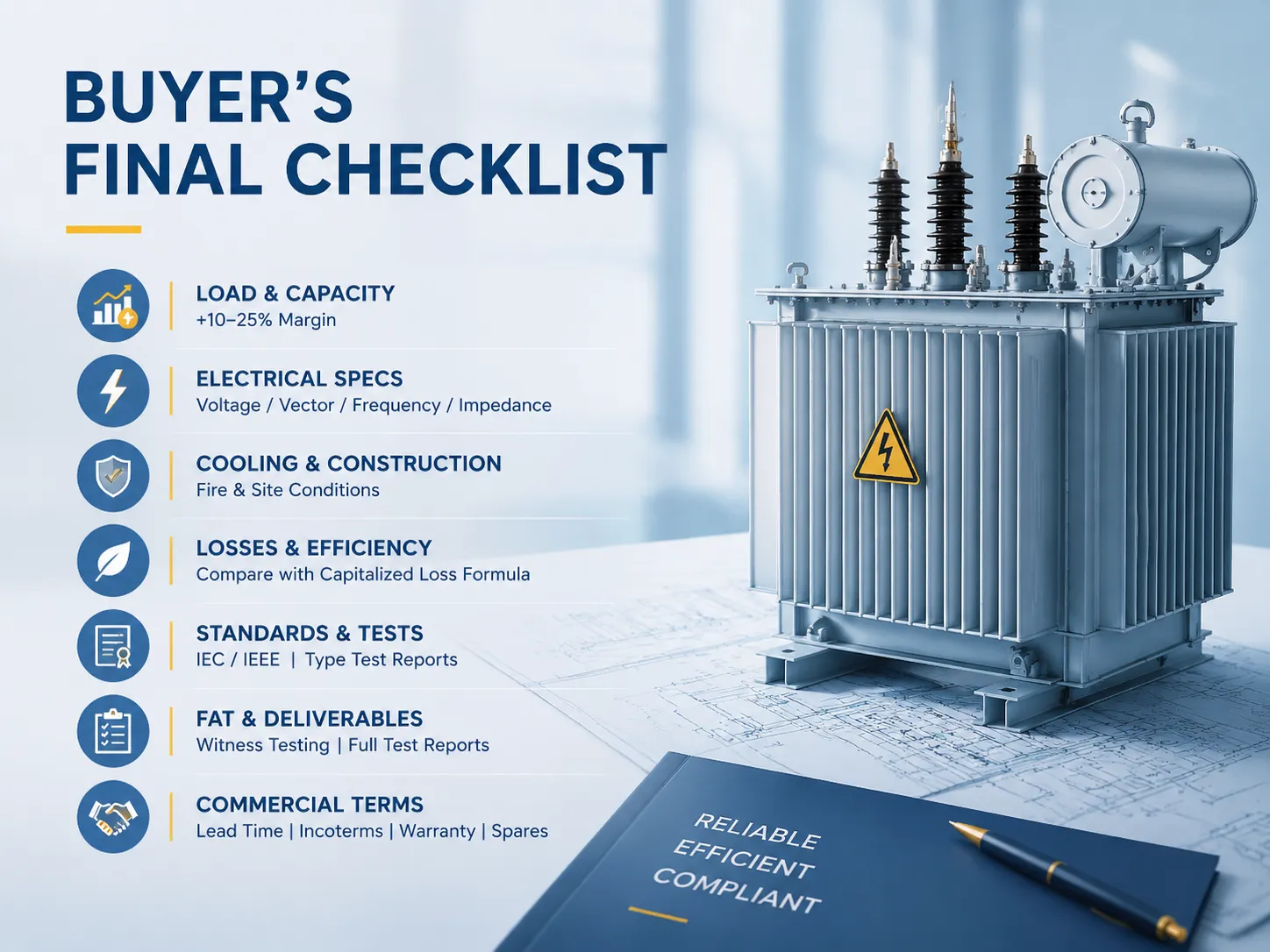
購入者の最終チェックリスト
- 負荷プロファイルの計算が行われ、kVAは10–25パーセントのマージンを加算して調整されました。.
- 電圧、ベクトルグループ、周波数、およびインピーダンスが決定されました。.
- 冷却タイプと構造タイプは、火災および現場条件に基づいて選択されました。.
- 損失は資本化損失の公式に従って推定されました。.
- 標準ファミリーが確認され(IEC 60076またはIEEE C57.12)、型式試験報告書が要求されました。.
- FATの範囲が合意され、テスト手順と完全なテスト報告書の納品が含まれました。.
- リードタイム、インコタームズ、および保証(12 -60ヶ月)が確認されました。.
よくある質問
プロジェクトに必要なkVA定格をどのように計算しますか?
必要な変圧器容量を計算するには、接続負荷の合計(キロワット単位)を単純に加算し、多様性係数(一般的に産業負荷の場合は0.6-0.85)を適用し、その数値を力率で割ってキロワットをキロボルトアンペアに変換し、成長のために10-25%を加算して切り上げます。例えば、800 kWで力率が0.85で多様性係数が0.8の場合、約753 kVAとなり、成長を考慮して1,000 kVAに切り上げることができます。.
現代の電力変圧器の典型的な効率はどのくらいですか?
通常、配電用変圧器は約98%から99.5%の効率に達し、大型電力変圧器は約99.5%から99.8%の効率を達成できます。しかし、重要なのは相対的な効率値ではなく、絶対値です。例えば、10 MVAの変圧器の場合、損失はフルロード時で30 kWから70 kWになります。電気の価格($0.12/kWh)を考慮すると、毎年の損失はかなりの金額に達する可能性があります。.
2025–2026年に1,000 kVAの変圧器はどのくらいの費用がかかりますか?
通常、1,000 kVAの変圧器は、中国のサプライヤーから$6,000から$14,000の間で、欧州メーカーからの場合は約$15,000から$28,000の間で購入できます。変圧器の最終的なコストには、配達、保険、物流費用も含まれ、追加で8%から15%の費用がかかります。また、銅や石油の現在の価格が価格にどのように影響するかを確認する必要があるため、60-90日間有効な公式の価格見積もりを取得することを忘れないでください。.
プロジェクトには油浸型と乾式型のどちらを選ぶべきですか?
屋外での設置や、公共事業や大規模産業負荷が優勢な場所には油浸型を選択してください。ただし、これは火災安全基準に準拠している必要があります。屋内、または建物、トンネル、データセンター、または火災の危険やメンテナンスの問題から制限がある他のエリアでの設置には乾式型を選択してください。乾式変圧器のコストは、同じ容量定格の油浸型変圧器よりも40-80%高くなる傾向がありますが、油の取り扱いプロセス全体を回避できます。.
損失を低減するために追加でどのくらい支払うべきですか?
資本化された損失評価は、kWあたり約$2,000–6,000の無負荷損失回避利益を生み出し、kWあたり$400–1,200の負荷損失を回避します。購入価格の5–15%のプレミアムが支払われる場合、無負荷損失が15–20%以上減少する結果となる場合は、通常正当化されます。.
参考文献
- IEC 60076-1: 電力変圧器 — 一般 — 評価、損失、および一般的な要件の基礎となる標準。.
- IEC 60076-2: 温度上昇 — 負荷能力のための温度上昇限界と冷却クラスの規則を定義します。.
- IEC 60076-7: 油浸型変圧器の負荷ガイド — 名札を超えたサイクリックおよび緊急負荷の基準。.
- IEC 60076-5: 短絡に耐える能力 — 短絡の堅牢性に関する設計検証および試験要件。.
- IEEE — トランスの調達と損失評価に使用されるC57.12シリーズおよび信頼性作業グループデータを公開します。.
- NEMA — トランスの効率と適用ガイダンスを提供する北米の業界団体です。.
- 江蘇省蘇辺電力 — 世界中のエンジニアリングバイヤーをサポートするIEC 60076準拠のトランス製造業者です。.
結論
電力工学におけるトランスの選定プロセスは、ランダムな推測ではなく計算された決定に依存しています。これには、ネット負荷を特定し、成長の可能性に対して適切な割合を追加する必要があります。トランスの運用による経済的損失を計算し、現場および火災安全要件に準拠した適切な設計タイプを選択し、機器が対応する基準に準拠していることを確認することで、設計計算が有効と見なされます。.
- 得られた測定値および必要なサイズマージンを10%から25%の範囲で考慮してサイズを見積もります。.
- 負荷なしで$2,000から$6,000/kW、負荷ありで$400から$1,200/kWの範囲で変動する損失を評価します。.
- 設置条件および火災安全規則に従って設計タイプを選択します。.
- タイプ試験報告書を用いて、トランスがIEC 60076またはIEEE C57.12の基準に準拠していることを確認します。.
- 詳細およびFATを考慮して、確立されたルールに従ってトランスの見積もりを比較します。