


Você é um engenheiro elétrico chefe em uma empresa de utilidade pública da cidade que acaba de ser autorizada a executar um projeto piloto de rede inteligente, que incluirá a análise de 2.400 transformadores de distribuição. Foi indicado à sua equipe que os planos são tornar a rede observável, mas o que você herdou ainda é uma rede que requer leituras de medidores, amostragens de óleo trimestrais e chamadas ocasionais de cidadãos sobre ouvir zumbidos incomuns antes de a eletricidade acabar. O principal desafio aqui é especificamente o transformador de rede inteligente, porque o transformador de distribuição é o último nó da rede que opera sem um medidor e sem qualquer monitoramento, sem que ninguém pense em verificar o orçamento para a substituição de milhares de unidades de uma só vez.
Este artigo explica a atualização do transformador inteligente e as práticas de aplicação em uma rede inteligente, juntamente com os custos envolvidos na adaptação versus substituição, a importância dos sensores e protocolos de comunicação, as principais informações a serem coletadas primeiro e até onde um orçamento modestamente organizado pode chegar.
Responda com padrões: Um transformador de rede inteligente é um transformador de distribuição ou transformador de potência equipado com monitoramento online, possuindo inteligência local e capacidades de comunicação para permitir que as utilidades monitorem carga, temperatura do óleo, gases dissolvidos e posição de derivação em tempo real.
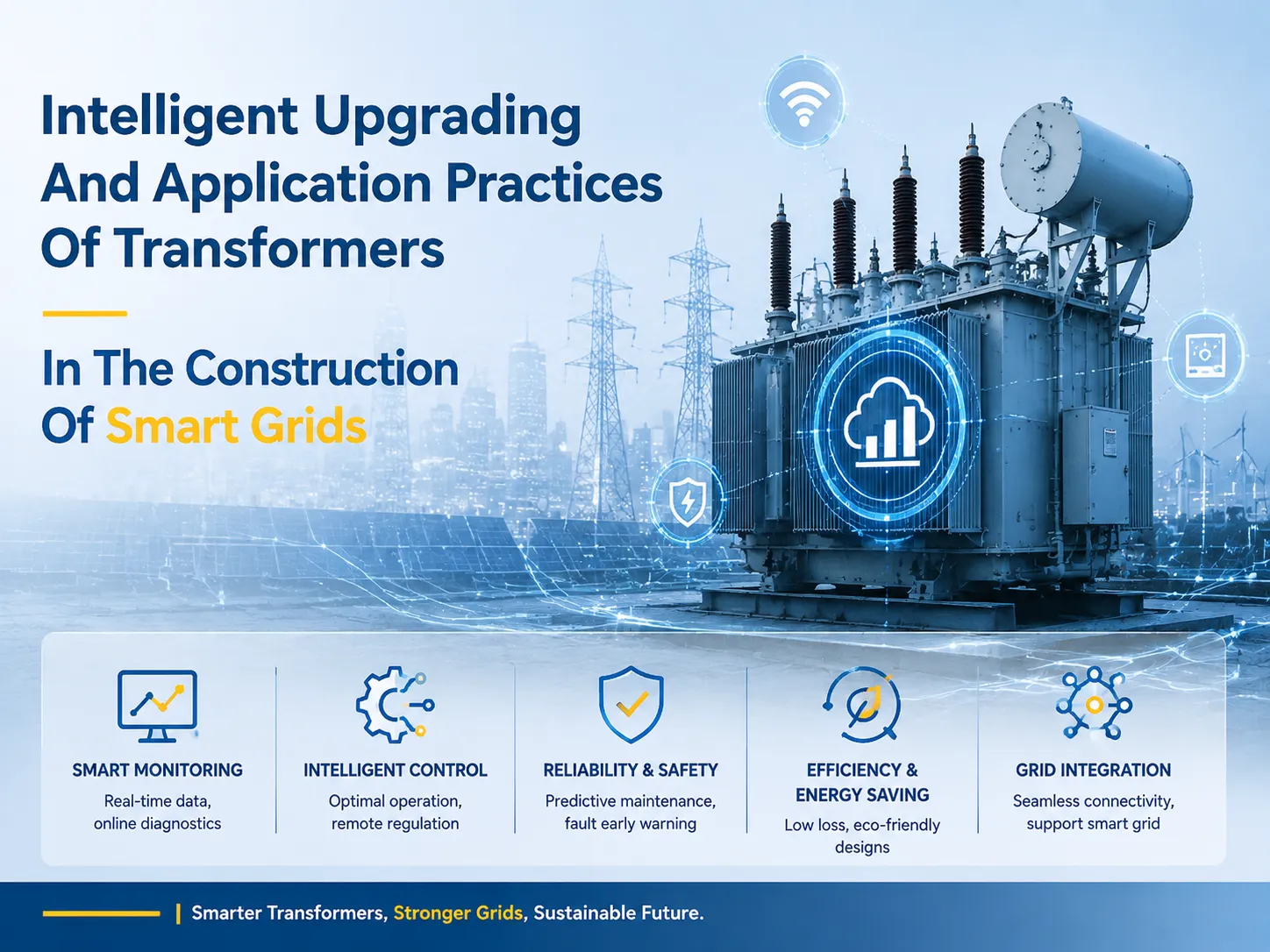
O que é um Transformador de Rede Inteligente?
O transformador de rede inteligente é um transformador de potência padrão ou transformador de distribuição equipado com mecanismos de detecção, processamento e comunicação para permitir operação remota e gerenciamento de desempenho em tempo real. A unidade permanece acima dos princípios eletromagnéticos descritos na IEC 60076. A diferença pode ser encontrada na parte “inteligente”, que geralmente inclui:
- Sensores de temperatura e nível de óleo (unidades imersas em óleo) ou monitoramento da temperatura do enrolamento para unidades do tipo seco;
- Adaptador DGA para monitoramento de gás (rastreamento de hidrogênio, metano, etileno e outros gases de falha);
- Sensores de descarga parcial instalados em buchas na parede do tanque;
- Unidade de monitoramento e controle local que é responsável pela análise, e
- Gestão de distribuição através do sistema SCADA seguindo Modbus, DNP3 ou IEC 61850.
O transformador inteligente pode ser diferenciado dos “monitorados” pelo fato de que ele opera usando dados em vez de apenas transmiti-los. Os transformadores inteligentes podem emitir um alarme caso detectem uma desvio do padrão de carga diário regular, sincronizar com o OLTC para controlar a tensão durante o carregamento de VE dentro de limites rastreáveis e avaliar a vida útil restante do isolamento com base nos pontos quentes observados anteriormente.
Por que os Transformadores Inteligentes São Importantes para a Construção de Redes Inteligentes
A frota de transformadores de distribuição constitui cerca de 70-80% dos ativos totais possuídos por uma concessionária e, ironicamente, permanece a classe de ativos menos monitorada. De acordo com estudos da CIGRE e IEEE, cerca de 30-40% das falhas de transformadores são “inesperadas” porque sua falha não é precedida por nenhuma inspeção. A interrupção causada por um transformador com falha é bem estabelecida: 100-600 clientes perdem temporariamente seu fornecimento de energia, o vazamento de óleo pode variar entre 400-2.000 litros, e o custo total da falha pode ser de $25.000-150.000, dependendo da compensação pela interrupção e substituição.
Quando o custo de monitorar um transformador está na faixa de $1.200-5.500, mas pode salvar uma concessionária de até mesmo um incidente desse tipo ao longo de dez anos, é evidentemente sensato implementar o sistema de monitoramento. O segundo benefício é a substituição adiada: um transformador que opera corretamente com isolamento em boas condições e que é operado a 65% pode ser utilizado por 8-15 anos a mais. A terceira vantagem é a operacional: os dados sobre a carga dos transformadores recebidos em tempo real podem ajudar a fazer ajustes em relação às cargas dos alimentadores e prolongar os investimentos necessários na modernização das estações para $200.000-2 milhões.
Como a Atualização Inteligente Funciona
Atualizar um transformador de maneira inteligente passa por cinco etapas:
- Ver: Os sensores monitoram as características da temperatura do óleo, temperatura do enrolamento, vibração do tanque, concentração de gases e corrente de carga em intervalos de um segundo a um minuto.
- Analisar: A unidade de controle local transforma as leituras brutas em indicadores utilizáveis — como temperatura de pontos quentes, porcentagem de umidade no óleo, relação com a carga e índice de saúde de 0 a 100.
- Responder: As regras incorporadas (e às vezes modelos de aprendizado de máquina nos novos sistemas) sinalizam a aparição de tendências anormais. Por exemplo, se a leitura de hidrogênio exceder 150 ppm e aumentar, gera um alarme, enquanto uma leitura de 80 ppm não gera.
- Agir: A unidade pode mudar a posição do tap automaticamente, iniciar os ventiladores para resfriar a 65 °C (de acordo com o padrão para transformadores imersos em óleo), ou enviar o comando para limitar a carga de alimentadores não críticos.
- Transmitir: As informações são comunicadas usando a rede Ethernet, fibra ou 4G/LTE para o centro DMS/SCADA via protocolo IEC 61850, transformando assim o transformador em um modelo de informação típico em vez de uma caixa preta criada pelo fabricante.
Para concessionárias de energia com subestações baseadas no protocolo IEC 61850, transformadores inteligentes são nós virtuais devido ao fato de que as funções de proteção e monitoramento utilizam a mesma pilha de comunicação, que é muito diferente de uma família de sensores montados no tanque.
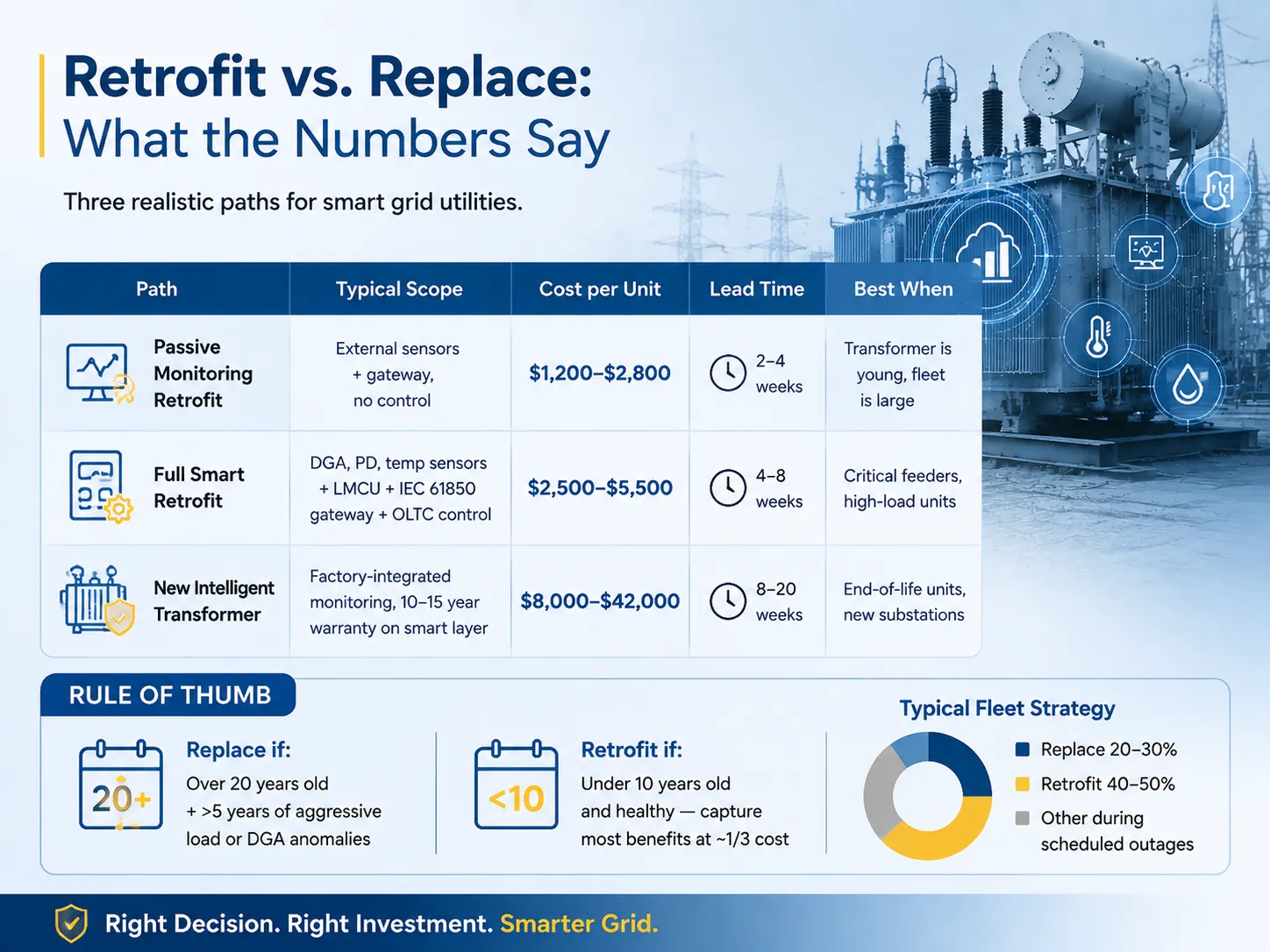
Retrofit vs. Substituição: O que os Números Dizem
Um erro comum cometido durante a construção de uma rede inteligente é pensar que é necessário substituir cada transformador. De acordo com os dados da tabela abaixo, a concessionária pode escolher entre três cenários práticos.
| Caminho | Escopo Típico | Custo por Unidade | Tempo de Entrega | Melhor Quando |
|---|---|---|---|---|
| Retrofit de monitoramento passivo | Sensores externos + gateway, sem controle | $1.200–$2.800 | 2–4 semanas | O transformador é jovem, a frota é grande |
| Retrofit inteligente completo | DGA, PD, sensores de temperatura + LMCU + gateway IEC 61850 + controle OLTC | $2.500–$5.500 | 4–8 semanas | Alimentadores críticos, unidades de alta carga |
| Novo transformador inteligente | Monitoramento integrado de fábrica, garantia de 10–15 anos na camada inteligente | $8.000–$42.000 | 8–20 semanas | Unidades no final da vida útil, novas subestações |
O conselho que os engenheiros frequentemente dão é que um transformador com mais de 20 anos, e que sofreu com alta carga por mais de 5 anos ou que apresenta indícios de problemas de DGA, é provavelmente um candidato à substituição. No entanto, um transformador com menos de 10 anos e que funciona bem pode ser reformado por cerca de um terço do custo. Como resultado, a maioria das concessionárias tomará a decisão de substituir apenas 20–30% de transformadores, reformar 40–50% e instalar seus transformadores restantes quando estiverem fora para manutenção.
Tipos e Classificações de Transformadores Inteligentes
Existem vários tipos diferentes de transformadores de rede inteligente com suas aplicações específicas na rede.
| Tipo | Faixa de Classificação | Recursos Inteligentes | Aplicação Típica |
|---|---|---|---|
| Transformador de distribuição inteligente (imersão em óleo) | 50–2.500 kVA, 10–35 kV | DGA, monitoramento de carga, controle de tap | Alimentadores urbanos, eletrificação rural |
| Transformador de distribuição inteligente (tipo seco) | 100–4.000 kVA, até 35 kV | Temperatura do enrolamento, monitoramento de PD | Edifícios, subestações internas, plataformas offshore |
| Transformador de potência inteligente (nível de rede) | 5–100 MVA, 35–220 kV | DGA completo, automação OLTC, pronto para fasor | Subestações de transmissão, pontos de interconexão |
| Transformador de estado sólido (SST) | 100 kVA–2 MVA (fase comercial) | Baseado em eletrônica de potência, bidirecional, link DC | Hubs de carregamento EV, microredes PV + armazenamento |
| Transformador inteligente com núcleo amorfo | 50–1.000 kVA | Baixa perda sem carga + monitoramento | Programas de alta redução de perda sem carga |
Note que transformadores de estado sólido valem a pena ser discutidos, pois são a única tecnologia existente que conecta redes AC e DC, permitindo isolamento harmônico. No entanto, o preço comercial (variando de $150 a $300 por kVA ou cerca de 4 a 12 vezes o preço de um modelo padrão) limita seu uso hoje principalmente a estações de carregamento rápido e indústrias ferroviárias, em vez de uso geral em distribuição.
Normas e Protocolos de Comunicação
Todas as especificações de transformadores elétricos inteligentes devem referir-se às seguintes normas para garantir que as licitações possam ser comparadas::
| Padrão | Escopo | O Que Isso Significa para Aquisições |
|---|---|---|
| IEC 60076 (série) | Projeto, testes, perdas, impedância de transformadores de potência | Classificação básica e garantias de perda |
| IEC 61850 | Arquitetura de comunicação de subestações e DER | O transformador deve expor um modelo padrão de nó lógico |
| IEEE C57.104 | guia de interpretação de DGA | Define níveis de alarme de concentração de gás e zonas de ação |
| IEC 60270 | Medição de descarga parcial | Estabelece níveis aceitáveis de PD (ex.: ≤10 pC para unidades tipo seco novas) |
| IEC 60529 | Proteção contra entrada | Invólucros de sensores normalmente precisam de IP54 ou superior |
| IEEE 1613 | Requisitos ambientais para dispositivos de comunicação em subestações | Aplica-se ao hardware do gateway de comunicação |
Na prática, existem duas cláusulas que podem influenciar a decisão da licitação; filosofia de alarme DGA (zonas de gás IEEE C57.104) e perfil de comunicações (um modelo de servidor IEC 61850 com arquivo SCD da concessionária). Uma empresa que não consegue fornecer um arquivo SCD padrão aumenta o custo de integração em $5.000–$20.000 por site.
Práticas de Aplicação na Rede Inteligente
Atualmente, transformadores inteligentes são encontrados em cinco tipos de usos específicos no desenvolvimento da rede inteligente:
- Gerenciamento de tensão e potência reativa dos alimentadores: Transformadores OLTC inteligentes mantêm a tensão de carga dentro de ±2% do ponto de ajuste com auxílio de bancos de capacitores e inversores DER que contribuem para reduzir perdas nos alimentadores em 3-6% em alimentadores urbanos mal carregados.
- Aproveitamento de energia renovável: O transformador aplica suas funções de regulação automática nos pontos onde ocorre geração de energia solar ou eólica, permitindo fluxo bidirecional de energia entre rede e pontos de geração e alcançando anti-ilhamento e suporte de tensão. Uma usina solar de 1 MW consome um transformador elevador de 1250 kVA.
- Estações de recarga para veículos elétricos: Devido às estações de carregamento rápido em CC consumindo 150-350 kW cada, há muitos transientes de carga que bloqueiam o funcionamento do trocador de tomadas mecânico convencional. Esses transformadores implementam comutação preditiva e operam até 4-6 estações de carregamento sem cintilações.
- Microredes: Em tipos isolados de microredes, é necessário sincronizar sua operação com inversores de bateria operando através de ferramentas de comunicação avançadas.
- Monitoramento da saúde do ativo: O uso de transformadores inteligentes permitiu que as pessoas coletassem dados através de milhares de unidades, obtendo assim informações sobre toda a frota de transformadores. Isso ajudou as empresas a usar essa técnica para reduzir a quantidade de acidentes em 15-25%.
Especificações a Especificar em uma Licitação
Uma vez que você comece a redigir a especificação técnica, não se esqueça de criar uma cláusula separada para a camada inteligente. Os requisitos que devem ser levados em conta são os seguintes:
| Parâmetro | Requisito Recomendado |
|---|---|
| Variáveis de monitoramento | Corrente de carga, temperatura do óleo superior, temperatura do enrolamento, nível de óleo, DGA (H2, CH4, C2H4, C2H6, C2H2, CO, CO2), posição da tomada |
| Amostragem e registro | Medição de 1 segundo, registro médio de 1 minuto, armazenamento local de 30 dias |
| Comunicações | Servidor IEC 61850 (MMS), fallback Modbus TCP, opção de uplink 4G/LTE |
| Precisão | Temperatura ±1 °C, corrente ±0.5% de leitura, DGA ±10% de leitura ou ±10 ppm, o que for maior |
| Tratamento de alarmes | Limites configuráveis por IEEE C57.104, push de email/SMS, objetos de alarme SCADA |
| Classificação do Invólucro | Caixas de junção de gateway e sensor IP54 mínimo, faixa de operação de −25 °C a +60 °C |
| Garantia | Transformador de 10 anos, módulos eletrônicos e de comunicação de 5 anos |
Também deve ser destacado que o sistema de monitoramento não deve cancelar o teste IEC 60076 de transformadores, e deve-se garantir que, se equipamentos refrigerados a óleo forem adaptados com os sensores, eles sejam instalados sem violar o tanque principal.
Principais Marcas & Comparação de Preços
Embora o mercado de transformadores inteligentes seja dominado por grandes empresas internacionais, um número crescente de empresas especializadas da China começou a participar ativamente deste negócio. O preço de um transformador de distribuição inteligente típico de 630 kVA, 10 kV/0,4 kV com DGA e monitoramento de tap é mostrado na tabela abaixo; os preços dependem das especificações, região e volume do pedido.
| Marca | País | Oferta de Camada Inteligente | Preço Indicativo (USD) |
|---|---|---|---|
| ABB | Suíça | Ecossistema TXpert, DGA completo + análises | $18.000–$34.000 |
| Siemens | Alemanha | SITRAM/EnergyIP, controle de tap integrado | $17.000–$33.000 |
| Schneider Electric | França | Transformador Inteligente (EcoStruxure), plug-and-play | $16.000–$31.000 |
| Hitachi Energy | Japão/Suíça | Controle LTC + análises de frota TXplore | $18.000–$36.000 |
| GE Vernova | EUA | Integração de Gestão de Desempenho de Ativos | $17.000–$35.000 |
| Jiangsu Subian Electric Power | China | Unidades testadas IEC 60076 com monitoramento inteligente opcional, OLTC, pronto para DGA | $8.000–$22.000 |
Empresas internacionais possuem sistemas de análises extensivos e programas de suporte disponíveis para clientes envolvidos em projetos de frota de longo prazo. A Jiangsu Subian Electric Power desenvolveu um transformador testado em fábrica que atende aos padrões IEC 60076 e vem com monitoramento inteligente opcional. Como resultado, os preços da Subian são aproximadamente 40–55% dos preços cobrados por empresas localizadas na Europa e América por produtos com especificações semelhantes. Além disso, oferece possibilidades de OEM/ODM para que os clientes possam determinar o fornecedor de DGA e o tipo de gateway que desejam. Essas qualidades tornam a Subian Electric Power um forte concorrente em projetos sensíveis a preços, como eletrificação rural, alimentadores de distribuição em áreas em desenvolvimento ou iniciativas de retrofit em larga escala.
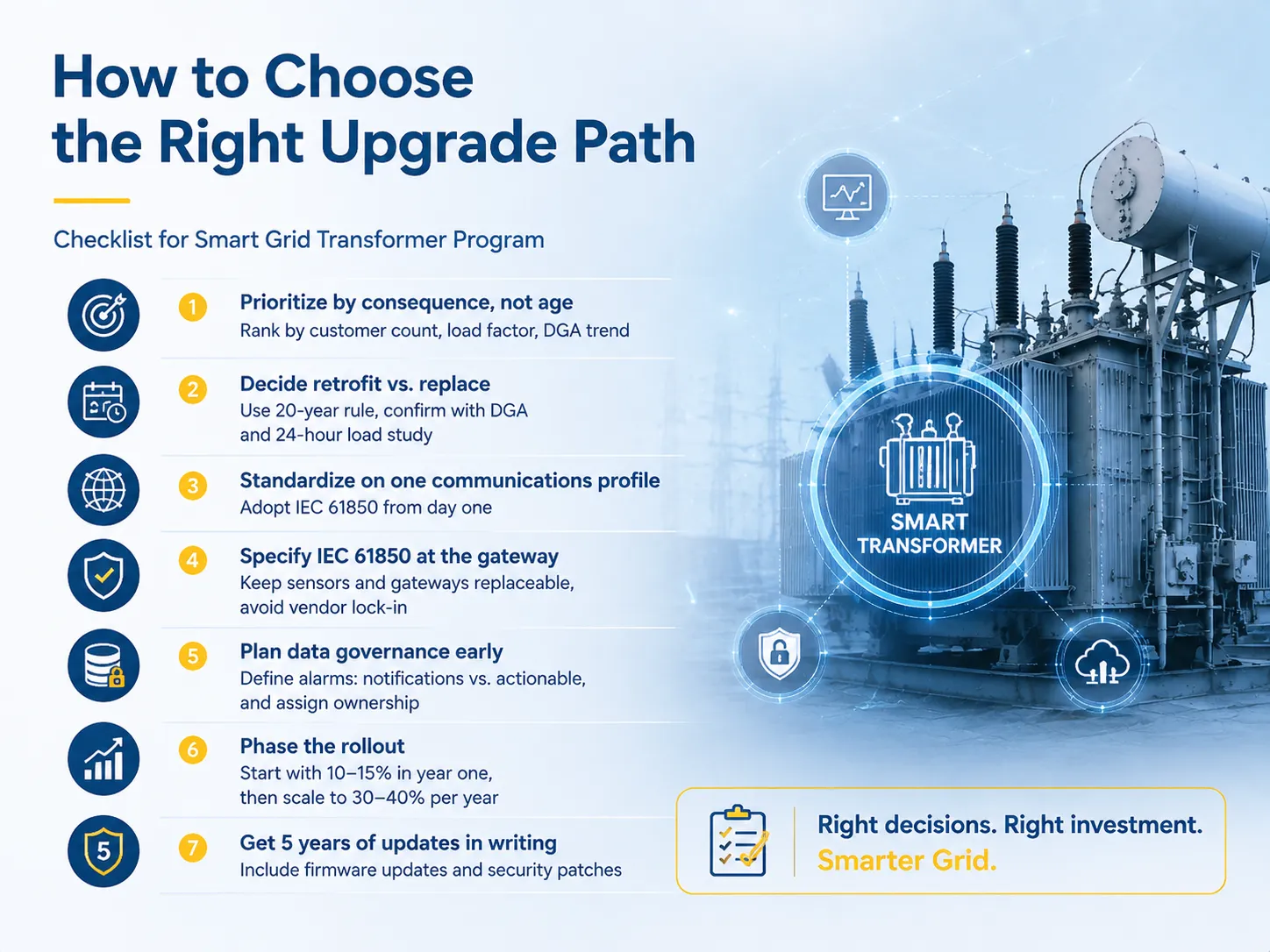
Como Escolher o Caminho de Atualização Certo
O seguinte conjunto de diretrizes deve ser seguido ao criar o programa de transformadores para a rede inteligente:
- A prioridade na classificação não deve ser dada à idade, mas às consequências. Classifique as unidades com base na contagem de consumidores, fator de carga juntamente com a tendência de DGA. Elas não podem ser consideradas iguais quando se trata de uma unidade de 1.600 kVA alimentando um hospital e uma unidade fornecendo energia para uma bomba de campo.
- Estabeleça a necessidade de substituição ou retrofit com base na regra de 20 anos delineada e, em seguida, verifique os resultados com um curso de DGA e realizando uma pesquisa de carga de 24 horas.
- Mantenha um único perfil de comunicação. A aplicação da IEC 61850 é melhor ser feita desde o primeiro dia, pois ajudará a economizar nas despesas de mudança de protocolos no futuro.
- Explique ao escrever os termos IEC 61850 que os sensores e as portas não serão bloqueados pelo fornecedor e podem ser facilmente substituídos.
- Planeje a recomendação antes de colocar os sensores em uso. Você deve esclarecer se os alarmes são mensagens ou eventos que devem ser respondidos por alguém.
- Todo o processo deve ser dividido em fases. No primeiro ano, é melhor lidar com 10-15% das unidades sendo avaliadas e, em seguida, o processo pode ser avançado para 30-40% em número anualmente.
- Seria útil obter por escrito a resposta sobre as atualizações de firmware e patches de segurança por um período de cinco anos, fornecido com garantia.
Perguntas Frequentes
Qual é a diferença entre um transformador inteligente e um transformador monitorado?
Um transformador monitorado apenas transmite medições para um display ou ponto SCADA, enquanto um transformador inteligente realiza o processamento local de dados com a aplicação de regras de diagnóstico, como a interpretação de gás da IEEE C57.104, e pode executar tarefas de forma autônoma, como mudar a posição do tap ou iniciar os ventiladores ou cooperar com inversores DER. A diferença de preço é de cerca de $1.000 a $3.000 para cada unidade do dispositivo, que é a razão pela qual a modernização geralmente começa pela monitorização primeiro e só depois começa a adicionar tecnologias inteligentes.
Quanto custa atualizar um transformador de distribuição existente para ser inteligente?
A modernização de monitoramento passivo com temperatura, carga e gateway de comunicação tem um preço de $1.200 a $2.800 por unidade, enquanto a modernização completa, incluindo DGA, detecção de descarga parcial e controle de tap, varia de $2.500 a $5.500, com um custo adicional de mão de obra de $300 a $800. A modernização completa em fases para a frota de 1.000 unidades custará cerca de $3 milhões a $6 milhões em média.
Quais níveis de gás devem acionar uma ação em um transformador imerso em óleo?
De acordo com a norma IEEE C57.104, o hidrogênio é o principal gás chave: sua concentração normal é inferior a 100 ppm, onde o nível de 100-150 ppm significa amostragem adicional, enquanto acima de 150 ppm indica a necessidade de investigação imediata. A concentração de monóxido de carbono acima de 350 ppm indica a presença de deterioração do papel, e a presença de mais de 1 ppm de acetileno sempre indica que a falha precisa ser investigada.
A IEC 61850 é obrigatória para projetos de transformadores de rede inteligente?
Não estritamente, no entanto, tornou-se uma necessidade de fato para a automação de novas subestações de energia na maioria dos mercados. Modbus TCP ou DNP3 são válidos para gateways de modernização. A vantagem competitiva da IEC 61850 são os nós lógicos padrão, que possibilitam o uso do SCADA com diferentes fornecedores, além de usar transformadores de outros fabricantes.
Quanto tempo leva para um sistema de monitoramento de transformador inteligente se pagar?
Para uma unidade de 630 kVA, o custo para uma reforma completa é de $3.000 a $5.000 para todo o sistema instalado. As economias de não ter uma falha inesperada (o custo médio de tal falha varia entre $25.000 a $150.000 no total) ou de adiar a substituição (entre $8.000 a $22.000) normalmente fazem o investimento se pagar em 2-4 anos.
Referências
- Série IEC 60076 — Transformadores de potência — o design do núcleo, testes e padrões de perda para todos os transformadores de potência e distribuição mencionados ao longo deste artigo.
- IEC 61850 — Redes e sistemas de comunicação para automação de utilidades de energia — o modelo de informação padrão que torna os transformadores inteligentes interoperáveis na automação de subestações.
- IEEE C57.104 — Guia para a Interpretação de Gases Gerados em Transformadores Imersos em Óleo — o guia autoritativo para zonas de alarme DGA e interpretação de gases de falha usados nos limites de monitoramento.
- NEMA — Associação Nacional de Fabricantes Elétricos — publica padrões de eficiência e aplicação de transformadores de distribuição usados em programas de rede inteligente na América do Norte.
- CIGRE — Conselho Internacional sobre Grandes Sistemas Elétricos — publica relatórios de grupos de trabalho sobre confiabilidade de transformadores, DGA e gestão de ativos de frota usados nas estatísticas de falhas deste artigo.
- Resultados do programa de subsídios para investimento em rede inteligente do U.S. DOE — relatórios governamentais sobre custos de implantação de redes inteligentes, benefícios e resultados de projetos de monitoramento de transformadores.
- Jiangsu Subian Electric Power — site oficial — fabricante de transformadores imersos em óleo e do tipo seco em conformidade com IEC 60076, com pacotes de monitoramento inteligente opcionais.
Conclusão
Atualizar transformadores de forma inteligente é a parte mais impactante de um projeto de rede inteligente porque permite o monitoramento do ativo mais oculto da rede. A economia é bastante notável: preço de retrofit de $1.200-5.500 por unidade, custos de falha de $25.000-150.000 e período de retorno de 2-4 anos, além de até 25% de redução no número de falhas não planejadas para empresas com práticas analíticas abrangentes. A solução técnica também é óbvia e consiste em padronizar os protocolos IEC 61850, empregar limites de DGA aceitos pela IEEE C57.104 e utilizar sensores e gateways que sejam intercambiáveis, não dependentes de fornecedores.
- Tente retrofitar todas as unidades saudáveis produzidas há menos de 10 anos; substitua as unidades que têm mais de 20 anos e aquelas com anomalias de DGA.
- Implemente o projeto gradualmente — comece com 10-15% no primeiro ano e depois cubra cerca de 30-40% anualmente.
- Compare marcas mundiais (ABB, Siemens, Schneider) com produtores chineses certificados pela IEC (como Jiangsu Subian Electric Power) para obter o equilíbrio certo entre controle e custo.