


Uma empresa EPC fechou um contrato para solar-plus-storage de 230 MW nas Filipinas. Os clientes estão exigindo que os transformadores sejam entregues no local em 26 semanas. O gerente de compras tem três fornecedores pré-selecionados, duas cotações cujos preços variam em quase 40 por cento, e um cronograma de projeto que não pode ser violado. Se você já esteve nessa posição antes, sabe que escolher o fornecedor de transformadores determinará se sua subestação pode ser energizada a tempo ou se o cliente invocará as multas conforme a cláusula de danos liquidados.
Este guia discute vários aspectos que os EPCs devem investigar e considerar ao selecionar um fornecedor de transformadores, permitindo que eles construam uma matriz de pontuação eficaz para os fornecedores. Abordaremos a capacidade de fabricação, comprovação de testes, certificação, política de preços, documentação necessária e serviços pós-venda, fornecendo assim os números necessários para uma comparação adequada. Assim, ao final deste guia, você obterá uma lista de verificação reutilizável que pode ser aplicada em qualquer um de seus projetos de energia, como um projeto de transformador de 315kVA ou um projeto envolvendo um transformador de 120 MVA.
De forma resumida, antes de selecionar qualquer fabricante de transformadores, os EPCs precisam verificar cinco áreas de preocupação: (1) Capacidade de fabricação e prazos realistas, que normalmente estão na faixa de 8 a 16 semanas para transformadores de distribuição, enquanto transformadores de potência maiores levam de 20 a 32 semanas; (2) Possuir instalações de teste adequadas e comprovação de conformidade com IEC/IEEE; (3) Informações completas de preços com custos de unidades de distribuição imersas em óleo variando de $3000 a $45.000 e transformadores de potência custando de $50.000 a $1,2 milhão, dependendo da classificação do equipamento; (4) Conhecimento sobre a capacidade da empresa de fornecer a documentação técnica, desenhos, relatórios de teste e registros de conformidade; e (5) Compromissos de serviço do fornecedor, que podem incluir comissionamento no local e garantia de 12 a 60 meses de duração.
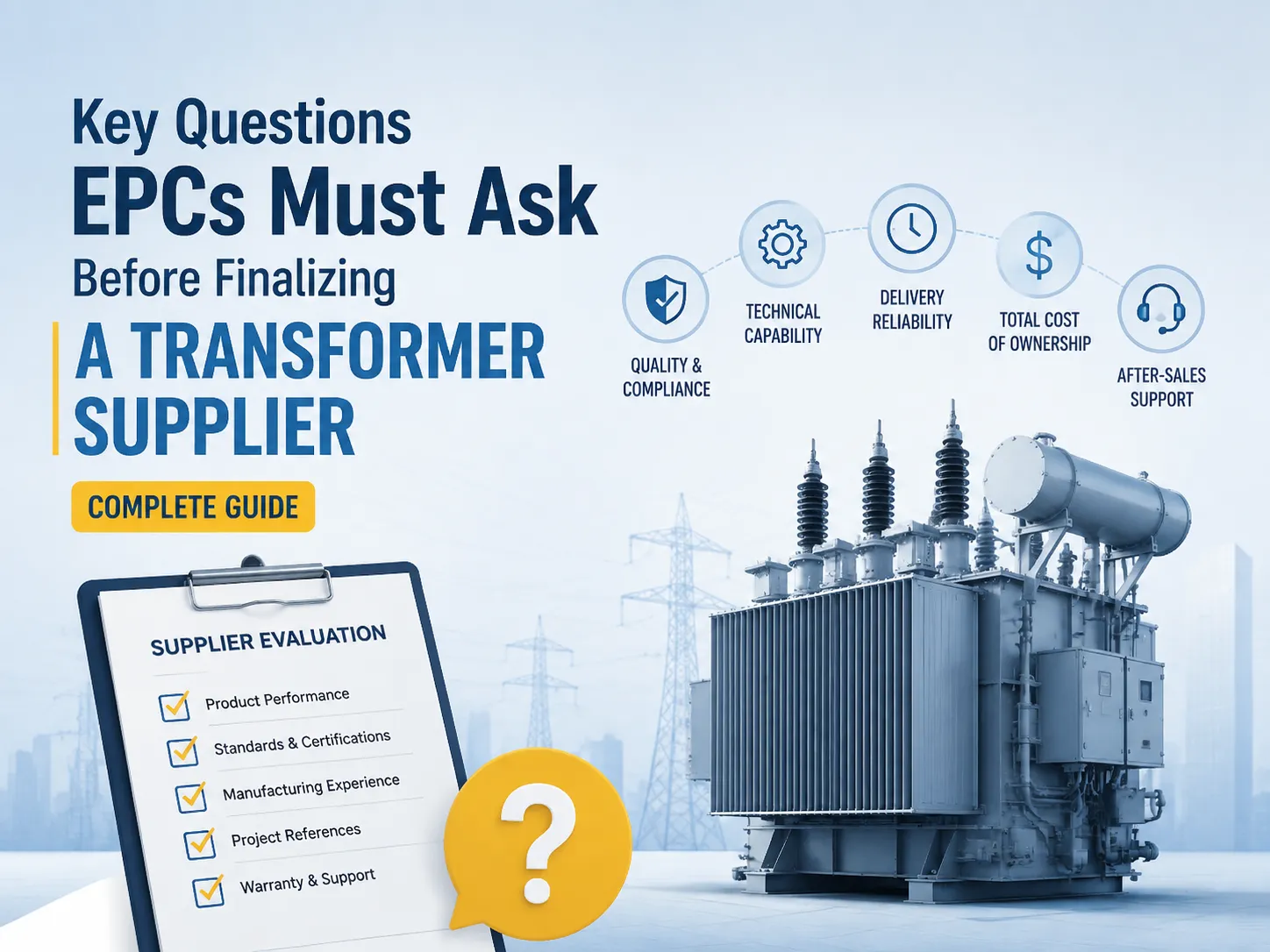
Por que a Seleção de Fornecedores Define o Risco do Projeto EPC
Para o contratante de engenharia, compras e construção (EPC), a importância de um transformador não pode ser subestimada. É um dos elementos que impulsionam o caminho crítico em um projeto e possui um longo processo de fabricação, enquanto a falha pode levar a uma subestação inteira a ficar inoperante. Com base na pesquisa Cigré A2.37, a condição do isolamento e o processo de fabricação são as principais causas de falhas prematuras, e na maioria dos casos, isso se resume a aspectos que o teste de aceitação na fábrica deve detectar.
O preço de um transformador de 10 MVA pode ser tão baixo quanto 5 – 15% do orçamento de uma subestação de tamanho médio, enquanto uma unidade de 100 MVA pode representar aproximadamente 25 – 40% do investimento de capital de uma estação maior. A economia de 12% em um transformador no valor de $400,000 geraria $48,000 em fluxo de caixa positivo, sem mencionar que uma interrupção poderia variar de $50,000 a $2 milhões. Muitas vezes, um preço baixo significa um longo risco na cadeia de suprimentos.
O que torna a aquisição de transformadores diferente para EPCs
Enquanto a maioria dos equipamentos que um EPC compra prontos para uso pode ser substituída se for considerada defeituosa, os transformadores são feitos sob medida, e a configuração do enrolamento, o trocador de tomadas, o padrão de resfriamento e as perdas são todos adaptados aos requisitos de um código de rede específico e da localização. Por essa razão, a aquisição deve ocorrer antes da precificação: as principais empresas EPC emitem um RFQ referindo-se à IEC 60076-1 e IEC 60076-11 (ou IEEE C57.12.00 para a América do Norte) e pedem para receber uma resposta por escrito para cada ponto.
Perguntas sobre Capacidade de Fabricação e Prazo de Entrega
O prazo de entrega é o parâmetro mais crucial porque este é o número mais complicado de verificar. Faça as seguintes perguntas aos candidatos e observe as respostas vagas:
- Qual é o seu backlog de pedidos agora e quantas unidades você pode enviar a cada mês? Um fabricante promete 500 unidades por mês enquanto usa apenas 60% de capacidade, o que significa que está utilizando o cronograma de outra pessoa.
- Você poderia me fornecer um cronograma de produção semana a semana e os nomes dos últimos três clientes cujos pedidos você completou? Referências telefônicas são muito superiores a brochuras.
- Você realiza laminação de núcleo, enrolamento e fabricação de tanque internamente? O processo de produção interno é propício para um prazo de entrega mais curto, enquanto a terceirização completa aumenta o risco de problemas de coordenação.
- Qual é o seu prazo de entrega para um transformador típico de 10 MVA 33/11 kV? Os números realistas são: 10-14 semanas para transformadores de distribuição padrão, 14-20 semanas para potência média e 22-32 semanas para transformador de 100 MVA.
- Quais Incoterms você usa para definir a entrega, e quem é responsável pelos riscos de frete marítimo? O preço CIF parece promissor até que a embalagem inadequada cause um bushing danificado na entrega.
Certifique-se de adicionar uma contingência de 15-20% aos prazos de entrega cotados, para verificar as informações fornecidas por dois clientes recentes no exterior e para solicitar penalidades por marcos no contrato.
Perguntas sobre Testes, Certificação e Conformidade com Normas
A certificação é o ponto onde as equipes de aquisição podem garantir o projeto ou criar uma responsabilidade potencial no futuro. As perguntas precisam ir além da marcação CE, que é apenas uma declaração auto-certificada e não garante um alto desempenho do transformador.
- Sua fábrica possui ISO 9001 e podemos auditá-la? Apenas fornecedores respeitáveis a possuem, enquanto a pergunta inevitável é se é possível realizar uma auditoria no local.
- Você pode nos fornecer relatórios de teste de tipo de acordo com a IEC 60076 e testemunhados por um órgão acreditado? Certifique-se de verificar os relatórios de teste de aumento de temperatura, impulso de raios e resistência a curto-circuito, assinados pelo engenheiro do cliente.
- Quais padrões você segue ao fabricar os transformadores? IEC 60076-1/-5/-11 ou IEEE C57.12.00? Confirme antes de verificar cotações de diferentes fornecedores.
- Qual é o seu procedimento de teste? Deve incluir resistência de enrolamento, relação de transformações, grupo vetorial, perdas em vazio/carga, resistência de isolamento e testes de tensão induzida.
- Você é capaz de realizar testes adicionais como medição de descarga parcial ou DGA após os testes de fábrica? Esses testes ajudarão a detectar defeitos de isolamento antes do envio.
Os líderes de mercado alocam aproximadamente 5 a 10 por cento do preço do produto para testes. Se uma cotação for muito mais baixa, peça para esclarecer quais testes foram excluídos.
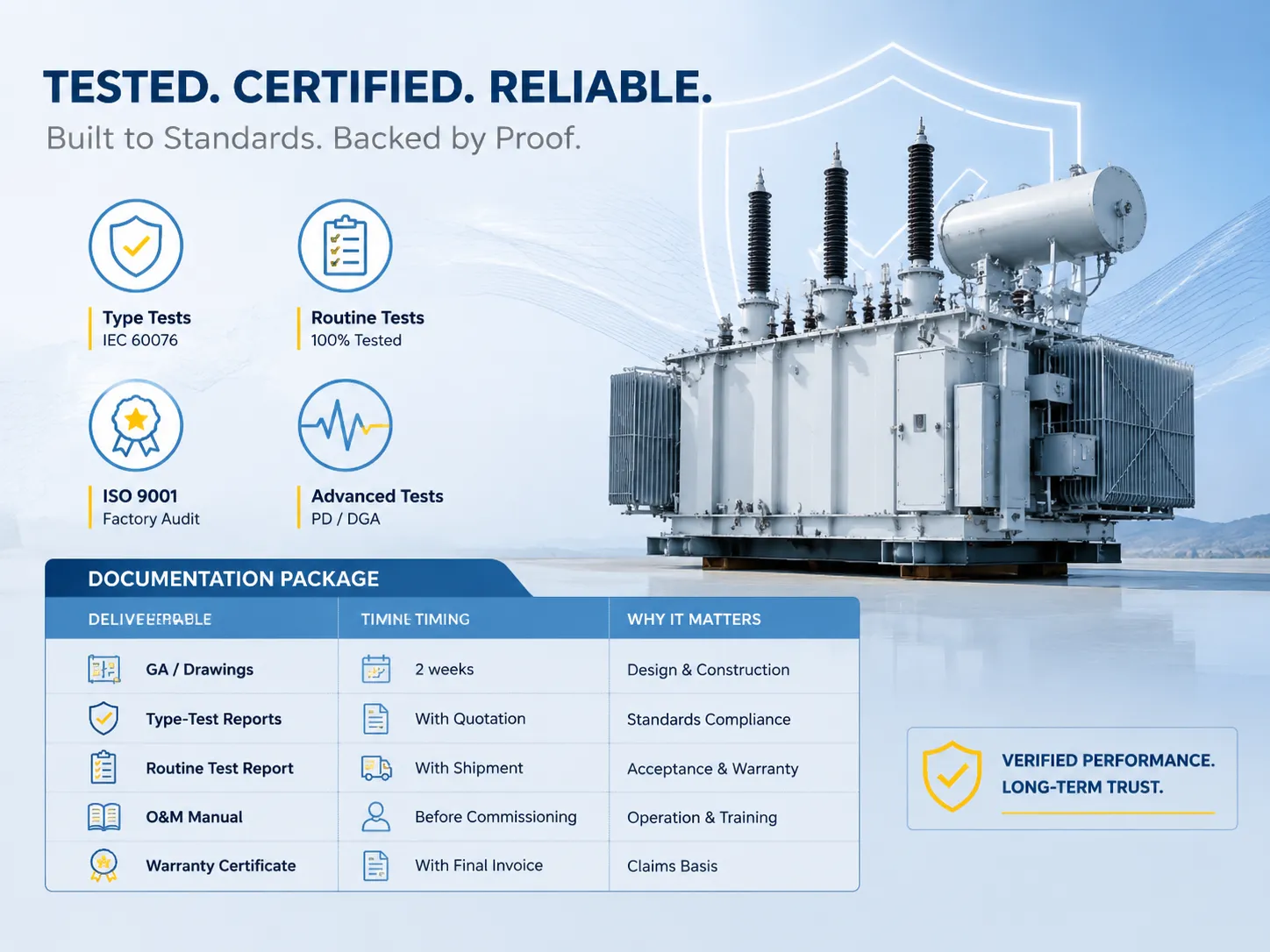
Não se esqueça de confirmar o pacote de documentação enviado junto com os produtos, pois isso determinará a aprovação dos produtos, seguros e reivindicações de garantia.
| Entregável | Cronograma | Por que isso é importante |
|---|---|---|
| Desenhos GA / núcleo e bobina | Dentro de 2 semanas após o pedido | Projeto civil e estrutural |
| Relatórios de teste de tipo | Com a cotação | Evidência de conformidade com os padrões |
| Relatório de teste de rotina | Com cada remessa | Aceitação e garantia |
| Manual de O&M | Antes da comissionamento | Treinamento de operadores |
| Certificado de garantia | Com a fatura final | Base de reivindicações |
Suporte de engenharia e Teste de Aceitação de Fábrica
Há uma grande necessidade de integração entre transformadores e os relés de proteção, dispositivos de controle de troca de tap e SCADA. Você deve consultar a equipe de engenharia sobre isso:
- Você fornece os desenhos GA, núcleo & bobina e layout de terminais duas semanas após o recebimento do pedido? O atraso na entrega dos desenhos causa atrasos nos trabalhos civis e nos projetos estruturais.
- Você é capaz de alterar o projeto para se adequar a alta altitude (mais de 1000 m), alta umidade, zonas sísmicas ou ar costeiro contendo sais? Você deve saber que, entre outras coisas, a norma IEC 60076-1 fala sobre desclassificação por altitude. Um fabricante incapaz de operar em clima tropical pode acabar usando buchas subdimensionadas.
- Você está pronto para verificar a coordenação das configurações do relé com seu próprio trocador de tap e a lógica do relé Bucholz? Esta é uma razão muito frequente para atrasos na comissionamento.
- Seus engenheiros estão disponíveis para pré-comissionamento? Isso deve cobrir 1-2 visitas ao local para que os problemas na fase de comissionamento possam ser resolvidos por você.
O teste de aceitação é a última oportunidade de impedir que o transformador seja enviado. Os EPCs precisam fazer as seguintes perguntas:
- Podemos ter nosso engenheiro ou um terceiro testemunhar o FAT para cada peça de equipamento? Para contratos de múltiplos equipamentos, vale a pena negociar o teste de testemunha para ser concluído em 100% dos casos.
- O que acontecerá se alguma peça falhar na verificação de rotina durante o FAT? Certifique-se de discutir as regras e regulamentos sobre reteste do equipamento.
- Você fornecerá pacote de relatório de teste para cada remessa? É muito importante para aceitação, seguro e razões de garantia.
- O que a controle de qualidade cobre em relação à isolação? Pergunte sobre ciclos de secagem, preenchimento a vácuo, umidade do óleo abaixo de 10-15 ppm, etc.
- O projeto de resistência a curto-circuito é coberto pela IEC 60076-5?
Tipos de Transformadores EPCs Adquirir (Tabela de Classificação)
Em projetos EPC realizados nas áreas de energias renováveis, utilidades e indústria, há necessidade de adquirir vários tipos de transformadores com diferentes tempos e custos de conclusão.
| Tipo | Faixa Típica de Classificação | Resfriamento | Tempo de Entrega Típico | Faixa de Preço (FOB) | Principal Preocupação de Aquisição |
|---|---|---|---|---|---|
| Transformador de distribuição (poste/base) | 25–2.500 kVA | Óleo mineral / tipo seco | 6–12 semanas | $1.200–$25.000 | Níveis de perda, entrada de umidade |
| Transformador de subestação skid/unidade | 315–2.500 kVA | Óleo mineral / resina fundida | 8–14 semanas | $8.000–$45.000 | Classificação de invólucro, entrada de cabo |
| Transformador de média potência | 5–40 MVA | Óleo com ONAN/ONAF | 12–20 semanas | $45.000–$250.000 | Mudança de tap on-load, perdas |
| Transformador de grande potência | 60–300 MVA | Óleo, ODAF/ODWF | 24–40 semanas | $300.000–$1,5 milhão | Testes de tipo, peso de transporte |
| Transformador tipo seco / resina fundida | 100–10.000 kVA | Ar, classe F0/F1 | 8–14 semanas | $6.000–$90.000 | Descarga parcial, segurança contra incêndio |
| Especialidade (forno, retificador, aterramento) | Personalizado | Óleo / seco | 16–30 semanas | $30.000–$600.000 | Design de enrolamento personalizado |
Principais Parâmetros de Especificação a Verificar
Ao comparar propostas, é necessário realizar a normalização dos requisitos técnicos entre diferentes tipos de transformadores, portanto, os seguintes parâmetros devem ser destacados na RFQ e confirmados em cada cotação:
| Parâmetro | O que Ele Controla | Valor Típico | Norma Relevante |
|---|---|---|---|
| Potência nominal (kVA/MVA) | Capacidade e tamanho | 100 kVA–300 MVA | IEC 60076-1 |
| Relação de tensão e grupo vetorial | Interface de rede | ex. 33/11 kV Dyn11 | IEC 60076-1 |
| Perdas sem carga e com carga | Custo de energia ao longo da vida | ex. 10 MVA: ~11 kW NL / ~65 kW LL | IEC 60076-1, IEC 60076-19 |
| Tensão de impedância | Nível de falha e queda de tensão | 4–12.5% | IEC 60076-5 |
| Classe de resfriamento | Capacidade de carga contínua | ONAN, ONAF, OFAF | IEC 60076-2 |
| Limites de aumento de temperatura | Envelhecimento do isolamento | 65 K óleo / 78 K enrolamento (OA) | IEC 60076-2 |
| Nível de isolamento (BIL) | Resistência a raios | ex. 33 kV: 170–200 kV BIL | IEC 60076-3 |
| Comutador de derivação | Regulação de tensão | ±5%, ±10%, DETC ou OLTC | IEC 60214 |
| Nível de ruído | Conformidade ambiental | 55–85 dB(A) | IEC 60076-10 |
Se duas cotações variarem devido a discrepâncias de perdas, deve-se usar o método de despesas capitalizadas. A perda sem carga deve ser multiplicada por um valor entre $2.000–$6.000/kW e a perda de carga deve ser multiplicada por um valor entre $400–$1.200/kW. Dessa forma, a posição de um transformador de baixo custo com altas perdas na classificação mudará em comparação com a de um transformador de alto custo com baixas perdas.
Comparação de Marcas e Referências de Preços
O mercado global de transformadores inclui marcas globais líderes e produtores específicos; uma comparação justa requer a padronização de classificação, perdas, faixa de testes e Incoterms para todas as marcas. A tabela mostra algumas faixas de preço típicas para um transformador a óleo de 10 MVA 33/11 kV, bem como um transformador de distribuição de 1000 kVA. Os níveis de preço dependem das especificações e localização.
| Marca / Fabricante | Origem | Preço de 10 MVA 33/11 kV | Preço de 1.000 kVA Distrib. | Tempo de Entrega Típico | Força |
|---|---|---|---|---|---|
| ABB | Suíça | $180.000–$320.000 | $15.000–$28.000 | 20–32 semanas | Rede de serviços global, referências de rede |
| Siemens Energy | Alemanha | $200.000–$350.000 | $16.000–$30.000 | 22–34 semanas | Transformador digital, profundidade em P&D |
| Schneider Electric | França | $170.000–$310.000 | $14.000–$26.000 | 20–30 semanas | Soluções em pacote, média tensão |
| Hitachi Energy | Suíça/Japão | $190.000–$340.000 | $15.000–$27.000 | 22–36 semanas | Especialização em HVDC e transformadores de grande potência |
| Hyosung, Hyundai, ILJIN (Coreia) | Coreia do Sul | $150.000–$280.000 | $12.000–$22.000 | 18–28 semanas | Qualidade consistente, laboratórios de teste robustos |
| Principais OEMs chineses (TBEA, Baoding Tianwei, etc.) | China | $90.000–$180.000 | $7.000–$14.000 | 12–20 semanas | Capacidade, custo, exportações certificadas pela IEC |
| Exportadores chineses de médio porte (por exemplo, Jiangsu Subian Electric Power) | China | $80.000–$150.000 | $6.000–$12.000 | 10–18 semanas | Engenharia personalizada, resposta rápida, suporte FAT |
Marcas globais renomadas obtêm sua vantagem de preço devido a anos de projetos bem-sucedidos e uma extensa rede de serviços. A maioria das empresas de médio porte compete por meio de capacidades de engenharia, prazos de entrega reduzidos e preços, enquanto fornece produtos de acordo com o padrão IEC 60076. A Jiangsu Subian Electric Power é uma das empresas chinesas que fabricam transformadores em conformidade com a IEC 60076 até 110 kV, oferecendo FAT com engenheiros dos clientes e exportando para o Sudeste Asiático, Oriente Médio, África e América Latina. Para EPCs que precisam otimizar seus cronogramas, orçamentos e sistemas de conformidade, a Subian pode fornecer produção auditada certificada pela IEC sem esperar na fila de 20-32 semanas típica para marcas famosas.
Estrutura de Preços e Questões de Custos Ocultos
Quando as comparações de preços surgem de considerações diferentes, a comparação válida se torna inválida. Deve-se fazer as seguintes perguntas antes de fazer a comparação:
- O trocador de tomadas, buchas, conservador, óleo e acessórios estão incluídos no preço? Diferenças de 5-15% no escopo dos acessórios são a principal razão por trás das diferenças de preços das cotações.
- Os testes de tipo estão incluídos ou cobrados separadamente? A taxa de testemunho pode envolver $8.000-$30.000.
- O que o preço inclui em relação à embalagem e à embalagem para exportação? O custo de embalagem tropical varia entre 1-3% do preço.
- O preço inclui supervisão de instalação? Os preços geralmente aceitos variam entre $150-$450 por dia de engenheiro, além de custos adicionais de viagem.
- Quais são as condições de pagamento? A estrutura comum é 30/30/30/10 ou 30/40/20/10 e é melhor não pagar mais de 30-40% antes do FAT.
Para ter certeza de que a comparação é válida, certifique-se de que os preços estão detalhados por itens e que o escopo é o mesmo; se o preço for 25% menor do que o preço de mercado, algo está faltando.
Resuma os pontos-chave relacionados aos termos comerciais antes da assinatura.
| Termo | Prática Comum | Proteção EPC |
|---|---|---|
| Marcos de pagamento | 30/30/30/10 | Máx 30–40% antes do FAT |
| Garantia | 12–24 meses | Negociar 24–60 meses |
| Testemunha do FAT | Apenas a primeira unidade | 100% para pedidos de múltiplas unidades |
| Incoterms | FOB ou CIF | Defina claramente o risco de frete |
Perguntas sobre Pós-Venda, Garantia e Peças de Reposição
Um transformador tem uma longa vida útil estimada em cerca de vinte a trinta anos após a compra. Pergunte ao fornecedor as seguintes perguntas:
- Qual é a sua garantia e o que está excluído por ela? Geralmente, é dada por um ano ou dois após a comissionamento, e pode ser de até cinco anos para defeitos de isolamento do núcleo.
- Qual é o seu procedimento para reivindicações de garantia para transformadores usados no exterior? Indique o local do reparo, quem está pagando pela entrega e se há compensação por tempo de inatividade.
- Você tem peças de serviço em estoque (bushings, vedações, elementos OLTC, etc.)? A entrega de bushings pode levar de 8 a 16 semanas após a falha.
- Você pode oferecer serviço remoto para alarmes DGA e OLTC? Negociar suporte ao cliente 24/7 é um investimento sólido.
- Você fornece contratos de manutenção e/ou treinamento de engenheiros?
Como Avaliar e Selecionar Fornecedores
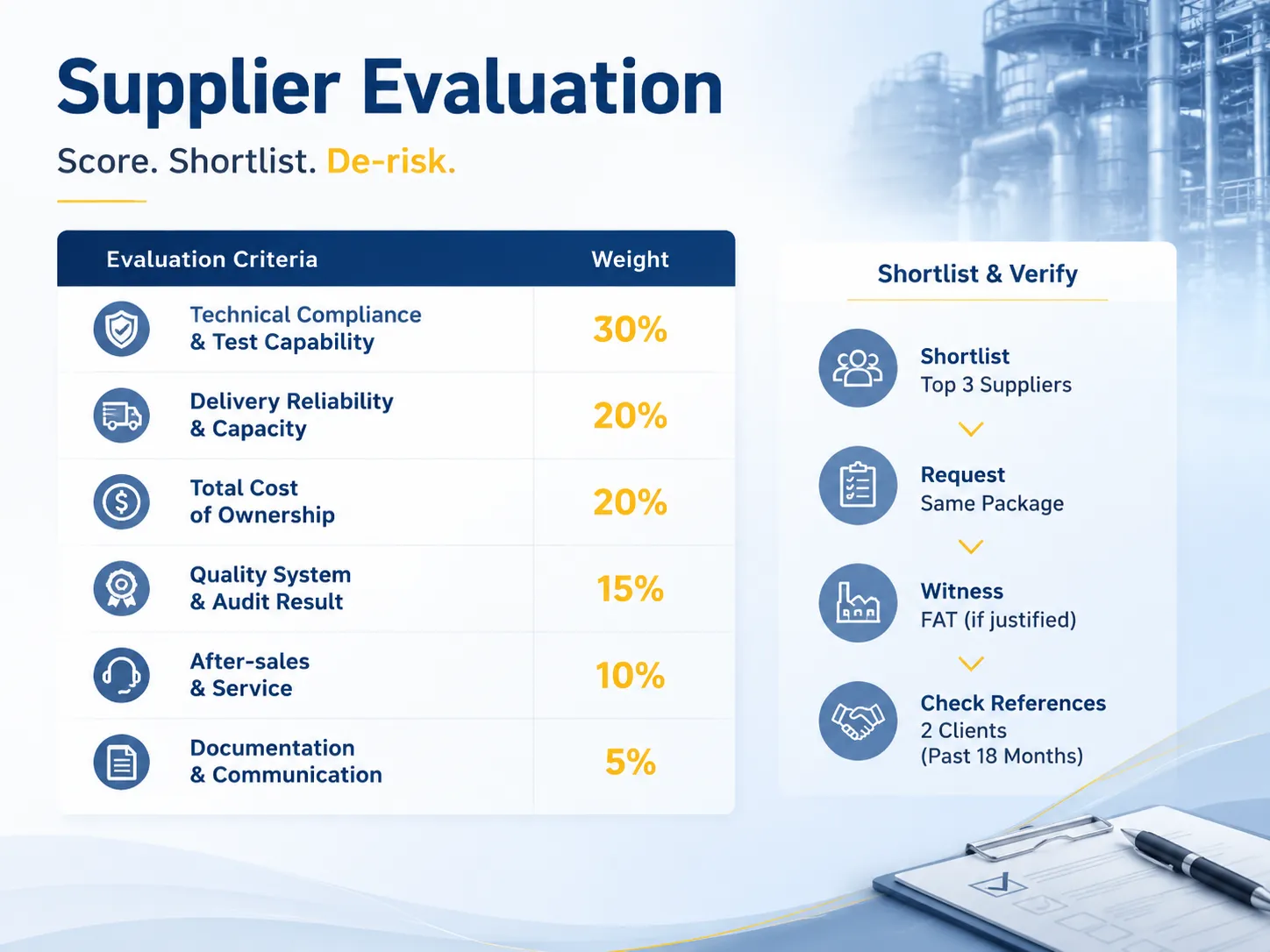
Crie uma matriz de pontuação ponderada com base nas perguntas anteriores, permitindo que a decisão suporte a análise interna. A ponderação que foi bem-sucedida no passado é a seguinte:
- Conformidade técnica e capacidade de teste – 30 %: Conformidade com normas, profundidade do relatório de teste, política de FAT
- Confiabilidade e capacidade de entrega – 20 %: Prazo de entrega, pedidos pendentes, histórico de referências
- Custo total de propriedade – 20 %: Preço, parte das perdas incorridas, transporte, comissionamento
- Sistema de qualidade e resultados de auditoria – 15 %: ISO 9001, auditoria de fábrica, histórico de defeitos
- Serviço pós-venda – 10 %: Garantia, peças sobressalentes, tempo de resposta
- Documentação e comunicação – 5 %: Conclusão de desenhos, domínio de termos técnicos em inglês
Identifique três fornecedores potenciais e solicite propostas para o mesmo pacote de cada um deles, participe de um FAT se o valor do projeto permitir, e comunique-se com dois clientes de referência que receberam remessas nos últimos 18 meses. Isso levará algum tempo, mas economizará meses de atrasos e disputas que valem seis dígitos para os EPCs.
Perguntas Frequentes
Qual é um prazo realista de entrega de transformadores para um projeto EPC?
Para transformadores regulares (cerca de 2.500 kVA), o período de entrega estimado é de cerca de 6 a 12 semanas para designs básicos e de 8 a 16 semanas para aqueles acessórios. Para transformadores de tamanho moderado (5-40 MVA), o prazo de entrega é entre 12 e 20 semanas, enquanto transformadores muito maiores (60 MVA+) são enviados em um intervalo de 24 a 40 semanas. É prudente incluir de 2 a 6 semanas de tempo de entrega na estimativa final também.
Quais normas um EPC deve especificar para a aquisição de transformadores?
Sempre que encomendar equipamentos, as normas IEC 60076-1 a IEC 60076-19 devem ser especificadas em todos os países. Na América, as normas IEEE C57.12.90 e IEEE C57.12.00 são suficientes. Você deve avaliar a cotação de preços com antecedência para estar do lado seguro.
Quanto um EPC deve orçar para um transformador de potência de 10 MVA?
Os custos esperados para um transformador médio de 10 MVA estão entre $80.000 e $250.000, dependendo da marca e do nível de perda por unidade. Gastar de 5 a 12 por cento do orçamento em impostos é bastante racional neste caso também. Certifique-se de obter os preços mais competitivos disponíveis.
Vale a pena pagar mais por um transformador com perdas menores?
Na maioria dos casos, a resposta seria sim. Se a taxa de perdas em transformadores estiver na faixa de $2.000- a $6.000 por kW, dependendo da versão do transformador, o investimento extra feito pode ser totalmente coberto por economias futuras.
Os EPCs devem testemunhar os testes de aceitação de fábrica para cada unidade de transformador?
Para produção em massa, seria prudente supervisionar todo o procedimento de teste de aceitação de fábrica com cada unidade enviada.
Referências
- IEC 60076-1: Transformadores de Potência — Geral — O padrão internacional primário que define requisitos de classificação, tensão e perda para transformadores de potência.
- IEC 60076-5: Transformadores de Potência — Capacidade de Suportar Curto-Circuito — Especifica a verificação de projeto de resistência a curto-circuito e procedimentos de teste.
- IEC 60076-11: Transformadores de Potência — Transformadores do Tipo Seco — O padrão chave para aquisição de transformadores do tipo seco e de resina fundida.
- IEEE C57.12.00: Padrão para Transformadores de Distribuição, Potência e Regulação Imersos em Líquido — Contraparte norte-americana utilizada para projetos nos EUA e no Canadá.
- ISO 9001:2015 Sistemas de Gestão da Qualidade — A certificação básica esperada de qualquer fábrica de fabricação de transformadores.
- CIGRÉ — Conselho internacional que publica pesquisas autoritativas sobre confiabilidade e manutenção de transformadores (brochuras técnicas A2).
- Jiangsu Subian Electric Power — Fabricante de transformadores em conformidade com a IEC 60076 que atende projetos de EPC e distribuição em todo o mundo.
Conclusão
A escolha do fornecedor de transformadores constitui um dos passos mais cruciais em qualquer projeto de EPC. As perguntas mencionadas anteriormente abrangem cinco aspectos principais que são vitais para a entrega bem-sucedida do projeto, ou seja, capacidade e prazo de entrega, testes e certificação, suporte de engenharia, custo real e serviço pós-venda. Utilize as perguntas acima para elaborar uma matriz de pontuação; compare as cotações com as tabelas de preços e confirme as promessas não muito ambiciosas por meio de inspeções de fábrica, exemplos de relatórios de teste e chamadas de referência.
- Certifique-se de que a conformidade com a IEC 60076 ou IEEE C57.12 seja comprovada por relatórios de teste de tipo.
- Verifique os prazos de entrega que variam de 6 a 16 semanas (no caso de transformadores de distribuição) a 24 a 40 semanas (para máquinas elétricas de grande capacidade), adicionando 15-20% de contingência.
- Ajuste os preços com base no escopo de fornecimento e na capitalização de perdas antes da comparação de preços.
- Certifique-se de estar presente nos testes de aceitação de fábrica (FAT) para exigir o relatório de teste relevante com cada remessa.
- Planeje um período de garantia de 12 a 60 meses e a disponibilidade de peças de reposição em contratos e negociações.