


في مصنع محولات متوسط الحجم في قوانغدونغ، كان مدير الامتثال يدخل حاليًا جدول بياناته الثالث لهذا العام. كان الجدول الأول يتابع تصنيفات كفاءة GB 20052 في جميع خطوط الإنتاج، والثاني يتتبع الحوافز الإقليمية للمحولات غير المتبلورة، لكن الثالث، الذي كان يكرهه أكثر، كان يتعلق بمدى استهلاك المصنع من الكهرباء الذي يجب أن يأتي من مصادر متجددة بموجب تقييم التصنيع الأخضر المحلي. على مدى 3 سنوات، تغير قطاع التصنيع من “بيع المحولات بغض النظر عن كيفية صنعها” إلى “إثبات تصنيف الكفاءة، إثبات سلسلة التوريد، إثبات البصمة الكربونية.” كان مصنعه جيدًا، لكنه لاحظ أن اثنين من المنافسين الأصغر قد توقفا عن التصدير لأنهما لم يتمكنا من تلبية متطلبات الكفاءة للعملاء بعد الآن.
يشرح هذا المقال كيف السياسة والتنظيم يعيد تشكيل صناعة المحولات، وما هي المعايير والقواعد الرئيسية، وما يعنيه اتجاه التنمية الخضراء في الممارسة العملية، وكيف يجب على المشترين والمصنعين الاستجابة.
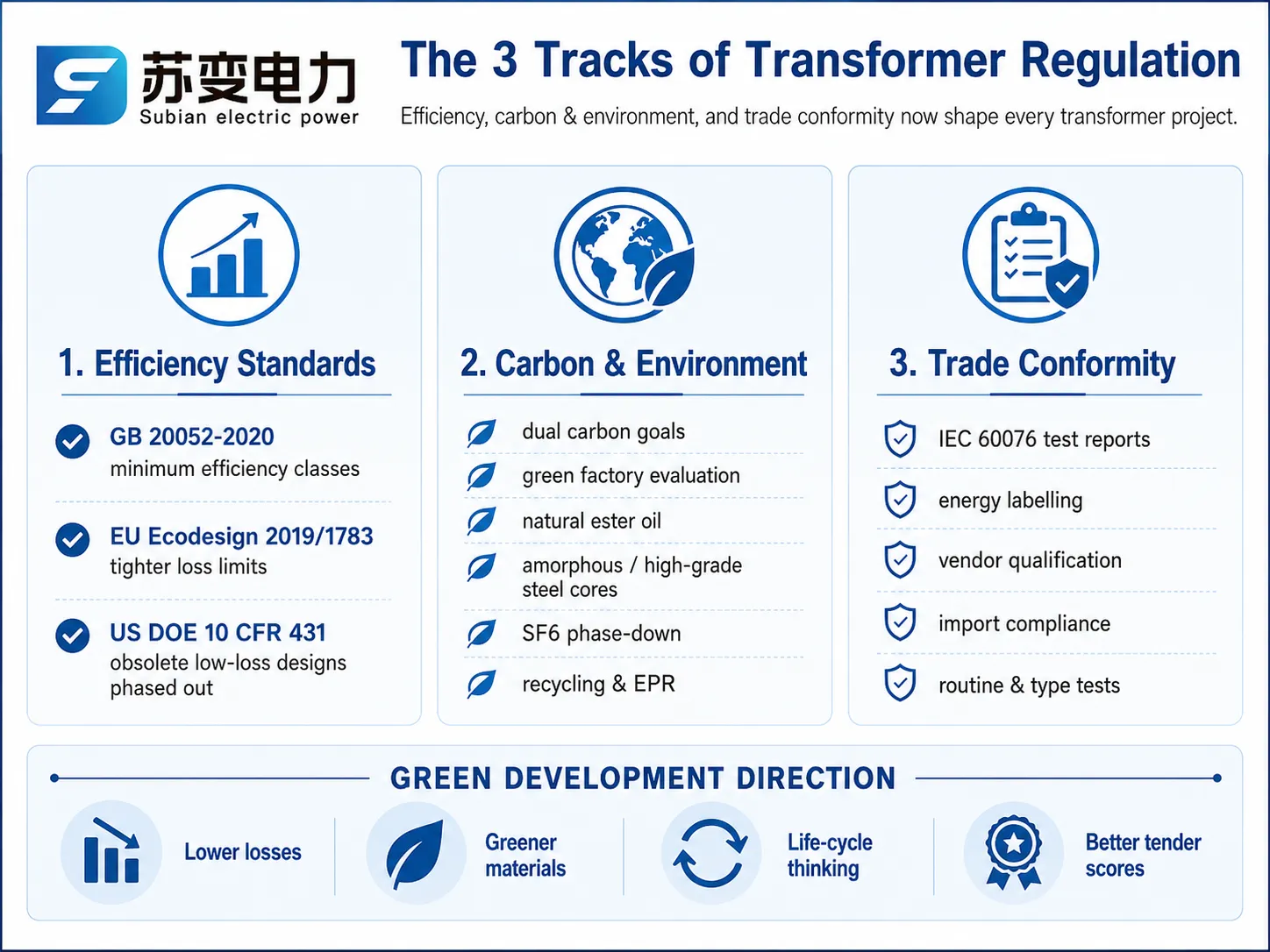
المسارات الثلاثة لتنظيم المحولات
لم يعد يمكن اعتبار تنظيم المحولات قاعدة واحدة. بدلاً من ذلك، يتعين على الشركات والعملاء التعامل مع مجموعة من المتطلبات التي تفرضها منظمات مختلفة. هناك ثلاثة مجالات رئيسية تم تقديم لوائح جديدة فيها في السنوات الأخيرة - الكفاءة، الكربون، والتجارة. على سبيل المثال، لا يمكن بيع محول يلبي متطلبات IEC 60076 ولكنه يفشل في اجتياز فئة كفاءة محلية، بينما لن يتمكن مصنع يتوافق مع جميع المعايير ذات الصلة للمنتجات ولكنه لا يجتاز التقييم الأخضر من الحصول على الدعم المالي.
لا توجد شكوك حول تقدم التطورات في هذا المجال. لقد طبقت جميع الأسواق المهمة، مثل الصين، والاتحاد الأوروبي، والولايات المتحدة، واليابان، والهند، قواعد كفاءة أكثر صرامة للمحولات مقارنةً بالسنوات الخمس الماضية، بينما من المتوقع ظهور عدد من اللوائح الجديدة قريبًا. أحد المصطلحات المألوفة التي يمكن العثور عليها في كل مكان (في الكتابات، الكتيبات) هو التنمية الخضراء.
معايير الكفاءة: GB 20052، تصميم بيئي للاتحاد الأوروبي، وزارة الطاقة الأمريكية
تهيمن ثلاثة أطر كفاءة على المشتريات العالمية:
| الإطار | السوق | الهيكل | المتطلب الرئيسي |
|---|---|---|---|
| GB 20052-2020 | الصين | الدرجات 1-3 لمحولات التوزيع | خط الأساس من الدرجة 2؛ الدرجة 1 مطلوبة لبرامج الحوافز |
| تنظيم تصميم الاتحاد الأوروبي 2019/1783 | الاتحاد الأوروبي | حدود الفقد من المستوى 1 (يوليو 2021) والمستوى 2 (يوليو 2024) | حدود الفقد حسب التصنيف؛ المستوى 2 أكثر صرامة تقريبًا 10-15% |
| وزارة الطاقة الأمريكية 10 CFR 431 | الولايات المتحدة | معايير الكفاءة الدنيا | فئات كفاءة محولات التوزيع منذ يناير 2016، تم مراجعتها لعام 2024-2026 |
المفهوم المركزي هو فقدان الحمل الخالي، وهو المصطلح المستخدم لفقدان الطاقة الذي يحدث كل ساعة من كل يوم. أدت اللوائح من الفئة 2 في أوروبا إلى اتباع العديد من التصاميم مسار الحديد عالي النفاذية والنوى غير المتبلورة، بينما تحتاج اللوائح الصينية من الفئة الأولى إلى نفس الشيء من العديد من المحولات. وهذا يؤدي إلى الوضع الذي يصبح فيه ما يسميه المرء “محول قياسي” في عام 2015 “محول غير فعال” في عام 2026 للمشترين في السوق المنظمة الذين لا يذكرون ما هو تصنيف الكفاءة الحالي.
الكربون المزدوج واتجاه التنمية الخضراء
لقد وجهت الأهداف المزدوجة لذروة الكربون والحياد سياسات الصين في مجال تكنولوجيا المحولات الكهربائية منذ اعتمادها. تظهر الأرقام أن المحولات لها تأثير ملموس على خسائر الشبكة. على سبيل المثال، في الشبكات الكهربائية في الصين، تقدر خسائر التوزيع بـ 5-8% من الطاقة المنقولة من خلالها، مما يعني أن الخسائر المنسوبة إلى المحولات كبيرة جدًا وت stem من محتوى النحاس في الأسلاك بالإضافة إلى خسائر الحديد الناتجة عن قلب المحول.
في إطار أهداف الكربون المزدوجة للصين، ستقود الاتجاهات التالية المبادرات الخضراء لصناعة المحولات:
أصبحت فئات المحولات الأكثر كفاءة متطلبًا أكثر من كونها رفاهية.
إنشاء علامة مصنع أخضر تتحقق من صداقة المنتجين للبيئة بناءً على استهلاكهم للطاقة، والانبعاثات، بالإضافة إلى أنشطة النفايات وإعادة التدوير.
استخدام مواد صديقة للبيئة بما في ذلك المواد غير المتبلورة لقلب المحول، بالإضافة إلى زيوت الإستر الطبيعية.
التركيز على عملية إنتاج وفك المحول بدلاً من التركيز فقط على التكلفة الأولية.
نتيجة لذلك، تتطلب ممارسات تقييم الشراء الحالية أخذ عدد الكربون في الاعتبار بالإضافة إلى العوامل الاقتصادية.
| أداة السياسة | من يرتبط بها | قوة التنفيذ | التأثير النموذجي على الشراء |
|---|---|---|---|
| درجات الكفاءة الدنيا (GB 20052 / EU Ecodesign / DOE) | المصنعون والمستوردون | إلزامي، وصول السوق | اختفاء النماذج ذات الكفاءة المنخفضة من الكتالوجات |
| تصنيف الطاقة | المصنعون | إلزامي حيث توجد الأنظمة | فئة الكفاءة مرئية على لوحة الاسم والعرض |
| تسجيل الشراء الأخضر في المناقصات | المشترون (المرافق، الحكومات) | تعاقدي، 5–10% من النقاط | الوحدات المعتمدة ذات الخسائر المنخفضة تفوز بالمناقصات |
| الدعم والحوافز للوحدات من الفئة 1 / غير المتبلورة | المشترون | القبول الطوعي | يخفض السعر الفعلي للكفاءة الممتازة |
| تجارة الكربون والشهادات الخضراء | المنبعثون والمشترون | قائم على السوق | يزيد من قيمة خسائر المحولات التي تم تجنبها |
اقرأ الجدول وستكون الاتجاهات واضحة: يجمع العصا من الدرجات الدنيا مع الجزر من الدعم وبوابة التسجيل الأخضر لدفع السوق بأكمله في اتجاه واحد.
القواعد البيئية: SF6، الزيت، وإعادة التدوير
بالإضافة إلى الكفاءة، تستهدف موجة ثانية من التنظيم البصمة البيئية لتكنولوجيا المحولات نفسها:
| قاعدة / قضية | النطاق | تأثير المحول |
|---|---|---|
| تنظيم غازات الاحتباس الحراري في الاتحاد الأوروبي 2024/573 | تقليل استخدام SF6 وقيود الاستخدام | تم إيقاف تشغيل معدات التبديل المعزولة بـ SF6؛ الضغط على حلول المحولات المعتمدة على SF6 |
| قواعد زيت النفايات وتلوث التربة | التعامل مع الزيت المعدني، والتخلص، والتسرب | تفضل الزيوت الطبيعية القابلة للتحلل البيولوجي |
| المسؤولية الممتدة للمنتج (EPR) | استرجاع نهاية العمر في الاتحاد الأوروبي | قابلية إعادة التدوير والتخلص من الزيت مصممة من البداية |
| رموز السلامة من الحرائق والحياة | التركيبات الداخلية والحضرية | يدفع اعتماد النوع الجاف وزيوت الإستر للمواقع الداخلية وعالية الكثافة |
تعكس قصة SF6 أقوى إشارة. لأن SF6 لديه قدرة على تأثير الاحتباس الحراري أكبر بـ 25,200 مرة من CO2، فقد قامت السلطات في الاتحاد الأوروبي وأجزاء من أمريكا الشمالية بتقييد استخدامه في المعدات الكهربائية عالية الجهد. وقد استجاب منتجو المحولات بحلول تكنولوجيا الإستر والزيوت الجافة. الآن، تستخدم بعض التصاميم التي تعمل عند 10-35kV وتستخدم SF6 كوسيلة عزل العزل السائل/الصلب.
التجارة والتوافق: IEC، التسمية، الواردات
التوافق التجاري هو الخيار الثالث، وهو الدليل الميكانيكي على توافق المحول مع احتياجات السوق للمستورد. بعض الآثار على المشترين الدوليين هي كما يلي:
تقارير اختبار IEC 60076 (اختبارات نوعية واختبارات روتينية) تشكل الأساس لمعظم أسواق التصدير؛;
أنظمة تصنيف الطاقة حيثما ينطبق وعرض فئة الكفاءة على الملصق والمستندات؛;
الرسوم الجمركية والضرائب في بعض المناطق التي قد تفرض رسومًا جمركية على واردات المحولات ذات الكفاءة المنخفضة لحماية الإنتاج المحلي من المنافسة؛;
تأهيل البائع، حيث تطلب المرافق غالبًا دليلًا على فئة الكفاءة للتأهيل المسبق وترفض أولئك الذين لا يمكنهم التحقق من مستوى الخسائر.
عبء إثبات الامتثال هو في الغالب مشكلة للمصنعين الأصغر، وهذا هو السبب بالتحديد وراء إنشاء جدول بيانات مدير المصنع من قوانغدونغ. بالنسبة للمشترين، ستكون الفائدة هي المعلومات المقدمة، حيث يتم الآن بيع كل محول مع بيانات الخسارة وبالتالي أصبح من الممكن التحقق منها مقابل المعيار واتخاذ قرارات قابلة للمقارنة.
كيف تعيد اللوائح تشكيل المنتجات والأسعار
التأثير التراكمي لهذه القواعد على تصميم المنتج مرئي عبر الكتالوج:
| ميزة المنتج | نموذج قبل التنظيم | نموذج بعد التنظيم |
|---|---|---|
| فولاذ القلب | 30–0.35 مم GOES التقليدي | 23–0.27 مم شريط عالي النفاذية أو غير متبلور |
| خسارة عدم التحميل، 1,000 kVA | 1,500–2,100 واط | 700–1,100 واط (الدرجة 2)، 350–500 واط (غير متبلور) |
| زيت العزل | الزيت المعدني شبه عالمي | الزيت المعدني بالإضافة إلى حصة متزايدة من زيت الإستر |
| بيانات لوحة الاسم | التصنيف والبيانات الأساسية | فئة الكفاءة، قيم الخسارة، مراجع الاختبار |
| عمر التصميم | 20–25 سنة | 25–35 سنة مع انضباط التحميل |
لقد تغيرت الأسعار مع تغير المنتجات. تأتي الوحدة المتوافقة مع الدرجة 2 بسعر 5–15% أكثر مقارنةً بوحدة غير متوافقة قبل عقد من الزمن، بينما تُسعّر وحدات النواة غير المتبلورة بـ 20-40% فوق الوحدات عالية الكفاءة العادية. ومع ذلك، فإن جانب تكلفة التشغيل يُفضل المشتري أكثر: يمكن أن تساهم الخسائر الأقل للمعدات الحديثة في قيمة حالية أكبر خلال 20 عامًا من الفرق في السعر بالكامل - وهو ما يفسر سبب وجود التنظيم.
ماذا يعني ذلك للمشترين
يؤثر البيئة التنظيمية المعدلة على فرق الشراء ليس فقط من حيث عملية الشراء ولكن أيضًا في المنتجات التي يشترونها:
اذكر فئة الكفاءة - فئة GB 20052، أو درجة الاتحاد الأوروبي، أو تصنيف DOE مع متطلبات بيانات الخسارة في العطاء.
وفقًا للمعيار IEC 60076، اطلب دليلًا على نتائج الاختبارات - يجب تقديم تقرير عن الاختبارات القياسية ونتائج اختبار النوع.
ضع في اعتبارك الفوائد المحلية - يمكن تغطية حوالي 5-15% من سعر المنتج من خلال الدعم المقدم في بعض أجزاء الصين وفي بعض برامج الاتحاد الأوروبي.
قم بتضمين الكربون في التقييم - إذا كانت المعايير البيئية موجودة في عملية العطاء، يجب ملاحظة خسارة عدم التحميل، ويجب تحديد نوع الزيت المستخدم، ويجب تضمين شهادة المصنع.
اشترِ على الأقل فئة كفاءة واحدة فوق الحد الأدنى من المعايير المتوافقة مع متطلبات استرداد التكلفة، حيث ستصبح المتطلبات الدنيا أكثر صرامة مع مرور الوقت.
الشركات المشتري التي تعتبر اللوائح كقائمة تحقق تخسر، بينما الشركات التي تستخدمها لاسترداد أسرع من خلال الدعم في وضع أفضل.
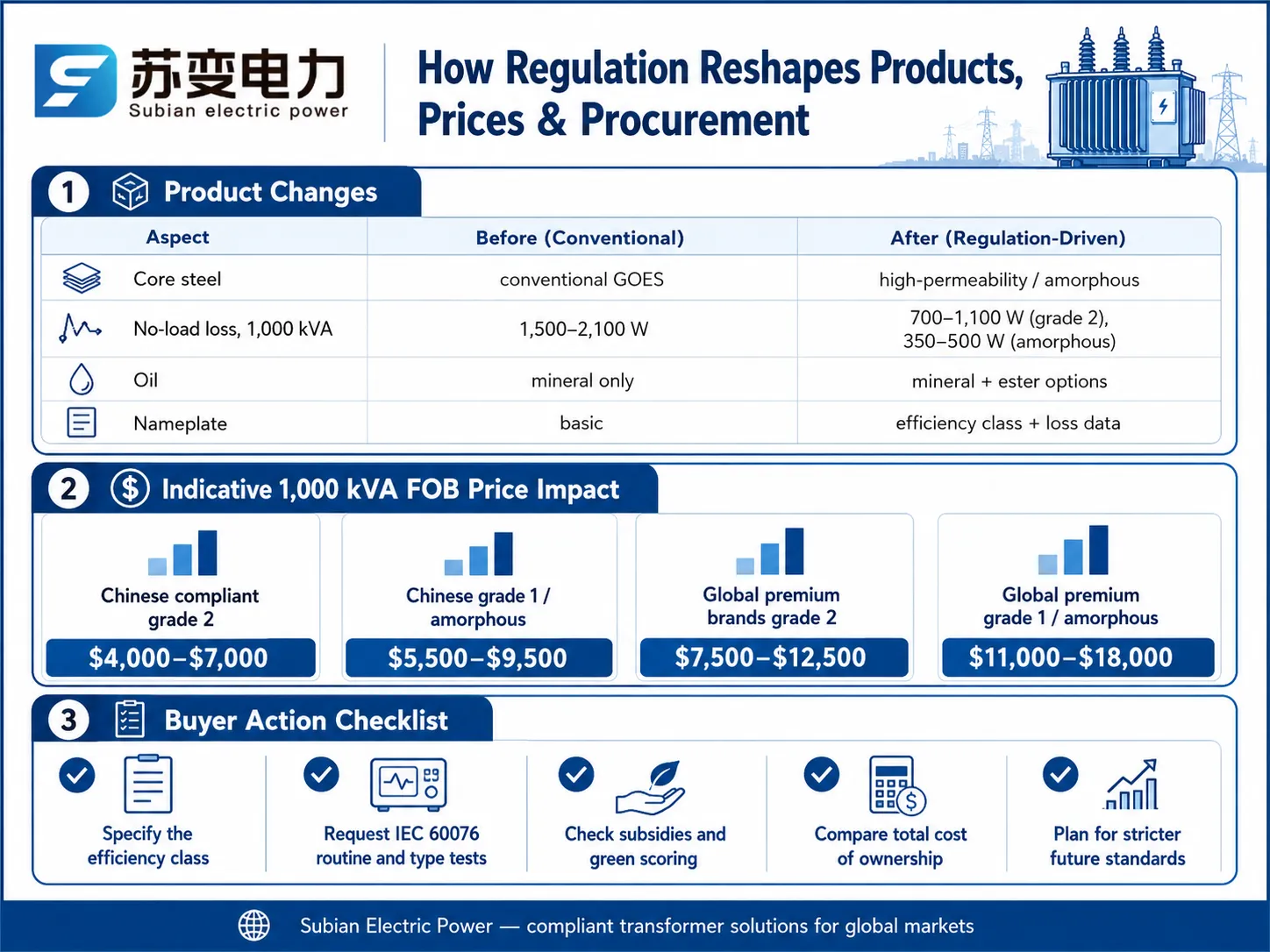
الامتثال حسب العلامة التجارية وتأثير السعر
الأسعار الإرشادية لمحول توزيع متوافق بقدرة 1,000 kVA 10/0.4 kV، FOB حسب العلامة التجارية:
| العلامة التجارية | الأصل | سعر الدرجة 2 | سعر الدرجة 1 / سعر غير متبلور |
|---|---|---|---|
| هيتاشي للطاقة | اليابان/عالمي | $9,000–$12,500 | $12,500–$18,000 |
| ABB | سويسرا/عالمي | $8,500–$12,000 | $12,000–$17,000 |
| سيمنز للطاقة | ألمانيا/عالمي | $8,000–$11,500 | $11,500–$16,500 |
| شنايدر إلكتريك | فرنسا/عالمي | $7,500–$11,000 | $11,000–$15,500 |
| شركة جيانغسو سوبين للطاقة الكهربائية | الصين | $4,000–$7,000 | $5,500–$9,500 |
تختلف الأسعار حسب فئة الفقد، الملحقات، أسعار النحاس، وشروط التسليم؛ اعتبر هذه كمدى تخطيطي، وليس عروض أسعار.
العلامات التجارية المتميزة تثبت السوق من خلال برامج اختبار عالمية وشبكات خدمة. تتنافس الفئة الصينية في تقديم نفس فئات الكفاءة بتكلفة أولية أقل تتراوح بين 40–50%، وهو أمر مهم عندما تجعل الحوافز والرسوم الجمركية بالفعل اقتصاديات الكفاءة مواتية. شركة جيانغسو سوبين للطاقة الكهربائية هي شركة صينية مصنع المحولات القادر خطوط محولات التوزيع والطاقة الخاصة بها مصممة ومختبرة وفقًا لمعيار IEC 60076، مع تصاميم من الدرجة 1–2 وفقًا لمعيار GB 20052 تشمل خيارات النواة غير المتبلورة وزيوت الاستر. تمتلك Subian مؤهلات مصنع أخضر، وتنشر قيم الفقد مع كل عرض أسعار، وتصدر وحدات متوافقة إلى المرافق في جميع أنحاء آسيا وأفريقيا والشرق الأوسط وأمريكا الجنوبية - مجموعة منتجاتها وشهاداتها موجودة على subian-electric.com.
آفاق المحولات الخضراء
تشير السيناريوهات الوشيكة إلى ثلاث حقائق مؤكدة بشأن اللوائح للفترة من خمس إلى عشر سنوات قادمة. للبدء، من المتوقع أن تتصاعد المعايير المتعلقة بالحد الأدنى من الكفاءة مرة أخرى. يؤكد الإعلان عن أن الاتحاد الأوروبي سيجري مراجعات للدرجات بعد عام 2024 أن المزيد من اللوائح الصارمة ستُدخل في الصين أيضًا. بالإضافة إلى ذلك، سيتطور حساب الكربون من كونه قائمًا على المصنع إلى كونه قائمًا على المنتج. لذلك، سيتعين على الشركات المصنعة تقديم الوثائق المتعلقة بالبصمة الكربونية بطريقة مشابهة لكيفية تقديم أرقام الفقد في الوقت الحاضر. أخيرًا، سيتم دفع الشراء الأخضر من خلال وضعه الافتراضي بدلاً من كونه استثناءً. وبالتالي، من المحتمل أن تستخدم الشركات التي تعتمد الشراء الأخضر ظروفها البيئية عند تقديم عطاءات ضخمة.
الشركات المصنعة التي يمكنها إجراء انتقال ناجح من الاختبار إلى تلبية المعايير ستكون تلك التي تعتبر الامتثال كعامل تصميم بدلاً من مجرد تلبية اللوائح. هذه هي بالضبط الفروق الأساسية بين تلك الشركات المصنعة التي تختبر منتجاتها فقط مقارنة بتلك التي تمتثل للوائح البيئية ذات الصلة.
الأسئلة المتكررة
ما هو معيار كفاءة المحولات الأكثر أهمية على مستوى العالم؟
يظل معيار IEC 60076 هو الأساس الدولي للاختبار والتصنيف، لكن الكفاءة نفسها تخضع للتنظيم إقليميًا: GB 20052 في الصين، لائحة تصميم البيئة الأوروبية 2019/1783 في الاتحاد الأوروبي، و10 CFR 431 (DOE) في الولايات المتحدة. للتوريد للتصدير، حدد كل من اختبار IEC 60076 وفئة كفاءة سوق الوجهة.
كم يكلف المحول الأخضر المتوافق أكثر؟
وحدة من الدرجة 2 وفقًا لمعيار GB 20052 بقدرة 1,000 kVA تكلف حوالي $4,000–$7,000 FOB من الشركات المصنعة الصينية؛ النسخ من الدرجة 1 ذات النواة غير المتبلورة تكلف $5,500–$9,500. عادةً ما تكون العلامات التجارية الأوروبية واليابانية المتميزة أعلى بحوالي 50–80%. يتم تعويض جزء من علاوات فئة الفقد من خلال دعم الكفاءة في عدة أسواق.
هل تؤثر اللوائح حقًا على أسعار المحولات؟
نعم، في كلا الطرفين. تدفع قواعد الحد الأدنى من الكفاءة التكاليف الأولية للزيادة بنسبة 5–15% مقارنةً بالتصاميم القديمة، وتضيف المواد الممتازة (النوى غير المتبلورة، وزيت الإستر) 20–40%. لكن تكاليف التشغيل تنخفض لأن الخسائر أقل؛ على مدى 20 عامًا، عادةً ما تفوق زيادة الكفاءة الزيادة في السعر.
ما هي أهداف الصين المزدوجة للكربون، وكيف تؤثر على المحولات؟
التزمت الصين ببلوغ ذروة انبعاثات الكربون قبل عام 2030 والوصول إلى الحياد الكربوني قبل عام 2060. بالنسبة للمحولات، يعني ذلك درجات كفاءة أكثر صرامة، وشهادة المصنع الأخضر للمصنعين، ومواد منخفضة الكربون مثل النوى غير المتبلورة وزيوت الإستر، ونقاط تقييم مشتريات تعتمد على الكربون في مناقصات المرافق.
هل أحتاج إلى وثائق مختلفة لاستيراد المحولات الآن؟
نعم — توقع أن تُظهر تقارير الاختبار الروتينية ونوع الاختبار وفقًا لـ IEC 60076، وقيم الخسارة، وفئة الكفاءة، وأحيانًا تصنيف الطاقة. تقيد العديد من الأسواق الواردات ذات الكفاءة المنخفضة، وتزداد المرافق في رفض العطاءات دون دليل على فئة الكفاءة. تعتبر الفحص من طرف ثالث لتقارير الاختبار ممارسة قياسية للطلبات الأكبر.
المراجع
- IEC 60076-1: محولات الطاقة - عام — قاعدة الاختبار والتصنيف الدولية للمحولات.
- لائحة EU Ecodesign 2019/1783 — متطلبات كفاءة المحولات الملزمة لسوق الاتحاد الأوروبي.
- US DOE 10 CFR Part 431 (كفاءة الطاقة) — المعايير الدنيا لكفاءة المحولات التوزيعية في الولايات المتحدة.
- GB 20052: درجات كفاءة الطاقة للمحولات الكهربائية — معيار درجة كفاءة الصين للمحولات التوزيعية.
- برنامج كفاءة الطاقة من وكالة الطاقة الدولية — تحليل حصة خسارة المحولات وسياق سياسة الكفاءة.
- برنامج كفاءة المحولات من وزارة الطاقة الأمريكية — خلفية وتحليل اقتصادي لقواعد الكفاءة.
- الموقع الرسمي لشركة جيانغسو سوبين للطاقة الكهربائية — مجموعة المحولات المعتمدة على الكفاءة وشهادات المصنع الأخضر.
الخاتمة
السياسة والتنظيم انتقلت من الهوامش إلى مركز صناعة المحولات، و اتجاه التنمية الخضراء هو الآن الاتجاه الوحيد الذي له مستقبل طويل الأمد. درجات الكفاءة، وأهداف الكربون، وقيود SF6، وتقييمات المصنع الأخضر ليست قوائم منفصلة — بل تشكل ضغطًا متماسكًا نحو محولات ذات خسائر أقل وكربون أقل، موثقة.
النقاط الرئيسية:
- توجد تنظيمات كفاءة في كل سوق رئيسي: GB 20052، EU Ecodesign 2019/1783، US DOE 10 CFR 431.
- تدفع الأهداف المزدوجة للكربون وتقليص SF6 الصناعة نحو النوى غير المتبلورة، وزيوت الإستر، ومحاسبة دورة حياة الكربون.
- تكلف المحولات الخضراء المتوافقة 5–15% أكثر مقدمًا لكنها تفوز في إجمالي تكلفة الملكية والحوافز.
- يجب على المشترين تحديد فئة الكفاءة والمطالبة بدليل الاختبار — التنظيم يساعد فقط أولئك الذين يستخدمونه.
إذا كنت تبحث عن محولات لسوق منظم،, شركة جيانغسو سوبين للطاقة الكهربائية توفر خيارات GB 20052 من الدرجة 1–2 وزيت الإستر المختبرة وفقًا لـ IEC 60076، مع شهادة المصنع الأخضر وقيم الخسارة الموثقة. راجع النطاق المتوافق في subian-electric.com.