


عامل في مصنع محولات صيني حديث مكلف بلف الملفات للمحولات لم يعد بحاجة إلى تتبع تقدم مهامه بعد الآن؛ كل ما عليه فعله هو توجيه انتباهه إلى الشاشة التي ستعطيه القراءات التي تظهر أن التوتر في الأسلاك التي يتعامل معها مستقر ويتتبع ضمن الحدود المحددة (97 N ± 3%) بالإضافة إلى تحديد عدد اللفات التي أكملها أثناء لف هذه الملف. عامل روبوتي آخر أنهى بالفعل تكديس الطبقة الرابعة من النواة؛ ووفقًا للمعلومات من نظام إدارة المصنع، فقد أثار التشغيل إنذارًا بشأن الخسائر العالية لتلك النواة.
تصف هذه المقالة عملية التحول الرقمي التي قامت بها الشركات، والتي سمحت لها بتطوير تقنياتها من مرحلة أولية تتمثل في جمع البيانات فقط إلى عمليات في وضع المصنع الذكي.
باختصار، يمكننا أن نقول إن التمكين الرقمي في تصنيع المحولات يعني استخدام أجهزة استشعار إنترنت الأشياء الإلكترونية، والتوائم الرقمية، ودمج MES/ERP، وتعلم الآلة، والتقنيات الآلية في جميع مراحل الإنتاج - من استلام المواد إلى الاختبار النهائي. ونتيجة لذلك، من الممكن تحسين الجودة، وتقليل التكاليف للعودة، وتقليل أوقات التسليم، وتوفير تتبع رقمي كامل لكل وحدة من المنتج المنتج. حققت بعض المنشآت الصناعية الرائدة معدلات إعادة العمل أقل من 1% (من 3-5% قبل)، وقللت أوقات التسليم من 3-6 أشهر للمحولات القياسية إلى 6-12 أسبوعًا، وحسنت اتساق فقدان الحمل الخالي من ±10-15% إلى ±3-5%، وتلقت بيانات كاملة كما تم بناؤها لكل قطعة من المعدات المنتجة. تتراوح التكاليف التقريبية لتنفيذ مثل هذه التكنولوجيا بين $200,000-800,000 وعادة ما يتم ملاحظة العائد في 2-4 سنوات بفضل تحسين استخدام المواد وتقليل تكاليف العودة. يجب على العملاء أن يسألوا الشركات المصنعة عن سجلاتهم في التتبع الرقمي وبياناتهم في مرحلة الاختبار، لأن ذلك هو المكان الذي يمكن فيه تتبع التمكين الرقمي.

ما هو التمكين الرقمي في تصنيع المحولات؟
التمكين الرقمي هو استخدام التكنولوجيا الرقمية كأساس لعملية الإنتاج. يجب ألا تكون التكنولوجيا الرقمية مجرد إضافة؛ بل يجب أن تؤدي كل خطوة من خطوات عملية الإنتاج إلى بيانات، تُستخدم لتحسين وإدارة العملية وتسمح بإنتاج محولات تحمل تاريخها الرقمي طوال عمرها. يتم تلخيص المفهوم في فكرة المصنع الذكي، التي تمثل الصناعة 4.0 فيما يتعلق بالسلع الصناعية المكلفة والقيمة والصعبة التصنيع.
يمكن أن تساعد ثلاثة عوامل في تفسير هذه الثورة. أولاً وقبل كل شيء، العملاء الذين يطالبون بالتتبع. سجلات اختبار المصنع وعقود المعلومات البديلة هي ما يريده المشترون في الوقت الحاضر، وهو ما أصبح أسهل بكثير بفضل التقدم في التكنولوجيا الرقمية. ثانياً، هناك حاجة قوية للكفاءة. حقيقة أن أعمال المحولات تتمتع بهامش ربح منخفض تقليديًا، مما يتطلب القضاء على جميع هدر المواد والعمالة. أخيرًا، المتطلبات المتعلقة بجودة المنتج، عندما تتطلب الضمانات الحديثة للخسارة وفئات الكفاءة تصنيع جودة لا يمكن ضمانها.
الرحلة الرقمية: 4 مراحل نضج
لا تصبح المصانع رقمية على الفور؛ بل تتسلق سلم النضج. المستوى الأول هو مرحلة السجل الرقمي - عندما يحدث تحويل السجلات الورقية وأوراق الاختبار إلى تخزين بسيط للبيانات في المحطات الرئيسية، تبدأ الخسائر في الحساب، وتبدأ عمليات البحث، ويتوقف التتبع. إنها رخيصة - تُستخدم بشكل أساسي جداول البيانات والأجهزة المحمولة - لكن البداية قد تمت. المرحلة الثانية هي العمليات المتصلة - ترسل المستشعرات الموضوعة على أجهزة مختلفة البيانات إلى نظام تنفيذ التصنيع (MES). في هذه الحالة، يصبح معالجة المعلومات ممكنًا بمساعدة الحدود - يتم مراقبة معلمات العمليات في الوقت الحقيقي من قبل الأشخاص. تبدأ العملية هنا في الانخفاض حيث يتم اكتشاف المشكلات في دقيقة واحدة بدلاً من المرحلة النهائية من فحص الجودة. المرحلة الثالثة هي إنشاء التوائم الرقمية وربطها بالإنتاج الحقيقي. تسمح بيانات الإنتاج بمقارنة الوحدة مع نموذج الوحدة. من السهل العثور على أسباب الاختلافات في هذه الحالة. المرحلة الرابعة هي تحسين العملية عبر التعلم الآلي وتحليل الآلات. في الوقت الحالي، هناك عدد قليل جدًا من المصانع في المرحلة الرابعة بينما معظم المصانع الجادة في المرحلتين الثانية والثالثة. الشيء الرئيسي الذي يجب أن يفهمه المشترون هو أن الشركات المصنعة التي تعمل في المرحلتين الثانية والثالثة تقدم بالفعل تقريبًا كل القيمة التي يحتاجها العملاء.
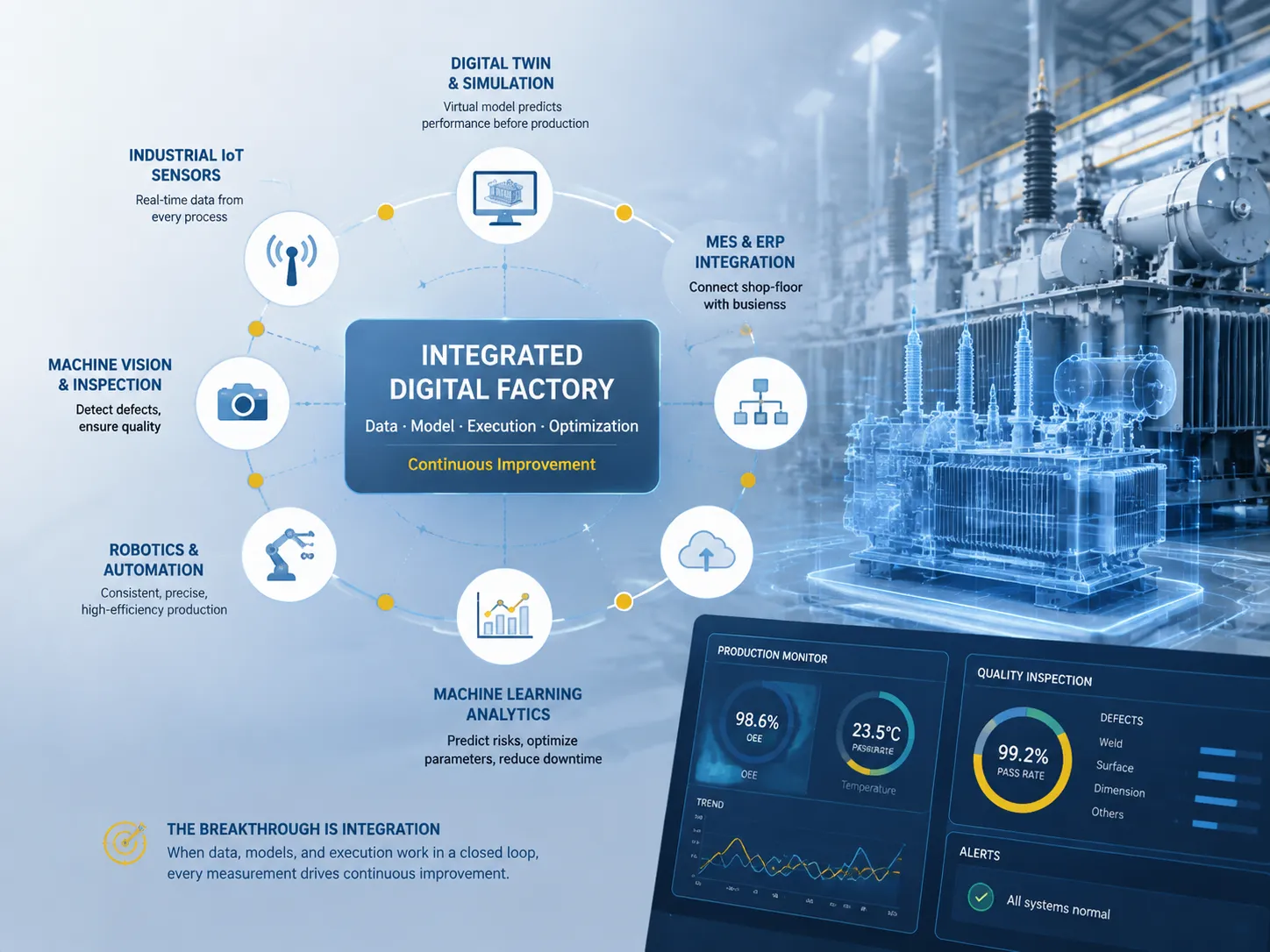
التقنيات الرقمية الرئيسية وأدوارها
| التكنولوجيا | ما الذي تفعله | حيث يهم الأمر أكثر |
|---|---|---|
| مستشعرات إنترنت الأشياء الصناعية | تلتقط التوتر، والعزم، ودرجة الحرارة، والفراغ، والاهتزاز في الوقت الحقيقي | لف، تجفيف، تجميع، اختبار |
| التوأم الرقمي / المحاكاة | النموذج الافتراضي يتنبأ بالخسارة، ودرجة الحرارة، والقدرة على التحمل قبل الإنتاج | التصميم، تحليل الانحراف |
| نظام تنفيذ التصنيع (MES) | يتتبع كل أمر عمل، ومحطة، وقياس خلال الإنتاج | التحكم في أرضية المصنع، التتبع |
| تكامل ERP | يربط الطلبات، والمواد، والتكلفة، والتسليم ببيانات الإنتاج | التخطيط، والمشتريات، والتسليم |
| رؤية الآلة والتفتيش الآلي | يكشف عن عيوب اللحام، والأضرار السطحية، والانحرافات البُعدية | قطع النواة، اللحام، التجميع |
| الروبوتات / أتمتة CNC | قطع، لف، تكديس، لحام متسق | خطوط النواة واللف |
| تحليلات التعلم الآلي | تتنبأ بانحراف العملية، ومخاطر الفشل، والمعلمات المثلى | الصيانة التنبؤية، الجودة |
| منصات بيانات السحابة | تخزن سجلات البناء كما هي وتمكن من المراقبة عن بُعد للأساطيل | دعم دورة الحياة بعد التسليم |
الحل الواحد ليس هو الاختراق؛ بل الاختراق هو الجمع. التوأم الرقمي بدون بيانات الإنتاج هو مجرد أداة تصميم بينما بيانات الإنتاج بدون توأم هي مجرد أداة تقارير. ستتبع المصانع الناجحة في المستقبل نهج دمج أداة المحاكاة مع الاستشعار والتقاط البيانات في حلقة مستمرة حيث يتحسن القياس باستمرار النظام.
التأثير المقاس: الإنتاج التقليدي مقابل الإنتاج الرقمي
| مقياس | الإنتاج التقليدي | الإنتاج الرقمي |
|---|---|---|
| معدل إعادة العمل | 3–5% من الوحدات | < 1% من الوحدات |
| اتساق فقدان الحمل (الانتشار) | ±10–15% | ±3–5% |
| وقت التنفيذ، وحدة 2,000 kVA القياسية | 3–6 أشهر | 6–12 أسبوعًا |
| وثائق الاختبار | ورق، عرضة للأخطاء | رقمي، كامل، قابل للتدقيق |
| سرعة تحليل السبب الجذري | أيام إلى أسابيع | ساعات |
| التحقق من تغيير الهندسة | الأجهزة النموذجية | المحاكاة أولاً |
| استخدام المواد | التقدير اليدوي | خطط القطع المحسّنة |
| موثوقية التسليم | متغير | عالي، مدفوع بالجدول الزمني |
هذه هي القيم المتوسطة المستمدة من المصانع التي تم أخذ التحول فيها على محمل الجد؛ ستختلف النتائج الفردية اعتمادًا على حجم التنفيذ للتحول. الأمر المهم هو الآلية: التحول الرقمي لا يتعلق بتحسين أحد المعايير بشكل كبير - بل يتعلق بتحسين كل معيار في الوقت نفسه لأنه يتعامل مع أسباب التباين بدلاً من عواقبه.
حيث يقدم التحول الرقمي: عملية تلو الأخرى
اتبع المصنع الرقمي خطوة بخطوة لاكتشاف أين تتدفق القيمة. استلام المواد: عند وصول بكرات الصلب، يتم ملاحظة وزنها وفقدانها، مما يسمح للفريق الأساسي باختيار المواد بناءً على الخصائص - أقل تكلفة هي الأفضل في المصنع.
- قطع وتكديس النواة: يتم رفض العيب الذي تجده رؤية الآلة على الفور بواسطة آلة CNC؛ تضمن الروبوتات المكدسة حزمة محكمة ومتسقة، مما يقضي على مشكلة الحزم القصيرة.
- لف: من خلال التحكم في التوتر باستخدام السيرفو وأتمتة وضع العزل بين الطبقات، يقضي العملية على الأسباب الكلاسيكية للعيوب؛ يتم قياس عدد اللفات بسهولة.
- التجفيف ومعالجة الزيت: يعتمد التحكم في التجفيف على مراقبة نقطة النهاية للعملية (يصل التجفيف إلى مستوى رطوبة 0.5% في الورق)؛ ستعتمد حالة العزل على ذلك.
- الفحص النهائي للجودة: تصل المعلومات حول الاختبارات إلى السجل الرقمي دون أخطاء نسخ، بينما يتم تخزين جميع الاختبارات اللازمة للمقارنة المستقبلية. بعد التسليم، سيكون السجل الرقمي الذي تم إنشاؤه هو الأساس لمراقبة حالة الوحدة.
| عملية الإنتاج | الحل الرقمي | الفائدة المقاسة |
|---|---|---|
| استلام المواد | رمز شريطي + التقاط الفقد المقاس | الصلب المختار حسب الخصائص، انتشار الفقد للأسفل |
| قطع النواة / التكديس | آلات CNC، رؤية الآلة، مكدس روبوتي | نتوء < 0.02 مم، تثبيت متسق |
| لف الملف | التحكم في توتر السيرفو، عدد اللفات التلقائي | التوتر ±3%، صفر أخطاء في العد |
| التجفيف بالفراغ | التحكم في نقطة النهاية للرطوبة | رطوبة الورق موثوقة < 0.5% |
| الاختبار النهائي | تدفق البيانات من الآلة إلى قاعدة البيانات | سجل كامل وفقًا لمعيار IEC 60076-1 لكل وحدة، بدون أخطاء نسخ |
| بعد التسليم | خط الأساس الرقمي كما تم بناؤه للمراقبة | الكشف عن الانحرافات بشكل أسرع، تحليل أفضل للفشل |
الاقتصاديات: الاستثمار، المدخرات والعائد
| العنصر | النطاق النموذجي | ملاحظات |
|---|---|---|
| المرحلة 1-2 الرقمنة (السجلات + العمليات المتصلة) | $200,000–$800,000 | MES، أجهزة الاستشعار، الاتصال لمصنع متوسط الحجم |
| التوأم الرقمي / منصة المحاكاة | $150,000–$500,000 | البرمجيات، الحوسبة، تدريب الهندسة |
| الأتمتة (تكديس روبوتي، لحام بالرؤية) | $500,000–$2,000,000 لكل خط | كثيف رأس المال؛ مبرر بالحجم |
| تكلفة التشغيل السنوية (التراخيص، الصيانة) | $50,000–$200,000 | السحابة، البرمجيات، الدعم |
| مدخرات إعادة العمل (3–5% → <1% على إنتاج $20M) | $400,000–$800,000 سنويًا | المحرك الرئيسي للعائد |
| مكاسب استخدام المواد | $100,000–$300,000 سنويًا | قطع النواة والموصل المحسّن |
| العائد العام النموذجي | 2–4 سنوات | إعادة العمل + المواد + الإنتاجية |
الأرقام تقوم بصياغة خططها. الخبر السار هو أن نموذج العمل لا يعتمد على الأسعار المرتفعة لأن النظام قابل للتطبيق مالياً ببساطة لأنه يقلل من الهدر ويحسن الإنتاجية، وهو السبب في أنه يكتسب شعبية بين الشركات المصنعة للعلامات التجارية غير المتميزة. في الواقع، يمكن للمصانع الرقمية إنتاج سلع ذات جودة أفضل وفي فترة زمنية أقصر بأسعار تتماشى مع تلك التي تقدمها منافسيها.
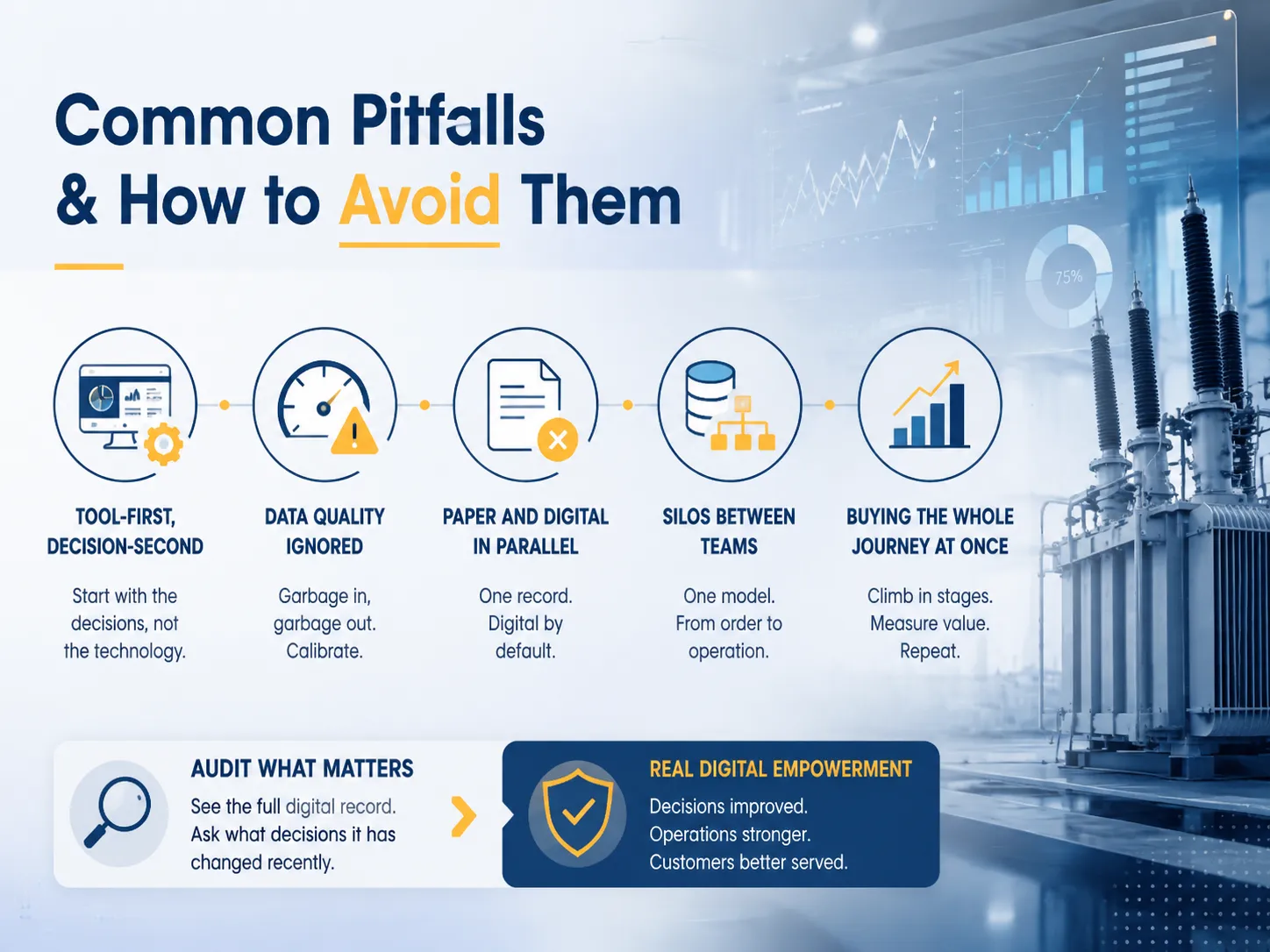
الأخطاء الشائعة وكيفية تجنبها
هناك طرق واضحة ومهمة تفشل من خلالها جهود التحول الرقمي، والتعرف على هذه الطرق يجب أن يساعد كل من المصانع ومشتريها على تجنب الفشل. إحدى الطرق: تقوم المصانع أولاً بتثبيت المستشعرات والمنصات قبل تطوير قرارات بشأن البيانات التي تحتاج إلى تقديمها، مما يؤدي إلى لوحات معلومات غير مفيدة. الحل: تحديد 3 أسئلة تشغيلية على الأقل وتصميم تدفق البيانات وفقًا لها. الطريقة الثانية: تجاهل جودة البيانات. المستشعرات غير المعايرة تقدم نفايات موثوقة؛ مستشعر DGA أو درجة حرارة معيب يفسد التحليل. الحل: يجب استخدام المعايرة في بداية التصميم. الطريقة الثالثة: يقوم المشغلون بتدوين السجلات على الورق “فقط في حالة”، ونتيجة لذلك تختفي السجلات الرقمية. الحل: يجب الاحتفاظ بنفس السجل الرقمي في جميع الأوقات بدلاً من الورق والرقمي بالتوازي. الطريقة الرابعة: يجب ألا يكون هناك انقسام بين التصميم والإنتاج أو بين التوأم الرقمي وقسم الخدمة. الحل: الشيء الوحيد الذي يجب بناؤه هو نموذج البيانات الوحيد الذي سيغطي العملية من لحظة تقديم الطلب حتى التشغيل. الطريقة الأخيرة: الشركات التي تحاول شراء العملية بأكملها دفعة واحدة تنتهي في مرحلة المشاريع الكبرى، بينما تبني الشركات الناجحة مشاريعها وفقًا للمراحل، مع التحقق من الربحية في كل مرحلة.
لذلك، عند تقييم القدرات الرقمية للمورد، يجب التحقق من جميع هذه الأخطاء. اطلب منهم أن يظهروا لك السجلات الرقمية للوحدة في نصف السنة الماضية وأن يخبروا بما تم تغييره وفقًا للقرارات المتخذة بناءً على هذه البيانات.
مشهد الموردين ونطاقات الأسعار
| المورد | القدرة الرقمية | السعر النموذجي (فئة 2,000 kVA) | ملاحظات |
|---|---|---|---|
| سيمنز للطاقة | نظام التوأم الرقمي، مراقبة السحابة | $38,000–$75,000 | تكامل IoT الرائد |
| هيتاشي للطاقة | خدمات الشبكة الذكية، تحليلات الأسطول | $35,000–$70,000 | منصة خدمة قوية |
| شنايدر إلكتريك | تكامل مصنع EcoStruxure الذكي | $25,000–$55,000 | تركيز على التوزيع |
| TBEA / الصين XD | مصانع صينية رقمية كبيرة | $20,000–$45,000 | النطاق والأتمتة |
| شركة جيانغسو سوبين للطاقة الكهربائية | السجلات الرقمية، خطوط مؤتمتة، اختبار IEC 60076 | $15,000–$38,000 | تتبع رقمي بسعر تنافسي |
تتغير التكاليف وفقًا لمواصفاتها وموقع المعاملة في العالم؛ يجب أن تفكر فيها كمراجع محتملة لأغراض التخطيط الخاصة بك. الشركات الرائدة في هذا المجال - سيمنز للطاقة، هيتاشي للطاقة، وشنايدر إلكتريك - قد طورت أكثر الأنظمة الرقمية تكاملاً، لذا ستكون أسعارها هي الأعلى. المصنعون الصينيون مثل جيانغسو سوبين للطاقة الكهربائية يستخدمون بالفعل وسائل رقمية مماثلة - لف أوتوماتيكي، تجفيف قائم على الحالة، سجلات اختبار رقمية للوحدات، إلخ. لكن يمكنهم تقديم عروض أسعار أقل بكثير - 20-40% أقل لمواصفات متوافقة مع IEC 60076. ما يجب أن يسأله المشتري عند البحث عن مورد ليس ما إذا كانت الشركة رقمية، ولكن ما إذا كانت سجلاتها الرقمية تؤكد جودة المحول المعني.
الأسئلة المتكررة
ماذا يغير التمكين الرقمي فعليًا لمشتري المحولات؟
إنه يعدل قدرتك على التحقق. توفر لك منشأة التصنيع الرقمية القدرة على الحصول على مستندات كما تم بناؤها لكل وحدة - ميزات المواد المستخدمة، عمليات التجفيف، تكوين اللف، بالإضافة إلى النتائج الكاملة للاختبارات في المصنع - مما يسمح بالتحقق من الجودة من خلال البيانات بدلاً من الشهادة. علاوة على ذلك، فإنه يقلل من الأطر الزمنية (6-12 أسبوعًا لوحدات التوزيع القياسية) ويقلل من الخسائر (إلى ±3–5%). عند مقارنة الموردين، اطلب مستندًا رقميًا لوحدة تم تصنيعها مؤخرًا، مع نتائج الاختبار كدليل على القوة الرقمية.
كم يكلف رقمنة مصنع المحولات؟
يتكبد وحدة تصنيع متوسطة الحجم تحقق مستوى رقمنة من المراحل 1-2 (تقديم المستندات الإلكترونية، تركيب المستشعرات، واستخدام نظام تنفيذ التصنيع (MES)) نفقات تتراوح بين $200,000-800,000. سيتطلب تركيب التوائم الرقمية والمحاكيات $150,000-500,000 إضافية، بينما تكلف الأتمتة الواسعة (تكديس الروبوت، وأتمتة عمليات اللحام) $500,000-2,000,000 لكل خط إنتاج. كقاعدة عامة، يستغرق استرداد الاستثمار من 2-4 سنوات من خلال تقليل نسبة إعادة العمل (من 3-5% إلى أقل من 1%)، وتوفير كبير في المواد، وزيادة قيم الإنتاجية للعمليات.
ما هو التوأم الرقمي في إنتاج المحولات؟
يشير التوأم الرقمي إلى نسخة افتراضية من الجهاز تعكس مواصفاته وبيانات الإنتاج. في التصنيع، يتم تطبيق التكنولوجيا لمحاكاة الأداء الكهربائي والحراري والميكانيكي قبل التصنيع. بعد تصنيع المنتج، يتم استخدام التوأم الرقمي لمقارنة البيانات التي تم الحصول عليها في الإنتاج مع ما كان متوقعًا في البرنامج، بحيث يمكن تحديد التباينات تقريبًا في الوقت الحقيقي.
هل يدفع المشترون أكثر مقابل المحولات من المصانع الرقمية؟
ليس دائماً. تقلل الرقمنة من التكاليف للمصانع بسبب كميات أقل من إعادة العمل والهدر بالإضافة إلى أوقات معالجة أسرع، مما يسمح بزيادة الاستثمارات. لهذا السبب، من الشائع اليوم أن تكون أسعار المحولات المتوافقة مع IEC 60076 من المصانع الرقمية في نفس نطاق الإنتاج التقليدي (حوالي $150 إلى $250 لكل kVA لوحدات 1-10 MVA الغاطسة في الزيت) مع فوائد إضافية مثل وثائق أفضل وخسائر أكثر اتساقاً. ملاحظة مهمة هي أنه من الضروري التحقق مما إذا كانت هناك أدلة على ادعاءات المصنع متاحة.
كيف يمكنني معرفة ما إذا كانت ادعاءات الشركة المصنعة الرقمية حقيقية؟
اطلب ثلاثة أشياء. أولاً، اطلب السجل الرقمي الفعلي لوحدة حديثة في فئتك إذا كان متاحاً وإذا كانت الطوابع الزمنية متسقة. ثانياً، اسأل كيف أثرت البيانات على العمليات خلال الستة أشهر الماضية (تحسينات في إعادة العمل، تغييرات في المعايير، تحسينات في التسليم) - العمليات الرقمية المطبقة بشكل صحيح تعطي أمثلة حقيقية. ثالثاً، اطلب رؤية اختبار المصنع - بفضل الأنظمة الرقمية، يتم إجراء هذه الاختبارات تلقائياً ويتم نقل البيانات مباشرة إلى سجل الوحدة.
المراجع
- IEC 60076-1: المحولات الكهربائية – الجزء 1: عام - المعيار وراء اختبارات المصنع وضمانات الخسارة التي تقوم الأنظمة الرقمية بأتمتتها.
- IEC 60076-20: محولات الطاقة – الجزء 20: كفاءة الطاقة - فئات الكفاءة التي تتطلب اتساق التصنيع الذي توفره الرقمنة.
- جمعية الإلكترونيات الصناعية IEEE - الأبحاث والمعايير حول الرقمنة الصناعية والتصنيع الذكي.
- منصة الصناعة 4.0 - الإطار المرجعي لتنفيذ المصنع الذكي ونماذج النضج.
- سيمنز للطاقة - مرجع الصناعة لتوأم رقمي ونظم مراقبة المحولات.
- هيتاشي للطاقة - مرجع لخدمات الشبكة الرقمية وتحليلات أسطول المحولات.
- شركة جيانغسو سوبين للطاقة الكهربائية - مصنع محولات متوافق مع IEC 60076 رقمي مع سجلات اختبار رقمية لكل وحدة.
الخاتمة
تمكين الرقمنة هو أحد الأساليب الابتكارية الرائدة في تصنيع المحولات لأنه يوفر حلاً لأهم مشكلة في الصناعة - مشكلة التباين. بفضل المستشعرات المتصلة، التوائم الرقمية، التكامل مع MES، والأتمتة، تم تحويل التصنيع من التخمين المعتمد على المهارات إلى عملية قابلة للقياس والإدارة مما ينتج عنه أرقام قابلة للقياس للعملاء: أقل من 1% إعادة عمل، خسارة اتساق ضمن حدود ±3-5%، أوقات تسليم من 6 إلى 12 أسبوعاً، وتاريخ رقمي كامل لكل وحدة منتجة. على الرغم من أن الطريق مكلف، إلا أنه يؤتي ثماره في 2-4 سنوات من خلال القضاء على الهدر وزيادة الإنتاجية.
- توفر الرقمنة تحسين كل مؤشر جودة في نفس الوقت، مما يعني أنه لا يتعين التضحية بأي مقياس جودة لصالح تحسينات في مؤشرات أخرى.
- يسمح نضج المرحلة المختارة 2-3 بالحصول على أكثر النتائج وضوحاً للعملاء.
- يجب على العملاء تقديم ادعاءات حول السجلات الرقمية كما تم بناؤها ونتائج الاختبار.
- يعتمد نموذج العمل على تقليل تكاليف إعادة العمل والمواد المستخدمة، مما يضمن سعراً تنافسياً.
شركة جيانغسو سوبين للطاقة الكهربائية هي مثال على مصنع رقمي حديث، يتوافق مع معايير IEC ويستحق أن يكون في قائمة التدقيق الخاصة بك للشراء القادم.