


مدير المشروع الذي يشرف على مبادرة كهرباء ريفية لديه وقت محدود قدره 40 دقيقة لمراجعة وتحليل ثلاثة عطاءات لتوريد 300 محول توزيع، مع تقلب في الأسعار يصل إلى 45%. أقل الأسعار هو $8,200 لتسليم وحدة واحدة بقدرة 1,000 kVA، بينما يبيع مورد صيني شهير منتجاته بسعر $9,600، وتفرض علامة تجارية أوروبية $14,000 لقطعة واحدة. جميع العطاءات تدعي الامتثال لمعايير IEC. السعر هو العامل الوحيد المعروض في جدول Excel، لكن المدير يدرك أن هناك العديد من الأمور الأخرى التي يجب أخذها بعين الاعتبار لاتخاذ قرار مستنير بما في ذلك الخسائر التشغيلية التي تكلف المال كل ساعة على مدى 25 عامًا؛ شهادات الاختبار التي تحدد ما إذا كانت شركة التأمين تعوض الخسائر؛ والتباين بين مصنع يستجيب للرسائل ومصنع اختفى بعد الشحن.
يهدف هذا الدليل الشرائي إلى تعليم العملية الكاملة لشراء المحولات المغمورة بالزيت بما في ذلك المواصفات، تأهيل الموردين، التقييم الفني والتجاري، وشروط العقد، مع اقتراح علامات تجارية منظمة وفقًا لمكانتها في السوق وأسعارها مما يجعل من الممكن اتخاذ خيار معقول.
ملخص. لنجاح شراء المحولات المغمورة بالزيت: (1) يجب أن تكون هناك مواصفات فنية تشمل التصنيفات، والممانعة، وفئات الخسارة، إلخ. قبل بدء عملية الشراء. (2) يجب تأهيل الموردين بناءً على نتائج الاختبار، وخبرة التصدير، وشهادة ISO التي تم الحصول عليها قبل الفحص من قبل طرف ثالث. (3) يجب حساب التكلفة الإجمالية للملكية للمعدات المراد شراؤها بناءً على الخسائر المستقبلية المتكبدة. (4) يجب التحقق من شروط العقد بما في ذلك شروط التسليم، وتوفير الضمان، ورقم المواد، وأحكام العقوبات.
الخطوة 1: كتابة المواصفة أولاً
طلب سعر قبل كتابة المواصفة هو أكبر خطأ في شراء المحولات. ببساطة قول “يرجى تقديم عرض لسعر محول بقدرة 10 MVA” سيؤدي إلى ثلاثة عطاءات قد لا تكون مناسبة للمقارنة، أي أن عرضًا واحدًا قد يكون قائمًا على ممانعة 7.5%، وآخر على 8%. قد يقدم مورد واحد لفات نحاسية وآخر لفات ألمنيوم. أحد الموردين لديه جهاز تحكم بوكهولز بينما الآخر ليس لديه. وبالتالي، سيكون هناك إما تقييم غير متكافئ أو سيكون هناك صراع حول أوامر التغيير بعد منح العقد.
إليك ما يجب أن تحتويه ورقة مواصفات المحول بشكل صحيح على الأقل:
| المعامل | قيمة مثال | لماذا هو مهم |
|---|---|---|
| القدرة المقدرة | 10,000 ك.ف.أ | يحدد الحجم، التكلفة، والخسائر |
| نسبة الجهد | 35 ± 8 × 1.25% / 10.5 كيلوفولت | يحدد اللفات ونطاق التوصيل |
| التردد | 50 هرتز | يؤثر على تصميم القلب |
| مجموعة المتجهات | YNd11 | يحدد إزاحة الطور والتأريض |
| المقاومة | 8% | يقود مستوى العطل والتنظيم |
| فئة الخسارة | GB/T 6451 S11 أو أفضل | يقود تكلفة الطاقة مدى الحياة |
| مستوى النبض | 170 kVp (فئة 35kV) | يحدد قوة العزل |
| التبريد | ONAN / ONAF | يحدد التصنيف وسعة التحميل الزائد |
| المعيار الحاكم | سلسلة IEC 60076 | يحدد الاختبارات والامتثال |
| الملحقات | بوكهولز، PRD، مؤشرات الحرارة، جهاز التنفس | السلامة والمراقبة |
إذا لم تتمكن من الرد على كل سؤال، اطلب مساعدة من مستشار أو قسم المعايير. الأيام التي تقضيها في هذا الجهد لمدة يومين إلى ثلاثة ستؤتي ثمارها خلال الجولة الأولى من التقييمات.
الخطوة 2: تأهيل الموردين
تأهيل الموردين أمر حاسم لأنه يسمح بالتمييز بين الموردين الذين لديهم القدرة فقط على تقديم العروض، وأولئك الذين يمكنهم فعليًا الوفاء بالوعود. من أجل إتمام تأهيل المورد المناسب بنجاح، يجب الحصول على إثباتات مناسبة:
- شهادة ISO 9001 مطلوبة لضمان تطبيق نظام إدارة الجودة المناسب وموثوقيته.
- يجب الحصول على شهادات اختبار النوع ذات الصلة بعائلة التصميم: ارتفاع درجة الحرارة، نبضة البرق، واختبارات تحمل الدائرة القصيرة وفقًا لمعيار IEC 60076-5.
- يجب الحصول على تقارير اختبار الإنتاج من الأجهزة التي تم تسليمها مؤخرًا بنفس التصنيف، بما في ذلك معلومات عن النسبة، المعاوقة، الخسائر، واختبارات العزل.
- ثلاث إلى خمس مراجع تصدير في شكل رسائل أو إثباتات طلبات من شركات عملاء تقع في أسواق مماثلة وتم التحقق منها.
- نتائج تدقيق عملية التصنيع، ويفضل أن يتم إجراؤها بواسطة مدقق مستقل، للتحقق من عملية التصنيع، والاختبار، وشهادة الجودة.
- الاستقرار المالي: من الضروري التحقق من عملية الإنتاج ومدى الاستعداد لدفع الطلبات الكبيرة.
دائمًا اطلب التحقق من طرف ثالث عند طلب البضائع من الخارج. لا تشك أبدًا فيما إذا كانت عملية التفتيش التي تكلف $3K-$8K لطلب بقيمة $200K غير مجدية، مع تذكر أنها تمثل فقط 1.5%-4% من سعر الطلب وعادةً ما تكشف عن مشاكل لا يمكن الكشف عنها بفحص الأوراق فقط. الموردون الجيدون يرحبون بالتفتيش ولن يقدموا خدمات للعملاء المترددين.
الخطوة 3: التقييم على أساس إجمالي تكلفة الملكية
السعر الأولي هو أقل رقم ذو صلة في اقتناء المحولات. التقييم الصحيح هو إجمالي تكلفة الملكية (TCO)، والمكون الأساسي له هو الخسائر. الطريقة:
- خذ خسارة عدم التحميل وكذلك خسارة التحميل لكل عرض عند درجة الحرارة المرجعية.
- قيمة خسارة عدم التحميل تحسب على تعريفتك مضروبة في 8,760 ساعة/سنة مضروبة في 25 سنة، بغض النظر عن الحمل لأنها تعمل دائمًا.
- قيمة خسارة التحميل تحسب على تعريفتك مضروبة في 8,760 ساعة مضروبة في (عامل الحمل المتوسط) تربيع مضروبًا في 25 سنة.
- أضف التكلفة الأولية، ورسوم الشحن، والتركيب، و2% من التكلفة الأولية سنويًا كمتوسط صيانة.
- قارن الإجماليات وليس التكاليف.
| عنصر العرض | العرض أ (الأرخص) | العرض ب (منخفض الخسائر) |
|---|---|---|
| التكلفة الأولية (FOB) | $30,000 | $36,000 |
| خسارة عدم التحميل (P0) | 11 كيلوواط | 8 كيلوواط |
| تكلفة P0 لمدة 25 سنة @ $0.08/كيلوواط ساعة | $192,000 | $140,000 |
| تكلفة خسارة التحميل (60% LF، 25 سنة) | $525,000 | $508,000 |
| إجمالي TCO لمدة 25 سنة | $747,000 | $684,000 |
البيانات الرقمية مثيرة للإعجاب. عند تسعيرها بـ $0.08 لكل كيلووات ساعة، فإن انحراف فقدان الحمل الذي يبلغ 10 كيلووات بين عرضين بقدرة 10 MVA ينتج عنه قيمة قدرها $7,000 سنويًا، أو $175,000 على مدار 25 عامًا. هذا المبلغ هو عدة مرات أكبر من الفرق في الأسعار بين معظم الأنظمة المتنافسة. إن رسملة الفقدان هي القاعدة في صناعة المرافق — وينبغي أن تكون كذلك في عملك أيضًا.
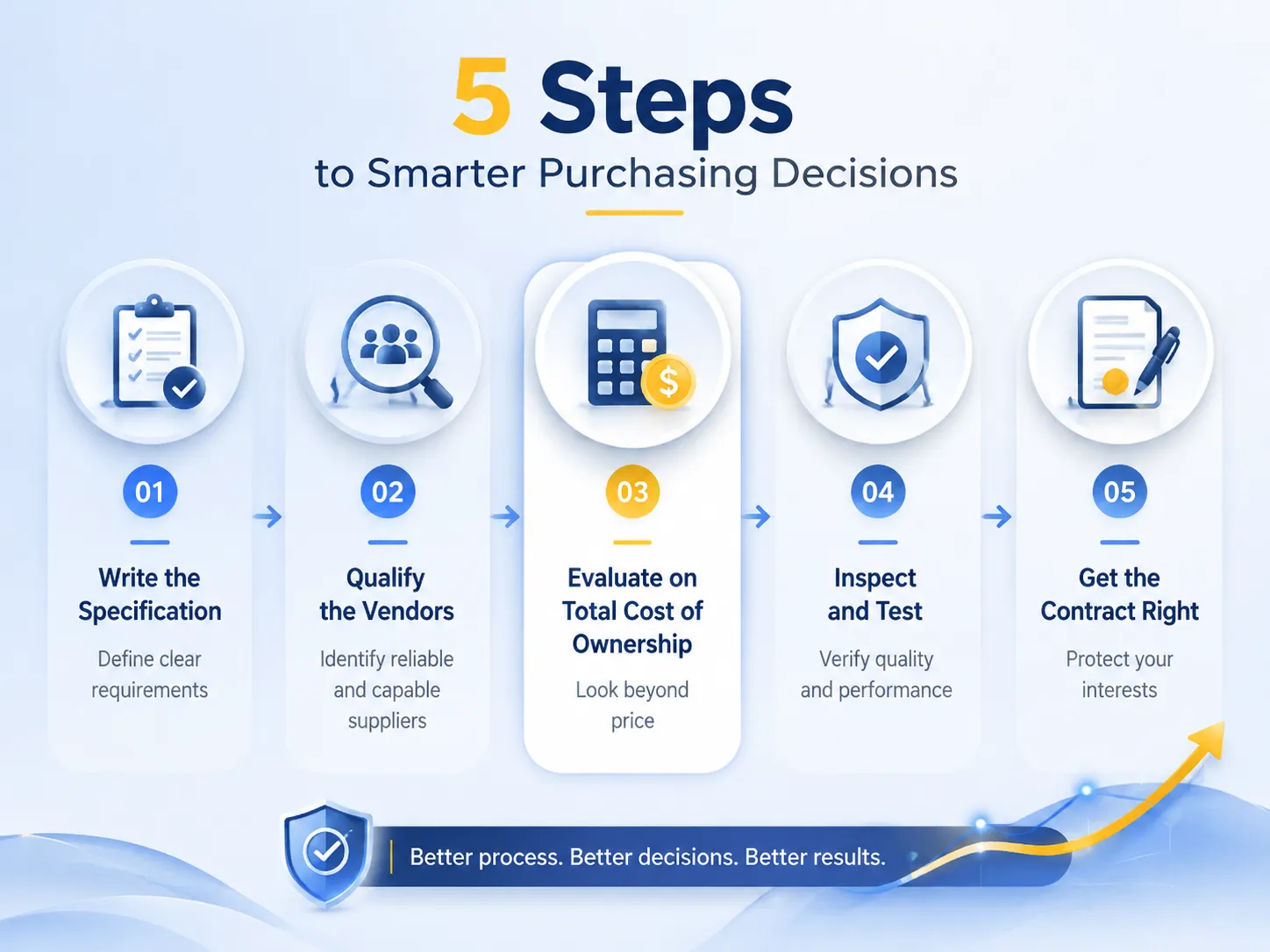
الخطوة 4: الفحص والاختبار
هناك ثلاث مراحل من الفحص والاختبار.
- المرحلة الأولى هي في المصنع حيث يقوم المُصنّع بإجراء فحوصات روتينية للوحدة، مثل فحص النسب، ومجموعات المتجهات، والمقاومة، والخسائر، ومقاومة العزل. يمكنك استخدام إما مسجل فيديو أو مفتش طرف ثالث لمشاهدة هذه الاختبارات.
- المرحلة الثانية هي عند نقطة الوصول للتحقق من أضرار النقل، وفحص لوحة الاسم، والتخزين السليم للوحدة سواء كانت في زيت أو نيتروجين جاف.
- المرحلة الأخيرة هي التشغيل وتتكون من قياس مقاومة العزل واختبار العزل بالزيت، وفحص أسلاك مرحل بوخولز، واختبار النطاق الكامل لـ OLTC بالإضافة إلى أخذ عينة DGA الأساسية.
كل مرحلة تغلق نافذة الفرصة للمخاطر.
| نقطة الفحص | الفحوصات النموذجية | من يقوم بذلك |
|---|---|---|
| المصنع، الاختبارات الروتينية | النسبة، مجموعة المتجهات، المقاومة، الخسائر، العزل، العازل | المُصنّع + الشاهد من طرف ثالث |
| المصنع، اختبارات النوع | ارتفاع درجة الحرارة، نبضة البرق، الدائرة القصيرة | طرف ثالث / مختبر معتمد |
| الوصول إلى الموقع | أضرار النقل، لوحة الاسم مقابل الطلب، مستوى الزيت، ضغط النيتروجين | المشتري + مساح الشحن |
| بدء التشغيل | ميجر، عزل الزيت، أسلاك المرحل، تمرين OLTC، DGA الأساسية | المثبت + المشتري |
اختبارات المصنع تتحقق من المعدات؛ وفحوصات الوصول تتحقق من اللوجستيات؛ والتشغيل يتحقق من التركيب. أي إغفالات في أي من الثلاثة تخلق عدم اليقين للفشل التالي، مما قد يكون مكلفًا من حيث المطالبات المقدمة لشركة التأمين أو نزاعات الضمان.
الخطوة 5: الحصول على العقد الصحيح
تحتوي عقود شراء المحولات على شروط محددة تستحق الانتباه:
| مصطلح | ممارسة جيدة | لماذا |
|---|---|---|
| الضمان | 18-24 شهرًا من التشغيل، بحد أقصى 30 من الشحن | تغطي العيوب الكامنة التي تم العثور عليها في الخدمة المبكرة |
| ضمان الخسارة | الخسائر المقاسة ضمن ±5% من العطاء، وإلا عقوبة | تمنع تقديرات الخسارة المتفائلة |
| تفاوت المعاوقة | ±7.5% وفقًا لـ IEC 60076-1 | تحمي افتراضات تنسيق النظام |
| الأضرار السائلة | 5% لكل أسبوع من التأخير، بحد أقصى 5-10% | تحمي جدول مشروعك |
| قطع الغيار | قائمة وسعر متفق عليه عند الطلب | تتجنب تسعير السوق المحتكر |
| الوثائق | تقارير الاختبار، الرسومات، الدليل باللغة الإنجليزية | مطلوبة للتشغيل والتأمين |
| شروط الدفع | 10-30% دفعة مقدمة، الرصيد مقابل المعالم | يوازن التدفق النقدي والرافعة المالية |
بالإضافة إلى ذلك، يرجى ذكر معيار حكومي (إما IEC أو IEEE) في لغة العقد وجعله نقطة في التقرير. شهادة تشير إلى المعيار الخاطئ لا تساوي شيئًا.
توصيات العلامة التجارية حسب المستوى
| اللائحة هي | العلامات التجارية | نقاط القوة | الأفضل لـ |
|---|---|---|---|
| عالمي متميز | هيتاشي إنرجي، سيمنز إنرجي، ABB | عمق الهندسة، تاريخ اختبار النوع، الخدمة العالمية | المحولات الكبيرة الحرجة، المرافق المنظمة |
| دولية متوسطة المستوى | شنايدر إلكتريك، هيونداي، توشيبا | جودة صلبة، أسعار تنافسية، تغطية إقليمية | مشاريع توزيع ومتوسطة القدرة |
| صناعي إقليمي | TBEA، EMCO (الهند)، كرومبتون | نطاق التصدير، أسعار تنافسية | أساطيل التوزيع والمرافق الإقليمية |
| فئة قيمة التصدير | شركة جيانغسو سوبين للطاقة الكهربائية وزملائها | شهادة IEC، أسعار التصدير، مواصفات مرنة | مرافق حساسة للتكلفة، مقاولون EPC، صناعيون |
تبرر الفئة المتميزة تكلفتها بسبب سنوات من بيانات الفشل، وبرامج اختبار نوع شاملة، وبصمة عالمية. تغلق فئة قيمة التصدير معظم الفجوة الفنية من خلال اتباع اختبارات IEC ومواصفات المواد المماثلة وتتنافس في السعر والتسليم. ومع ذلك، تقدم الفئة المتوسطة تسوية مناسبة للعديد من عملائها.
تمثل فئة قيمة التصدير في المحولات المملوءة بالزيت شركة جيانغسو سوبين للطاقة الكهربائية: محولات توزيع ومحولات طاقة معتمدة من IEC 60076 تتراوح من 35 كيلوفولت إلى 110 كيلوفولت، بروتوكولات اختبار روتينية لكل وحدة معينة، درجات كفاءة GB 20052، خيارات OLTC والإستر، بالإضافة إلى تاريخ من العمل مع المرافق ومقاولي EPC في آسيا وأفريقيا والشرق الأوسط وأمريكا اللاتينية. كما تسمح سوبين أيضًا بالتفتيش من قبل طرف ثالث وتوفر مستندات باللغة الإنجليزية، وهي الضروريات التي تضمن تأمين صفقة تصدير. سوبين على قائمة الموردين للمشترين الذين يتبعون نهج قائم على الأدلة في اختيارهم. الكتالوج والشهادات متاحة في subian-electric.com.
نطاقات الأسعار وما يحركها
ميزانيات FOB الإرشادية، صالحة لأغراض التخطيط:
| التصنيف | فئة القيمة (الصين) | الفئة المتوسطة | مستوى متميز |
|---|---|---|---|
| 500 ك.ف.أ | $6,000–$10,000 | $9,000–$13,000 | $12,000–$16,000 |
| 1,000 كيلوفولت أمبير | $14,000–$22,000 | $18,000–$26,000 | $22,000–$34,000 |
| 10 MVA (35kV) | $28,000–$48,000 | $40,000–$60,000 | $52,000–$82,000 |
| 5 MVA (35kV) | $65,000–$110,000 | $90,000–$130,000 | $125,000–$190,000 |
العوامل الرئيسية في التسعير هي كما يلي: التصنيف وفئة الجهد، حجم الفقد، محول التوصيل (يضيف الحمل حوالي 15 إلى 30 في المئة)، سعر النحاس (لوحدة 10 MVA، لديك حوالي أربعة إلى ستة أطنان)، الملحقات، والشركة المصنعة. العروض صالحة لمدة 15 إلى 45 يومًا حيث تتغير أسعار النحاس والفولاذ الموجه. يجب تثبيت الأسعار في أقرب فرصة بينما يجب تضمين بند تصعيد في حالة الخطط متعددة السنوات.
أخطاء الشراء الشائعة
- إجراء عملية شراء بناءً فقط على تكاليف kVA. غالبًا ما تحتوي المعدات الأقل تكلفة على المزيد من الفقدان مما يعني أنك ستتكبد خسارة عن كل ساعة على مدى 25 عامًا.
- الإيمان بالشهادات دون التحقق. اطلب أرقام التقارير وتحقق؛ في حالة السلع المصدرة، يجب أن يقوم طرف ثالث بإجراء التفتيش.
- إهمال تنسيق المقاومة. يمكن أن تجعل الاختيار الخاطئ بشأن المقاومة حماية المرحل عديمة الفائدة — أكبر خطأ في القائمة بأكملها.
- عدم الانتباه إلى جوانب النقل والتركيب. تذكر أن محول 10 MVA يزن حوالي 25 طنًا ويتطلب رافعات وأساسًا، لذا تأكد من التخطيط لذلك قبل إجراء عملية الشراء.
- تخطي DGA الأساسية. بدون عينة بدء التشغيل، لن تتمكن من معرفة ما إذا كانت الشذوذ الغازي اللاحق عيبًا أو اتجاهًا.
- تجاهل قطع الغيار والخدمات. تعتبر مرحلات بوخولز أو الحشوات رخيصة الآن، لكنها قد تكون باهظة الثمن لاحقًا.
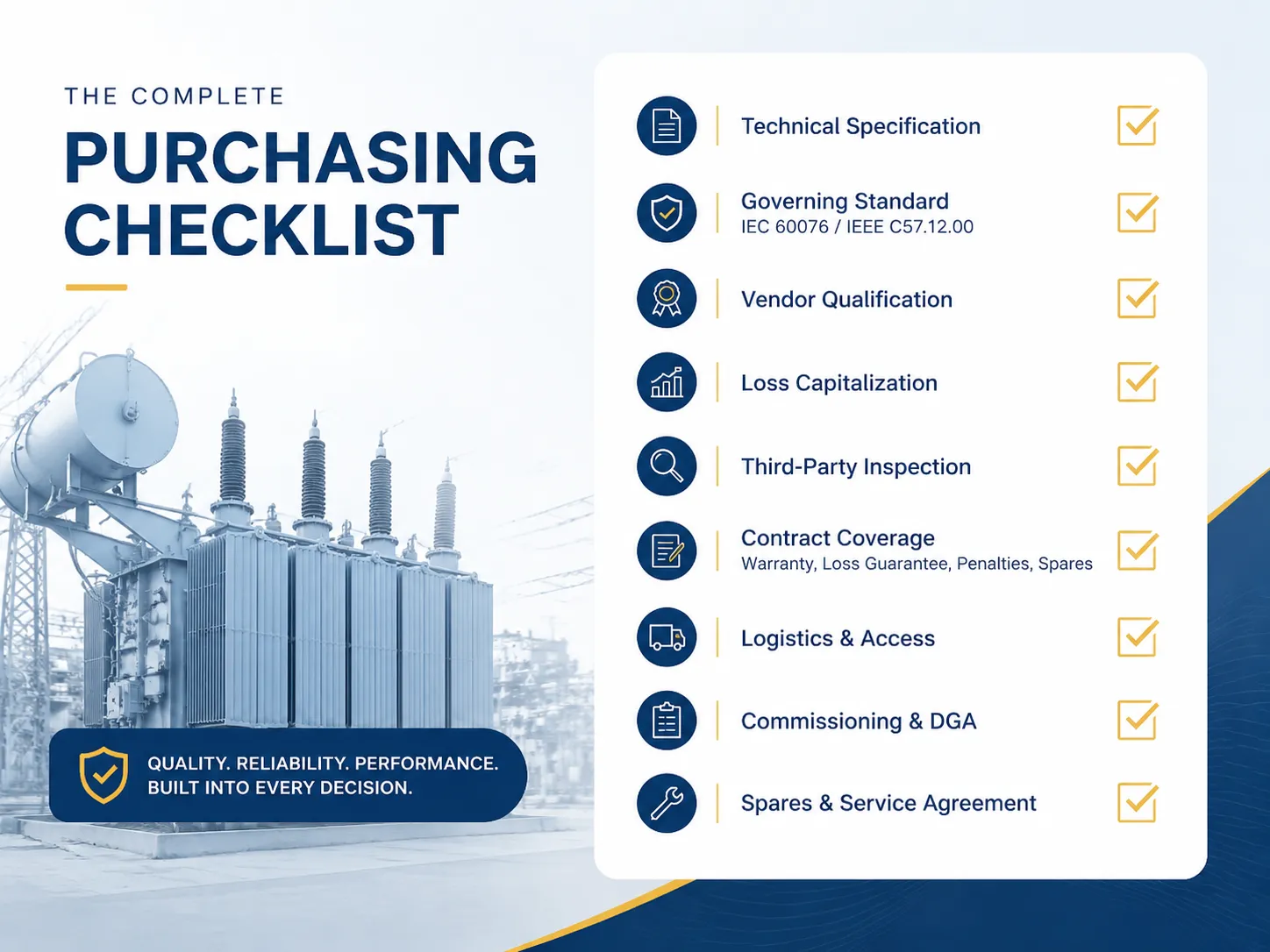
قائمة التحقق الكاملة للشراء
- ☐ تم إنشاء المتطلبات الفنية الكاملة وإرسالها للتداول
- ☐ تم الإشارة إلى المعيار التنظيمي (IEC 60076 أو IEEE C57.12.00)
- ☐ تم جمع وتأكيد مؤهلات البائع
- ☐ تم تطبيق تقنية رسملة الخسائر في جميع العطاءات
- ☐ تم جدولة فحص مستقل للشحنات الدولية
- ☐ يتضمن الاتفاق الضمان، وضمان الخسارة، والغرامات، وقطع الغيار
- ☐ تم تنظيم مسار الشحن والوصول إلى الرافعة
- ☐ تم الاتفاق على عملية بدء التشغيل وكذلك أساس تحليل زيت المحولات
الأسئلة المتكررة
ما هو السعر العادل لمحولة زيتية بسعة 1,000 kVA؟
خطة المصدر الصيني تنتج أسعارًا تتراوح من $14,000 إلى $22,000 FOB، ومن $18,000 إلى $26,000 من مورد متوسط، ومن $22,000 إلى $34,000 من مصنع متميز اعتمادًا على معدلات الخسارة والملحقات. عادةً ما تتراوح رسوم الشحن والتأمين بين $2,000 إلى $6,000 اعتمادًا على المسافة.
هل يجب أن أدفع أكثر مقابل محولة ذات خسائر أقل؟
بشكل عام، الإجابة هي نعم. تظهر رسملة الفجوة أنه عند $0.08/kWh، كل كيلووات من الخسائر غير المحملة له قيمة حوالي $700 سنويًا في التشغيل المستمر، أو $17,500 على مدى 25 عامًا. لذلك، في حال كانت العطاءات ذات الخسائر الأقل تكلف أقل من الفجوة المرسملة، فإنها تكون البديل الأقل تكلفة.
كيف يمكنني التحقق من أن شهادة اختبار IEC أصلية؟
تشمل المعلومات المهمة رقم تقرير الاختبار، المختبر الذي أصدر التقرير، والتاريخ؛ حيثما كان ذلك ممكنًا، احصل على نسخة من التقرير لوحدة حديثة أخرى من نفس النوع؛ وإذا كانت طلبية تصدير، اطلب مفتشًا من طرف ثالث للتحقق من الاختبار نفسه. الشركات المصنعة الأصلية لديها سجلات كاملة؛ عادةً ما تفشل النسخ المزيفة عند الطلب على الوثائق الأصلية.
أي علامة تجارية يجب أن أختار؟
خصص المستوى للأصل. عندما يتعلق الأمر بالمحولات المهمة ذات الخدمة المحدودة حول موقعها، يمكن تبرير سعر المستوى المتميز. عندما نتحدث عن محولات ذات قيمة تصديرية مثل أساطيل التوزيع الكبيرة مع مستندات احتياطية وتكلفة إجمالية متساوية، قيمها بناءً على الحقائق وتكلفة الملكية الإجمالية، وليس فقط على السمعة.
كم من الوقت تستغرق عملية التسليم؟
تتراوح مدة التسليم لأنظمة التوزيع من 8 إلى 24 أسبوعًا اعتمادًا على حمولة المصنع. في حالة المحولات ذات السعة المتوسطة (3-31.5 MVA)، يكون الوقت المتوقع عادةً بين 16 إلى 40 أسبوعًا. في الظروف السلبية، يمكن أن تستغرق المحولات الكبيرة أكثر من 60 أسبوعًا للتسليم.
المراجع
- IEC 60076-1: محولات الطاقة - عام — المواصفات وقاعدة الاختبار لكل مناقصة محولات.
- IEC 60076-5: القدرة على تحمل الدائرة القصيرة — متطلبات اختبار الدائرة القصيرة والتصميم المشار إليها في تأهيل المورد.
- IEEE C57.12.00: محولات التوزيع والطاقة المغمورة في السائل — نظير متطلبات أمريكا الشمالية.
- IEC 60422: إرشادات إشراف وصيانة الزيت — حدود اختبار الزيت في الخدمة للوحدات المشتراة.
- ISO 9001: أنظمة إدارة الجودة — قاعدة إدارة الجودة لتأهيل المورد.
- محولات هيتاشي إنرجي — مرجع لعروض محولات الطاقة من الفئة الممتازة.
- الموقع الرسمي لشركة جيانغسو سوبين للطاقة الكهربائية — منتجات المحولات المغمورة بالزيت من فئة قيمة التصدير والشهادات.
الخاتمة
شراء محول مغمور بالزيت يحدث في خمس خطوات: المواصفات، التأهيل، تقييم التكلفة الإجمالية للملكية، الفحص، والتعاقد. كل خطوة تحول عملية شراء عالية المخاطر إلى عملية مسيطر عليها وعادة ما تكشف عن المورد الذي يقدم أفضل قيمة، وليس أقل سعر. الفرق بين “أقل سعر” و“أقل سعر على مدى 25 عامًا” غالبًا ما يكون في نطاق 30-60% من سعر الشراء، ولهذا السبب فإن العملية تستحق المتابعة.
ملاحظات ملخصة:
- احصل دائمًا على المواصفات المكتوبة قبل طلب السعر.
- قيم التكلفة الإجمالية للملكية بدلاً من سعر العطاء.
- تحقق من الشهادات وأجرِ فحصًا من طرف ثالث للطلبات الخارجية.
- اختر العلامة التجارية المناسبة اعتمادًا على أهمية الأصل؛ الحقائق لها أولوية على أسماء العلامات التجارية.