


يقوم المهندس بالتحقق من تاريخ صيانة محول رفع بقدرة 50 MVA الذي يعمل منذ 14 عامًا. لم يواجه المحول أي فشل كبير حتى الآن ولكن تحليل الزيت الأخير يظهر زيادة في مستويات الهيدروجين ويجب أخذ بعض عينات زيت OLTC. قام المهندسون بتحديد الميزانية السنوية لصيانة المحول والمحول على وشك الاستخدام في الإغلاق القادم الذي يعد في غاية الأهمية للعملية. في الواقع، من الواضح أن المهام يجب أن تُعطى الأولوية بناءً على كفاءة كل مهمة وفقًا للوقت الذي يجب أن تُنفذ فيه المهمة وكيفية تحليل كل مهمة لفعاليتها.
يبرز هذا المقال أهم جوانب عملية صيانة المحولات الكهربائية التي تُخفى في كتيبات طويلة، وهي المهام التي يجب أن تُنفذ حقًا لضمان موثوقية المعدات، وما تعنيه نتائج الفحص لصيانة المحول وما يمكن أو لا يمكن القيام به من مهام.
استجابة سريعة: يمكن أن تحمي صيانة المحول الكهربائي المعدات من خلال: إدارة الزيت، الاختبارات الكهربائية، الحفاظ على الملحقات، والتوثيق. تشمل المعايير الأساسية للإدارة: درجة حرارة الزيت من 75 – 85 درجة مئوية أثناء العمل تحت الحمل المقدر، رطوبة الزيت أقل من 20 – 30 جزء في المليون، جهد الانهيار فوق 30 – 40 كيلو فولت، وTDCG أقل من 720 جزء في المليون وفقًا لمعيار IEEE C57.104. تصل تكاليف الصيانة السنوية إلى $1,500–$5,000 لكل موقع.

لماذا تعتبر صيانة المحولات الكهربائية أمرًا غير قابل للتفاوض
المحول الكهربائي هو في الوقت نفسه أغلى وأطول عمرًا وأقل قطعة معدات زائدة موجودة في العديد من محطات الطاقة الكهربائية. إذا ظهرت مشكلة مع المحول، سيتوقف الإنتاج، وستتوقف المحطة، وسيستغرق الأمر عدة أشهر للحصول على بديل بشكل طارئ. وفقًا لبيانات الموثوقية المقدمة من لجان العمل في IEEE وCIGRÉ، فإن العزل، ومغيرات النقر، وكسر العوازل هي المصادر الرئيسية لخلل المحولات؛ يمكن تحديد هذه المكونات خلال إجراءات الصيانة المعينة بشكل مناسب التي تمنع حدوث الفشل الفعلي.
المنطق الاقتصادي بسيط جدًا. على سبيل المثال، يكلف المحول الكهربائي بقدرة 50MVA $250,000 ويمكن أن يكلف ما يصل إلى $1.2 مليون؛ في الوقت نفسه، تبلغ تكلفة صيانته السنوية $1,500 إلى $5,000، وهو ما يمثل نسبة صغيرة فقط من تكلفة المعدات. بالإضافة إلى ذلك، من المعروف أن الإغلاقات غير المخطط لها تكلف على الأقل $50,000 ويمكن أن تصل إلى $2 مليون، اعتمادًا على الحمل المفقود ومدته. وبالتالي، من الآمن القول إنه من الحكمة تحمل تكلفة الصيانة، حيث إنها الأكثر فعالية من حيث تكلفة الخسائر المحتملة.
الأعمدة الأربعة لصيانة المحولات الكهربائية
فيما يتعلق بصيانة المحولات المبردة بالزيت، فإنها تقع تحت واحدة من أربع مجالات، مما يضمن عدم ترك أي شيء دون اهتمام وعدم القيام بأي شيء بشكل زائد.
| العمود | ما يغطيه | الاختبار الرئيسي / المهمة | النقاط الرئيسية |
|---|---|---|---|
| إدارة الزيت وDGA | حالة زيت العزل والغازات المذابة | DGA، الرطوبة، جهد الانهيار، الحموضة | الأعطال الحرارية، القوس الكهربائي، دخول الرطوبة، التلوث |
| الاختبارات الكهربائية | سلامة اللف والعزل | مقاومة العزل، النسبة، مقاومة اللف، تيار المغنطة | تلف اللف، تدهور العزل |
| العناية بالملحقات والمكونات | البوشينغ، أجهزة التنفس، محولات السحب، التبريد، الحماية | الفحص البصري، اختبار زيت OLTC، فحص جهاز التنفس، اختبار المروحة | التآكل الميكانيكي، الرطوبة، فشل التبريد |
| الوثائق والاتجاهات | التاريخ، تقييم الحالة، تصنيف المخاطر | دفاتر السجل، CMMS، تحليل الاتجاه | الأعطال التي تتطور ببطء والتي تفوتها القراءات الفردية |
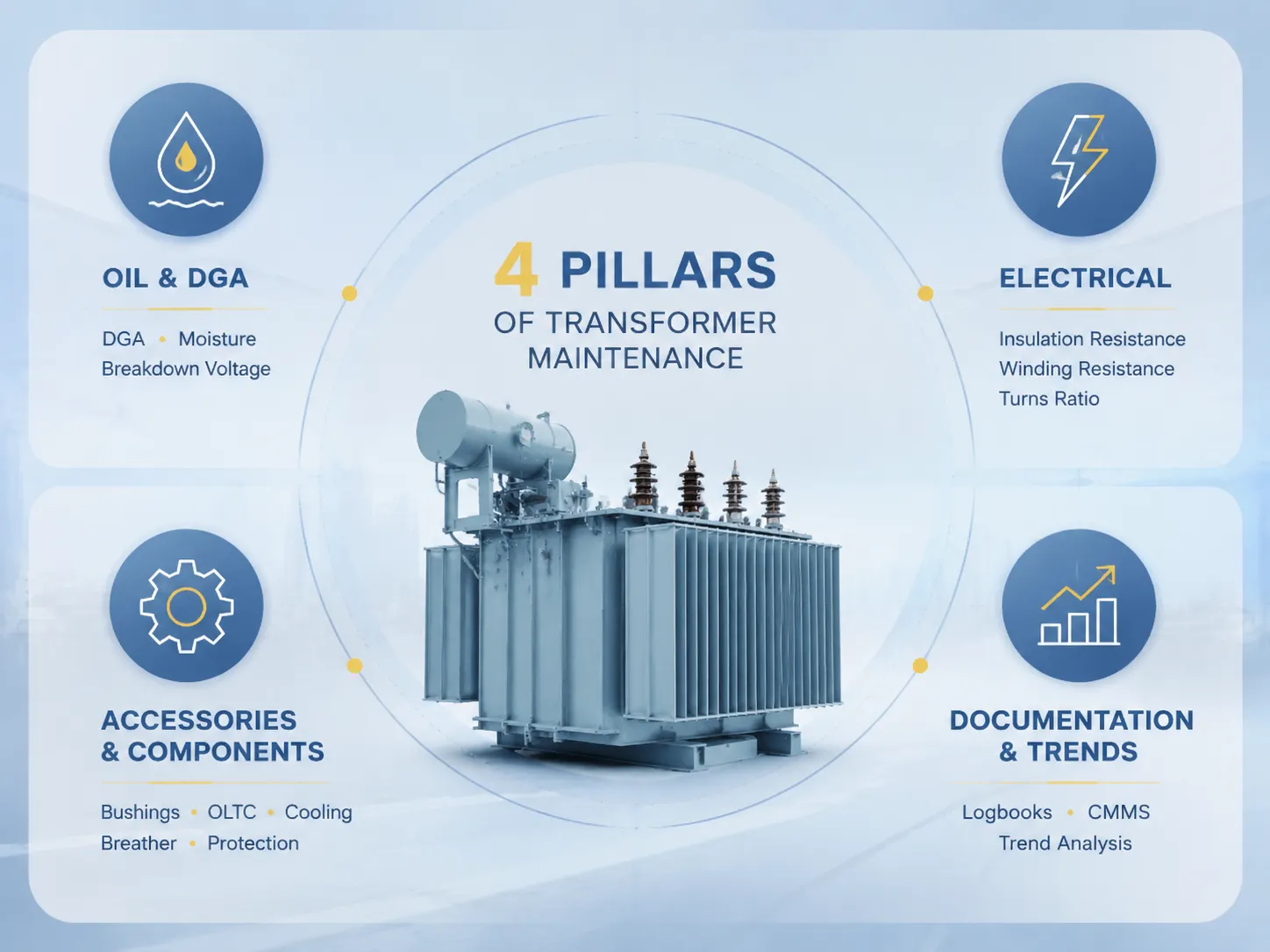
العمود 1: إدارة الزيت وDGA
يعمل الزيت كعازل ومبرد في المحول وكأداة تشخيصية لتحديد الأعطال داخل المعدات. يمثل تحليل الغاز المذاب الاختبار الأكثر شمولاً الذي يكشف عن جميع المعلومات المطلوبة. تقوم الأعطال بتفكيك عزل الورق والزيت إلى غازات محددة مذابة في الزيت، مثل الهيدروجين، الميثان، الإيثان، الإيثيلين، الأسيتيلين، CO، وCO2. تشير تفسير الغازات باستخدام IEEE C57.104 وIEC 60599 إلى نوع ومستوى العطل.
القيم المهمة لإدارة الزيت في المحول الكهربائي:
| المعامل | طبيعي | تحذير | إجراء |
|---|---|---|---|
| جهد انهيار الزيت | > 40–60 كيلوفولت | 30–40 كيلوفولت | < 30 kV: تصفية أو استبدال الزيت |
| رطوبة الزيت | < 15–20 جزء في المليون | 20–30 جزء في المليون | > 30–40 ppm: تجفيف والعثور على مصدر الدخول |
| إجمالي الغاز القابل للاحتراق المذاب | < 720 جزء في المليون | 720–1,920 جزء في المليون | > 1,920 ppm: التحقيق؛ > 4,630 ppm: إزالته من الخدمة |
| الحموضة | منخفضة (رقم التعادل < 0.1–0.15 ملغ KOH/g) | اتجاه متزايد | عالي: زيت إعادة التأهيل |
| محتوى الفوران | منخفض | ارتفاع | عالي: تأكيد شيخوخة الورق، خطة نهاية العمر |
تشمل الصيانة المجدولة العملية لمحولات الطاقة DGA سنويًا، وواحدة نصف سنوية للوحدات الحرجة أو بعد حدث عطل. نظرًا لأن زيت حجرة OLTC يتقدم في العمر بشكل أسرع، يتم اختبار زيتها كل 6-12 شهرًا. يجب دائمًا جمع العينة من نفس الصمام عند حمل محدد وتدوين درجة حرارة الزيت.
العمود 2: الاختبارات الكهربائية
تساعد الاختبارات الكهربائية اختبارات الزيت في فحص الملفات والعزل مباشرة:
- مقاومة العزل (ميجر): يتم تقييمها بين الملف والأرض وبين الملفات. يجب أن تظهر مقاومة عزل الملفات عالية الجهد من 1000 إلى 5000 مΩ أو أكثر؛ المقارنة على مر السنين أكثر أهمية من الأرقام المطلقة. إذا بدأت الأرقام في الانخفاض، فهناك وجود للرطوبة أو التلوث.
- مقاومة الملف: تقاس مرحلة بمرحلة وتُقارن؛ أي تغيير فوق 2-3 في المئة يشير إلى عطل إما في الاتصال أو في اللفة.
- نسبة اللفة: هي اختبار نسبة اللفة يؤكد النتائج مع لوحة الاسم؛ أي انحراف فوق 0.5-1 في المئة يشير إلى قصر في الملفات.
- تيار المغنطة: قد يشير ارتفاع هذا التيار إلى قصر أو تلف في القلب.
تكلف هذه الاختبارات عادةً بين $300 و$1,500 لكل وحدة لكل فحص وتُجرى مرة واحدة في السنة أو بعد حادث خطير، مثل دائرة قصيرة أو ضربة برق. عند دمجها مع DGA، يمكن أن تساعد في تحديد المشكلة: DGA تخبرنا بوجود فشل، بينما تشير الاختبارات إلى الموقع.
العمود 3: رعاية الملحقات والمكونات
من المعروف أن الملحقات تتعطل أكثر من المحول الأساسي ويمكن تجنب الفشل لأنها قابلة للتنبؤ. تُظهر الجدول التالي المهام الضرورية التي يجب تنفيذها والتكاليف المرتبطة بالإصلاح:
| ملحق | الفحص | الفاصل الزمني | التكلفة النموذجية |
|---|---|---|---|
| البوشينغ | الشقوق، التتبع، تسرب الزيت؛ PD/tan-delta للوحدات الحرجة | الفحص البصري اليومي؛ PD كل 3-6 سنوات | $3,000–$30,000 لكل مرحلة للاستبدال |
| جهاز التنفس | لون هلام السيليكا؛ يجب تجديده عندما يكون ورديًا | فحص يومي | $50–$300 |
| OLTC | عينة الزيت، محرك القيادة، الاتصالات | الزيت 6-12 شهرًا؛ إعادة بناء كل 3-6 سنوات | $5,000–$40,000 لكل إعادة بناء |
| مراوح التبريد / المضخات | التشغيل، تدفق الهواء، زعانف المبرد | اختبار شهري | $300–$5,000 لكل مكون |
| أجهزة الحماية | دوائر تشغيل صمام بوشولز وصمام الإغاثة | خلال الانقطاعات المجدولة | $200–$1,000 |
- البوشات: تحقق من الأضرار والشقوق وتسرب الزيت وتأكد من استبدال الوحدات التالفة بسرعة. يمكن أن يؤدي فشل البوشات إلى تدمير المحولات وتختلف تكاليف الاستبدال من $3,000 إلى $30,000. يمكن إجراء اختبارات PD وtan-delta كل 3-6 سنوات للبوشات المهمة.
- جهاز التنفس والمخزن: يجب أن يكون هلام السيليكا دائمًا أزرق؛ إذا كان ورديًا، يجب تجديده أو استبداله. عندما يكون جهاز التنفس مشبعًا، فإنه يسمح بدخول الهواء الرطب إلى الزيت، مما يتسبب في تدهور العزل ببطء.
- محول التبديل: بالنسبة لوحدات OLTC، يجب أخذ عينات من زيت OLTC بانتظام؛ يجب التحقق من عملية تغيير التبديل والتحقق من تيار المحرك كل 3-6 سنوات. تتراوح تكاليف صيانة OLTC من $5,000 إلى $40,000 لدورة إصلاح واحدة ولكنها تتجنب الأعطال الكبيرة.
- نظام التبريد: يجب اختبار المراوح والمضخات وأجهزة الترموستات؛ يجب تنظيف زعانف المبرد ومراقبة تدفق الزيت للكشف عن الأعطال.
- أجهزة الحماية: يجب اختبار جهاز بوشولز، وأجهزة حماية الضغط، ودارات الفصل خلال الإصلاحات الدورية.
العمود 4: الوثائق وتتبع الاتجاهات
البيانات المتعلقة بالصيانة ذات قيمة كبيرة، بينما توفر الوثائق الدعم لمكونات النظام الأساسية الأخرى. مفهوم رئيسي هنا هو ممارسة الحفاظ على تاريخ لكل وحدة من النظام، يحتوي على نتائج اختبارات التشغيل، وأداء وتحليل DGA، والاختبارات الكهربائية، وحوادث التحميل الزائد، والإصلاحات، والتنبيهات. يسمح هذا التاريخ بثلاثة أشياء: اكتشاف الأنماط (على سبيل المثال، زادت تركيز الغاز من 40 إلى 120 جزء في المليون في 24 شهرًا)، وتحديد الظروف (ترتيب الوحدات حسب أولويات الميزانية)، وإثبات وجود اتفاقيات الضمان والتأمين.
يتم أتمتة معظم إجراءات الصيانة اليوم بواسطة أنظمة إدارة الأصول الحديثة. الحد الأدنى الذي يجب القيام به هو الاحتفاظ بسجل لجميع المقاييس المفيدة: جميع القراءات، وتواريخ الأحداث، وإجراءات موظفي الصيانة. تلك الشركات التي تحافظ على البيانات تحقق مزايا من خلال الحصول على أموال لتبرير ميزانياتها، ومساعدة السلطات التنظيمية في التدقيق، وتسريع التحقيق في الأسباب الجذرية لأي مشكلة.
جدول الصيانة: المهام والترددات
يحتوي الجدول أدناه على نقطة مرجعية مفيدة لمحولات الطاقة. يمكن تغييره بناءً على العجلة، والعمر، وحالة المحول.
| التردد | المهمة | التكلفة النموذجية |
|---|---|---|
| يومي | جولة بصرية: مستوى الزيت، الصوت، درجة الحرارة، البوشينغ، التسريبات | $300–$1,500/سنة عمل |
| ربع سنوي | مقاومة العزل، فحص بصري/وظيفي لـ OLTC، اختبار المروحة | $200–$800 |
| نصف سنوي | DGA للوحدات الحرجة، عينة زيت OLTC | $200–$500 لكل عينة |
| سنوي | تحليل الغاز المذاب الكامل، حزمة جودة الزيت، مقاومة اللف، النسبة، ميجر | $800–$2,500 |
| كل 3–6 سنوات | إعادة تأهيل OLTC، PD/تان دلتا للبوشينغ، اختبار الحماية، فحص شامل | $5,000–$40,000 |
| كل 10-15 سنة | إعادة تأهيل كبيرة، ترشيح الزيت/استبداله، تجديد الحشيات | $10,000–$60,000 |
كقاعدة عامة، يجب إجراء تحليل الغاز المذاب في أي وقت وبعد أي حادث غير عادي. في حالة حدوث مثل هذا الحدث، يجب إجراء تحليل الغاز المذاب على الفور.
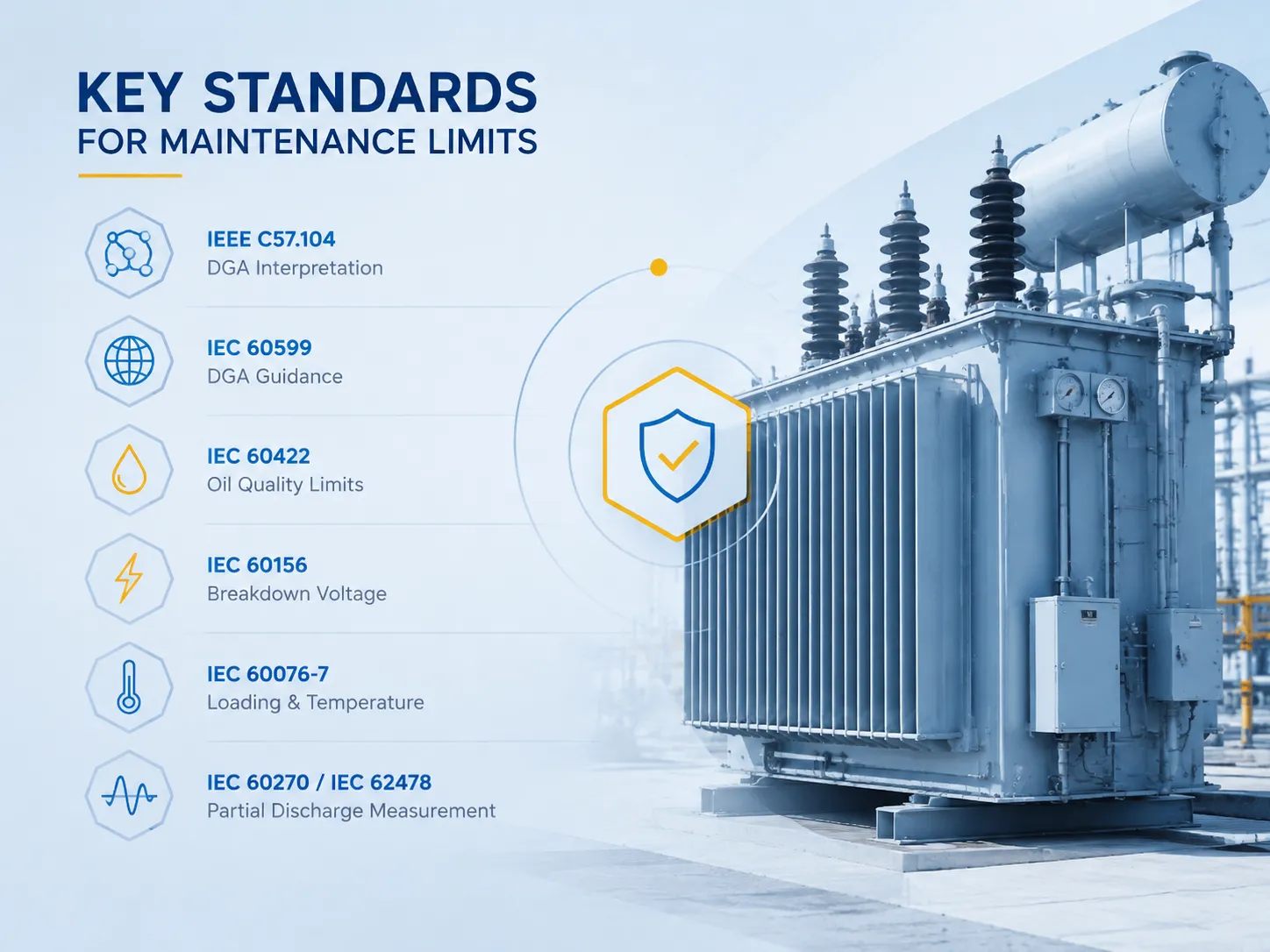
المعايير الرئيسية لحدود الصيانة
يجب أن تستند القرارات المتعلقة بأعمال الصيانة إلى المعايير المعمول بها وليس على الشائعات. فيما يلي قائمة بالمراجع الإلزامية في هذا المجال:
- IEEE C57.104 – تفسير التفريغ الجزئي وتقييمه للتشخيصات المعتمدة على الزيت.
- IEC 60599 – دليل دولي لتحليل الغاز المذاب للمعدات القديمة.
- IEC 60422 – التحكم في زيوت العزل المعدنية وخدمتها مع مؤشرات الجودة.
- IEC 60156 – طريقة اختبار الفشل العازل.
- IEC 60076-7 – توصيات بشأن تحميل المحولات وحدود درجة الحرارة.
- IEC 60270 / IEC 62478 – طرق قياس التفريغ الجزئي في التشخيصات الحديثة.
إذا كانت تعليمات الشركة المصنعة لقطعة معينة من المعدات تضع حدودًا أكثر صرامة أو تحديدًا، يجب الالتزام بها.
ميزانية الصيانة: التكلفة مقابل خطر الفشل
يجب تخصيص ميزانيات الصيانة وفقًا للمخاطر وليس بناءً على الخبرة أو العادات. بعض المبادئ هي:
| العنصر | القيمة النموذجية |
|---|---|
| برنامج صيانة سنوي (لكل محول طاقة) | $1,500–$5,000 |
| عينة تحليل الغاز المذاب | $200–$500 |
| حزمة جودة الزيت | $150–$400 |
| مجموعة المراقبة عبر الإنترنت (الوحدات الحرجة) | $25,000–$120,000 رأس المال |
| استبدال المحول (20–60 MVA) | $250,000–$1.2 مليون |
| تكلفة انقطاع غير مخطط له | $50,000–$2 مليون لكل حدث |
| العمر الافتراضي المتوقع مع الصيانة المناسبة | 30–40 سنة |
كل شيء يعتمد على الرياضيات: عينة تحليل الغاز المذاب $400 سنويًا لأصل $500,000 الذي تحصل منه على 30+ سنة من الخدمة هو أقل استثمار تكلفة تقوم به. ينطبق نفس المنطق على تمديد الفحوصات للوحدات في حالة جيدة وزيادة تكرار الفحوصات للوحدات الأكثر خطورة.
أدوات الصيانة الحديثة: المراقبة والتحليلات
المراقبة والتحليلات تحدث ثورة في مجال الصيانة. مع وجود أجهزة مراقبة تحليل الغاز المذاب عبر الإنترنت، وأجهزة استشعار التفريغ الجزئي، ومتتبعات درجة الحرارة/الحمولة، تتوفر بيانات مستمرة للوحدات الحرجة، بفضل منصات التحليلات التي تحول البيانات إلى إنذارات جدية. تتطلب الاقتصاديات مزيجًا من الطرق: أجهزة المراقبة عبر الإنترنت للوحدات الحرجة القليلة التي قد تسبب فشلًا كارثيًا إذا حدث، وتحليل الغاز المذاب السنوي المعتاد للجزء الأكبر. تظل عتبة المعايير كما هي، والفرق الوحيد هو أن أنظمة المراقبة عبر الإنترنت تلتقط العطل الذي يحدث بين أخذ العينات.
ومع ذلك، تظل التفسيرات الخبيرة ضرورية. يمكن أن تؤدي البيانات إلى إرهاق الإنذارات أو الفشل في اكتشاف الأعطال.
الأسئلة المتكررة
كم مرة يجب صيانة محول الطاقة؟
المبادئ الأساسية وراء صيانة المحولات الكهربائية تشمل المراقبة البصرية المتكررة مرتين، والفحوصات الكهربائية التي تحدث كل ثلاثة أشهر، واختبار تحليل الغاز المذاب بالإضافة إلى جودة الزيت على أساس سنوي. يمكن إجراء اختبار DGA نصف السنوي للأجهزة الأكثر أهمية، بينما يمكن أيضًا تطبيق المراقبة عبر الإنترنت؛ يتم اختبار زيت OLTC تقريبًا مرة واحدة في السنة؛ وتحدث الإصلاحات الكبرى مرة كل خمس إلى عشر سنوات. في حالة وجود أي شذوذ، يجب إجراء اختبار فوري أولاً.
ما هي أهم اختبارات الصيانة لمحولات الطاقة؟
يعتبر تحليل الغاز المذاب من أكثر الاختبارات فائدة، لأنه يمكن من اكتشاف المشاكل الحرارية والكهربائية قبل الكارثة. عادة ما يتم استخدامه مع اختبارات الرطوبة وجهد الانهيار، واختبارات مقاومة اللف والعزل، مما يجعلها خمسة اختبارات تغطي معظم مؤشرات التدهور.
كم يكلف صيانة المحول الكهربائي سنويًا؟
يكلف حوالي 1.500-5.000 دولار سنويًا لتنفيذ البرنامج القائم على الحالة بالكامل لمحولات الطاقة، بما في ذلك المراقبة اليومية، واختبار DGA الذي يتم سنويًا (بتكلفة 200-500 دولار)، وجودة الزيت (150-400 دولار) والاختبارات الكهربائية (300-1.500). يجب أيضًا أخذ تكلفة الإصلاحات الكبرى في الاعتبار - فهي تتطلب 5.000-60.000 دولار مرة كل خمس أو عشر سنوات.
ما هي العمر الافتراضي الطبيعي لمحول كهربائي يتم صيانته؟
مع إدارة زيت منضبطة، ومراقبة DGA مناسبة، واختبارات كهربائية منتظمة، تخدم محولات الطاقة عادةً لمدة 30-40 عامًا، وبعضها يصل حتى 50 عامًا. يتبع تدهور العزل علاقة أسية مع درجة الحرارة: كل 6-8 كلفن من درجة الحرارة الثابتة فوق التصميم يؤدي إلى تدهور مزدوج للعزل، مما يجعل تحميل الانضباط أداة صيانة.
هل يمكن أن تمنع الصيانة التنبؤية جميع أعطال المحولات؟
لا، تساعد الصيانة التنبؤية في اكتشاف ومنع الأعطال التدريجية (بسبب العزل، والرطوبة، والتصدع، وتلوث الزيت) التي تؤدي إلى هزائم مستمرة. ومع ذلك، لا يمكن التنبؤ بانفجار البوشينغ، والتفريغات، والدوائر القصيرة الخارجية.
المراجع
- IEEE C57.104: دليل لتفسير الغازات الناتجة في المحولات المغمورة بالزيت — المرجع لحدود DGA ومستويات استجابة الصيانة.
- IEC 60422: إرشادات الإشراف والصيانة للزيوت العازلة المعدنية — حدود جودة الزيت وممارسات الصيانة للمحولات في الخدمة.
- IEC 60599: دليل تفسير DGA في المعدات المملوءة بالزيت المعدني — الإطار الدولي لتفسير الغاز في المعدات القديمة.
- IEC 60156: السوائل العازلة — تحديد جهد الانهيار — معيار الاختبار لجهد العزل للزيت.
- IEC 60076-7: دليل التحميل لمحولات الطاقة المغمورة بالزيت — حدود درجة الحرارة وإرشادات التحميل للوحدات المغمورة بالزيت.
- سيجرé — كتيبات فنية حول صيانة المحولات، والموثوقية، وتقييم الحالة.
- شركة جيانغسو سوبين للطاقة الكهربائية — مصنع محولات متوافق مع IEC 60076 يقدم وثائق الصيانة والدعم الفني.
الخاتمة
يجب أن تركز صيانة محولات الطاقة على جودة الخدمة بدلاً من الإنتاج الضخم بالمعنى التقليدي للكلمة. تدور عملية صيانة المعدات حول أربعة أعمدة: إدارة الزيت وDGA، الفحوصات الكهربائية، صيانة الدعم، والوثائق. يجب أن تضمن تنفيذ العملية استخدام الأصول إلى أقصى حد، مع كون الصيانة رخيصة.
- قم بإجراء اختبارات DGA مرة واحدة في السنة وبعد كل حالة مزعجة.
- قم بإجراء اختبارات DGA بالتزامن مع اختبارات الزيت والكهرباء.
- حافظ على انضباط العناية بالملحقات: عازل البوشينغ، جهاز التنفس، OLTC، ونظام التبريد.
- وثق واحتفظ بالسجلات.