


يقوم مخطط المرافق بوزن عرضين لمحول طاقة مصنف بقدرة 20 MVA وعلى مستويات جهد 66/11 kV. قدم كلا المصنعين نفس سعة الطاقة مع خسائر متطابقة تقريبًا ونفس السعر تقريبًا، لكن الاختلاف الرئيسي يكمن في أنظمة الزيت الخاصة بهم. قام أحد المصنعين بتصميم المحول بناءً على خزان زيت خارجي تقليدي مع جهاز تنفس من هلام السيليكا بينما قام المصنع الآخر بتصميم خزان تمدد مموج بدون خزان زيت. يفهم المخطط أن نوع نظام الزيت المختار يؤثر ليس فقط على نظام الحفاظ على الزيت نفسه ولكن أيضًا يؤثر على جدول الصيانة، ومستوى خطر الحريق، والسعر؛ عادةً ما سيكون تكلفة الوحدة مع خزان الزيت أعلى بمقدار 5-10% من سعر الوحدة المغلقة، لكن الخيار الأول يسمح بإدارة الزيت وفقًا للوائح مبسطة لسنوات عديدة قادمة.
يوفر الدليل معلومات حول ما هو الغطاء، وما هي التصاميم المختلفة الموجودة في السوق، وكيفية حساب حجمه، وكيفية اختيار الأنظمة التي ستتناسب بشكل أفضل مع نظام الحفاظ على الزيت للمحول المعزول بالزيت.
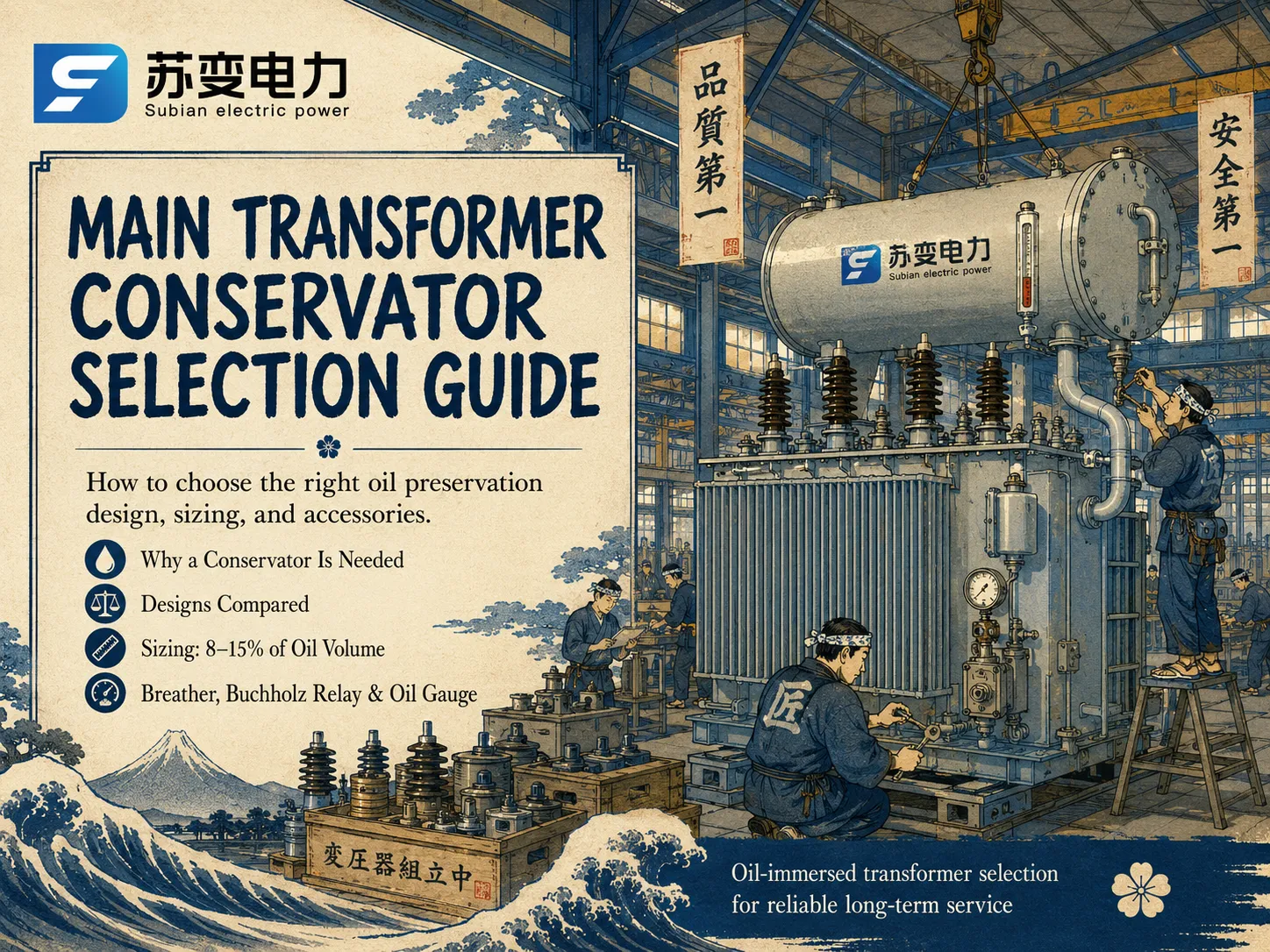
ما هو غطاء المحول؟
يمكن تعريف الغطاء على أنه خزان مساعد أسطواني أو مستطيل يوضع في أعلى خزان المحول الرئيسي، مرتبط بالخزان الرئيسي عبر أنبوب. يمتلك حجم الزيت في الاحتياطي للتقلب في المستوى وفقًا لتغير درجة الحرارة (الحمل). عندما يتمدد الزيت بسبب التسخين، يمكن ملؤه في الغطاء بحيث لا يتكون ضغط في الخزان الرئيسي. يتدفق الزيت بين الغطاء والخزان الرئيسي دون إنشاء فراغ إضافي أثناء العمل. يظل الغطاء مفتوحًا على الهواء الجوي عبر جهاز تنفس (أو مختوم بغشاء)، وهو سبب مهم آخر لوضعه في أعلى الخزان الرئيسي.
في غياب الغطاء، يعني الخزان المغلق بالكامل أن الضغط الداخلي يرتفع مع تمدد الزيت، وفي حالة تبريده، يظهر فراغ داخلي، مما يؤدي إلى ضغوط على بناء الخزان واستنتاجاته.
تؤدي ثلاث خصائص إلى هذه النتائج
يتمدد الزيت اعتمادًا على درجة الحرارة. يتمدد الزيت المعدني تقريبًا 0.07% لكل درجة مئوية واحدة من درجة الحرارة. باستخدام خزان بسعة 10,000 لتر يتعرض لتغير في درجة الحرارة قدره 50 درجة مئوية، وأخذًا في الاعتبار أن حجم الزيت والضغط سيزداد بمقدار 350 لتر، يتضح أن الخزان المغلق الصلب يمكن أن ينفجر أو يدفع الزيت للخارج من خلال فتحة التنفس.
يجب أن يكون الخزان الرئيسي دائمًا ممتلئًا. إذا انخفض الزيت في الخزان الرئيسي، فإن لفائفه العليا تصبح مكشوفة وتسمح بدخول الرطوبة إلى العزل في الفضاء الغازي. بمساعدة الغطاء، يمتلئ الزيت بسهولة في الخزان الرئيسي.
يجب إدارة الضغط في مساحة الغاز. يسمح تصميم الحافظ بوجود مساحة غاز صغيرة فوق الزيت يتم التحكم فيها بواسطة جهاز التنفس. إذا كان التصميم بدون الحافظ، ستنمو مساحة الغاز وتنكمش مع زيادة الحمل، ونتيجة لذلك، سيتم تحريك الهواء داخل وخارج الخزان.
وبالتالي، يصبح من الممكن تصنيع نظام حفظ الزيت “ذو التنفس الحر”.
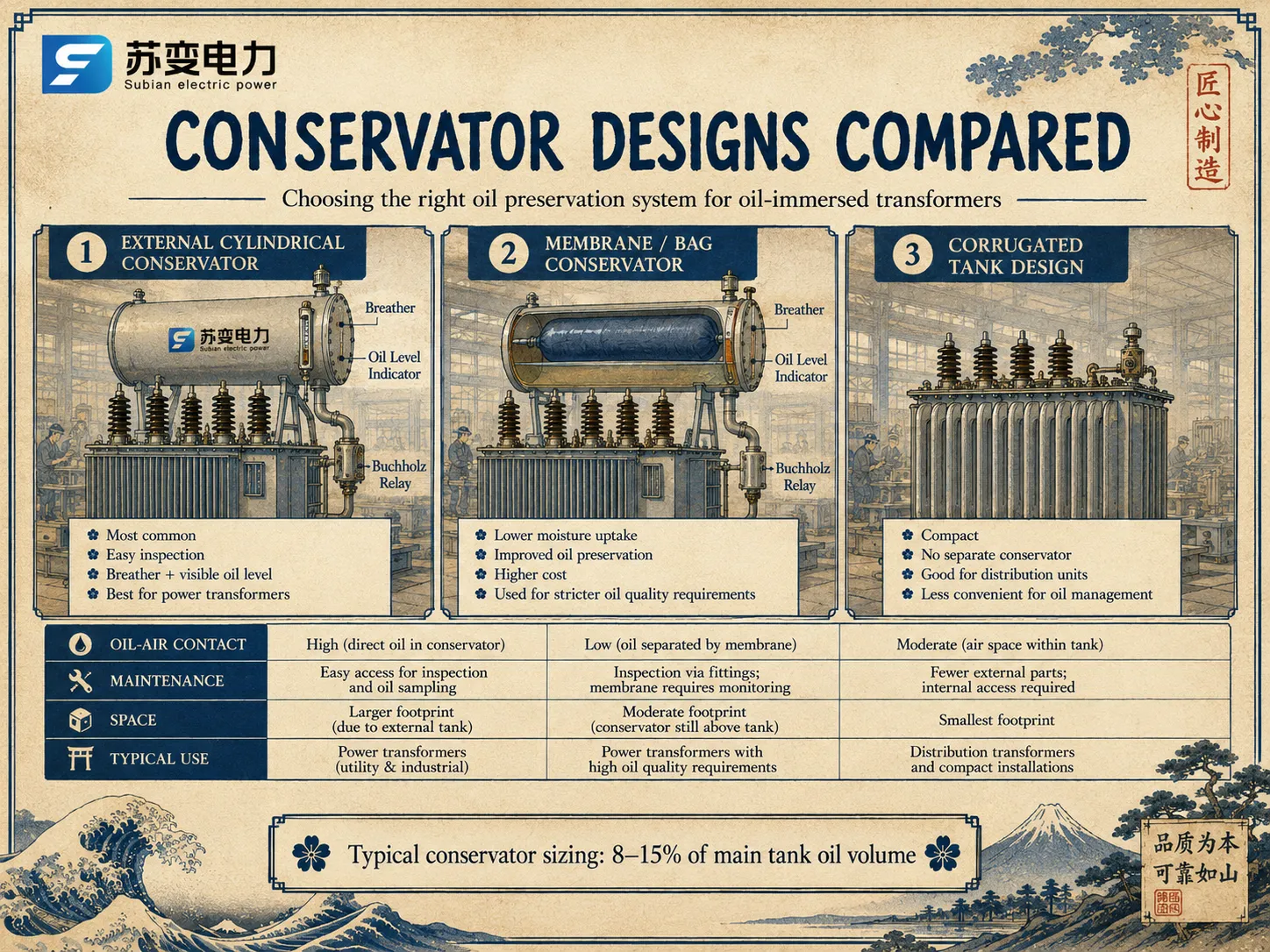
مقارنة تصاميم الحافظ
| التصميم | كيف تعمل | حجم الزيت الاحتياطي النموذجي | التكلفة النسبية |
|---|---|---|---|
| حافظ أسطواني خارجي | برميل منفصل فوق الخزان، جهاز تنفس في الأعلى، أنبوب الزيت في الأسفل | 8-15% من حجم الخزان | خط الأساس |
| حافظ غشاء / كيس | كيس مطاطي أو غشاء يفصل الزيت عن الهواء؛ مساحة غاز محكمة الإغلاق | 8-15% | +10-20% فوق الحافظ العادي |
| تصميم جدار خزان مموج | لا يوجد حافظ منفصل؛ جدار خزان مرن مموج يمتص التمدد | متكاملة | مشابه للحافظ العادي |
| خزان محكم / مغطى بالغاز | خزان ثابت مع وسادة نيتروجين أو غشاء؛ لا يوجد جهاز تنفس | لا شيء (مساحة الغاز) | +5-15% |
يظل الحافظ الخارجي مع جهاز التنفس التصميم الأكثر شيوعًا في العالم لأنه بسيط ورخيص البناء وسهل الفحص. يضيف الحافظ الغشائي كيسًا مطاطيًا يفصل الزيت تمامًا عن الهواء الخارجي، لذا لا يرى الزيت الأكسجين أو الرطوبة من التنفس - بتكلفة كيس يجب فحصه بحثًا عن الأضرار. يلغي تصميم الخزان المموج الوعاء المنفصل وهو شائع في المحولات التوزيعية حيث تكون المساحة والبساطة أكثر أهمية من سهولة الصيانة.
تحديد حجم الحافظ بشكل صحيح
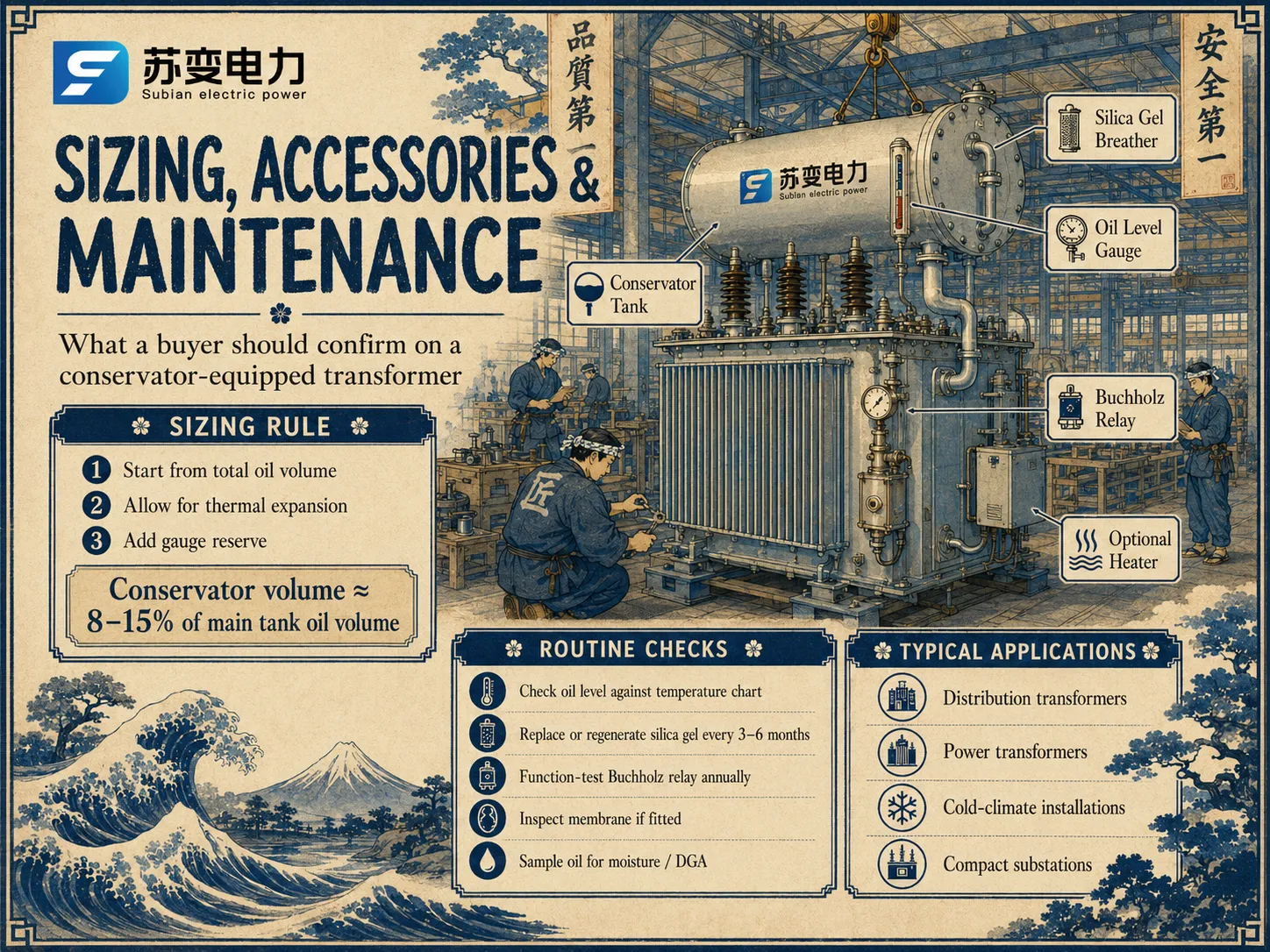
يجب أن يكون لدى الحافظ سعة كافية لحساب حجم الزيت الذي سيتوسع بين الحد الأدنى من درجة الحرارة أثناء التشغيل والحد الأقصى المسموح به لدرجة حرارة الزيت العلوي. يجب اتخاذ كل من الخطوات: تحديد نطاق درجة الحرارة. في الظروف المعتدلة العادية، يتصرف الزيت من -10 درجات عند بدء التشغيل البارد إلى 90 درجة أثناء التحميل، مما يتوافق مع تقلب درجة الحرارة البالغ 100 ك. في حالة المناطق الحارة - استخدم بيانات حقيقية بدلاً من ذلك. احسب حجم الزيت الذي سيتوسع، والذي يتطلب ضرب حجم الزيت في معامل التمدد، بشكل تقريبي 0.0007 لكل ك مضروبًا في درجة تقلب درجة الحرارة. وبالتالي، على سبيل المثال، يصل حجم الزيت إلى 10,000 كجم عند 100 ك، وهو ما يعادل حوالي 700 لتر. يجب أخذ مساحة احتياطية في الاعتبار لمؤشر مستوى الزيت. يجب أن يشير الحافظ إلى مستوى الزيت طوال الوقت من العلامة القصوى أثناء الحرارة والعلامة الدنيا أثناء البرودة، مما يشير إلى 20 إلى 30% المزيد من الزيت مقارنةً بالحجم الدقيق للزيت، والذي يعتبر حوالي 8 إلى 15% من الحجم العام للزيت في الخزان. سيكلف حساب كل شيء بشكل خاطئ أموالًا كبيرة. إذا كان الحافظ صغيرًا، سيتسرب الزيت إلى الخارج من خلال جهاز التنفس مما يؤدي إلى بقع زيتية على الخزان وامتصاص الهواء الرطب؛ بينما إذا كان الحافظ كبيرًا جدًا، سيكون لديه مواد وزيت فائض. لقياس الحجم بسرعة، نبدأ بحجم الزيت الكلي في المحول، إليك قيم مرجعية هندسية نموذجية للحافظ لتقلب درجة حرارة 100 ك:
| تصنيف المحول | الحجم الكلي النموذجي للزيت | حجم العمل للحافظ (10-12%) | حجم خزان الحافظ (مع احتياطي القياس) |
|---|---|---|---|
| توزيع 100 كVA | 300-400 لتر | 35-50 لتر | 60-80 لتر |
| توزيع 1 MVA | 1,500-2,000 لتر | 150-240 لتر | 250-350 لتر |
| طاقة 10 MVA | 8,000-12,000 لتر | 800-1,400 لتر | 1,200-2,000 لتر |
| طاقة 40 MVA | 25,000-35,000 لتر | 2,500-4,200 لتر | 3,500-6,000 لتر |
ملحقات الحافظ والحماية
| ملحق | الغرض | المواصفات النموذجية |
|---|---|---|
| جهاز تنفس هلام السيليكا | إزالة الرطوبة من الهواء الداخل إلى الحافظ | 1-15 كجم من المجفف، مؤشر تغيير اللون |
| مقياس مستوى الزيت (مغناطيسي) | عرض مستوى الزيت في لمحة | عائم + مؤشر، قرص محدد عليه Min/Max |
| مرحل بوخولز (غاز) | اكتشاف الغاز وزيادة الزيت في أنبوب الحافظ | DN50-DN100، مفتاحان عائم |
| غشاء / خلية هوائية | فصل الزيت عن الجو في التصاميم المغلقة | كيس مطاطي، قابل للاستبدال |
| سخان الحافظ (اختياري) | منع التكثف في المناخات الباردة | حراري، مقاوم للعوامل الجوية |
على محول مزود بحافظ، يتم تركيب مرحل بوخولز في الأنبوب بين الخزان الرئيسي والحافظ - موقعه الصحيح والمعياري. يتم تركيب جهاز التنفس في الجزء العلوي من الحافظ، ومقياس الزيت في غطاء النهاية. يتم اختبار جميع هذه الملحقات كجزء من اختبار الروتين للمحول في مصنع مُدار بشكل صحيح.
الحافظ مقابل الخزان المموج مقابل التصاميم المغلقة
| الخصائص | حافظ خارجي | خزان مموج | مغلق / محمي بالغاز |
|---|---|---|---|
| اتصال الزيت بالهواء | يتم التحكم فيه عبر جهاز التنفس | يتم التحكم فيه عبر جهاز التنفس | لا شيء (مغلق) |
| الوصول للصيانة | ممتاز؛ سهل الفحص والتعبئة | جيد؛ المستوى عبر المقياس | محدود؛ أخذ عينات الزيت فقط |
| تأثير تكلفة المحول | +5 إلى +10% | +3 إلى +8% | +5 إلى +15% |
| التطبيق النموذجي | معظم محولات الطاقة والتوزيع | مواقع التوزيع ذات المساحة المحدودة | حيث يجب تقليل دخول الرطوبة |
| خطر الحريق | مشابه؛ حجم الزيت هو المحرك | مشابه | تعرض أقل قليلاً للأكسجين |
بالنسبة للمحولات التي تزيد عن 5 MVA، فإن الحافظ الخارجي هو الخيار الشائع بشكل ساحق لأنه يجعل إدارة الزيت، وفحص المستوى، وصيانة مرحل الغاز سهلة. تهيمن الخزانات المموجة على فئة توزيع 100-2,500 kVA حيث تكون التكلفة والمساحة أكثر أهمية من سهولة الصيانة. تظهر التصاميم المغلقة حيث يجب ألا يرى الزيت الهواء أبداً - لكنها تعقد عملية التعبئة والفحص، لذا فهي الاستثناء بدلاً من القاعدة.
أي تصميم لأي محول
- محولات التوزيع (50-2,500 kVA): حافظ خارجي أو خزان مموج، كلاهما مع جهاز تنفس؛ يبسط الحافظ الفحوصات الموسمية.
- محولات الطاقة (5-100 MVA): حافظ خارجي مع جهاز تنفس، مرحل بوخولز، مقياس زيت مغناطيسي؛ حافظ غشائي حيث يتم تحديد امتصاص الرطوبة المنخفض.
- محولات رفع الجهد والمولدات: حافظ غشائي أو مغلق لتلبية ضمانات جودة الزيت الصارمة.
- التركيبات في المناخات الباردة: حافظ مع سخان وحجم مناسب لنهاية نطاق درجات الحرارة المنخفضة.
- محطات فرعية مدمجة وحزم سريعة: خزان مموج أو حافظ غشائي لتوفير الارتفاع والمساحة.
مقارنة العلامات التجارية والأسعار
| العلامة التجارية | الأصل | عرض الحافظ | نطاق السعر التقريبي (مستقل) |
|---|---|---|---|
| ABB | سويسرا/السويد | مجموعة كاملة من التصاميم المغلقة والحافظ | $1,200-$9,000 |
| سيمنز | ألمانيا | محولات الطاقة المزودة بحافظ | $1,500-$10,000 |
| هيتاشي للطاقة | سويسرا | خيارات حافظ غشائي للوحدات الكبيرة | $1,500-$12,000 |
| شنايدر إلكتريك | فرنسا | حافظات محولات التوزيع | $800-$5,000 |
| صانعي الملحقات المتخصصين (Comem، إلخ) | إيطاليا / الصين | خزانات الحفظ، الأكياس، مقاييس المستوى | $500-$6,000 |
| شركة جيانغسو سوبين للطاقة الكهربائية | الصين | تصاميم الحفظ والمموجة، مجموعة كاملة من الملحقات | $600-$6,000 |
تقوم الشركات الأوروبية الرائدة مثل ABB وSiemens وHitachi Energy وSchneider Electric ببناء تصاميم الحفظ كجزء من حزم المحولات الكاملة، ويقوم صانعو الملحقات المتخصصون بتوريد خزانات الحفظ ومقاييس المستوى المستقلة في جميع أنحاء العالم. عادةً ما يتم تضمين الحفظ في سعر المحول الأساسي، لذا فإن المقارنة الحقيقية تكون بين الحزم الكاملة. الشركات المصنعة مثل شركة جيانغسو سوبين للطاقة الكهربائية تقدم تصاميم خزانات الحفظ الخارجية والمموجة، مع وجود جهاز التنفس، ومرحلة Buchholz، ومقياس الزيت المغناطيسي المضمن والمختبر كمجموعة — يظهر التجميع الكامل في شهادة الاختبار الروتينية. تسعير Subian لمحولات المزودة بخزانات الحفظ ينخفض تقريبًا 40-60% عن عروض العلامات التجارية الأوروبية المعادلة، وهذا هو السبب في أنها خيار شائع للمرافق والشركات المصنعة الأصلية في آسيا وأفريقيا وأمريكا اللاتينية. عند مقارنة العروض، تأكد دائمًا من أن الحفظ والملحقات واختبارها مفصلة بدلاً من أن تكون مخفية في سعر الخزان.
نصائح لاختيار الحفظ المناسب
أولاً وقبل كل شيء، اتخذ قرارات بشأن طرق الحفاظ على الزيت الخاصة بك. هل ستختار تصميمًا يسمح بالتنفس الحر مع جهاز تنفس، أو خزانات حفظ محكمة الغلق أو مغلقة بالكامل؟ اختيارك يحدد تصميم الحفظ.
الخطوة التالية هي النظر في الحجم بالنسبة لدرجة الحرارة. يرجى استخدام القيم الفعلية للحدود الدنيا والعليا لموقعك؛ قاعدة 8-15% تفترض نطاق 100 ك، مما يعني أن خزانًا أكبر مطلوب في المناخات الباردة.
الآن تحقق من الملحقات. يجب أن يحتوي الحفظ الخاص بك على جهاز تنفس، ومقياس زيت، ومرحلة Buchholz في المواقع المطلوبة من قبل نظام الحماية.
خطوة أخرى هي التحقق من إمكانية الوصول للصيانة. في حال كان موقعك غير مأهول، من الأفضل شراء خزانات حفظ مع مقياس مستوى يمكن قراءته من مسافة أو تصميم لا يحتاج إلى التحقق من مستوى الزيت.
اعتبر المساحة المطلوبة. هل يجب عليك استخدام تصميم مموج لمحطات التحويل المعبأة أو خزانات الحفظ الخارجية؟
تحتاج أيضًا إلى طلب السجلات حول كيفية اختبار الملحقات.
التشغيل والصيانة
متطلبات صيانة خزانات الحفظ بسيطة ولكنها خاصة:
تحقق كل أسبوع من مقياس مستوى الزيت في خزانات الحفظ للتأكد من عدم وجود اختلاف مقارنةً بمخطط مستوى مصحح لدرجة الحرارة؛ أي انحراف عن مخطط المستوى يشير إلى حدوث تسرب للزيت، أو تسرب الرطوبة إلى الزيت.
استبدل أو اشحن هلام السيليكا الموجود في جهاز التنفس بعد كل 3-6 أشهر، أو بمجرد أن يتغير لون هلام السيليكا مما يشير إلى التشبع.
قم بإجراء اختبار وظيفة سنوي على مرحلة Buchholz الموجودة في أنبوب الحفظ للتأكد من أن هذه المكون يعمل بشكل صحيح.
في كل مرة يحدث فيها انقطاع، تحقق من الغشاء الذي قد يكون موجودًا داخل خزانات الحفظ لوجود ثقوب أو تصلب وتأكد من وجود مساحة كافية بين الكيس وجدار الحفظ.
عند نقطة أخذ العينات من الحافظ، قم بأخذ عينة من الزيت لاختبار الماء والغازات المذابة، حيث يُعتبر الزيت في الحافظ مؤشرًا على نظام الزيت بالكامل.
تجاهل مقياس الحافظ هو أحد الأسباب الرئيسية لفشل تبريد المعدات في الممارسة العملية؛ تسرب الزيت المستمر يخفض مستوى الزيت، وعندما يتفاعل المرحل مع توليد الغاز الكبير، يكتشف المشغل أن الخزان لم يتم ملؤه منذ شهور. على الرغم من أن تكلفة الحافظ تبلغ 100 دولار فقط، إلا أنه كان يمكن أن يشير إلى انخفاض مستوى الزيت منذ فترة طويلة.
الأسئلة المتكررة
كم تكلفة حافظ المحول؟
كعنصر مستقل، يكلف خزان الحافظ $800-$8,000 حسب الحجم والمادة، بالإضافة إلى $50-$1,200 للمنفس، مقياس الزيت، والمرحل. في المحول الكامل، يضيف تصميم الحافظ حوالي 5-10% إلى السعر الإجمالي مقارنة بالخزان المغلق. بالنسبة لوحدة توزيع بقدرة 1 MVA، عادةً ما يضيف حزمة الحافظ $500-$2,000 إلى الاقتباس.
ما حجم الحافظ الذي أحتاجه؟
قم بحجمه لاستيعاب التمدد الكامل للزيت بين درجات حرارة الزيت الدنيا والقصوى في موقعك. القاعدة الهندسية هي 8-15% من حجم زيت الخزان الرئيسي، مع 10-12% كافتراضي شائع لدرجة حرارة 100 ك. تحتاج المناخات الباردة إلى الطرف الأكبر؛ يمكن للمواقع الاستوائية ذات نطاقات درجات الحرارة الضيقة استخدام الطرف الأصغر.
ما الفرق بين الحافظ وخزان تمدد الزيت؟
هما نفس الشيء بكلمات مختلفة. الحافظ (المعروف أيضًا باسم حافظ الزيت، خزان التمدد، أو خزان حفظ الزيت) هو الوعاء الصغير المثبت فوق الخزان الرئيسي الذي يستوعب التمدد الحراري للزيت ويحافظ على امتلاء الخزان. مصطلح “الحافظ” هو المعيار في هندسة المحولات، بينما “خزان التمدد” هو المصطلح الهندسي الأكثر عمومية.
هل يمكن أن يعمل المحول بدون حافظ؟
نعم - تعمل التصاميم ذات الخزان المموج، والغشاء، والمغلقة بالكامل جميعها بدون حافظ خارجي منفصل. لكن كل محول مغمور بالزيت يحتاج إلى شكل من أشكال حفظ الزيت. يستخدم الخزان المموج الجدار المرن، ويستخدم الخزان المغلق وسادة نيتروجينية أو غشاء، وفقط الحافظ يوفر لك مستوى زيت مرئي وسهولة الوصول للصيانة. بالنسبة للمحولات التي تزيد عن 5 MVA، يُفضل بشدة استخدام الحافظ في الممارسة العملية.
لماذا ينخفض مقياس مستوى زيت الحافظ لدي؟
تحقق منه مقابل جدول المستوى المصحح حسب درجة الحرارة أولاً - الانخفاض خلال ليلة باردة هو أمر طبيعي. إذا انخفض المستوى تحت القيمة المدرجة في الجدول لدرجة الحرارة الحالية، فهناك إما تسرب زيت (تحقق من اللحامات، والحشوات، وصمام العينة) أو دخول الرطوبة الذي يستهلك مساحة الزيت. اعتبر انخفاض المستوى الحقيقي أولوية: يمكن أن يؤدي انخفاض مستوى الحافظ في النهاية إلى كشف الجزء العلوي من اللفائف وتفعيل رحلة بوخولز.
المراجع
- IEC 60076-1 — المحولات الكهربائية، المتطلبات العامة — المعيار الرئيسي الذي يغطي أنظمة حفظ الزيت، والحافظات، والملحقات.
- IEEE C57.12.00 — المتطلبات العامة للمحولات المغمورة بالسوائل — متطلبات أمريكا الشمالية لمعدات الحفاظ على الزيت.
- IEEE C57.106 — دليل لقبول وصيانة زيت المعادن العازل — حدود رطوبة الزيت والجودة التي يحميها الحافظ.
- هيتاشي إنرجي — منتجات المحولات — مرجع لخيارات تصميم الحافظ والمحولات المغلقة.
- محولات ABB — مرجع صناعي لوثائق نظام الحفاظ على الزيت.
- مجلة المحولات — مقالات عملية حول صيانة الحافظ وتصميم نظام الزيت.
الخاتمة
يعمل الحافظ كالنواة الهادئة لنظام الحفاظ على زيت المحول. يمتص تمدد الحرارة، ويوفر حماية لخزان الزيت، ويعمل كدعم للمنفس وكذلك لمرحلة الغاز، ويسهل المراقبة من قبل موظفي الصيانة من خلال وجود نظام زيت مرئي وقابل للقياس. اعتمادًا على ما إذا كان تصميم الحافظ الذي تفضله يعتمد على الشكل الصلب من أجل التCompactness، أو إذا كنت ترغب في استخدام حافظ خارجي من أجل الفائدة، أو إذا كنت بحاجة إلى حل الغشاء من أجل نقاء الزيت، فإنه لا يزال يجب اختياره بحكمة بدلاً من وراثته من مواصفات هندسية نموذجية.
تأكد من تحديد حجم الحافظ وفقًا لدرجات الحرارة الحقيقية في موقعك (8-15% من حجم الخزان).
تأكد من استخدام مقياس الزيت، والمنفس، ومرحلة بوخولز كمجموعة.
تحقق من مقياس المستوى مقابل جدول درجات الحرارة أسبوعيًا.
قم بإدراج الحافظ والإكسسوارات في كل عرض أسعار.
بالنسبة للمحولات المغمورة بالزيت والمزودة بحافظ والمبنية وفقًا لـ IEC 60076-1 مع اختبار كامل للإكسسوارات، اتصل شركة جيانغسو سوبين للطاقة الكهربائية ما إذا www.subian-electric.com واطلب عرض أسعار مفصل مع بيانات kVA، والجهد، ودرجات حرارة الموقع.