


في الساعة 2:15 صباحًا، خلال عاصفة رملية في منشأة جمع الغاز الطبيعي في حوض أوردو، فشل محول بقدرة 2000 كيلوفولت أمبير يمد الطاقة لوحدة الضغط بسبب ارتفاع درجة الحرارة. وفقًا لنظام SCADA، تجاوزت درجة حرارة اللف 105 درجة مئوية. وهذا يعني أن درجة حرارة اللف تجاوزت العتبة البالغة 98 درجة مئوية، التي تم تحديدها وفقًا للمواصفات التي تحكم نظام العزل للجهاز. وبالتالي، واجه المهندس معضلة: إما أن يحتفظ بتشغيل الضواغط ويخاطر بفشل المحول أو يغلقها طوال اليوم ويفقد الإنتاج خلال عملية حرق الغاز المضغوط. في وقت لاحق، تمكن الخبراء من تحديد أن المشكلة كانت في المحول المختار لمناخ ساحلي معتدل وتم تركيبه في مكان جبلي مغبر، يعاني من درجات حرارة محيطة عالية في الصيف (تصل إلى 50 درجة مئوية) ومعدلات فشل عالية للمحولات.
إنتاج النفط والغاز هو أحد أصعب القطاعات من حيث تشغيل المحولات. تعتبر الموثوقية العالية ضرورية للمحولات المستخدمة في رؤوس الآبار، في محطات الضغط، مصانع معالجة الغاز، ومصافي النفط في المنصات البحرية.
لماذا تختلف واجبات النفط والغاز
أربع خصائص تميز واجب المحولات في النفط والغاز عن الخدمة الصناعية في جميع القطاعات الأخرى تقريبًا:
| الخصائص | التأثير النموذجي | عواقب المحول |
|---|---|---|
| خطر الاشتعال (الهيدروكربونات) | أي معدات كهربائية بالقرب من الغاز أو الأبخرة أو النفط يمكن أن تكون مصدر اشتعال | تصميم المناطق الخطرة، حاويات مقاومة اللهب، أطراف مغلقة |
| مواقع بعيدة وغير مأهولة | لا يوجد طاقم صيانة ضمن 100+ كم | مراقبة عبر الإنترنت، مستهلكات طويلة العمر، تشخيص عن بعد |
| استمرارية العملية على مدار الساعة طوال أيام الأسبوع | فقدان غير متوقع = فقدان الإنتاج يقاس بالأيام | تكوينات زائدة، تحميل محافظ (60–75%) |
| بيئة قاسية | حرارة الصحراء، برودة القطب الشمالي، ملح البحر، غبار، اهتزاز | تصنيف واسع للبيئة، حماية من التآكل، بناء قوي |
بالنسبة للمحول، فإن المعنى الحقيقي هو أن نفس الوحدة بقدرة 2 م.ف.أ التي تكفي تمامًا لمصنع ستتم إعادة تصميمها مع صندوق طرفي لمنطقة خطرة، مصمم لدرجة حرارة محيطة تبلغ 50 درجة مئوية، وطلاء C5-M، ومراقبة DGA عبر الإنترنت لاستخدامها في مصنع غاز. الفرق في تكلفة الشراء هو 20-60 في المئة — هذه هي بالضبط الزيادة التي منعت الرحلة في الساعة 2:15 صباحًا الموضحة أعلاه من الحدوث.
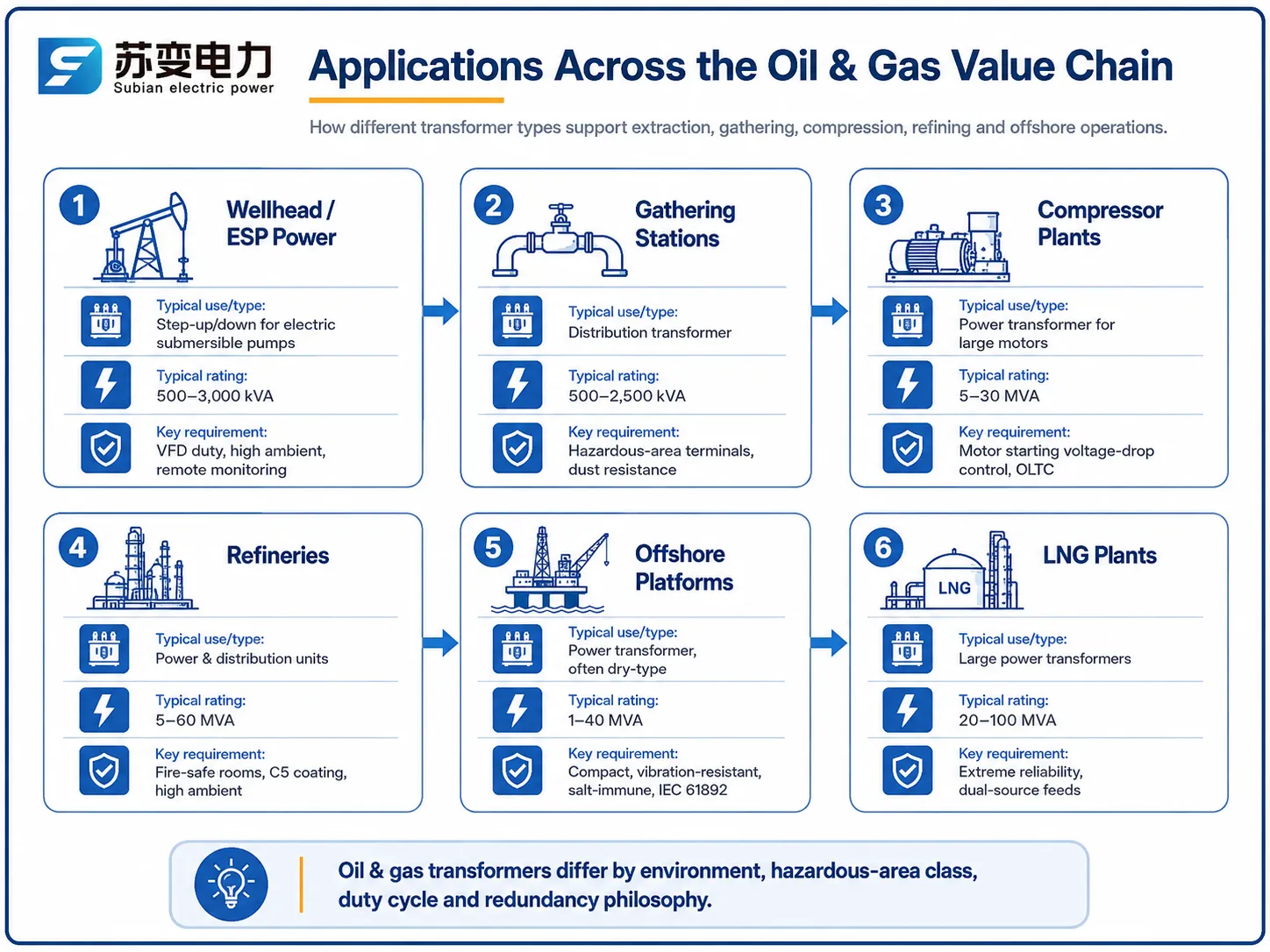
تطبيقات المحولات عبر سلسلة القيمة
تستخدم قطاعات مختلفة من سلسلة قيمة النفط والغاز المحولات بطرق مختلفة:
| القطاع | المحول النموذجي | التصنيف | متطلبات خاصة |
|---|---|---|---|
| طاقة رأس البئر / مضخات الغمر الكهربائية (ESP) | رفع/خفض لمضخات الغمر الكهربائية (ESP) | 500–3000 كيلوفولت أمبير | واجب تردد متغير، بيئة عالية، مراقبة عن بعد |
| محطات التجميع | محول توزيع | 500–2500 كيلوفولت أمبير | أطراف مناطق خطرة، مقاومة للغبار |
| مصانع الضواغط | محول طاقة للمحركات الكبيرة | 5–30 م.ف.أ | التحكم في انخفاض جهد بدء المحرك، OLTC |
| المصافي | وحدات الطاقة والتوزيع | 5–60 م.ف.أ | غرف مقاومة للحريق، طلاء C5، بيئة عالية |
| المنصات البحرية | محول طاقة، غالبًا من النوع الجاف | 1–40 م.ف.أ | مدمجة، مقاومة للاهتزاز، محصنة ضد الملح، IEC 61892 |
| مصانع الغاز الطبيعي المسال | محولات الطاقة الكبيرة | 20–100 م.ف.أ | موثوقية قصوى، تغذيات مزدوجة المصدر |
تحتاج المضخات الغاطسة الكهربائية إلى تركيز خاص لأنها أسرع الأحمال المحول في العمليات. تتطلب المضخة الغاطسة الكهربائية للرفع الاصطناعي بين 100 إلى 1,000 kVA لكل بئر، بينما يتم توفير الطاقة لتشغيلها عند 0.3 إلى 5 kV مع محول يمكنه إدارة مخرج محول التردد. قد يحتاج موقع بئر يحتوي على عشرين مضخة ESP إلى حوالي 2 إلى 4 MVA من سعة المحول مع توافقيات متوافقة مع VFD.
متطلبات المناطق الخطرة
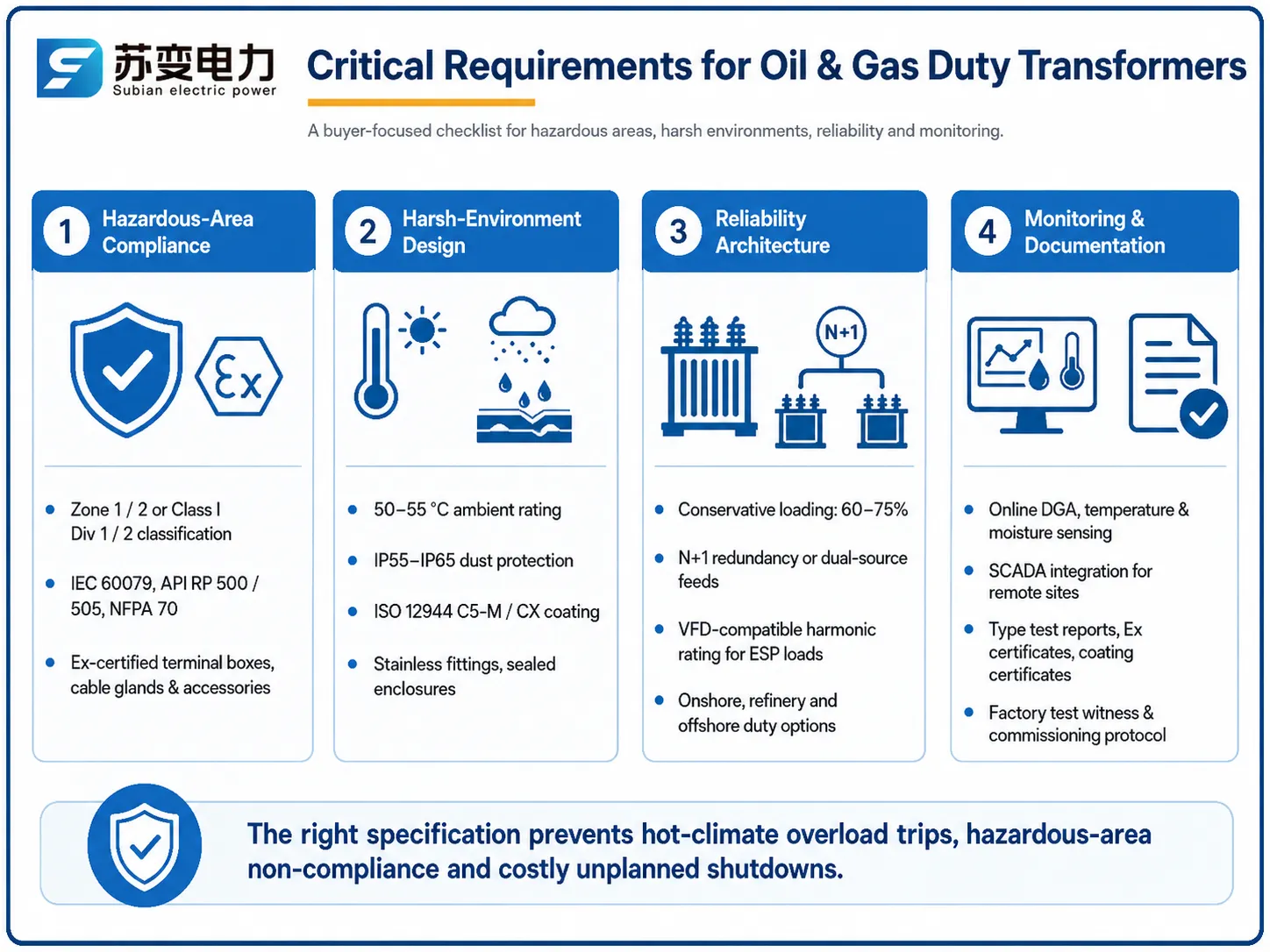
في محولات النفط والغاز، فإن الامتثال للوائح المناطق الخطرة أمر أساسي. تصنيف المصنع حسب المناطق (IEC) أو الأقسام (أمريكا الشمالية) يؤدي إلى فهم وجود الغاز الخطير:
– المنطقة 0 / الفئة I القسم 1: الغاز المتفجر موجود دائمًا. نادرًا ما يتم تركيب المحولات في.
– المنطقة 1 / الفئة I القسم 1: الغاز المتفجر موجود أحيانًا؛ يجب تصميم الأطراف والجدران خصيصًا لهذه المنطقة.
– المنطقة 2 / الفئة I القسم 2: الغاز المتفجر موجود فقط تحت ظروف غير طبيعية، والمعدات المعتادة هي Ex n أو Ex e؛ معظم المنشآت الخارجية تقع في هذه المنطقة.
المواصفات الرئيسية للمحولات في المناطق الخطرة هي IEC 60079 للمعايير الدولية وAPI RP 500/505 وNFPA 70 (NEC) لأمريكا الشمالية. متطلبات المواصفات الرئيسية هي كما يلي:
– يجب أن تحتوي العوازل وصناديق التوصيل على شهادات Ex صحيحة وفقًا لتصنيف المنطقة.
– يمكن قبول المحولات المملوءة بالزيت في المنطقة 2، حيث أن الخزانات محكمة الإغلاق؛ يجب أن تمر الأطراف بالتحقق.
– يجب أن تحتوي المحولات الجافة (التركيبات الداخلية) على أغلفة معتمدة للاستخدام في المناطق الخطرة، بما في ذلك التحكم اللازم في ارتفاع درجة الحرارة، إلخ.
– يجب أن تحتوي الأجهزة الأخرى — محركات OLTC، مراوح التهوية، أجهزة إرسال RTD — على تصنيفات Ex مماثلة.
تصنيف Ex يعني تكاليف أعلى بسبب، على سبيل المثال، صناديق التوصيل ذات التصنيف Ex؛ يمكن أن تكلف تكاليف الوثائق المتعلقة بالشهادات للمحولات المقاومة للانفجار أيضًا مبلغًا كبيرًا.
تصميم مقاوم لدرجات الحرارة العالية، والغبار، والتآكل
تعتبر مواقع النفط والغاز عادةً من بين أكثر البيئات حرارةً وغبارًا وتآكلًا في الطاقة الصناعية. تتبع التعديلات التصميمية نمطًا واضحًا:
| الضغط | استجابة التصميم | المواصفات النموذجية |
|---|---|---|
| درجة حرارة محيطة عالية (40–55 °م) | تبريد مخفض أو نظام تبريد مطور | لوحة الاسم عند 50 °م محيطة، ONAN/ONAF |
| الإشعاع الشمسي (الصحاري) | التظليل، طلاء عاكس للضوء | نظام طلاء C5-M باللون الأبيض/الرمادي الفاتح |
| الرمل والغبار | أغلفة محكمة، تهوية مرشحة | IP55–IP65، فلاتر غبار على المراوح |
| الملح (البحرية، الساحلية) | مواد مقاومة للتآكل | ISO 12944 C5-M/CX، تركيبات من الفولاذ المقاوم للصدأ |
| الاهتزاز (المنصات، رؤوس الآبار) | خزانات مقواة، تركيب مخمد | تأهيل زلزالي/اهتزازي حسب المشروع |
واحدة من المعلومات التي يتم تجاهلها بشكل متكرر ولكنها حاسمة هي تصنيف البيئة المحيطة. وفقًا لـ IEC 60076-1، يجب تعريف البيئة المحيطة القياسية على أنها 40 °م كحد أقصى لمتوسط اليوم؛ وبالتالي، في حالة مواقع النفط والغاز ذات درجة حرارة 50 °م، سيكون من الضروري الحصول على معدات أكبر أو ترقية وحدات التبريد. قد تكلف تركيب 2000 kVA لدرجة حرارة 50 °م 8-15% أكثر من تركيب مماثل مصنف لدرجة حرارة 40 °م، وقد يضمن ذلك عمل المعدات لمدة تصل إلى 25 عامًا بدلاً من الفشل في كل يوم صيفي حار.
موثوقية وهياكل تكرارية
نظرًا لأن توقف الإنتاج يكلف من $200,000 إلى أكثر من $1,000,000 يوميًا في مصنع معالجة الغاز الكبير، من الضروري ضمان الموثوقية من خلال التصميم، بدلاً من الاعتماد على الصدفة. تشمل الأحكام الرئيسية ما يلي:
احتياطي N+1: يتم تثبيت وتحويل محول احتياطي في كل محطة فرعية إلى التشغيل في غضون بضع دقائق.
إمداد مزدوج المصدر: تكون خطي الإمداد مستقلين عن بعضهما البعض، مع وجود محولات لها مصدر طاقة مختلف.
تحميل محافظ: تعمل المحولات تحت تحميل من 60% إلى 75% من قدرتها بحيث يمكن للأولى العمل عندما تفشل الثانية (وهذه ممارسة شائعة في صناعة النفط والغاز).
سياسة الأصول الاحتياطية: يتم التعاقد على أن الشركة ستحتفظ بمحولة احتياطية في المخزون وجاهزة للاستخدام خلال 48 إلى 72 ساعة.
مبرر القرار هو أن فوائد النهج المحافظ تفوق التكاليف. من أجل استخدام المحولة تحت 60% إلى 75% من قدرتها، يجب دفع مبلغ يتراوح بين $10,000 إلى $40,000، بينما ستكلف حالة واحدة من توقف الإنتاج 5-20 مرة أكثر من ذلك.
المراقبة والصيانة
المواقع البعيدة وغير المأهولة تجعل المراقبة التنبؤية الاستراتيجية الوحيدة الواقعية للصيانة. حزمة معايير المراقبة للنفط والغاز للمحولات:
| طبقة المراقبة | ما الذي تكشفه | التكلفة النموذجية |
|---|---|---|
| DGA عبر الإنترنت | اتجاهات غازات العطل (H2، CH4، C2H2، CO) | $8,000–$20,000 |
| درجة الحرارة / ملف الحمل | أحداث التحميل الزائد، كفاءة التبريد | $2,000–$6,000 |
| استشعار التفريغ الجزئي | أعطال العزل الناشئة | $3,000–$8,000 |
| مستشعر رطوبة الزيت | خطر دخول الرطوبة وتدهور الورق | $1,500–$4,000 |
| تكامل SCADA عن بُعد | أحداث الإنذار والتوقف إلى غرفة التحكم | مدرج في تصميم المحطة الفرعية |
عندما يتعلق الأمر بالمصافي أو المحولات البحرية التي تتراوح أسعارها بين $120,000 و $500,000، من الشائع تخصيص 10–15% من تلك الاستثمارات للمراقبة والتشخيص عن بُعد. هذا يحول الآلة من عملية “التشغيل حتى الفشل” إلى واحدة يمكن أن يتم فيها توقع أعطالها بأسابيع أو أشهر مسبقًا.
المعايير التي تحكم المحولات النفطية والغازية
| معيار | النطاق | الدور في شراء النفط والغاز |
|---|---|---|
| IEC 60076 (السلسلة) | تصميم واختبار المحولات الكهربائية | الأساس للتصنيفات، والخسائر، واختبارات النوع |
| IEC 60079 (السلسلة) | الأجواء المتفجرة | شهادة Ex للمخارج، والملحقات، والحاويات |
| API RP 500 / 505 | تصنيف المناطق في منشآت النفط | يحدد المناطق الخطرة التي تدفع متطلبات Ex |
| NFPA 70 (NEC) | الكود الكهربائي الوطني | قواعد التركيب في أمريكا الشمالية وتصنيفات الفئة I قسم |
| IEC 61892 | الوحدات البحرية المتنقلة والثابتة - التركيبات الكهربائية | متطلبات المحولات في المنصات البحرية |
| ISO 12944 | حماية الفولاذ من التآكل | مواصفات الطلاء C5-M للمناطق الساحلية وعملية |
تشكل الوثائق فخ الشراء في النفط والغاز: قد تكون المحولات مصنوعة بشكل استثنائي، ولكن إذا لم تتوافق شهادات Ex، ورسومات تصنيف المنطقة، ومواصفات الطلاء مع جدول المنطقة الخطرة كما هو موضح في خطة المشروع، فإن الوحدة ستكون غير صالحة. تحقق من تسليم الوثائق كشرط من شروط العقد، وليس كفكرة لاحقة.
قائمة التحقق من المواصفات
تحديد تصنيف المنطقة الخطرة لموقع التركيب (المنطقة/الفرع) وفقًا لجدول تصنيف المنطقة.
يتطلب صناديق كهربائية معتمدة، ووصلات سلكية، وملحقات تتوافق مع المنطقة التي سيتم استخدامها فيها (IEC 60079).
ذكر الحد الأقصى لدرجة حرارة البيئة بناءً على ظروف الموقع (عادة حوالي 50 °م للأماكن الصحراوية) وليس وفقًا للقيمة القياسية IEC البالغة 40 °م.
تحديد ضرورة طلاء C5-M وفقًا لمعايير ISO 12944 للمناطق الساحلية أو العملية.
تصميم الحمل لـ 60-75% من الطاقة الاسمية وتجنب التكرار أو السعة الاحتياطية وفقًا لمبادئ موثوقية المصنع.
تضمين بيانات DGA، ودرجة الحرارة، والتحكم في الرطوبة بقدر ما يتعلق الأمر بالأجهزة البعيدة والحرجة.
تحديد أن تصنيف التوافقيات لـ VFD يحتاج إلى التنفيذ حيث تكون محركات ESP أو الضواغط هي الحمل الرئيسي.
تعريف ما هو مدرج في الوثائق - شهادات Ex، نتائج اختبارات الأجهزة، شهادات الطلاء، كتيبات التشغيل والصيانة.
تحديد الاستقرار الزلزالي أو تأثير فحص الاهتزاز للتركيبات البحرية وتركيبات رأس البئر.
عرض شهادة اختبار المصنع للمورد.
أفضل العلامات التجارية ومقارنة الأسعار
سوق المحولات النفطية والغازية يهيمن عليه الموردون الذين لديهم عمق في شهادات المنطقة الخطرة ومراجع الصناعة العملية. الجدول يظهر الأسعار الإرشادية لمحولات توزيع بقدرة 2,000 kVA، 35/0.4 kV مع مخارج منطقة خطرة وتصنيف بيئي 50 °م؛ الأسعار تختلف حسب متطلبات المنطقة، والطلاء، والمراقبة، والعلامة التجارية.
| العلامة التجارية | الدولة | نقاط القوة في النفط والغاز | السعر الإرشادي (دولار أمريكي) |
|---|---|---|---|
| سيمنز | ألمانيا | مراجع عميقة في الصناعة العملية، خدمات رقمية | $28,000–$48,000 |
| ABB | سويسرا | محفظة المنطقة الخطرة، تكامل محركات ESP | $27,000–$46,000 |
| هيتاشي للطاقة | اليابان/سويسرا | مراجع كبيرة من المصافي والمنصات البحرية | $30,000–$52,000 |
| شنايدر إلكتريك | فرنسا | حزم كهربائية متكاملة للعملية | $26,000–$45,000 |
| GE فيرنوفا | الولايات المتحدة الأمريكية | مراجع الفئة I قسم في أمريكا الشمالية | $28,000–$50,000 |
| شركة جيانغسو سوبين للطاقة الكهربائية | الصين | وحدات IEC 60076 مع مخارج Ex، تصنيف 50 °م، طلاء C5 | $18,000–$32,000 |
إن ترخيص الشركات الكبيرة يمتلك قاعدة بيانات الوثائق والتحقق التي تحتاجها الشركات الرائدة وجمعيات EPC للبرامج الرائدة، خاصة عندما تحكم لوائح المحتوى المحلي أو قيود سلامة المشغلين الموردين المرخصين المحددين. لقد secured Jiangsu Subian Electric Power موطئ قدم في هذه الصناعة من خلال توفير محولات متوافقة مع IEC 60076 مع تراخيص طرفية للمناطق الخطرة، وموافقة لدرجات حرارة البيئة، وطلاء C5-M عند حوالي 40 – 55% من المستويات الأوروبية أو الأمريكية، مع مرونة OEM من حيث حزم المراقبة والأغلفة. في حالة شركات النفط الوطنية ومقاولي EPC الذين يخططون لتوحيد تسليم المحولات عبر منصات الحفر، ومحطات التجميع، ومحطات منتصف الطريق، فإن تقديم مورد مرخص مثل Subian جنبًا إلى جنب مع الشركات العالمية - بالإضافة إلى التحقق من شهادات Ex وبرنامج شهادة الاختبار في العملية - يمثل حلاً عمليًا للتحكم في النفقات الرأسمالية دون تعريض الامتثال لقوانين المناطق الخطرة للخطر.
الأسئلة المتكررة
ما هو تصنيف المنطقة الخطرة الذي يحتاجه المحول في محطة الغاز؟
تقع معظم منصات المحولات الخارجية تحت تصنيف المنطقة 2/الفئة I القسم 2 حيث إن استخدام صناديق الطرفيات وغيرها من الملحقات المعتمدة لـ Ex n أو Ex e هو ممارسة شائعة. يمكن قبول استخدام المحولات المملوءة بالزيت مع خزانات محكمة الإغلاق في تصنيف المنطقة 2. استخدام المحولات في المنطقة 1 نادر حيث يتم إعادة توجيه التغذيات إلى حدود الموقع الخطير. تأكد من أن كل وحدة تتطابق مع رسومات تصنيف منطقة المشروع.
كم يكلف المحول الخاص بالنفط والغاز أكثر من المحول الصناعي القياسي؟
يكلف جهاز بقدرة 2,000 kVA مع طرفيات مخصصة للمواقع الخطرة وقادر على العمل في درجات حرارة بيئية تصل إلى 50 درجة مئوية ومع طلاء C5 الواقي أكثر بكثير من وحدة صناعية شائعة - حوالي $18,000–$32,000 للأولى مقارنة بـ $12,000–$20,000 للأخيرة. تشمل التكلفة الإضافية ليس فقط شهادة Ex، وميزات البناء ذات درجات الحرارة العالية والحماية ضد التآكل ولكن أيضًا جميع الوثائق المطلوبة.
لماذا تحتاج تطبيقات ESP إلى اعتبار خاص للمحول؟
يتم تغذية المضخات الغاطسة الكهربائية من خلال محركات ذات تردد متغير، لذا يجب أن يتعامل المحول مع التيارات التوافقية ومخرجات جهد VFD أثناء وجوده في مواقع الآبار النائية ذات درجات الحرارة العالية. تعتبر تصنيفات 500–3,000 kVA لكل مجموعة منصة نموذجية. يجب أن يكون المحول مصنفًا للتوافقية، ومصنفًا لدرجة حرارة الموقع البيئية، ومزودًا بمراقبة عن بُعد لأن الوصول للصيانة محدود.
ما هي المراقبة التي تحتاجها المحولات الخاصة بالنفط والغاز؟
بالنسبة للوحدات البعيدة والحرجة، فإن الحزمة القياسية تشمل تحليل الغاز المذاب عبر الإنترنت، وتوصيف درجة الحرارة/الحمل، واستشعار رطوبة الزيت، ودمج SCADA - تقريبًا $8,000–$30,000 لكل وحدة. هذا يحول المحول من أصل يعمل حتى الفشل إلى أصل يمكن رؤية تدهوره قبل عدة أشهر، وهو أمر مهم عندما يمكن أن يتسبب الفشل في توقف مصنع عن إنتاج $1 مليون يوميًا.
هل يجب أن أشغل محولات الطاقة الخاصة بي عند الحمل الكامل المسمى في مصنع الغاز؟
لا — المعيار في صناعة النفط والغاز هو تحميل المحولات عند 60–75% من الاسم التجاري بحيث يمكن لوحدة واحدة تحمل المحطة عند فقدان التوأم الاحتياطي. تكلفة القدرة الإضافية تتراوح بين $10,000–$40,000 لكل وحدة؛ بينما تكلف التوقف غير المخطط له من 5 إلى 20 مرة من ذلك. التحميل المحافظ بالإضافة إلى تكرار N+1 هو أرخص تأمين موثوقية في هذا المجال.
المراجع
- IEC 60079 سلسلة — الأجواء المتفجرة — المعيار الدولي لشهادة معدات المناطق الخطرة المستخدمة في اختيار أطراف المحولات والملحقات.
- API RP 500 / API RP 505 — تصنيف المناطق لمرافق النفط — يحدد المناطق الخطرة التي تؤثر على متطلبات Ex للمحولات.
- NFPA 70 — الكود الكهربائي الوطني — قواعد التركيب في أمريكا الشمالية وتصنيفات الفئة I القسم لمرافق النفط والغاز.
- سلسلة IEC 60076 - محولات الطاقة — معيار التصميم والاختبار الأساسي لجميع مواصفات المحولات في النفط والغاز.
- IEC 61892 — التركيبات الكهربائية للوحدات البحرية المتنقلة والثابتة — متطلبات المحولات في المنصات البحرية وممارسات التركيب.
- ISO 12944 — حماية الفولاذ من التآكل — تصنيف الطلاء C5-M المستخدم لمعدات المناطق الساحلية وعملية.
- Jiangsu Subian Electric Power — الموقع الرسمي — مصنع محولات متوافقة مع IEC 60076 مع أطراف مناطق خطرة وتصنيفات عالية للحرارة المحيطة.
الخاتمة
يقدم قطاع النفط والغاز للمحولات حالات – ظروف خطرة، درجات حرارة قصوى، مواقع نائية غير مأهولة، وتشغيل مستمر على مدار السنة – والتي لا تتواجد في أي مجال آخر. بسبب ذلك يجب الحصول على شهادة غير عادية لمنطقة خطرة، وتصميم محدد لمواجهة درجات الحرارة العالية والتآكل، واستخدام معامل معقول من التكرار، بالإضافة إلى الانتباه للصيانة التنبؤية. كل نقطة لها سعرها الخاص: من 20 إلى 60 بالمئة في تكلفة المواصفات، من 60 إلى 75 بالمئة في الحمل، ومن 8 إلى 30 بالمئة من الأصول في الصيانة.
لتجنب المشاكل:
تأكد من أن تصنيف المنطقة الخطرة يتوافق مع متطلبات شهادة Ex، وتحقق من أن الأطراف والملحقات الأخرى مخصصة للمناطق الخطرة أيضًا.
اختر درجة الحرارة المحيطة بناءً على البيانات الفعلية للموقع (50oС هو الخيار الأفضل للصحراء)، ولكن ليس عند 40oС وفقًا لقواعد IEC.
حمل المحولات عند 60 إلى 75 بالمئة من قدراتها واستخدم تكرار N+1 في المحطات الأكثر أهمية.
استثمر ما لا يقل عن 8 إلى 15 بالمئة من قيمة الأصول في نظام المراقبة عبر الإنترنت.
انظر إلى الشركات الكبرى مثل Siemens وABB وHitachi Energy وJiangsu Subian Electric Power للتأكد من أن الشهادة تتم بشكل صحيح بتكلفة منخفضة.
للحصول على دعم توريد المحولات المصنفة للمناطق الخطرة والمواصفات عبر سلسلة قيمة النفط والغاز، اتصل بـ Jiangsu Subian Electric Power على www.subian-electric.com.