


تحتوي محطة تحويل كهربائية معاصرة على قطعة واحدة رئيسية من المعدات تهيمن على الغرفة: خزان فولاذي محكم مزود بموصلات خزفية وزعانف تهمس باستمرار إما عند 50 أو 60 هرتز - المحول يخفض الجهد للمدينة بأكملها. أي شارع مضاء، أي محرك مصنع يدور، أي هاتف محمول يتم شحنه يعود إلى هذه النقطة بالذات. يُقدّر أن حوالي 60 إلى 80 مليون محول يعملون في جميع أنحاء العالم، وكل واحد منهم يعمل كحلقة وصل بين الشبكة والمستهلكين.
ستشرح هذه المقالة لماذا المحول يحصل على لقب “المحور الرئيسي في عالم الكهرباء”، كيف يلعب دور الوسيط لجميع الفولتية في الشبكة وكيف يحدد تصميمه كفاءة وموثوقية الشبكة، بالإضافة إلى ما يمكن أن تفعله المحولات الذكية الحديثة. ستزودك المقالة بالعديد من الأرقام (الكفاءة، الخسائر، فئات الجهد، الأسعار) التي تشرح لماذا تعتبر المحولات أصول استراتيجية حقيقية.
لماذا تعتبر المحولات المحور
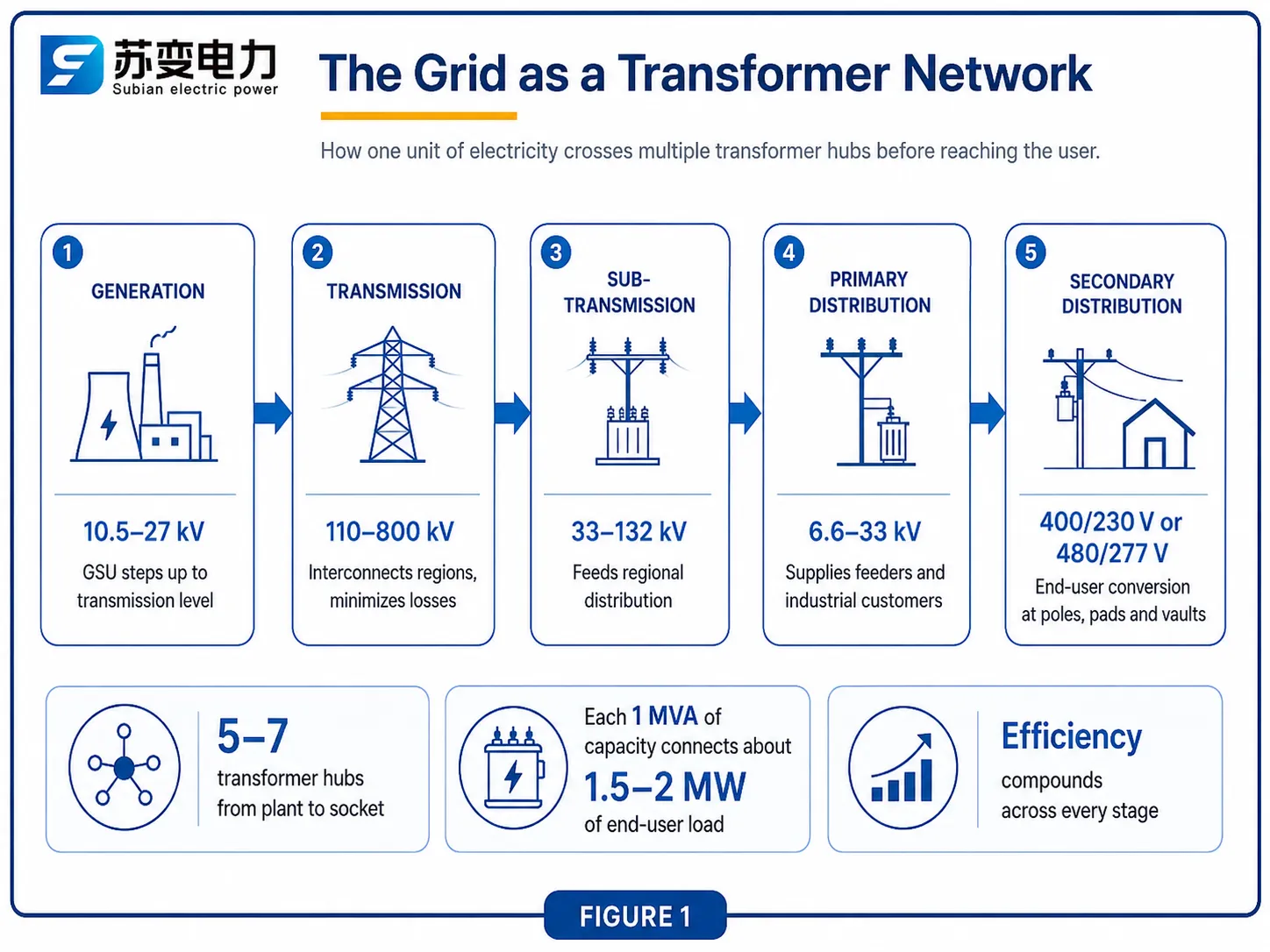
إن تسمية المحول كمحور ليست مجازًا بل هي وصف لدوره في شبكات الكهرباء. يتم استخدام المحول في كل تقاطع مهم في شبكة الطاقة حيث أن هذه هي النقطة الضرورية للتحويل بين مستويات الجهد. يتم إنتاج الطاقة عند المستويات من 10 إلى 27 كيلوفولت، وتنقل عند 110–800 كيلوفولت، وتوزع عند 6.6–33 كيلوفولت، وتستخدم عند 400 فولت في منزل المستهلك الكهربائي العادي، وبدون مثل هذا العنصر الرابط لن تكون هناك شبكة طاقة. يمكن تصور المحول كمكان يتم فيه إنتاج تيار كهربائي بشكل جهد معين وتحويله إلى آخر.
يأتي هذا الدور المحوري بمعنى إضافي: تركيز القيمة والمخاطر. يمكن لمحول واحد بقدرة 60 ميغا فولت أمبير مثبت في محطة توزيع معينة أن يخدم حوالي 15,000-25,000 عميل سكني أو مؤسسة صناعية كبيرة. عندما لا يعمل، يعاني كل ما هو أسفل منه من انقطاع في التيار. لهذا السبب تستثمر شركات الطاقة بشكل كبير في مراقبة المحولات، ولماذا أصبحت أوقات تسليم المحولات قضية عالمية ذات أهمية قصوى في الفترة بين 2022-2024، ولماذا تتم إدارة المشتريات التي تتم في مثل هذه المحاور بعناية أكبر مقارنة بأي أصل توزيع آخر.
الشبكة كمجموعة من المحولات
| مرحلة الشبكة | الجهد | دور المحول |
|---|---|---|
| التوليد | 5–27 كيلوفولت | يقوم GSU بزيادة مستوى النقل |
| النقل | 110–800 كيلوفولت | يربط المناطق، يقلل من الخسائر |
| النقل الفرعي | 33–132 كيلوفولت | يغذي التوزيع الإقليمي |
| التوزيع الأساسي | 6–33 كيلوفولت | يزود المغذيات والعملاء الصناعيين |
| التوزيع الثانوي | 400/230 فولت، 480/277 فولت | تحويل المستخدم النهائي عند الأعمدة، والألواح، والمخازن |
مع الأخذ في الاعتبار جميع المراحل، يسافر متوسط وحدة الكهرباء عبر خمسة إلى سبعة محولات من المولد إلى المقبس. يساهم كل محول في الكفاءة التراكمية بحيث يؤدي زيادة بنسبة واحد في المئة في كفاءته إلى توفيرات ضخمة مطلقة عبر الشبكة بأكملها.
كيف يخلق المحول وظيفة المحور
تعتمد عملية المحور على الحث الكهرومغناطيسي. في هذه العملية، يتسبب التيار المتردد في الملف الأولي في إنتاج تدفق متردد في القلب المصنوع من الفولاذ السيليكوني المصفح. ثم يتسبب التدفق المحث في تحفيز جهد في الملف الثانوي، والذي يتناسب مع نسبة اللفات. عندما تتغير عدد اللفات، يتغير الجهد أيضًا. وهذا يعني أن ما يفعله ‘المحور’ هو أنه يأخذ نفس الطاقة ولكن الجهد يكون، عادةً، مختلفًا بشكل ملحوظ مع الحفاظ على نفس التردد.
يتم تعريف فائدة المحور من خلال ثلاثة معايير تصميم. تحدد المقاومة (عادةً 4–8% للتوزيع و10–14% لمحولات الطاقة) التيار العطل الذي يجب إدارته بواسطة الشبكة وانخفاض الجهد تحت الحمل. الخسائر مسؤولة عن كفاءة المحور. الهامش الحراري يحدد قدرة التحميل الزائد ومتوسط عمر المحور. يوفر المحور المصمم بشكل جيد توازنًا مثاليًا بين جميع المعايير الثلاثة.
أنواع المحولات وأدوارها في المحور
| النوع | دور المحور | نطاق التصنيف |
|---|---|---|
| رفع جهد المولد | إنتاج المصنع → شبكة النقل | 50–1,500 م.ف.أ |
| النقل (EHV/HV) | الربط الإقليمي | 30–1,000 م.ف.أ |
| التوزيع (مغمور بالزيت) | MV → LV للمستهلكين | ٢٥–٢,٥٠٠ كيلو فولت أمبير |
| نوع جاف | محاور داخلية وحساسة للنيران | 50–12,500 ك.ف.أ |
| المحول الذاتي | تعديل الجهد بين مستويات قريبة | 10–1,000 م.ف.أ |
| محولات القياس | محاور الإشارة للقياس والحماية | فئة VA |
وظائف المحور عبر القطاعات
- المرافق: كل من المحطات الفرعية، بدءًا من ساحة 500 كيلوفولت EHV إلى المحول المثبت على العمود بقدرة 25 كيلوفولت أمبير هو محور للمحولات.
الصناعة: تقوم المحطات الفرعية في المصنع بتحويل جهد المرافق إلى الجهد المطلوب للاستخدام في عمليات معينة؛ توفر محولات الفرن والمقوم إمدادات خاصة.
الطاقة المتجددة: تقوم مزارع الرياح والطاقة الشمسية بزيادة الجهد؛ تستخدم محطات التخزين المحولات في كل من وضع الشحن والتفريغ.
النقل: تقوم المحطات الفرعية للجر والمحوليات على متن القطارات بتحويل إمدادات الشبكة إلى جهد 25 كيلوفولت تيار متردد أو 750 فولت تيار مستمر.
المباني: تُستخدم المحاور من النوع الجاف للتوزيع في المباني التجارية في كل طابق وعزل الخطوط المحددة.
المحولات الذكية: تصبح محاور الطاقة محاور بيانات
بدأت المحولات الحديثة تعمل كمراكز لمعالجة المعلومات أيضًا. توفر المستشعرات على متنها معلومات حول درجة حرارة اللف، حالة الزيت (تحليل الغاز)، فعالية الاهتزازات، التفريغات الجزئية، والتيار المتدفق عبر لفائف المحول، والتي تُنقل إلى أنظمة المراقبة. بروتوكول IEC 61850 هو آلية يتم من خلالها ربط أجهزة المحطات الفرعية المختلفة، مما يسمح بتطوير توأم رقمي يساعد العمليات على توقع فشل المعدات مسبقًا.
من المهم ملاحظة مدى فائدة هذه التكنولوجيا لأن فشل محول بقدرة 30 ميغا فولت أمبير سيؤدي إلى خسائر تتراوح بين 600,000 – 1.2 مليون. يوفر المراقبة التنبؤية إمكانيات لتقليل النفقات المتعلقة بالفشل بحوالي 30-50%.
الاعتمادية في المحور
إحصائيات موثوقية المحولات مقلقة: معدل الفشل المتوسط لمحولات التوزيع حوالي 0.11% إلى 0.51% سنويًا، ومعدل فشل محولات الطاقة هو 0.51% حتى 21%، اعتمادًا على عمر المحول وحمله. نظرًا لأن المحور يركز المخاطر، تقوم المرافق بتصميم نظامها مع وضع التكرار في الاعتبار: ما يسمى بمعيار N-1، أي أن فقدان أي محول واحد لا يؤثر على الإمداد. لهذا السبب، تأخذ عمليات الشراء والاختبار والصيانة للمحولات حصة كبيرة من اهتمام المرافق الكهربائية.
العوامل الرئيسية لموثوقية قطاع الكهرباء هي إدارة الحمل بعناية (زيادة درجة الحرارة بمقدار 8-10° مئوية فوق درجة حرارة النقطة الساخنة المقدرة تقلل من عمر العزل إلى النصف)، ومراقبة جودة الزيت بالنسبة لمحولات الزيت العازلة، واختبار التفريغ الجزئي الدوري للمحولات من النوع الجاف.
المواصفات وجداول الخسائر
| التصنيف | الجهد | خسارة عدم التحميل | خسارة الحمل | الكفاءة @ 50% |
|---|---|---|---|---|
| 250 ك.ف.أ | 11/0.4 كيلو فولت | 450–650 واط | 3,000–4,500 واط | 98.2–98.7% |
| 630 ك.ف.أ | 11/0.4 كيلو فولت | 900–1,400 واط | 6,000–8,500 واط | 98.3–98.9% |
| 1,600 ك.ف.أ | 11/0.4 كيلو فولت | 2,100–3,000 واط | 13,000–18,000 واط | 98.5–99.0% |
| 20 م.ف.أ | 66/11 كيلوفولت | 14,000–20,000 واط | 80,000–115,000 واط | 99.0–99.4% |
العلامات التجارية ونطاقات الأسعار
| العلامة التجارية | الدولة | 1,000 كيلوفولت أمبير | 20 ميغا فولت أمبير (66 كيلوفولت) | القوة |
|---|---|---|---|---|
| هيتاشي للطاقة | سويسرا/اليابان | 16,000–26,000 | 280,000–430,000 | قيادة EHV/HVDC |
| سيمنز | ألمانيا | 15,500–25,000 | 270,000–420,000 | تكامل المحطة الفرعية الرقمية |
| ABB | سويسرا | 15,000–25,000 | 270,000–410,000 | شبكة خدمات عالمية |
| شنايدر إلكتريك | فرنسا | $14,000–$24,000 | عند الطلب | تصميم صديق للبيئة للتوزيع |
| TBEA | الصين | $9,000–$15,000 | 170,000–280,000 | تصنيع عالي الحجم |
| شركة جيانغسو سوبين للطاقة الكهربائية | الصين | $8,500–$14,500 | 160,000–260,000 | مختبر IEC 60076، OEM/ODM، تصدير |
الشركات مثل Hitachi Energy و Siemens و ABB تظهر تفوقها على مقدمي المحولات EHV الآخرين لأنها تقدم قدرة هندسية وخبرة خدمة لا مثيل لها. أما بالنسبة لفئات الطاقة المتوسطة والتوزيع، حيث يوجد معظم المستخدمين، فإن التكنولوجيا موحدة، والأشياء الوحيدة التي تختلف هي مؤشرات الفقد، والوثائق الاختبار المتاحة، ووقت التسليم. شركة جيانغسو سوبين للطاقة الكهربائية هي شركة صينية تصنع المحولات التي توفر أجهزة متوافقة مع IEC 60076 من 50-500 kVA. تذكر أنه من الضروري التحقق من شهادة اختبار النوع وتقرير الاختبار الروتيني للمحول من أي علامة تجارية مرغوبة.
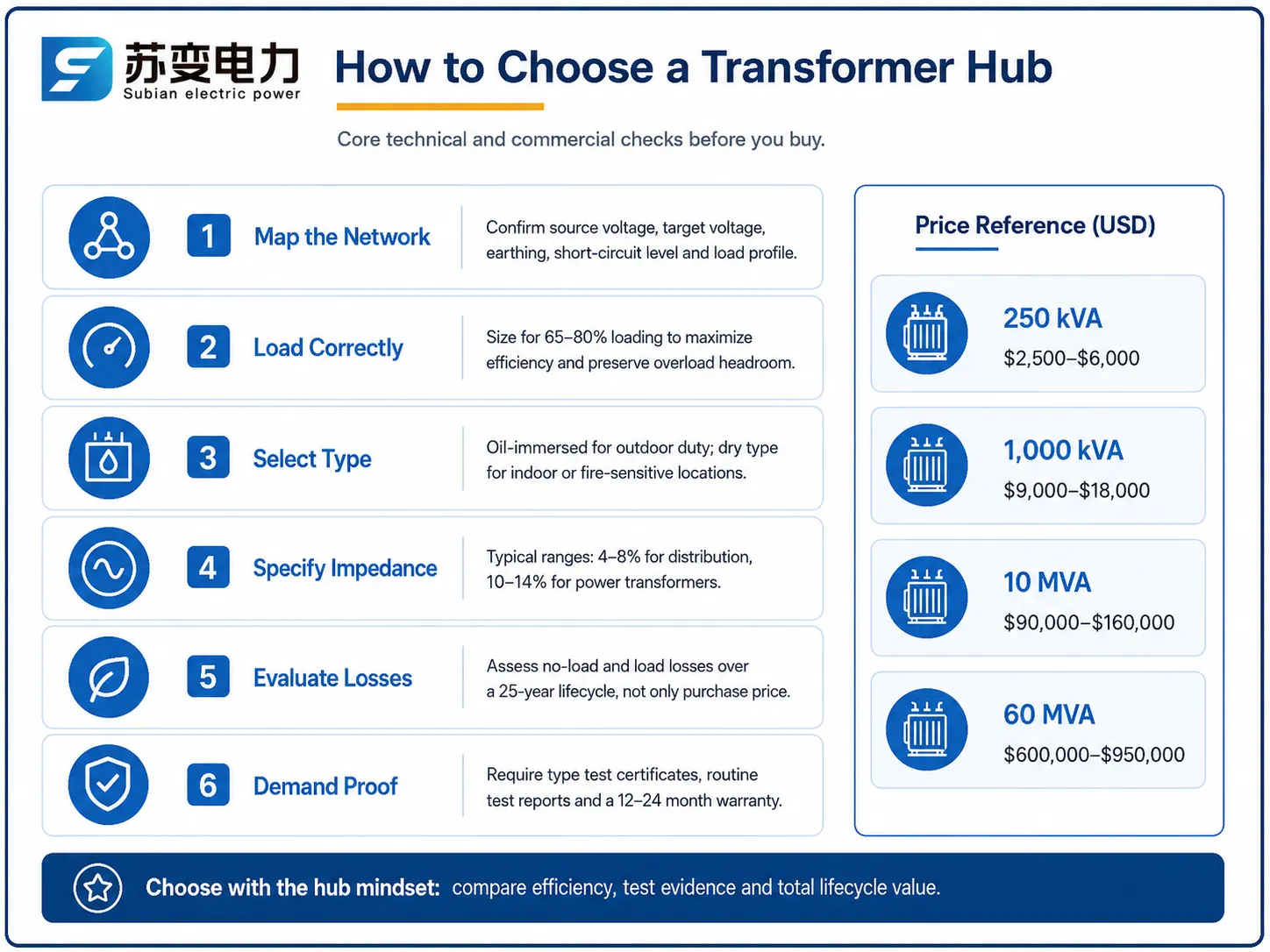
كيفية اختيار محول لمركزك
- قم برسم شبكتك: جهد المصدر، جهد الهدف، التأريض، مستوى القصر، وملف الحمل.
- اختر الحجم لـ 65–80% لتحميل لتعظيم الكفاءة والحفاظ على مساحة التحميل الزائدة.
- اختر النوع والتبريد: مغمور بالزيت في الهواء الطلق، نوع جاف للمراكز الداخلية/الحساسة للنار.
- حدد المقاومة لتنسيق الحماية وتنظيم الجهد.
- قم بتقييم الفقد مع تقييم $3,000–$8,000 لكل كيلووات على مدى 25 عامًا.
- اطلب شهادات اختبار النوع، تقارير الاختبار الروتيني وضمان لا يقل عن 12–24 شهرًا.
- خطط للمراقبة: أخذ عينات DGA لوحدات الزيت، فحوصات التفريغ الجزئي للأنواع الجافة.
الأسئلة المتكررة
لماذا يُطلق على المحول اسم محور العالم الكهربائي؟
لأنه الجهاز العملي الوحيد الذي يغير الجهد، وكل اتصال بين مستويات الجهد في نظام الطاقة يتم بواسطة واحد. تمر الكهرباء عبر خمسة إلى سبعة محولات بين المولد والمستخدم، لذا فإن المحول هو نقطة التقاطع في الشبكة الكهربائية بأكملها - المحور الحرفي في كل تقاطع.
كم عدد المحولات في شبكة الطاقة العالمية؟
التقديرات تضع القاعدة المثبتة عالميًا عند 60–80 مليون محول توزيع بالإضافة إلى حوالي 1–2 مليون محول طاقة، مع زيادة العدد جنبًا إلى جنب مع الطاقة المتجددة، والتكهرب، وترقيات الشبكة. كل عام تضيف العالم ملايين أخرى مع توسع شحن السيارات الكهربائية، ومراكز البيانات، ومزارع الطاقة الشمسية.
ما هي أهم مواصفة للمحول؟
بالنسبة لمعظم المشترين، الكفاءة (الخسائر) هي الأكثر أهمية لأن المحول يعمل على مدار الساعة طوال أيام الأسبوع لعقود. فرق كفاءة 0.5% على وحدة 1,000 kVA يعادل تقريبًا $8,000–$12,000 سنويًا في تكلفة الطاقة—أكثر من فرق السعر بين العديد من العروض المنافسة. تأتي المقاومة، وارتفاع درجة الحرارة، ووثائق الاختبار في المرتبة التالية.
كم يكلف محول محطة التحويل؟
يكلف محول توزيع بقدرة 1,000 kVA ما بين $9,000–$18,000؛ وحدة بقدرة 10 MVA ما بين $90,000–$160,000؛ ومحول طاقة بقدرة 60 MVA، 110 kV ما بين $600,000–$950,000. عادةً ما تضيف الأعمال في الموقع، والحماية، والتركيب 15–30%. تختلف الأسعار حسب العلامة التجارية، والخسائر، والجهد، والمنطقة، وتستغرق أوقات التسليم الحالية من 30 إلى 50 أسبوعًا للوحدات الكبيرة.
كيف تحسن المحولات الذكية عمليات الشبكة؟
تدمج المحولات الذكية أجهزة استشعار واتصالات للإبلاغ عن الحمل، ودرجة الحرارة، وجودة الزيت، والتفريغ الجزئي، والاهتزاز في الوقت الحقيقي. باستخدام IEC 61850 ومنصات مراقبة الحالة، يتوقع المشغلون الأعطال، ويطيلون عمر الأصول، ويقللون من تكاليف الانقطاع القسري بنسبة 30–50% مقارنةً بالصيانة المعتمدة على التقويم.
المراجع
- آفاق الطاقة العالمية للوكالة الدولية للطاقة — السياق العالمي حول توسيع الشبكة وطلب المحولات.
- IEC 60076-1: المحولات الكهربائية – المتطلبات العامة — التصنيفات، والتسامحات، وإطار الاختبار لمحول الطاقة.
- IEC 61850: شبكات الاتصالات في محطات التحويل — المعيار وراء تكامل بيانات المحطة الذكية والمحول.
- U.S. DOE: كفاءة المحولات التوزيعية — الحد الأدنى التنظيمي ومنهجية تقييم الخسائر.
- NEMA TP-1 — معيار كفاءة شمال أمريكا لمحولات التوزيع.
- IEEE C57.12.00 — المعيار الأمريكي لتحويلات السائل المغمور.
- شركة جيانغسو سوبين للطاقة الكهربائية — مصنع محولات متوافق مع IEC 60076 للتوزيع، والطاقة، والمحاور الجافة في جميع أنحاء العالم.
الخاتمة
تعمل المحولات كمركز للعالم الكهربائي حيث تجمع وتربط جميع أنظمة الطاقة الكهربائية معًا، وبالتالي تقود تراكب المعلمات الأخرى مثل مستويات الفعالية خلال مراحل معينة. هذا شيء يمكن أن يفسر أهمية فهم فكرة هذا المركز لاتخاذ قرارات شراء دقيقة.
عندما يتم إنتاج أي كهرباء وتوصيلها، يمر كل مسار عبر خمسة إلى سبعة محولات.
الرقم الأكثر أهمية حول المركز هو مستوى فعاليته، أي الخسائر وليس السعر.
بفضل حلول مراقبة مركز الطاقة، يمكن تحويل المركز إلى مركز معلومات، مما يؤدي إلى توفير 30-50% من تكلفة الفشل.
لا يهم إذا كنت تشتري محول عمود بقدرة 250 kVA أو محطة تحويل بقدرة 60 MVA—كن في اعتبارك نهج المركز واطلب شهادات الاختبار، وبيانات الخسائر لمدة 25 عامًا، ومعلومات المنتج، التي تتراوح بين عمالقة عالميين مثل Hitachi Energy وSiemens إلى مصنّعين مباشرين مثل Jiangsu Subian Electric Power.