


Un gerente de proyecto de un contratista EPC se sentó con tres propuestas de transformadores en su mesa. La primera era de una marca premium europea que costaría un tercio del presupuesto de la subestación con un tiempo de entrega de 28 meses. La segunda era de un conocido productor asiático de volumen y era más barata; sin embargo, el paquete de documentación proporcionado con ella fue considerado por el revisor de ingeniería de su cliente como ‘delgado’. El último licitador era un proveedor chino certificado que ofrecía transformadores a precios moderados, así como un tiempo de entrega dos veces más corto que los dos primeros licitadores y completos informes IEC 60076. Ahora necesitaba encontrar un ganador antes del viernes, lo cual no es una tarea fácil para el gerente de proyecto. Este artículo representa una comparación de las marcas de transformadores que están disponibles para la compra en el mercado moderno.
Respuesta rápida: El mercado global de transformadores, que se espera que tenga alrededor de $55–65 mil millones en 2025, está dominado por ABB, Siemens Energy, Hitachi Energy, Schneider Electric y GE Vernova en los campos de tecnología y capacidad de alta tensión, mientras que TBEA y Baoding Tianwei de China lideran en producción y precios. Ningún jugador único es un campeón consistente en todas las categorías. En primer lugar, las marcas premium dominan los segmentos HVDC y EHV con primas de precio de 50–150% sobre alternativas de nivel de valor de igual clasificación. Mientras tanto, los jugadores de nivel de valor certificados por IEC 60076 pueden proporcionar calidad certificada a menos de la mitad del costo de soluciones típicas para unidades de distribución estándar y de potencia media.
Cómo Juzgar el Liderazgo de Marca de Transformadores
La pregunta, “¿Quién está a cargo del sector de transformadores?” no tiene sentido a menos que se defina el liderazgo. Hay cuatro respuestas legítimas, cada una apuntando a un grupo de empresas diferente:
- Liderazgo tecnológico: capacidad para diseñar y fabricar el equipo más complejo — transformadores de conversión HVDC, unidades de ultra alta tensión, enormes GSUs. La medida de esto son las clasificaciones en kV, la capacidad en MVA y el rendimiento.
- Liderazgo en volumen: producción total en MVA por año que impacta la disponibilidad y los precios. Esto está dominado por empresas con sede en China.
- Liderazgo en fiabilidad y servicio: tasas de fallos en campo, estadísticas de tiempo de actividad y el tamaño de la red de servicio local.
- Liderazgo en valor: dispositivos estándar que complacen a los especificadores y clientes y exhiben la más alta calidad con el menor costo total de propiedad.
Un cliente que pregunta qué marca es la más grande obtendrá una respuesta diferente en comparación con el que pregunta qué marca se empleará para el proyecto de distribución de 20 MVA en tres años.
El Mercado Global de Transformadores a Primera Vista
Existen varios métodos para calcular el tamaño del mercado de transformadores. Se estima que el mercado de transformadores compondrá alrededor de USD 55-65 mil millones para 2025. Está en el extremo superior ya que los transformadores de distribución dominan en términos de ventas en volumen y los transformadores de potencia lideran en términos de valor monetario. La región de Asia-Pacífico representa el 40% del consumo, mientras que Europa y América del Norte representan aproximadamente una cuarta parte cada una.
| Segmento | Valor estimado para 2025 | Perspectiva de crecimiento | Principales impulsores de la demanda |
|---|---|---|---|
| Transformadores de distribución (polo, montados en base) | $22–35 mil millones | ~5–7% TACC | Reemplazo de flota, electrificación |
| Transformadores de potencia (>10 kV, grandes MVA) | $25–33 mil millones | ~6–8% TACC | Refuerzo de red, energías renovables, centros de datos |
| Transformadores de tipo seco | $8–10 mil millones | ~7% TACC | Edificios comerciales, normas de seguridad contra incendios |
| Transformadores especiales / convertidores | $3–5 mil millones | ~8–10% TACC | HVDC, ferrocarril, duty de rectificador industrial |
La categoría Premium: Líderes en ingeniería
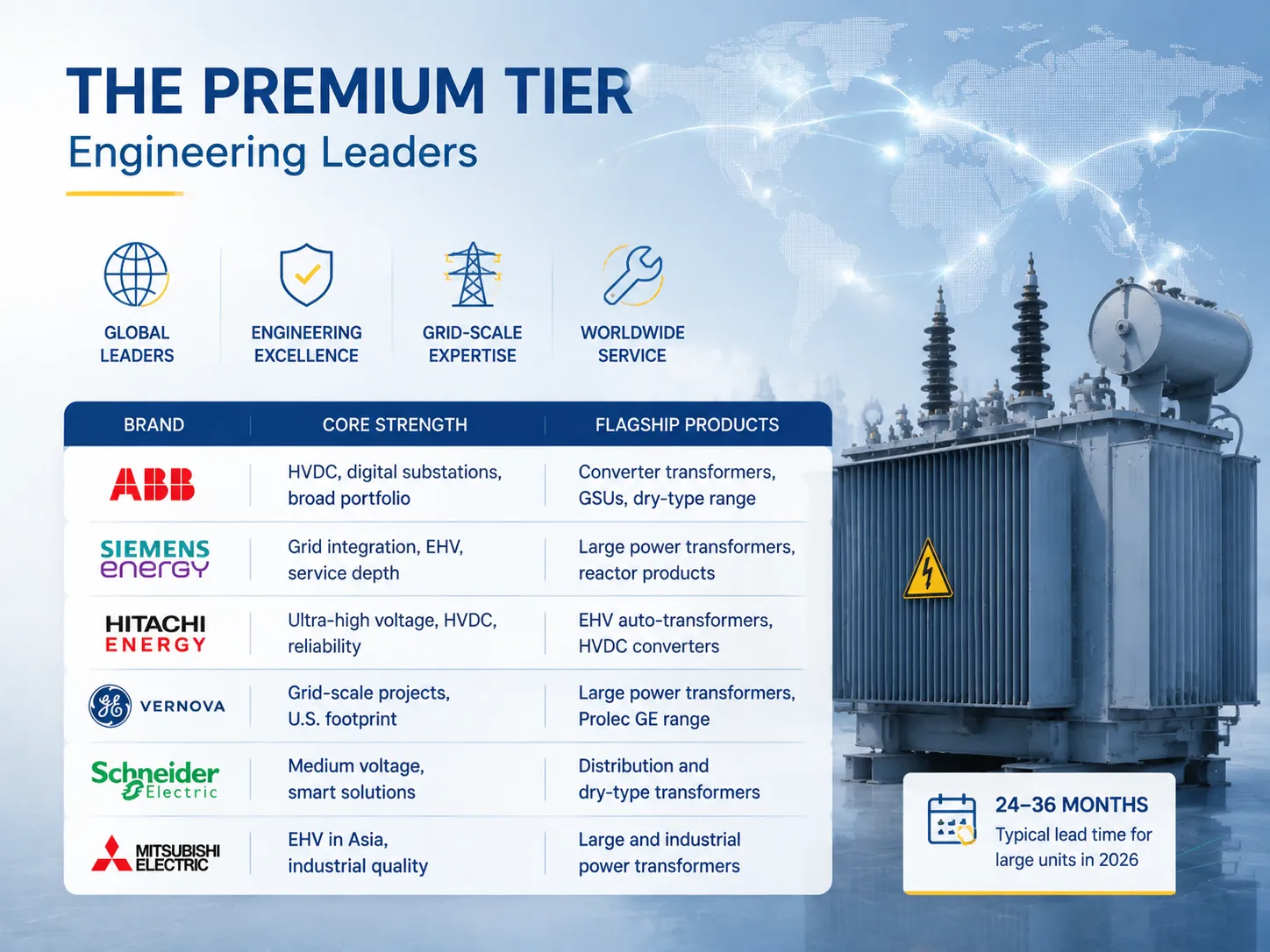
Las organizaciones de la categoría premium son limitadas en tamaño, pero su poder es excepcional. ABB, Siemens Energy, Hitachi Energy, loper, GE Vernova, y en menor medida Mitsubishi Electric y Schneider Electric constituyen los principales actores de influencia en el sector de transformadores de potencia, ya que lideran su desarrollo. Las listas de referencia de estas organizaciones incluyen HVDC y los tipos UHV de 400–800 kV. Las empresas tienen sus laboratorios equipados con la última tecnología que les proporciona la capacidad de operar y mantener su documentación ejemplar, mientras logran proporcionar requisitos de servicio a escala global también.
La compensación radica en la estructura de los negocios. Las instalaciones de producción de la categoría premium han estado operando cerca de su capacidad total durante muchos años. En caso de que una gran empresa de servicios públicos o desarrollador ordene una unidad de 500MVA de este sector en 2026, requerirán de 24 a 36 meses para la fabricación, así como una cantidad significativa de dinero que se utilizará al solicitar este pedido.
| Marca | Fortaleza central | Productos insignia |
|---|---|---|
| ABB | HVDC, subestaciones digitales, amplio portafolio | Transformadores convertidores, GSUs, gama de tipo seco |
| Siemens Energy | Integración de red, EHV, profundidad de servicio | Grandes transformadores de potencia, productos de reactores |
| Hitachi Energy | Ultra alta tensión, HVDC, fiabilidad | Auto-transformadores EHV, convertidores HVDC |
| GE Vernova | Proyectos a escala de red, huella en EE. UU. | Grandes transformadores de potencia, gama Prolec GE |
| Schneider Electric | Voltaje medio, soluciones inteligentes | Transformadores de distribución y tipo seco |
| Mitsubishi Electric | EHV en Asia, calidad industrial | Transformadores de potencia grandes e industriales |
El Nivel de Volumen: Potencias Chinas
En cuanto al volumen de fabricación, hay una respuesta diferente a la pregunta del liderazgo. El país produce porciones significativas de los transformadores de distribución y potencia del mundo, y sus mayores productores como TBEA, Baoding Tianwei Electric, China XD Electric, así como divisiones de transformadores de empresas estatales han enviado miles de productos a diferentes regiones del mundo, incluyendo Asia, África, Oriente Medio y América Latina. Por ejemplo, TBEA está entre los más grandes que son capaces de producir transformadores de ultra alta tensión utilizados para proporcionar electricidad a proyectos nacionales a un nivel de voltaje de 750 kV o más.
Los fabricantes de transformadores que califican como fabricantes de volumen son conocidos por sus precios agresivos y gran capacidad de producción, y muchos de ellos son capaces de fabricar transformadores que necesariamente cumplen con una serie de estándares internacionales como IEC 60076 e IEEE C57. La tarea de verificación recae en el comprador, ya que el volumen de producción no garantiza el cumplimiento de la documentación, y no todos los exportadores en esta categoría utilizan el mismo enfoque cuando se trata de realizar pruebas de tipo, informes de rendimiento y servicio postventa. Solo los proveedores confiables se aseguran de que su documentación sea correcta, y los clientes pueden identificar a dicho proveedor revisando la documentación.
El Nivel de Valor: Especialistas en Exportación Certificados
En el terreno intermedio entre las categorías premium y de volumen hay un nicho que merece más crédito del que recibe. Esta categoría incluye especialistas en exportación certificados que fabrican productos según estándares internacionales, emiten todos los informes de prueba necesarios y comercializan sus productos en términos de precio entre estas dos categorías. Jiangsu Subian Electric Power es un caso en particular: la empresa china de transformadores que entrega transformadores llenos de aceite, transformadores de tipo seco, subestaciones de tipo caja y otros dispositivos especiales alrededor del mundo, emitiendo informes de prueba IEC 60076 junto con cada pedido proporcionado. Las empresas de este nivel confían en su calidad de fabricación certificada, flexibilidad de posibilidades de ingeniería y plazos de entrega realistas para competir en lugar de depender del reconocimiento de marca y presencia en el mercado.
Para la mayoría de los casos prácticos, ya sean subestaciones de utilidad de 1-20 MVA, transformadores de plantas industriales o dispositivos de conexión a la red de energía renovable, la mejor relación calidad-precio se logra en el nivel presentado, asumiendo que la documentación esté debidamente emitida.
Comparación de Marcas Cara a Cara
La siguiente tabla compara las marcas representativas de diferentes niveles o segmentos para el transformador sumergido en aceite de capacidad de 1-10 MVA y voltaje 33/11 kV. Los precios presentados son precios FOB indicativos para el período de 2025-2026 y cambian dependiendo de la capacidad del transformador, el equipo suplementario y la ubicación geográfica.
| Marca | supone | Precio típico (1–10 MVA) | Tiempo de entrega (aprox.) | Mejor para |
|---|---|---|---|---|
| ABB | Premium | $150,000–$350,000 | 18–30 meses | Utilidad, industrial, digital |
| Siemens Energy | Premium | $150,000–$350,000 | 18–30 meses | Red, proyectos EHV |
| Hitachi Energy | Premium | $160,000–$380,000 | 20–32 meses | EHV, HVDC, activos críticos |
| Schneider Electric | Premium/volumen | $40,000–$150,000 | 10–16 meses | Distribución, comercial |
| GE Vernova | Premium | $150,000–$340,000 | 18–30 meses | Programas de utilidad en EE. UU. |
| TBEA | Volumen | $60,000–$200,000 | 8–14 meses | Proyectos de gran volumen, EHV |
| Baoding Tianwei | Volumen | $55,000–$190,000 | 8–14 meses | Distribución/poder de volumen |
| Jiangsu Subian Electric Power | Valor | $50,000–$180,000 | 6–12 meses | Certificado IEC, especificaciones personalizadas |
La diferencia en los precios de los diversos niveles no debe ser desestimada como un error; más bien, la cantidad que se paga refleja el valor de la experiencia en ingeniería, la marca utilizada y el nivel de servicio ofrecido. El truco radica en poder determinar qué capacidades requiere realmente su proyecto antes de hacer cualquier comparación de costos.
Liderazgo Tecnológico por Segmento
El liderazgo de marca también varía según el segmento de producto, y el segmento importa más que la reputación general:
| Segmento | Líderes | Lo que define el liderazgo aquí |
|---|---|---|
| Transformadores de convertidor HVDC | ABB, Siemens Energy, Hitachi Energy, TBEA | Resistencia a voltaje DC, carga armónica |
| EHV / UHV (≥220 kV) | Hitachi Energy, Siemens Energy, TBEA, China XD | Niveles de aislamiento, límites de transporte |
| Distribución (≤10 kV, ≤2.5 MVA) | Schneider, Prolec GE, exportadores chinos | Niveles de pérdida, costo por unidad |
| Tipo seco (resina fundida) | ABB, Siemens, Schneider, especialistas europeos | Seguridad contra incendios, control de descarga parcial |
| Elevación renovable (33–110 kV) | Todos los niveles compiten | Carga variable, calificaciones ambientales |
En el caso de un autotransformador de 500 MVA, 400 kV, la lista mejorada consiste precisamente en la clase premium, junto con algunos otros líderes de volumen. Por otro lado, para un transformador montado en pad de 500 kVA utilizado en bloques comerciales, prácticamente todos los fabricantes llegan a ser parte de las empresas preseleccionadas y en este caso el precio y la documentación se vuelven más importantes que la tecnología utilizada en los dispositivos.
Fiabilidad, Servicio y Costo Total
La profundidad del servicio es la razón por la cual las marcas premium pueden cobrar tanto. Una empresa de servicios públicos que opera mil transformadores requiere un fabricante capaz de responder a una interrupción en un plazo de días, tener piezas de repuesto disponibles y proporcionar servicios de monitoreo durante décadas. Cuando se trata de equipos críticos, los costos pagados a proveedores de servicios premium se consideran un gasto de seguro razonable. En contraste, los exportadores de nivel de valor son buenos en lo que hacen antes de la venta: evaluación de ingeniería, pruebas en planta, entrega, etc. Su servicio de campo se realiza típicamente a través de agentes o socios, lo que beneficia a los clientes basados en proyectos, pero no funciona bien para aquellas empresas de servicios públicos que operan una flota continua de maquinaria.
El concepto de costo total de propiedad reconcilia estos dos enfoques. El cálculo habitual es así: se toma el precio inicial, se añaden los costos capitalizados (pérdidas en vacío y en carga multiplicadas por la relación de valor presente para vatios), se añaden los costos de mantenimiento esperados y se tiene en cuenta el riesgo de servicio. De esta manera, los transformadores de marca de valor IEC 60076 a menudo superan a las marcas premium en aplicaciones estándar, mientras que las marcas premium siguen teniendo sentido cuando se trata de operaciones EHV, HVDC y críticas para la flota.
| Elemento de costo | Nivel premium | Nivel de volumen | Nivel de valor |
|---|---|---|---|
| Primer precio, 1–10 MVA | $150,000–$380,000 | $60,000–$200,000 | $50,000–$180,000 |
| Niveles de pérdida (típicos) | Bajo (diseños de primer nivel) | Estándar | Estándar a bajo |
| Red de servicio | Global, respuesta más rápida | Agentes regionales | Socios regionales |
| Profundidad de documentación | Acreditado, completo | Varía — verificar | Completo, terceros bienvenidos |
| Mejor ajuste | EHV, HVDC, flotas críticas | Proyectos de volumen | Deber estándar de utilidad/industrial |
Cómo Elegir la Marca de Transformador Correcta
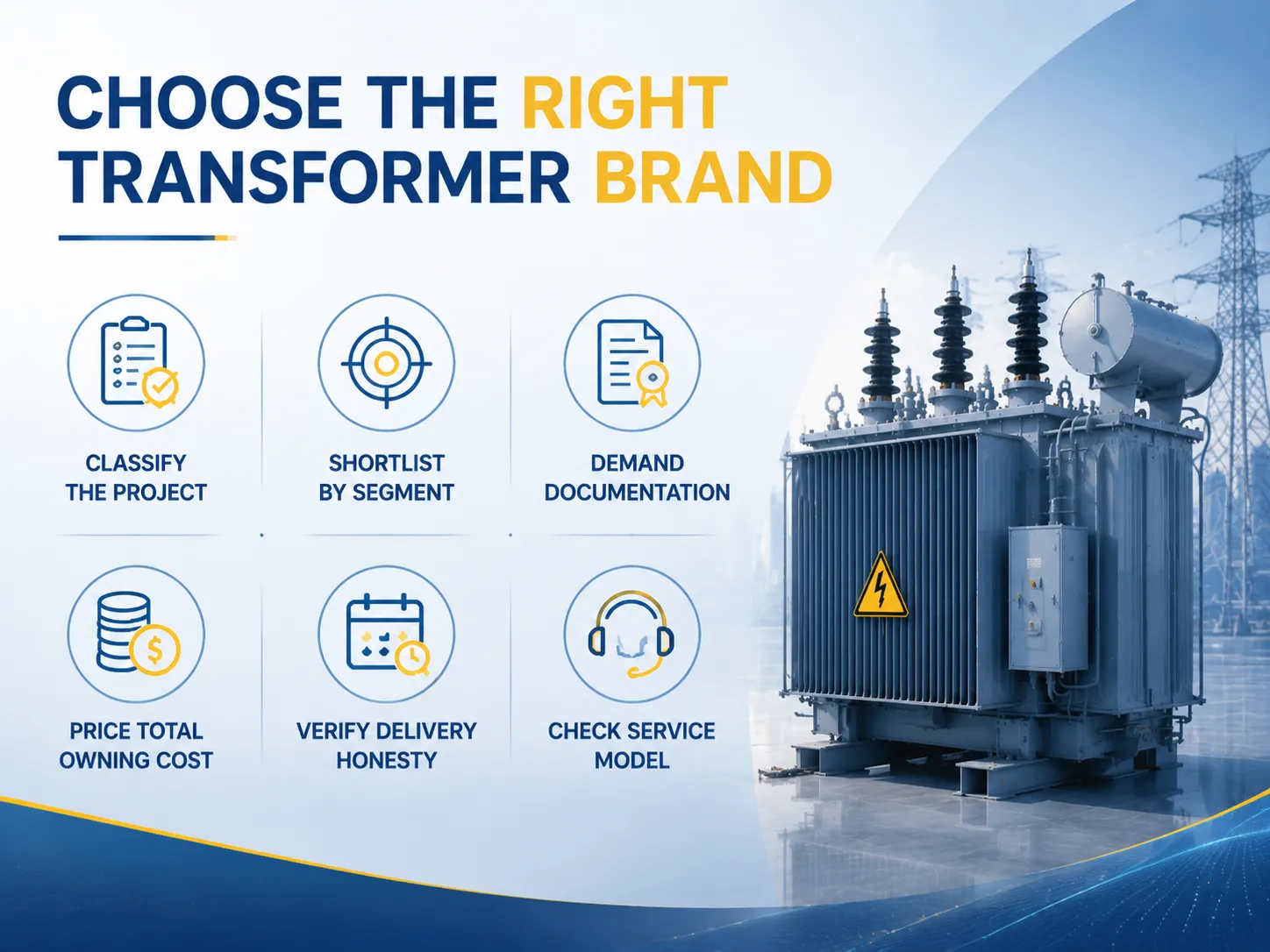
Separar y reducir las opciones de manera metódica aliviará la mayoría de las incertidumbres.
- Identifique las especificaciones del proyecto en términos de voltaje, MVA, ciclo de trabajo, entorno e importancia. Esto ayudará a reducir considerablemente las opciones.
- Elija nombres por segmento en lugar de notoriedad. Ser un líder en HVDC no necesariamente convierte a una empresa en una buena opción para un transformador de montaje en pad de 630 kVA.
- Exija el mismo tipo de documentación de todos los candidatos. Esto incluye certificados de prueba de tipo, informes de rutina por unidad y garantías de pérdidas e impedancia declaradas según IEC 60076.
- Calcule el costo total de propiedad utilizando su tarifa; la diferencia entre la eficiencia de 98.5% y 99.2% en un sistema siempre activo tiene sentido desde una perspectiva financiera.
- Asegúrese de que la entrega sea lo que su proveedor promete. Obtenga el cronograma de producción por escrito. De esta manera, un proveedor de buena reputación que no cumpla con la entrega a tiempo no será considerado como tal.
- Comprenda el plan de servicio del proveedor. Si el soporte en campo es algo que necesita, conozca los detalles de contacto y cuánto tiempo necesitarán para responderle.
Preguntas Frecuentes
¿Cuál es la mejor marca de transformadores en el mundo?
Elegir la mejor marca no es fácil. Mientras que ABB, Siemens Energy y Hitachi Energy son las mejores en tecnología y aplicaciones de alta tensión, TBEA y Baoding Tianwei son las mejores en términos de volúmenes. Esto deja a empresas como Jiangsu Subian Electric Power, que son exportadores certificados, como la mejor opción de la empresa en términos de valor para aplicaciones simples.
¿Por qué las marcas de transformadores premium cuestan tanto más?
La fijación de precios premium toma en consideración los costos de I+D, los costos de operación de instalaciones de prueba de primer nivel y redes de servicio en todo el mundo, y la escasez de recursos. El precio premium de las unidades de 1-10 MVA generalmente oscila entre $150,000 y $380,000 en comparación con un rango de precios típico de $50,000 a $200,000 para los otros niveles. En términos de trabajo EHV y HVDC, este premium significa que las capacidades correspondientes están disponibles solo en este nivel de precios.
¿Son las marcas de transformadores chinas tan buenas como las marcas europeas?
Después de haber obtenido la certificación IEC 60076 y recibir los resultados de las pruebas de tipo y pruebas de rutina, es posible que los fabricantes chinos establezcan un rendimiento que no es inferior al de los competidores europeos cuyos productos están hechos para estándares particulares; y los fabricantes chinos ofrecen sus productos a un precio mucho más bajo. La principal diferencia radica en los siguientes aspectos: prima de marca, profundidad de la red de servicio y consistencia de la documentación; por eso es importante tener verificación en lugar de pensar de dónde proviene este producto.
¿Cómo puedo verificar la calidad de una marca de transformador antes de hacer un pedido?
Obtenga de un laboratorio reconocido sus certificados de prueba de tipo solicitados, los informes de prueba de rutina para cada unidad, un certificado de impedancia y pérdidas, y una lista de proyectos similares realizados anteriormente. Si la cantidad supera unas pocas unidades, organice una inspección de terceros (por ejemplo, SGS, TÜV, Bureau Veritas) o esté presente durante las pruebas en fábrica.
¿Debería elegir la marca de transformador más barata?
Solo si la garantía y la documentación son efectivas. Un precio de 30% inferior al valor de mercado generalmente indica que falta algo; esto podría incluir disposiciones para garantías faltantes, cobertura de pruebas y entrega verificable. Comparar constantemente ofertas certificadas con especificaciones similares, forma de calcular el costo total de propiedad, y no solo el precio de pedido.
Referencias
- Comisión Electrotécnica Internacional (IEC) — editor de IEC 60076, la serie de estándares internacionales de transformadores utilizados para certificación.
- IEEE — editor de los estándares de transformadores IEEE C57 y orientación de la industria.
- NEMA — estándares de equipos eléctricos de América del Norte y datos de mercado.
- ABB — fabricante global de transformadores, referencia de ingeniería de nivel premium.
- Hitachi Energy — fabricante de transformadores de gran potencia y HVDC, inversor en capacidad en EE. UU.
- Siemens Energy — fabricante de redes y transformadores, referencia de nivel premium.
Conclusión
Con importantes empresas liderando cada nivel del mercado global de transformadores, los fabricantes premium como ABB, Siemens Energy, Hitachi Energy y GE Vernova son los más conocidos en ese santo grial de la tecnología y capacidad, la tecnología de alta tensión. En contraste, los fabricantes chinos reinan supremos en cuanto a la escala de producción; sin embargo, los jugadores de valor certificados (como Jiangsu Subian Electric Power) han dejado su huella en el nivel de valor, donde los clientes pueden obtener buena calidad a precios razonables.
Así, Jiangsu Subian Electric Power se ha convertido en una corporación importante en el segmento de ‘valor’ del mercado con una idea simple de vender transformadores sumergidos en aceite, transformadores de tipo seco, subestaciones de tipo caja e instalaciones de propósito especial con pleno cumplimiento de las normas IEC 60076 y mucha documentación de pruebas acompañante para cada pedido. Si su proyecto necesita un rendimiento certificado con plazos de entrega realistas y precios competitivos, inicie una conversación con Subian Eléctrico y compare la documentación lado a lado con cualquier lista corta que ya tenga.