


Se passeggi per qualsiasi corridoio della Fiera di Canton, ti renderai conto che lo stile degli stand dei trasformatori non è diverso da altri: i clienti non richiedono più solo listini prezzi; ora cercano garanzie sulle perdite a vuoto, opzioni per il monitoraggio digitale e termini di consegna invece di mesi. Questo è particolarmente vero per il settore dei trasformatori ausiliari, dove gli ordini e le richieste post-Fiera di Canton mostrano una tendenza molto chiara verso l'aumento dell'efficienza, dell'intelligenza, della compattezza e della consegna rapida.
In breve, lo sviluppo dei trasformatori ausiliari, secondo la domanda dopo la Fiera di Canton, può essere descritto in cinque direzioni: (1) aumento dell'efficienza grazie a nuclei amorfi e ad alta qualità orientati al grano che consentono una riduzione delle perdite a vuoto del 30–50% rispetto alle strutture di generazione precedente; (2) la presenza di monitoraggio intelligente integrato: le differenze tra temperatura degli avvolgimenti, livello dell'olio e sistemi di sensori di gas stanno passando da caratteristiche opzionali a obbligatorie; (3) la tendenza verso design compatti, modulari e integrati su skid che riducono i tempi di installazione; (4) l'emergere di piattaforme di design standardizzate per tensioni tradizionali associate a 35/0.4 kV e 10/0.4 kV che rendono i tempi di consegna prevedibili; (5) la richiesta di documentazione in conformità agli standard IEC 60076 insieme a ispezioni di terze parti e dichiarazioni ambientali.
Cosa Segnala la Domanda Post-Fiera di Canton
La Fiera di Canton ha un prezioso e affidabile sistema di allerta precoce per la domanda globale di trasformatori poiché è il luogo in cui i principali produttori cinesi possono incontrare acquirenti di aziende di servizi pubblici, appaltatori EPC e utenti finali industriali in Medio Oriente, Africa, Sud-est asiatico, America Latina ed Europa. Durante le ultime tre fiere, gli stand dei trasformatori ausiliari hanno assistito a un cambiamento costante nei tipi di richieste fatte dagli acquirenti riguardo ai prodotti. Invece di chiedere il prezzo più basso per un'unità da 50 kVA, gli acquirenti si sono spostati su nuove domande riguardo ai nuclei amorfi, ai sensori di temperatura wireless, alle opzioni di consegna in container e se il rapporto di prova ricevuto sarà accettato dalla loro utility. Questo cambiamento non è affatto una coincidenza: riflette le tendenze che si stanno verificando nelle attività di approvvigionamento nei mercati domestici degli acquirenti.
| Tendenza | Fattore | Segnale di mercato |
|---|---|---|
| Perdite inferiori | Costo energetico, regolamentazione | Garanzie sulle perdite richieste nelle RFQ |
| Monitoraggio intelligente | Automazione, costo di interruzione | Sensori che passano da opzione a standard |
| Compatto/modulare | Costo di terra e civile | Pacchetti skid e tipo scatola in crescita |
| Piattaforme standard | Pressione sui tempi di consegna | Aspettative di consegna di 4–10 settimane |
| Conformità documentale | Regole di utility e doganali | Routine di ispezione di terze parti |
Tendenza 1: Efficienza e Riduzione delle Perdite
Dato che un trasformatore ausiliario funziona a livelli di carico elevati per tutto l'anno, le perdite sostenute diventano una spesa fissa costante e i regolatori insistono sulla riduzione di tali perdite. Pertanto, la risposta trovata dagli ingegneri è stata l'implementazione di materiali di nucleo migliori. I nuclei in materiale amorfo (vetro metallico) sono in grado di ridurre le perdite operative di un significativo 30-50 percento rispetto all'acciaio silicio orientato a grano convenzionale e le classi GOES molto efficaci come la serie 23H e quelle più recenti riescono a compensare il divario in modo economicamente ragionevole. Nel caso di un trasformatore ausiliario operante continuamente con una capacità di 500 kVA, ridurre le perdite a vuoto da 900 W a 600 W consente a un'azienda di risparmiare circa $260-$390 all'anno al prezzo di $0.10 – $0.15 per kWh, il che significa $6,500-$9,800 in 25 anni. Questo ha reso chiaro che gli acquirenti commerciali hanno incluso tali spese nelle loro valutazioni e i produttori hanno iniziato a menzionare solo le percentuali di perdita garantite secondo gli standard IEC 60076-1.
Tendenza 2: Monitoraggio Intelligente e Digitalizzazione
La seconda tendenza inconfondibile è il monitoraggio digitale. Un trasformatore ausiliario era tipicamente considerato un bene passivo, esaminato solo durante le valutazioni annuali. Tuttavia, al giorno d'oggi, gli Indicatori di Temperatura degli Avvolgimenti (WTI), gli Indicatori di Temperatura dell'Olio (OTI), i manometri del livello dell'olio e i punti di campionamento dell'Analizzatore di Gas Disciolti (DGA) stanno diventando ora criteri di qualificazione per le parti transazionali, insieme all'opzione per trasmettitori wireless o connessi a SCADA. Un sensore di temperatura, che costa tra $200-$600 quando installato, è in grado di segnalare problemi di tensione o raffreddamento settimane prima che questi portino a un guasto, e un semplice controllo sul sistema DGA ogni sei mesi consente di identificare problemi che potrebbero portare a un'interruzione forzata. Nelle sottostazioni automatizzate, il rapporto del trasformatore ausiliario si unisce ai rapporti del trasformatore principale a livello della sala di controllo — e i clienti di solito richiedono che tutte le attrezzature siano effettivamente pronte per l'interfaccia, anche se SCADA è inclusa nel progetto in un secondo momento.
| Caratteristica di monitoraggio | Costo aggiuntivo tipico | Cosa rileva |
|---|---|---|
| Indicatore di temperatura degli avvolgimenti (WTI) | $100–$300 | Sovraccarico, guasto di raffreddamento |
| Indicatore di temperatura dell'olio (OTI) | $80–$250 | Perdita di raffreddamento, stress ambientale |
| Manometro del livello dell'olio con allarme | $50–$150 | Perdite, basso livello di olio |
| Valvola di campionamento DGA | $40–$120 | Sviluppo di guasti all'isolamento |
| Trasmettitore SCADA/wireless | $200–$800 | Stato remoto, allarmi di tendenza |
Tendenza 3: Design Compatti e Modulare
Terreni costosi nelle sottostazioni e opere civili impongono costi di progetto più elevati. I partecipanti alla Fiera richiedono soluzioni a ingombro compatto e pacchetti modulari: trasformatore ausiliario fornito in un comune skid con l'apparecchiatura di bassa tensione, contatore e cubicolo di controllo che sono pre-cablati e pre-testati in fabbrica. Utilizzare un approccio di design prefabbricato riduce il tempo di installazione da settimane a giorni, aiuta a eliminare errori di cablaggio e sposta il collaudo al piano di fabbrica invece di eseguirlo in loco. Ad esempio, un'unità compatta con il pannello LV integrato può aiutare a ridurre le dimensioni della sala elettrica della sottostazione del 20-30%. Si deve pagare un po' di più per l'involucro e il lavoro di integrazione (5-15% premium).
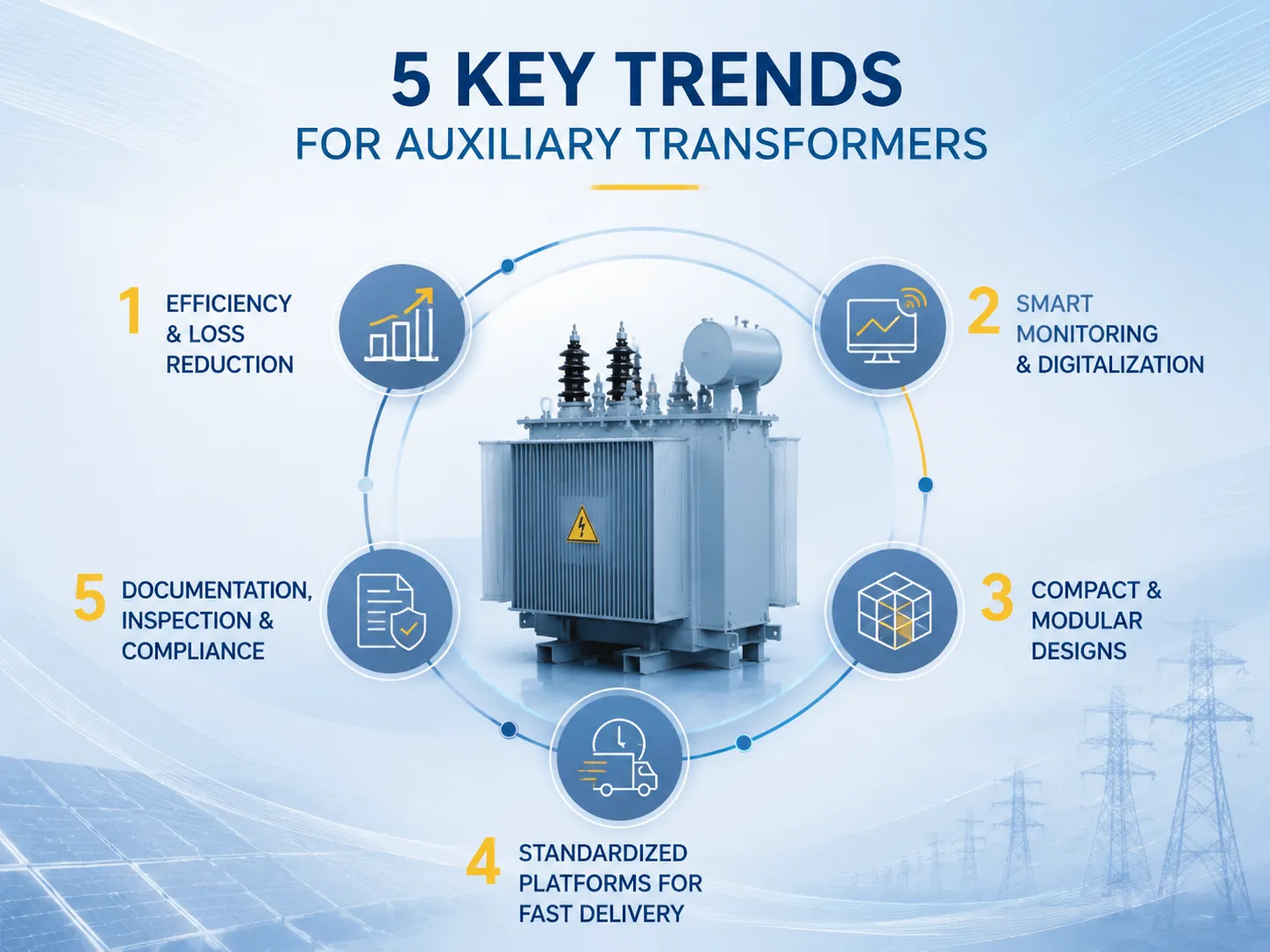
Trend 4: Piattaforme Standardizzate per una Consegna Veloce
Negli ultimi anni, il feedback riguardante i tempi di consegna è stato significativo nel mercato dei trasformatori, portando il segmento ausiliario a reagire con sforzi di standardizzazione. Questo significa che i produttori sono ora dotati di un insieme comune di standard, come: gradi di potenza comuni (100, 200, 315, 500, 800, 1.250 kVA); coppie di tensione comuni (35/0,4 kV e 10/0,4 kV); gruppo vettoriale predefinito Dyn11, tutti progettati una volta e fabbricati sulla linea di produzione. A causa di ciò, un dispositivo standard può essere fornito entro 4–10 settimane, mentre una soluzione personalizzata richiederebbe 14–20 settimane. Il pubblico della Fiera ha appreso il segreto della consegna veloce: attenersi agli standard; utilizzare un grado standard superiore alle proprie esigenze energetiche, mantenere una coppia di tensione standard e mantenere la personalizzazione al minimo.
| Piattaforma standard | Tempo di consegna tipico | Tempi di consegna per design personalizzato |
|---|---|---|
| 100–315 kVA, 10/0.4 kV, Dyn11 | 4–6 settimane | 12–16 settimane |
| 400–800 kVA, 10/0.4 kV, Dyn11 | 5–8 settimane | 14–18 settimane |
| 000–1.600 kVA, 35/0.4 kV, Dyn11 | 6–10 settimane | 16–20 settimane |
| 500 kVA, 35/0.4 kV, Dyn11 | 8–10 settimane | 18–24 settimane |
Tendenza 5: Documentazione, Ispezione e Conformità
L'ultima tendenza si riferisce ai principi della procedura: i clienti considerano la documentazione come un componente del prodotto stesso. I dati di prova richiesti che coprono IEC 60076, emissione di certificati per prove di tipo e ispezione effettuata da un'autorità terza (SGS, TUV, Bureau Veritas) inclusi quelli locali, così come le dichiarazioni ambientali (RoHS, REACH e verifica dei materiali per l'impronta di carbonio) sono gli adesivi standard attesi al giorno d'oggi piuttosto che solo una caratteristica opzionale. Gli acquirenti che partecipano alla fiera hanno scartato fornitori che non erano in grado di fornire prove di prova. Le nuove tendenze sono generalmente vantaggiose per gli acquirenti poiché garantiscono che ogni produttore sia soggetto a standard comuni e verificabili e garantiscono protezione contro offerte basse disoneste. Richiede anche di dichiarare l'ambito della documentazione nella propria specifica.
Cosa significano le tendenze per il tuo budget
| Caratteristica | Costo aggiuntivo tipico | Vantaggio |
|---|---|---|
| Nucleo amorfo | +10–20% rispetto al convenzionale | 30–50% perdita a vuoto inferiore |
| Nucleo GOES di alta qualità | +3–8% | 10–25% perdita a vuoto inferiore |
| Pacchetto di monitoraggio intelligente | +3–8% | Avviso precoce di guasto, pronto per SCADA |
| Integrazione skid/contenitore | +5–15% | Giorni di tempo di installazione risparmiati |
| OLTC (cambiavalvole sotto carico) | +10–25% | Bus LV stabile su reti fluttuanti |
| Ispezione da parte di terzi | +1–3% o tariffa fissa | Prova di qualità indipendente |
Di conseguenza, risulta che un cosiddetto trasformatore ausiliario “a prova di futuro” ha un prezzo di circa 5-20% superiore a un trasformatore convenzionale, ma il costo extra è compensato da una bolletta elettrica più bassa, un numero minore di interruzioni e una più rapida messa in servizio del sito. Il prezzo del trasformatore stesso rientra nella fascia di $2.000-35.000 per 50-2.500 kVA, a seconda della potenza, del marchio e delle caratteristiche aggiuntive.
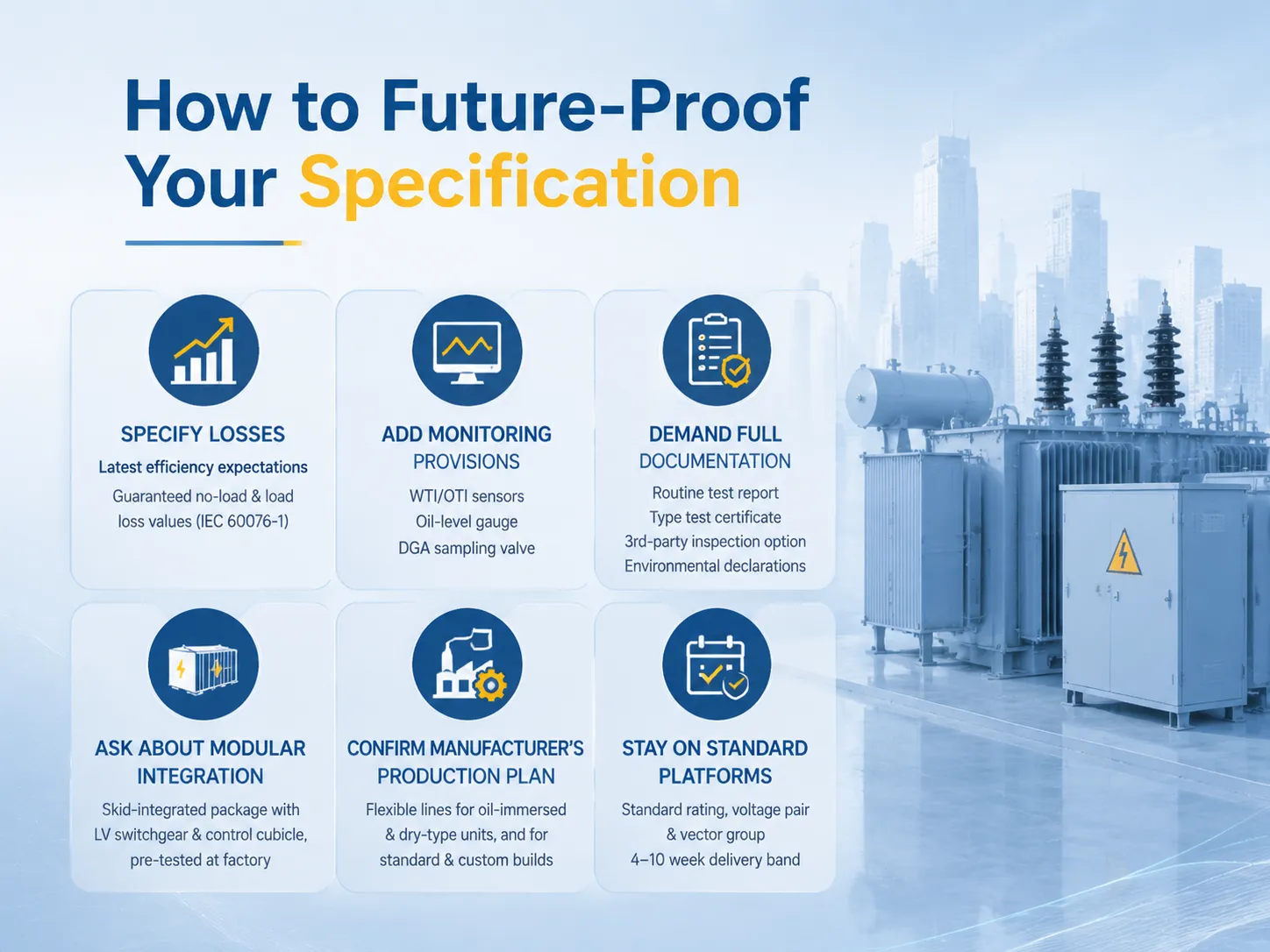
Come rendere la tua specifica a prova di futuro
- Fornire informazioni sulle perdite in relazione agli ultimi standard di efficienza. Chiedere garanzie sulle perdite a carico e a vuoto in conformità con IEC 60076-1 e valutarle da un punto di vista capitalizzato piuttosto che controllare solo un elenco di prodotti.
- Aggiungere componenti di monitoraggio, anche se si rinvia l'installazione dell'interfaccia. Dichiarare che i puntatori WTI/OTI e i misuratori di livello dell'olio, così come la valvola di campionamento per DGA, devono essere inclusi poiché i loro costi sono inferiori rispetto a quelli durante la ristrutturazione dell'attrezzatura.
- Optare per piattaforme standardizzate ogni volta che è possibile. Attenersi alla tensione standard e alla capacità di potenza, così come al gruppo vettoriale, in modo che la consegna venga completata entro 4-10 settimane e che i pezzi di ricambio necessari siano disponibili in futuro.
- Richiesta di documenti completi. È necessario avere un rapporto di prova regolare, documentazione di prova di tipo quando possibile, opzione di ispezione da parte di terzi e certificazioni ambientali nella propria lingua.
- Controlla se il fornitore può fornire integrazione modulare. Nelle piccole sottostazioni, considera la versione montata su skid che contiene l'apparecchiatura di bassa tensione e il quadro di controllo ed è testata in fabbrica.
- Conferma la capacità produttiva del fornitore. La fabbrica che può produrre rapidamente sia unità immerse in olio che unità secche ti darà una rete di sicurezza quando i piani cambiano.
Marchi principali e fasce di prezzo
| Marca | Paese | Forza delle tendenze future | Fascia di prezzo indicativa (US$) |
|---|---|---|---|
| ABB | Svizzera/Svezia | Ecosistemi di monitoraggio digitale | $4.000–$60.000 |
| Siemens | Germania | Integrazione di trasformatori intelligenti | $3.500–$55.000 |
| Schneider Electric | Francia | Eco-design e gamma di unità secche | $2.500–$40.000 |
| Hitachi Energy | Svizzera | Pacchetti di sensori e analisi | $4.500–$70.000 |
| Eaton | USA | Linee di distribuzione focalizzate sull'efficienza | $2.000–$35.000 |
| Jiangsu Subian Energia Elettrica | Cina | Piattaforme standard, consegna rapida, opzioni intelligenti | $2.000–$35.000 |
In relazione ai trasformatori ausiliari che appaiono nella gamma di 50-2.500 kVA, i prezzi dipendono dalla potenza, dalle opzioni e dagli accessori. ABB, Siemens, Schneider Electric, Hitachi Energy ed Eaton sono avanzati nel monitoraggio digitale e nella maturità dei progetti, mentre le loro roadmap possono essere considerate un buon punto di riferimento su come questo prodotto si svilupperà. Jiangsu Subian Electric Power Co., Ltd ha creato l'offerta di esportazione attorno a queste tendenze per coloro che desiderano utilizzare l'ingegneria collaudata basata sulle norme IEC 60076 a tempistiche e prezzi fattibili. È importante notare che l'azienda ha incluso nuclei a bassa perdita (tipi amorfi inclusi), così come piattaforme standard mirate a una consegna rapida e metodi di monitoraggio intelligenti opzionali insieme a soluzioni montate su skid. Subian produce sia trasformatori ausiliari immersi in olio che unità secche, ha dimostrato le sue capacità di condurre ispezioni di terze parti e i suoi prodotti sono stati utilizzati nei settori utility ed EPC in molti paesi. I prezzi di fabbrica e un tempo di consegna di 4-10 settimane consentono all'azienda di agire rapidamente e di partecipare ai piani di sviluppo con il budget degli anni 2026. Vedi l'attuale gamma di prodotti su sito web di Subian Electric.
Domande frequenti
Cosa è cambiato di più per i trasformatori ausiliari dopo le recenti sessioni della Fiera di Canton?
C'è stato un cambiamento nell'approccio adottato dai clienti. Non si preoccupano più solo dei prezzi, ma richiedono invece informazioni sulle perdite a vuoto, tecnologie come il monitoraggio intelligente, piattaforme con tempi di consegna garantiti da quattro a dieci settimane e un pacchetto di documentazione completo che conforma agli standard IEC 60076 e certificato da una terza parte. In generale, l'efficienza e la trasparenza del processo di consegna sono ora considerate i fattori più importanti per concludere contratti di esportazione.
Un nucleo amorfo vale il costo extra su un trasformatore ausiliario?
Nella maggior parte dei casi, la risposta è sì per un'unità caricata continuamente. L'uso di un nucleo amorfo consente di ridurre le perdite a vuoto del 30-50% per un costo extra di 10-20%. Per un costo energetico di $0.10-$0.15/kWh, un'unità da 500 kVA risparmia circa $6.500-$9.800 in consumo energetico nel corso di 25 anni, che è considerevolmente superiore al costo extra di acquisto dell'attrezzatura. Se il carico è utilizzato in modo intermittente, il periodo di ammortamento aumenta e l'uso di GOES di grado superiore può essere vantaggioso.
Ho davvero bisogno di monitoraggio intelligente su un trasformatore di servizio stazione?
Sì, per le stazioni chiave. Un indicatore del livello dell'olio, un sensore di temperatura degli avvolgimenti e una valvola di campionamento DGA costeranno centinaia di dollari e forniranno un avviso anticipato di problemi di raffreddamento da sovraccarico o di qualsiasi problema di isolamento in fase di formazione. Quando lo confronti con il costo di un'interruzione non pianificata che disabilita la tua protezione e i tuoi controlli, diventa chiaro che ne vale la pena non appena lo strumento di monitoraggio trova un problema per la prima volta.
I trasformatori ausiliari di tipo secco stanno diventando più popolari?
Sì, soprattutto per quanto riguarda le installazioni sotterranee, interne e sensibili al fuoco. Le unità di tipo secco in resina colata offrono requisiti di manutenzione ridotti, sicurezza antincendio e mancanza di necessità di contenimento dell'olio, e stanno crescendo nelle richieste di esportazione — man mano che le sottostazioni urbane e normative antincendio più rigorose diventano disponibili. Le unità immerse nell'olio continuano a essere i cavalli da lavoro all'aperto.
Come mantiene Subian tempi di consegna brevi?
Subian utilizza concetti di piattaforma di design standard in termini di valutazioni comuni e coppie di tensione e gruppi vettoriali. Pertanto, i tempi di ingegneria e produzione sono minimi, utilizzando una linea di produzione flessibile che consente design e produzione personalizzati. I design standard possono solitamente essere spediti tra 4 e 10 settimane con il tempo di consegna specificato nel calendario di produzione durante la fase di offerta.
Riferimenti
- IEC 60076-1 — Trasformatori di potenza: Generale — lo standard che definisce i valori di perdita garantiti ora richiesti dagli acquirenti.
- IEC 60076-5 — Capacità di Resistere a Cortocircuiti — verifica del cortocircuito richiesta per i trasformatori ausiliari nel servizio pubblico.
- Rapporto sull'Efficienza Energetica IEA — contesto politico per l'efficienza e la spinta alla riduzione delle perdite nell'attrezzatura di distribuzione.
- Hitachi Energy — Monitoraggio dei Trasformatori — documentazione di riferimento per i sistemi di monitoraggio digitale dei trasformatori.
- NEMA TP-1 — Efficienza Energetica per Trasformatori di Distribuzione — il benchmark di efficienza utilizzato nella valutazione delle perdite in Nord America.
- Sito Ufficiale della Fiera di Canton — l'evento di approvvigionamento dove queste tendenze di mercato sono osservabili direttamente.
Conclusione
Le tendenze della domanda post-Fiera di Canton confermano che i trasformatori ausiliari stanno cambiando da un acquisto di commodity a un prodotto definito da specifiche: basse perdite, monitoraggio incorporato, integrazione compatta, soluzioni standard che consentono una consegna rapida e documenti completi e verificabili. Nessuna di queste tendenze è rivoluzionaria; sono ampiamente disponibili oggi, e il prezzo di una soluzione a prova di futuro è insignificante rispetto ai benefici del risparmio energetico e delle interruzioni. Il modo migliore per implementarle è includere perdite, monitoraggio, aspettative di consegna e l'ambito dei requisiti documentali nelle proprie specifiche e scegliere un fornitore in grado di produrre sia soluzioni standard che personalizzate. Jiangsu Subian Electric Power è un produttore di trasformatori ausiliari conformi alla IEC 60076 con un nucleo a bassa perdita, capacità di monitoraggio intelligente e tempi di consegna standard rapidi a prezzi di fabbrica. Discuti la tua specifica con il team attraverso il sito ufficiale per vedere come queste tendenze si riflettono nel budget del tuo progetto.