


Il responsabile dell'impianto, che ha acquistato un trasformatore di distribuzione da 630 kVA per $12.000 basato su un preventivo ricevuto, ha appreso che sei mesi dopo operava a un carico di 92% nei giorni caldi, il che ha comportato l'assenza di margine di sovraccarico, un aumento delle perdite e una riduzione della vita utile del suo dispositivo. Pertanto, acquistare il tipo giusto di trasformatore non riguarda il fatto che un preventivo sia il più economico, ma il corrispondere le valutazioni del motore con le perdite, i livelli di tensione, il tipo di sistema di raffreddamento, così come i requisiti degli standard.
La guida completa su come scegliere un trasformatore copre tutti i passaggi richiesti che ogni cliente deve seguire, nell'ordine in cui l'ingegnere li eseguirà.
In termini semplici, se desideri selezionare il tipo appropriato di trasformatore da acquistare, devi calcolare il carico massimo di cui avrai bisogno in kVA e poi scegliere la valutazione del trasformatore appropriata in modo che il carico di picco sia intorno a 60% a 80% della capacità del trasformatore. Inoltre, assicurati di bloccare il rapporto di tensione dei trasformatori, il gruppo vettoriale, l'impedenza, la classe di raffreddamento e il tipo di isolamento. Dopo di che, cerca preventivi dai fornitori per il trasformatore considerando le perdite senza carico e durante il carico per 20 anni utilizzando il metodo delle perdite capitalizzate.
Passo 1: Definire il Carico e Calcolare la Dimensione
Nella scelta di un trasformatore, è necessario prima determinare il carico. Non sommare la valutazione della targhetta di ogni singola macchina, altrimenti ti ritroverai con un trasformatore sovradimensionato. Invece, segui l'approccio professionale:
| Passo | Calcolo | Risultato |
|---|---|---|
| Carico connesso | Somma di tutte le valutazioni delle attrezzature | 200 kVA |
| Domanda massima | Applicare il fattore di domanda 0,7 | 840 kVA |
| Correzione del fattore di potenza | Compensare a 0,95 | 884 kVA |
| Margine di crescita | Aggiungere 20% | 061 kVA |
| Valutazione selezionata | Dimensione standard più vicina | 000 o 1.250 kVA |
La regola d'oro stabilisce che la dimensione dell'unità dovrebbe essere tale che il carico di picco normale si trovi tra 60% e 80% della sua capacità. Ad esempio, un'unità da 1000 kVA ha un carico di picco normale di 750 kVA, il che significherebbe che l'unità opera con un'efficienza ottimale con un certo margine di capacità per l'avviamento. Sovradimensionare un'unità comporta costi inutili e perdite inattive, mentre sottodimensionarla porta a un ciclo di vita rapido dell'unità e al rischio di guasti in caso di caldo.
Passo 2: Selezionare il Rapporto di Tensione e il Gruppo Vettoriale
Il rapporto di tensione deve corrispondere con le unità del generatore e del consumatore. In generale, per applicazioni industriali e commerciali, il primario del trasformatore di tensione è intorno a 11 o 20 kV e il secondario 400/230. Nei siti delle sottostazioni, i rapporti di tensione comuni sono 110/20 kV, 33/11 kV e 220 kV/110 kV. Il gruppo vettoriale aiuta a determinare come sono collegate le fasi e se il trasformatore è a terra o meno.
| Gruppo Vettoriale | Configurazione | Applicazione Tipica |
|---|---|---|
| Dyn11 | Primario delta, secondario stella con neutro | Distribuzione, 11/0,4 kV — il più comune |
| YNd11 | Stella primario con neutro, delta secondario | Trasformatori di potenza per trasmissione e sotto-trasmissione |
| Yyn0 | Stella-stella, entrambi i neutri | Piccola distribuzione, reti specifiche |
| YNyn0 | Stella-stella con entrambi i neutri | Sistemi interconnessi con neutri a terra |
Quando si mettono in parallelo i trasformatori, è necessario garantire la compatibilità con il gruppo vettoriale, l'impedenza e il rapporto. Un trasformatore Dyn11 non può funzionare in tandem con YNd11. Quando non si è certi, si può richiedere un trasformatore Dyn11 per la propria distribuzione e si può sempre verificare con il fornitore l'idoneità delle proprie configurazioni.
Passo 3: Scegliere Impedenza e Classe di Raffreddamento
Le caratteristiche della tensione di impedenza (che è generalmente dal 4 percento al 6 percento per i trasformatori di distribuzione e tipicamente dall'8 percento al 12 percento per i trasformatori di potenza) definiscono la corrente di cortocircuito e la condivisione di potenza tra i sistemi paralleli. Bassa impedenza consente una corrente di guasto più alta, ma ha una migliore regolazione della tensione; alta impedenza protegge le apparecchiature elettriche, ma porta a una scarsa regolazione della tensione. La maggior parte delle compagnie di servizi pubblici e dei progettisti industriali ha calcolato questo numero sulla base dell'analisi delle proprie reti; non assumere che la fabbrica lo conosca.
La classe di raffreddamento indica quanto carico l'unità può ospitare e a quale prezzo:
| Codice di Raffreddamento | Significato | Quando Sceglierlo |
|---|---|---|
| ONAN | Olio naturale, aria naturale | Distribuzione, semplice servizio all'aperto |
| ONAN/ONAF | Aggiunge ventilatori ad aria forzata | Unità di sottostazione e industriali con dovere di picco/sovraccarico |
| OFAF / ODAF | Olio forzato + aria | Grandi unità sopra ~50 MVA |
| Tipo secco (AN/AF) | Aria naturale / forzata | Installazioni interne, sensibili al fuoco |
Quando i ventilatori sono attivati, un trasformatore con potenza nominale 20/28 MVA ONAN/ONAF fornisce una capacità maggiore di 40%, un approccio economico per soddisfare i carichi estivi di picco e altre contingenze senza acquistare un trasformatore più grande.
Passo 4: Trasformatore Immerso in Olio o Tipo Secco?
Questa scelta è guidata principalmente dalla posizione e dai codici antincendio:
| Fattore | Immerso nell'Olio | Tipo Secco |
|---|---|---|
| Migliore posizione | Sottostazioni all'aperto | Interno, alto, marittimo |
| Gamma di potenza | 50 kVA–1.200 MVA | 100 VA–40 MVA |
| Costo relativo (1 MVA) | Base ($18k–$45k) | +40%–60% ($28k–$70k) |
| Rischio di incendio | Contenimento dell'olio necessario | Ritardante di fiamma |
| Manutenzione | Test dell'olio, DGA | Minimo, nessun olio |
| Rumore | Generalmente inferiore | Maggiore per resina colata |
Se un trasformatore è all'esterno o in una sottostazione riempita d'olio, deve essere un trasformatore riempito d'olio. Tuttavia, una volta all'interno di un edificio, molti codici insistono su unità di tipo secco o trasformatore riempito di estere.
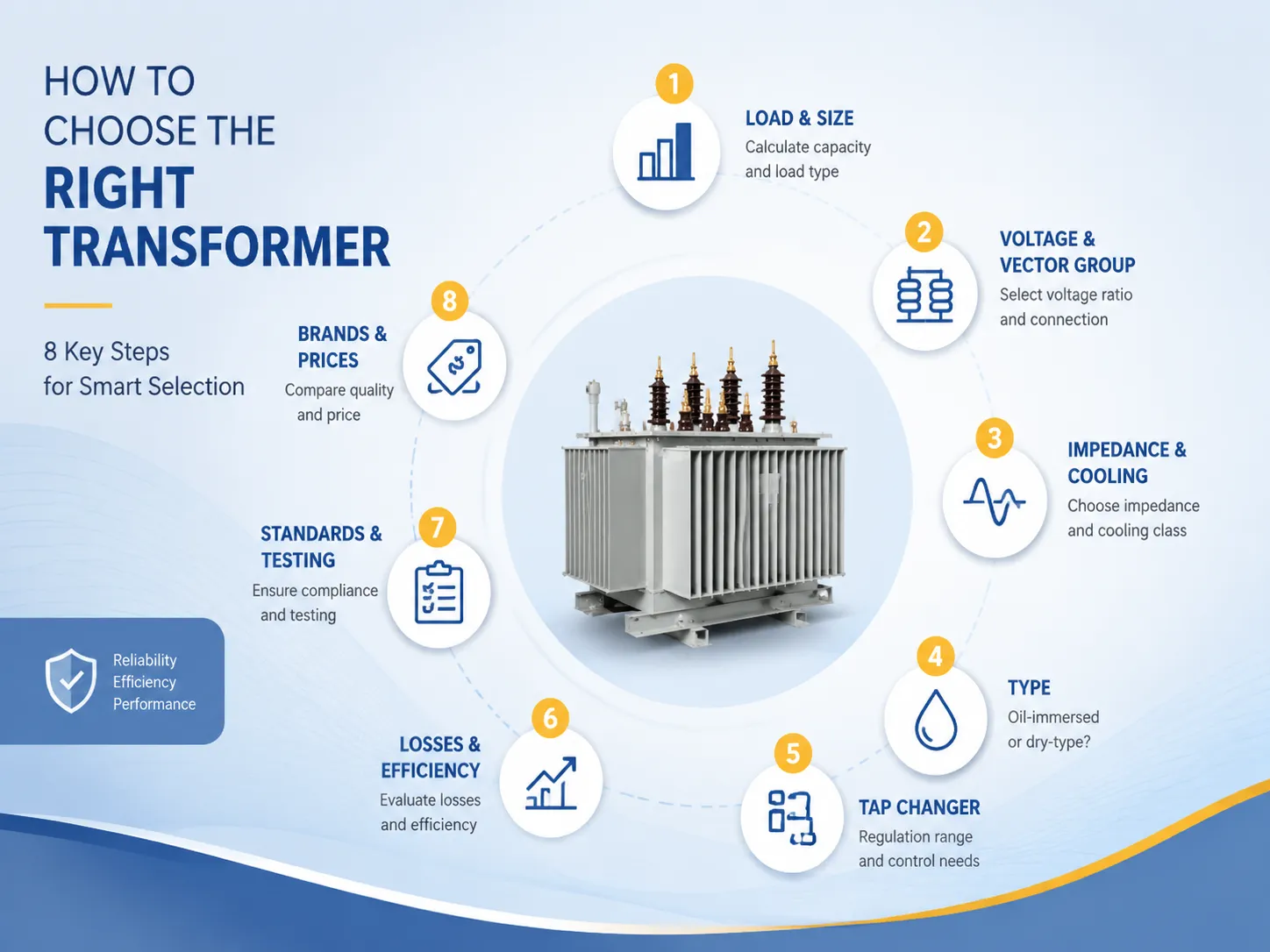
Passo 5: Necessità di Cambio di Tappo e Regolazione
Controlla quanto varia la tua tensione di alimentazione. Se è stabile entro ±5%, allora un semplice interruttore off-circuito con 2 o 3 posizioni (±2.5%, ±5%) funzionerà bene. Se si verificano fluttuazioni giornaliere, carichi di picco e di fuori picco, dovrebbe essere utilizzato l'interruttore sotto carico (OLTC):
- Gli interruttori off-circuito possono essere economici (3-5 posizioni). Tuttavia, devono disattivare il trasformatore per impostare la posizione, quindi sono utilizzati principalmente su trasformatori di distribuzione.
- L'OLTC può avere varie valutazioni da ±10% a ±16% con 13 a 17 iterazioni in modalità di regolazione automatica, cioè mantiene la tensione di uscita entro ±2%; Questo è comune per trasformatori di trasmissione o sub-trasmissione.
- Quando consideri il costo di questi sistemi, un OLTC presenta un costo aggiuntivo di circa $15,000–$60,000 in base alla valutazione del trasformatore; pertanto, devi considerarlo come un investimento per la qualità dell'energia.
Passo 6: Valutare Perdite ed Efficienza
Assicurati di fare confronti basati sul costo totale di proprietà piuttosto che concentrarti solo sui prezzi delle offerte. I trasformatori sono in funzione continuamente, il che significa che le perdite si verificano permanentemente. Richiedi a ciascun fornitore valori garantiti sia per le perdite a vuoto che per le perdite a carico in modo da poter completare un confronto delle perdite capitalizzate:
| Fornitore | Perdita a vuoto | Perdita da carico | Perdite Energetiche Annuali Stimate* | Valore delle Perdite in 20 Anni** |
|---|---|---|---|---|
| A (standard) | 150 W | 500 W | ≈17 MWh | ≈$34.000 |
| B (bassa perdita) | 900 W | 500 W | ≈14 MWh | ≈$28.000 |
Il costo iniziale dell'apparecchiatura a bassa perdita è maggiore rispetto al normale, tuttavia, nella maggior parte dei casi, il denaro risparmiato nel tempo (3-6 anni) ripaga l'unità. Questo è il motivo per cui esistono standard rigorosi sul consumo energetico.
Passo 7: Standard, Certificazione e Test
Il tuo contratto deve prevedere la conformità allo standard IEC 60076-1 in generale e alle specifiche disposizioni IEC 60076 pertinenti alla tua applicazione e, inoltre, allo standard IEEE C57.12.00 per il Nord America. Insisti nel ricevere i seguenti documenti prima del pagamento:
- Rapporti di prova di tipo – per l'aumento di temperatura, impulso di fulmine e prove di resistenza al cortocircuito condotte su un'unità campione.
- Certificati di prova di routine – per il rapporto, l'impedenza, le perdite, il dielettrico e la resistenza di isolamento determinati sulla tua unità specifica.
- Certificazioni – se necessario, marchio CE, certificato di qualità ISO 9001 e IEC 60076-11 per trasformatori di tipo secco.
- Rapporto di ispezione di terze parti – solitamente da SGS o Bureau Veritas, o può essere fornito dal tuo esperto che supervisiona i test in fabbrica per ordini di prezzo pertinenti.
È anche consigliabile abbandonare fornitori che rifiutano l'ispezione indipendente o non possiedono rapporti di prova di tipo indipendentemente dalla loro politica di prezzo, poiché certificati e registrazioni di esami sono la prova della qualità di un prodotto.
Passo 8: Confronta Marchi e Prezzi
Sia le aziende multinazionali che l'industria cinese aderiscono agli standard IEC 60076 ma differiscono in termini di prezzo, tempi di consegna e servizi ingegneristici. Gli intervalli a livello di pianificazione per i trasformatori immersi in olio sono:
| Valutazione | Fabbrica Cinese (es. Subian) | Marca Europea/USA |
|---|---|---|
| 100 kVA | $1.500–$8.000 | $4.000–$12.000 |
| 1 MVA | $18.000–$45.000 | 000–70.000 kVA |
| 2,5–5 MVA | $35.000–$90.000 | $70.000–$200.000 |
| 20 MVA / 110 kV | $160.000–$300.000 | $430.000–$700.000 |
Le specifiche, i livelli di perdita e la località determinano i prezzi. Se un'impresa richiede attrezzature che soddisfano gli standard IEC 60076 a un prezzo diretto dalla fabbrica, Jiangsu Subian Electric Power è un'ottima scelta: questo produttore di trasformatori di distribuzione e potenza (classi da 50 kVA a 220 kV, sia immersi in olio che asciutti) presenta anche specifiche in termini di rapporti di tensione, raggruppamento vettoriale, intervallo di derivazione e alcuni metodi di raffreddamento. Tutti i dispositivi sono dotati di risultati di prove di tipo e prove di routine, certificazione secondo gli standard CE/ISO, e i loro prezzi sono molto più bassi rispetto a quelli dei concorrenti stranieri (la differenza di prezzo varia tra 30% e 50%). Inoltre, la fabbrica è aperta a progetti OEM/ODM e ispezioni di terze parti.
La Lista di Controllo Completa per la Selezione
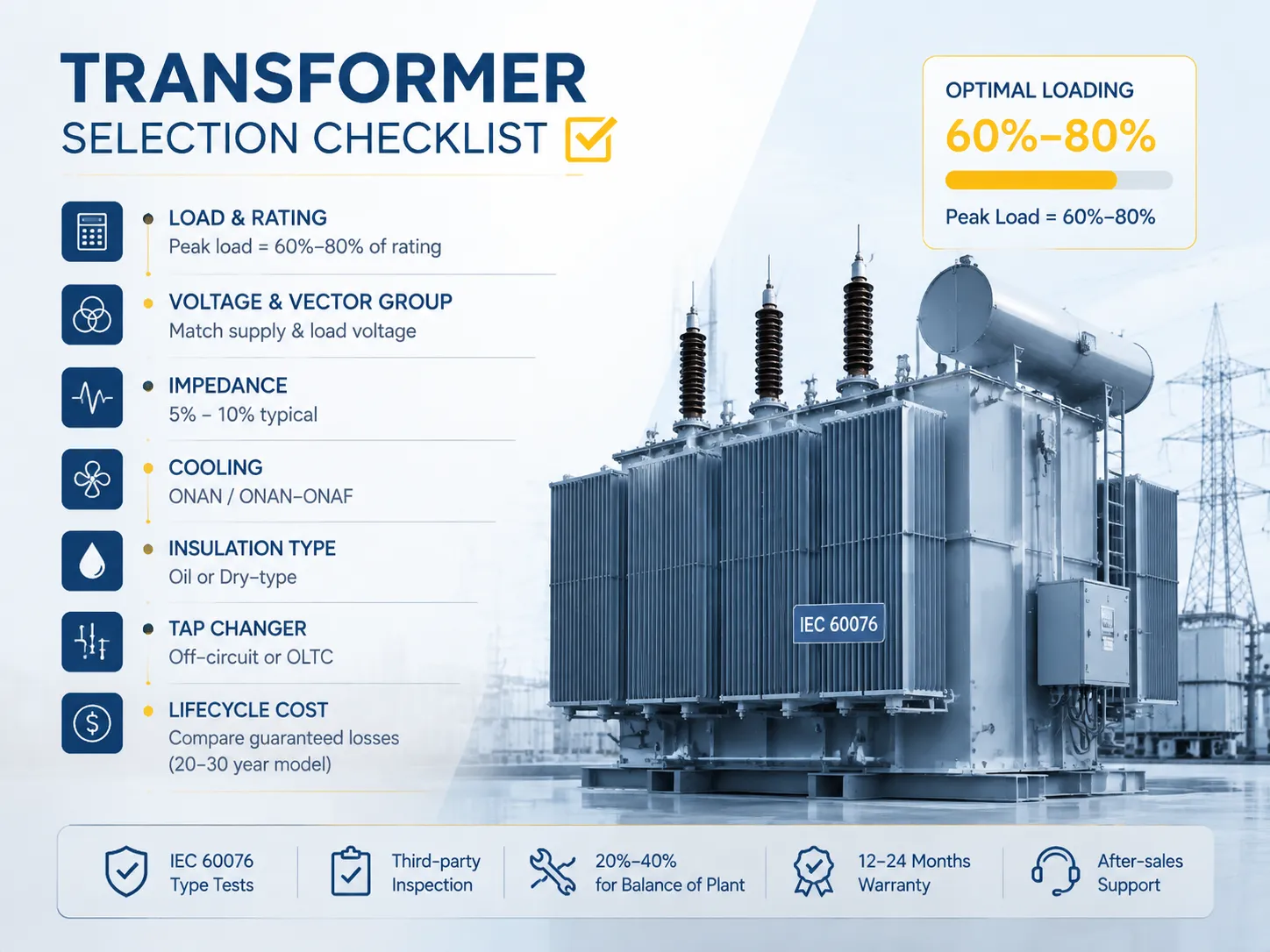
- Determina il carico di picco con l'aiuto del fattore di domanda e del margine di crescita; assicurati che la classificazione sia scelta in modo tale che il carico di picco sia compreso tra 60% e 80%. Verifica i valori di tensione per l'alimentazione e il carico e decidi sia sul rapporto che sul gruppo vettoriale.
- L'impedenza deve essere acquisita dallo studio di rete (5%-10% in media).
- Scegli un tipo di raffreddamento: ONAN quando si lavora sotto carichi standard, ONAN/ONAF se ci si aspetta un sovraccarico.
- Scegli tra tipo ad olio e tipo asciutto in base al luogo di installazione e ai requisiti del codice antincendio.
- Scegli il cambiavalute: off-circuito se la tensione di alimentazione è stabile, OLTC se è necessaria una stabilità di tensione più precisa.
- Confronta le offerte in base alle perdite garantite utilizzando uno studio delle perdite capitalizzate per 20-30 anni.
- Richiedi i rapporti di prova di tipo secondo IEC 60076 e l'ispezione di terze parti.
- Prevedi da 20% a 40% di costi per protezione, installazione, collaudo e lavori di costruzione.
- Controlla i tempi di consegna, la garanzia (che di solito dura da 12 a 24 mesi) e il servizio post-vendita.
Domande frequenti
Come calcolo la giusta dimensione del trasformatore per il mio edificio o fabbrica?
Determina il carico connesso, moltiplica con il fattore di domanda di 0,6-0,85, correggi il fattore di potenza a 0,9-0,95, aggiungi qualsiasi cosa da 15% a 25% per la crescita. Poi seleziona la classificazione standard più vicina in modo che il carico di picco normale sia uguale a qualcosa tra 60% e 80% della capacità. Ad esempio, se il carico connesso è pari a 1200 kVA, il fattore di domanda è 0,7 e la crescita è 20%, il risultato sarà qualcosa di vicino a 1060 kVA. In questo caso, un'unità con una classificazione pari a 1000 o 1250 kVA andrà bene.
Qual è la differenza tra un trasformatore 11/0,4 kV e un trasformatore 20/0,4 kV?
Entrambi i dispositivi hanno la stessa funzione ma operano a tensioni diverse in questo caso, dove l'unità da 11 kV è adatta per linee di media tensione in ingresso da 11 kV e l'unità da 20 kV opera in sistemi da 20 kV. Sebbene le potenze in kVA possano essere le stesse, l'unità ad alta tensione ha un isolamento BIL più elevato, oltre a una costruzione diversa, e in generale costa leggermente di più.
Dovrei acquistare un trasformatore immerso in olio o un trasformatore a secco?
In alcuni casi, i trasformatori a secco sono utilizzati in edifici occupati e in luoghi all'aperto. I trasformatori a secco sono molto ben valutati e privi di manutenzione. Il costo del trasformatore a secco è nell'intervallo di $28000-$70000 e rispetto al trasformatore immerso in olio è nell'intervallo di $18000-$45000.
Perché i trasformatori con la stessa potenza hanno prezzi così diversi?
Garanzie di perdita, qualità dell'acciaio principale, materiale di avvolgimento (rame o alluminio), marca del cambiavalute, classe di raffreddamento, storia dei test di tipo e premio di marca. Fai sempre un confronto delle perdite capitalizzate: un'unità che ha basse perdite e costa un ulteriore 5% a 10% probabilmente farà risparmiare di più nei costi energetici durante 20 anni rispetto all'intera differenza di prezzo.
Quali documenti dovrei richiedere prima di acquistare un trasformatore?
Richiedi il rapporto di prova di tipo (aumento della temperatura, impulso di fulmine, cortocircuito), certificazione di test di routine per la tua unità, certificazione di qualità ISO 9001, marcatura CE se applicabile e la possibilità di ispezione da parte di terzi. Secondo IEC 60076-1, la tolleranza del rapporto è ±0.5%, quindi verifica i risultati dei test con le tue specifiche prima di accettare la consegna.
Riferimenti
- IEC 60076-1: Trasformatori di Potenza — Generale — Lo standard di base per valutazioni, tolleranze e test.
- IEC 60076-7: Guida al Carico per Trasformatori di Potenza Immersi in Olio — Capacità di sovraccarico e raccomandazioni di carico per la dimensionamento.
- IEEE C57.12.00: Requisiti Generali per Trasformatori Immersi in Liquido — Standard di selezione e applicazione nordamericana.
- US DOE: Standard di efficienza dei trasformatori — Regolamenti di efficienza che modellano le specifiche di perdita.
- NFPA 70: Codice Elettrico Nazionale — Requisiti di installazione per la selezione e il posizionamento del trasformatore.
- Fabbrica di macchine Reinhausen (MR) — Riferimento per la selezione del cambiavalute e la regolazione della tensione.
Conclusione
La scelta del trasformatore appropriato non è semplicemente una questione di prezzo, ma consiste in un processo di otto decisioni ingegneristiche specifiche. Ciò significa che una corretta dimensione in riferimento al profilo di carico effettivo, la scelta della giusta tensione (con il giusto gruppo vettoriale), il tipo di raffreddamento e l'isolamento adatto per la specifica località, la valutazione delle perdite nel ciclo di vita dell'asset, così come una rigorosa insistenza sulle prove di test supportate da standard sono i fattori che rendono un buon acquisto piuttosto che un errore costoso.
- La dimensione più generale dei trasformatori significa il cosiddetto picco normale = 60%−80% della potenza del trasformatore con un margine di 15%−25% per la crescita da considerare.
- Il rapporto, il gruppo vettoriale, l'impedenza e il raffreddamento dovrebbero essere predeterminati prima della selezione del fornitore.
- Il confronto dovrebbe essere effettuato sulla base delle perdite capitalizzate che potrebbero essere sostenute durante 20−30 anni rispetto al costo iniziale.
- Assicurati di ricevere i rapporti di prova di tipo e i riferimenti di ispezione di terze parti.
- I prezzi sono stimati in un intervallo di $1.5k−$8k (per trasformatori da 100 kVA), $18k−$45k (per trasformatori da 1 MVA), $160k−$300k (per trasformatori da 20 MVA) quando acquistati direttamente dal produttore.