


Менеджер объекта, который приобрел распределительный трансформатор мощностью 630 кВА для $12,000 на основании одного полученного предложения, узнал, что через шесть месяцев он работал на нагрузке 92% в жаркие дни, что привело к отсутствию запаса по перегрузке, увеличению потерь и сокращению срока службы его устройства. Следовательно, покупка правильного типа трансформатора не заключается в том, чтобы предложение было самым дешевым, а в соответствии номинальных характеристик с потерями, уровнями напряжения, типом системы охлаждения, а также требованиями стандартов.
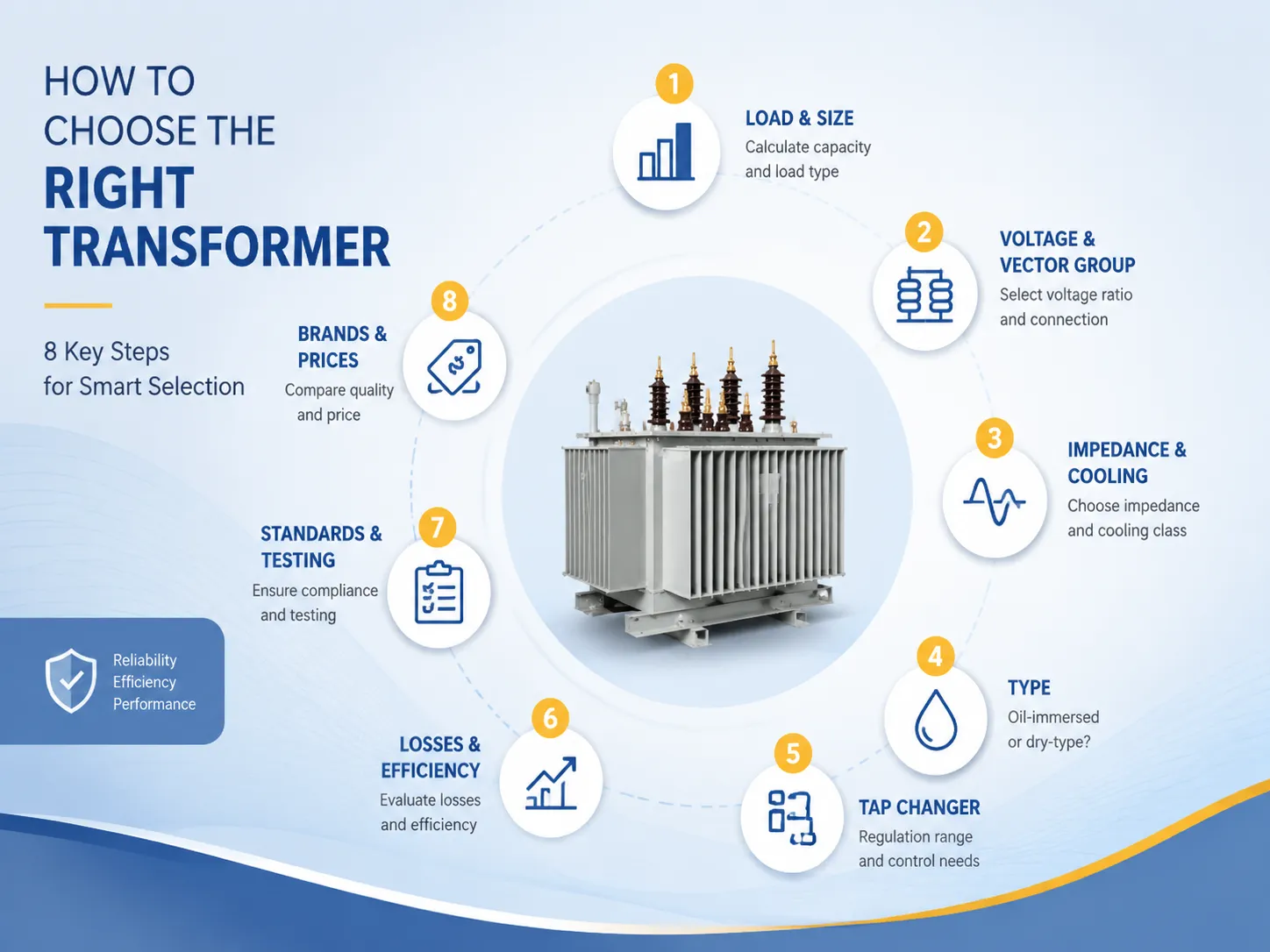
Полное руководство по выбору трансформатора охватывает все шаги, которые необходимо предпринять каждому клиенту, в порядке, в котором их выполнит инженер.
Проще говоря, если вы хотите выбрать подходящий тип трансформатора для покупки, вам нужно определить максимальную нагрузку, которая вам потребуется в кВА, а затем выбрать соответствующий номинал трансформатора так, чтобы пиковая нагрузка составляла около 60% до 80% от мощности трансформатора. Также убедитесь, что зафиксированы соотношение напряжения трансформатора, векторная группа, импеданс, класс охлаждения и тип изоляции. После этого ищите предложения от поставщиков на трансформатор с учетом потерь без нагрузки и при нагрузке на 20 лет, используя метод капитализированных потерь.
Шаг 1: Определите нагрузку и рассчитайте размер
При выборе трансформатора сначала необходимо определить нагрузку. Не суммируйте номинальные значения каждого отдельного устройства, иначе вы получите сильно завышенный трансформатор. Вместо этого следуйте профессиональному подходу:
| Шаг | Расчет | Результат |
|---|---|---|
| Подключенная нагрузка | Сумма всех номинальных значений оборудования | 1,200 кВА |
| Максимальный спрос | Примените коэффициент спроса 0.7 | 840 кВА |
| Коррекция коэффициента мощности | Компенсируйте до 0.95 | 884 кВА |
| Запас на рост | Добавьте 20% | 1,061 кВА |
| Выбранный номинал | Ближайший стандартный размер | 1,000 или 1,250 кВА |
Золотое правило гласит, что размер устройства должен быть таким, чтобы нормальная пиковая нагрузка находилась между 60% и 80% от его мощности. Например, устройство мощностью 1000 кВА имеет нормальную пиковую нагрузку 750 кВА, что означает, что устройство работает с оптимальной эффективностью с некоторым запасом мощности для запуска. Завышение размера устройства приводит к ненужным затратам, а также к простоям, в то время как занижение приводит к быстрому износу устройства и риску поломки в жаркую погоду.
Шаг 2: Выберите соотношение напряжения и векторную группу
Соотношение напряжения должно соответствовать генератору и потребительским устройствам. Обычно для промышленных и коммерческих приложений первичное напряжение трансформатора составляет около 11 или 20 кВ, а вторичное — 400/230. На подстанциях распространенные соотношения напряжения — 110/20 кВ, 33/11 кВ и 220 кВ/110 кВ. Векторная группа помогает определить, как соединены фазы и заземлен ли трансформатор.
| Векторная группа | Конфигурация | Типичное применение |
|---|---|---|
| Дин11 | Дельта первичная, звезда вторичная с нейтралью | Распределение, 11/0.4 кВ — наиболее распространенная |
| YNd11 | Звезда первичная с нейтралью, дельта вторичная | Трансформаторы мощности передачи и подпереводки |
| Yyn0 | Звезда-звезда, обе нейтрали | Небольшое распределение, специфические сети |
| YNyn0 | Звезда-звезда с обоими нейтралями | Взаимосвязанные системы с заземленными нейтралями |
При параллельном соединении трансформаторов необходимо обеспечить совместимость с векторной группой, импедансом и соотношением. Трансформатор Dyn11 не может работать в тандеме с YNd11. Если вы не уверены, можно запросить трансформатор Dyn11 для вашего распределения, и вы всегда можете уточнить у поставщика о совместимости ваших конфигураций.
Шаг 3: Выберите импеданс и класс охлаждения
Характеристики напряжения импеданса (которое обычно составляет от 4 до 6 процентов для распределительных трансформаторов и обычно от 8 до 12 процентов для силовых трансформаторов) определяют ток короткого замыкания и распределение мощности среди параллельных систем. Низкий импеданс позволяет получить более высокий ток короткого замыкания, но обеспечивает лучшую регулировку напряжения; высокий импеданс защищает электрическое оборудование, но приводит к плохой регулировке напряжения. Большинство коммунальных компаний и промышленных проектировщиков рассчитали это значение на основе анализа своих сетей; не предполагайте, что завод знает это.
Класс охлаждения указывает, какую нагрузку устройство может выдержать и по какой цене:
| Код охлаждения | Значение | Когда его выбирать |
|---|---|---|
| ОНАН | Масло естественное, воздух естественный | Распределение, простая работа на открытом воздухе |
| ОНАН/ОНАФ | Добавляет вентиляторы с принудительной подачей воздуха | Подстанции и промышленные установки с пиковыми/перегрузочными режимами |
| OFAF / ODAF | Принудительное масло + воздух | Крупные установки выше ~50 МВА |
| Сухие трансформаторы (AN/AF) | Воздушное естественное / принудительное охлаждение | Внутренние установки, чувствительные к огню |
Когда вентиляторы активированы, трансформатор мощностью 20/28 МВА ONAN/ONAF обеспечивает большую мощность на 40%, что является экономичным подходом для удовлетворения пиковых летних нагрузок и других непредвиденных обстоятельств без покупки более крупного трансформатора.
Шаг 4: Масляный или сухой тип?
Этот выбор в основном определяется местоположением и нормами пожарной безопасности:
| Фактор | Масло-иммерсионные | Сухой тип |
|---|---|---|
| Лучшее местоположение | Уличные подстанции | Внутренние, высотные, морские |
| Диапазон номинальных значений | 50 кВА–1,200 МВА | 100 ВА–40 МВА |
| Относительная стоимость (1 МВА) | Базовая ($18k–$45k) | +40%–60% ($28k–$70k) |
| Риск возгорания | Необходимость в удержании масла | Огнестойкий |
| Обслуживание | Испытание масла, DGA | Минимальное, без масла |
| Шум | Обычно ниже | Выше для литого смолы |
Если трансформатор находится на улице или в масляной подстанции, он должен быть масляным трансформатором. Однако, как только он оказывается внутри здания, многие нормы требуют либо сухие установки, либо трансформаторы с эфирным наполнителем.
Шаг 5: Нужды в переключателе отводов и регулировании
Проверьте, насколько изменяется ваше напряжение питания. Если оно стабильно в пределах ±5%, то простой выключатель с 2 или 3 позициями (±2.5%, ±5%) будет работать хорошо. Если происходят ежедневные колебания, пиковые и непиковые нагрузки, следует использовать переключатель под нагрузкой (OLTC):
- Выключатели вне цепи могут быть дешевыми (3-5 позиций). Однако они должны обесточивать трансформатор для установки позиции, поэтому их в основном используют на распределительных трансформаторах.
- OLTC может иметь различные номиналы от ±10% до ±16% с 13 до 17 итерациями в автоматическом режиме регулирования, т.е. он поддерживает выходное напряжение в пределах ±2%; это распространено для трансформаторов передачи или под-передачи.
- Когда вы рассматриваете стоимость этих систем, OLTC представляет собой дополнительную стоимость около $15,000–$60,000 в зависимости от номинала трансформатора; поэтому вы должны рассматривать это как инвестицию в качество электроэнергии.
Шаг 6: Оценка потерь и эффективности
Убедитесь, что вы проводите сравнения на основе общей стоимости владения, а не только сосредотачиваетесь на ценах в тендерах. Трансформаторы работают непрерывно, что означает, что потери происходят постоянно. Запросите у каждого поставщика гарантированные значения как для потерь без нагрузки, так и для потерь под нагрузкой, чтобы вы могли завершить сравнение капитализированных потерь:
| Поставщик | Потери при холостом ходе | Потери при нагрузке | Оценочные годовые потери энергии* | 20-летняя стоимость потерь** |
|---|---|---|---|---|
| A (стандартный) | 1,150 Вт | 10,500 Вт | ≈17 МВтч | ≈$34,000 |
| B (низкие потери) | 900 Вт | 9,500 Вт | ≈14 МВтч | ≈$28,000 |
Начальная стоимость аппарата с низкими потерями выше, чем у обычного, однако в большинстве случаев сэкономленные деньги за определенный период времени (3-6 лет) окупают устройство. Вот почему существуют строгие стандарты потребления энергии.
Шаг 7: Стандарты, сертификация и испытания
Ваш контракт должен требовать соблюдения стандарта IEC 60076-1 в общем и конкретных положений IEC 60076, относящихся к вашему применению, а также стандарта IEEE C57.12.00 для Северной Америки. Настоятельно требуйте получения следующих документов перед оплатой:
- Отчеты о типовых испытаниях – для испытаний на повышение температуры, импульс молнии и испытания на устойчивость к короткому замыканию, проведенные на образцовом устройстве.
- Сертификаты рутинных испытаний – для соотношения, импеданса, потерь, диэлектрической прочности и сопротивления изоляции, определенных для вашего конкретного устройства.
- Сертификаты – при необходимости, знак CE, сертификат качества ISO 9001 и IEC 60076-11 для трансформаторов сухого типа.
- Отчет о проверке третьей стороной – обычно от SGS или Bureau Veritas, или может быть предоставлен вашим собственным экспертом, контролирующим испытания на заводе для соответствующих ценовых заказов.
Также рекомендуется отказаться от поставщиков, которые отказываются от независимой проверки или не имеют отчетов о типовых испытаниях, независимо от их ценовой политики, так как сертификаты и записи о проверках являются доказательством качества продукта.
Шаг 8: Сравните бренды и цены
Как многонациональные компании, так и китайская промышленность придерживаются стандартов IEC 60076, но различаются по цене, срокам выполнения и инженерным услугам. Уровни планирования для трансформаторов, погруженных в масло, составляют:
| Рейтинг | Китайская фабрика (например, Subian) | Европейский/американский бренд |
|---|---|---|
| 100 кВА | $1,500–$8,000 | $4,000–$12,000 |
| 1 МВА | 1ТП4Т18,000–1ТП4Т45,000 | $35,000–$70,000 |
| 5–5 MVA | $35,000–$90,000 | $70,000–$200,000 |
| 20 МВА / 110 кВ | $160,000–$300,000 | 1ТП4Т430,000–1ТП4Т700,000 |
Спецификации, уровни потерь и местоположение определяют цены. Если предприятию требуется оборудование, соответствующее стандартам IEC 60076 по цене от производителя, Jiangsu Subian Electric Power является отличным выбором: этот производитель распределительных и силовых трансформаторов (классы 50 kVA–220 kV, как масляные, так и сухие) также имеет спецификации по соотношениям напряжений, векторным группам, диапазону отводов и некоторым методам охлаждения. Все устройства оснащены результатами типовых и регулярных испытаний, сертификацией по стандартам CE/ISO, а их цены значительно ниже, чем у иностранных конкурентов (разница в цене варьируется от 30% до 50%). Также завод открыт для проектов OEM/ODM и сторонних проверок.
Полный контрольный список выбора
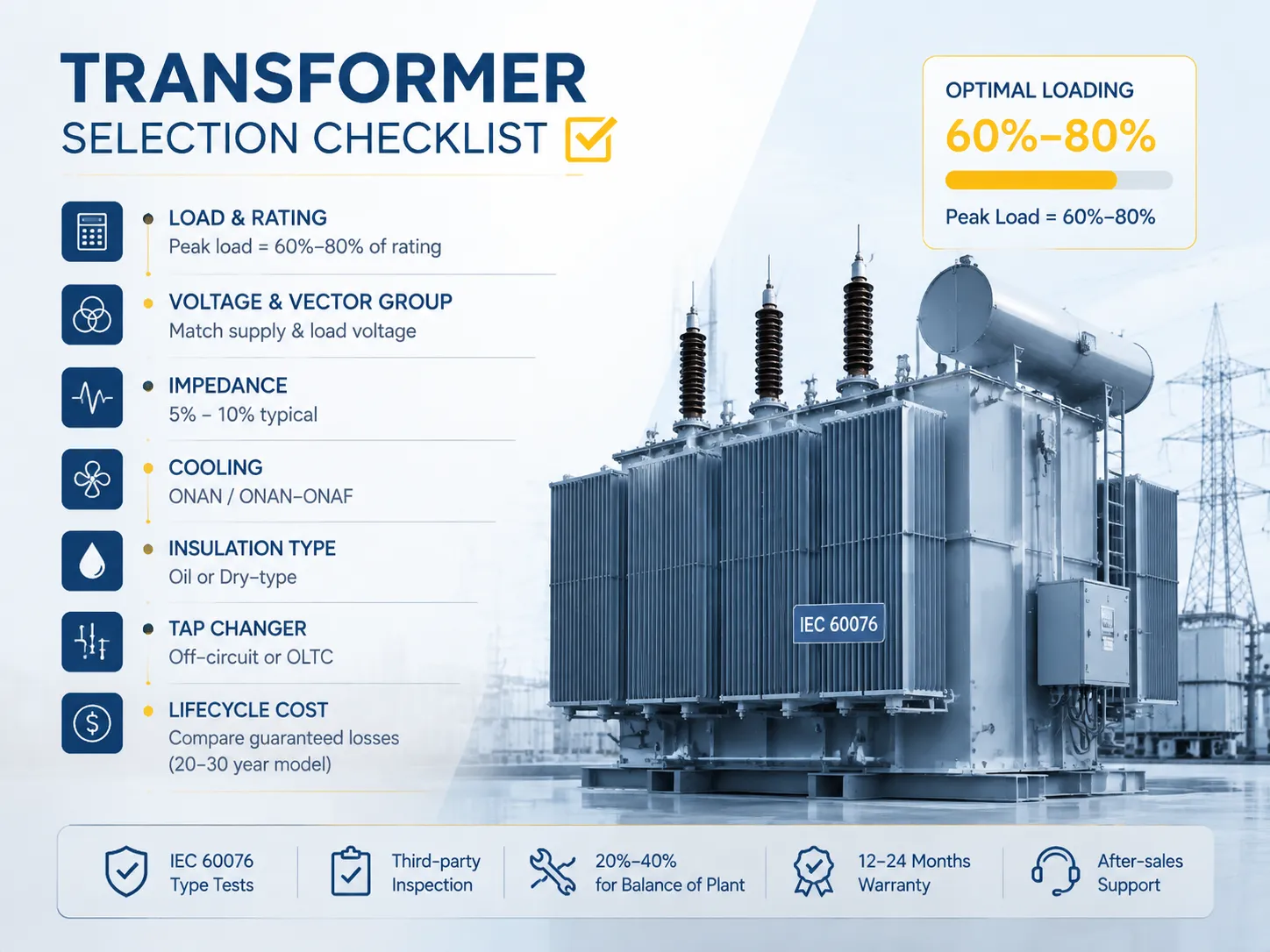
- Определите пиковую нагрузку с помощью коэффициента спроса и запаса роста; убедитесь, что номинал выбран так, чтобы пиковая нагрузка находилась между 60% и 80%. Проверьте значения напряжения для подачи и нагрузки и определите как соотношение, так и векторную группу.
- Импеданс должен быть получен из исследования сети (в среднем 5%-10%).
- Выберите тип охлаждения: ONAN при работе под стандартными нагрузками, ONAN/ONAF, если ожидается перегрузка.
- Выберите между масляным и сухим типом в зависимости от места установки и требований противопожарного кодекса.
- Выберите переключатель отводов: вне цепи, если подающее напряжение стабильно, OLTC, если требуется более точная стабильность напряжения.
- Сравните предложения на основе гарантированных потерь, используя исследование капитализированных потерь на 20-30 лет.
- Запросите отчеты о типовых испытаниях в соответствии с IEC 60076 и стороннюю проверку.
- Запланируйте 20%-40% затрат на защиту, установку, испытания и строительные работы.
- Проверьте время выполнения, гарантию (которая обычно составляет от 12 до 24 месяцев) и сервис после продажи.
Часто задаваемые вопросы
Как мне рассчитать правильный размер трансформатора для моего здания или завода?
Определите подключенную нагрузку, умножьте на коэффициент спроса 0.6-0.85, скорректируйте коэффициент мощности до 0.9-0.95, добавьте что-либо от 15%-25% для роста. Затем выберите ближайший стандартный номинал так, чтобы нормальная пиковая нагрузка была равна где-то между 60%-80% от мощности. Например, если подключенная нагрузка равна 1200 kVA, коэффициент спроса 0.7, а рост 20%, результат будет близок к 1060 kVA. В этом случае подойдет устройство с номиналом 1000 или 1250 kVA.
В чем разница между трансформатором 11/0.4 kV и 20/0.4 kV?
Оба устройства имеют одинаковую функцию, но работают на разных напряжениях в данном случае, где 11-кВ устройство подходит для входящих средневолтных линий 11 кВ, а 20-кВ устройство работает в системах 20 кВ. Хотя номиналы kVA могут быть одинаковыми, высоковольтное устройство имеет более высокую изоляцию BIL, а также другую конструкцию и, как правило, стоит немного дороже.
Должен ли я купить масляный или сухой трансформатор?
В некоторых случаях трансформаторы сухого типа используются в занятых зданиях и на открытых площадках. Трансформаторы сухого типа имеют очень высокие характеристики и не требуют обслуживания. Стоимость трансформатора сухого типа в диапазоне $28000-$70000 по сравнению с трансформатором с масляным погружением в диапазоне $18000-$45000.
Почему трансформаторы с одинаковыми характеристиками имеют такую разницу в цене?
Гарантии потерь, качество основного металла, материал обмотки (медь или алюминий), марка переключателя отводов, класс охлаждения, история типового испытания и премия бренда. Всегда проводите сравнение капитализированных потерь: устройство с низкими потерями и дополнительной стоимостью 5% до 10%, вероятно, сэкономит больше на затратах на электроэнергию за 20 лет, чем вся разница в цене.
Какие документы я должен запросить перед покупкой трансформатора?
Запросите отчет о типовых испытаниях (подъем температуры, импульс молнии, короткое замыкание), сертификат о рутинных испытаниях для вашего устройства, сертификат качества ISO 9001, маркировку CE, если применимо, и возможность инспекции третьей стороной. Согласно IEC 60076-1, допустимое отклонение по отношению составляет ±0.5%, поэтому проверьте результаты испытаний с вашими спецификациями перед приемкой.
Ссылки
- IEC 60076-1: Силовые трансформаторы — Общие сведения — Базовый стандарт для характеристик, допусков и испытаний.
- IEC 60076-7: Руководство по нагрузке для масляных силовых трансформаторов — Возможности перегрузки и рекомендации по нагрузке для выбора.
- IEEE C57.12.00: Общие требования к трансформаторам с жидким заполнением — Стандарт выбора и применения для Северной Америки.
- US DOE: Стандарты эффективности трансформаторов — Регулирования эффективности, которые формируют спецификации потерь.
- NFPA 70: Национальный электрический кодекс — Требования к установке для выбора и размещения трансформатора.
- Машиностроительный завод Рейнхаузен (MR) — Справочник для выбора переключателя отводов и регулирования напряжения.
Заключение
Выбор подходящего трансформатора — это не просто вопрос цены, а процесс из восьми конкретных инженерных решений. Это означает, что правильный выбор размеров с учетом фактического профиля нагрузки, выбор правильного напряжения (с правильной векторной группой), тип охлаждения и изоляция, подходящая для конкретного местоположения, оценка потерь в течение жизненного цикла актива, а также строгая настойчивость в получении доказательств испытаний, поддерживаемых стандартами, являются факторами, которые делают хорошую покупку, а не дорогостоящую ошибку.
- Наиболее общее определение размеров трансформаторов означает так называемый нормальный пик = 60%−80% номинала трансформатора с запасом 15%−25% для роста.
- Соотношение, векторная группа, импеданс и охлаждение должны быть заранее определены перед выбором поставщика.
- Сравнение должно основываться на капитализированных потерях, которые могут возникнуть в течение 20−30 лет, в отличие от первоначальной стоимости.
- Убедитесь в получении отчетов о типовых испытаниях, а также ссылок на инспекцию третьей стороной.
- Цены оцениваются в диапазоне $1.5k−$8k (для трансформаторов 100 кВА), $18k−$45k (для трансформаторов 1 МВА), $160k−$300k (для трансформаторов 20 МВА) при покупке непосредственно у производителя.