


Un project manager di un appaltatore EPC si è seduto con tre proposte di trasformatori al suo tavolo. Il primo era un marchio premium europeo che costerebbe un terzo del budget della sottostazione con un tempo di consegna di 28 mesi. Il secondo proveniva da un noto produttore asiatico di volume ed era più economico; tuttavia, il pacchetto di documentazione fornito con esso è stato definito dal revisore ingegneristico del suo cliente come ‘sottile’. L'ultimo offerente era un fornitore cinese certificato che offriva trasformatori a prezzi moderati, oltre a un tempo di consegna due volte più breve rispetto ai primi due offerenti e report completi IEC 60076. Ora doveva trovare un vincitore entro venerdì, il che non è un compito facile per il project manager. Questo articolo rappresenta un confronto tra i marchi di trasformatori disponibili per l'acquisto nel mercato moderno.
Risposta rapida: Il mercato globale dei trasformatori, che si prevede avrà circa $55–65 miliardi nel 2025, è dominato da ABB, Siemens Energy, Hitachi Energy, Schneider Electric e GE Vernova nei settori della tecnologia e della capacità di alta tensione, mentre TBEA e Baoding Tianwei dalla Cina guidano nella produzione e nei prezzi. Nessun singolo attore è un campione costante in tutte le categorie. In primo luogo, i marchi premium dominano i segmenti HVDC ed EHV con premi di prezzo di 50–150% rispetto alle alternative di valore di pari rating. Nel frattempo, i player di valore certificati IEC 60076 sono in grado di fornire qualità certificata a meno della metà del costo delle soluzioni tipiche per unità di distribuzione standard e potenza media.
Come Giudicare la Leadership del Marchio di Trasformatori
La domanda, “Chi è responsabile del settore dei trasformatori?” non ha senso a meno che la leadership non sia definita. Ci sono quattro risposte legittime, ognuna delle quali punta a un diverso gruppo aziendale:
- Leadership tecnologica: capacità di progettare e produrre l'attrezzatura più complessa — trasformatori di conversione HVDC, unità ad ultra alta tensione, enormi GSU. La misura di questo è la valutazione in kV, la capacità in MVA e le prestazioni.
- Leadership di volume: produzione totale in MVA per anno che influisce sulla disponibilità e sui prezzi. Questo è dominato da aziende con sede in Cina.
- Leadership di affidabilità e servizio: tassi di guasto sul campo, statistiche di uptime e dimensioni della rete di servizio locale.
- Leadership di valore: dispositivi standard che soddisfano specificatori e clienti e mostrano la massima qualità con il costo totale di proprietà più basso.
Un cliente che chiede quale marchio sia il più grande riceverà una risposta diversa rispetto a chi chiede quale marchio sarà impiegato per il progetto di distribuzione da 20 MVA tra tre anni.
Il Mercato Globale dei Trasformatori a Colpo d'Occhio
Ci sono vari metodi per calcolare la dimensione del mercato dei trasformatori. Si stima che il mercato dei trasformatori componga circa 55-65 miliardi di USD entro il 2025. È nella fascia alta poiché i trasformatori di distribuzione dominano in termini di vendite in volume e i trasformatori di potenza prendono il comando in termini di valore monetario. La regione Asia-Pacifico rappresenta il 40% dei consumi, mentre Europa e Nord America rappresentano ciascuna circa un quarto.
| Segmento | Valore stimato 2025 | Prospettive di crescita | Principali fattori di domanda |
|---|---|---|---|
| Trasformatori di distribuzione (palo, montaggio a terra) | $22–35 miliardi | ~5–7% CAGR | Sostituzione della flotta, elettrificazione |
| Trasformatori di potenza (>10 kV, grande MVA) | $25–33 miliardi | ~6–8% CAGR | Rafforzamento della rete, energie rinnovabili, centri dati |
| Trasformatori a secco | $8–10 miliardi | ~7% CAGR | Edifici commerciali, normative sulla sicurezza antincendio |
| Trasformatori speciali / convertitori | $3–5 miliardi | ~8–10% CAGR | HVDC, ferroviario, dovere di rettificatore industriale |
Il Livello Premium: Leader ingegneristici
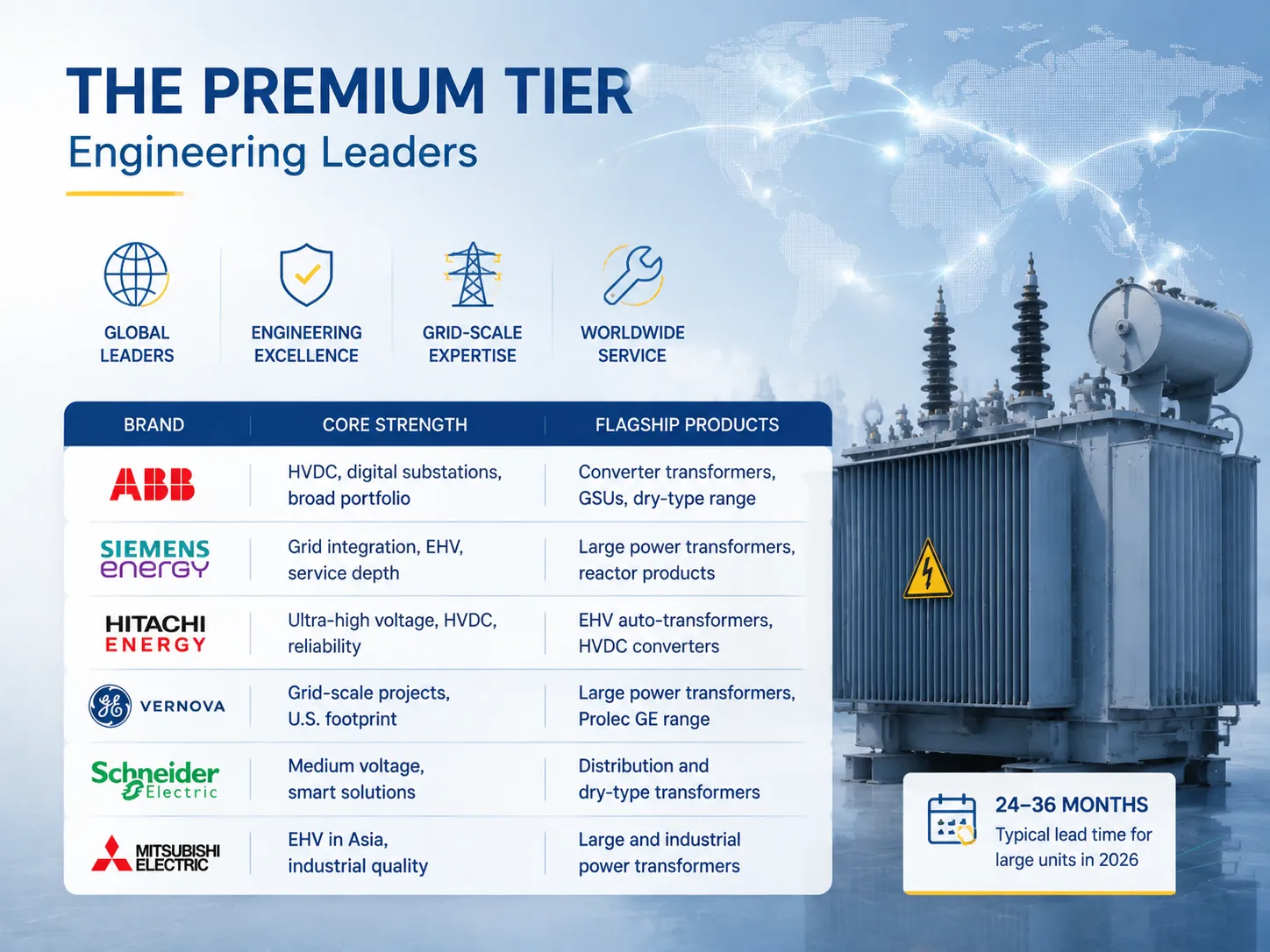
Le organizzazioni del livello premium sono limitate in dimensione, ma il loro potere è eccezionale. ABB, Siemens Energy, Hitachi Energy, loper, GE Vernova e, in misura minore, Mitsubishi Electric e Schneider Electric costituiscono i principali attori influenti nel settore dei trasformatori di potenza poiché guidano il suo sviluppo. Le liste di riferimento di queste organizzazioni includono HVDC e i tipi UHV da 400–800 kV. Le aziende hanno i loro laboratori dotati delle ultime tecnologie che forniscono loro la capacità di operare e mantenere la loro documentazione esemplare, mentre riescono a soddisfare i requisiti di servizio su scala globale.
Il compromesso risiede nella struttura delle aziende. Gli impianti produttivi del livello premium operano vicino alla piena capacità da molti anni. Nel caso in cui una grande azienda di servizi pubblici o uno sviluppatore ordini un'unità da 500MVA da questo settore nel 2026, richiederanno da 24 a 36 mesi per la produzione, oltre a una significativa somma di denaro da utilizzare durante la richiesta di questo ordine.
| Marca | Forza principale | Prodotti di punta |
|---|---|---|
| ABB | HVDC, sottostazioni digitali, ampio portafoglio | Trasformatori convertitori, GSU, gamma a secco |
| Siemens Energy | Integrazione della rete, EHV, profondità del servizio | Grandi trasformatori di potenza, prodotti reattori |
| Hitachi Energy | Alta tensione, HVDC, affidabilità | Auto-trasformatori EHV, convertitori HVDC |
| GE Vernova | Progetti su scala di rete, impronta negli Stati Uniti | Grandi trasformatori di potenza, gamma Prolec GE |
| Schneider Electric | Media tensione, soluzioni intelligenti | Trasformatori di distribuzione e trasformatori a secco |
| Mitsubishi Electric | EHV in Asia, qualità industriale | Trasformatori di potenza grandi e industriali |
Il Livello Volume: Giganti Cinesi
Per quanto riguarda il volume di produzione, c'è una risposta diversa alla questione della leadership. Il paese produce porzioni significative dei trasformatori di distribuzione e di potenza del mondo, e i suoi maggiori produttori come TBEA, Baoding Tianwei Electric, China XD Electric, così come le divisioni di trasformatori delle imprese statali hanno spedito migliaia di prodotti in diverse regioni del mondo, inclusi Asia, Africa, Medio Oriente e America Latina. Ad esempio, TBEA è tra i più grandi in grado di produrre trasformatori ad alta tensione utilizzati per fornire elettricità a progetti nazionali a un livello di tensione di 750 kV e oltre.
I produttori di trasformatori che si qualificano come produttori di volume sono noti per i loro prezzi aggressivi e grande capacità produttiva, e molti di loro sono in grado di fabbricare trasformatori che necessariamente rispettano un certo numero di standard internazionali come IEC 60076 e IEEE C57. Il compito di verifica ricade sulle spalle dell'acquirente poiché il volume di produzione non garantisce la conformità della documentazione, e non tutti gli esportatori in questa categoria utilizzano lo stesso approccio quando si tratta di eseguire test di tipo, rapporti sulle prestazioni e servizio post-vendita. Solo i fornitori affidabili si assicurano che la loro documentazione sia corretta, e i clienti possono identificare un fornitore del genere controllando la documentazione.
Il Livello Valore: Specialisti Certificati per l'Esportazione
Nel terreno di mezzo tra le categorie premium e volume c'è una nicchia che merita più credito di quanto ne riceva. Questa categoria include specialisti certificati per l'esportazione che producono prodotti secondo standard internazionali, emettono tutti i rapporti di prova necessari e commercializzano i loro prodotti in termini di prezzo tra queste due categorie. Jiangsu Subian Electric Power è un caso esemplare — l'azienda cinese di trasformatori che fornisce trasformatori riempiti d'olio, trasformatori a secco, sottostazioni a scatola e altri dispositivi speciali in tutto il mondo, emettendo rapporti di prova IEC 60076 insieme a ciascun ordine fornito. Le aziende di questo livello si basano sulla loro qualità di produzione certificata, flessibilità delle possibilità ingegneristiche e tempi di consegna realistici per la competizione piuttosto che sul riconoscimento del marchio e sulla presenza nel mercato.
Per la maggior parte dei casi pratici, sia per sottostazioni di utilità da 1-20 MVA, trasformatori di impianti industriali o dispositivi di connessione alla rete di energia rinnovabile, il miglior rapporto qualità-prezzo si ottiene nel livello presentato, assumendo che la documentazione sia correttamente emessa.
Confronto Diretto dei Marchi
La seguente tabella confronta i marchi rappresentativi di diversi livelli o segmenti per il trasformatore immerso in olio con una capacità di 1-10 MVA e tensione 33/11 kV. I prezzi presentati sono prezzi FOB indicativi per il periodo 2025-2026 e variano a seconda della capacità del trasformatore, dell'attrezzatura supplementare e della posizione geografica.
| Marca | Fascia | Prezzo tipico (1–10 MVA) | Tempo di consegna (circa) | Migliore per |
|---|---|---|---|---|
| ABB | Premium | $150.000–$350.000 | 18–30 mesi | Utility, industriale, digitale |
| Siemens Energy | Premium | $150.000–$350.000 | 18–30 mesi | Rete, progetti EHV |
| Hitachi Energy | Premium | $160.000–$380.000 | 20–32 mesi | EHV, HVDC, beni critici |
| Schneider Electric | Premium/volume | $40.000–$150.000 | 10–16 mesi | Distribuzione, commerciale |
| GE Vernova | Premium | $150.000–$340.000 | 18–30 mesi | Programmi utility negli Stati Uniti |
| TBEA | Volume | $60.000–$200.000 | 8–14 mesi | Progetti di grande volume, EHV |
| Baoding Tianwei | Volume | $55.000–$190.000 | 8–14 mesi | Distribuzione/energia di volume |
| Jiangsu Subian Energia Elettrica | Valore | $50.000–$180.000 | 6–12 mesi | Certificato IEC, specifiche personalizzate |
La differenza nei prezzi dei vari livelli non dovrebbe essere trascurata come un errore; piuttosto, l'importo che si paga riflette il valore dell'expertise ingegneristica, il marchio utilizzato e il livello di servizio offerto. Il trucco sta nel riuscire a determinare quali capacità il tuo progetto richiede veramente prima di effettuare qualsiasi confronto di costi.
Leadership tecnologica per segmento
La leadership del marchio varia anche in base al segmento di prodotto, e il segmento conta più della reputazione complessiva:
| Segmento | Leader | Cosa definisce la leadership qui |
|---|---|---|
| Trasformatori di conversione HVDC | ABB, Siemens Energy, Hitachi Energy, TBEA | Resistenza alla tensione DC, dovere armonico |
| EHV / UHV (≥220 kV) | Hitachi Energy, Siemens Energy, TBEA, China XD | Livelli di isolamento, limiti di trasporto |
| Distribuzione (≤10 kV, ≤2.5 MVA) | Schneider, Prolec GE, esportatori cinesi | Livelli di perdita, costo per unità |
| Tipo secco (resina colata) | ABB, Siemens, Schneider, specialisti europei | Sicurezza antincendio, controllo delle scariche parziali |
| Rinnovo step-up (33–110 kV) | Tutti i livelli competono | Dovere a carico variabile, valutazioni ambientali |
Nel caso di un autotrasformatore da 500 MVA, 400 kV, l'elenco aggiornato consiste precisamente nella classe premium, insieme a pochi altri leader di volume. D'altra parte, per un trasformatore montato su basamento da 500 kVA utilizzato in blocchi commerciali, praticamente tutti i produttori rientrano nelle aziende selezionate e in questo caso il prezzo e la documentazione diventano più importanti della tecnologia utilizzata nei dispositivi.
Affidabilità, Servizio e Costo Totale
La profondità del servizio è il motivo per cui i marchi premium possono addebitare così tanto. Un'utility che gestisce mille trasformatori richiede un produttore in grado di rispondere a un'interruzione entro un lasso di tempo di giorni, avendo pezzi di ricambio a disposizione e fornendo servizi di monitoraggio per decenni. Quando si tratta di attrezzature critiche, i costi pagati ai fornitori di servizi premium sono considerati una spesa assicurativa ragionevole. Al contrario, gli esportatori di valore sono bravi per quanto riguarda ciò che fanno prima della vendita: verifica ingegneristica, test in stabilimento, consegna, ecc. Il loro servizio sul campo è tipicamente svolto tramite agenti o partner, il che avvantaggia i clienti basati su progetti ma non funziona bene per quelle utility che gestiscono una flotta continua di macchinari.
Il concetto di costo totale di proprietà riconcilia questi due approcci. Il calcolo abituale è il seguente: si prende il prezzo iniziale, si aggiungono i costi capitalizzati (perdite a vuoto e a carico moltiplicate per il rapporto di valore attuale per watt), si aggiungono i costi di manutenzione previsti e si tiene conto del rischio di servizio. In questo modo, i trasformatori a marchio valore IEC 60076 spesso superano i marchi premium nel caso di applicazioni standard, mentre i marchi premium hanno ancora senso quando si tratta di EHV, HVDC e operazioni critiche per la flotta.
| Elemento di costo | Livello premium | Livello volume | Livello valore |
|---|---|---|---|
| Primo prezzo, 1–10 MVA | $150.000–$380.000 | $60.000–$200.000 | $50.000–$180.000 |
| Livelli di perdita (tipici) | Basso (design di alta gamma) | Standard | Standard a basso |
| Rete di assistenza | Globale, risposta più rapida | Agenti regionali | Partner regionali |
| Profondità della documentazione | Accreditato, completo | Varia — verifica | Completo, terze parti benvenute |
| Migliore adattamento | EHV, HVDC, flotte critiche | Progetti di volume | Utilizzo standard/industriale |
Come scegliere il giusto marchio di trasformatore
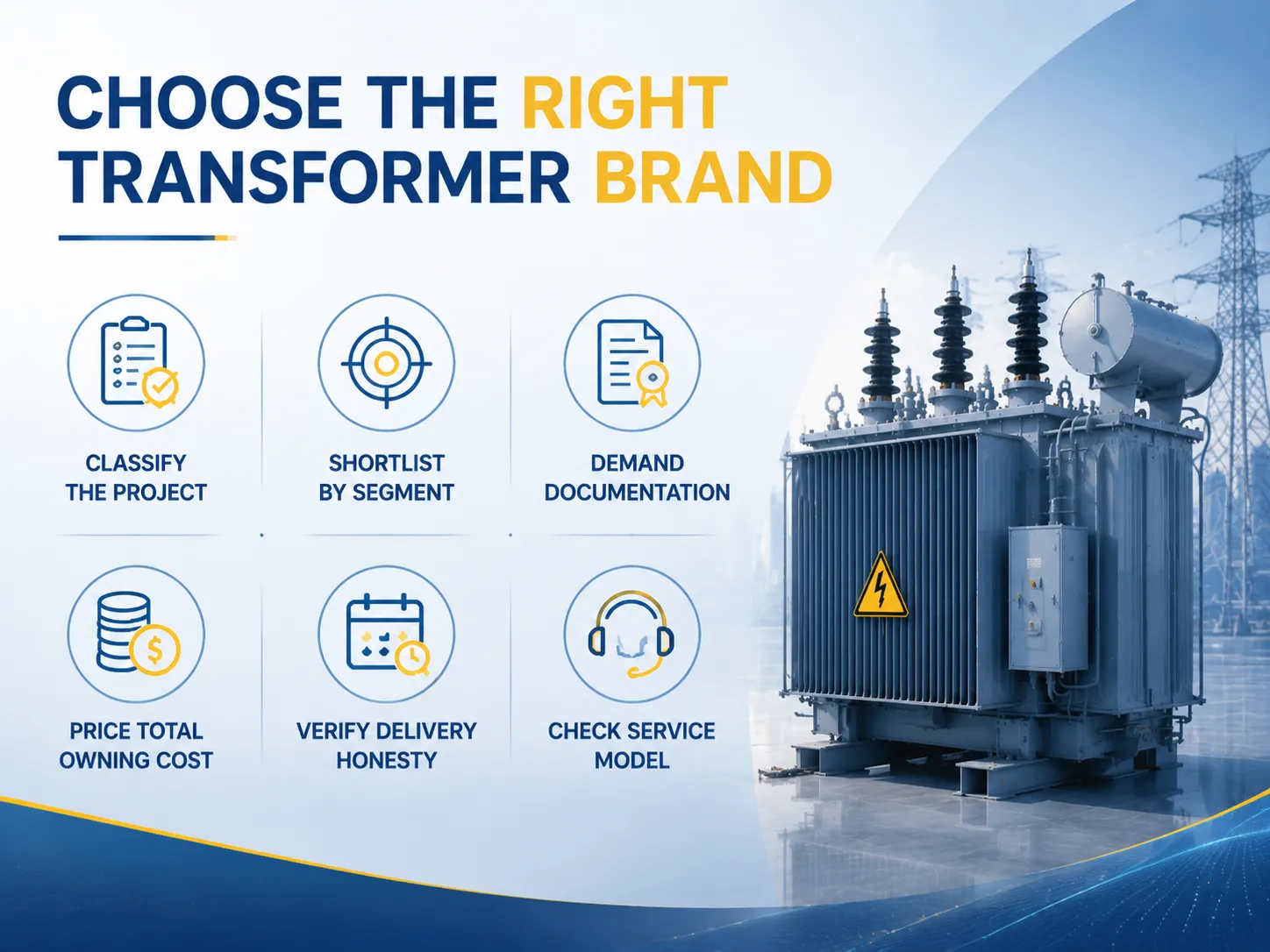
Separare e restringere metodicamente le opzioni allevierà la maggior parte delle incertezze.
- Identificare le specifiche del progetto in termini di tensione, MVA, ciclo di lavoro, ambiente e importanza. Questo aiuterà a restringere notevolmente le opzioni.
- Scegliere nomi per segmento invece di notorietà. Essere leader in HVDC non rende necessariamente un'azienda una buona scelta per un trasformatore montato a terra da 630 kVA.
- Richiedere lo stesso tipo di documentazione a tutti i candidati. Questo include certificati di prova di tipo, rapporti di routine per unità e garanzie di perdita e impedenza dichiarate secondo IEC 60076.
- Calcolare il costo totale di proprietà utilizzando la propria tariffa; la differenza tra l'efficienza di 98.5% e 99.2% in un sistema sempre attivo ha senso dal punto di vista finanziario.
- Assicurati che la consegna sia quella promessa dal tuo fornitore. Ottieni il programma di produzione per iscritto. In questo modo, un fornitore rinomato che non riesce a consegnare in tempo non sarà considerato tale.
- Comprendere il piano di assistenza del fornitore. Se il supporto sul campo è qualcosa di cui hai bisogno, conosci i dettagli di contatto e quanto tempo avranno bisogno per risponderti.
Domande frequenti
Qual è il miglior marchio di trasformatori al mondo?
Scegliere il miglior marchio non è facile. Mentre ABB, Siemens Energy e Hitachi Energy sono i migliori in tecnologia e applicazioni ad alta tensione, TBEA e Baoding Tianwei sono i migliori in termini di volumi. Questo lascia aziende come Jiangsu Subian Electric Power, che sono esportatori certificati, come la migliore scelta dell'azienda in termini di valore per applicazioni semplici.
Perché i marchi di trasformatori premium costano così tanto di più?
La tariffa premium tiene conto dei costi di R&S, dei costi per il funzionamento di strutture di test all'avanguardia e reti di assistenza a livello mondiale, e della scarsità di risorse. Il prezzo premium delle unità da 1-10 MVA oscilla generalmente tra $150.000 e $380.000 rispetto a un intervallo di prezzo tipico di $50.000 a $200.000 per gli altri livelli. In termini di lavoro EHV e HVDC, questo premium significa effettivamente che le capacità corrispondenti sono disponibili solo in questo livello di prezzo.
I marchi di trasformatori cinesi sono buoni quanto i marchi europei?
Dopo aver ottenuto la certificazione IEC 60076 e ricevuto i risultati dei test di tipo e dei test di routine, è possibile per i produttori cinesi stabilire prestazioni che non sono inferiori a quelle dei concorrenti europei i cui prodotti sono realizzati per standard particolari; e i produttori cinesi offrono i loro prodotti a un prezzo molto più basso. La principale differenza risiede nei seguenti aspetti: premium di marca, profondità della rete di assistenza e coerenza della documentazione – ed è per questo che è importante avere una verifica piuttosto che pensare da dove provenga questo prodotto.
Come posso verificare la qualità di un marchio di trasformatori prima di ordinare?
Ottieni da un laboratorio riconosciuto i certificati di test di tipo richiesti, i rapporti di test di routine per ogni unità, un certificato di impedenza e perdite, e un elenco di progetti simili già realizzati. Se la quantità supera alcune unità, organizza un'ispezione di terza parte (ad es. SGS, TÜV, Bureau Veritas) o sii presente durante i test in fabbrica.
Dovrei scegliere il marchio di trasformatori più economico?
Solo se la garanzia e la documentazione sono efficaci. Un prezzo 30% inferiore al valore di mercato indica generalmente che qualcosa mancava; questo potrebbe includere disposizioni per garanzie mancanti, copertura dei test e consegna verificabile. Confronta costantemente le offerte certificate con specifiche simili, il modo di calcolare il costo totale di proprietà e non solo il prezzo richiesto.
Riferimenti
- Commissione Elettrotecnica Internazionale (IEC) — editore della IEC 60076, la serie di standard internazionali sui trasformatori utilizzati per la certificazione.
- IEEE — editore degli standard IEEE C57 sui trasformatori e delle linee guida del settore.
- NEMA — standard e dati di mercato per apparecchiature elettriche nordamericane.
- ABB — produttore globale di trasformatori, riferimento ingegneristico di fascia premium.
- Hitachi Energy — produttore di grandi trasformatori di potenza e HVDC, investitore nella capacità statunitense.
- Siemens Energy — produttore di reti e trasformatori, riferimento di fascia premium.
Conclusione
Con importanti aziende che guidano ciascun livello del mercato globale dei trasformatori, produttori premium come ABB, Siemens Energy, Hitachi Energy e GE Vernova sono i più noti in quel sacro graal della tecnologia e della capacità, la tecnologia ad alta tensione. Al contrario, i produttori cinesi regnano sovrani per quanto riguarda la scala di produzione; tuttavia, i player di valore certificati (come Jiangsu Subian Electric Power) hanno lasciato il segno nel segmento di valore, dove i clienti possono ottenere buona qualità a prezzi ragionevoli.
Quindi, Jiangsu Subian Electric Power è diventata una grande azienda nel segmento di ‘valore’ del mercato con un'idea semplice di vendere trasformatori immersi in olio, trasformatori di tipo secco, sottostazioni di tipo scatola e installazioni speciali con piena conformità agli standard IEC 60076 e molta documentazione di test accompagnatoria per ogni ordine. Se il tuo progetto necessita di prestazioni certificate con consegna realistica e prezzi competitivi, avvia una conversazione con Subian Elettrico e confronta la documentazione fianco a fianco con qualsiasi lista ristretta tu abbia già.