


Immagina un impianto di lavorazione industriale situato a Zhengzhou che utilizza tre trasformatori da 1.600 kVA che operano con un fattore di carico medio del 92 percento per dodici ore consecutive. Un'interruzione di corrente nel pomeriggio di martedì sulla rete elettrica provoca un calo di tensione nell'impianto per 400 millisecondi, con tre sistemi di imballaggio a controllo servo che si fermano simultaneamente. La produzione si ferma per 47 minuti mentre gli operatori dell'attrezzatura riattivano i motori e i PLC, con una perdita di fatturato di circa $18.000, insieme alla distruzione di due lotti di produzione. L'indagine condotta dal supervisore della manutenzione conferma i sospetti sollevati intorno ai trasformatori di potenza che erano stati usurati nel corso di sei anni dall'installazione.
Associati all'automazione industriale, i trasformatori non sono pezzi statici di attrezzatura; piuttosto svolgono la funzione di mediatori tra l'alimentazione ad alta tensione e l'attrezzatura sensibile alle fluttuazioni di tensione. In questo articolo, discutiamo l'importanza fondamentale dei trasformatori nell'automazione industriale — metodi per la dimensionamento e la specifica dei trasformatori, controllo della qualità della tensione, costi di efficienza e modi per scegliere fornitori senza pagare troppo. Il nostro articolo contiene esempi, riferimenti a IEC 60076 e IEC 60204, fasce di costo reali e suggerimenti per l'ottimizzazione.
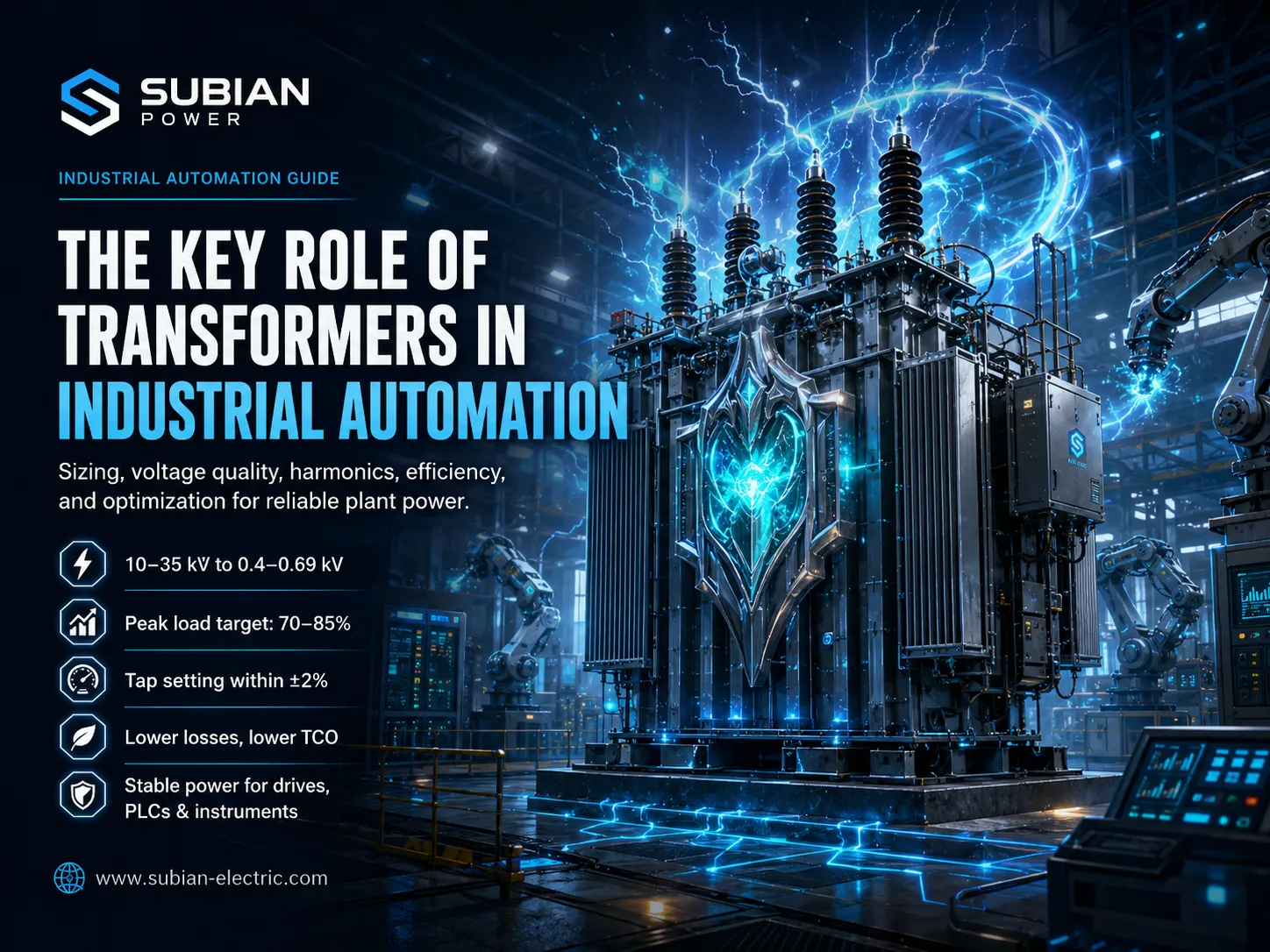
Importanza dei trasformatori nell'automazione industriale
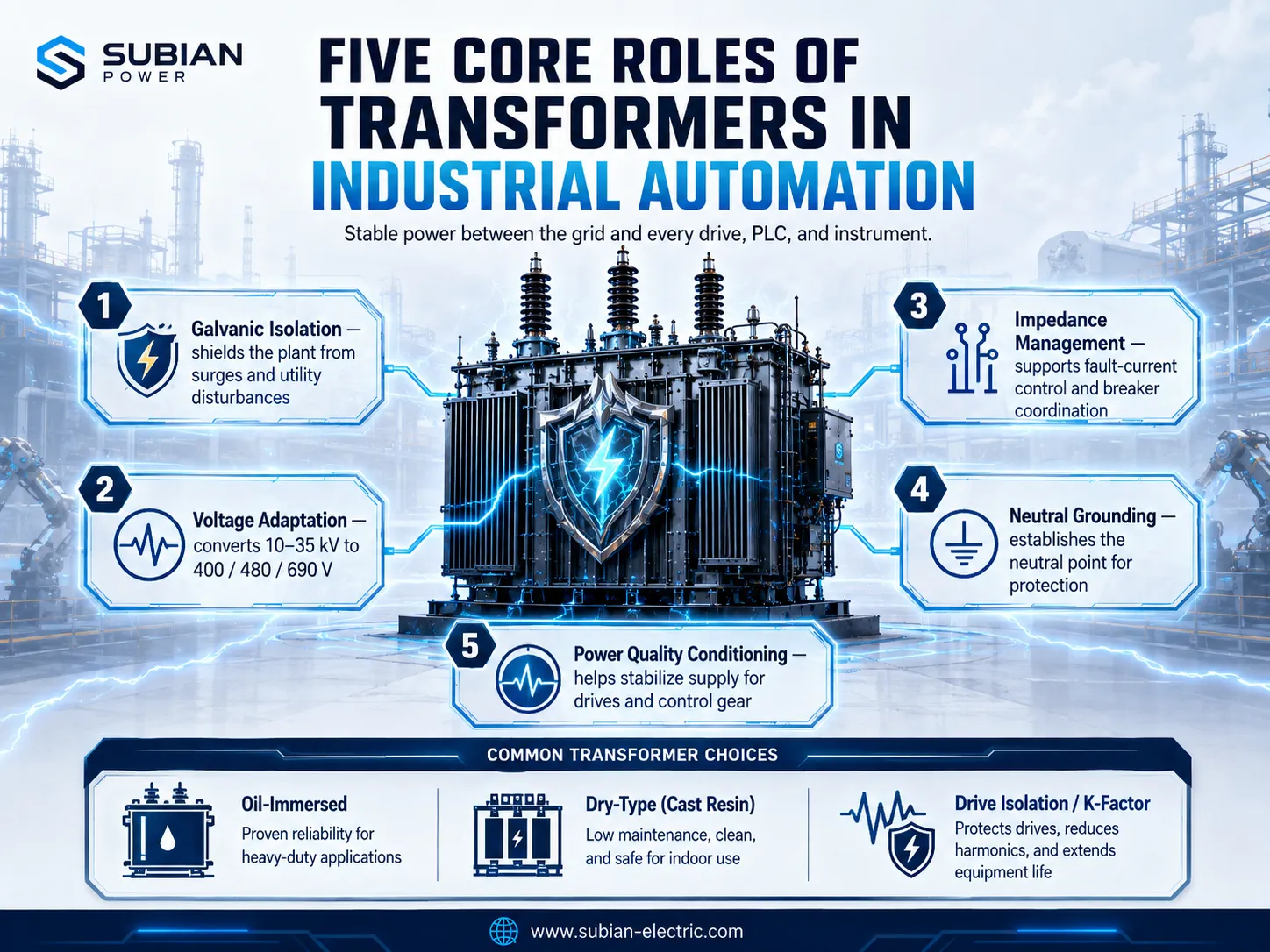
Qualsiasi sistema di automazione industriale contiene tre parti: il livello di campo (sensori, attuatori, motori), il livello di controllo (PLC, DCS, HMI) e il livello di potenza, dove si trova il trasformatore. Il trasformatore svolge funzioni piuttosto che semplicemente cambiare i valori di tensione. Esegue cinque funzioni diverse:
Separazione galvanica: Separa le sezioni di processo dalle perturbazioni della linea di alimentazione come sovratensioni, abbassamenti di tensione e transitori.
Adattamento della tensione: Trasforma l'alta tensione (10–35 kV) in bassa tensione (400 V, 480 V o 690 V).
Gestione dell'impedenza: L'impedenza di cortocircuito (circa 4–8%) limita la corrente di guasto proveniente dall'alimentazione ad alta tensione, rendendo possibile coordinare gli interruttori automatici.
Messa a terra neutra: L'avvolgimento secondario funge da neutro e garantisce il funzionamento del sistema di protezione.
Controllo della qualità dell'energia: Il trasformatore con la sua configurazione può aiutare a ridurre le perturbazioni armoniche e stabilizzare la sorgente di tensione.
Interruzioni di processo legate alla qualità dell'energia negli impianti automatizzati. Un trasformatore ben selezionato con la corretta impostazione del punto di prelievo riduce l'impatto degli abbassamenti e previene le interruzioni indesiderate nei circuiti PLC e motori.
Tipi di trasformatori utilizzati negli impianti industriali
Non ogni impianto ha bisogno dello stesso trasformatore. La tabella sottostante riassume i tipi comuni e le loro caratteristiche rilevanti per l'automazione.
| Tipo | Gamma di Potenza | Tensione tipica | Punti di forza nell'automazione | Prezzo tipico (USD) |
|---|---|---|---|---|
| Trasformatore di distribuzione immerso in olio | 50–2.500 kVA | 10–35 kV / 0,4–0,69 kV | Costo più basso, robusto, ben compreso | $6.000–$38.000 |
| Trasformatore di tipo secco (resina colata) | 100–4.000 kVA | Fino a 36 kV / 0,4–0,69 kV | Installazione interna a prova di incendio, bassa scarica parziale | $12.000–$75.000 |
| Trasformatore di isolamento per azionamenti | 100–2.000 kVA | 4–0.69 kV | Protegge i VFD da correnti di modo comune e armoniche | $4.000–$22.000 |
| Trasformatore a fase spostata / zig-zag | 500–5.000 kVA | 6–35 kV | Cancellazione armonica per grandi banchi di convertitori | $18.000–$70.000 |
| Trasformatore dry-type con fattore K | 150–1.500 kVA | 48–0.69 kV | Valutato per carichi non lineari (azionamento) | $10.000–$40.000 |
| Trasformatore di potenza (grado sottostazione) | 5–60 MVA | 35–110 kV | Grandi impianti, cogenerazione, linee di collegamento | $80.000–$400.000 |
Per un tipico pavimento di fabbrica automatizzato, la scelta pratica è tra unità immerse in olio e unità dry-type. I trasformatori dry-type (in resina colata) dominano le installazioni interne perché sono resistenti al fuoco, non necessitano di contenimento dell'olio e possono essere collocati all'interno dell'edificio di produzione — a un prezzo superiore di circa 60–90% rispetto alle unità immerse in olio equivalenti.
Come dimensionare un trasformatore per un impianto di automazione
Gli errori più frequenti commessi durante l'ottimizzazione del trasformatore sono errori di dimensionamento. Se il trasformatore è sottodimensionato, si verifica surriscaldamento e usura precoce. Trasformatori sovradimensionati possono causare perdite dovute all'assenza di carico, il che significa denaro sprecato.
Procedura per il dimensionamento del trasformatore:
Misurazione della domanda. Assicurati di registrare la domanda massima per un periodo di 1 mese utilizzando il sistema di misurazione dell'impianto. Non dimensionare in base alle informazioni della targa; la maggior parte degli impianti utilizza solo il 40%-70% della capacità della targa.
Criteri di diversità del carico. Moltiplica le capacità di azionamento, PLC e utility per un certo fattore di domanda (circa 0.65-0.85, piuttosto che 1.0).
Regola di margine. Selezionare la prossima maggiore capacità nominale in modo che la domanda di picco del sistema sia 70%-85% della capacità del trasformatore.
Piani futuri. Se si prevede una seconda linea di produzione entro 3 anni, la capacità attuale del trasformatore dovrebbe essere dimensionata a 120-130%.
Inoltre, è importante prestare attenzione alle correnti di avviamento. I grandi motori utilizzano tra 6 e 8 volte di più rispetto al loro valore nominale all'avvio, e il trasformatore deve essere in grado di ridurre il calo di tensione.
Qualità della tensione: derivazioni, regolazione e fattore di potenza
Uno degli aspetti più vitali è la qualità della tensione in ingresso ai terminali degli azionamenti. Sebbene gli azionamenti e i circuiti di ingresso PLC siano classificati per variazioni di livello di tensione di ±10%, in pratica, si verificano disconnessioni anche a variazioni di livello inferiori poiché il calo di tensione provoca la distorsione dell'onda. Le tre misure importanti in questo contesto possono essere definite come segue:
| Misura | Configurazione tipica | Effetto | Costo |
|---|---|---|---|
| Regolazione della derivazione fuori circuito | ±2.5%, ±5% derivazioni su avvolgimento MV | Ottimizza la tensione in regime stazionario per l'effettivo approvvigionamento dell'impianto | $0 (incluso) |
| Cambio di derivazione sotto carico (OLTC) | ±8% in 8–16 passi | Mantiene l'uscita entro ±1.5% nonostante le fluttuazioni di alimentazione | $6,000–$18,000 aggiunti |
| Correzione del fattore di potenza (PFC) | Banche di condensatori fisse + automatiche | Aumenta il PF da 0.80 a 0.95, riduce la penalità dell'utility | $4.000–$30.000 |
Impostare la derivazione fuori circuito sulla tensione media in ingresso dell'impianto è gratuito e tipicamente migliora la tensione in ingresso dell'azionamento di 2–4%. Per gli impianti con approvvigionamento volatile o grandi carichi di avviamento dei motori, un OLTC si ripaga entro 2–3 anni eliminando i guasti degli azionamenti e i tempi di inattività per il riavvio.
Armoniche e carichi non lineari
Sebbene i variatori di frequenza (VFD) rappresentino una parte importante dell'automazione industriale, richiedono corrente non sinusoidale che provoca distorsione armonica. Lo standard principale che governa quest'area è l'IEEE 519 che raccomanda un limite di distorsione armonica di 5% al punto di accoppiamento comune. L'ottimizzazione dei trasformatori in questo contesto ha tre aspetti.
Derating del carico. Un trasformatore che fornisce più di 30% di carico VFD dovrebbe essere derated o indicato come unità trasformatore K-factor (K-4 fino a K-20). Questo è dovuto all'effetto della corrente armonica sull'aumento del riscaldamento da correnti parassite.
Selezione dell'impedenza. Un'impedenza inferiore di 4-5% riduce la distorsione di tensione da correnti armoniche ma aumenta la corrente di guasto. Pertanto, la scelta dell'impedenza deve essere coordinata con le classifiche degli interruttori.
Sfasamento di fase. Per installazioni di convertitori molto grandi, ad esempio un raddrizzatore a 12 impulsi utilizzato per elettrolisi o grandi azionamenti, i trasformatori a sfasamento elimineranno gli effetti delle armoniche 5 e 7 alla sorgente.
In un impianto automatizzato comune con carico VFD di 30%, i valori THD di tensione erano compresi tra 6-12% prima della mitigazione e 2-4% dopo l'installazione di reattori passivi o filtri per gruppo di azionamenti con impedenza in ingresso di 5% a un prezzo di $500 a $2000.
Efficienza, perdite e ottimizzazione energetica
Le perdite del trasformatore si suddividono in perdite a vuoto (nucleo), che funzionano 24 ore al giorno, e perdite da carico, che aumentano con il quadrato della corrente. La tabella mostra l'economia per un'unità tipica da 1.000 kVA.
| Componente di perdita | Valore tipico (IEC 60076) | Energia annuale (7.200 h di funzionamento) | Costo annuale @ $0.09/kWh |
|---|---|---|---|
| Perdite a vuoto | 6–2.2 kW | 500–15.800 kWh | $1.040–$1.420 |
| Perdite da carico (carico massimo) | 9–12 kW | 600–28.800 kWh a 50% di carico | $1.940–$2.590 |
| Perdita annuale totale | — | 000–44.000 kWh | $2.980–$3.960 |
Le informazioni sopra portano a tre possibilità per un grande utilizzo dell'ottimizzazione:
Primo, le proprietà del nucleo amorfo portano a una significativa riduzione delle perdite durante il funzionamento a vuoto: 60-75% in meno, ad esempio, da 2.0 kW a tra 0.6 e 0.8 kW per un'unità da 1000 kVA.
Il secondo punto riguarda l'adattamento completo del trasformatore per il funzionamento attorno al 60-80% del fattore di carico: le perdite a vuoto sono 4 volte maggiori rispetto al trasformatore operato al 50% di carico, passando da 98.7% a carico massimo a 97.8%.
La terza importante suggerimento è di utilizzare trasformatori in parallelo in caso di ampie fluttuazioni di carico e di spegnerli a carichi bassi: in questo modo si possono ridurre le perdite del trasformatore di 15%-30% nelle operazioni a due turni.
Misure di ottimizzazione in pratica
Oltre alla selezione dell'hardware, l'ottimizzazione è una disciplina operativa continua. Le misure che gli impianti industriali implementano effettivamente, in ordine di impatto:
| Misura | Frequenza | Cosa cercare | Beneficio atteso |
|---|---|---|---|
| Imaging termico del serbatoio e delle guarnizioni | Annuale | Punti caldi, connessioni allentate | Previene 60% di guasti correlati alle connessioni |
| Analisi dell'olio (DGA + umidità) | Ogni 6–12 mesi | Tendenze chiave dei gas, contenuto d'acqua > 30 ppm | Rilevamento precoce dei guasti 12–24 mesi prima |
| Registrazione del carico e della qualità dell'energia | Trimestrale | Domanda massima, THD, squilibrio di tensione | Quantifica il margine di manovra e le esigenze di filtraggio |
| Test dei relè di protezione | Ogni 1–2 anni | Impostazioni di sovraccarico e differenziale | Previene guasti a cascata su guasti interni |
| Revisione della posizione del tap | Ogni stagione | Tensione di uscita vs. punto di impostazione | Recupera 1–3% di margine di tensione |
Per impianti con un personale di manutenzione di due o tre persone, il costo annuale realistico di questo programma è di $800–$2,500 per trasformatore, comprese le spese di laboratorio — un importo esiguo rispetto ai costi di un guasto imprevisto di $30,000–$120,000 più le perdite di produzione.
Costi e Costo Totale di Proprietà
Il prezzo di acquisto rappresenta solo un terzo del costo totale di vita di un trasformatore. Un'analisi completa del costo totale di proprietà (TCO) nel corso della vita di 20 anni di un trasformatore include:
* Spese in conto capitale: $9,000–$85,000 a seconda delle specifiche e del tipo.
* Spese per perdite: $3,000–$4,000 all'anno per 1,000 kVA, normalmente 40% a 50% di TCO.
* Manutenzione: $800–$2,500/anno inclusiva di DGA, termografia e test.
* Rischio di inattività: il tasso di guasto annuale previsto moltiplicato per $30,000–$120,000 per ogni guasto.
* Valore residuo: 15% a 25% del prezzo di acquisto iniziale dopo 20 anni.
Se valutato con questo metodo, le migliori prestazioni del trasformatore a bassa perdita più costoso (classe C o superiore in base all'efficienza IEC) sono solitamente dimostrate. Un acquirente recupererà la differenza di $5,000 tra un trasformatore standard da $24,000 e un trasformatore ad alta efficienza da $29,000 in 3–5 anni grazie ai risparmi sui costi derivanti dalla riduzione delle perdite.
Top Brand e Confronto Prezzi
Il mercato dei trasformatori industriali è servito da un gruppo familiare di produttori globali, oltre a fornitori cinesi affermati che hanno ottenuto certificazioni IEC e internazionali. La tabella fornisce prezzi indicativi per un trasformatore industriale da 1,000 kVA, 10 kV/0.4 kV immerso in olio; i prezzi effettivi variano in base a specifiche, impedenza, classe di perdita e regione.
| Marca | Paese | Punti di Forza | Prezzo Indicativo (USD) |
|---|---|---|---|
| ABB | Svizzera | Integrazione completa dell'automazione, ampia rete di servizi | $16.000–$28.000 |
| Siemens | Germania | Gemello digitale, opzioni di monitoraggio SITRAM | $15.000–$27.000 |
| Schneider Electric | Francia | Integrazione EcoStruxure, resistenza di tipo secco | $14.000–$26.000 |
| Hitachi Energy | Giappone/Svizzera | Eredità di grandi trasformatori di potenza, esperienza LTC | $16.000–$30.000 |
| Eaton | USA | Forte portafoglio di distribuzione e di tipo secco | $13.000–$25.000 |
| Jiangsu Subian Energia Elettrica | Cina | Conforme a IEC 60076, OEM/ODM, prezzi competitivi | $9.000–$18.000 |
Le aziende internazionali offrono soluzioni digitali mature, assistenza ingegneristica locale e pratiche comprovate in migliaia di strutture e, per un trasformatore singolo mission-critical in una struttura leader, i costi aggiuntivi possono ripagare. Per gli impianti di produzione che acquistano trasformatori in serie — un produttore alimentare che attrezza cinque impianti e un'azienda di livello 1 dell'industria automobilistica che aggiunge tre fabbriche — Jiangsu Subian Electric Power compete con i trasformatori verificati secondo lo standard IEC 60076 con unità immerse in olio e di tipo secco per circa 45-60% del prezzo di attrezzature simili provenienti da Europa e USA. Sfruttando l'esperienza nelle operazioni internazionali e la flessibilità OEM/ODM, Subian consente agli ingegneri degli impianti di personalizzare i trasformatori in base alla classe di perdite richiesta, al tap, all'impedenza e al sistema di monitoraggio, che è la prova della corretta selezione del trasformatore.
Come Scegliere e Ottimizzare: Una Checklist
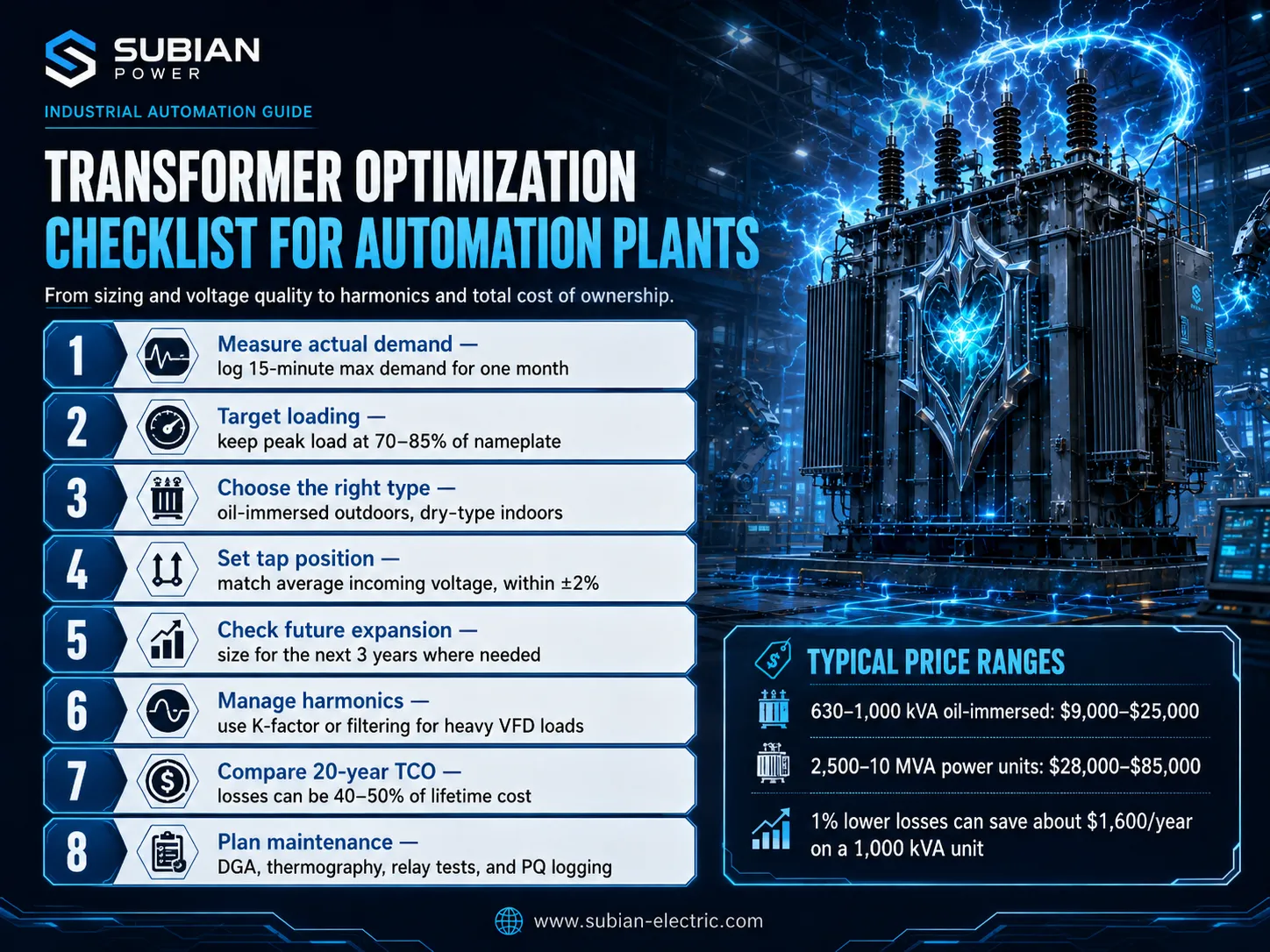
- Registra la domanda di 15 minuti per un mese; dimensiona affinché la domanda di picco sia 70–85% della targa.
- Scegli il tipo immerso in olio per esterni/costi ridotti, tipo secco per aree interne sensibili al fuoco.
- Specifica la classe di perdite secondo IEC 60076-1 e confronta il TCO di 20 anni, non il prezzo di acquisto.
- Imposta il tap fuori circuito per abbinare la tensione media in ingresso effettiva.
- Aggiungi un OLTC o un regolatore di tensione solo dove la volatilità dell'alimentazione o l'avviamento del motore sono significativi.
- Riduci o specifica il fattore K per gli impianti con carico VFD superiore a 30%; verifica il THD secondo IEEE 519.
- Pianifica il commutazione di unità parallele dove il carico varia ampiamente tra i turni.
- Contratto per il logging della qualità dell'energia trimestrale e DGA annuale fin dal primo giorno.
- Richiedere il certificato di prova IEC 60076 con l'offerta e confrontare almeno tre marchi — inclusi fornitori cinesi certificati IEC — prima di assegnare.
Domande frequenti
Come posso determinare la giusta potenza kVA per la mia fabbrica?
Registrare la domanda massima effettiva di 15 minuti per un mese intero, moltiplicare per un fattore di domanda di 0,65–0,85 per i carichi di automazione e scegliere la potenza standard sopra quel valore in modo che il carico di picco si collochi tra 70–85% della targa. Un impianto con un picco misurato di 720 kVA dovrebbe selezionare un'unità da 1.000 kVA — il margine assorbe l'inrush del drive e le aggiunte di linea pianificate.
Qual è il ritorno sull'investimento per la sostituzione di un vecchio trasformatore inefficiente?
Sostituire un'unità da 1.000 kVA degli anni '80 (perdita a vuoto ~3,5 kW) con un'unità moderna (perdita a vuoto ~1,8 kW) consente di risparmiare circa 12.000 kWh/anno, ovvero $1.100 a $0,09/kWh. Inclusi le differenze di perdita di carico e la riduzione della manutenzione, il ritorno è tipicamente di 5–8 anni — o 2–4 anni se l'unità vecchia mostra anche anomalie DGA o problemi termici.
Dovrei acquistare un trasformatore immerso in olio o un trasformatore a secco per il mio impianto?
Quando si installa un trasformatore all'interno, è altamente raccomandato optare per trasformatori a secco (in resina colata), poiché sono ignifughi e non richiedono complicate contenzioni per l'olio o barriere antincendio; inoltre, un tale trasformatore può essere collocato all'interno dell'edificio stesso. Per le installazioni all'aperto, il vantaggio dei trasformatori riempiti d'olio è che sono anche meno costosi (circa 35-45% più economici) e più facili da mantenere. Ad esempio, il prezzo di un trasformatore a secco da 1.000 kVA è compreso tra $18.000-$32.000 rispetto a quanto può essere prodotto un trasformatore ad olio ($12.000-$22.000).
Come influiscono le armoniche sulla selezione del mio trasformatore?
I carichi VFD superiori a circa 30% della capacità del trasformatore creano correnti armoniche che riscaldano gli avvolgimenti e causano distorsione della tensione. Le opzioni sono: ridurre la potenza del trasformatore del 10–20%, specificare un'unità con fattore K (K-4 a K-20) o aggiungere reattori/filtri di ingresso ai drive. IEEE 519 raccomanda di mantenere il THD della tensione al di sotto di 5% al punto di accoppiamento comune; un reattore da $500–$2.000 per gruppo di drive di solito raggiunge questo obiettivo.
Qual è il costo totale di un trasformatore industriale nel corso della sua vita?
Per un'unità da 1.000 kVA a $15.000 di acquisto, un TCO di 20 anni è di circa $55.000–$70.000: 40–50% di esso sono perdite elettriche ($3.000–$4.000/anno), 10–15% è manutenzione ($800–$2.500/anno), e il resto è capitale più rischio di inattività. Un'unità di classe IEC C ad alta efficienza riduce tipicamente il componente di perdita del 15–25%.
Riferimenti
- IEC 60076 serie — Trasformatori di potenza — lo standard di riferimento per la valutazione, le perdite, l'impedenza e i test di tutti i trasformatori industriali discussi qui.
- IEEE 519 — Pratica raccomandata per il controllo armonico nei sistemi di alimentazione elettrica — definisce i limiti di THD utilizzati per impianti dominati da drive.
- IEEE 493 — Pratica raccomandata per la progettazione di sistemi di alimentazione industriali e commerciali affidabili — fonte delle statistiche sulle interruzioni da caduta di tensione citate in questo articolo.
- NEMA TP-1 e standard NEMA per trasformatori di distribuzione — valutazioni di efficienza e linee guida per l'applicazione per acquirenti industriali nordamericani.
- CIGRE — Consiglio Internazionale sui Grandi Sistemi Elettrici — pubblica rapporti dei gruppi di lavoro sulle statistiche di guasto dei trasformatori e pratiche di manutenzione.
- Linee guida sulla sicurezza elettrica OSHA — contesto normativo per la manutenzione dei trasformatori e il blocco/taglio nelle strutture industriali.
- Jiangsu Subian Electric Power — sito ufficiale — produttore di trasformatori di distribuzione e potenza industriali conformi alla IEC 60076 con supporto OEM/ODM.
Conclusione
I trasformatori sono la spina dorsale silenziosa dell'automazione industriale: isolano, adattano e stabilizzano l'energia di cui ogni azionamento, PLC e strumento ha bisogno. L'ottimizzazione non riguarda attrezzature esotiche — si tratta di dimensionamento corretto (carico di picco a 70–85% della targhetta), impostazioni di tap corrette, controllo armonico per carichi VFD e acquisto basato sul costo totale di proprietà di 20 anni piuttosto che sul prezzo iniziale. L'economia è concreta: risparmi sulle perdite di $1,000–$4,000/anno per unità, ottimizzazione del tap che vale 1–3% di margine di tensione, e eventi di inattività evitati che valgono $30,000–$120,000.
Punti chiave:
- Dimensiona in base alla domanda misurata, non alla targhetta; mantieni il carico operativo tra 60–80%.
- Confronta il TCO di 20 anni — le perdite sono 40–50% del costo totale di vita.
- Gestisci le armoniche secondo IEEE 519 per impianti con carichi pesanti.
- Confronta marchi globali come ABB, Siemens e Schneider con fornitori certificati IEC come Jiangsu Subian Electric Power per bilanciare qualità e prezzo.
Applica la checklist sopra nel tuo prossimo progetto e esegui un audit della qualità dell'energia sul sito prima di acquistare qualsiasi cosa — i dati ti diranno quale ottimizzazione ripaga per prima. Per supporto nella selezione dei trasformatori e preventivi, visita www.subian-electric.com.