


鉄鋼工場では、アーク炉用変圧器が白熱した鋼からわずか数メートルの位置に配置されており、二次電流は40,000 Aです。半導体工場では、主変圧器が110 kVを20 kVに降圧し、計画外のダウンタイムを一瞬も許容できない施設に供給します。主変圧器は、実際には産業界のバックボーンであり、電力会社のラインから高電圧供給を転送し、それをいわゆる低電圧でプラントのスイッチギア、エンジン、炉に供給します。.
この記事では、主変圧器とは何か、配電変圧器やユニット変圧器との違いを見分ける方法、産業施設に適したサイズと仕様の決定方法、効率、インピーダンス、冷却、保護、価格の観点からのコストについて説明します。あなたが電気技術者であろうと、プラントエンジニアであろうと、購買マネージャーであろうと、このガイドは正しい選択をするために必要なすべての技術的および商業的データを提供します。.
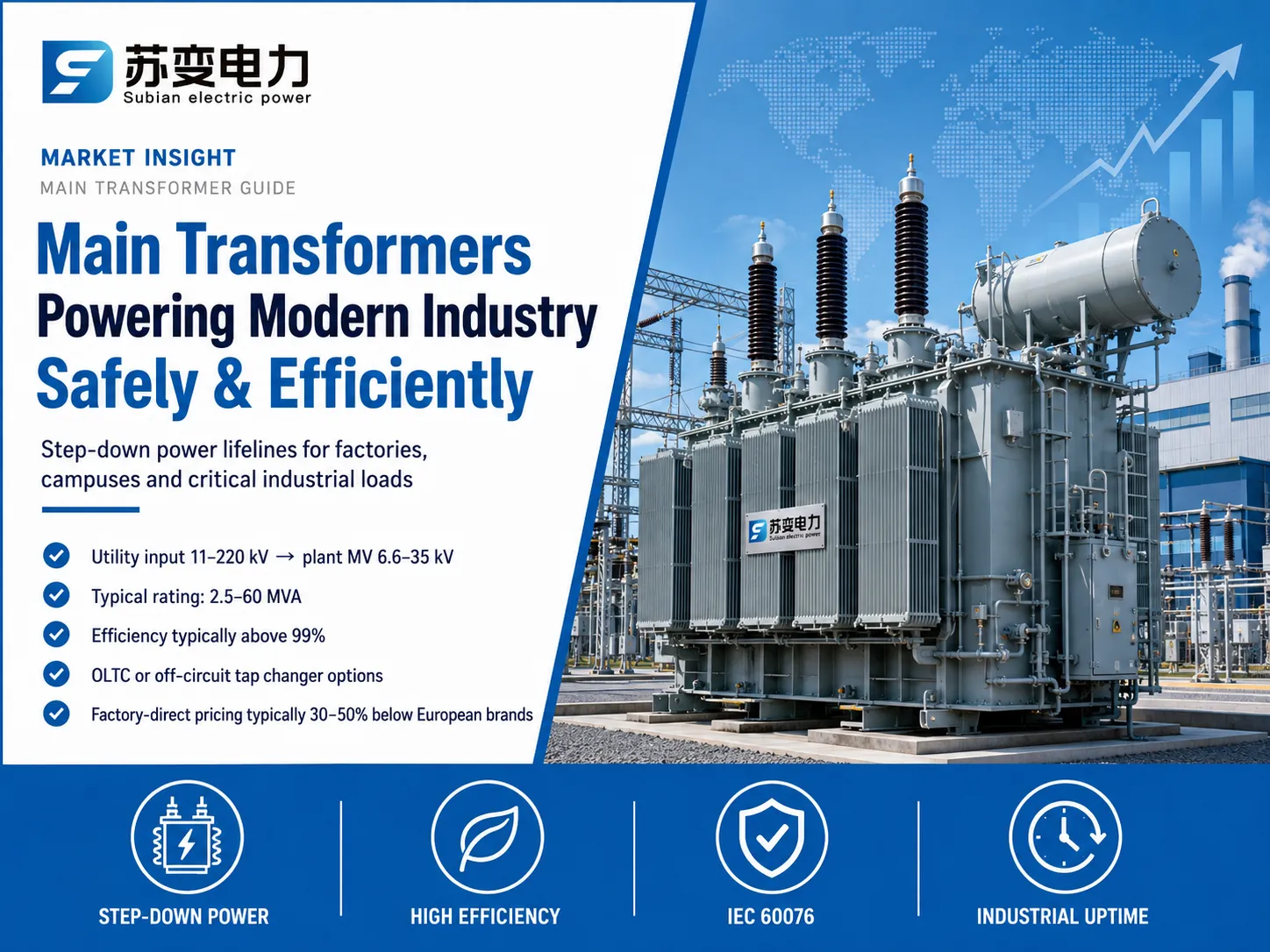
主変圧器とは何ですか?(定義)
産業、商業、または公共施設における主変圧器は、最大の電力変圧器であり、施設を電力網に接続し、すべての内部配電ネットワークに電力を供給する装置です。例えば、鉄鋼工場では40MVA/110kVユニットである可能性があり、中規模の工場では2.5MVA/11kVユニットを使用し、病院キャンパスでは冗長性を提供するために複数の2MVAユニットを適用する可能性があります。この装置が主変圧器と呼ばれる理由は、電圧値ではなく、プラントの主要な電気コンポーネントとしての変圧器の位置にあります。.
主変圧器は、損失に関する最良の解決策、高品質の絶縁、機能するタップチェンジャー、適切な保護ソリューションを含むため、最大の信頼性で動作するように製造されています。主変圧器の故障によるコストは、修理費用だけでなく、プロセスプラントの場合、故障による損失は数百万ドルに達する可能性があります。.
産業電力システムにおける主変圧器の役割
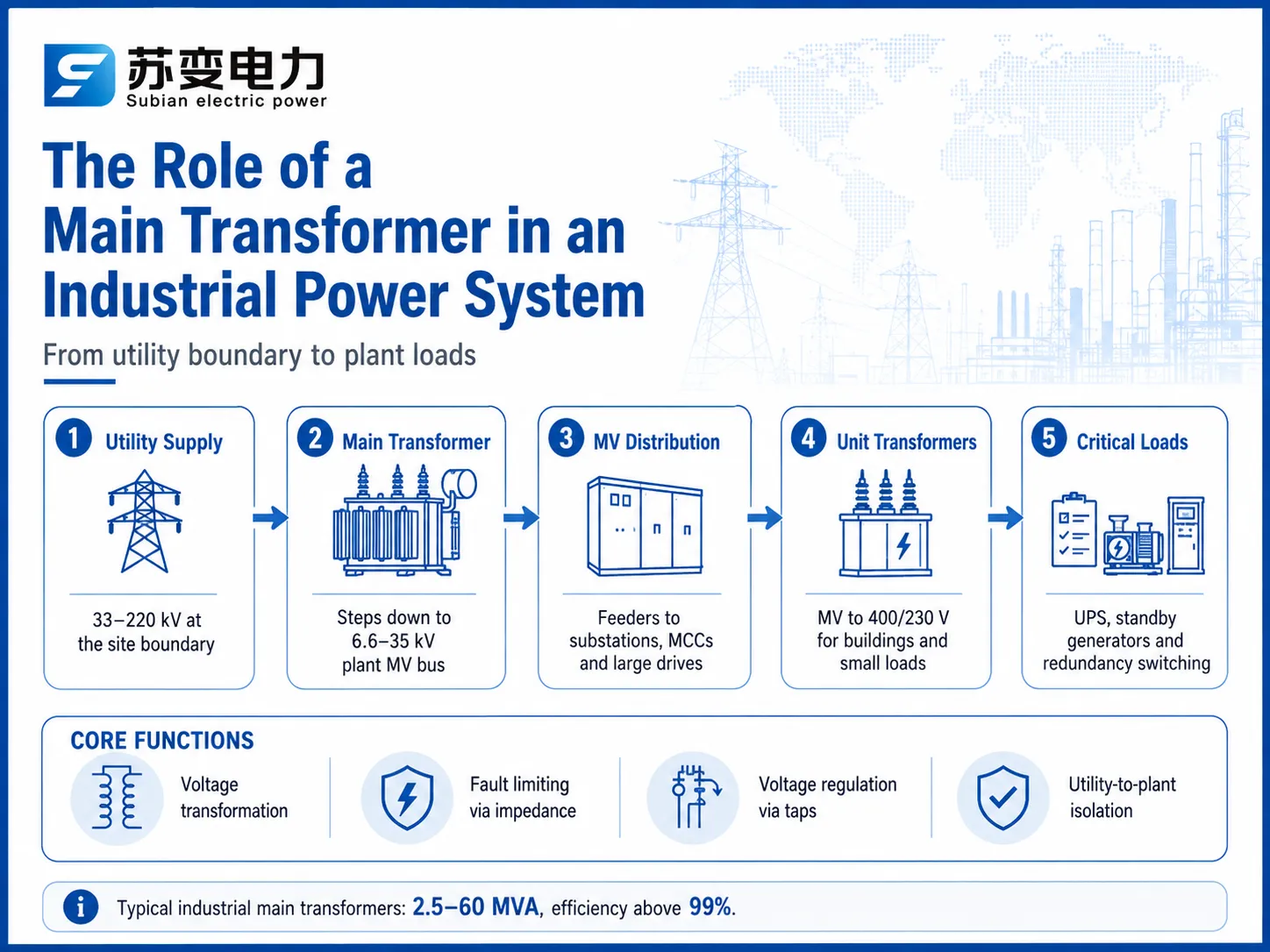
現代の産業施設の電力構造は、主に類似のパターンに従います:
公共電力接続 — 33 kVから220 kVの範囲で、施設の境界に位置しています(外部電力供給が施設の電気システムに接続されるポイント)。.
主変圧器 — 施設自体に供給電圧を6.6 kVから35 kVに生成します。.
中電圧配電システム — 変電所、モーター制御センター、主要駆動装置への電力接続を含みます。.
ユニット変圧器 — 供給電圧を6.6 kVから35 kVに降圧し、400 Vおよび230 Vを生成して建物や小負荷に電力を供給します。.
重要な負荷 — 無停電電源装置(UPS)、バックアップ発電機、冗長スイッチが設置されています。.
この枠組みの中で、主変圧器は電圧を変換するだけでなく、そのインピーダンスによって回路全体を故障から保護し、タップの利用可能性によって電圧を制御し、施設を電力網から分離します。.
施設の主変圧器のサイズを決定する方法
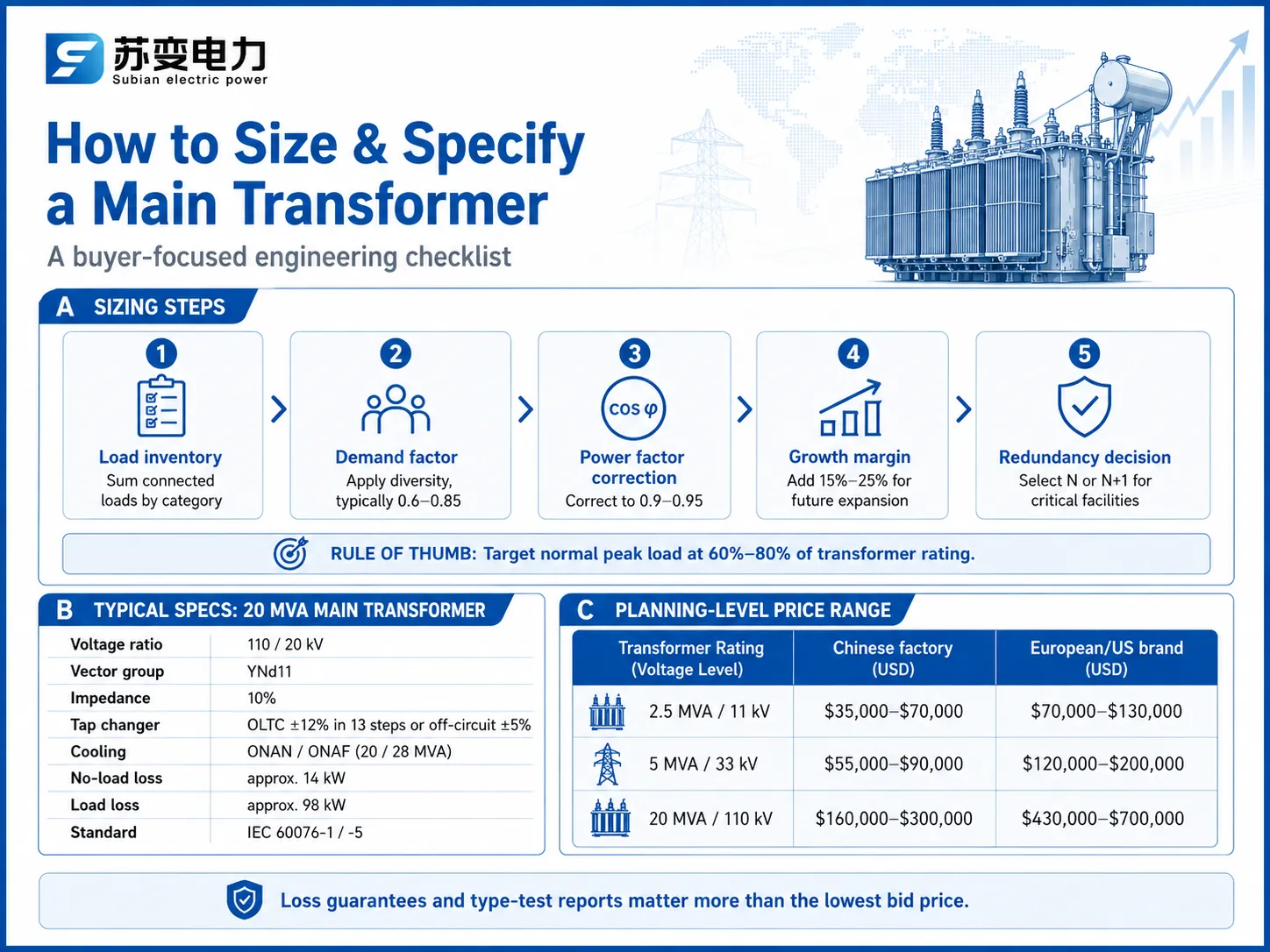
サイズ決定は他のすべての仕様を決定する要因です。エンジニアリングの手順:
| ステップ | 方法 | 一般的な結果 |
|---|---|---|
| 負荷インベントリ | カテゴリごとに接続された負荷を合計 | 例:接続された8 MW |
| 需要係数 | 多様性を適用(通常0.6〜0.85) | 例:最大需要6 MW |
| 力率補正 | 9〜0.95に補償 | ≈6.5〜7 MVAの見かけ |
| 成長マージン | 将来のために15%〜25%を追加 | ≈8〜8.5 MVAを選択 |
| 冗長性の決定 | NまたはN+1構成 | 重要な場合は2×8 MVA |
工業施設に対する確固たるガイドラインは、主変圧器のサイズを、通常のピーク負荷がその定格の60%から80%の間に収まるようにすることです。これにより、過負荷の余裕が確保され、効率が最大化され、モーター起動時の電力低下に対する十分なマージンが確保されます。重要なプラントでは、緊急時に両方の変圧器が全負荷を管理できるN+1構成で2つの変圧器を使用することが一般的になっています。.
主変圧器の種類と構成
| 構成 | 電圧ステップ | 典型的な定格 | 使用場所 |
|---|---|---|---|
| 二次巻線、油浸型 | 110/20 kV | 5–60 MVA | ほとんどの工業サイト |
| 二次巻線、乾式 | 11/0.4 kVまたは20/0.4 kV | 5〜10 MVA | 屋内、火災に敏感な施設 |
| 三次巻線 | 110/20/6.6 kV | 10–60 MVA | 複数の電圧レベルを持つプラント |
| N+1 ツインバンク | 110/20 kV ×2 | 2×5–2×30 MVA | データセンター、病院、製油所 |
三巻き主変圧器は、中電圧プロセスバスと別の補助バスの両方が必要な場所で人気があります。第三の巻きはハーモニックパスを提供し、別のユニット変圧器の必要性を減少させます。.
主変圧器 vs. 配電変圧器 vs. ユニット変圧器
| 視点 | メイン変圧器 | 配電変圧器 | ユニット変圧器 |
|---|---|---|---|
| 位置 | ユーティリティ境界からプラントMVまで | MVフィーダーからエンドユーザーまで | プラントMVからLV負荷まで |
| 一般的な定格 | 5–60 MVA | 50 kVA–2,500 kVA | 100 kVA–3 MVA |
| 主電圧 | 11–220 kV | 4–35 kV | 6–35 kV |
| 稼働プロファイル | 連続高負荷 + 過負荷 | 可変部分負荷 | 建物/プロセス負荷 |
| 典型的な価格 | $35k–$300k+ | $1.5k–$45k | $5k–$70k |
「主」と「ユニット」の境界は、小規模施設では単一の変圧器が両方の役割を果たすため曖昧になることがありますが、エンジニアリングの優先事項は異なります:主変圧器は信頼性と連続負荷を最適化し、ユニット変圧器はコストと柔軟性を重視します。.
工業用主変圧器の主要仕様
| パラメータ | 典型的な値 |
|---|---|
| 定格電力 | 20 MVA |
| 電圧比 | 110 / 20 kV |
| ベクトルグループ | YNd11 |
| インピーダンス電圧 | 10% |
| タップチェンジャー | OLTC ±12%の13段階、またはオフサーキット ±5% |
| 冷却 | ONAN/ONAF (20/28 MVA) |
| 無負荷損失 | ≈14 kW |
| 負荷損失 | ≈98 kW |
| 絶縁レベル | 550 kV BIL (110 kV側) |
| 標準 | IEC 60076-1/-5 |
これらの数値は、買い手と製造者の間の契約です。いかなる逸脱 — 高い損失、異なるインピーダンス、弱いタップ範囲 — は価格と性能を変更するため、生産前にロックする必要があります。.
効率、損失 & 総所有コスト
ほとんどの工業用主変圧器は、効率レベルが99.0%から99.6%の間で動作します。例えば、20 MVAの変圧器で効率が99.4%の場合、フルロード運転時の熱損失は約120 kWで、1年間の総消費量は約1,000 MWhになります。これは、平均料金が$0.08–0.15/kWhの場合、年間$80,000–150,000のコストに相当し、待機時間中の損失は考慮していません。.
効果的なコスト評価は、20–30年の期間にわたって行うべきです。低損失モデルの作成には約5%–10%の追加コストがかかりますが、長期的には運用コストを節約します。20 MVAの変圧器ユニットで5 kWの損失を削減することは、年間約44 MWhの節約を意味し、年間約$4,400–6,600の節約、通常の工業価格ソリューションで20年間で$90,000–130,000の節約をもたらします。.
保護 & 安全工学
多層保護の最も重要なアプローチは、場所で最も高い評価を受けている変圧器に向けられています。.
異なる保護スキーマから始めます:
差動保護 (87T) は、変圧器の一次側の電流と二次側の電流(比率とベクトルグループで補正)を比較して内部故障を迅速に検出します。.
過電流保護 (50/51) は、位相および接地故障のバックアップを支援します。.
制限接地故障 (REF, 64) は、巻き線から接地への故障を検出するのを支援します。.
ブクホルツリレーは、ガスの形成による初期段階での故障を検出します。また、サージおよび波インパルスアラームを生成することもできます。.
温度アラームは、変圧器がIEC 60076-2で定められた温度制限に達したことを示します。.
圧力解放、OLTC保護およびサージアレスタは、変圧器を機械的力および雷から保護します。.
委託および保守の経験は、IEEE C57.140(保守ガイド)およびIEC 60076-7(負荷ガイド)によって定められた基準から採用されています。.
現代産業における応用
鉄鋼および冶金 — 30-120 MVAの範囲で非常に過酷な運転サイクルに対応する主変圧器および炉用変圧器。.
コンピュータセンター — 冗長性が保証された双子の主変圧器、通常は110/20 kVの電圧レベルで2×10-2×30 MVAの範囲。.
医薬品および半導体 — 不利な負荷に接続し、屋内設置用の乾式オプション選択に加えて高品質の電圧を要求。.
鉱業 — 難しい環境要因、高温、アクセス条件の悪さに対応する特定の設計が必要な遠隔地。.
化学および精製 — 連続負荷技術は通常N + 1ベースで動作し、重要な余剰負荷容量をサポート。.
商業ビルおよび病院 — 厳格な冗長性要件に従う5-20 MVA。.
各状況において、購入の背後にある論理は似ています:負荷の特性に合わせたサイズのマッチング、投資に対する損失の最適化、ダウンタイムが損失を意味する場合の冗長性の追加、リレーの接続による保護の追加。.
現実的な価格とトップブランド
主変圧器の価格は、定格、電圧、損失、タップチェンジャー、ブランドに従います。油浸型ユニットの計画レベルの範囲:
| 定格 / 電圧 | 中国工場(例:Subian、TBEA) | ヨーロッパ/米国ブランド |
|---|---|---|
| 5 MVA / 11 kV | $35,000–$70,000 | $70,000–$130,000 |
| 5 MVA / 33 kV | $55,000–$90,000 | $120,000–$200,000 |
| 20 MVA / 110 kV | $160,000~$300,000 | $430,000–$700,000 |
| 40 MVA / 110 kV | $300,000–$550,000 | $800,000–$1,300,000 |
価格は仕様、損失レベル、地域によって異なります。国際ブランドプレミアムなしで負荷プロファイルに合わせて設計された主変圧器が必要な産業バイヤーには、, 江蘇省蘇辺電力 強力な選択肢です:50 kVAから220 kVクラスまでの配電および電力変圧器を製造する中国の変圧器メーカーで、カスタムインピーダンス、タップ範囲、冷却構成を持つ2.5–60 MVAの産業用主変圧器を含みます。ユニットはIEC 60076型試験報告書および完全な工場試験文書を持って出荷され、エンジニアは保護インターフェース設計および現場委託をサポートします。工場直販価格は通常、欧州の同等品よりも30%–50%低く、複雑なプロジェクト向けのOEM/ODMカスタマイズが可能です。.
よくある質問
主変圧器とユニット変圧器の違いは何ですか?
主変圧器は、施設を11–220 kVの電力網に接続し、全体のプラントのMV配電を6.6–35 kVで供給します。ユニット変圧器は小型(通常100 kVA–3 MVA)で、プラントのMVバスを400/230 Vに降圧し、建物、照明、小負荷に供給します。大規模なサイトには1台または2台の主変圧器と数十台のユニット変圧器があります。.
工場の主変圧器をどのようにサイズ設定しますか?
接続された負荷を合計し、需要係数0.6–0.85を適用し、力率を0.9–0.95に修正し、15%–25%の成長マージンを加え、通常のピーク負荷が60%–80%の定格に収まるように最も近い標準定格を選択します。重要な施設の場合、各ユニットがフルロードに対応できるN+1のツインユニットを使用します。最大需要が6 MWの場合、通常は8–10 MVAの変圧器が必要です。.
工業用主変圧器はどのくらいの効率を達成すべきですか?
フルロード時に99.0%–99.6%を期待し、無負荷損失は定格の約0.05%–0.1%、負荷損失は0.4%–0.7%です。20 MVAのユニットは、無負荷で14 kW、負荷損失で98 kWを示すかもしれません。保証された損失値を要求し、入札の選択前に20–30年の資本化損失比較を実施してください — 損失の違いは通常、価格の違いを上回ります。.
工場用の主変圧器はどのくらいのコストがかかりますか?
5–5 MVA / 11–33 kVユニットには$35,000–$90,000、20 MVA / 110 kVには中国の工場から$160,000–$300,000(またはヨーロッパのブランドから$430,000–$700,000)、プレミアムブランドの40 MVAクラスには最大$1.3百万を予算に入れてください。保護、設置、試験、土木工事には20%–40%を追加してください。.
主変圧器には負荷切替器が必要ですか?
ユーティリティの電圧が±5%以上変動する場合や、負荷が意味のある電圧変動を引き起こす場合は、はい — OLTCは、±12%から±16%の範囲内で自動的に工場のMVを±2%に保ちます。供給が安定していて負荷が一定の場合、±5%のオフ回路タップチェンジャーが安価で適切です。OLTCは通常、定格に応じて$15,000–$60,000を追加します。.
参考文献
- IEC 60076-1: 電力変圧器 — 一般 — 主変圧器の定格、許容差、試験。.
- IEC 60076-5: 短絡に耐える能力 — 工業用の耐短絡要件。.
- IEC 60076-7: 油浸型電力変圧器の負荷ガイド — 過負荷能力と熱劣化のガイダンス。.
- IEEE C57.12.00: 液体浸漬トランスの一般要件 — 北米の関連規格。.
- IEEE C57.140: 変圧器メンテナンスのガイド — 工業用ユニットのメンテナンスと状態評価のリファレンス。.
- 日立エナジートランス — 大型変圧器技術の業界リファレンス。.
結論
- 主変圧器は現代産業の電気システムにおける重要なコンポーネントであり、企業のエネルギー構造の基盤を形成します。サイズ、損失の最適化、保護の種類、冗長性のパラメータが、今後のサイトの性能とコストを決定します。.
サイズは、通常の最大負荷が60%–80%の定格容量で、15%–25%の成長マージンを持つように選択する必要があります。.
損失は、20–30年の資本化損失モデルを使用して最適化する必要があります。.
保護は、差動保護、REF、ブクホルツリレー、温度制御によって提供されるべきであり、メンテナンスはDGAに従うべきです。.
これらの変圧器の予算は、2.5–5 MVAの場合は$35kから$90k、20 MVA/110 kVの場合は$160kから$300k(工場直送)であるべきです。.
新しい工場を計画しているか、既存の変電所をアップグレードしている場合、, 江蘇省蘇辺電力 5 MVAから60 MVAまでの主変圧器をIEC 60076認証、カスタムタップおよび冷却構成、工場直販価格でエンジニアリングおよび供給できます。.