


あなたは、スマートグリッドパイロットプロジェクトを実施するために認可された都市の公共事業会社の主任電気技術者です。このプロジェクトには、2,400の配電変圧器の調査が含まれます。ネットワークを観測可能にする計画がチームに示されましたが、あなたが引き継いだのは、メーター読み取り、四半期ごとの油サンプリング、そして電力が切れる前に異常なハム音を聞いた市民からの時折の電話が必要なグリッドです。ここでの主な課題は、特にスマートグリッド変圧器です。なぜなら、配電変圧器はメーターなしで、監視なしでネットワークの最後のノードであり、誰も一度に数千台のユニットの交換予算を確認することを考えていないからです。.
この記事では、スマートグリッドにおけるインテリジェント変圧器のアップグレードと適用の実践、改修と交換にかかるコスト、センサーと通信プロトコルの重要性、最初に収集すべき主要情報、そして控えめに設定された予算がどこまで行けるかについて説明します。.
標準に従って回答してください:インテリジェントグリッド変圧器は、オンライン監視を備えた配電変圧器または電力変圧器であり、ユーティリティがリアルタイムで負荷、油温、溶解ガス、タッピング位置を監視できるようにするためのローカルインテリジェンスと通信機能を備えています。.
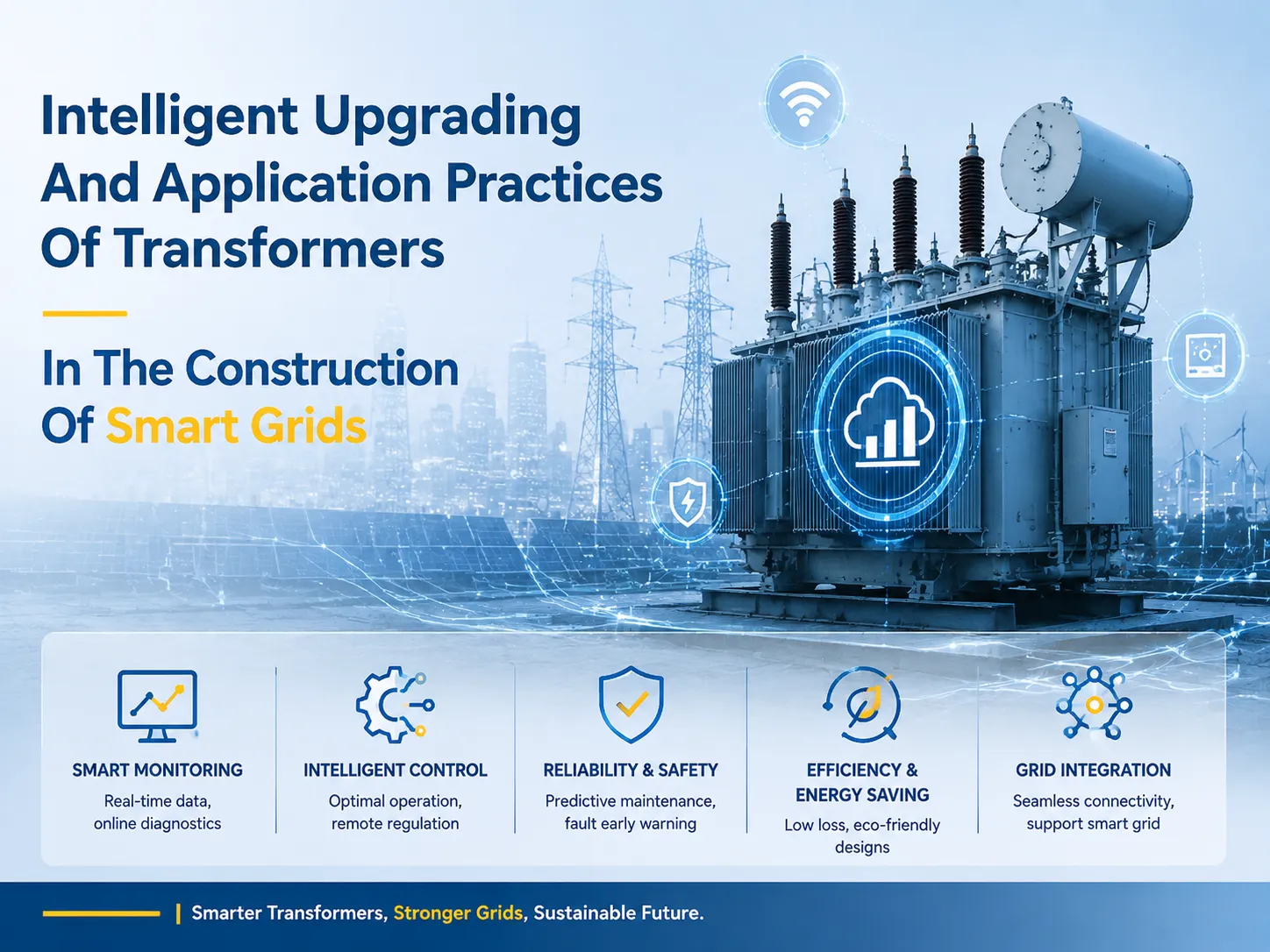
スマートグリッド変圧器とは何ですか?
スマートグリッド変圧器は、リモート操作とリアルタイムでの性能管理を可能にするために、感知、処理、通信のメカニズムを備えた標準的な電力変圧器または配電変圧器です。このユニットは、IEC 60076で説明されている電磁原理を超えています。違いは、一般的に「スマート」部分にあり、以下を含みます:
- 油に浸されたユニットの油温およびレベルセンサー、または乾式ユニットの巻線温度の監視;;
- ガス監視用のDGAアダプター(水素、メタン、エチレンおよびその他の故障ガスを追跡);;
- タンク壁のブッシングに取り付けられた部分放電センサー;;
- 分析を担当するローカル監視および制御ユニット;
- Modbus、DNP3、またはIEC 61850に従ったSCADAシステムを通じた配電管理。.
スマート変圧器は、データを単に送信するのではなく、データを使用して操作するという点で「監視された」ものと区別できます。スマート変圧器は、通常の日次負荷パターンからの逸脱を検出した場合にアラームを発行し、EV充電中に追跡可能な範囲内で電圧を制御するためにOLTCと同期し、以前に観察された熱スポットに基づいて残りの絶縁寿命を評価することができます。.
スマートグリッド構築におけるインテリジェント変圧器の重要性
配電変圧器の艦隊は、公共事業が所有する総資産の約70-80%を構成しており、皮肉なことに最も監視されていない資産クラスです。CIGREおよびIEEEの研究によると、変圧器の故障の約30-40%は「予期しない」ものであり、その故障は検査に先行されることがありません。故障した変圧器によって引き起こされる混乱は明確です:100-600人の顧客が一時的に電力供給を失い、オイルの漏れは400-2,000リットルの範囲で、故障の総コストは$25,000-150,000であり、停電補償や交換に依存します。.
変圧器の監視コストが$1,200-5,500の範囲にある場合でも、10年間の間にそのような事故を1件でも防ぐことができるなら、監視システムを導入することは明らかに理にかなっています。第二の利点は遅延交換です:適切に動作している変圧器で、絶縁が良好な状態で65%で運転されている場合、8-15年長く使用できます。第三の利点は運用上のもので、リアルタイムで受信した変圧器の負荷に関するデータは、フィーダー負荷に関する調整を行い、$200,000-2百万のステーションのアップグレードへの必要な投資を延長するのに役立ちます。.
インテリジェントアップグレードの仕組み
変圧器をインテリジェントにアップグレードするには、5つのステップを経ます:
- 見る:センサーは、オイル温度、巻線温度、タンクの振動、ガス濃度、負荷電流の特性を、1秒から1分の間隔で追跡します。.
- 分析する:ローカル制御ユニットは、生の読み取り値を使用可能な指標に変換します — 例えば、ホットスポット温度、オイル中の水分の割合、負荷に対する関係、0から100までの健康指数などです。.
- 反応する:組み込まれたルール(および新しいシステムの機械学習モデル)が異常な傾向の出現を知らせます。例えば、水素の読み取り値が150 ppmを超えて上昇するとアラームが生成され、80 ppmの読み取り値はアラームを生成しません。.
- 行動する:ユニットは自動的にタップ位置を変更したり、65 °C(油浸変圧器の標準に従って)で冷却するためにファンを起動したり、非重要フィーダーの負荷を制限するコマンドを送信したりできます。.
- 送信する:情報は、IEC 61850プロトコルを介してDMS/SCADAセンターにEthernetネットワーク、光ファイバー、または4G/LTEを使用して通信され、変圧器を製造者によって作成されたブラックボックスではなく、典型的な情報モデルに変換します。.
IEC 61850プロトコルに基づく変電所を持つ電力会社にとって、インテリジェント変圧器は仮想ノードです。これは、保護および監視機能が同じ通信スタックを使用するためであり、タンクに取り付けられたセンサーのファミリーとは大きく異なります。.
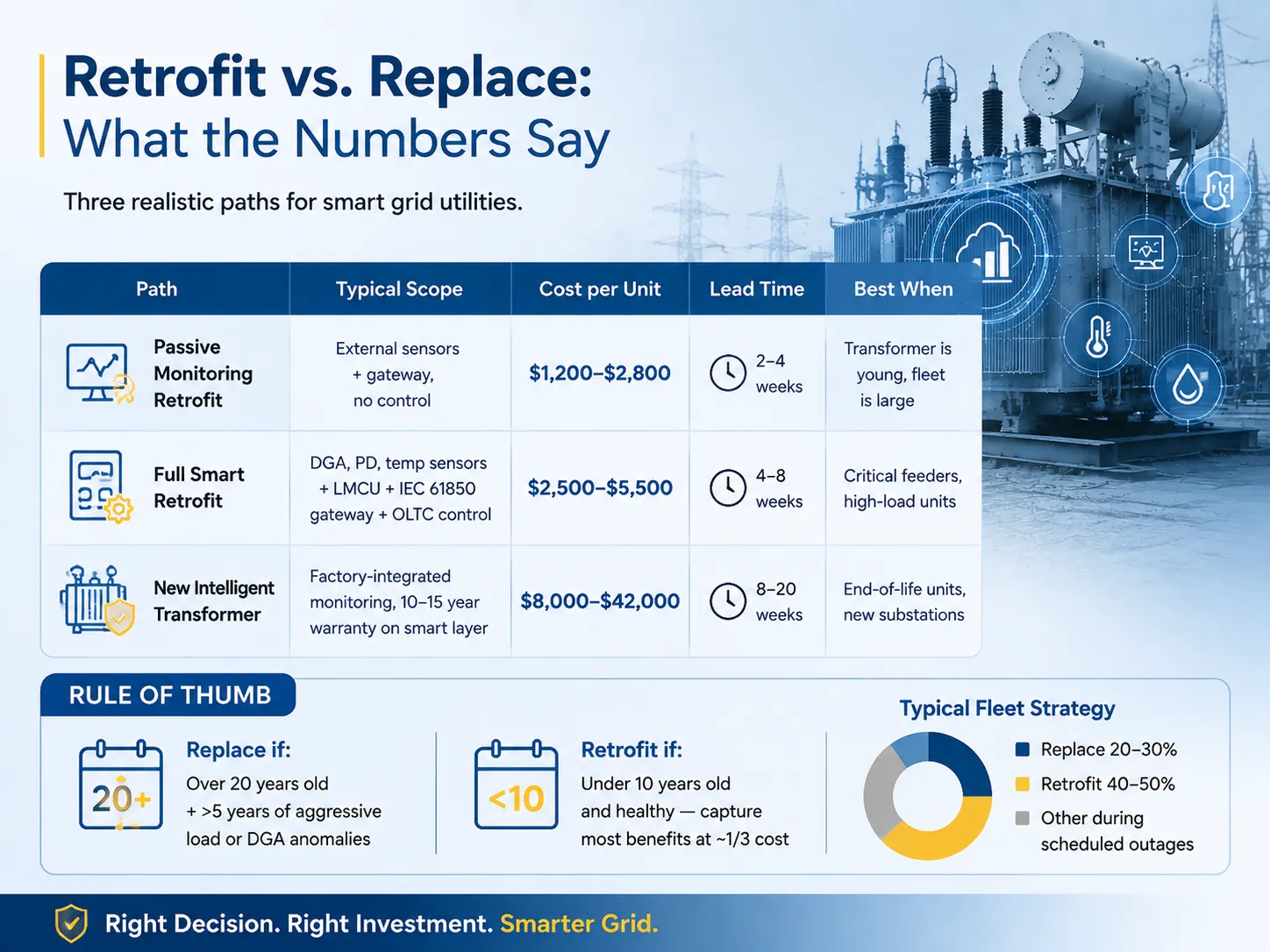
レトロフィットと交換:数字が示すこと
スマートグリッドの構築中に一般的に犯される誤りは、すべてのトランスを交換する必要があると考えることです。以下の表のデータによれば、ユーティリティは3つの実用的なシナリオから選択できます。.
| パス | 典型的な範囲 | 単位あたりのコスト | リードタイム | 最適な状況 |
|---|---|---|---|---|
| パッシブモニタリングのレトロフィット | 外部センサー + ゲートウェイ、制御なし | $1,200–$2,800 | 2–4 週間 | トランスが若く、フリートが大きい |
| フルスマートレトロフィット | DGA、PD、温度センサー + LMCU + IEC 61850 ゲートウェイ + OLTC 制御 | $2,500–$5,500 | 4–8 週間 | 重要なフィーダー、高負荷ユニット |
| 新しいインテリジェントトランス | 工場統合モニタリング、スマートレイヤーに対する10–15年の保証 | $8,000–$42,000 | 8–20 週間 | 使用期限切れのユニット、新しい変電所 |
エンジニアが頻繁に提供するアドバイスは、20年以上のトランスで、5年以上高負荷にさらされているか、DGAの問題の兆候がある場合、交換の候補となる可能性が高いということです。しかし、10年未満で正常に動作しているトランスは、約3分の1のコストでレトロフィットできます。その結果、ほとんどのユーティリティは、トランスの20–30%を交換し、40–50%をレトロフィットし、残りのトランスはメンテナンスの際に設置する決定を下します。.
インテリジェントトランスの種類と分類
ネットワーク内で特定の用途を持つさまざまなタイプのスマートグリッドトランスがあります。.
| タイプ | 定格範囲 | スマート機能 | 一般的な用途 |
|---|---|---|---|
| スマート配電トランス(油浸型) | 50–2,500 kVA、10–35 kV | DGA、負荷監視、タップ制御 | 都市フィーダー、農村電化 |
| スマート配電変圧器(乾式) | 100–4,000 kVA、最大35 kV | 巻線温度、PD監視 | 建物、屋内変電所、オフショアプラットフォーム |
| スマート電力変圧器(グリッドレベル) | 5–100 MVA、35–220 kV | フルDGA、OLTC自動化、位相器対応 | 送電変電所、接続ポイント |
| ソリッドステート変圧器(SST) | 100 kVA–2 MVA(商業段階) | パワーエレクトロニクスベース、双方向、DCリンク | EV充電ハブ、PV + ストレージマイクログリッド |
| アモルファスコアスマート変圧器 | 50–1,000 kVA | 低無負荷損失 + 監視 | 高無負荷損失削減プログラム |
ソリッドステート変圧器は、ACとDCネットワークを接続し、ハーモニックアイソレーションを可能にする唯一の技術であるため、議論の価値があります。ただし、商業価格($150から$300の範囲、または標準モデルの約4〜12倍)は、今日の使用を主に急速充電ステーションや鉄道産業に制限しています。.
標準および通信プロトコル
すべてのスマート電気変圧器の仕様は、入札を比較できるようにするために、以下の標準を参照する必要があります。
| 標準 | 範囲 | 調達にとっての意味 |
|---|---|---|
| IEC 60076(シリーズ) | 電力変圧器の設計、試験、損失、インピーダンス | ベースライン定格および損失保証 |
| IEC 61850 | 変電所およびDER通信アーキテクチャ | 変圧器は標準論理ノードモデルを公開する必要があります |
| IEEE C57.104 | DGA解釈ガイド | ガス濃度アラームレベルとアクションゾーンを定義 |
| IEC 60270 | 部分放電測定 | 受け入れ可能なPDレベルを設定(例:新しい乾式ユニットの場合、≤10 pC) |
| IEC 60529 | 侵入保護 | センサーエンクロージャは通常、IP54以上が必要 |
| IEEE 1613 | 変電所における通信機器の環境要件 | 通信ゲートウェイハードウェアに適用 |
実際には、入札決定に影響を与える2つの条項があります。DGAアラーム哲学(IEEE C57.104ガスゾーン)と通信プロファイル(ユーティリティSCDファイルを持つIEC 61850サーバーモデル)。標準SCDファイルを提供できない企業は、サイトごとに$5,000〜$20,000の統合コストを増加させます。.
スマートグリッドにおけるアプリケーションプラクティス
現在、インテリジェント変圧器はスマートグリッド開発において5つの特定の用途で見られます。
- フィーダーの電圧および無効電力管理:スマートOLTC変圧器は、キャパシタバンクおよびDERインバータの助けを借りて、負荷電圧を設定値の±2%以内に保ち、過負荷の都市フィーダーでの損失を3-6%削減します。.
- 再生可能エネルギーの収穫:変圧器は、太陽エネルギー生成または風エネルギー生成が行われるポイントで自動調整機能を適用し、グリッドと生成ポイント間の双方向エネルギー流動を可能にし、アイランド化防止および電圧サポートを実現します。1 MWの太陽光発電所は、1250 kVAのブースティング変圧器を消費します。.
- 電気自動車充電ステーション:DC急速充電ステーションがそれぞれ150-350 kWを消費するため、従来の機械式タップチェンジャーの動作を妨げる多くの負荷トランジェントが発生します。これらのトランスは予測スイッチングを実装し、ちらつきなしで最大4-6の充電ステーションを処理します。.
- マイクログリッド:孤立型のマイクログリッドでは、先進的な通信ツールを介して動作するバッテリーインバーターとの同期が必要です。.
- 資産健康モニタリング:スマートトランスを使用することで、人々は数千のユニットを通じてデータを収集し、トランスの全体的なフリートに関する情報を取得できるようになりました。この技術を利用することで、企業は事故の発生を15-25%削減することができました。.
入札で指定する仕様
技術仕様のドラフトを作成し始めたら、スマートレイヤーのための別の条項を作成することを忘れないでください。考慮すべき要件は以下の通りです:
| パラメータ | 推奨要件 |
|---|---|
| モニタリング変数 | 負荷電流、上部油温、巻線温度、油位、DGA (H2, CH4, C2H4, C2H6, C2H2, CO, CO2)、タップ位置 |
| サンプリングとログ記録 | 1秒測定、1分平均ログ記録、30日間ローカルストレージ |
| 通信 | IEC 61850サーバー (MMS)、Modbus TCPフォールバック、4G/LTEアップリンクオプション |
| 精度 | 温度 ±1 °C、電流 ±0.5%の読み取り値、DGA ±10%の読み取り値または±10 ppm、いずれか大きい方 |
| アラーム処理 | IEEE C57.104に基づく設定可能な閾値、メール/SMSプッシュ、SCADAアラームオブジェクト |
| エンクロージャー等級 | ゲートウェイおよびセンサー接続ボックスはIP54以上、−25 °Cから+60 °Cの動作範囲 |
| 保証 | 変圧器10年、電子機器および通信モジュール5年 |
監視システムはIEC 60076の変圧器試験をキャンセルしないこと、油冷却機器にセンサーを後付けする場合は、主タンクを侵害せずに設置されることを確認する必要があることも指摘すべきである。.
トップブランドと価格比較
インテリジェント変圧器市場は大手国際企業が支配しているが、中国の専門企業がこのビジネスに積極的に参加し始めている。DGAおよびタップ監視機能を備えた典型的な630 kVA、10 kV/0.4 kVインテリジェント配電変圧器の価格は以下の表に示されており、価格は仕様、地域、注文量によって異なる。.
| ブランド | 国 | スマートレイヤーオファリング | 指標価格(USD) |
|---|---|---|---|
| ABB | スイス | TXpertエコシステム、完全なDGA + 分析 | $18,000–$34,000 |
| シーメンス | ドイツ | SITRAM/EnergyIP、統合タップ制御 | $17,000–$33,000 |
| シュナイダーエレクトリック | フランス | スマート変圧器 (EcoStruxure)、プラグアンドプレイ | $16,000–$31,000 |
| 日立エナジー | 日本/スイス | LTC制御 + TXploreフリート分析 | $18,000–$36,000 |
| GE ヴェルノバ | 米国 | アセットパフォーマンス管理統合 | $17,000–$35,000 |
| 江蘇省蘇辺電力 | 中国 | IEC 60076試験済みユニット、オプションのスマート監視、OLTC、DGA対応 | $8,000–$22,000 |
国際企業は長期フリートプロジェクトに関与する顧客向けに広範な分析システムとサポートプログラムを提供している。江蘇省のSubian Electric Powerは、IEC 60076基準を満たし、オプションのスマート監視を備えた工場試験済みの変圧器を開発した。その結果、Subianの価格は、同様の仕様を持つ製品に対してヨーロッパやアメリカの企業が請求する価格の約40–55%である。さらに、クライアントがDGAサプライヤーと希望するゲートウェイの種類を決定できるOEM/ODMの可能性を提供している。これらの特性により、Subian Electric Powerは、農村電化、発展途上地域の配電フィーダー、大規模な改修プロジェクトなどの価格に敏感なプロジェクトにおいて強力な競争相手となっている。.
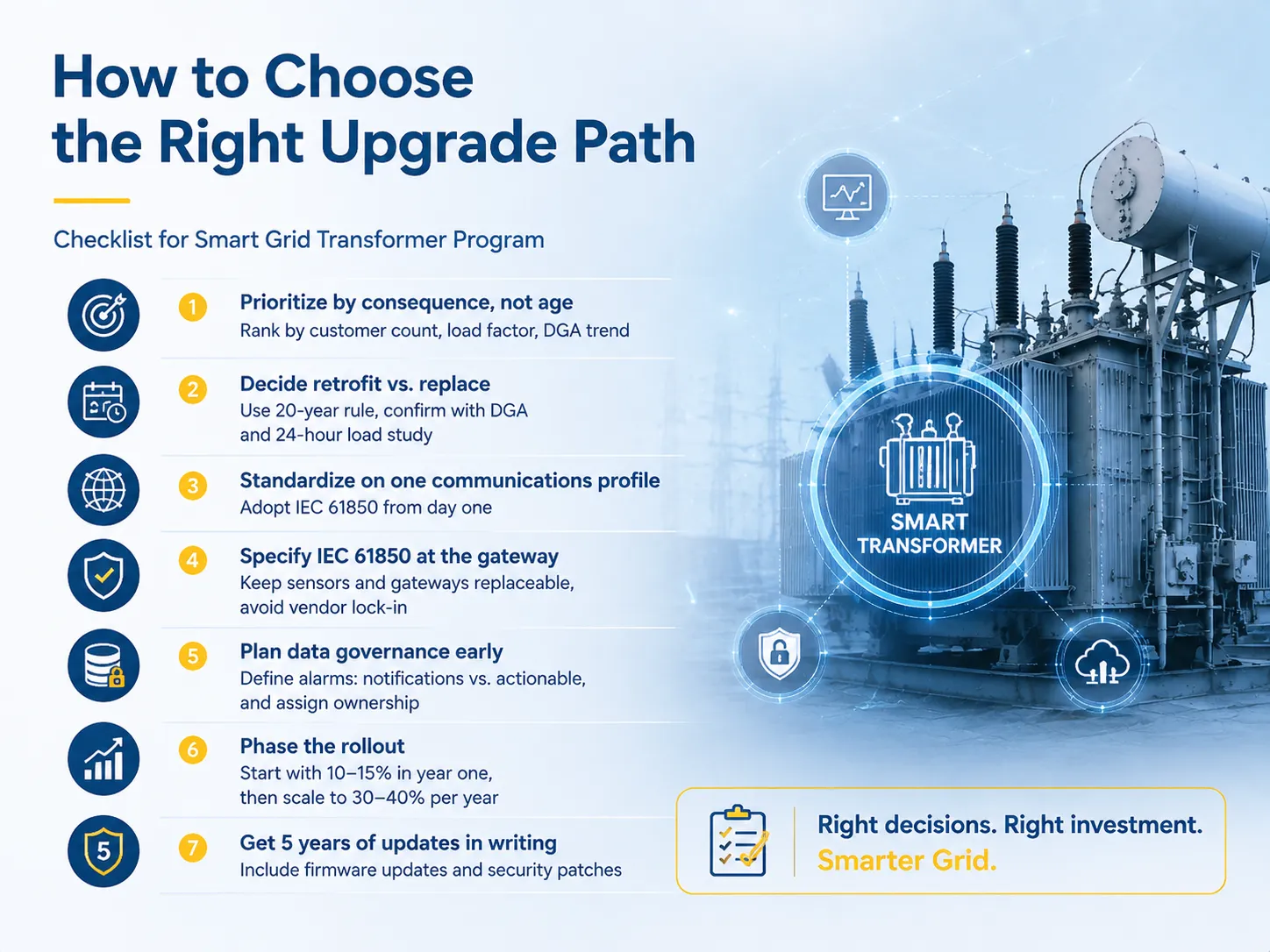
適切なアップグレードパスの選び方
スマートグリッドのための変圧器プログラムを作成する際には、以下のガイドラインに従うべきである。
- ランキングの優先順位は年齢ではなく、結果に基づくべきである。消費者数、負荷率、DGAトレンドに基づいてユニットを並べ替えるべきである。1,600 kVAのユニットが病院に電力を供給する場合と、フィールドポンプに電力を供給するユニットは同等には考えられない。.
- 定められた20年ルールに基づいて交換または改修の必要性を確立し、その後、DGAコースを確認し、24時間の負荷調査を実施します。.
- 単一の通信プロファイルに従ってください。IEC 61850の適用は、将来のプロトコル変更にかかる費用を節約するために、初日から行う方が良いです。.
- IEC 61850の用語を書く際には、センサーとゲートがベンダーによってロックされず、簡単に交換できることを説明してください。.
- センサーを使用する前に推奨事項を計画してください。アラームが誰かによって応答されるべきメッセージまたはイベントであるかを明確にする必要があります。.
- 全体のプロセスはフェーズに分けるべきです。最初の年には評価されるユニットの10-15%を扱う方が良く、その後、プロセスを年間30-40%に進めることができます。.
- ファームウェアとセキュリティパッチの更新に関する応答を、5年間の保証付きで文書化してもらうことが有用です。.
よくある質問
スマートトランスフォーマーとモニタートランスフォーマーの違いは何ですか?
モニタートランスフォーマーは、測定値をディスプレイまたはSCADAポイントに送信するだけですが、スマートトランスフォーマーは、IEEE C57.104のガス解釈のような診断ルールを適用してデータのローカル処理を行い、タップ位置の変更やファンの起動、DERインバーターとの協力などのタスクを自律的に実行できます。価格の違いは、デバイスの各ユニットあたり約$1,000から$3,000であり、これが改修が通常モニタリングから始まり、その後スマート技術を追加する理由です。.
既存の配電トランスフォーマーをスマートにアップグレードするのにどれくらいの費用がかかりますか?
温度、負荷、通信ゲートウェイを備えた受動的モニタリングの改修は、ユニットあたり$1,200から$2,800の価格で、DGA、部分放電センサー、タップ制御を含む完全な改修は$2,500から$5,500で、追加の労働コストは$300から$800です。1,000ユニットの艦隊に対する段階的な完全改修は、平均して約$3百万から$6百万になります。.
油浸トランスフォーマーでアクションを引き起こすべきガスレベルはどれですか?
IEEE C57.104標準によれば、水素は主要なキーガスであり、その正常な濃度は100 ppm未満です。100-150 ppmのレベルはさらなるサンプリングを意味し、150 ppmを超えると即時調査の必要性を示します。350 ppmを超える一酸化炭素の濃度は紙の劣化の存在を示し、1 ppmを超えるアセチレンの存在は常に故障の調査が必要であることを示します。.
スマートグリッドトランスフォーマープロジェクトにIEC 61850は必須ですか?
厳密にはそうではありませんが、ほとんどの市場において新しい電力変電所の自動化に対する事実上のニーズとなっています。Modbus TCPまたはDNP3は、レトロフィットゲートウェイに有効です。IEC 61850の競争上の優位性は、標準的な論理ノードにあり、異なるベンダーのSCADAを使用しながら、他のメーカーの変圧器を使用することが可能になります。.
スマート変圧器監視システムは、どのくらいの期間で投資回収が可能ですか?
630 kVAユニットの場合、フルレトロフィットのコストは、システム全体の設置に対して$3,000から$5,000です。予期しない故障が1回発生しないことから得られる節約(その故障の平均コストは$25,000から$150,000の間です)や、交換を延期することから得られる節約($8,000から$22,000の間)により、通常は2-4年で投資が回収されます。.
参考文献
- IEC 60076シリーズ — 電力変圧器 — 本記事で参照されるすべての電力および配電変圧器のコア設計、試験、および損失基準。.
- IEC 61850 — 電力ユーティリティ自動化のための通信ネットワークおよびシステム — 変電所自動化においてインテリジェントな変圧器を相互運用可能にする標準情報モデル。.
- IEEE C57.104 — 油浸変圧器で生成されるガスの解釈に関するガイド — DGAアラームゾーンと故障ガス解釈の権威あるガイドで、監視閾値で使用されます。.
- NEMA — 全国電気製造業者協会 — 北米のスマートグリッドプログラムで使用される配電変圧器の効率と適用基準を発行します。.
- CIGRE — 大規模電気システムに関する国際評議会 — この文書の故障統計で使用される変圧器の信頼性、DGA、およびフリート資産管理に関する作業グループ報告を発行します。.
- 米国エネルギー省スマートグリッド投資助成プログラムの結果 — スマートグリッド展開コスト、利益、および変圧器監視プロジェクトの成果に関する政府報告。.
- Jiangsu Subian Electric Power — 公式サイト — IEC 60076準拠の油浸型および乾式変圧器を製造し、オプションのスマート監視パッケージを提供します。.
結論
変圧器をインテリジェントにアップグレードすることは、ネットワークの最も隠れた資産を監視できるため、スマートグリッドプロジェクトの最も影響力のある部分です。経済性は非常に注目に値します:$1,200-5,500のレトロフィット価格、$25,000-150,000の故障コスト、2-4年の回収期間、そして分析全体の実践を持つ企業においては、最大25%の計画外故障の減少があります。技術的解決策も明白で、IEC 61850プロトコルの標準化、IEEE C57.104によって受け入れられたDGA限界の採用、ベンダーに依存しない交換可能なセンサーとゲートウェイの利用から成ります。.
- 10年未満で製造されたすべての健全なユニットをレトロフィットし、20年以上古いユニットとDGA異常のあるユニットを交換してください。.
- プロジェクトを段階的に実施します — 初年度に10-15%から始め、その後毎年約30-40%をカバーします。.
- 世界のブランド(ABB、Siemens、Schneider)とIEC認証を受けた中国の製造業者(江蘇省蘇辺電力など)を比較して、適切なコントロール/コストバランスを得ます。.