


トランス技術の新しい時代の始まりは、生産の技術的近代化のための三層プラットフォームの創造に対応しています。まず、アモルファスコア、エステルオイル、高純度巻線材料の開発などのコンポーネント革新により、損失を削減し、設置オプションを広げることが可能になります。次に、監視、デジタルツイン、予測分析などのシステム革新により、資産がデータの源に変わり、強制的な停電を30から50 %削減します。最後に、パフォーマンス調達やトランスフォーマー・アズ・ア・サービスのようなビジネスモデル革新により、リスクと資本の所有権が変更されます。進行中の三方向の革命は、トランスの調達を単なる購入からデータ駆動型の戦略的意思決定プロセスに変えます。.
IEC 60076-20 クラス 1 への効率のアップグレードにより、30から50%の損失削減が可能になり、4年から9年で投資回収が実現します。.
監視への投資は、重要な資産に対する最も迅速な投資回収を保証し、しばしば最初の事故を防いだ後にすでに回収を提供します。.
サービスモデルは、資本の解放とリスクの移転を可能にし、特にキャッシュフローの目的において重要です。.
信頼性保証、デジタル文書、監視下でのテストを伴うトランスを購入すべきです。.
江蘇省スビアン電力は、現代的なトランスと、手頃な価格で監視ソリューションのアップグレードに対応したトランスの製造業者です。.
トランスのタップチェンジャーとは何ですか?
A タップチェンジャー は、トランスの巻線にさまざまなタッピングポイントで取り付けられた切替装置です。この装置の助けを借りて、巻線のターン数の変化とそれに伴う二次側の電圧の変動をもたらす異なるタップ間の接続を切り替えることが可能です。したがって、タップチェンジャーは、トランスのタンク内に組み込まれているか、巻線の上に取り付けられている電圧調整のメカニズムです。.
様々なネットワークで経験される電圧は、日中の負荷の変動、電力線のたわみ、ネットワークによって提供される電圧の変化により、常に減少と増加を繰り返します。生産中に得られた比率でのトランスの固定電圧出力は、電圧供給の問題を引き起こす可能性があり、タップチェンジャーは信頼できる修正手段を提供します。.
すべてのタイプのタップチェンジャーを特徴付けるために使用される3つの重要な側面があります:その電圧ステップ(定格電圧のパーセンテージで表現)、位置の数、調整された電圧の範囲です。例えば、±2×2.5%の範囲で機能する能力を持つ配電トランスがあり、4つのタップ位置を持っていますが、より大きなトランスにはより高度なタップチェンジャーが提供されています。.
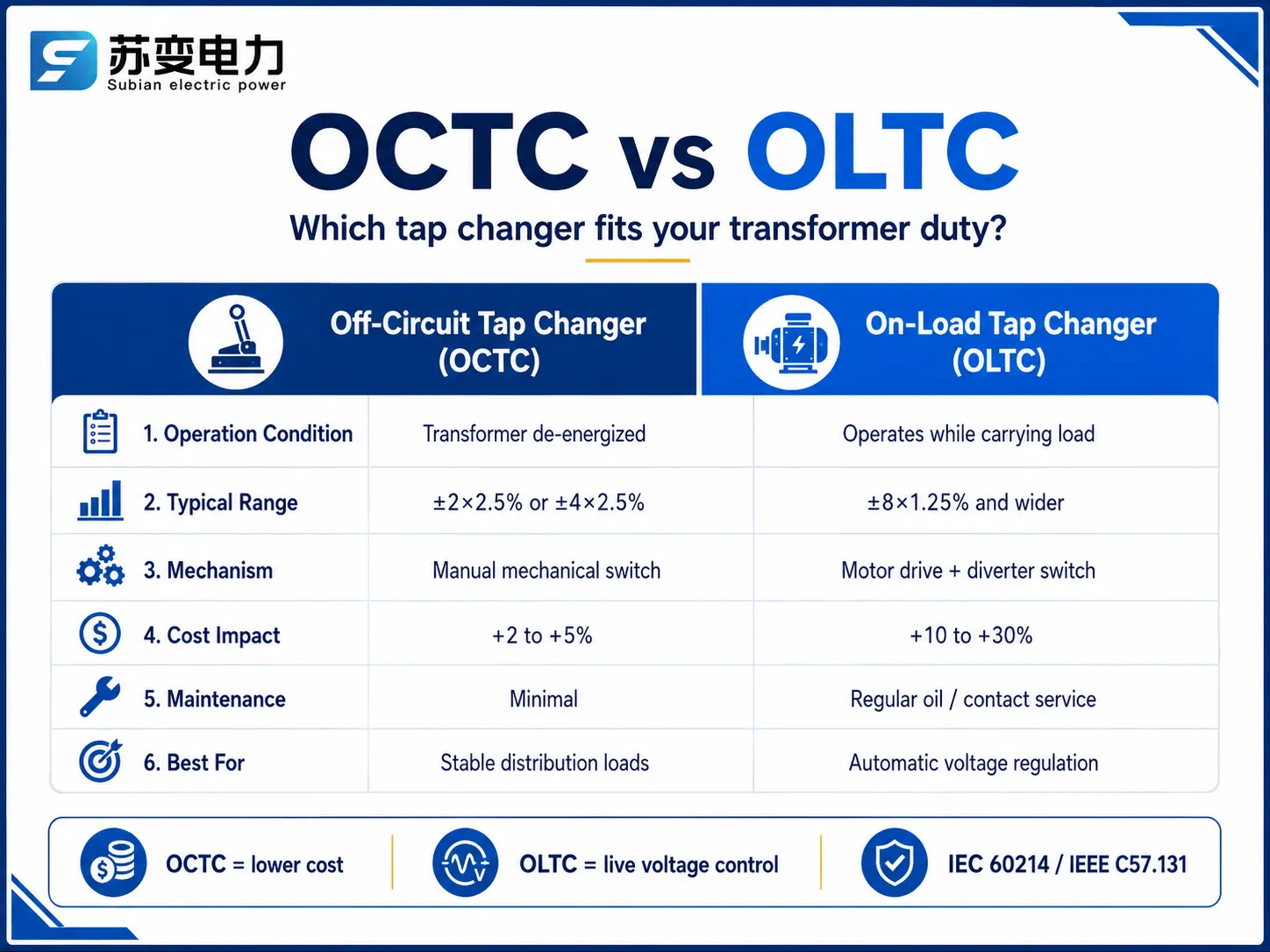
オフ回路対負荷時タップチェンジャー
| 特徴 | オフ回路タップチェンジャー (OCTC) | 負荷時タップチェンジャー (OLTC) |
|---|---|---|
| 操作条件 | トランスが無電圧 | トランスが負荷を持つ |
| 一般的な範囲 | ±2×2.5% (5位置)、±4×2.5% (9) | ±8×1.25%(17ポジション)およびそれ以上 |
| 機構 | マニュアル、シンプルな機械式スイッチ | モータードライブ、スプリング式ダイバータ、真空または抵抗遷移 |
| トランスのコスト影響 | +2から+5% | +10から+30% |
| メンテナンス | 最小 | 定期的; 油フィルトレーションと接触検査 |
| 最適 | 配電、安定負荷、季節調整 | 電力トランス、変動負荷、自動電圧制御 |
二つの選択肢の間の選択は、一つの重要な側面に基づいています:変圧器が稼働しているときに生成される電圧に調整が必要ですか? 安定した負荷に対応する配電用変圧器は、OCTCを使用して季節ごとに調整できるため、ほとんどコストがかかりません。しかし、変動する負荷に電力を供給する電力変圧器は、供給される電圧の品質を確保するためにOLTCを装備する必要があり、そのため電圧品質に関する要件を満たすために追加の10-30%のコストを負担しなければなりません。.
負荷接続タップチェンジャーの動作
負荷の下でタップを切り替えるのは簡単ではありません。タップポイントで回路を開くことはできません。なぜなら、それは負荷電流を中断し、接点を損傷するアークを引き起こすからです。OLTCは、電流がオンになっていない状態で新しいタップ位置を選択できるセレクターと、現在のタップでの電流負荷を新しい位置に移動させるダイバータスイッチを含む2段階のソリューションを提供します。遷移は遷移インピーダンスによって提供されます。これは抵抗素子または真空遮断器である可能性があります。したがって、電流は連続して流れ、すぐに消えます。.
抵抗型OLTCでは、ダイバータが
タップを切り替える際に電流負荷を抵抗素子または2つを通過させます。真空型設計の場合、アーク消滅を担当するのは真空遮断器であり、これにより油がクリーンに保たれ、メンテナンスの間隔が延びます。両方のタイプはIEC 60214-1の性能要件とIEC 60214-2の適用仕様に基づいており、選択は主にライフサイクルコスト計算によって決定されます。真空OLTCは設置コストが高いですが、サービスが少なくて済みます。.
タップチェンジャーの種類
| タイプ | 動作原理 | 典型的な定格範囲 | 価格範囲 |
|---|---|---|---|
| オフサーキット(手動)タップチェンジャー | 機械式スイッチ、無負荷 | 典型的に最大10 MVA | $200-$1,500 |
| 抵抗型OLTC(タンクまたはヘッドタイプ) | 遷移抵抗器を持つダイバータ | 最大約60 MVA | $3,000-$18,000 |
| 真空型OLTC | ダイバータ内の真空遮断器 | 最大200+ MVA | $5,000-$30,000 |
| リアクタ型OLTC | リアクタ遷移、古い設計 | 大型電力変圧器 | 珍しい;抵抗器/真空に置き換えられた |
| モータードライブユニット(アクセサリー) | すべてのOLTCのリモート/自動操作 | — | $2,000-$10,000 |
今日私たちが扱うほとんどのアプリケーションでは、抵抗器または真空OLTCを選択するかどうかが問題ですが、最近では後者がより人気があり、新しい電力変圧器には通常採用されています。オフサーキットチェンジャーは、全く異なる製品タイプで、よりシンプルで非常に安価($200-$1500)であり、配電タンク内に配置され、変圧器がオフのときに年に数回調整されます。.
主要な定格と仕様
| パラメータ | 意味 | 一般的な値 |
|---|---|---|
| 定格通過電流 | OLTCが運ぶことができる最大連続負荷電流 | 250-1,250 A |
| 定格ステップ電圧 | タップ範囲の電圧 | 大型ユニットで1ステップあたり最大3,300 V |
| 定格周波数 | システムに一致する必要があります(50または60 Hz) | 50 Hz / 60 Hz |
| 位置の数 | 選択可能なタップの合計 | 5, 9, 17, 33 |
| ステップ電圧(%) | 定格の%としてのステップごとの電圧変化 | 1.25%, 2.5%, 5% |
| 標準 | 設計および試験の基準 | IEC 60214-1/-2、IEEE C57.131 |
購入注文で通常順序が乱れる2つの数字があります。これらは、変圧器の最大連続電流定格(過負荷定格を含む)よりも大きくなければならない定格通過電流と、特定の電流に対する高ステップ電圧です。高ステップ電圧は、低ステップ電圧で同じ電流を運ぶこととは異なる要求をダイバータに課すため、OLTCの定格はこれら2つの数字を組み合わせます。.
このテーマを説明するために、従来のタイプの変圧器のタップチェンジャーのパラメータに関するガイドラインを持ち込みましょう。これは、RFQで言及すべき数字です:
| 変圧器クラス | タップチェンジャータイプ | 一般的な範囲 | 通過電流 | 変圧器への価格影響の概算 |
|---|---|---|---|---|
| 100-1,000 kVA配電 | オフサーキット(OCTC) | ±2×2.5% / ±4×2.5% | 最大1,500 A | +2から+4% |
| 1-10 MVA産業 | OLTC、抵抗器タイプ | ±6×2.5% | 300-700 A | +10から+18% |
| 10-60 MVA変電所 | OLTC、抵抗器または真空 | ±8×1.25% | 400-1,250 A | +12から+25% |
| 60 MVA以上の電力 | OLTC、真空タイプ | ±8×1.25%またはそれ以上 | 1,250-2,500 A | +15から+30% |
タップ範囲、ステップ、および位置選択
タップ範囲の選択は、教育的な推測ではなく、電圧調整の決定です。プロセスは一般的に次のように進みます:
最初のステップは、フルロードサイクル中の一次側電圧を記録することによって電圧変動を測定することです。一次電圧は、軽負荷から重負荷にかけて±5-10%変化します。.
第二のステップは、必要な調整範囲を計算することです。フルロード時の変圧器のインピーダンス降下(通常は4-8%)と一次側の電圧変動を合計することが重要です。.
次のステップは、設置で使用されるステップサイズを調べることです。標準の分配ステップサイズは、使用される各変圧器によって異なり、より精度が必要な大容量変圧器の場合は2.5%から1.25%まで変動します。.
第四のステップは、範囲の中点を選択することです。これは、±8×1.25%の公称比を中心にする必要があり、33/11kVアプリケーションのために10%の電圧調整タッピングの範囲を生成します。.
最終ステップはAVRと同期することです。自動モードで動作しているとき、リレーはバスの電圧を監視し、モータードライブに各ステップを遅延モードで変更するコマンドを送信します。これは約30-120秒です。.
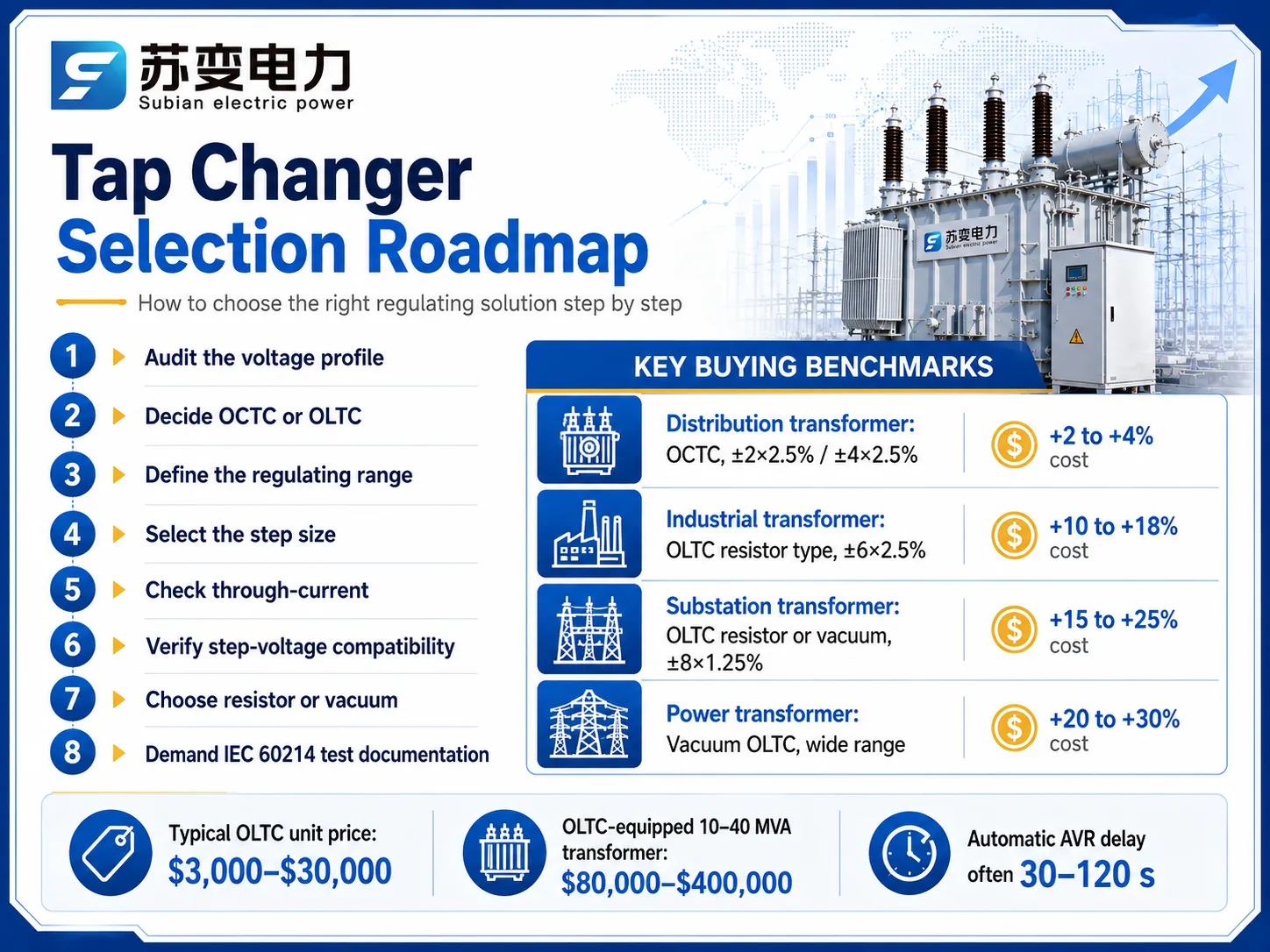
各タイプの所属
- 配電変圧器(50-2,500 kVA):回路外タップチェンジャー、±2×2.5%または±4×2.5%、 commissioningおよび季節ごとに調整;;
サブステーション電力変圧器(5-60 MVA):±8×1.25%または±6×2.5%の調整が可能な抵抗型OLTCで、電圧を自動的に調整する機能があります;;
大型電力および発電機変圧器(>60 MVA):広範囲で動作する真空型OLTC、時にはHVおよびLV巻線の両方で(2つのOLTC);;
工業炉およびアーク負荷:迅速な操作と大きな切替速度のために設計されたOLTC;;
再生可能エネルギー接続変圧器:変動する発電を助け、グリッド内の電圧を維持するためのOLTC。.
ブランドと価格比較
| ブランド | 起源 | 強度 | おおよその価格範囲(OLTC、スタンドアロン) |
|---|---|---|---|
| MR(ラインハウゼン) | ドイツ | グローバルOLTCベンチマーク;真空および抵抗型 | $6,000-$35,000 |
| ABB | スイス/スウェーデン | 完全な変圧器 + OLTCパッケージ | $5,000-$30,000 |
| シーメンス | ドイツ | 大型電力変圧器用OLTC | $6,000-$32,000 |
| 日立エナジー | スイス | 電力変圧器のタップ切替 | $7,000-$35,000 |
| シュナイダーエレクトリック | フランス | 配電クラスのタップチェンジャー | $3,000-$15,000 |
| 江蘇省蘇辺電力 | 中国 | OCTCおよびOLTC装備の変圧器、IEC 60214調整 | $2,000-$12,000 |
負荷時タップチェンジャーの分野では、MRラインハウゼンがベンチマークと見なされており、世界中の大多数の大型変圧器はMRまたはそのライセンス版によって製造されています。ABB、シーメンス、日立エナジーは、これらの機械またはそのパートナーのOLTC技術に関する完全なソリューションを提供しています。この機器は、IEC 60214およびIEEE C57.131に従って必要なすべてのテストを通過し、その寿命とメンテナンスに関するすべての必要な記録を持っています。同じ結果を得たいが、より魅力的な価格であることを望む人々のために、江蘇 スビアン電力 は、デバイスを1つにまとめることができる同じOLTCを持つ機器を製造しています。江蘇スビアン電力は、IEC 60214に対して正常に動作し、すべての一般的なテスト記録を持って世界中に出荷される機器を供給しており、価格は欧州の変圧器のコストよりも40-60%低いです。MR機器を選択するか、コスト効率の良い類似品を見つける場合は、OLTCの名前を購入時に言及し、一般的に言及するのではなく、正確なユニットを購入することに同意してください。.
ステップバイステップの選択ガイド
まず、OCTCまたはOLTCのいずれかを選択します。タップを変更する際に変圧器をサービスから外すことができ、負荷が徐々に変化する場合は、OCTCが適しています。しかし、負荷が一定の変化状態にある間に電圧を一定に保ちたい場合は、OLTCを選択する必要があります。.
次に、調整範囲を定義します。実際の電圧変動を記録し、必要な範囲を見つけます。電気を使用する際には、+8×1.25%がほとんどの状況をカバーするのに十分であることを考慮してください。.
次に、ステップサイズを選択します。経済的な目的には2.5%を使用し、より正確な調整には1.25%を使用します。.
次に、通過電流を確認します。OLTCは、変圧器の最大連続電流よりも大きな容量を持っている必要があり、過負荷の約束も含まれます。.
さらに、電圧が互換性があることを確認してください。OLTCが変圧器のステップ電圧を処理できることを確認してください。なぜなら、タップ電流とステップ電圧の積がダイバータにストレスを与えるからです。.
抵抗器を使用するか、真空を使用するかを決定します。抵抗器は安価で長い間使用されてきたため、より良い選択肢です。一方、真空はメンテナンスコストが低くなります。.
最後に、自動制御を含めることを忘れないでください。モータードライブ、AVRリレー、位置指示器はOLTCに必要なだけでなく、機能するために必要な制御電圧も指定する必要があります。.
設置とメンテナンス
現代の変圧器で最もメンテナンスが必要な側面は、負荷時タップチェンジャーの使用です。これは、負荷条件下で機械的作業を行う唯一の変圧器コンポーネントです。一般的な抵抗器型OLTCデバイスで使用される切替油は、メーカーのスケジュールに従ってフィルタリングまたは交換する必要があります。通常、100,000回の操作または5〜7年のいずれか早い方の期間後に行いますが、真空操作のOLTCは運転時間を大幅に延ばします。.
メンテナンス手順
操作カウンターの読み取り値の月次チャートを測定し作成します。.
OLTCオイルサンプルをメインタンクオイルとは別に採取します。ダイバータオイルは切替中に炭化し、より早く劣化します。.
一般的なオーバーホール中に接点の侵食を検査し、マニュアルの要件に従って遷移抵抗器の読み取り値を取得します。.
モータードライブとAVRリレー設定のトルク特性を年に一度テストします。.
手動操作を行う前に、タップ位置指示器が現在の巻線位置に対応していることを確認します。.
よくある質問
タップチェンジャーは変圧器のコストにどれくらい追加されますか?
オフ回路タップチェンジャーは、変圧器の価格に約2-5%を追加します。負荷時タップチェンジャーは10-30%を追加します。なぜなら、OLTC自体のコストは$3,000-$30,000(定格による)であり、モータードライブと制御システムが必要だからです。10 MVAの変圧器の場合、OLTCの増分として$10,000-$25,000を予算に入れてください。.
オフ回路タップチェンジャーと負荷時タップチェンジャーの違いは何ですか?
オフ回路タップチェンジャー(OCTC)は、変圧器が無電圧のときにのみ操作可能です。これは、変圧器をフィーダーの平均電圧プロファイルに合わせるために使用されるシンプルで安価なスイッチです。オンロードタップチェンジャー(OLTC)は、変圧器が負荷を持っている間にタップを切り替え、電流を中断しないようにダイバータと遷移インピーダンスを使用するため、変動する負荷下での自動電圧調整に適しています。.
変圧器にはどのタップ範囲が必要ですか?
配電用変圧器の場合、±2×2.5%(5ポジション)または±4×2.5%(9ポジション)がほとんどのケースをカバーします。変動する負荷に給電する電力変圧器の場合、±8×1.25%(17ポジション)が一般的な選択肢で、合計±10%の範囲を提供します。正しい値は、電圧変動と変圧器のインピーダンス降下を測定することで得られます。カタログから範囲を選択しないでください。.
オンロードタップチェンジャーはどのくらいの頻度でメンテナンスが必要ですか?
抵抗型OLTCは通常、100,000回の操作または5-7年ごとに油のフィルトレーションまたは交換が必要です。真空型設計では、これを約300,000回の操作に延長します。操作カウンターを監視し、OLTCの油をメインの油とは別にサンプリングし、各主要オーバーホール時に接点を検査してください。.
オフ回路運用用に設計された変圧器にOLTCをレトロフィットできますか?
まれに、通常は安くありません。巻線は適切なタップ構成を持っている必要があり、タンクにはマウントターレットが必要で、冷却とクリアランスはダイバータに適合しなければなりません。設計段階でOLTCを指定するか、新しい変圧器を購入する方がほとんどの場合安価です。すでに設置された固定タップユニットに電圧調整の必要がある場合は、別の電圧調整変圧器を考慮すべきです。.
参考文献
- IEC 60214-1 — タップチェンジャー、性能要件および試験方法 — タップチェンジャーの設計と試験のためのコア標準。.
- IEC 60214-2 — タップチェンジャー、アプリケーションガイド — 範囲、ステップ、および定格の選択に関するガイダンス。.
- IEEE C57.131 — 負荷タップチェンジャーの要件 — 北米のOLTC標準。.
- MR Reinhausen — タップチェンジャーポータル — 主要なOLTCメーカーの製品およびアプリケーション文書。.
- IEC 60076-1 — 電力変圧器、一般要件 — タップチェンジャーがユニットの一部として満たさなければならない変圧器レベルの標準。.
- ABBトランスフォーマー — 変圧器とタップチェンジャーの統合に関するリファレンス。.
結論
この タップチェンジャー 選択は、コンポーネントの選択を装った電圧調整ソリューションと見なすことができます。電圧変動および変圧器インピーダンスの減少に関する試験結果を事前に評価する必要があります。次のステップは、適切な電圧範囲とタップサイズに基づいてタップチェンジャーを選択し、その要件と仕様を満たす対応するモデルを選択することです。必要に応じて、オフロードタップチェンジャーの選択も含まれます。.
OCTCは変圧器のコストに約2%から5%を追加しますが、OLTCは約10%から30%のコストを増加させます。電流と電圧は、機器のブランドを名付けるのではなく、運転条件に応じて一致させるべきです。.
IEC 60214およびIEC 60076に準拠したオフサーキットおよびオンロードタップチェンジャー装備の変圧器については、連絡してください。 江蘇省蘇辺電力 で www.subian-electric.com あなたの電圧プロファイルと負荷データを持って、仕様と見積もりのために。.