


すべての生産エンジニアは、次のような午後を経験したことがあるでしょう:停止できない生産ライン、夏の熱波、そして選択肢がないために定格容量の112パーセントで稼働している変圧器。問題は変わらず、誰が彼に変圧器がどれだけの過負荷に耐えられるか、どれくらいの時間耐えられるか、そしてそれがどれだけの寿命を費やすかを教えられるのかということです。過負荷容量は不変の数値ではなく、複雑な相互関係の結果です - 以前の負荷値、周囲温度、最も高い温度、絶縁体の年齢、冷却システムの状態。システムを理解すれば、緊急時に120-130パーセントの過負荷で数時間効率的に運転することができます - さもなければ、科学を無視すると季節の間に変圧器を焼き切ってしまいます。.
簡単に言えば、変圧器の過負荷容量は、指定された期間において、名札に記載された容量を超えて変圧器が運転できる能力を指します。この制限は、最も高い温度と絶縁材料の老化に由来し、IEC 60076-7およびIEEE C57.91に従います。実際には、良好な状態の変圧器は、定格容量の120%で数時間運転することができます。緊急時には、短期間で130-150%の容量で運転することができる状況もあります。.
変圧器の過負荷容量とは何ですか?
変圧器の過負荷容量は、定格MVA値を超える最高負荷を指し、変圧器が設定された期間内に温度制限を超えずに耐えることができる負荷です。過負荷容量は固定された数値ではなく、変圧器の負荷履歴によって変動します:寒い夜に40%の負荷で運転している変圧器は、暑い午後に95%で運転している変圧器よりもはるかに大きな過負荷に耐える可能性があります。定格容量は、変圧器が定格温度(通常は40 °C、非従来型設計の場合は最大55 °Cまで)でフル負荷の下で提供できる最大値に過ぎず、最も高い温度値は98 °Cです。.
この問題は経済的な観点から重要です。なぜなら、負荷は通常変わらないわけではないからです。電力会社や産業ユーザーは、通常105-125%の範囲で数時間のピークを経験することが多く、変圧器の過負荷容量に関する適切な知識は熟練したオペレーターにとって不可欠です。上記の知識を使用してすべての変圧器のサイズを決定すると、悪い財政状況につながる可能性があります:定格負荷のために設計された変圧器は、数年間40%の負荷で運転し続け、月に数時間の過負荷から自らを保護するために過剰な無負荷損失を消費することになります。.
物理学:最も高い温度と絶縁寿命
問題は一つの数字で表現できます:ホットスポット温度、巻線温度はI²R加熱によって増加し、油温度の上昇を引き起こす一方で、ホットスポット温度は絶縁の劣化率を決定します。業界の規則は、IEC 60076-7およびIEEE C57.91の両方で指定されており、熱的に改善された紙絶縁の場合、98°Cを超える6°Cごとに劣化率が倍増する「6°Cルール」があります。一部の情報源では、材料の種類によっては6°Cから10°Cの温度範囲に適用される可能性があるとも言われています。ホットスポット温度が110°Cの場合、劣化率は通常の4〜8倍高く、ホットスポット温度が130°Cの場合は30〜100倍になる可能性があり、これはそのような温度での数時間が数ヶ月の絶縁寿命を消費することを意味します。.
温度は負荷によって増加し、約電流の二乗を巻線温度の上昇で割ったものに、油温度の遅い上昇を加えたものです。冷却剤—油とファン/ラジエーターシステム—は時間定数を決定するため、熱モデルは過負荷を数十分から数時間の時間定数を持つ過渡的なプロセスとして扱います。もう一つ重要な点は、ホットスポット温度が上部油温度と等しくないという事実です。実際、巻線と油の間には通常5-15Kの温度勾配があります。.
過負荷能力を決定する要因
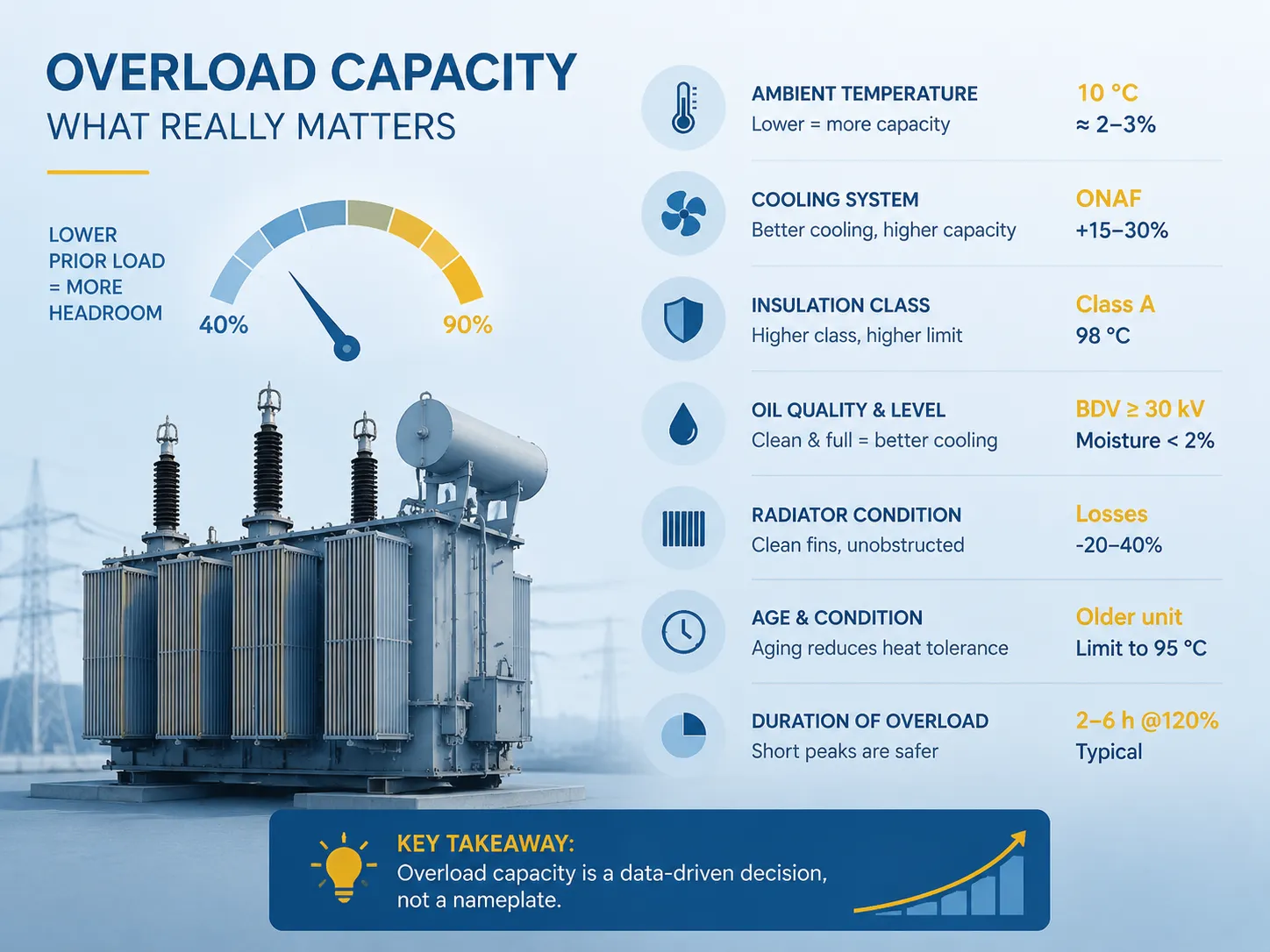
| 要因 | 過負荷能力への影響 | 一般的な値 |
|---|---|---|
| 前の負荷レベル | 以前の負荷が低いほど、より多くの熱的余裕があります | 40%の以前の負荷は90%よりも大きなピークを許容します |
| 環境温度 | 環境温度が低いほど、直接的な余裕が増えます | 環境温度が10°C低下するごとに、約2–3%の容量が追加されます |
| 冷却システム(ONAN/ONAF/ONAN→ONAF) | 強制空気/油は損失の散逸を増加させます | ONAFはONANに対して15–30%の容量を追加します |
| 絶縁クラス | 高クラスのシステムは、より高温のホットスポットに耐えます | クラスA:98°C;アラミド:220°Cクラス |
| 油の品質とレベル | 清潔で満たされた油は熱をより良く散逸します | BDV ≥ 30 kV、湿度 < 2% |
| ラジエーターの状態 | フィンが詰まったり、ほこりが付着すると冷却が20–40%減少します | 年に一度点検し、清掃します |
| 年齢と絶縁状態 | 劣化した絶縁はホットスポットへの露出に対して耐性が低くなります | 古いユニット:許容されるホットスポットを95°Cに減少させます |
| 過負荷の持続時間 | 短いピークは安価ですが、持続的な過負荷は高コストです | 120%での2–6時間が一般的;持続的な120%は急速に劣化します |
実際の影響:過負荷能力を決定する際には、名板よりも提供された情報に依存する方が良いです。効率的で冷却が良好で、軽負荷の変圧器は130%で数時間運転できます。逆に、30年使用された古いほこりまみれの変圧器、すなわち90%に負荷がかかっている変圧器は、過負荷能力が全くないと見なすべきです。.
規格:IEC 60076-7対IEEE C57.91
| 視点 | IEC 60076-7 | IEEE C57.91 |
|---|---|---|
| 範囲 | 油浸型電力変圧器の負荷ガイド | ミネラルオイル浸漬変圧器の負荷ガイド |
| 基本原則 | 相対的な劣化率対ホットスポット温度 | 温度露出に対する消費された絶縁寿命 |
| 参照ホットスポット | 熱的に改良された紙のための98 °C | 多くの表における「単位寿命」参照の110 °C |
| アプローチ | 負荷係数を持つ簡略化された詳細な熱モデル | 完全な熱モデル、上部/下部オイルおよび巻線の方程式 |
| 出力 | 許容負荷対持続時間の表と曲線 | 計画用の寿命消費と負荷曲線 |
| 最適な使用者 | 欧州/国際プロジェクト | 北米の電力会社および計画エンジニア |
�¤のコードは同じエンジニアリングの結論に達しますが、それを異なる方法で定式化します。IEC 60076-7はサイクリック負荷のための直接的な数値を提供します; IEEE C57.91はカスタム熱モデルのための公式を提供します。両方のコードが存在することを知り、地域や契約に適した方を使用し、両方のコードに共通する重要な要件、すなわち、露出した最も高温のスポット温度が要求される絶縁寿命に従っている必要があります。.
過負荷容量を改善する方法:8つの方法
| 方法 | 仕組み | 容量の増加 | 典型的なコスト |
|---|---|---|---|
| 冷却ファンを追加する(ONAN→ONAF) | 強制空気がラジエーターの放熱を高める | +15–30% | $2,000–$8,000 |
| オイルポンプを追加する(ONAF→OFAF) | 強制オイル循環が熱伝達を改善する | +10–20% ONAFに対して | $5,000–$15,000 |
| ラジエーターを清掃し、冷却システムを修理する | 設計放熱を復元する | 失われた冷却の20–40%を復元する | $500–$3,000 |
| ラジエーターを追加または拡大する | より多くの表面積 = より多くの熱放出 | +10–20% | $3,000–$12,000 |
| 最も高温のスポット/負荷監視を設置する | 安全で情報に基づいた過負荷使用を可能にする | 実際の容量を完全に使用できるようにする | $15,000–$45,000 |
| 自動負荷ベースのファン/ポンプ制御 | 必要なときだけ冷却が作動し、絶縁を保護する | 利用可能な容量を正確に使用する | $3,000–$8,000 |
| 高温絶縁システム(アラミド/エステル) | より高い許容最も高温のスポット | +20–40 °Cのホットスポット余裕 | +20–40%(新築) |
| 環境温度の低下/換気の改善 | ユニット周辺の冷たい空気 | ~2–3%あたり10 °C | サイト特有 |
最も低コストのアプローチが最初のステップです:ラジエーターの清掃、ファンの修理、オイルレベルの定期的なチェックなどの簡単なプロセスは、$3,000未満で失われた冷却の最大20-40%を復元できます。次のステップは、投資を控えめに保ちながら追加のファンやポンプを使用することです。ただし、監視プロセス自体は容量を増加させることはできず、それを可能にするだけです。.
過負荷下でのシステムの安定性を維持する
過負荷容量は、システムが適切に機能する能力がある場合にのみ効率的であることが証明されます。最も重要なポイントは電圧調整です:変圧器がより負荷されるほど、失われる電圧が増加します。したがって、変圧器が定格電力の125%で動作している場合、長いフィーダーの末端で許可されている電圧よりも低い状況に置かれる可能性があります。タップ設定を確認し、自動電圧調整の使用を考慮に入れてください。ほとんどのケースでは、共通接続点で5%の電圧降下があり、その後、負荷の動作に偏差が生じます。第二のポイントは保護調整です:リレー設定と過負荷リレー特性は、電源から切り離されることなく過負荷を許可する必要がありますが、故障時には依然として動作しなければなりません。変圧器の熱限界曲線に関連してリレー曲線を見直し、損傷を受けることなく安全条件下にあるものを理解してください。第三のポイントは負荷分担です:変圧器の並列運転では、インピーダンスの大きな差により、1つの変圧器が効率的に動作しないことがあります。.
結論として、過負荷時の冷却信頼性は安全性の観点から非常に重要です。強制冷却および強制油冷却自体が現場の補助電源の負荷であり、ピーク時に補助電源が故障した場合、変圧器は必要な瞬間にファンとポンプを停止します。.
| 安定性の実践 | それが防ぐもの | 典型的なコスト | 優先順位 |
|---|---|---|---|
| リレー曲線と熱限界曲線のレビュー | 不要なトリップと故障クリアの見逃し | エンジニアリング時間 | 高い |
| 125%負荷での電圧降下チェック | 下流負荷での低電圧 | 負荷フロー研究 | 高い |
| 並列変圧器のインピーダンス/タップ補正 | 不均等な負荷分担、一つのユニットの過負荷 | $500–$3,000 | 中程度 |
| 二重供給/バックアップ補助供給 | ピーク時のファン/ポンプの損失 | $2,000–$15,000 | 中程度 |
| 冷却失敗時の自動負荷遮断 | 冷却されていない過負荷による絶縁損傷 | $3,000–$8,000 | 高い |
| 負荷移転/ピークシフト | 定格ウィンドウを超えた持続的な過負荷 | 操作上の低 | 高い |
アプリケーション: 過負荷容量が本当に重要な時
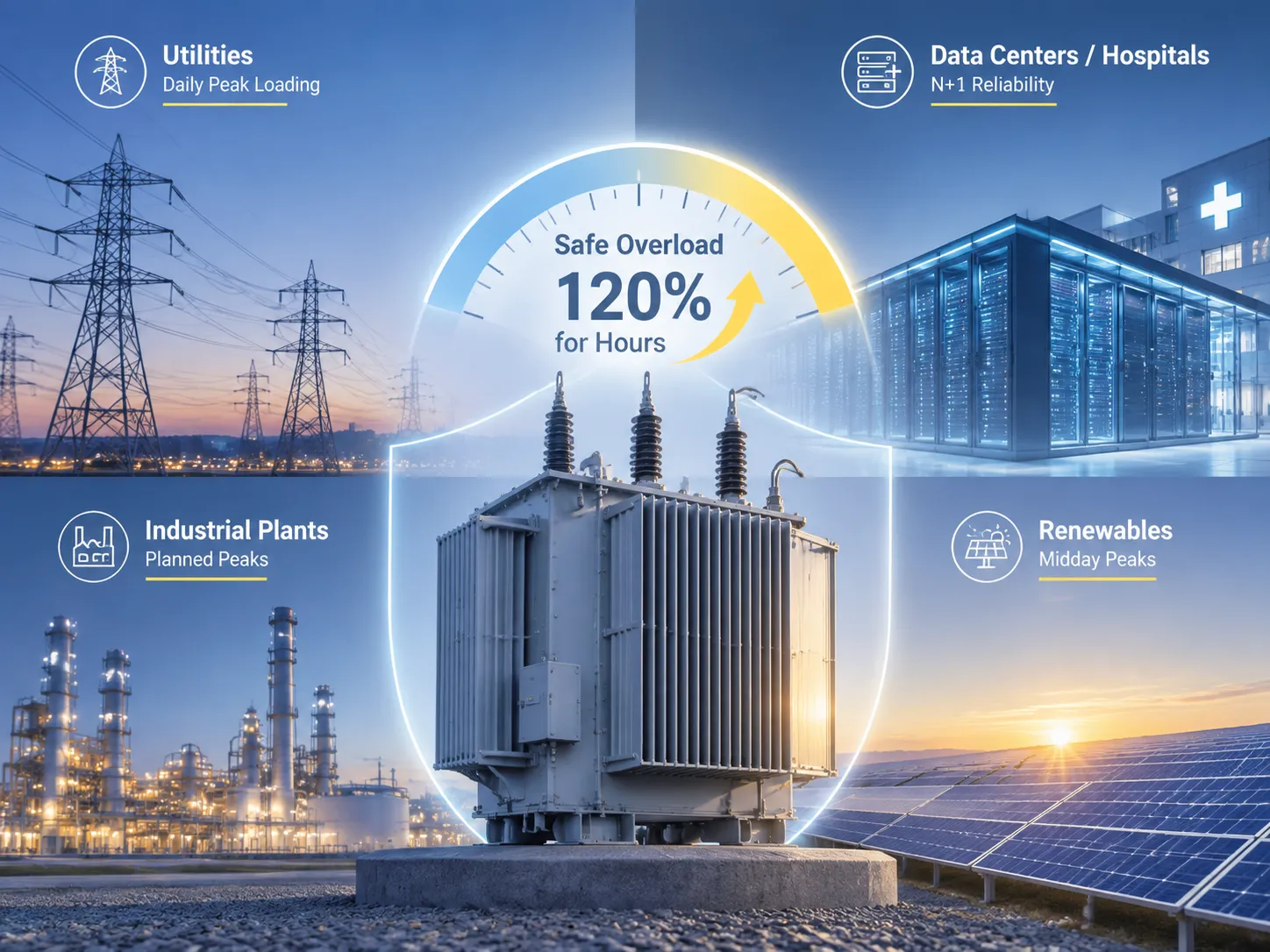
様々な業界は過負荷容量を異なる方法で利用します。公益事業セクターは毎日サイクルを使用し、配電変圧器は通常、日々の最大負荷を考慮し、変圧器を損なうことなく夕方のピーク負荷の間に120%容量で2〜3時間運転できることがよく知られています。バッチプロセス産業は、炉が始動する時や機械がオンになる時など、需要のピークが定期的に発生します - これらのプロセスでは、設置の熱容量が理解されている限り、短時間の過負荷が可能です。一方、病院やデータセンターはN+1の概念で運営されており、通常の状況下では変圧器の過負荷を避けますが、異なる変圧器間で電力が切り替えられると、転送プロセスが変圧器に一時的な過負荷条件を生じさせ、この過負荷能力はプロセスにおける安全上の利点と見なされます。再生可能エネルギー源の概念は新たな課題をもたらし、太陽光発電システムはピークの正午に過負荷を生じ、夜間には過負荷が発生し、熱サイクリング自体が変圧器に機械的負荷を与えます - 現在使用されている技術は高品質の絶縁と監視です。.
すべての場合において、アルゴリズムは同じです: 負荷持続曲線の特性を理解し、最も高温のスポットでの最大負荷を計算し、ユニットの絶縁状態を確認します - このようにして、過負荷表または熱モデルが受け入れ可能で安全なレベルを理解するのに役立ちます。.
設備、サプライヤー & 価格帯
| 設備 / サービス | 代表的なサプライヤー | 典型的な価格範囲 | 注記 |
|---|---|---|---|
| ラジエーター冷却ファンと制御装置 | Kelvion、Plexus、地元のOEM | $2,000–$8,000(トランスフォーマーあたり) | モーター駆動ファンと接触器を含む |
| 油ポンプ(強制油循環) | Kelvion、地元のOEM | $5,000–$15,000 | OFAF/ODAF変換用 |
| オンライン巻線温度/ホットスポットモニター | Qualitrol、Doble、Maschinenfabrik Reinhausen (MR) | $15,000–$45,000 | ファイバーオプティックまたはモデルベース |
| 負荷監視および制御リレー | Schneider Electric、ABB、GE | $1,500–$6,000 | 過負荷警報/制御機能 |
| エステル油/アラミド高級トランスフォーマー | Hitachi Energy、Siemens Energy、Jiangsu Subian Electric Power | $25,000–$60,000(2,000 kVAクラス) | 過負荷運転用のプレミアム絶縁 |
価格は仕様や地域によって異なるため、参考値として使用してください。世界的に有名なブランド — 監視用のQualitrolとMR、冷却用のKelvion、制御用のSchneider/ABB — が基準を設定しており、これらの価格はその事実を反映しています。エンドユーザーは、IEC 60076に準拠し、重負荷プロセスに適した冷却および絶縁システムを備えた高品質の配電および電力トランスフォーマーを設計するJiangsu Subian Electric Powerなどの企業から、高過負荷アプリケーション向けに製造されたトランスフォーマーを購入することができます — 価格は知られており、20%から40%までの欧州平均と異なる場合があります。購入されるものに関係なく、仕様にはサイクル負荷プロファイルに関する情報が含まれている必要があり、製造業者がこのデータを質的な冷却および絶縁マージン計算に組み込むことができるようにします。.
よくある質問
トランスフォーマーはどれだけの過負荷を安全に処理できますか?
トランスフォーマーが処理できる最大容量は、定格負荷、加熱、冷却、その他の要因など、多くの要因によって異なります。ただし、一般的な目安として、通常の条件下で定格容量の120-130%で2〜6時間動作することができる典型的なONAN定格のトランスフォーマーがあります。空冷(ONAF)のトランスフォーマーの場合、追加で15-30%の容量があります。平均して、制限はホットスポット温度にあり、110 °Cを超えてはなりません。.
過負荷はトランスフォーマーの絶縁寿命にどのような影響を与えますか?
「6度の法則」によれば、熱的に強化された紙で作られたトランスフォーマーの絶縁は、定格温度(98 °C)を超える6度ごとに絶縁寿命が倍増するため、計算できます。温度が110 °Cに上昇すると、絶縁寿命は98 °Cの4-8倍になり、130 °Cでは30倍から100倍になります。この場合、中程度の過負荷はトランスフォーマーの寿命に影響を与えませんが、重度の過負荷はその寿命を消耗します。.
既存のトランスフォーマーに冷却を追加して過負荷容量を改善できますか?
通常、それはそうです。これは、変圧器の冷却システムをONANからONAFに変更するか、詰まったラジエーターを清掃し、ファン冷却ユニットを修理することで、変圧器の容量を増加させるコスト効果の高いソリューションです。他の選択肢としては、油冷却システム(OFAF)の設置があります。冷却システムに変更を加える前に、変圧器の仕様を明確にし、技術的な観点から修正を遵守することが重要です。.
ONAN、ONAF、およびOFAF冷却の違いは何ですか?
ONAN、ONAF、およびOFAFの違いは、これらがIEC冷却の指定であることです。ONANは変圧器内で油が循環する自然冷却を生成し、ONAFは空気による人工冷却を追加し、OFAFは油による強制冷却を提供します。冷却クラスが高いほど、変圧器はより多くのワット容量を達成します。.
変圧器をピーク負荷用にサイズ設定すべきですか、それとも平均負荷用ですか?
これらのアプローチのいずれかに主に気を配るのは間違いです。まず、変圧器によって生成される電圧損失の量を考慮して、平均負荷がどの程度許容されるかを結論付けることが重要です。たとえば、平均負荷で運転している場合でも、特定の時点で最大電圧を消費する可能性があることに注意する必要があります。運用戦略を信頼性高く特定するためには、規制IEC基準などのより高度なツールを使用することが望ましいです。.
参考文献
- IEC 60076-7: 電力変圧器 – パート7: 油浸電力変圧器の負荷ガイド — 許容負荷およびサイクリック過負荷評価のための国際標準。.
- IEEE C57.91: ミネラルオイル浸漬変圧器の負荷ガイド — 熱モデルおよび寿命消費方法を含む北米の負荷ガイド。.
- IEC 60076-2: 電力変圧器 – パート2: 温度上昇 — 過負荷能力を制限する温度上昇限界を定義します。.
- IEEE C57.140: 液体浸漬電力変圧器の評価および再調整 — 状態に基づく負荷決定のための寿命消費方法論。.
- IEC 60156: 絶縁液の破壊電圧 — 過負荷時の熱的および電気的完全性に関連する油の状態試験。.
- マシーネンファブリック・ラインハウゼン (MR) — 負荷変圧器運転のための負荷タップチェンジャーおよび監視機器の供給者。.
- 江蘇省蘇辺電力 — 重度のサイクリック業務向けに強化された冷却および絶縁オプションを提供するIEC 60076準拠の変圧器メーカー。.
結論
実際の定量的リソースである変圧器の過負荷容量は、オペレーターによって大いに活用されていないリソースです。なぜなら、彼らはホットスポット温度を特定できないからです。その背後にある科学は簡単です:過負荷は、98 °Cのホットスポット温度から6 °C上昇するごとに半分になる絶縁寿命によって制限されます。技術は利用可能です:IEC 60076-7およびIEEE C57.91の負荷ガイドラインと基準;冷却システムの更新、高品質の絶縁材、リモートモニタリングシステム。問題の経済的側面は、情報に基づいた利用を支持します:冷却ファンに$2,000–$8,000を支出し、リモートモニタリングシステムに$15,000–$45,000を支出することで、変圧器購入に$50,000–$500,000の費用を回避できます。.
- 変圧器がサポートできる冷却容量を決定するのはホットスポット温度です。.
- まず清掃されたラジエーターと修理された冷却システム — これは容量を増加させる最も安価な方法です。.
- ONAN→ONAFへの変換は、$2,000–$8,000の追加で15–30%の容量を提供します。.
- 過負荷を考慮する前に、IEC 60076-7 / IEEE C57.91の表とモデルを使用してください。.
- 重要な変圧器のホットスポット温度を監視し、補助冷却供給を確保してください。.
- サイクル負荷プロファイルを事前に定義してください — 江蘇省蘇辺電力はIEC基準に準拠したユニットを製造しています。.