


ベトナムの工業団地の主任技術者は、35%の平均負荷の下でハミングしている2,000 kVAのトランスのペアを見守っていました。この負荷プロファイルは、工業団地の電気運用における制御可能なコストの中で、無負荷損失が最大であることを意味していました。彼はすでに数値を確認していました:1990年代のトランスは、運転していないときに3,200–4,500 Wを失っており、現代のものは1,600–2,400 Wの損失で運転していました;アモルファスコアのトランスは、わずか800–1,200 Wの損失でした。工業団地の拡張計画は、彼に新しいトランスに投資するユニークな機会を与え、今回はベンダーファイルに前の世代が見ることのなかった新技術が含まれていました:アモルファスコア、天然エステルオイル、トランスのスマートモニタリング用ポート、そして新しい基準によって決定された効率カテゴリです。.
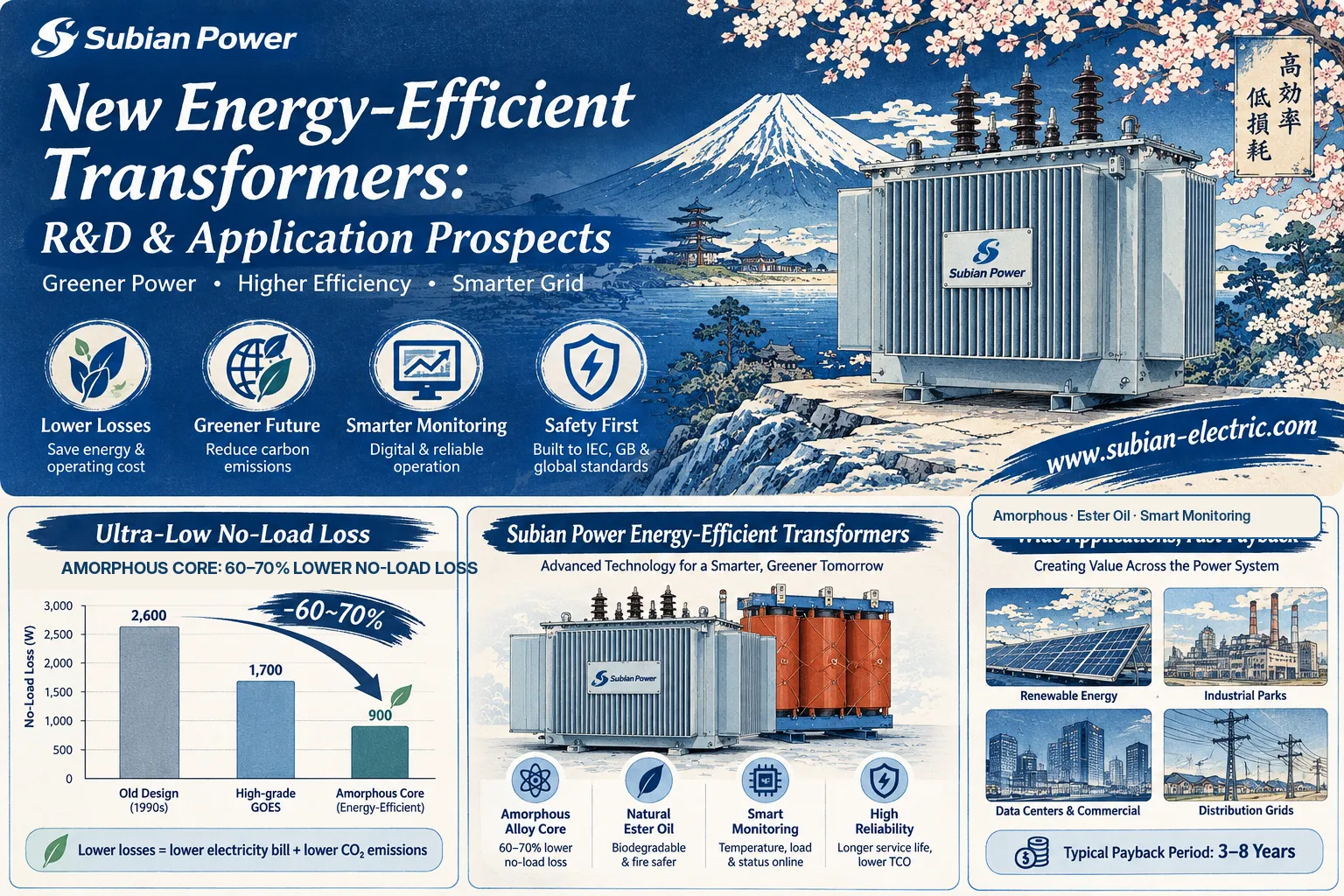
エネルギー効率の良いトランスとは何ですか?
エネルギー効率の良いトランスは、その定格に対して期待される業界の損失を大幅に下回る前例のない損失を持つトランスとして定義されます。新しいコア材料を使用するか、革新的なデザインを持つか(またはその両方)です。.
定量的な定義は非常にシンプルです。これは、IEC 60076のルーチンテストによって確認された同じ定格とインピーダンスで、低い無負荷損失と低い負荷損失を持つことを含みます。エネルギー効率の良いトランスとして認定されるために必要な唯一の特性は、現在の高効率製品のクラス(GB 20052のグレード1、EUエコデザイン指令のティア2、または最高のDOEクラス)で運転することです。それ以外はすべてマーケティングに過ぎません。.
研究開発が行われている場所
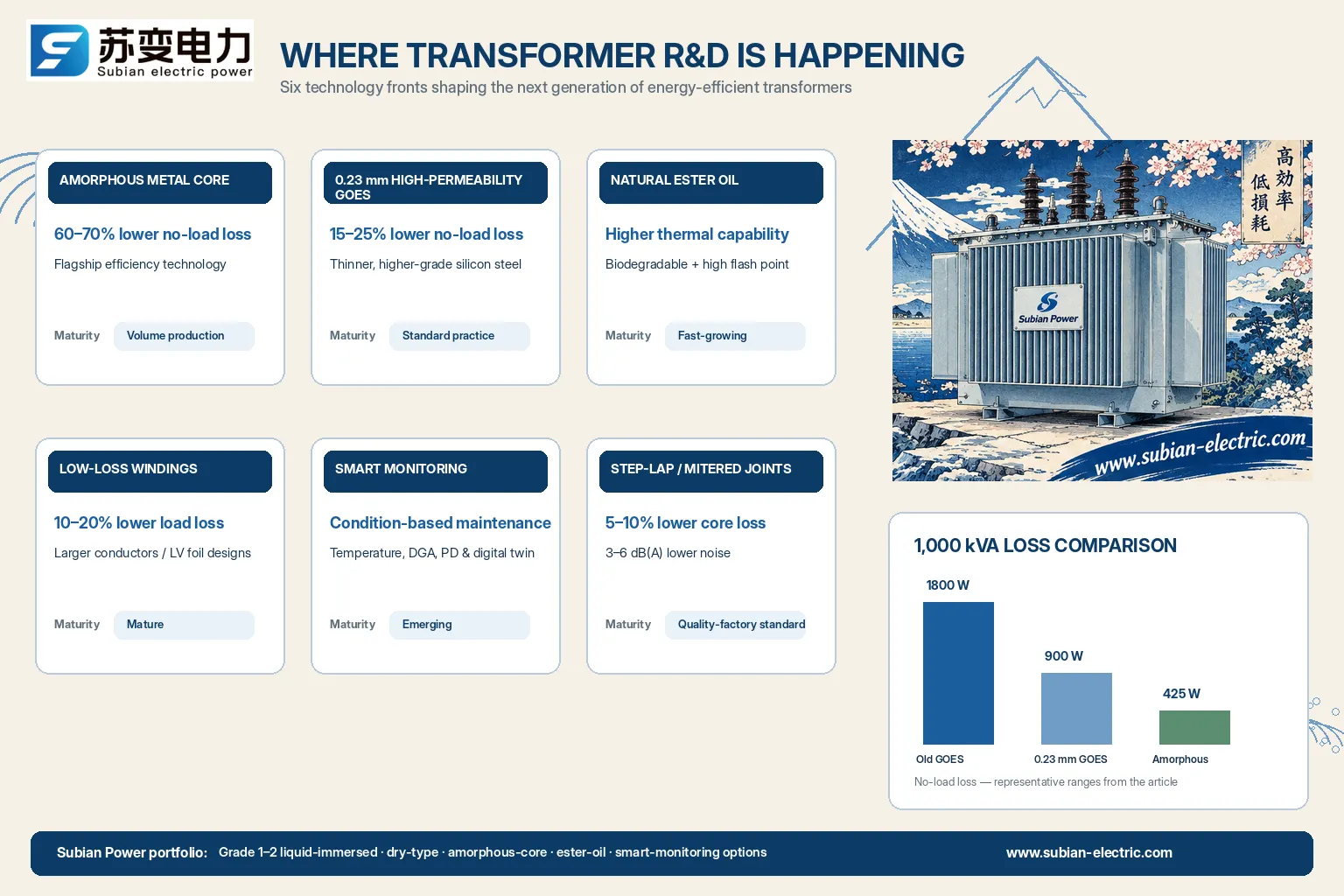
今日のトランスの研究開発は少数のフロントに集中しており、それぞれが損失予算の異なる部分に取り組んでいます:
| R&Dフロント | 目標 | 典型的な利得 | 成熟度 |
|---|---|---|---|
| アモルファス金属コア | 無負荷損失 | 60–70%の削減 | 中国での量産、世界的に成長中 |
| 高透磁率GOES、薄いゲージ | 無負荷損失 | 15–25%の削減 | 標準的な実践 |
| 天然エステルオイル | 生命安全、持続可能性、高温での損失 | 高い熱能力、生分解性 | 商業的、急成長中 |
| 低損失巻線(大きな導体、LV用の箔) | 負荷損失 | 10–20%の削減 | 標準的な実践 |
| 埋め込みセンサーとデジタルツイン | 運用および保守損失 | 延長された寿命、回避された故障 | 新興、10kV+クラスで増加中 |
| ステップラップおよびミタードコアジョイント | 無負荷損失と騒音 | 5–10%の損失、3–6 dB(A)の騒音 | 品質工場での標準 |
注目すべき変化は、最大の技術的レバーであるアモルファスコアが研究室から量産に移行したことです。これは効率規制と政府のインセンティブによって推進されています。経済的な結果は、アモルファスコアトランスがもはやエキゾチックではなく、予測可能な回収が可能な主流の選択肢であるということです。.
アモルファス合金コア:フラッグシップ技術
アモルファス金属は、原子が結晶構造を形成していないほど急速に冷却された鉄合金です。従来の粒状鋼と比較して、アモルファス構造は磁化をより容易に行うことができるため、無負荷損失を従来の鋼の約30–40%にまで削減することができます。欠点は知られています:リボンは薄くて脆く、コアは大きく、初期コストが高いことです。.
1,000 kVA 10/0.4 kV 配電トランスの代表的な損失比較:
| コア技術 | 無負荷損失 | 負荷損失(指標) | 相対コアコスト |
|---|---|---|---|
| 従来のGOES(旧設計) | 1,500–2,100 W | 10,000–12,000 W | ベースライン |
| 高透磁率 0.23 mm GOES | 700–1,100 W | 9,500–11,500 W | +5–10% |
| アモルファス金属 | 350–500 W | 9,500–11,500 W | +20–40% |
コストの観点から、アモルファスコアトランスは、最良のGOESトランスの期待される性能と比較して、無負荷損失に関して年間約$440から$610の節約を生み出します。20年間の期間を8%の割引率で計算すると、その節約の現在価値は新しいトランスの初期コストプレミアムに対して約$4,300から$6,000になることがわかります。新しいトランスの初期コストは$1,500から$3,000の範囲になると予想されています。.
ナチュラルエステルオイルと絶縁の進展
ナチュラルエステルオイルは、菜種や大豆などの植物材料を原料とし、エネルギー効率の良いトランス技術における第二の主要なトレンドとして際立っています。これらは鉱油よりも優れた電気性能を提供するわけではありませんが、2つの重要なエネルギーと持続可能性の利点を提供します。.
第一に、ナチュラルエステルオイルは、より高い温度上昇で機能できるため、熱性能が優れています。これにより、絶縁システムがより高い負荷の下でより効果的に動作でき、冷却して動作することで紙絶縁の寿命が延びます。.
第二に、生分解性と火災安全性の利点を提供します。エステルオイルは自然に分解し、従来のオイルよりもはるかに高い引火点を持っているため、火災のリスクや関連する保険および環境漏洩コストを削減します。.
多くの革新的なグリーントランスは、アモルファスコアデザインとナチュラルエステルオイルを組み合わせています。この革新は、ナチュラルエステルオイルから作られた生分解性絶縁を利用することでエネルギー損失を最小限に抑えますが、通常、従来のトランスに比べて生産コストが30%から55%増加します。.
スマートトランスと状態監視
「新しい」エネルギー効率の良いトランスでは、「新しい」という用語は今やインテリジェンスと同義です。監視システムは、油と巻線の温度、油中のガス、部分放電を監視する埋め込みセンサーによって収集された情報を使用しています。.
リアルタイムのトランス効率監視は、名板損失ではなく運用損失メトリックを示します。.
さらに、溶解ガスの読み取りを使用した予知保全(IEC 60599に従う)は、故障が発生する数年前にそれを検出します。.
スマート機能のおかげで、リアルタイムの動的負荷は、IEC 60076-7に従った許容される絶縁状態の限界内であれば、名板定格を超えて安全に運転することができます。.
改善された技術の影響は間接的かもしれませんが、重要であり、10 MVAトランスの中間寿命故障による修理、交換、ダウンタイムコストで$100,000〜$500,000を節約します。.
効率クラスと基準
新しい技術は、基準がそれを製品と認めるときにのみ製品になります。現在の枠組み:
| 基準 / 規則 | 市場 | クラス構造 | ステータス |
|---|---|---|---|
| GB 20052-2020 | 中国 | グレード1〜3、配電トランス | グレード2ベースライン;インセンティブのためのグレード1 |
| EUエコデザイン2019/1783 | EU | Tier 1およびTier 2損失制限 | Tier 2は2024年7月から施行 |
| US DOE 10 CFR 431 | アメリカ合衆国 | 最低効率クラス | 効力発生; 2024–2026年の改訂が採用されました |
| IEC 60076(すべての部分) | 国際 | 定格および試験の基準 | 効率規則と常に適用されます |
標準が常に変化しているため、R&D投資の市場が常に存在することを意味します。簡単に言えば、標準が厳しくなるたびに、「プレミアム」技術が規制となり、それは新しい「プレミアム」が研究所で開発されることを意味します。消費者は、製品パンフレットではなく、標準に従って等級を読むことを推奨します。.
セクター別の適用見通し
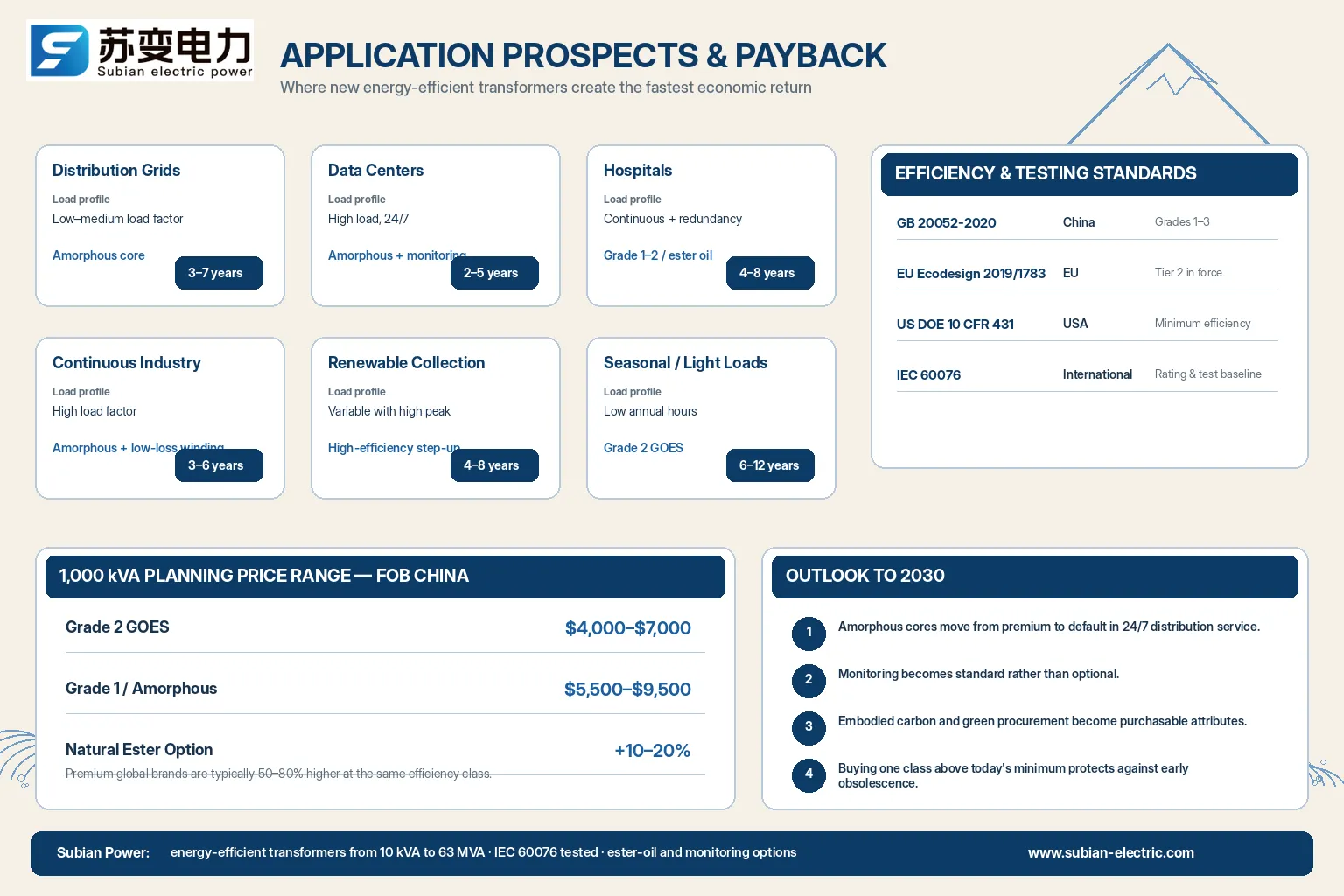
新しいエネルギー効率の高いトランスが最も早く勝つのは、負荷係数と稼働時間によって決まります:
| アプリケーション | 典型的な負荷プロファイル | 最良の技術 | 期待される回収期間 |
|---|---|---|---|
| 配電網(24/7稼働) | 低〜中負荷係数 | アモルファスコア、グレード1–2 | 3–7年 |
| データセンター | 高負荷係数、24/7 | アモルファスコア + モニタリング | 2–5年 |
| 病院および重要施設 | 継続的で冗長性の高い | グレード1〜2、屋内用エステル油 | 4~8年プラスレジリエンス価値 |
| 工業用継続プロセス | 高負荷係数 | アモルファスコア、低損失巻線 | 3~6年 |
| 再生可能エネルギー発電所の集積 | 可変、高ピーク | 高効率昇圧ユニット | 4~8年 |
| 季節的/軽負荷 | 低時間、低負荷係数 | グレード2 GOES(最適値) | 6~12年 |
アモルファスコア配電変圧器のアプリケーション見通しは非常にポジティブであり、10〜110kVクラスのスマート機能や都市および環境に敏感な場所でのエステル油ユニットに対しても同様です。同じリストは、業界のR&D予算がどこに流れているかを定義しています。.
利用可能な製品と価格帯
ブランド別の1,000 kVA 10/0.4 kV新エネルギー効率的配電変圧器の指標FOB価格:
| ブランド | 起源 | グレード2価格 | グレード1 / アモルファス価格 | エステル油プレミアム |
|---|---|---|---|---|
| 日立エナジー | 日本/グローバル | $9,000–$12,500 | $12,500–$18,000 | +15–25% |
| ABB | スイス/グローバル | $8,500–$12,000 | $12,000–$17,000 | +15–25% |
| シーメンスエナジー | ドイツ/グローバル | $8,000–$11,500 | $11,500–$16,500 | +15–25% |
| シュナイダーエレクトリック | フランス/グローバル | $7,500–$11,000 | $11,000–$15,500 | +15–25% |
| 江蘇省蘇辺電力 | 中国 | $4,000–$7,000 | $5,500–$9,500 | +10–20% |
価格は定格、損失クラス、タップチェンジャー、アクセサリー、原材料価格、納入条件によって異なります。これらは計画範囲として扱い、確定的な見積もりではありません。.
プレミアム層の価格は、グローバルな試験プログラム、長いフィールド履歴、サービスネットワークに基づいています。中国の層は、アモルファスコア、グレード1損失、エステル油オプションと同じ効率クラスを40〜50%低い初期コストで提供しており、これがコストに敏感な新興市場での採用を加速させています。. 江蘇省蘇辺電力 は中国の 変圧器メーカーです と エネルギー効率の良いトランス 10 kVAから63 MVAまでのグレード1〜2の液浸型、乾式、アモルファスコア変圧器をIEC 60076に従ってテストし、定期的な試験報告書と共に出荷するメーカー。Subianのエネルギー効率的な範囲には、エステル油およびスマートモニタリングオプションが含まれています。 subian-electric.com.
2030年までの見通し
今後の10年間を形作る3つのトレンドがあります。まず、アモルファスコア変圧器は、継続的に負荷がかかる配電用途でプレミアムカテゴリからデフォルトカテゴリに移行し、効率の引き締めの次の段階に影響されます。次のトレンドは、効率と信頼性を確保する手段としてのモニタリングの導入です。.
第三のトレンドに関しては、炭素含有量が製品の一部となります。この場合、製品に組み込まれた炭素とエコラベリングのスコアは、環境に優しい製造プロセスを適用するメーカーに報いることになります。.
顧客にとって、これらのトレンドの適用は、今日購入する変圧器が2030年にはより高い基準を満たさなければならないことを意味します。.
よくある質問
今日入手可能な最も効率的な変圧器のタイプは何ですか?
配電定格に関しては、アモルファスコア変圧器がリードしています:1,000 kVAユニットの無負荷損失は350〜500 Wであり、高透磁率GOESユニットは700〜1,100 W、1990年代の設計は1,500〜2,100 Wです。効率クラスはGB 20052(グレード1〜3)およびEUエコデザイン2019/1783(ティア1〜2)に規定されています。.
新しいエネルギー効率的な変圧器のコストはいくらですか?
1,000 kVAグレード2ユニットは、中国のメーカーから約$4,000〜$7,000 FOBで、アモルファスコアグレード1ユニットは$5,500〜$9,500で、さらに自然エステル油のために10〜25%追加されます。プレミアムのヨーロッパおよび日本のブランドは、同じクラスで50〜80%高くなります。.
アモルファスコアトランスは追加コストの価値がありますか?
24時間365日稼働するアプリケーション — グリッド、データセンター、病院、連続産業 — では、はい。20–40%のプレミアムは、60–70%の低い無負荷損失を通じて3–8年で回収され、25–35年間にわたって節約が積み重なります。軽負荷の季節的なサイトでは、グレード2のGOESユニットが通常は価値の最適解です。.
新しいエネルギー効率の良いトランスの寿命はどのくらいですか?
定期的なメンテナンスで25–35年です。ナチュラルエステルオイルと低い運転温度は絶縁体の寿命を延ばします。ホットスポット温度を6K下げるごとに、紙の寿命は約2倍になります。温度と溶解ガスのスマートモニタリングは、投資をさらに保護します。.
新しいトランスは自らのコストを回収しますか?
通常、所有コストの観点からははい。現代のグレード1–2ユニットは1990年代のユニットと比較して、1,000 kVAで$0.08–$0.10/kWhの無負荷損失だけで$800–$1,500の節約を実現し、3–8年の回収期間を提供します — 故障回避、補助金、グリーン調達の優遇を考慮する前に。.
参考文献
- IEC 60076-1: 電力変圧器 – 一般 — すべての新しいトランスのための国際的な評価および試験の基準。.
- GB 20052: 電力変圧器のエネルギー効率グレード — 中国におけるアモルファスおよびグレード1設計の背後にあるグレード構造。.
- EUエコデザイン規則2019/1783 — 市場アクセスを制限するEUの効率ティア。.
- 米国DOEトランス効率プログラム — 北米の効率クラスと損失経済学。.
- IEAエネルギー効率プログラム — トランスの損失シェアと技術の展望の分析。.
- 日立エナジーのトランスフォーマーポートフォリオ — プレミアムティアのエネルギー効率の良いトランスの提供に関する参考。.
- 江蘇省蘇辺電力公式サイト — グレード1–2、アモルファスコア、エステルオイルトランスの範囲。.
結論
新しい エネルギー効率の良いトランス は未来の概念ではありません — 文書化された損失データ、標準化された効率クラス、実証済みの回収を持つ成熟した製品ラインです。R&Dのアジェンダは明確です:アモルファスコア、ナチュラルエステル絶縁、スマートモニタリング、すべてがますます厳しくなる効率基準に従っています。トランスが連続して稼働する場所では、アプリケーションの展望が最も強力であり、そこが世界のトランス損失の大部分が発生する場所です。.
重要なポイント:
- アモルファスコアは無負荷損失を60–70%削減し、現在は実験室技術ではなく量産されています。.
- GB 20052、EUエコデザイン、米国DOEの効率クラスは、「エネルギー効率が良い」と見なされるものを制限します。“
- 継続的に負荷がかかる用途での3~8年の回収期間、スマートモニタリングが資産を保護します。.
- 次回の基準改訂での陳腐化を避けるために、最低基準の1クラス上を購入してください。.
トランスのフリートをアップグレードまたは拡張する場合、, 江蘇省蘇辺電力 GB 20052グレード1-2およびIEC 60076に準拠したアモルファスコアエネルギー効率トランスをエステルオイルおよびモニタリングオプション付きで、輸出に優しい価格で提供します。範囲を確認するには、 subian-electric.com.