


中国北西部の風の強い高原に位置する200 MWの太陽光発電施設は、電力網に接続される予定でしたが、契約者の一人に問題が発生しました。インバータは高電圧変電所に到達する必要がありますが、そこに至る道は3キロメートルの困難な地形を通過し、数週間以内に完了する必要があります。時間通りに電力網に接続するために、江蘇省のSubian Electric Powerが製造した特別に作られた変電所のグループを指定された太陽光発電所に送ることが決定されました。.
この記事では、中国で製造された典型的な変電所と、ヨーロッパおよび北米のエンジニアによって設計された類似のものとの違いについて学ぶことができます。ユニットの特性、試験プロセス、およびこの種の機器を供給業者に販売する理由など、多くの有用な情報が含まれます。.
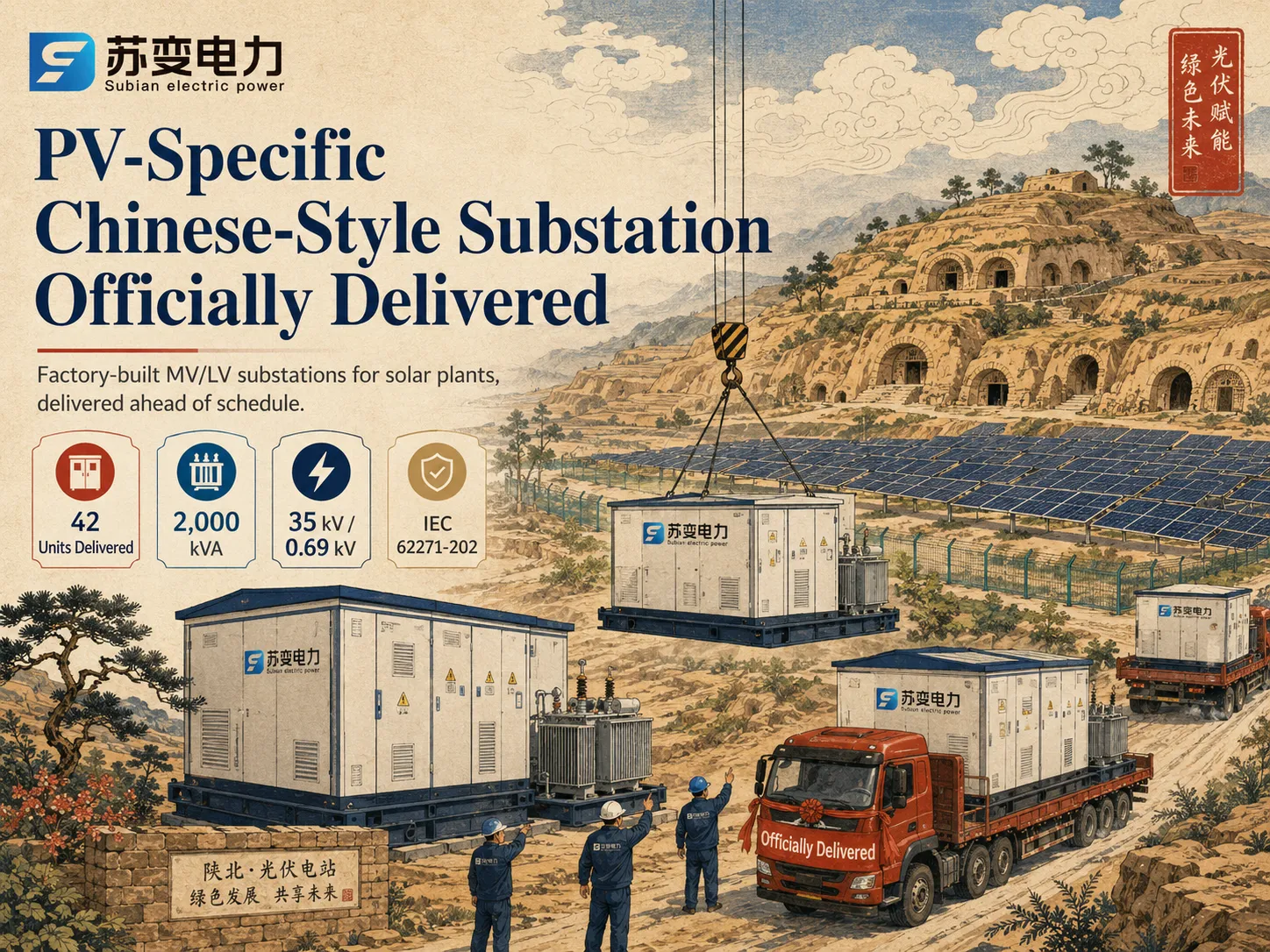
配送マイルストーン
上記のプロジェクトの供給は、2,000 kVAの昇圧機能を備えた特定の42台の変電所フォトボルタイクユニットで構成されており(35 kV / 0.69 kV)、ネットワーク上の産業用RMU、インバータ端子を持つLVスイッチボード、保護用の数値リレー、測定および完全運用のための機器が含まれています。各アセンブリは、動作条件下での温度上昇、短絡耐性、電圧試験、内部アーク放電に耐える能力など、工場型試験を受けていました。各ユニットは、定期試験の認証を受け、GB基準をカバーし、EPC請負業者が所有者に納品するための完全な計装を備えていました。.
このようなマイルストーンの納品の完了は、プロジェクトの観点だけでなく、より広い視点から重要です。これは、完全かつ認証されたPV接続ポイントが製造および試験される可能性があることを証明しており、建設側からの建設作業を必要としません。.
中国スタイルのPV変電所とは何ですか?
中国スタイルのフォトボルタイク変電所は、中国の巨大なローカルソーラーマーケットを考慮して開発されており、変電所メーカーによる変電所設計の標準化が必要とされています。中国型変電所は、ヨーロッパおよびアメリカの同類と比較して以下の特徴を持っています:
統合インバータステーション:低電圧セクションは、通常800〜1,500 Vの直流入力と400〜690 Vの交流出力のインバータ出力を中心に設計されています。これは、インバータが同じスキッドまたは隣接するエンクロージャに配置されることが多いため、ケーブルの配線を最小限に抑えるヨーロッパ製またはアメリカ製のインバータです。.
標準化された中電圧/低電圧アーキテクチャ:標準モジュール寸法の2または3コンパートメントレイアウト(中電圧、変圧器、低電圧セクション)により、開発者は常に同じ変電所を注文できます。.
二重基準準拠:GB/T基準に設計され、IEC 62271-202およびIEC 60076によって許可されています。.
高速納品モデル:設計の標準化のおかげで、製造スケジュールは短く、10〜16週間で、コストもヨーロッパより低くなります。.
グリッドコード対応:統合された数値リレーは、アンチアイランド機能と方向性過電流および電圧/周波数ライドスルー機能を市場向けに備えています。.
国際的なバイヤーにとって、「中国スタイル」という用語は、コンパクトでプレファブリケートされた変電所の設計特徴と特定の太陽光発電工学を組み合わせた確立されたタイプの設計を意味し、したがって、ヨーロッパおよびアメリカのモデルとともに検討する価値があります。.
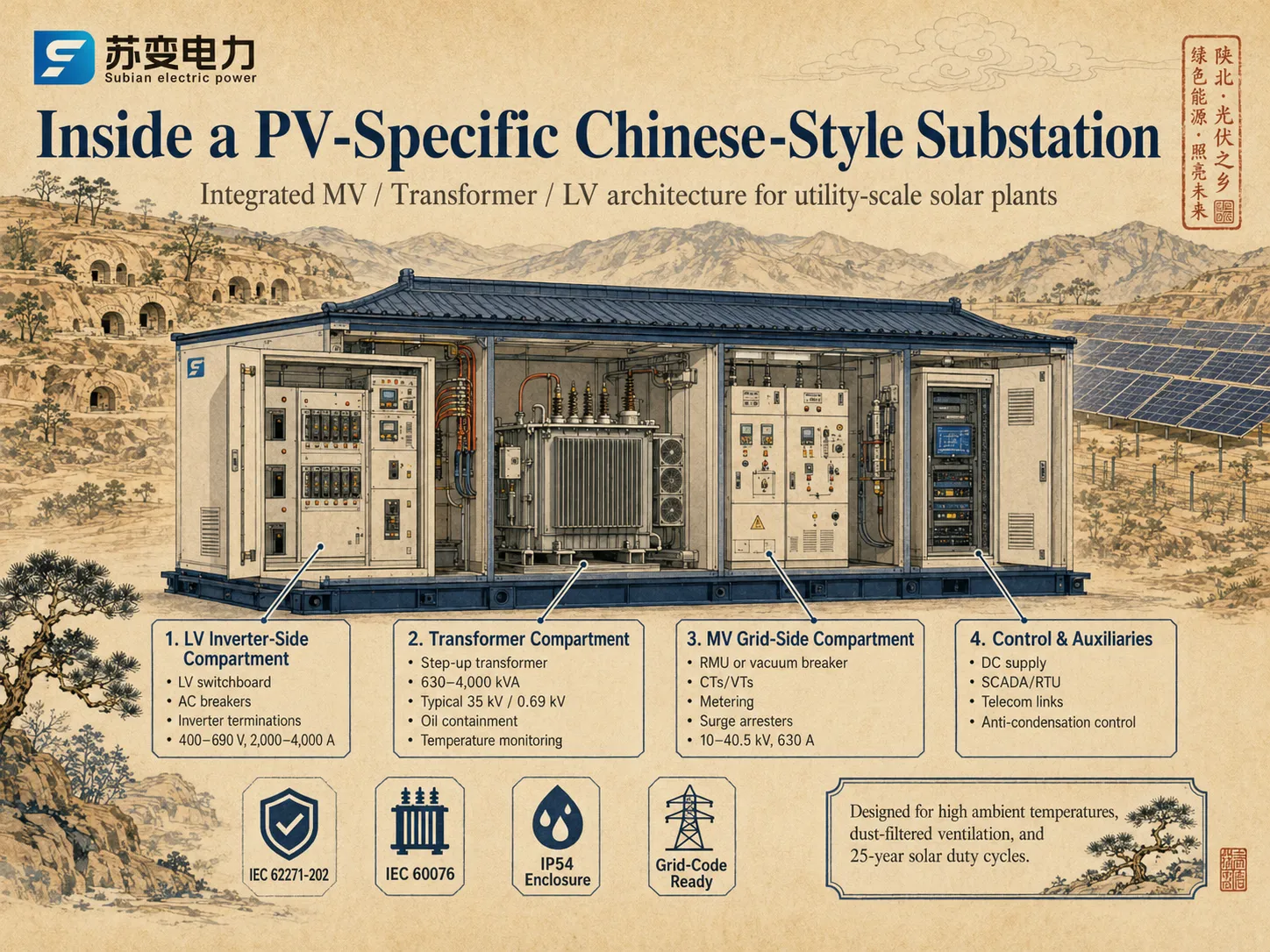
構造と主要コンポーネント
| コンパートメント | 主な機器 | 典型的な定格 |
|---|---|---|
| LVインバータ側コンパートメント | LVスイッチボード、ACブレーカー、サージアレスタ、保護リレー、インバータ端子 | 400–690 V、2,000–4,000 A |
| トランスコンパートメント | ステップアップトランス、オイルコンテインメント、温度監視、強制空冷オプション | 630–4,000 kVA、35/0.69 kV |
| MVグリッド側コンパートメント | 固体絶縁またはSF6 RMU、真空ブレーカーオプション、メータリングCT/VT、アレスタ | 10–40.5 kV、630 A |
| 制御および補助機器 | DC供給、ヒーター、SCADA/RTU、通信リンク、抗結露制御 | — |
太陽光アプリケーションのための構造的特性には、高い周囲温度条件(最大50 °C)で計算されたデレーティング曲線、日常的な熱サイクルに耐えられるトランスの設計、乾燥した場所のためのダストフィルタ付き換気、および砂漠や沿岸地域で使用される腐食防止システムが含まれます。これらの詳細により、ユニットは日々の太陽サイクルの条件下で25年間効率的に運転できます。.
なぜ太陽光発電所にはPV特化型ユニットが必要なのか
太陽光発電所が一般的な配電変電所に依存すべきでないことを示す4つの要因。.
第一に、太陽光発電設備の負荷パターンは、太陽放射レベルによるトランスの負荷に影響を与え、正午にピークに達し、夜間にはほぼゼロに近くなります。電力施設の設計がこれを考慮しない場合、絶縁体は通常よりも早く摩耗します。.
第二に、グリッド規制は、アンチアイランドスキーム、方向性過電流保護、電圧および周波数ライドスルーに関する要件を定めており、待機時間や時間-電流特性を含め、標準的な配電リレーを使用して満たすのが難しいです。.
第三に、適切な電圧をグリッドライン全体に確保するために、調整された無効電力をグリッドに供給するための無効電力機器が必要です。.
第四に、メータリングは太陽光発電設備の接続点で行われ、規定された精度クラス(0.2s/0.5s)に準拠し、完全なSCADA文書が処理される必要があります。.
PVベースのトランスミッターは、これら4つの技術分野を統合しています。これがSubian機器の機能であり、現場でのカスタマイズなしに納品可能です。.
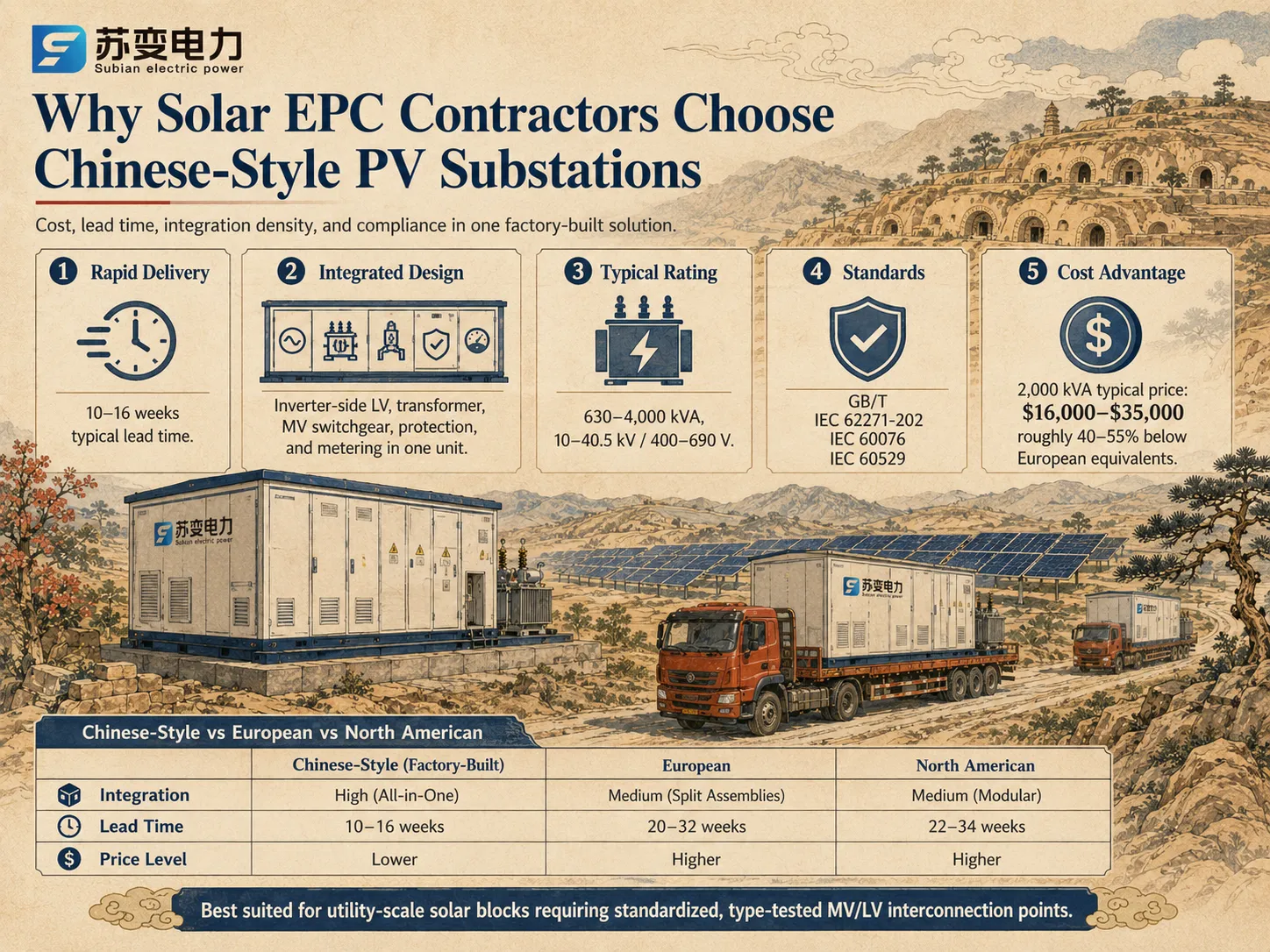
中国スタイル vs. ヨーロッパ vs. 北米デザイン
| 要因 | 中国スタイル | ヨーロッパスタイル | 北米スタイル |
|---|---|---|---|
| 基本標準 | GB/T + IEC 62271-202 | IEC 62271-202 | IEEE C57 / UL |
| インバータ統合 | 一つのスキッド上に共通 | 通常は別のエンクロージャ | 通常は別のステーション |
| 一般的な定格 | 630–4,000 kVA | 630–2,500 kVA | 75–5,000 kVAパッドマウント |
| 電圧レベル | 10–40.5 kV / 400–690 V | 10–36 kV / 400–690 V | 15–35 kV / 480–690 V |
| エンクロージャ | IP54、スキッドまたはキャビネット | IP54、キャビネット | 盗難防止キャビネット |
| 価格レベル | 最低コスト層 | プレミアムティア | プレミアムティア |
| リードタイム | 10–16週間 | 16–28 週間 | 20–35週間 |
すべてのスタイルはその市場に対して効果的です。中国版は統合密度、価格、リードタイムに優れています。一方、欧州および北米のアプローチは地域の資格とサービスを持っています。価格と時間が最も重要なグローバルな太陽光プロジェクトにおいて、中国スタイルの太陽光発電所が最も魅力的です。.
典型的な仕様
提供されたSubian PV変電所ユニットの代表的な仕様:
| パラメータ | 典型的な値 |
|---|---|
| トランスの定格 | 2,000 kVA、油浸式、ONAN |
| 電圧比 | 35 kV / 0.69 kV (10/20/33 kVオプション) |
| ベクトルグループ | Dyn11またはDyn5 |
| 無負荷損失 | ~2.2–3.0 kW |
| 75°Cでの負荷損失 | ~16–20 kW |
| インピーダンス電圧 | 6%–8% |
| LVスイッチギア | 2,500–4,000 A ACB、インバータ端子 |
| MVスイッチギア | 固体絶縁またはSF6 RMU、20–25 kA/3s |
| 保護 | 数値リレー:50/51、50N/51N、27/59、81、アンチアイランド、方向性 |
| 計測 | クラス0.5sまたは0.2s、CTs/VTs |
| エンクロージャ | IP54、熱浸漬亜鉛メッキベース、耐腐食コーティング |
| 環境設計 | 降格曲線で最大50°C |
| 規格 | GB/T + IEC 62271-202 + IEC 60076 + IEC 60529 |
規格およびグリッドコードの遵守
| 標準 | 範囲 | 関連性 |
|---|---|---|
| IEC 62271-202 | プレファブリケート変圧器サブステーション | 完全ユニット設計、エンクロージャ、型式試験 |
| IEC 60076 | 電力変圧器 | 変圧器の定格、損失、試験 |
| IEC 60529 | IPエンクロージャ保護 | IP54/IP55屋外定格 |
| GB/T 17467 | 中国のプレファブ変電所標準 | 中国における国内設計基準 |
| IEEE 1547 / EN 50549 | グリッド接続(地域) | アンアイランドおよびライドスルーの設定 |
購入者は、リレーに付属するグリッドコード設定を確認し、現場のリレー調整研究を要求する必要があります。同じハードウェアは、ファームウェア/設定の変更でEN 50549(ヨーロッパ)、IEEE 1547(北米)、およびさまざまな国家コードを満たすことができます。.
工場試験および文書
配送プロセスを通じて受け取ったすべてのユニットは、完全な工場試験プログラムを経ました。.
変圧器は、IEC 60076に準拠して(部分的および完全に)検査され、以下の試験が含まれました:比率;巻線抵抗;損失;インピーダンス;および絶縁試験。.
標準の変圧器検査に加えて、完全なユニットはIEC 62271-202に従って定期的な型式試験を受けました。試験には、運転中の試験が含まれました:ハウジングによる温度上昇;内部アークに対する短絡抵抗;および絶縁。.
開閉装置も定期的な試験を受け、機械的操作試験;接触抵抗;絶縁試験;および保護機能試験が含まれました。.
これらの定期的な試験に加えて、保護リレーはその設定がプロジェクトのグリッドコードに準拠していることを確認するためにチェックされました。.
出荷前に、各ユニットは、構造;端子;油のレベル;塗装;および文書の遵守を含むすべての要件に準拠していることを確認するために検査されました。.
すべてのユニットには、定期報告書;型式試験報告書;使用材料の試験報告書;およびエンドユーザーに必要なすべての文書が含まれた完全なパッケージが付属しました。.
コストと価格帯
中国スタイルの構成(昇圧変圧器、中圧および低圧開閉装置、保護、計測、IP54エンクロージャ)における完全なPV特化型変電所ユニットの指標価格:
| 定格 | 電圧クラス | 典型的な価格(USD) | リードタイム |
|---|---|---|---|
| 630–1,000 kVA | 10–35 kV | $12,000〜$25,000 | 10–14 週間 |
| 1,250〜2,000 kVA | 10–35 kV | $16,000〜$35,000 | 10–16週間 |
| 2,500〜3,150 kVA | 10–40.5 kV | $30,000〜$60,000 | 12–18週間 |
| 3,550〜4,000 kVA | 10–40.5 kV | $45,000〜$90,000 | 14–20週間 |
ステンレス鋼または高腐食性エンクロージャ用に15–30%を追加し、乾式変圧器用に10–20%を追加し、高度なリレー、クラス0.2s計測、および完全なSCADA用に$1,500–$5,000を追加します。価格はFOBの指標であり、仕様および地域によって異なります。.
トップブランドと価格比較
| ブランド | 国 | 強度 | 参考価格 — 2,000 kVA(USD) |
|---|---|---|---|
| シュナイダーエレクトリック | フランス | 統合ソリューション、グローバルサービス | $38,000〜$60,000 |
| シーメンス | ドイツ | デジタルグリッド、ユーティリティの参照 | $40,000〜$65,000 |
| ABB / 日立エナジー | スイス | 幅広いポートフォリオ、強力な太陽光発電の実績 | $38,000〜$62,000 |
| サングロウ / ファーウェイ | 中国 | インバータ + ステーションパッケージ | $32,000〜$58,000 |
| 江蘇省蘇辺電力 | 中国 | 中国スタイルのPV変電所、IEC/GB認証、OEM | $16,000〜$35,000 |
ヨーロッパの主要プレーヤーとインバータメーカーが、主要入札に魅力的な変電所を作るために地元のサポートおよびコンプライアンスチームと連携しています。江蘇省のSubian Electric Powerは、昇圧トランス、MV/LVスイッチギア、グリッドコード保護、SCADA対応のメーターを備えた完全な中国スタイルのPV変電所を提供し、工場試験、GB/TおよびIECの認証、OEMカスタマイズを含む欧州価格の40-55%で提供します。この試験、密度統合ソリューション、価格の持続可能性の組み合わせにより、Subianはさまざまな太陽光プロジェクトを採用するEPC業界の入札候補者リストで高い評価を得ています。.
仕様の指定と購入方法
インバータACの適切な出力を得るためには、環境減衰係数を考慮してACインバータ出力(kVA)に10 – 20%のマージンを加算します。.
プロジェクトのスムーズなセットアップを確保するために、事前に電力会社に輸出電圧および接続ポイントを確認してください。.
トランスの種類を決定します - オープングラウンドユニット用の油浸型と、限られたスペースまたは火災に敏感な場所用の乾式タイプ。.
グリッドコードの仕様を電力会社に確認します - アンチアイランド、ライドスルー、リアクティブパワーの時間は、あなたの国の法律に従ってください。.
IEC 62271-202で提供された要件に従って、完全なユニット操作のテストを要求します。.
水中または特に重要なプロジェクトの場合、出力が1 MWを超える場合は、リレー調整プロジェクトを要求してください。.
発電機を取得するために発生するコストではなく、25年間の運用コストを評価して会社を選択します。.
地元のリソースと会社のサポートを確認します。.
よくある質問
中国スタイルのPV変電所とは何ですか?
それは、太陽光発電所向けに特別に設計された工場組み立てのMV/LV変電所であり、中国の高ボリューム国内市場向けに開発され、現在は輸出されています。630–4,000 kVAの昇圧トランス、MVスイッチギア、LVインバータ側スイッチギア、グリッドコード保護、メーターを1つのIP54エンクロージャに統合し、IEC 62271-202に準拠しており、インバータステーションが同じスキッドにあることがよくあります。.
中国スタイルのPV変電所のコストはいくらですか?
完全なユニットは、$12,000–$25,000 (630–1,000 kVA) から $45,000–$90,000 (3,550–4,000 kVA) までの範囲です。これは、比較可能な範囲のヨーロッパ価格よりも約 40–55% 低いです。ステンレス製エンクロージャーは 15–30% を追加し、乾式変圧器は 10–20% を追加し、SCADA は $1,500–$5,000 を追加します。価格はFOBの指標であり、仕様や地域によって異なります。.
受け取りを受け入れる前に、どのテストを要求すべきですか?
IEC 60076 に基づく変圧器の定期テスト(比率、巻線抵抗、損失、絶縁)、スイッチギアの機械的および絶縁テスト、IEC 62271-202 の完全ユニット型テスト — エンクロージャーを装着した状態での温度上昇、短絡耐性、内部アークを要求してください。輸出の場合は、工場テストの立会いと出荷前検査を追加してください。.
中国スタイルの設計は国際基準に準拠していますか?
はい。ユニットは GB/T 国家基準に基づいて製造され、IEC 62271-202、IEC 60076、および IEC 60529 に基づいてテストされています。保護リレーは、EN 50549、IEEE 1547、または国家コードに設定可能なグリッドコード設定で出荷され、計測はクラス 0.5s/0.2s の精度要件を満たしています。.
完全な納品のリードタイムはどのくらいですか?
標準定格は 10–16 週間で出荷されます。大きなユニット(2,500–4,000 kVA)は 14–20 週間かかります。中国スタイルの設計は標準化されているため、生産スロットは特注のヨーロッパ製品よりも短くなります。特に複数ユニットのプログラムについては、早めに書面でスロットを確認してください。.
参考文献
- IEC 62271-202 — プレファブリケート変電所 — 完全ユニット設計および型式試験のための規制基準。.
- IEC 60076シリーズ — 電力変圧器 — ステップアップ変圧器の基本基準。.
- IEC 60529 — IPコード — IP54/IP55 エンクロージャー保護を定義します。.
- IEEE 1547 — 分散型エネルギー資源の相互接続 — 北米のグリッド相互接続要件。.
- IRENA — 再生可能エネルギー容量統計 — 世界の太陽光発電の展開と相互接続需要に関するデータ。.
- U.S. DOE — 太陽光発電の相互接続ガイダンス — ユーティリティ規模の太陽光発電の相互接続要件。.
- Jiangsu Subian Electric Power — 公式サイト — PV専用変電所の製造業者および輸出業者。.
結論
Subian の施設特有の変電所の市場導入は、太陽光発電のバランス供給の確立に向けた重要なマイルストーンを示しています。この新しい施設は、変圧器、スイッチギア、保護、計測などの重要なコンポーネントが標準機器として製造、テスト、納品される完全に認証された納品地点を表しています。これは、プロジェクト開発者と請負業者がスケジュールを守り、コストを削減し、現場の品質を妥協することなく行う必要があることを意味します。.
基本的な新機能には以下が含まれます:
– 新しいタイプの中国のPV変電所は、コンバータ接続された変圧器とLV、MVスイッチギアを1つのテスト済み機器に統合しています。.
– トレイルデバイスは IEC 62271-202 テストに合格し、グリッドコードの要件を満たさなければなりません。.
– その価格範囲は、定格に応じて $12,000 から $90,000 までで、同様のヨーロッパ機器よりも 40–55% 低くなっています。.
– 25年間の損失と総コストを比較し、事前に納期に合意することが重要です。.
– ブランドを比較してください — Schneider、Siemens、ABBを、Jiangsu Subian Electric Powerのような承認されたメーカーと比較します。.
PV変電所の価格、仕様、および輸出サポートについては、Jiangsu Subian Electric Powerにお問い合わせください。 www.subian-electric.com.