


Электрическая трансформатор может быть крупнейшей единственной инвестицией в любой электрической системе, однако она выходит из строя предсказуемым и предотвращаемым образом. Даже до того, как трансформатор отключится, сгорит или потерпит катастрофическую аварию, разложение его изоляционного масла из-за тепловых и электрических нагрузок уже началось, производя специфические газы, которые растворяются в масле. Эти газы включают водород от частичных разрядов, этилен, образующийся из-за перегрева, и ацетилен от дуги, среди прочих. Традиционно, анализ растворенных газов — это изучение газов, производимых в изоляционной жидкости, аналогично проведению анализов крови. Однако с помощью анализа растворенных газов в реальном времени процесс переходит от ежегодного визита в лабораторию к непрерывному мониторингу состояния, при котором трансформатор будет показывать, есть ли развивающаяся неисправность, насколько быстро она растет и когда требуется вмешательство.
Этот гид подчеркивает процесс мониторинга газов трансформатора в реальном времени, какие газы следует искать и их значение, технологии, используемые в системах мониторинга в реальном времени, преимущества для владельцев активов и как установить системы мониторинга, которые обеспечивают хорошую отдачу от инвестиций.
Ответ: Служба мониторинга газов трансформатора в реальном времени способна непрерывно анализировать концентрации газов, обычно присутствующих в трансформаторном масле (таких как водород, метан, этан, этилен, ацетилен, угарный газ и углекислый газ), с использованием онлайн-систем мониторинга газов (либо в форме газовой хроматографии, либо с помощью фотоакустической/инфракрасной спектроскопии, или через использование специфических датчиков водорода). Каждый из этих газов указывает на одну из неисправностей, с которыми сталкивается трансформатор. Для критически важных трансформаторов использование онлайн-мониторов может привести к значительной экономии, так как необходимость в обслуживании основывается на необходимости, а не просто на календаре, тем самым полностью избегая незапланированных отключений.
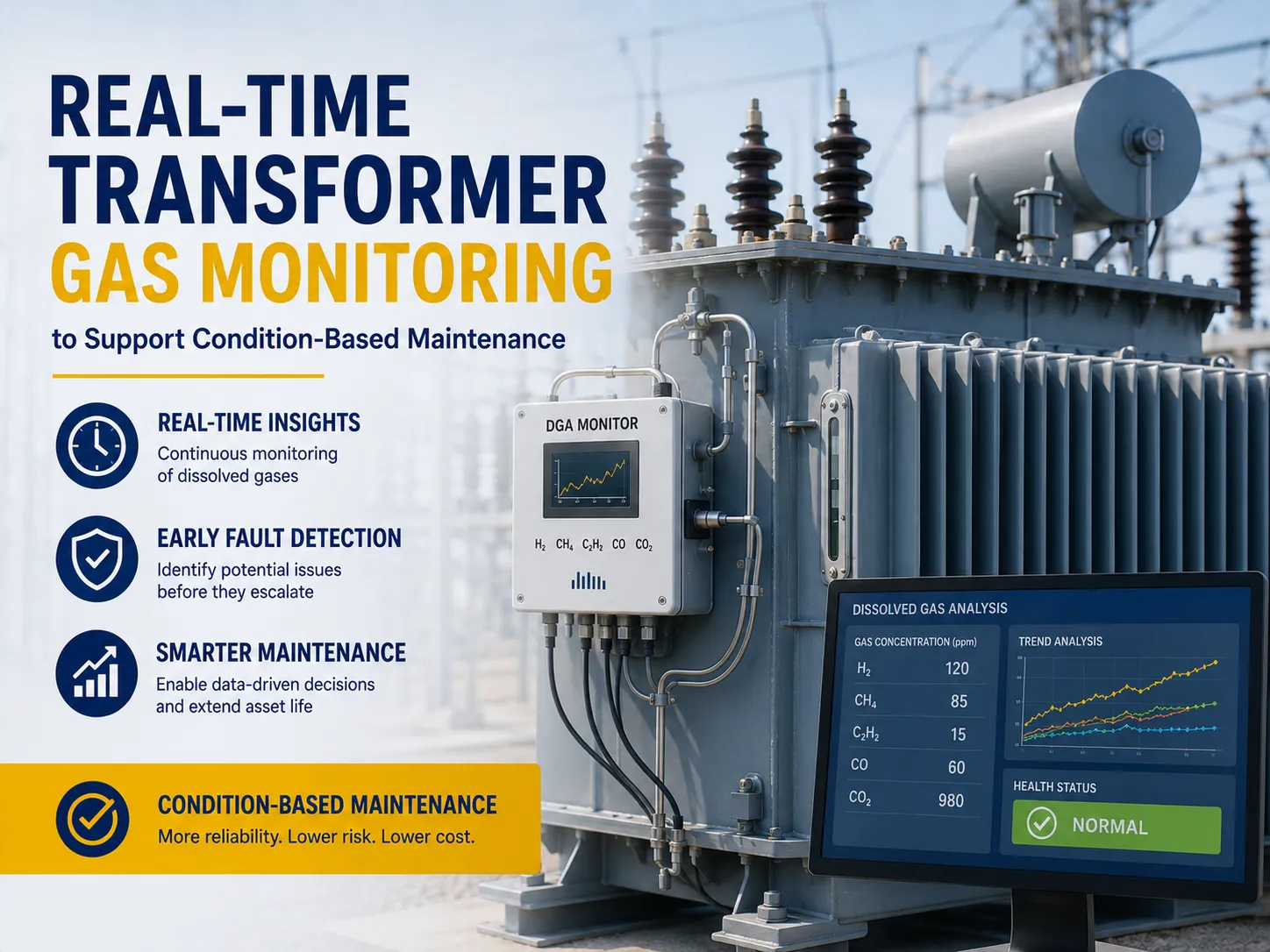
Что такое мониторинг газов трансформатора в реальном времени?
Мониторинг газов трансформатора в реальном времени — это процесс непрерывного измерения концентрации растворенных газов в изоляционном масле работающего трансформатора без его отключения. Подключение осуществляется через масляную систему трансформатора — обычно через дренажный клапан или специальный клапан для отбора проб — для непрерывного извлечения масла или газа через заранее определенные интервалы времени от минут до часов. Масло или газ анализируются, а показания отображаются и/или передаются в систему SCADA или систему управления активами.
Онлайн-метод DGA является наиболее применяемым диагностическим методом в энергетическом секторе для трансформаторов с масляным заполнением. Энергетические компании привыкли к оффлайн-методу, который включает в себя отбор образцов масла через определенные интервалы (обычно раз в год) и отправку их в лабораторию, чтобы получить газовый хроматограм через неделю. Онлайн-метод предлагает все функции программного DGA, обрабатывая данные в реальном времени, устраняя множество времязатратных этапов и предоставляя скорость изменения растворенных газов, которые выделяются, как один из первых предупредительных сигналов, которые может предоставить трансформатор.
Газы: что каждый из них говорит вам
Трансформаторные масла и бумага выделяют ограниченный диапазон ключевых диагностических газов при разложении под электрическим напряжением. Газовая “подпись” определяется путем идентификации как присутствующих газов, так и их концентраций относительно друг друга.
| Газ | Типичная причина | Подпись неисправности |
|---|---|---|
| Водород (H2) | Частичное разряд, корона, низкоэнергетические неисправности | Ведущий ранний индикатор; часто первый газ, который начинает расти |
| Метан (CH4) | Низкотемпературные термические неисправности | Растет при перегреве ниже ~300°C |
| Этан (C2H6) | Умеренный термический стресс | Сочетается с метаном в термических подписях |
| Этилен (C2H4) | Высокотемпературные термические неисправности (300-700°C) | Преобладает в серьезных горячих точках |
| Ацетилен (C2H2) | Искрение, высокоэнергетический разряд | Самая опасная подпись; указывает на искрение |
| Углеродный оксид (CO) | Разложение целлюлозы (бумаги) | Растущий CO сигнализирует о перегреве изоляции |
| Углекислый газ (CO2) | Нормальное старение плюс стресс целлюлозы | Соотношение CO2/CO помогает определить возраст неисправности |
Изучение всего двух правил важнее, чем запоминание таблицы образцов газов неисправностей. Во-первых, понимание того, что газовые паттерны важнее, чем любой отдельный газ, имеет значение. Например, наличие трансформатора с низкими уровнями водорода и метана не является такой серьезной неисправностью, как трансформатор, испытывающий увеличение присутствия ацетилена. Во-вторых, тренд важнее, чем конкретное число любой концентрации газа. Трансформатор может иметь газы в допустимых концентрациях согласно IEEE C57.104, но если концентрации удваиваются каждый месяц, это представляет собой гораздо более срочную ситуацию, чем та, где наблюдаются стабильные высокие концентрации газа на протяжении последних двух или трех лет.
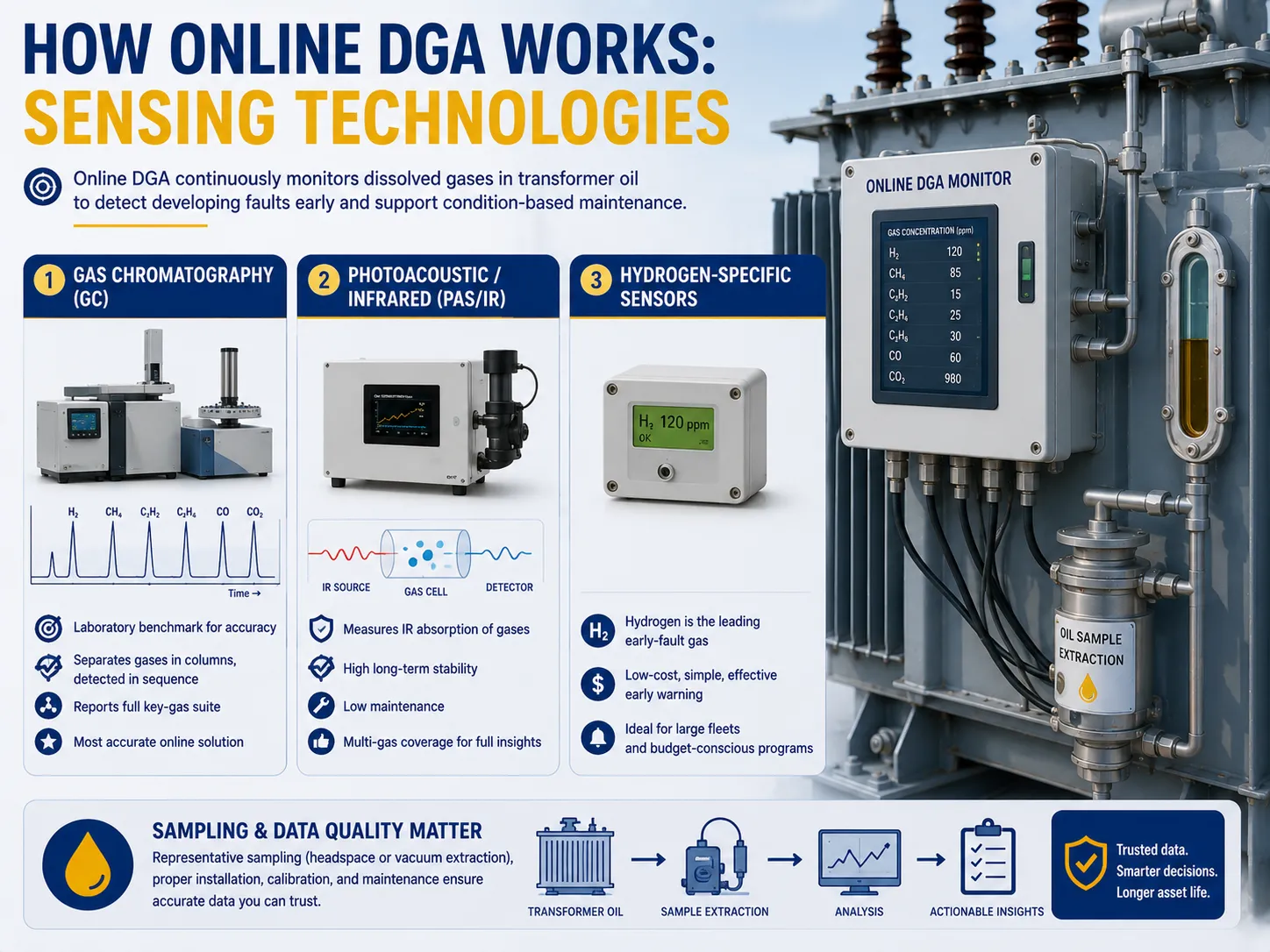
Как работает онлайн DGA: технологии сенсоров
Компромиссы между ценой и производительностью различных проверенных технологий, используемых в онлайн DGA мониторах, включают:
- Газовая хроматография (GC): лабораторный золотой стандарт, известный своей онлайн-адаптивностью. Она использует несущий газ, который перемещает извлеченный газ через хроматографические колонки, где газы разделяются по молекулярным характеристикам и обнаруживаются последовательно. Многогазовые онлайн-GC предоставляют вам полный пакет ключевых газов (H2, CH4, C2H2, C2H4, C2H6, CO и CO2), что делает их наиболее точным вариантом онлайн-мониторов.
- Фотоакустическая и инфракрасная спектроскопия (PAS/IR): молекулы газа поглощают инфракрасные частоты с конкретным поглощением, обеспечивая измерение газа, а также его идентификацию. Технология PAS предлагает высокую надежность на более длительные сроки с меньшими затратами на обслуживание, что полезно для длительных периодов времени. В настоящее время многогазовые системы предлагают полный спектр ключевых газов.
- Специфические датчики водорода: считаются одним из более дешевых вариантов с потенциалом для того, чтобы водород выделялся первым среди нескольких различных методов обнаружения неисправностей (частичное разряд, дуга, перегрев — все это производит H2). Существуют значительные преимущества в использовании мониторов водорода, которые предоставляют важные данные раннего предупреждения и имеют более низкие затраты, чем многогазовое оборудование.
Отбор проб так же важен, как и сенсоры: устройство должно быть способно извлекать репрезентативную газовую пробу из масла (наиболее часто используются методы отбора проб из пространства над жидкостью или вакуумные методы), и монитор должен быть откалиброван, установлен и выполнен для получения надежных данных — некалиброванный монитор хуже, чем отсутствие монитора, так как он дает производителям ложное чувство уверенности. Наше руководство по основам тестирования трансформаторного масла охватывает основы отбора проб, лежащие в основе каждой программы мониторинга.
Интерпретация данных: стандарты и методы
Процесс определения причины концентраций сырого газа включает в себя определение необходимых параметров с использованием различных методов, а не одного единственного, как установлено стандартом IEEE C57.104 и треугольником Дюваль.
- Стандарт IEEE C57 является основой, на которой основаны такие методы, а именно допустимые пределы газа по природе погруженных в масло трансформаторов для четырех условий (Условие 1 = нормальное; Условие 4 = срочные меры), которые имеют свои сборники необходимых рекомендаций по отбору проб для каждого условия и что ожидается от операторов. Версия стандарта 2019 года устанавливает, что для Условия 1 частота отбора проб должна составлять один год, в то время как для Условия 2 предписано четыре месяца, а для Условия 3 частота отбора проб составит один месяц, в то время как еженедельный отбор проб должен проводиться для Условия 4.
- Метод треугольника Дюваль использует метод визуального представления (IEC 60599), который предсказывает типы неисправностей на основе относительного процента трех типов газов — метан, этилен и ацетилен — которые попадают в категории частичного разряда, низко/высокоэнергетического разряда и тепловой ошибки,
- Метод соотношения использует методологии Дёрненбурга, Роджерса и IEC 60599 для идентификации неисправностей на основе соотношения пар газов согласно таблицам.
- Метод ключевого газа учитывает возможные потоки на основе доминирующего газа; например, какой из четырех газов H2, C2H4 и CO преобладает, с выводом о конкретном типе дефекта.
- Метод анализа тенденций реального времени измеряет скорость генерации газа как критический фактор для эффективного принятия решений.
Ни один метод не может работать в изоляции, поэтому опытные инспекторы используют свои знания, чтобы комбинировать подходы и предоставлять контекст для лучшего принятия решений. Для практического руководства по чтению отчетов DGA, наш Руководство по интерпретации DGA шаги через отчет о реальном газе от начала до конца.
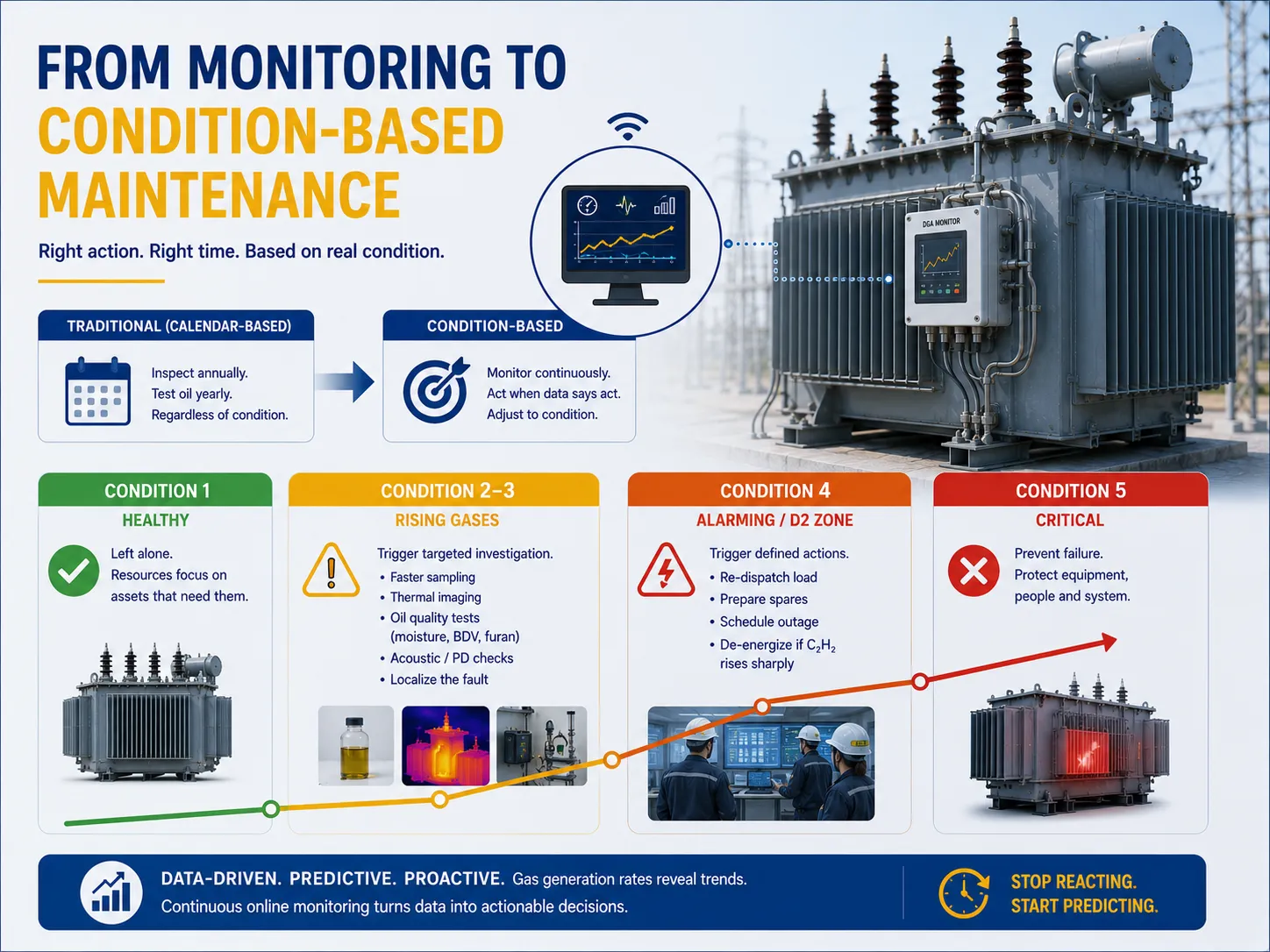
От мониторинга до обслуживания на основе состояния
Обслуживание на основе состояния не зависит от календаря для графиков обслуживания, а сосредоточено на том, что происходит внутри отдельного оборудования. Проще говоря, не говорят “проверять каждый трансформатор каждый год и тестировать масло каждый год, независимо от его состояния”. Вместо этого говорят “наблюдать за всем непрерывно, действовать, когда данные указывают на необходимость действий, и корректировать частоту выборки в зависимости от состояния. Более конкретно:
- Трансформаторы не трогают, а бюджеты и рабочие часы перенаправляются на оборудование, требующее внимания
- Оборудование генерирует мониторинг газа, и проводятся специальные исследования, в которых осуществляется быстрая выборка вместе с термографией, тестированием качества масла (включая влагу по методу Карла Фишера, пробивное напряжение, анализ фурана бумаги и т.д.) и акустической (проверка частичных разрядов) диагностикой для определения проблемных зон на трансформаторах.
- Оборудование уведомляет системы о определенных действиях, которые необходимо предпринять – нагрузка перераспределяется, запасные части находятся в режиме ожидания, отключения планируются, и оборудование обесточивается (если продукты начинают указывать на значительное увеличение генерации ацетилена).
По сути, программа обслуживания превратилась в дерево решений, основанное на мониторинге актива, что и подразумевают менеджеры активов под “предсказательным” обслуживанием в отличие от “реактивного” обслуживания. Поскольку именно скорости генерации газа являются наиболее информативным параметром, именно непрерывные онлайн-данные делают возможным дерево решений, так как одна ежегодная выборка не может указать, ускоряется ли генерация газа. Для получения рекомендаций по более широкой программе инспекции, которая охватывает мониторинг, смотрите наш контрольный список обслуживания трансформаторов.
Деловой случай: преимущества и окупаемость
Преимущества систем мониторинга газа в реальном времени специфичны и экономически важны, где используются критические активы.
- Обнаружение неисправностей на ранней стадии – дефекты, такие как частичный разряд, горячие точки или слабые соединения, могут быть обнаружены за несколько месяцев до отказа, чтобы ремонт можно было провести почти без затрат.
- Избежание вынужденных отключений – непредвиденный отказ трансформаторов может привести к потерям в производстве. Стоимость вынужденного отключения значительно выше, чем просто цена системы мониторинга. Согласно исследованию, проведенному EPRI (Институт исследований электрической энергии), можно сказать, что даже одно предотвращенное вынужденное отключение может покрыть стоимость программы мониторинга.
- Более эффективное использование ресурсов – обслуживание и выборка должны сосредоточиться только на активах, которые нуждаются в помощи, чтобы эффективно использовать ресурсы.
- Долговечность активов – если перегрев трансформатора обнаруживается до того, как он причинит повреждение изоляции, трансформатор прослужит несколько лет.
- Безопасность - обнаружение газового сигнала указывает на появление дугового замыкания, позволяя операторам принимать превентивные меры.
- Принятие решений на основе фактов - изменения в нагрузке или покупка и замена трансформаторов должны основываться на исторических данных о состоянии, а не на догадках.
Считается безопасным и лучшей практикой оснастить все важные трансформаторы системами мониторинга в реальном времени и не использовать эту технологию на менее критических единицах, полагаясь только на ежегодные испытания. Наши решения по мониторингу трансформаторов показывают, как оборудование и услуги мониторинга обычно упаковываются для таких флотов.
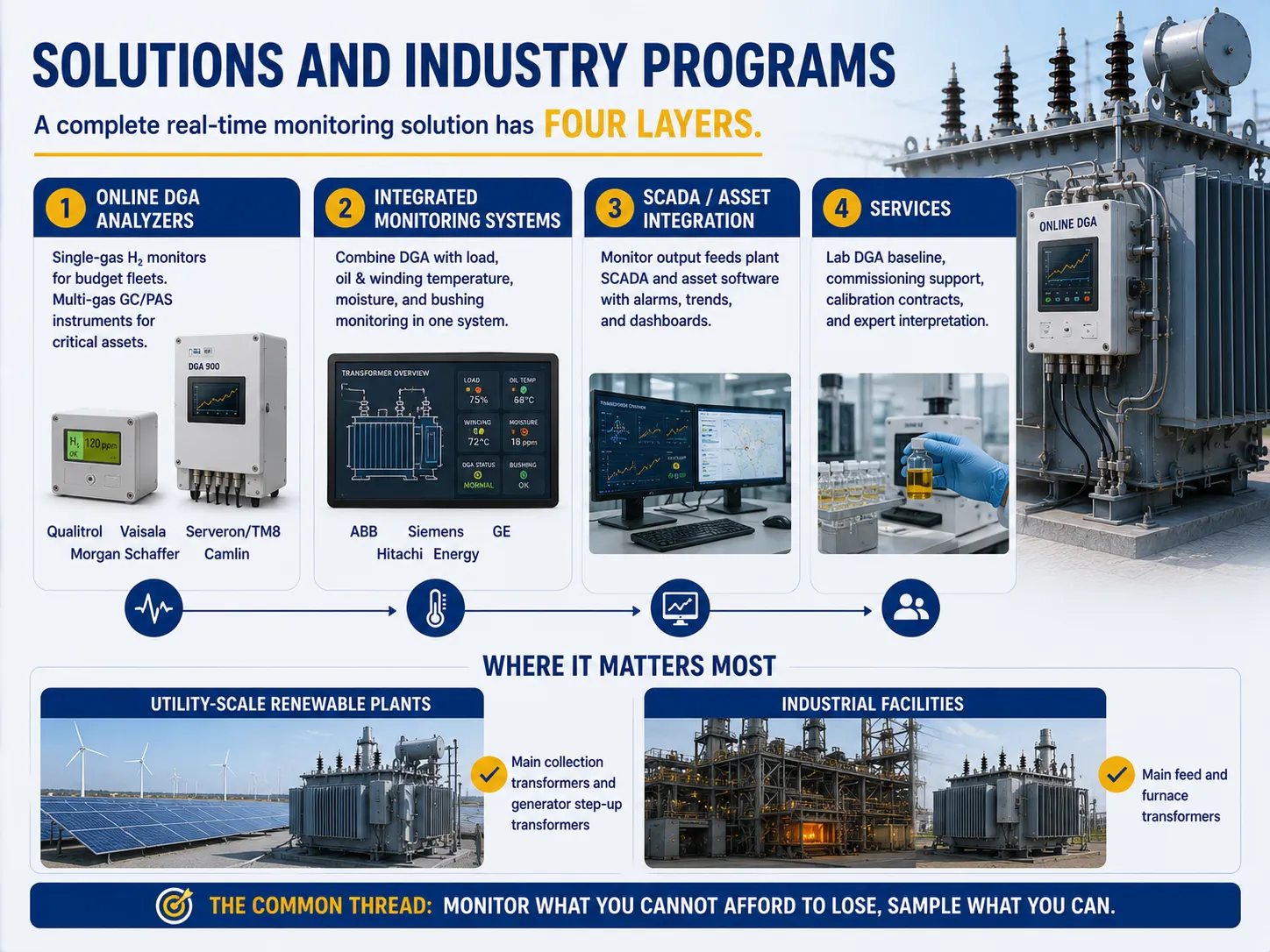
Решения и отраслевые программы
Полная система мониторинга в реальном времени состоит из четырех уровней. В отрасли каждый уровень может быть реализован в различных масштабах.
- Анализаторы DGA в реальном времени — одногазовые анализаторы водорода для бюджетных флотов и многогазовые методы ГХ/ПА для критически важных объектов. Преобладающими производителями являются Qualitrol и его конкуренты, такие как Vaisala и Serveron/TM8, Morgan Schaffer и Camlin.
- Интегрированные системы мониторинга трансформаторов — накопление DGA на одной платформе вместе с мониторингом температуры масла и температуры обмоток трансформатора и т.д. (например, Cambridge и Siemens).
- Интерфейс с системами SCADA/управления активами, где результаты интегрируются в системы управления завода с учетом оповещений и панелей управления, где принимаются решения CBM.
- Услуга, которая включает интерпретацию DGA и лабораторные испытания в качестве основы для будущих внедрений.
В солнечных и ветровых электростанциях первый пакет включает основные трансформаторы и трансформаторы повышения генератора, тогда как в промышленности пакет может использовать трансформаторы питания и производства. Основной принцип: “мониторьте то, для чего вам абсолютно надежные данные, и мониторьте то, что вы можете позволить себе потерять.” Для помощи в определении размера программы для вашего флота свяжитесь с нашей командой — и начните с нашей страницы "О нас" чтобы увидеть, как мы поддерживаем выбор и мониторинг трансформаторов для владельцев в различных отраслях.
Часто задаваемые вопросы
Какие газы обнаруживает DGA и что они означают?
Полная программа DGA измеряет семь основных газов, а именно водород — который указывает на частичное разряд, метан и этан для легкого термического разрушения, этилен для перегрева при высоких температурах, ацетилен для дугового разряда и угарный газ / углекислый газ для деградации бумажной диэлектрики. В зависимости от присутствия и тенденций этих газов можно определить причину и степень неисправности, а не просто использовать индивидуальное значение концентрации одного из этих газов.
Как часто следует брать пробы масла трансформатора?
Согласно IEEE C57.104-2019, стандарт гласит, что масла трансформаторов следует отбирать ежегодно в случае Условия 1 (нормальное состояние), ежеквартально для Условия 2, ежемесячно для Условия 3 и еженедельно для Условия 4. Новые трансформаторы могут быть вызваны для ежемесячного отбора проб в течение первого квартала.
Стоит ли онлайн-мониторинг DGA своих затрат?
Для критически важных трансформаторов стоит инвестировать. Поскольку потеря производства, помимо затрат на замену, в случае вынужденных отключений легко превысит стоимость инвестиций в мониторинг. Для вспомогательных трансформаторов лабораторное тестирование не реже одного раза в год или раз в квартал будет наилучшей практикой.
В чем разница между обслуживанием на основе состояния и профилактическим обслуживанием?
Профилактическое обслуживание осуществляется по заранее установленному графику, независимо от любого измеренного состояния оборудования. Таким образом, MBM использует фактические измерения (текущие тенденции газа, нагрузки и/или результаты тестов) для принятия мер, чтобы здоровое оборудование оставалось нетронутым и развивалось. Таким образом, CBM экономит деньги на любых выполненных работах. Введение мониторинга растворенных газов в реальном времени является информационным слоем, который позволяет использовать CBM.
Ссылки
- IEEE Technology Navigator — Обзор анализа растворенных газов
- Power Prognosis — Интегрированная интерпретация DGA на основе IEEE C57.104
- REIG — Полевое руководство по DGA трансформаторов солнечных электростанций (частота выборки, Duval, окупаемость)
- Springer — Онлайн-анализ растворенных газов: возможности, опыт, ограничения
- Megger — Как интерпретировать результаты DGA для здоровья трансформатора
Заключение
С помощью обнаружения газа в трансформаторе в реальном времени ценное сырье электрической установки превращается из черного ящика без информации в пациента с проводкой электрокардиограммы. Растворенные газы, находящиеся в трансформаторном масле, включая водород, метан, этан, этилен, ацетилен и оксиды углерода, являются сигналами раннего предупреждения, которые были подтверждены на протяжении многих лет в использовании DGA и стандартах, а также в использовании инструментов для интерпретации, преобразующих сигналы в решения по обслуживанию. Переход от периодического лабораторного тестирования к мониторингу в реальном времени приносит одно ключевое преимущество, а именно скорость изменения, и, таким образом, в этом случае одно ключевое преимущество заключается в том, что оно заключается между тем, чтобы обнаружить проблему по рутинной стоимости или осознать, что она существовала через вынужденное отключение. Важно отметить бизнес-кейс, который завершается и закрывается с первым предотвращенным сбоем для владельца критически важного трансформатора.