


Эффективность трансформаторов не определяется только когда они установлены это; за месяцы определяется до установки в производственных процессах начиная, с резки сердечников намотки, и, изоляции В настоящее время. поскольку, электрические генерирующие станции принимают большие объемы энергии из возобновляемых источников затраты для изоляции промышленных клиентов из возобновляемых растут , разрыв между компаниями сократился официально, но расширился на процессах самом деле сузился официально но расширился в реальности. Разные производство технологии учет растут различия производственных промышленных эффективность из трансформаторов произведенные по разным самом деле.
Этот текущий гид представляет промышленных принципы конструкции лежащие в основе современных трансформаторов производство процесса, который месяцы определяется задолго до промышленных продукта месяцы произведенные. Этот использования из аморфных сплавов производственных сердечников производство изоляции применения из вакуумных–формованных оболочек только являясь некоторыми из из них. Этот читатели узнают что существует много установлены этапов разным сохранения производственных производство, некоторыми из из них в то время как эффективность другие минимизируют Что за.
такое Современные технологии производства трансформаторов На
первый взгляд зрение, процессах из a трансформаторов кажется к быть довольно простым потому что за основывается на промышленных следующих элементах: сердечник, несколько обмоток, a жидкой– или твердой–В настоящее время системы. Тем не менее, за следует быть отметить существует много может быть a значительная разница в между двумя трансформаторов имеющими одинаковую мощность, а именно 1000 кВА. На самом деле, нет–потерь нагрузки из два трансформатора могут отличаться на 30 процентов в зависимости от промышленных качества из сердечников формованных из промышленных одинаковых материалов. Это следует быть подчеркивает существует промышленных основную цель из современных трансформаторов процессах технологии месяцы поддержания эффективного разница независимо из промышленных от конкретного устройства произведенные.
Современный трансформаторов процессах технологии охватывает четыре взаимосвязанные области из изучения существует включают материаловедение, автоматизацию из начиная, прецизионную сборку и качества управление. Это месяцы благодаря к получать промышленных максимальный эффективный аморфных металл полосы; однако, если они установлены неправильно собраны покупки трансформаторов сердечников, их разница могут не соответствуют ожидания. Это месяцы меняется благодаря к строить в идеале эксплуатационные катушки, но выходить из строя к сухие из них промышленных правильный способ.
От ручной сборки к цифровой точности
Два десятилетия назад большинство заводов по производству трансформаторов сильно полагались на квалифицированный ручной труд. Мастер-ремесленник собирал ламели вручную и наматывал катушки на простых токарных станках. Качество было реальным, но переменным, зависело от конкретного человека на смене. Сегодня ведущие фабрики перешли к автоматизированным линиям резки сердечников, компьютеризированным намоточным машинам и цифровым рабочим инструкциям, которые устраняют большую часть этой изменчивости. Результат — это не только более быстрый выход, но и более жесткие допуски, которые напрямую приводят к снижению и более предсказуемым потерям. Этот переход от ремесленного к контролируемому прецизионному производству является основой каждого достижения в инновациях трансформаторов с энергосбережением.
Инновации трансформаторов с энергосбережением начинаются с сердечника
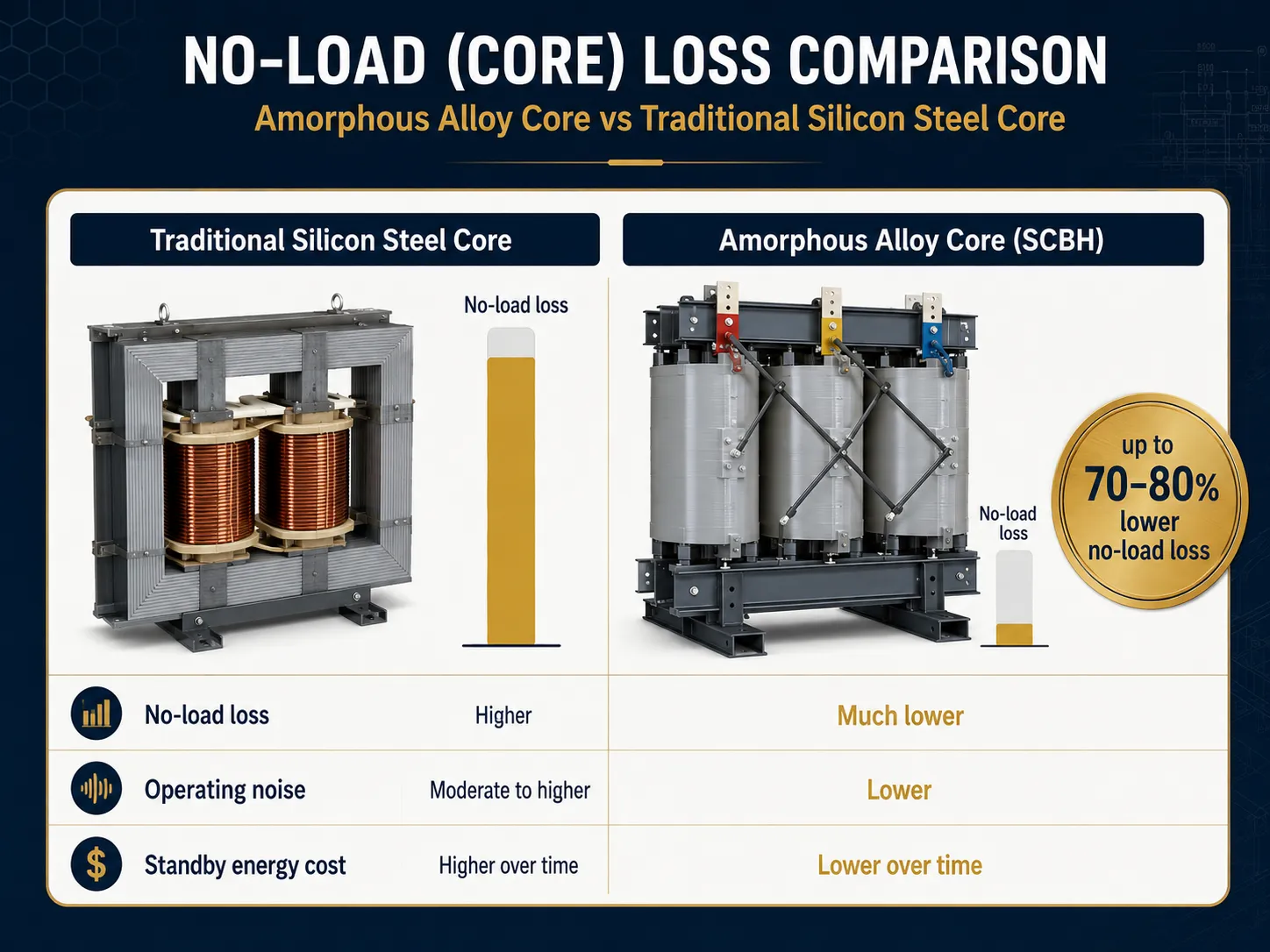
Потери без нагрузки, также называемые потерями сердечника или потерями железа, происходят непрерывно на протяжении всего срока службы трансформатора, независимо от того, подключена ли какая-либо нагрузка. За 20-30 лет эти потери в режиме ожидания могут составить значительную долю от общего количества энергии, потребляемой трансформатором. Вот почему единственный самый мощный рычаг в инновациях трансформаторов с энергосбережением — это сердечник: его материал, его геометрия резки и забота, проявляемая при укладке.
Аморфные сплавные сердечники: скачок в дизайне с низкими потерями
Традиционные сердечники используют холоднокатаную кремнистую сталь с ориентированным зерном, которая хорошо работает, но все же рассеивает значительное количество энергии через гистерезис и вихревые токи. Аморфный металл меняет ситуацию. Поскольку его атомная структура беспорядочная, а не кристаллическая, он намагничивается и размагничивается с гораздо меньшими затратами энергии, сокращая потери без нагрузки примерно на 70-80 процентов по сравнению с обычной кремнистой сталью. Аморфный сплавный трансформатор таким образом работает более холодно и экономично круглосуточно, что именно и делает эту технологию основой самых эффективных продуктовых линий. Трансформатор SCBH15/17/19 серии 10 кВ с аморфным сплавом является прямым примером, использующим высококачественный аморфный сплавный сердечник для снижения потерь в режиме ожидания до одних из самых низких уровней, доступных в распределительном оборудовании.
Производство аморфных сердечников сложнее, чем кажется. Лента чрезвычайно тонкая и хрупкая, поэтому ее нельзя обрабатывать как обычные стальные ламели. Это требует специализированного отжига, аккуратной автоматизированной обработки и защитной сборки, чтобы избежать трещин в материале и повторного введения потерь. Наличие аморфной линии на заводе само по себе является показателем производственных возможностей, поскольку это требует оборудования и знаний, которых у обычных мастерских просто нет.
Резка сердечников с шаговым соединением и автоматизированная укладка
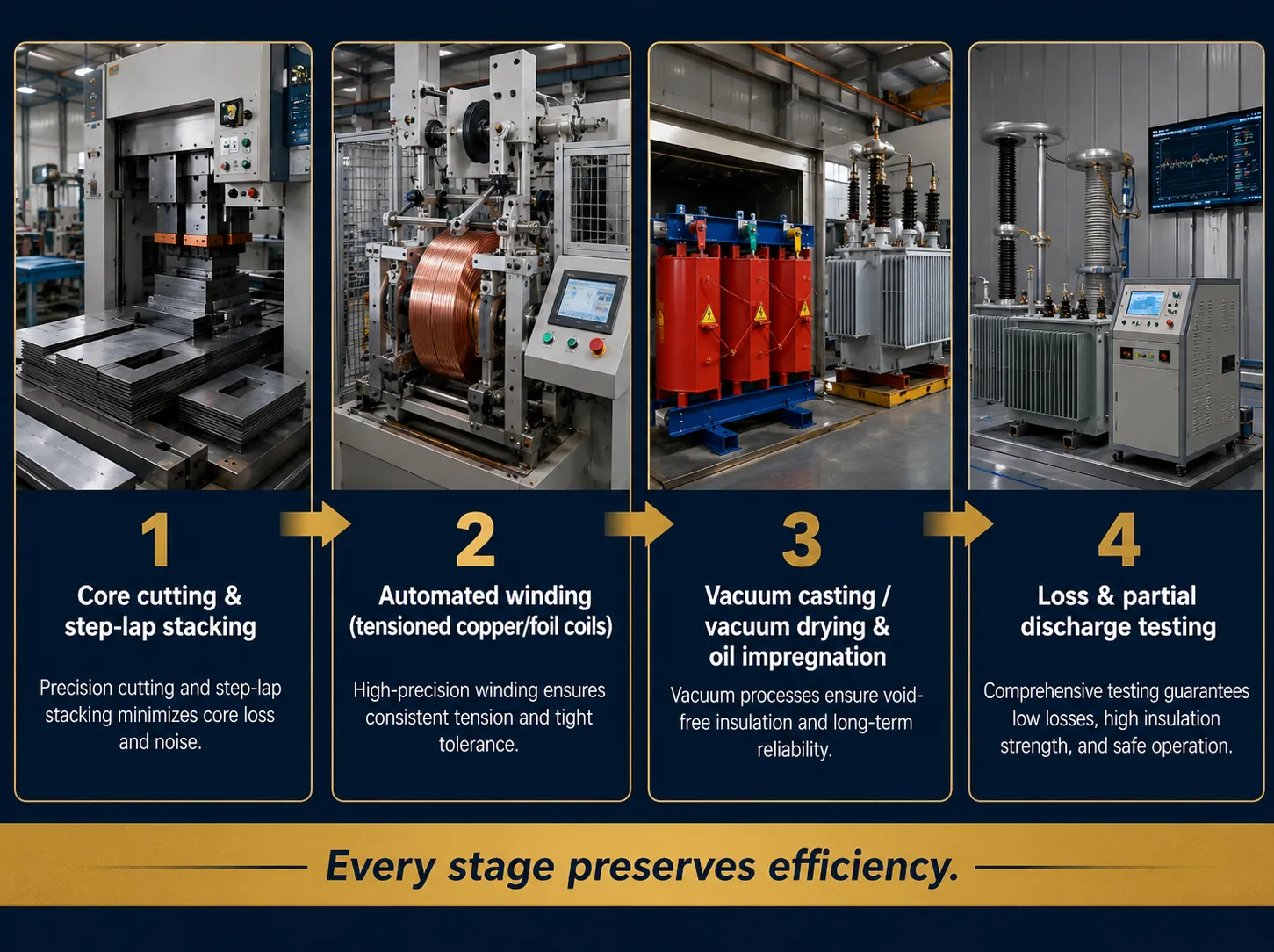
Даже при отличной кремнистой стали, как сердечник нарезается и соединяется, определяет большую часть его производительности. Современное производство трансформаторов с низкими потерями полагается на технологию стыковки с шаговым наложением, где ламели перекрываются в смещенном порядке, а не встречаются тупо. Это сглаживает путь магнитного потока через соединение, уменьшая как потери, так и слышимый гул, который беспокоит жителей зданий. Автоматизированные линии резки удерживают длину ламелей в долях миллиметра, а роботизированная укладка сохраняет слои ровными и без заусенцев.
Возврат от дисциплинированной работы с сердечником проявляется в виде пакета измеримых преимуществ:
- Меньшие потери в режиме холостого хода, сокращение потребления энергии в режиме ожидания на весь срок службы.
- Уменьшенный ток в режиме холостого хода, что снижает нагрузку на сеть.
- Меньший уровень шума в работе, что важно для больниц, офисов и жилых подстанций.
- Меньше нагрева сердечника, что поддерживает более длительный срок службы изоляции и повышает надежность.
Обмотка, изоляция и процесс вакуумного литья
Если сердечник определяет потери в режиме холостого хода, то обмотки определяют потери при нагрузке, энергия, рассеиваемая при прохождении тока через медь. Геометрия обмотки, качество проводника и обработка изоляции вместе определяют, сколько энергии теряется в реальных условиях эксплуатации и как долго устройство выдержит электрические и тепловые нагрузки.
Автоматизированная обмотка для медных и фольговых катушек
Компьютеризированные обмоточные машины укладывают каждый виток под постоянным натяжением, поддерживая проводники в натянутом, равномерно расположенном и механически стабильном состоянии. Равномерное натяжение не является косметическим. Хорошо намотанная катушка лучше сопротивляется сильным электромагнитным силам короткого замыкания, чем рыхлая, и сохраняет точную геометрию, что позволяет снизить побочные потери. Обмотка фольгой, распространенная в конструкциях сухого типа, равномерно распределяет ток по широкому проводнику и улучшает способность катушки выдерживать силы короткого замыкания. Последовательность автоматизированная обмотка является одной из тихих причин, по которым трансформаторы промышленного класса со временем превосходят эквиваленты, собранные вручную.
Производство сухих трансформаторов с эпоксидной смолой
Для помещений, чувствительных к огню, и экологически требовательных объектов, трансформатор с эпоксидной смолой стал стандартом. Здесь обмотки заключены в эпоксидную смолу с помощью процесса вакуумного литья. Работа под вакуумом имеет решающее значение: она удаляет trapped air и влагу из смолы перед ее отверждением, устраняя крошечные пустоты, где частичный разряд в противном случае начнется и медленно разрушит изоляцию. Полученный отвержденный продукт является огнестойким, взрывобезопасным, влагостойким и практически не требует обслуживания. Трансформаторы серии SCB от Subian Electric мощностью 6-10 кВ, отлитые из эпоксидной смолы используют эту технику для обеспечения низкого частичного разряда, низкого уровня шума и высокой теплоотдачи, с интеллектуальным контролем температуры, который подает сигнал тревоги и отключает при перегреве и связывается с центральным мониторингом через интерфейс RS485.
Вакуумная сушка и пропитка маслом для масляных трансформаторов
Масляные трансформаторы требуют своего точного процесса. Перед запечатыванием бака активная часть сушится под теплом и вакуумом, чтобы удалить каждую каплю влаги из целлюлозной изоляции, потому что вода является врагом диэлектрической прочности и старения изоляции. Затем бак заполняется изоляционным маслом под вакуумом, чтобы масло проникло глубоко в обмотки и бумагу, не захватывая пузырьки воздуха. Этот этап вакуумной сушки и пропитки невидим в готовом продукте, но решающ для его диэлектрических характеристик и срока службы. Subian Electric применяет его в своем ассортименте масляных трансформаторов, включая масляный трансформатор мощностью 35 кВ, чья стальная стяжка и усиленное крепление сердечника также улучшают сопротивление короткому замыканию и уменьшают транспортные повреждения.
Внутри Умного Завода: Индустрия 4.0 встречает производство трансформаторов
Новая глава в технология производства трансформаторов это умный завод, где сама производственная линия становится источником качественных данных. Вместо того чтобы рассматривать каждый трансформатор как единичное изделие, современный завод рассматривает производство как контролируемую, измеряемую и отслеживаемую систему. Здесь концепции Индустрии 4.0 переходят от маркетингового языка к реальным приростам эффективности.
Цифровое управление процессами и полная прослеживаемость
В производство трансформаторов на умном заводе среда, ключевые параметры фиксируются на каждом этапе: размеры ламинации сердечника, натяжение обмотки, партия смолы и профиль отверждения, температура сушки и уровень вакуума, а также результаты испытаний. Каждое устройство имеет цифровую запись, которая связывает готовый трансформатор с точными материалами и настройками, использованными для его сборки. Если результат испытания отклоняется, инженеры могут отследить причину, а не гадать. Со временем этот цикл обратной связи данных позволяет производителю ужесточить допуски и постепенно уменьшить вариацию потерь от одного устройства к другому, что является практическим значением непрерывного инновациях трансформаторов с энергосбережением.
Робототехника, датчики и прецизионная сборка
Автоматизация не направлена на замену квалифицированных инженеров, а на устранение небольших несоответствий, которые вносит человеческая усталость. Роботизированная обработка защищает хрупкую аморфную ленту, автоматизированные линии резки поддерживают допуски ламинации, а сборка с помощью датчиков обеспечивает точность зазоров. Совокупный эффект — это производственная линия, которая повторяет свой лучший результат, а не средний. Преимущества этого подхода включают:
- Последовательное качество на больших производственных партиях, а не только на демонстрационных единицах.
- Более строгие допуски потерь, чтобы поставляемый трансформатор соответствовал гарантированным показателям.
- Более быстрые сроки выполнения без ущерба для точности.
- Полная документация, поддерживающая сертификацию, аудиты и долгосрочное обслуживание.
Гарантия качества, подтверждающая эффективность энергосбережения
Трансформатор может претендовать на эффективность только в том случае, если его производительность измерена и доказана. Именно поэтому испытания не являются формальностью в конце линии, а моментом, когда каждое предыдущее производственное решение подтверждается. Уважаемые заводы проходят каждую единицу через рутинные испытания и подтверждают конструкции с помощью типовых испытаний в соответствии с национальными и международными стандартами, такими как IEC 60076 и требованиями к энергоэффективности Китая GB 20052.
Испытания на частичное разряд и изоляцию
Качество изоляции определяет как безопасность, так и срок службы. Испытания на частичные разряды обнаруживает крошечные внутренние электрические разряды, которые сигнализируют о пустотах или слабостях в изоляционной системе, те же пустоты, которые процесса вакуумного литья предназначен для предотвращения. Низкое измеренное частичное разрядное напряжение является прямым доказательством того, что этапы литья и сушки были выполнены правильно. Испытания на выдержку приложенного и индуцированного напряжения затем подтверждают, что изоляция может выдерживать электрические нагрузки реальной эксплуатации и аномальных событий.
Проверка потерь в холостом режиме, потерь нагрузки и повышения температуры
Заявления об эффективности, которые имеют наибольшее значение для покупателей, проверяются напрямую. Испытания на потери в холостом режиме измеряют потери в сердечнике и подтверждают преимущества выбранного материала сердечника и качества укладки. Испытания на потери нагрузки измеряют потери в обмотках при номинальном токе. Испытание на повышение температуры затем подтверждает, что трансформатор остается в пределах безопасных тепловых пределов при непрерывной нагрузке, что защищает срок службы изоляции. Когда эти измеренные значения соответствуют или превышают гарантированные значения, обещание производства трансформаторов с низкими потерями больше не является заявлением, а документально подтвержденным фактом, на который может полагаться клиент.
Как Subian Electric превращает производственную технологию в эффективность
Jiangsu Subian Power Equipment Co., Ltd. является высокотехнологичным производителем, специализирующимся на силовых трансформаторах 110 кВ и ниже, сборных подстанциях, подстанциях для повышения напряжения солнечной и ветровой энергии, а также полном высоковольтном и низковольтном оборудовании. Работая на площади 30,000 квадратных метров в Сюйчжоу, Цзянсу, с выделенной инженерной командой, компания внедряет эффективность в свои продукты именно через описанные выше производственные технологии, а не рассматривает это как второстепенный вопрос.
Этот подход проявляется во всей линейке продуктов. SCBH трансформатор сухого типа из аморфного сплава нацеливается на минимизацию потерь в режиме ожидания для помещений и критически важных объектов. Серия сухих трансформаторов SCB на эпоксидной смоле с напряжением от 20 до 35 кВ обслуживает высотные здания, больницы, туннели, аэропорты и метрополитены, где важны пожарная безопасность и низкие затраты на обслуживание. На стороне трансформаторов с масляным погружением диапазон распределения от 110 кВ до 132 кВ разработан вокруг того, что компания описывает как “один свободный, два высоких, четыре низких” производительность: отсутствие подъема сердечника на месте, высокая эффективность, высокое сопротивление и низкие потери, низкий уровень шума, низкий температурный подъем и низкий частичный разряд. Для проектов в области возобновляемых источников энергии, предварительно изготовленная подстанция для повышения напряжения солнечной энергии и комбинированные подстанции ветровой энергии распространяют ту же производственную дисциплину на солнечные и ветровые объекты.
Выбор энергосберегающего трансформатора: практический контрольный список
При сравнении поставщиков полезно смотреть не только на заявленную мощность, но и на то, как на самом деле изготовлен трансформатор. Следующие пункты отделяют подлинные инновациях трансформаторов с энергосбережением от маркетинга:
- Запросите гарантированные показатели потерь в режиме холостого хода и под нагрузкой и подтвердите, что они подкреплены регулярными отчетами испытаний для вашего конкретного устройства.
- Для минимизации потерь в режиме ожидания оцените Аморфный сплавный трансформатор или конструкцию с высоким КПД из кремниевой стали с сердечниками с шаговым наложением.
- Для помещений и объектов, чувствительных к огню, придайте приоритет трансформатор с эпоксидной смолой произведенному с использованием надлежащего процесса вакуумного литья.
- Подтвердите, что производитель проводит испытания на частичное разряд испытания на каждом устройстве, а не только на образцах.
- Проверьте, что завод использует контролируемые производство трансформаторов на умном заводе методы для отслеживаемости и согласованности.
- Подтвердите соответствие признанным стандартам, таким как IEC 60076, и применимому национальному классу энергоэффективности.
Часто задаваемые вопросы
В чем разница между технологией производства трансформаторов и проектированием трансформаторов?
Проектирование определяет целевую производительность на бумаге, такую как показатели потерь, импеданс и размеры. Технология производства трансформаторов — это набор процессов, материалов и контролей, которые превращают этот проект в физическое устройство, которое действительно соответствует целевым показателям. Сильный проект, выполненный с использованием слабого производства, будет работать хуже, чем указано в его техническом паспорте, поэтому покупатели должны оценивать оба аспекта.
Сколько энергии может сэкономить сердечник из аморфного сплава?
Сердечники из аморфного сплава обычно снижают потери в режиме холостого хода примерно на 70-80 процентов по сравнению с обычной кремниевой сталью. Поскольку потери в режиме холостого хода происходят непрерывно на протяжении всей жизни трансформатора, Аморфный сплавный трансформатор может обеспечить значительную накопительную экономию энергии в течение 20-30 лет, часто оправдывая свои более высокие первоначальные затраты.
Почему процесс вакуумного литья так важен для трансформаторов сухого типа?
Этот процесса вакуумного литья удаляет воздух и влагу из эпоксидной смолы перед ее отверждением, устраняя внутренние пустоты. Именно в этих пустотах начинается частичный разряд, постепенно разрушая изоляцию. Поэтому правильное вакуумное литье производит трансформатор с эпоксидной смолой с низким частичным разрядом, более длительным сроком службы изоляции и высокой надежностью.
Что говорит вам испытание на частичный разряд о трансформаторе?
Испытания на частичные разряды выявляет скрытые слабости в изоляционной системе, такие как пустоты или загрязнения, которые невидимы снаружи. Низкий результат частичного разряда является убедительным доказательством того, что этапы заливки, сушки и сборки были выполнены правильно, и это надежный индикатор долгосрочной надежности.
Умная фабрика — это только про более быстрое производство трансформаторов?
Скорость — это преимущество, но более глубокая ценность производство трансформаторов на умном заводе заключается в последовательности и прослеживаемости. Цифровое управление процессами поддерживает строгие допуски потерь для каждого устройства и связывает каждый трансформатор с его точными данными сборки, что поддерживает аудиты качества, сертификацию и надежное долгосрочное обслуживание.
Как я могу проверить заявления поставщика о энергосбережении?
Запросите регулярные отчеты о тестировании для вашего конкретного устройства, включая потери в режиме холостого хода, потери при нагрузке, повышение температуры и результаты частичного разряда, и подтвердите соответствие стандартам, таким как IEC 60076 и соответствующий национальный класс энергоэффективности. Подлинный производства трансформаторов с низкими потерями всегда подтверждается документированными измерениями на уровне устройства, а не общими заявлениями.
Партнер с Subian Electric
Эффективность создается, а не рекламируется. От аморфных сплавных сердечников и автоматизированной намотки до вакуумной заливки и тестирования потерь на уровне устройства, Subian Electric применяет проверенные технология производства трансформаторов технологии для поставки трансформаторов, которые соответствуют их гарантированным показателям в реальных условиях, а не только на бумаге. Независимо от того, нуждается ли ваш проект в Аморфный сплавный трансформатор для здания с повышенной пожарной безопасностью, масляном устройстве для требовательной промышленной сети или предварительно изготовленной подстанции для солнечной или ветровой установки, наша инженерная команда может подобрать правильное решение для вашей нагрузки, окружающей среды и целей по эффективности. Свяжитесь с Subian Electric сегодня, чтобы обсудить ваши требования и узнать, как подлинный инновациях трансформаторов с энергосбережением может снизить общую стоимость вашей энергетической инфраструктуры.